8 Spring Backpacking Trips near Vancouver

Earlier this season I posted a list of some of my favourite Spring day hikes. As much as I love day hiking, backpacking is my favourite activity and I’m always excited to start camping once the weather gets nice. Spring is tricky for backpacking because the alpine is still full of snow until at least late June, but if you pick the right trail, Spring can be a really nice time for hiking because it’s not too hot and there’s usually not a fire ban in effect. Every year is different and just because a trail is generally snow-free in a previous year, doesn’t mean it will always be snow-free. Make sure to do real time research before heading out to the trail to confirm the conditions. Make sure to Leave No Trace and always be respectful of the land and indigenous territories through which you are hiking. Here’s a few of my favourite Spring backpacking trips!
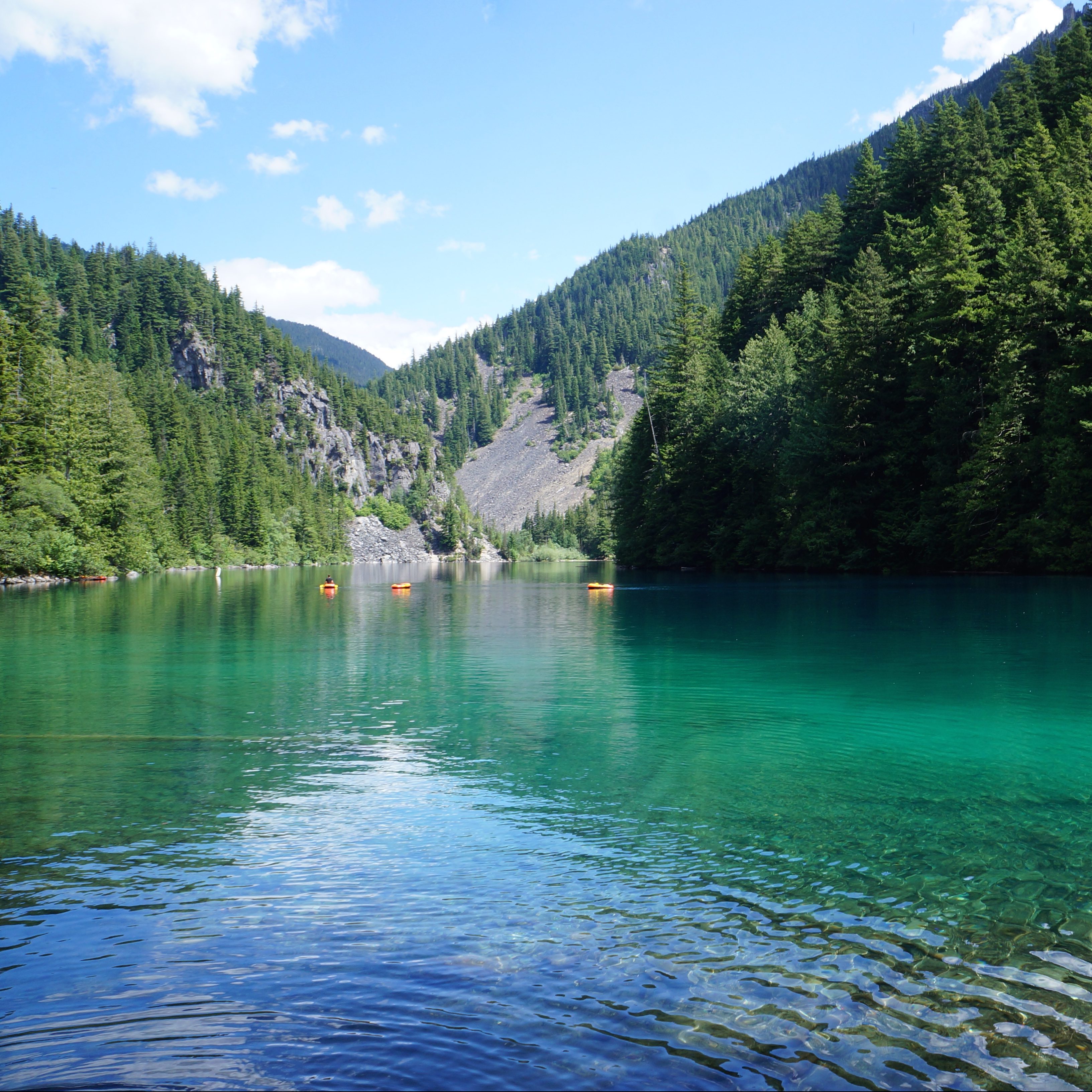
Lindeman Lake

The blue green hues of Lindeman Lake on a sunny day in summer while people lounge on the water with the mountains in the background in Chilliwack Lake Provincial Park in BC.

Located in Chilliwack Lake Provincial Park, this is a really popular hike. There’s somewhat limited space for tents, so I advise going early in the day or on a weekday if you want one of the tent pads. The hike to Lindeman Lake is less than 2km, but it is quite steep, with 350m of elevation gain. The parking lot is often targeted by thieves, so make sure you don’t leave anything valuable in your car. There is a bear cache and outhouse, but it’s only a throne-style toilet, meaning there are no walls. Due to the high volume of crowds at this location, I think it could use a little TLC from BC Parks. Get a backcountry permit for $5pp per night from camping.bcparks.ca. Campfires are NOT permitted, so enjoy a swim in the clear, but cold, lake instead!

Viewpoint Beach/Half Moon Beach 

A photo overlooking Gold Creek and Golden Ears Mountain from Viewpoint Beach on a sunny day in Golden Ears Provincial Park in BC.

Viewpoint Beach is located very close to the lower mainland, in Golden Ears Provincial Park, and as a result, it’s also very popular. The nice thing about this location is that it’s an easy 4km hike and there’s lots of space for tents. There is an outhouse and bear cache, but the bear cache is severely undersized for the number of visitors, so be prepared to hang your food. Some people cross the river to access Hiker’s Beach, but be careful doing this when the river is running high. Also, be aware there’s no cache or outhouse on that side. If you want to avoid the crowds, you can hike another 6km to Half Moon Beach, but this trail isn’t in great shape, so be prepared for a slower, muddy hike. Get a backcountry permit for $5pp per night from camping.bcparks.ca. Campfires are NOT permitted.
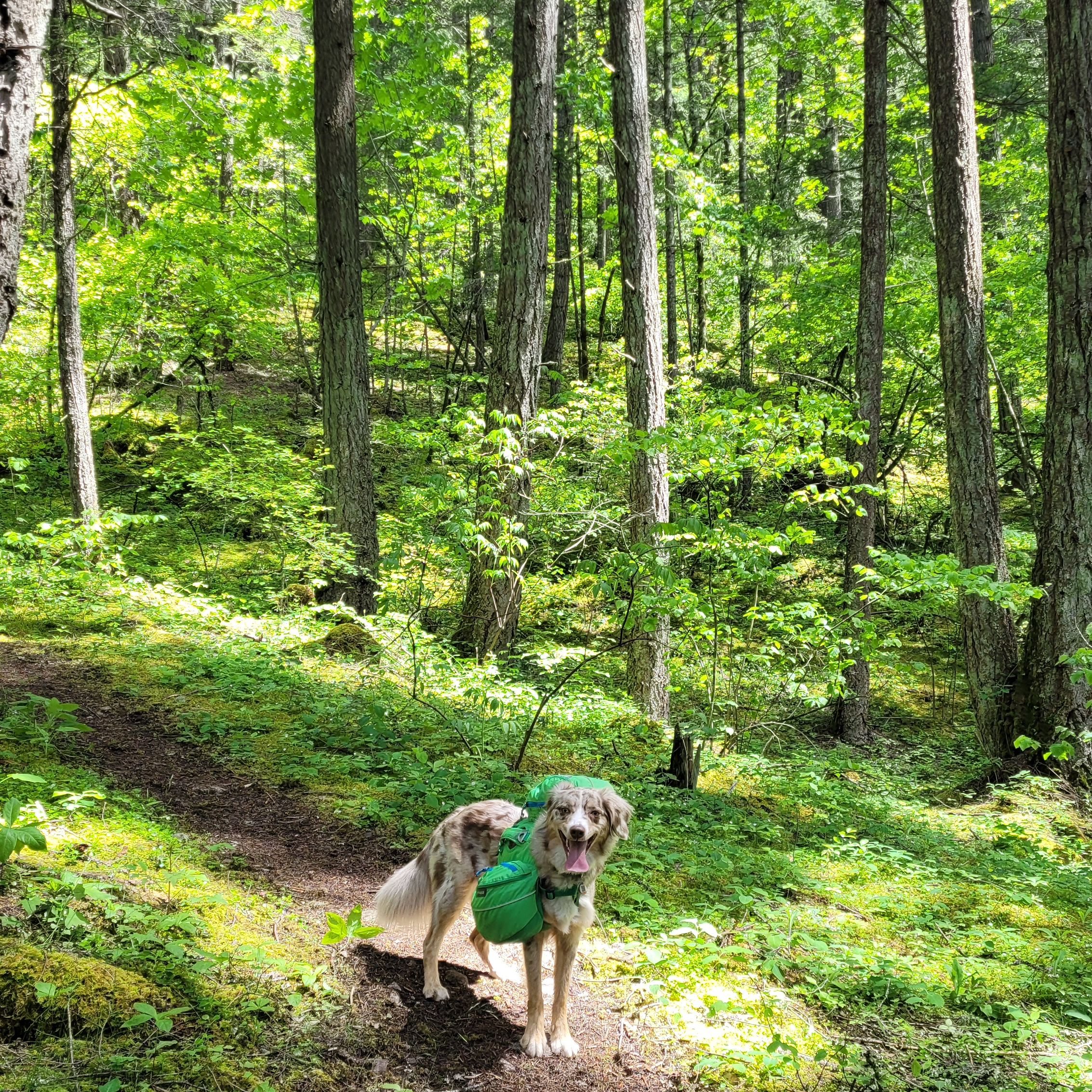
Tikwalus Heritage Trail

A cute red merle Australian Shepherd dog poses on a dirt trail with a large dog backpack, with green forest in the background while hiking on the Tikwalus Heritage Trail in British Columbia, Canada.

The first two trails on this list are very popular, so if you’re looking to avoid the crowds, Tikwalus Heritage Trail is located near the Fraser Canyon on Highway 1. It’s a 6km hike to get to the campsite, but the challenge with this trail is an elevation gain of 750m, so be prepared for a climb! This trail is mostly forested, but has lovely views of the backcountry from the campsite. These are all first-come-first-serve sites, but there’s a fair amount of space and in my experience, it’s not that busy. There is an outhouse and bear cache, but there’s no water source immediately at the campsite, so fill up at the river located 1km before camp. There are no permits for this campsite and campfires are permitted if there’s no fire ban.

Levette Lake/Hut Lake
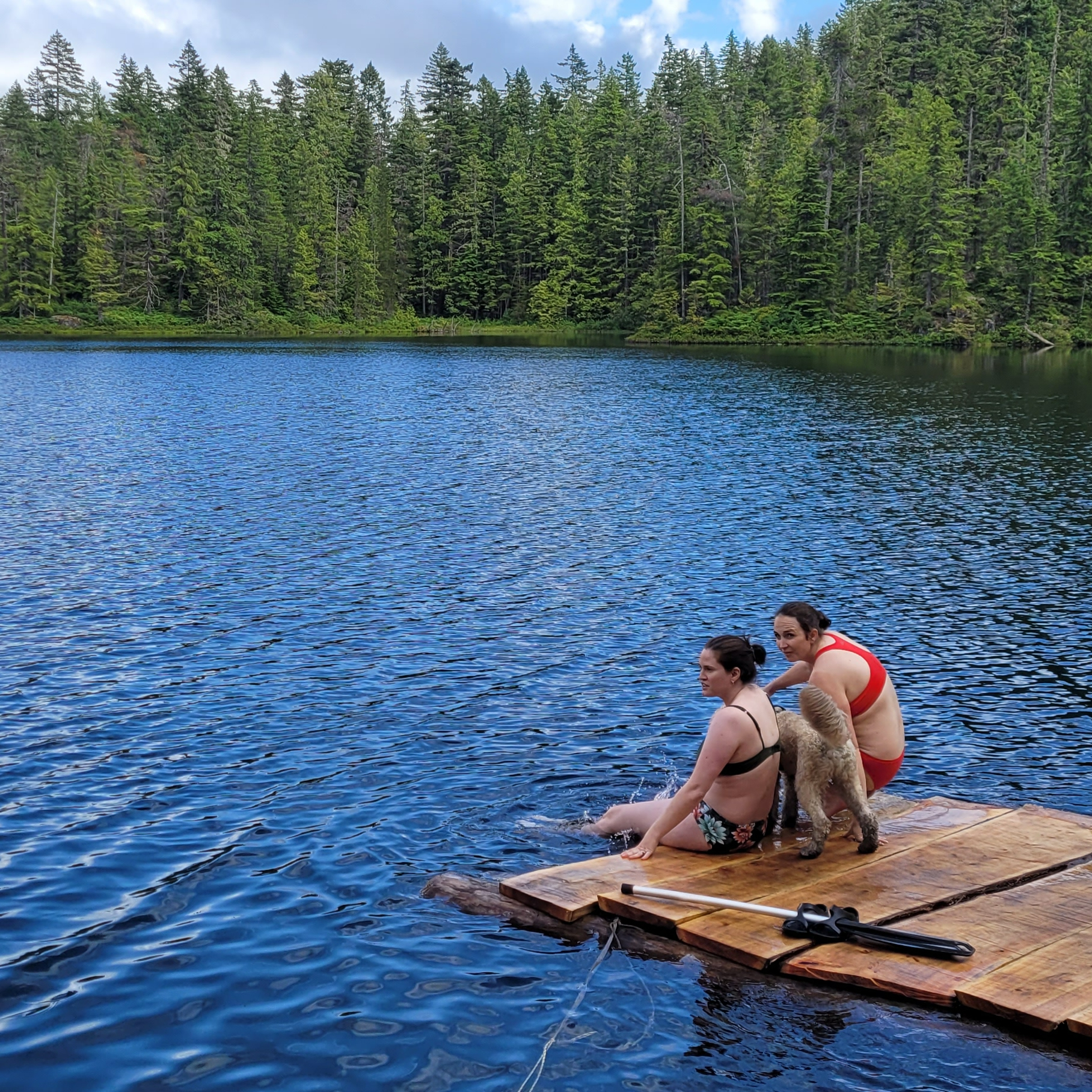
Two women sit in swimsuits on a dock with a dog, looking out at the forest and blue water of Hut Lake Recreation Site, Northwest of Squamish in British Columbia, Canada.

Levette Lake and Hut Lake are free rec sites located in the backcountry near Squamish, off Paradise Valley Road, but the vibe is very different at each lake. Levette is popular among locals and depending if the road is open, you can generally drive right up to the lake to camp. If you want to avoid the crowds, it’s a 5km hike from Levette Lake to Hut Lake. The trail is along rugged road and some hardcore off-roaders will drive all the way to Hut Lake. There’s not a lot of space for tents at Hut Lake and there’s no bear cache or outhouse, but we were the only people at this campsite when we visited on a weekend in mid-July. It’s a great option for a rainy weekend and we enjoyed swimming in the lake. There’s no permit for this site and campfires are permitted if there’s no fire ban.

Juan de Fuca/West Coast Trail

A photo of Mystic Beach on a sunny, blue sky day with the forested cliffs in the background and the waves washing up on the beach on the Juan de Fuca Marine Trail on Vancouver Island, BC.

The Juan de Fuca Trail is a great option for Spring as it’s located along the coast of Vancouver Island and is open year round. However, it’s closed in 2025 due to damage from winter storms, so I’ve opted to include the West Coast Trail as an alternative. The WCT opens May 1 for the season and is extremely popular, so be prepared to book your permit from Parks Canada when they release in Jan/Feb. Both trails are long, multi-day hikes, though it is possible to do shorter trips along the Juan de Fuca trail. If you’re hiking the Juan de Fuca, backcountry permits are required for $10pp per night from camping.bcparks.ca. Both trails are recognized for their coastal beauty and campfires are permitted when there’s no fire ban.

San Josef Bay/Cape Scott Trail
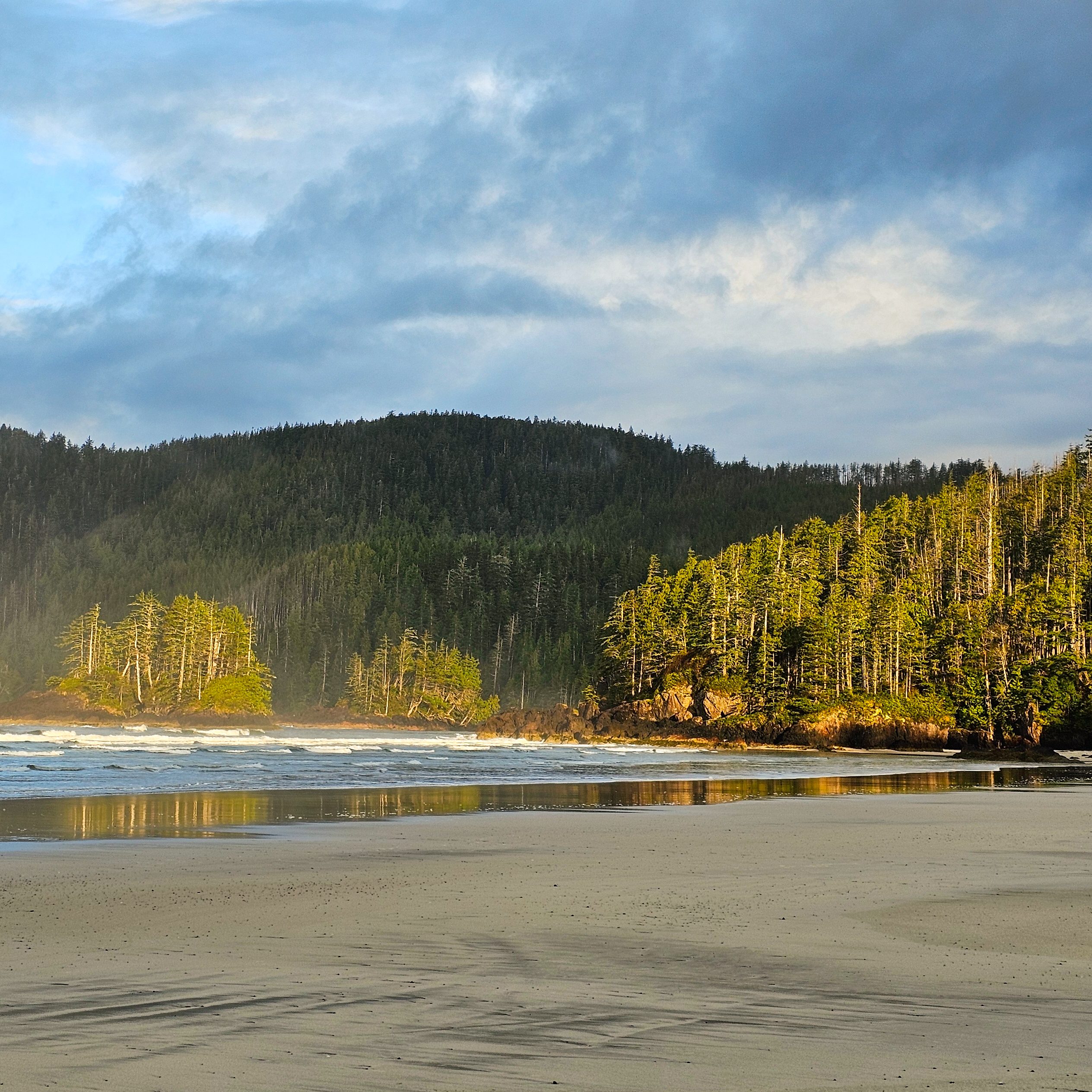
A photo of San Josef Bay on a cloudy, moody day, with the forest lit by the sun and the waves crashing onto the sand in Cape Scott Provincial Park on Vancouver Island, BC.

Given the challenges with the Juan de Fuca Trail this year, visiting San Josef Bay or Cape Scott on the northern part of Vancouver Island is a great alternative! San Josef Bay is recognized as one of the most beautiful beaches in the world and is only 3km from the trailhead along well maintained trail. If you’re more ambitious, there’s a fully developed trail that travels 25km each way to the historic lighthouse at Cape Scott. This trail is more challenging, but still relatively well maintained, with several campsites on beautiful beaches. All campsites have an outhouse and bear cache and you can get a backcountry permit for $10pp per night from camping.bcparks.ca. Campfires are permitted when there is no fire ban. Be prepared to drive along 65km of gravel road to access the trailhead – any car can make the trip, but be prepared to drive slow.

Sunshine Coast Trail

A female hiker / camper sits on a bench on Manzanita Bluff over looking the trees and blue water of the Salish Sea along the Sunshine Coast Trail in British Columbia, Canada.

The Sunshine Coast Trail is a 180km trail through the wilderness of the upper Sunshine Coast. The entire trail will not be accessible until summer, but there are a few options for Spring hiking in the first 50km of trail between Sarah Point and Powell River. You can do the entire 50km section, or you prioritize one of the shorter trail options, such as Manzanita Bluffs, Appleton Canyon, Rieveley Hut, or Little Sliammon Lake. This is a very well maintained trail with facilities at every site. It is free to hike, but I recommend a donation to qPaws if you’re using the huts. The trailhead at Sarah Point is along rugged road, so I recommend booking a trip with the Sunshine Coast shuttle to access the trailhead. Be aware that not all campsites have a reliable water source (or any water source) and plan accordingly.

Cheakamus Lake

Two backpackers stand and stare at beautiful Cheakamus Lake while hiking to the campsite at Singing Creek on a beautiful, blue sky day with mountains in the background in Garibaldi Provincial Park, BC, Canada.

Cheakamus Lake is a popular campsite near Whistler. I include this option with a caveat to check the trail conditions before going. I’ve hiked the trail in May when it’s been completely clear of snow, but I’ve also had to cancel a June trip when the snowmelt was particularly late. It’s a great option for beginners as it’s a mostly flat trail. There’s two campsites on the trail, the first is a 4km hike from the trailhead and the second is a 7km hike. Reservations are required to stay at these sites and release 4 months in advance of your date from camping.bcparks.ca for $10pp per night. Campfires are NOT permitted, but there is an outhouse and bear cache. 

Favourite Hikes in Southwestern BC Part III

I moved to BC in 2014. In late 2016, I wrote a post sharing my top 10 favourite hiking trails in Southwest BC, which I followed up with Part II in late 2018 with 10 more of my favourite trails. I’ve been wanting to write a follow up post for a while, but I’ve hiked well over 100 more trails since my last post in 2018, so it’s a lot a trails to choose from! I decided to break it into two more posts. Part III will cover another 10 of my favourite trails that I hiked between 2019 and 2020, while Part IV will cover 2021 to 2022. Is this a bit excessive? Maybe… but my blog, my rules! I like the symmetry of a top 10 post for every 2 years I’ve been here, so I guess you’ll get Part V at the end of 2024!

Without further ado, here’s a few of my favourite hikes from the 2019-2020 era!

HOP_5389

#10 High Falls Creek – Squamish has a few hidden gems and in my opinion, this is one of them. It’s located about 30 minutes out on Squamish Valley Road and after a quick ascent, boasts beautiful views of both High Falls Creek and the Squamish River. It’s a bit of a scramble on the way up, so I would save it for a fair weather day. The waterfall is the main highlight, but my favourite part is the viewpoint after the waterfall and the peaceful forest walking. Turn this into a loop by walking back the Forest Service Road, which has more incredible views of the Valley! (10km, 500m elevation gain, 4 hours)

DSC00125

#9 Mount Norman – I stumbled upon this short little hike when I kayaked around Pender Island. The formal hike starts just past the bridge to the South Island and it’s a short uphill hike to a viewpoint over Bedwell Harbour and the surrounding Gulf Islands. It’s only 3km round trip, but if you’d like to extend it, take the left branch before you get back to the road and hike down to the Beaumont Campground, which has gorgeous views out over the bluff and along Bedwell Harbour. (3-6km, 300m elevation gain, 1-2 hours)

PSX_20210605_203736

#8 Viewpoint Beach – This hike is located in Golden Ears Park and has been gaining a lot of popularity since the pandemic as a good beginner backpacking trail. Because of it’s low elevation, it’s snow free in the Spring and is an easy 8km round trip hike along Gold Creek to Viewpoint Beach. It makes for a great day trip, or an overnight trip, though it can get busy. I’d recommend hiking in Friday night or early Saturday morning. The trail continues on to Half Moon Beach if you’d like to extend the trip, but it’s not well maintained, so be prepared for a bit of route finding. (8km, 200m elevation gain, 3 hours)

PSX_20210314_180305

#7 Zoa Peak – I’ve attepted Zoa Peak twice now, once in the Fall (where I got smoked out by wildfires) and once in the Winter. For this reason, I’ve never made it past the sub-peak, but I still recommend it as a good all year hike. I think the Coquihalla Summit Rec Area is vastly underrated and Zoa makes for a scenic hike in the summer and a relatively safe snowshoe in the winter. Don’t go past the sub-peak in the winter without your Avalanche Safety Training, but it’s a popular area for ski touring in the winter! (10km, 700m elevation gain, 5 hours)

DSC01099

#6 Elk/Thurston Mountain – Elk Mountain is a popular hike in the summer and especially in the Fall when it gets a pop of colour. There’s a lot of elevation gain, but it’s a relatively simple trail until close to the top, when you pop into the woods for a steeper ascent to the summit. It’s 8km round trip to the Elk Mountain Summit, but 800m in elevation gain, so don’t underestimate it! If you have the time, I recommend continuing on another ~2km as the hike continues along the ridgeline to Thurston Peak. It’s an 16km round trip to go all the way to Thurston, but there’s no view from Thurston Peak, so if you’d like to save yourself a bit of time, just enjoy the ridge walk for a few kilometers and then turn around. From Elk Mountain onwards are beautiful views of Chilliwack Valley and Mount Baker. (8-16km, 800-1000m elevation gain, 4-8 hours)

#5 Pinecone Burke Provincial Park – Pinecone Burke was one of my best pandemic discoveries. When we weren’t allowed to leave our neighbourhood in 2020, I spent a lot of time hiking around Eagle Mountain, Minnekhada, and Pinecone Burke. Pinecone Burke is located right on the northern edge of Coquitlam (in the Burke Mountain area) and it’s BC Parks least funded park. As a result, it has no infrastructure (not even a toilet) and gets few visitors. It’s mostly frequented by mountain bikers, but there are some truly lovely trails in this park! My personal favourite is to extend the Woodland Walk up to Sawblade Falls, but the Coquitlam Lakeview Trail is also reasonably popular. The park is primarily forest views, so it’s a perfect rainy day or Spring hike. You can hike the Woodland Walk year round, but the Lakeview Trail usually has snow until June. (8-14km, up to 700m elevation gain, 2-6 hours)

PSFix_20201005_141057

#4 Brew Lake – Brew Lake is another relatively unknown trail off the Sea to Sky Highway, just before Whistler. Even I discovered this trail by accident when the Rainbow Lake trailhead was closed due to an aggressive bear. We decided to hike to Brew Lake instead and spend the night in early Fall and were rewarded with beautiful lake views and an empty trail. We didn’t know what condition the road was in, so we parked at the Whistler RV Park and hiked the full 17km round-trip trail. But if you have the proper vehicle, you can considerably shorten the trail along forestry roads. If you have time, extend the hike a little further to Brew Hut, which I still have to return for. (17km, 900m elevation gain, 9 hours)

DSC08281

#3 Minnekhada Regional Park – Minnekhada Park was my other pandemic discovery and remains one of my favourite places near the city for a leisurely hike. The highlight of the park is High Knoll, which is known as the “Quarry Rock of Coquitlam” and has beautiful views down to the Pitt River and Pitt-Addington Marsh. Part of the park burned down in 2022, but it recently re-opened and is great for bird watching along the lakes. (5-8km, 200m elevation gain, 2-3 hours)

DSC06277

#2 Cape Scott and the North Coast Trail – This is where I stretch the boundary of “Southwestern BC” just a little bit. Cape Scott and the NCT are at the far northern tip of Vancouver Island, but I feel this was one of the defining hikes I did between 2018 and 2020. We hadn’t planned to do this hike, but when our Assiniboine trip got cancelled during the pandemic, we decided to hike 85km along this intense and remote coastal trail instead. This trail is a real challenge and is not for the faint of heart. Be prepared for an incredibly slow pace and knee high mud, but boy is it a rewarding hike. One of my most memorable. (85km, 5-7 days)

DSC07622

#1 Howe Sound Crest Trail – This is another incredibly challenging trail that tested my endurance when I did it in 30 degree weather, but it’s a trail I think about often. It was on my bucket list for 3 years before I finally did it over the course of 2 nights and was able to soak in every inch of this scenic trail. The trail provides the opportunity to summit the West Lion, Mount Harvey, and Mount Brunswick. I didn’t summit any of them, but I camped beneath the Lions and lounged in vibrant Brunswick Lake instead. I’d like to return one day for each of these summits, but this was a trail where it was more about the journey than the summits. (30km, 1500m elevation gain, 2-3 days)

Continue to Part IV.

Cape Scott and North Coast Trail: Part II

Continuing on from Part I, after an eventful journey to the trailhead and our first night on the trail, we still had 5 more days of fun ahead of us!

We never made it to Nel’s Bight on Day 1 and still had 8km to go to the beach, so we decided to aim for it as our lunch spot on Day 2. We weren’t in too much of a rush in the morning, but we made good time taking down camp (ended up being our fastest day packing up), and had a speedy start, hiking the 4km to the trail junction in just over an hour. At the junction one trail branches off to Nel’s Bight and Cape Scott, while the other continues on the Nissen Bight and the rest of the North Coast Trail. We’d be heading there eventually, but first we wanted to see Cape Scott.

DSC06013

It’s another 4km from the junction to Nel’s Bight and we continued on with ease. The trail was reasonably muddy on Day 1, but it was surprisingly clear on Day 2. I would say this is the easiest section of trail in the park (except perhaps for the trail to San Jo). The trail continues through the woods with the first landmark being detritus from one of the old Cape Scott settlements. Cape Scott was originally settled by the dutch in the late 1800’s, but it was too remote and the government wouldn’t subsidize any services because they didn’t want to encourage the colony, so it was abandoned. It was settled again in the early 1900’s and peaked at a community of around 200 individuals. There’s not much left now, but you can see some old debris from the community that settled at Hanson’s Lagoon.

On the way to Hanson’s Lagoon, you pass across a large open marsh area. There is a small road that continues on to the lagoon, but our path took us around the lagoon to Nel’s. It’s very green and lush, but the clouds decided to drop a quick bout of rain on us as were passing through and we ended up running most of the way across to the safety of the trees. Though of course once we reached the trees it had pretty much rained itself out, so Brandon joked we must smell bad and nature was just treating us to a quick shower.

IMG_0357

We made it to Nel’s Bight before noon, which Brandon affectionately refers to as Tent City. Along the way we ran into one of the Rangers that lives on Nel’s and he told us the previous evening (saturday night), he’d estimated there were 100 people camping on the beach, so the name was definitely accurate. Fortunately Nel’s is a giant white sand beach with lots of space for tents, so there’s no concern about finding a campsite. It’s the most popular beach in the park because you can hike there in a single day and it’s a popular stopping point for people visiting the lighthouse. Most people camp at Nel’s and day hike to Cape Scott. Since we’d stopped at Fisherman’s River, we had a different destination in mind. Guise Bay is located 4km past Nel’s Bight and it was Brandon’s favourite beach in the park, so we decided to lug our packs the extra 4km.

It was an excellent choice! We stopped at Nel’s for lunch and it was extremely windy, sending huge crashing waves along the beach. It was a little drizzly, so we sent up a tarp but didn’t stay too long. The drizzle didn’t last long though, so it was a nice 4km stroll to Guise. You head back into the woods briefly at the end of Nel’s and then come out at Experiment Bight – another long sandy beach. It’s also perfect for camping, but there’s no water source or facilities so I don’t think it gets used very much. After Experiment Bight you go back into the woods, this time crossing the peninsula to Guise Bay. Because Guise Bay is on the opposite side, it doesn’t get as much wind and the water was a lot calmer. I immediately liked it and with only 1 other tent on the beach, we got a great campsite without the crowds.

HOP_3872

It was overcast most of the day, which I think is super common at Cape Scott, but the rain stayed away for the rest of the day and it did slowly get clearer as the day progressed. We set up our campsite and decided to continue on to finish the rest of the trail to the lighthouse as a day hike. We left our backpacks behind and stuffed our pockets full of snacks. From Guise Bay it’s ~5km round trip to the lighthouse, which is located just outside the park boundary and is a government facility.

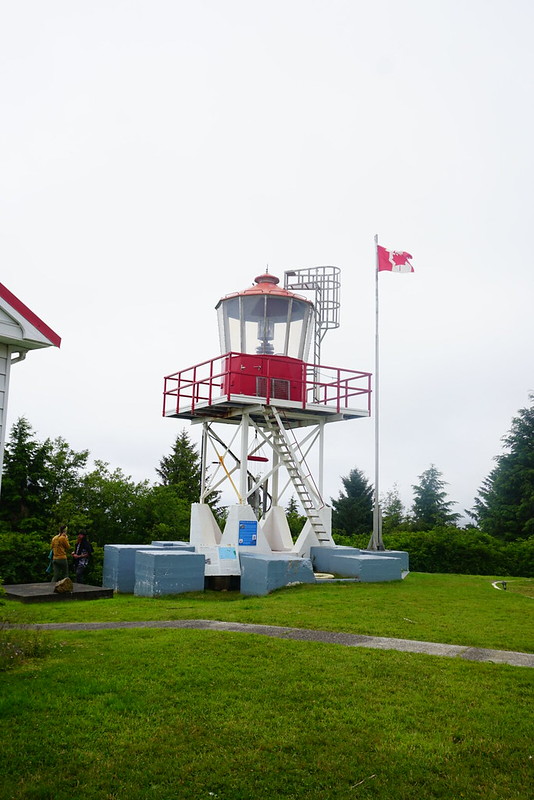
I didn’t love the walk to the lighthouse. My feet were starting to hurt after so much walking. I didn’t have any blisters or hot spots, but it was just a general throbbing on the soles of my feet from being on them for too long. Emily was also having a rough time. She has awkwardly shaped pinky toes and she always gets blisters, so she was battling both sore feet and a blister. It was cool to see the lighthouse though. There’s not a whole lot there – it’s just a wire frame tower and what looked to be 3 houses and an office building. I’m not sure if all the houses are occupied, but we talked to one of the inhabitants and he said he’d been living there for the last 20 years! Apparently he gets a supply drop once a month and that’s what he lives on. It was neat but I can’t imagine living so remotely, especially in such a foggy place (sounds like home lol).

DSC06069

We topped up our water bottles from the tap at the back of one of the buildings (filtered water yay!) and then headed back to Guise. Emily was a bit out of it when we got back – her feet were hurting her a lot and in retrospect, I suspect she may have been a bit dehydrated – so she took a nap. I helped Lien start re-hydrating dinner and Brandon went in search of the water source on the far side of the beach. Lien followed him about 10 minutes later and I was treated to a little show from the other side of the beach. Our timing with collecting water was really good because we didn’t realize the water source was only accessible when the tide was low. I watched as Lien zigzagged his way across the pinch point and disappeared into the woods. He came back out with our water bladders about 10 minutes later and as soon as he reached the pinch point again, he suddenly turned around and took off running back towards where Brandon was still collecting more water. He popped in and out of the woods and ran back across the beach and over the pinch point and was followed moments later by Brandon in a desperate attempt to not get his feet wet! Fortunately we all kept dry and we had collected enough water to see us through the evening and the next day.

DSC06050

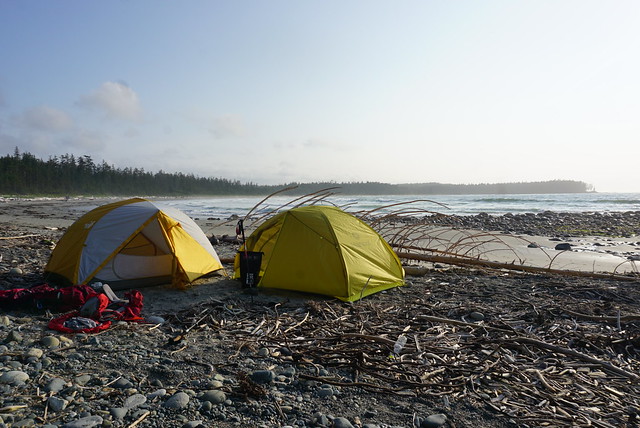
It had been a bit of a mauzy day, both weatherwise and in spirit. Including the lighthouse, we’d trekked 17km, so we were feeling pretty tired. Brandon, our eternal optimist, decided to get a campfire going and I can definitely say the evening improved a lot from there! We got supper started and coaxed Emily out of the tent. The wind dropped down, the clouds lifted, and the fire warmed us all up! It ended up being one of my favourite nights on the trail. We had chili for dinner and then spent the rest of the evening lounging around the campfire listening to music on Brandon’s speaker. The sun never really peaked out, but the clouds did break-up and treat us to a lovely pink glow over the beach as the sun was going down. It was the last week of June and we were further north, so the days were extremely long. We found ourselves staying up so late every night because it would be after 11 by the time it would finally get dark.

DSC06085

On Day 3 we awoke to a bit more of the same. Again, it wasn’t raining and it was brighter than the previous day, but still pretty cloudy. It was on the cooler side, but it was good weather for hiking. We packed up camp and started back the way we’d come, repeating our 4km hike back to Nel’s Bight and then another 4km to the junction. Just before we left the beach we heard some guys coming down the trail yelling into the woods. We figured they were just making their bear calls because they were the first ones on the trail (we regularly yell into the woods to keep the wildlife away). We were right, but it was because they’d actually seen a bear. They were on their way to the lighthouse and came on to the beach fully armed. One guy had his bear spray held a loft and they were both sporting knives. Apparently a bear had followed them for most of the trail from Experiment Bight to Guise Bay and while he didn’t seem aggressive, they weren’t taking any chances. The bear finally spooked off when they got to the beach, but since we were going back the way they’d just come, we had a nice sing-a-long on the way back – no sign of the bear.

Along the way we ran into some more rangers who were doing maintenance along the trail. They asked us about our plans and we told them we were going all the way to Shushartie Bay. They informed us they were the North Coast Trail maintenance crew and while they had conducted their initial assessment for the year, they hadn’t done any maintenance to date because of COVID. They warned us a lot of the brush needed to be cut back and that some of the trailheads might be difficult to find if the buoys were knocked down, but that the trail was still doable. So with that ominous warning we set off towards it.

DSC06108

After re-tracing our steps 8km to the junction, we had to go 2 more kilometres to Nissen Bight. It was a long day on the trail because we wanted to go all the way to Laura Creek, a total of 17km with our packs. I always like to do more hiking before lunch than after, so we pushed 10km to Nissen Bight before stopping for lunch. My feet were definitely throbbing by the time we reached the beach and I wasn’t looking forward to another 7km after lunch. But we pushed the thought from our minds and tried to enjoy our lunch. Nissen is another big beach, pretty similar to Nel’s in that there’s lots of camping space and big waves crashing along the beach. I had exhausted my egg salad wraps, so I was on to cheese and salami wraps with dehydrated hummus. The hummus worked out really well, so it made for a filling lunch, though it got a bit repetitive as I ate it for the next 3 days.

Nissen Bight marks the transition from the Cape Scott Trail to the North Coast Trail. Cape Scott has been a well developed trail for ages and sees tons of visitors, while the North Coast Trail is a new trail that was only created in 2008. From Nissen Bight it’s 43km to Shushartie Bay and the water taxi that would bring us back to Port Hardy. We had 3.5 more days of hiking and 3 nights to complete it. I wasn’t too thrilled to be back on my feet, but I was excited to start exploring this less busy and more rugged part of the trail. We trekked another kilometre across the beach as the sun finally started to peak out from behind the clouds and then started our North Coast Trail adventure! To continue, read Part III.

DSC06164