Overnight Hikes for Beginners Near Vancouver

Last week, I shared a Beginner’s Guide to Backpacking for those looking to make the transition from hiking to backpacking. A large part of trip planning is selecting a good trail, especially as a beginner, so I’ve put together a list of trails near Vancouver that I think are appropriate for new backpackers.

There are literally hundreds of trails within a 3-hour drive of Vancouver and it can be difficult to know where to start. My biggest recommendation is to keep it simple by choosing easy trails and campsites with access to basic facilities. It can be an adjustment getting used to carrying a large backpack, so pick shorter trails with less elevation gain, and a first-time trip can be made a lot simpler with access to an outhouse, bear cache, and cooking shelter. See my Guide for more information on how to select and book campsites.

Here are some of my preferred hikes for beginners, in order of level of difficulty (easiest trips first):

3 Brothers Mountain (Buckhorn Campsite)
Region: E.C. Manning Provincial Park
Distance: 4km each way
Elevation: 200m
Reservation: yes ($10pp, per night)
Amenities: outhouse, bear cache, tent pads, cooking shelter, picnic tables
Season: July-September
Drive time from Vancouver: 2.5 hours
Trip Report: found here

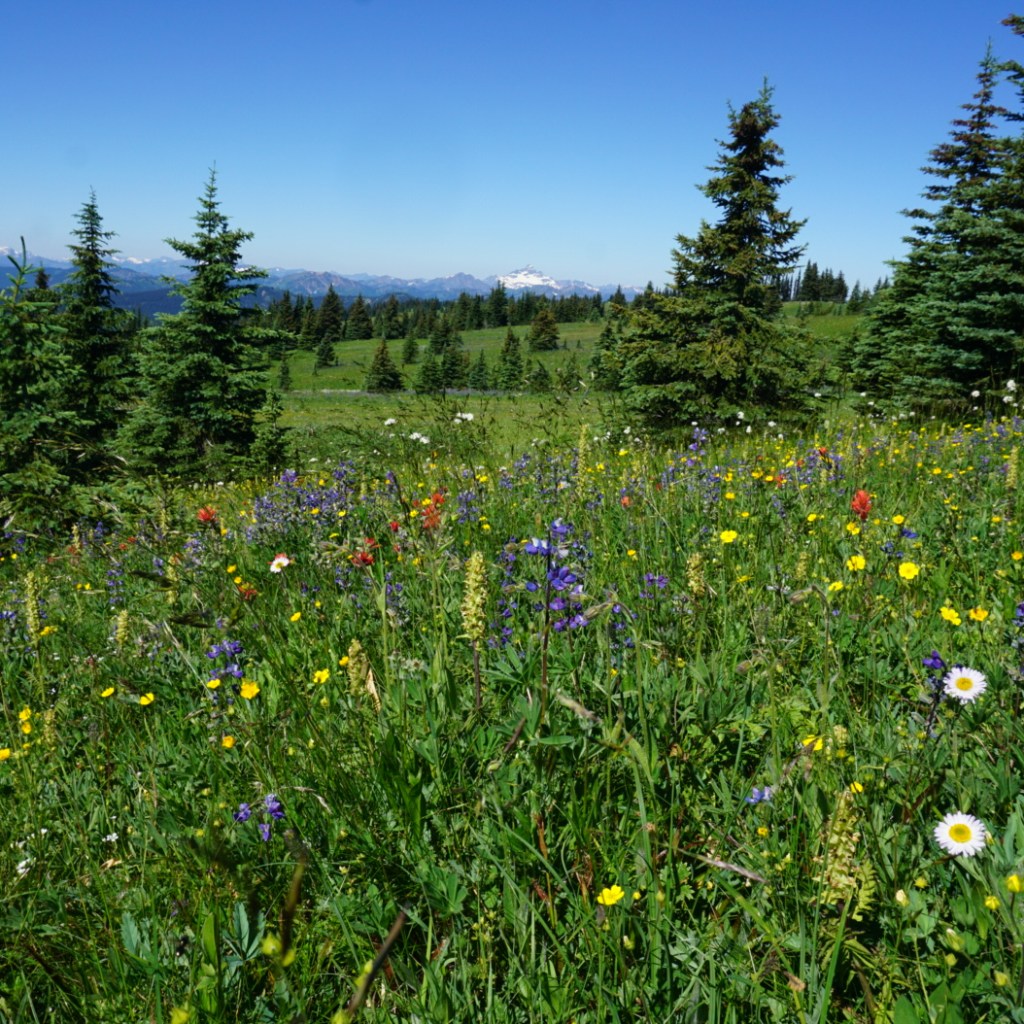
Buckhorn Campsite is my pick for best experience for beginners. Manning Park is my favourite park near Vancouver and I think this hike is ideal because it’s short, has a lot of amenities, and is absolutely beautiful. You have to drive up all the way up Blackwall Road to get to the trailhead, so most of the elevation gain is done in the car. You get to enjoy brand new tent pads and a gorgeous cooking shelter, surrounded by alpine wildflowers. The reservation system for this site is new in 2024. This campsite is ideal for 1 or 2 nights and is a great base if you want to day hike to 3 Brothers Mountain on your second day.

Cheakamus Lake
Region: Garibaldi Provincial Park
Distance: 4-7km each way
Elevation: 250m
Reservation: yes ($10pp, per night)
Amenities: outhouse, bear cache
Season: June-October
Drive time from Vancouver: 2 hours
Trip Report: found here

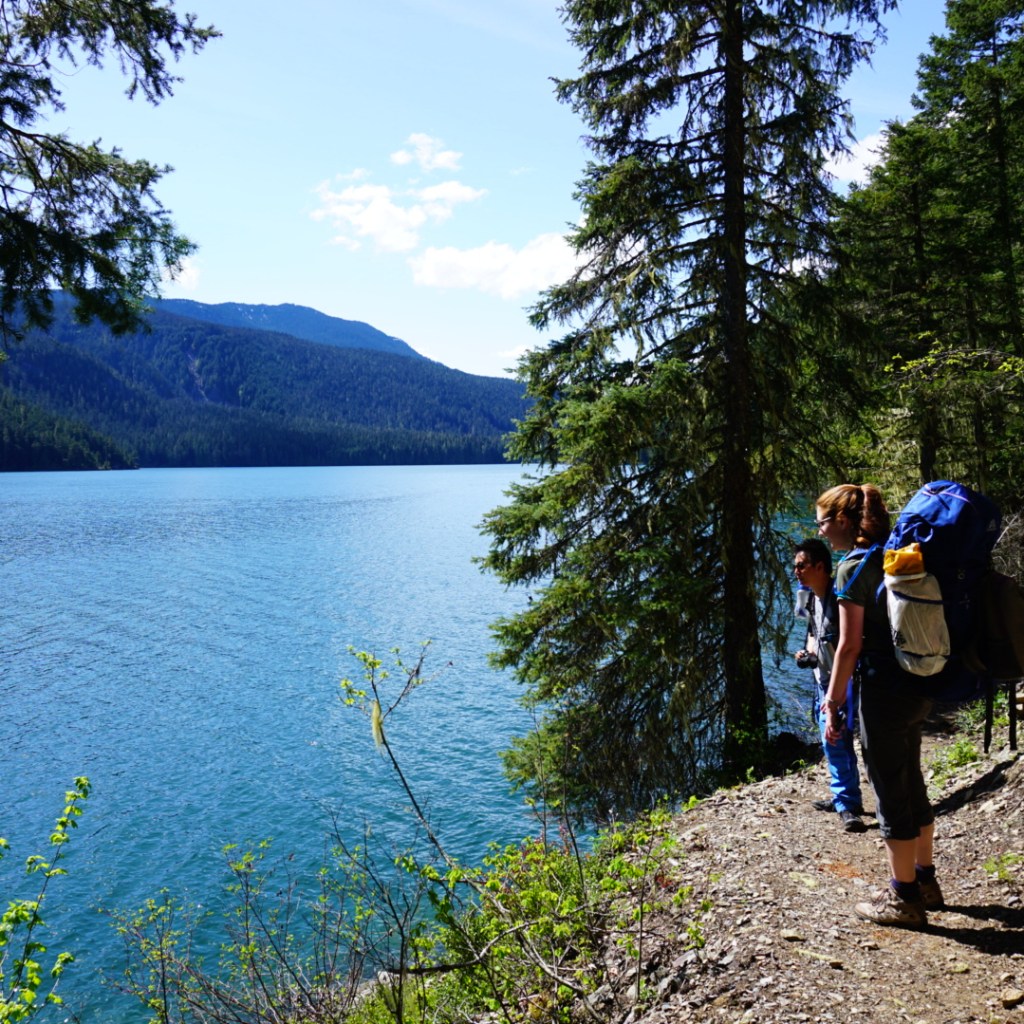
There are two options for Cheakamus Lake, the first campground is called Cheakamus Lake and is located 4km from the parking lot along mostly flat terrain. The second campground is called Singing Creek and is located 7km from the parking lot, and is still mostly flat terrain. Either campground is a great option for a 1 night hike. If you’d like to do 2 nights, camp at Cheakamus Lake and do a day hike to Singing Creek and back on your second day. Be diligent with bear safety on this hike as there is a history of bears in this area.

Viewpoint Beach
Region: Golden Ears Provincial Park
Distance: 4.5km each way
Elevation: 200m
Reservation: no (permit is $5pp, per night)
Amenities: outhouse, bear cache
Season: May-October
Drive time from Vancouver: 1 hour
Trip Report: found here

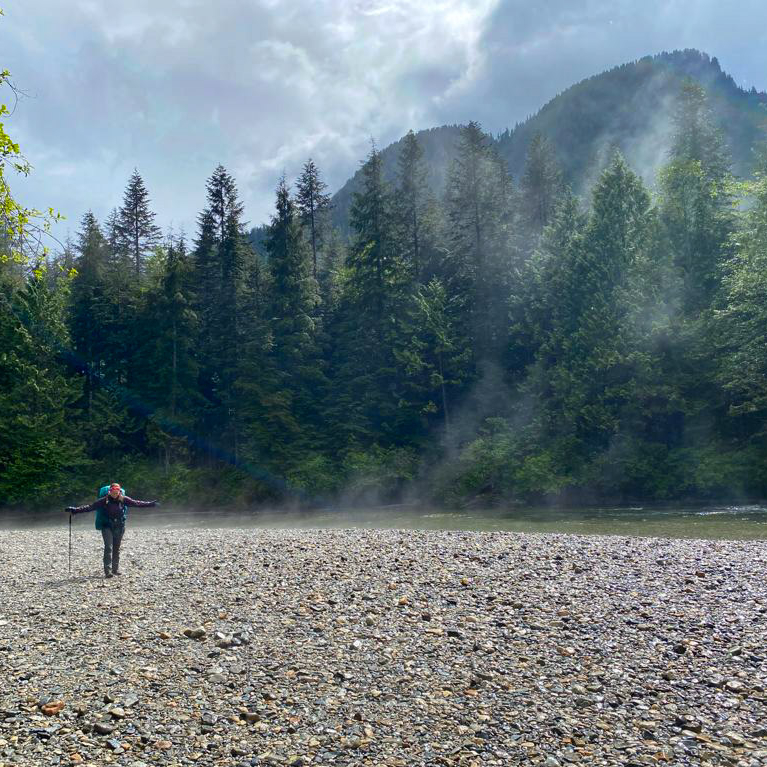
Viewpoint Beach was the first place I ever took my girl guides and it’s a great option for beginners. It’s a short and easy walk from the parking lot to the campground and there is an outhouse and a bear cache available. However, because there are no reservations, I recommend to leave earlier in the day to secure a campsite. You can camp on either side of the river, but don’t attempt to cross the river. The bear cache and outhouse are located at Viewpoint Beach. The other side of the river is called Hikers Beach and can be accessed by crossing the large wooden bridge 500m before Viewpoint Beach. You can extend this trip to 2 nights if you’d like to do a day hike up to Alder Flats.

Tetrahedron Park

Region: Tetrahedron Provincial Park
Distance: 3-6km each way
Elevation: 250m
Reservation: yes ($15pp, per night, paid to the Tet Outdoor Club)
Amenities: sleeping hut, outhouse
Season: June-October
Drive time from Vancouver: 1 hour + ferry
Trip Report: found here

Tetrahedron Park is a really unique experience and is a great option if you don’t have a tent yet. Tenting is not allowed in this park and all users must stay in one of the huts. There are 4 huts, but I recommend either Bachelor Cabin or Edwards Cabin for beginners (though Bachelor Cabin is often used by families, so please be respectful of children). These sites are managed by the Tetrahedron Outdoor Club. First, join the Tetrahedron Outdoor group on facebook and do a search for your dates to see how many other people are already going then (the cabin sleeps ~12), then post your booking on facebook and pay on the website. This location is great for multi-day trips, as you can do a day hike up to Mount Steele from Edwards Cabin, but the mountain may have snow until July.

Lindeman Lake
Region: Chilliwack Provincial Park
Distance: 1.5km each way
Elevation: 225m
Reservation: no (permit is $5pp, per night)
Amenities: outhouse, bear cache, tent pads
Season: May-October
Drive time from Vancouver: 2 hours
Trip Report: found here

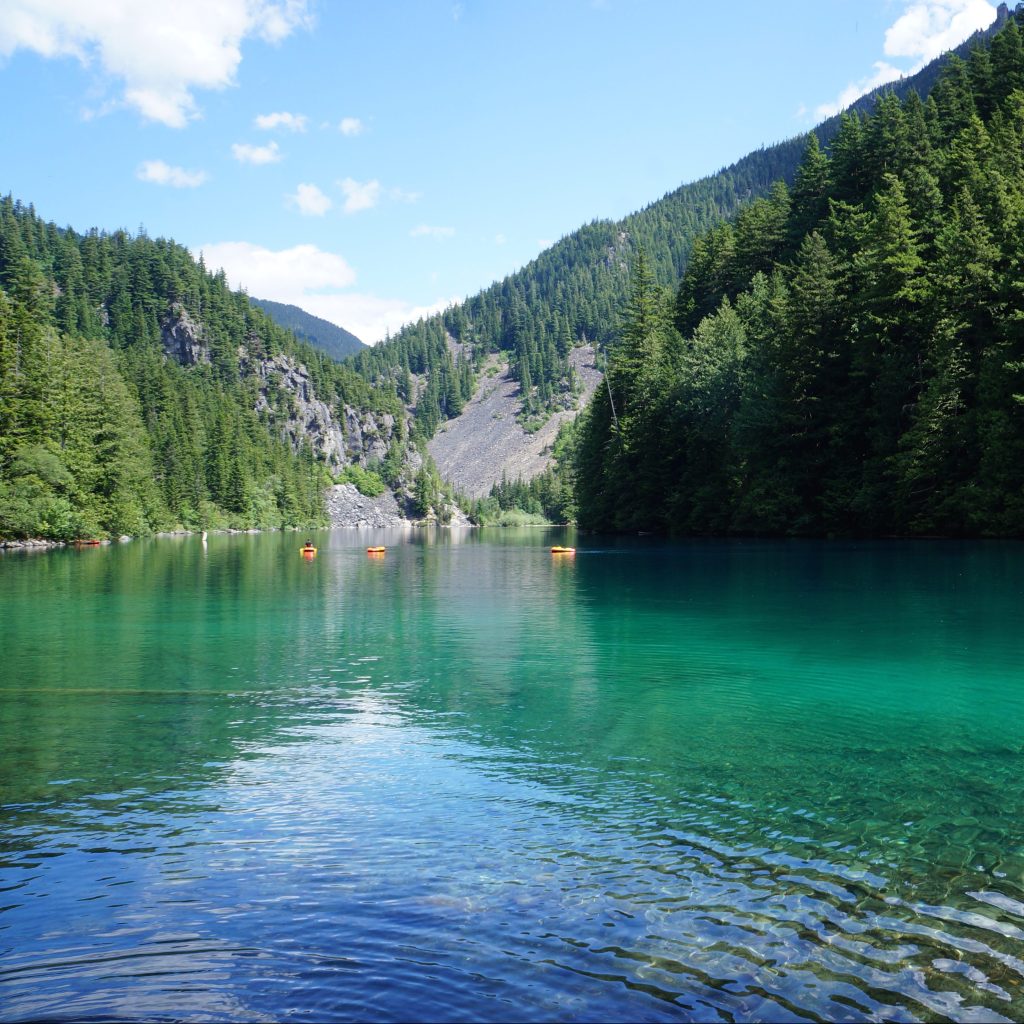
Lindeman Lake is a very popular trail, so if you opt to camp here, I recommend going very early or visiting on a week day. There are a small amount of tent pads and room for tents, but it can get very crowded. It’s an attractive hike because it is very short, but there is significant elevation gain over a short distance, so be prepared for a steep hike. Sites are not reservable, but you do need a backcountry permit, which can be obtained 2 weeks before your trip. This is a great option for a two night trip if you want to do a day hike up to Greendrop Lake, but you may encounter snow past Lindeman Lake until July.


In my opinion, the first 5 hikes on this list are the most ideal for true beginners planning their first ever overnight hike. They are shorter and have less elevation gain. The rest of the hikes on the list are starting to get more advanced in that they are longer and have more elevation gain, but are still good options for newer backpackers and second trips. I recommend these trips to people who are are already experienced hikers; those new to both hiking and backpacking should stick with the hikes listed above.

Joffre Lakes

Region: Joffre Lakes Provincial Park
Distance: 5.5km each way
Elevation: 400m
Reservation: yes ($10pp, per night)
Amenities: outhouse, bear cache
Season: July-September
Drive time from Vancouver: 3 hours
Trip Report: found here

Joffre Lakes is another insanely popular hike and you will have to be diligent in booking exactly 4 months ahead of your planned dates to secure a permit. However, it’s popular for a reason and is actually a relatively straightforward trip for the incredible views. Be prepared for a climb, but it’s not too steep, so it just requires a little bit more effort for a great reward.

Fairview Loop Trail

Region: Upper Sunshine Coast
Distance: 6-12km (customizable)
Elevation: 250-400m
Reservation: no (recommend a donation to qPAWS)
Amenities: sleeping hut, outhouse, bear cache, picnic tables
Season: May-October
Drive time from Vancouver: 2 hours + 2 ferries
Trip Report: found here

We’re definitely starting to get a little more technical with this trail. The Fairview/Rainy Day loop is located in Saltery Bay, directly after you get off the ferry. To save money, park at Earl’s Cove and walk on the ferry as you don’t need your car on the other side. This loop trail is part of the Sunshine Coast Trail and has two huts on it, Fairview Hut and Rainy Day Lake Hut. It’s 6km (250m gain) to Fairview hut (counterclockwise) and 4km (350m gain) to Rainy Day Lake hut along the road (road is recommended as it’s significantly longer and steeper to take the trail). You can do the trail as a loop to visit both huts (12km total), but this is a more challenging option as there’s 700m of climbing to do both huts. The huts can get very busy, so you should bring a tent in case they get full.

Elfin Lakes

Region: Garibaldi Provincial Park
Distance: 11km each way
Elevation: 600m
Reservation: yes ($10pp, per night)
Amenities: sleeping hut, tent pads, outhouse, cooking shelter, bear cache, picnic tables
Season: July-September
Drive time from Vancouver: 1.5 hours
Trip Report: found here

Elfin Lakes is the longest trail on the list, so you should be prepared for ~4 hours of hiking with your backpack. However, I include it because the elevation gain is spread out over the distance, so it’s never too steep and it’s a very wide and easy trail. This is another hike that books up fast, but you can stay either on a tent pad or in the hut, but they have separate bookings, so make sure you book the correct one. The views from the campsite are some of the best of any hike. Watch out for bears on this hike, especially in the Fall.

Garibaldi Lake
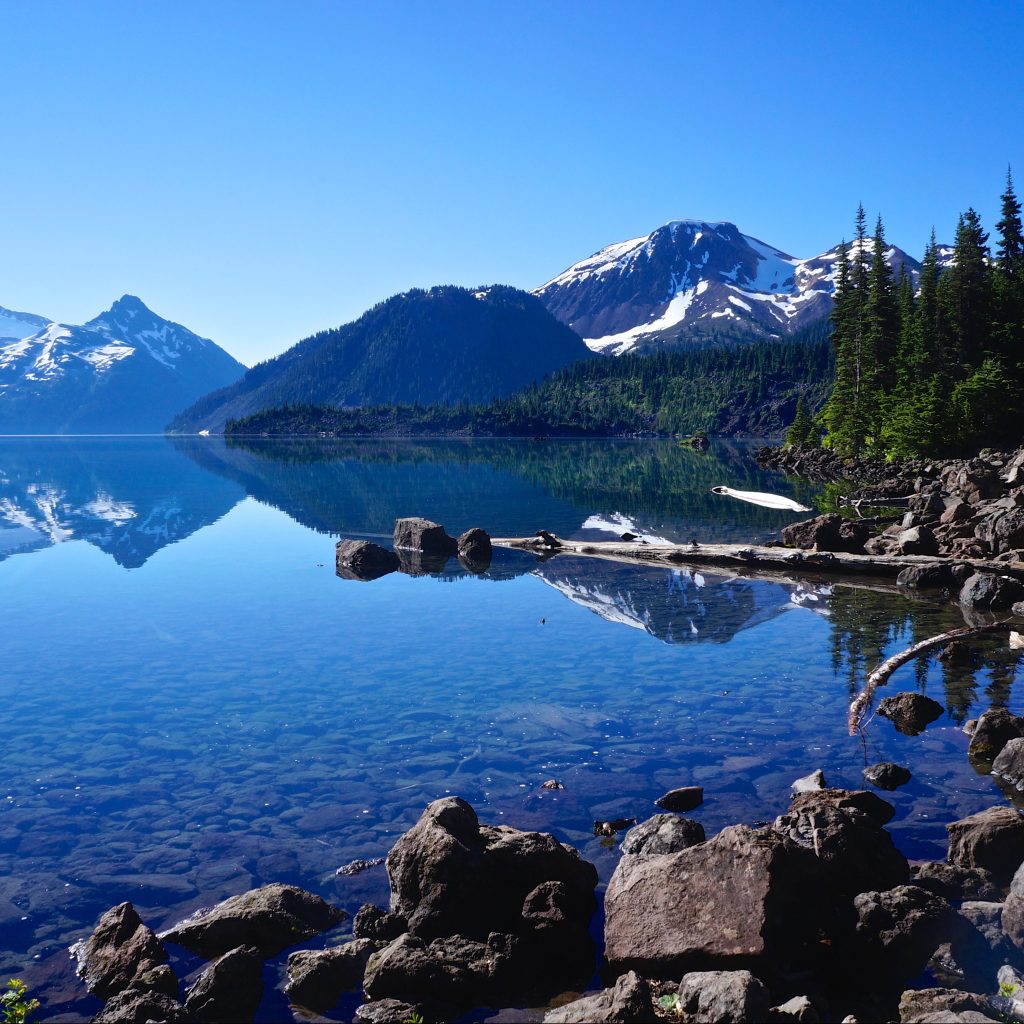
Region: Garibaldi Provincial Park
Distance: 9km each way
Elevation: 800m
Reservation: yes ($10pp, per night)
Amenities: outhouse, bear cache, cooking shelters, picnic tables
Season: July-September
Drive time from Vancouver: 2 hours
Trip Report: found here

This is the final hike on the list. It has the most elevation gain and you should be prepared for 3 hours of hiking up switchbacks in the first 7km. The trail is not technical, but it is very boring until you reach the lake. However, if you like amenities, it’s a great option. You can camp at either Garibaldi Lake or Taylor Meadows, which have composting toilets, cooking shelters, and picnic tables. I recommend this trip only for those who are already experienced hikers.


There are 3 more trails I want to note because they are easy trails, but I didn’t include them in my main list because they don’t have outhouses or bear caches. There are enough other challenges to contend with on your first hike, so I don’t recommend these. But once you get comfortable with digging a cathole and making your own bear caches, these are good options. However, please note, these are all on crown land, so while there’s no permit required, the sites also don’t receive any maintenance, so please respect the natural environment, leave no trace and pack out everything, including your toilet paper!

Falls Lake – a 1.5km hike on the Coquihalla Summit Rec Area. It’s totally flat and is a great option for a beginner snow camp as well.

Levette/Hut Lake – you can drive up to Levette Lake (which can get very busy), and it’s only another 4km to Hut Lake, which doesn’t get many visitors.

Semaphore Lakes – a 2.5km hike, but this one is a bit steeper (300m gain). There are limited trees for a bear cache here, so a bear canister is recommended.

If you’re looking for more advanced trips, check out my posts on Thru Hikes and Loop Hikes.

Relaxing in Santiago

This is my last post about my Patagonia trip! It was a great trip, but I this point, I feel like I’ve been writing about it forever, so I just wanted to do a quick wrap up about Santiago before I move on to some more BC related activities.

To be honest, before the trip, I didn’t really care about Santiago. It was a convenient place to leave from, but I would have preferred to have more time in Buenos Aires rather than Santiago. I ran out of steam planning the trip, so I didn’t plan anything for Santiago and left everything to Seth for our last 3 days.

20240307_111107

But I ended up loving Santiago! I’m hesitant to say I liked it more than Buenos Aires, because I only saw a small portion of Buenos Aires, but I enjoyed Santiago so much more than I expected. This is partially due to the fact that we had no strict schedule, so we slept in and ate lots of good food and drank lots of wine and pisco sour. There is definitely some petty street crime in Santiago and we were advised to keep our phones physically attached to us by a cord because phone theft is super common. But overall, Santiago is a very vibrant city. It has a lot artwork all over the city and it was surprisingly gay (which is a compliment!). We saw a lot of pride all over the city and many openly gay couples, which I just didn’t expect to see in South America, so it was a really nice surprise.

As usual, we started with a walking tour of the city to get our bearings and we learned a lot of really useful history. Apparently Chileans have a pretty “jaded” attitude in general, and have a history of being agnostic about religion and bitter about politics. They were under a dictatorship for 20 years in the 70’s/80’s, and as a result, Chileans are frequent protestors. They have a strong sense of justice and will march in the streets for whatever they believe in, which we definitely witnessed.

20240307_202442
20240306_184523

Our tour guide gave us a detailed history of Santiago, which I won’t share for fear of mis-remembering some of the finer points. But what was striking was Santiago’s economic situation. Chile’s currency is super stable compared to Argentina, and for a long time Chile was doing really well, but Santiago has hit a rough patch since the pandemic. 3.5 million people have migrated to Chile during the pandemic, but there’s been limited economic growth. All the shops in the downtown had been shuttered and in their place, a lot of street vendors have popped up with desperate people looking to make money.

20240306_161440
20240307_181125

It’s not really related, but our guide also highlighted how Santiago is somewhat lacking in a culture of its own. Santiago was conquered by the Incas and the Spaniards; followed by an obsession with the French (which is really obvious in the architecture), so a lot of their culture is just borrowed from elsewhere, which contributes to the sense of bitterness and indifference from the locals. At least, this was my tour guide’s POV, it could be that he is just the one who’s jaded! Feel free to counter this argument!

Over our 3 days in Santiago, we visited a lot of attractions. We took the funicular up to the top of San Cristobal Hill and we visited both the National History Museum (wouldn’t recommend), and the Pre-Columbian Art Museum (would recommend). Museums are a bit tricky because a lot of them are only in Spanish, so plan accordingly.

PSX_20240403_200923
20240306_111040

Our favourite part of the city was St. Lucia Hill, which was conveniently located right next to our hotel. Our tour guide referred to it as the “gem of Santiago”, and we would definitely agree! It’s just a hill/park in the middle of the city, but it has all kinds of fascinated infrastructure scattered around it. The most obvious thing is to hike up to the top of the hill, where there is a tower lookout and a great view, but if you have the time, just let yourself get lost in the space, because there’s all kinds of different pathways and structures. It’s a fun place to explore and we ended up going there twice.

Another small attraction that I really liked was Alice’s Room, which is a small Wonderland themed cafe. It’s super popular, so we were lucky to get in without a reservation one morning. You really go to this place for the decor, the food is great too, but they’ve completely committed to the theme and it’s just fun to look at all the little details. Highly recommend if you have the time!

PSX_20240408_110622
PSX_20240408_103826

Otherwise, our last visit was to the Concho y Torro winery. It’s a very popular winery and even I have seen some of their wine in liquor stores in Canada, most notably, Casillero del Diablo. The tour was fantastic and quite different that other wine tours I’ve been on. The most memorable part is that the winery has a tasting vineyard where they have planted all 24 different varieties of grapes that they use to make wine. Now obviously, it’s not ideal to plant all 24 varieties of grapes in one place, but they don’t make wine with these grapes, they just allow guests to wonder the vineyard and taste any of the grapes that they want. I’ve never actually done this and was surprised that a lot of the grapes actually tasted pretty good. It was cool to wander around and try chardonnay and merlot and pinot grapes.

20240308_172556

But the coolest wine fact I learned in Chile was about the carmenere grape. Carmenere is a grape that the world thought to be extinct for a long time, but was randomly found growing in Chile in 1994. So the wine was revived and you can now get it only in Chile. We sampled a few different Carmenere’s in Chile, and bought some from Concho y Torro to take home with us.

So overall, it was a great end to the trip! Seth planned most of our activities, which was a nice break for me and I enjoyed the relaxing aspect of this part of the trip. We were on the go early and often for our hiking adventures, so it was nice to have a proper rest in Santiago before returning home. Patagonia was definitely a memorable experience for me and I feel certain I will be back to explore more mountains and maybe one day (hopefully), we might make it to Antarctica.

That’s all for now, thanks for following along on our journey!

PSX_20240408_104358
20240308_124914

Torres del Paine Backpacking Trip Part IV

Continued from Part I, II, and III. The O-trek can only be hiked in the counterclockwise direction. I thought this was the case for the W-trek as well, but I learned that lots of people hike it clockwise, meaning they start their trip with the towers. I’m really glad we started from Paine Grande, because it meant that we reached the towers on our last day, which is a high note on which to end the trip!

Hiking to the Towers for sunrise requires a very early rise. I wanted to be hiking by 4am, so we got up at 3:30am and the campsite was already bustling with other campers and day hikers. I know a lot of hikers weren’t able to get a reservation for Chileno, so it’s not uncommon for people to hike all the way from the Campsite at Centrale to see the sunrise. Many of the day hikers were taking a break at the picnic table before continuing up to the towers.

Seth is definitely not a sunrise hiker, but I was pretty much buzzing with excitement all night about how fortunate we were to experience the towers on a cloudless day. It was pitch dark when we set out; I carried our shared pack and thanks to our early start, we were able to move at a leisurely place. It’s not the most fun to hike in the dark, but I honestly have some really fond memories from this hike. The night sky was incredible and it felt really special and romantic to hike up a mountain by starlight.

20240304_065344
20240304_074737

The first two kilometres are mostly in the trees and aren’t too steep. Eventually you reach a junction where the ranger station and outhouse are located, and from there, it’s all uphill. It was steep, but honestly, I found it easier than at Lago de los Tres. The main downside is that the trail is incredibly busy. It kind of felt like we were on a pilgrimage with hundreds of other hikers all following the same route (like the many hikers who had come before us).

The trail gets a little confusing just before the towers. You reach a certain point where you can start to see the peaks rising out of the darkness (it’s magical!), and I think people get overexcited and start climbing the rocks directly towards them. It’s a big boulder field, but you’re supposed to follow the trail, as some sections are roped off for safety reasons. I had to focus on following the trail markers rather than the people and we made it to the top with lots of time to spare.

PSX_20240316_194531
PSX_20240408_100139

It was very busy at the lake, but there is a lot of room to spread out. Unfortunately, a lot of people were ignoring the roped sections, but we stuck to the sanctioned area. We found a nice place near the water and sat in the dark to wait for sunrise.

Similar to Lago de los Tres, once you start hiking, it’s freezing! I took off my sweaty clothes and put on every other layer I’d brought with me. You’re not allowed to cook in the park, so we couldn’t bring our pot to make breakfast and ate some protein bars instead. I was so cold I decided to finally test out my emergency bivvy, which I’ve never used. It definitely helped trap a lot of heat, but it has its limitations, so it was a good reminder that it would be a long cold night if I ever have to survive outside with only a bivvy.

Finally, the sun started rising on the other horizon. At first, the daylight only illuminates the towers, but once the sun comes up, they turn a very vibrant orange. It lasts for around 30 minutes and it was every bit as magical as I hoped it would be! I felt so content sitting there watching it. I feel like there’s always one thing you miss on a big hike – either you skip a summit, or the weather is bad – but I felt like I got to experience everything that I wanted in Torres del Paine, and I left the park feeling very content.

20240304_073822
PSX_20240408_095825

Once the sun fully came up, most people left the lake and it was pretty empty. We hung around for a while longer, taking more photos and warming up. The sun makes a huge difference in the temperature and we layered down before starting our hike back. I didn’t want to feel rushed at the towers on our last day, so I had booked the last bus on the day, which didn’t leave until 8pm. This was definitely a mistake as we ended up spending 4 hours at the visitor centre, but it made for a more leisurely day.

We hiked back down to Chileno, past a steady stream of hikers still coming up, and had our breakfast at the campsite. We hung out for a bit, chatting with some other hikers, before starting our hike out of the park around noon. From Chileno, you do have to hike back up the canyon to Windy Pass, but it’s only ~1km and then it’s all downhill for the rest of the day. At this point, most people who were doing the towers were already beyond Windy Pass, so it was a pretty empty trail down to the base.

20240304_090025
20240304_124016

It was the hottest day on the trek and we switched out to shorts and t-shirts for the first time! The hike to Centrale is gorgeous as you continue back down the valley. The trail is completely exposed, so you have views the entire way. From Chileno to the towers and back to the base is ~15km, but we were fast on the last section.

There’s a huge hotel at the trailhead and then you walk another kilometer parallel to the road to get to Centrale Campground and the Visitor Centre. From there, you take a shuttle bus to the Park Entrance, where you can catch your bus back to Puerto Natales. We debated trying to get an earlier bus, but apparently they only leave at like 3pm and 8pm. We just missed the 3pm shuttle, so we decided to stick around the Visitor Centre and got beer and empanadas to pass the time.

It was a long time to hang around, but we befriended some other hikers who were also killing time before starting their hike the following morning. They were quite young and I found it very entertaining listening to stories about their adventures and missteps. The one thing I didn’t love about Torres del Paine, or Sendero al Fitz Roy, is that I felt we didn’t really befriend that many people.

20240304_133915
20240304_133001

I love meeting people hiking and I’m pretty good at making friends. When I hiked the Milford Track in New Zealand, and Mount Assiniboine and Lake O’Hara in Canada, I felt like I met so many interesting people on the trail. It’s definitely possible at Torres del Paine, but I think our combination of staying in refugios and cooking our own meals (plus the fact that Seth was quite sick for the first 2-3 days), didn’t lend itself that well to connecting with people. This was exacerbated by the fact that you can pay for wifi, so a lot of people were just hanging around on their phones in the refugio. I’m sure many people have a different experience, but this was my particular experience. It may have just been a timing thing.

But overall, it was an incredible experience. Like I said, I felt very content when I left the park. I feel that we made lots of good decisions in how we structured our trip and we got incredibly lucky with the weather. I’m sure I’ll be back to Patagonia again someday, but at this time, I feel more of a draw to return to Los Glaciares over Torres del Paine. I think I need to return for the Huemel Circuit, and one day, Antarctica!

20240302_111932
20240304_133952