Hiking Mount Doom

I was so nervous about hiking the Tongariro Alpine Crossing. After the disaster that was Fox Glacier, I was really weary about hiking in less than ideal weather and I really wanted to enjoy the hike. The shuttles said they would be going ahead for our second attempt, but it was calling for a cloudy day with rain in the afternoon and temperatures as low as 0 degrees. I wasn’t sure if it was even worth doing the hike if we weren’t going to see any of the views, but I was incapable of walking away from a hike to Mordor.

In the end we decided to go for it and I went on the most over-prepared hike of my life. I must have been traumatized from my experience on the glacier because I packed SO MUCH extra clothing and food, it was a little out of hand. Even though I snowshoe all the time in Canada, everyone had me freaked about about the “cold” temperatures. One part of me was like, “wear two pairs of pants for the cold!” while the other part was saying, “you snowshoe in below zero temperatures all the time and you never wear two pairs of pants!” I did wear the extra pair of leggings, which was a mistake and I ended up ditching them at the first outhouse we came to, so needless to say I was desperately over-prepared.
DSC04359

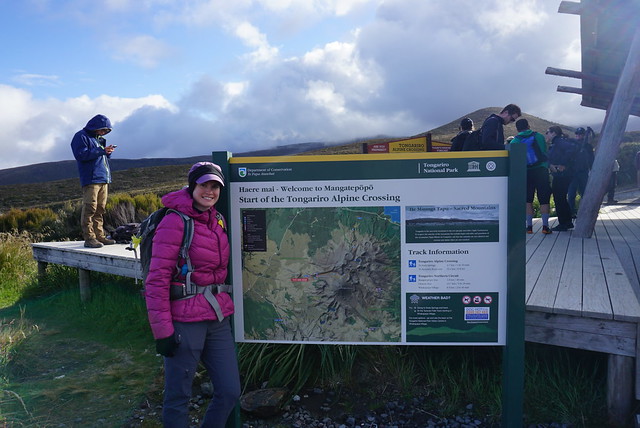
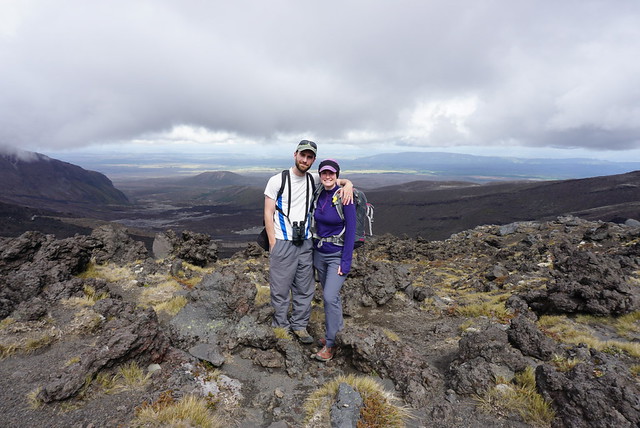
But none of that ended up mattering because we had the most awesome hike! The Tongariro Alpine Crossing is a 20km hike that goes right through the national park, crossing over Mount Ngauruhoe, past the red crater, and around Mount Tongariro back to the road. I hiked a volcano once before in Costa Rica, but this was totally unlike anything else I’ve ever done. It was super overcast when we started and we couldn’t see any of the 3 volcanoes in the park, so I wasn’t super optimistic. But the landscape is still pretty neat. We started hiking through some low shrub areas and as we got closer to Mount Ngauruhoe, the landscape started to become more barren and interspersed with volcanic rock that had been catapulted in all directions from a previous eruption.

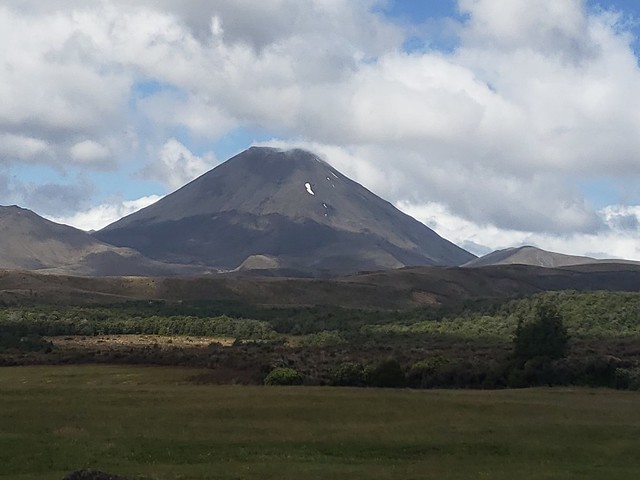
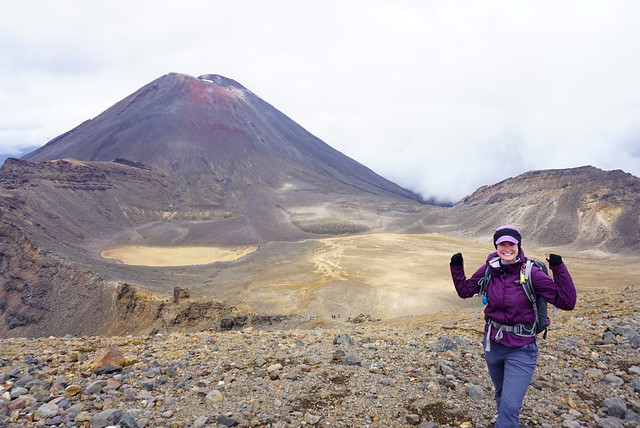
We were really lucky and the clouds started to lift just as we were approaching our first view of Mount Ngauruhoe, also known as Mount Doom. It’s unreal because you can actually see the lava flows coming down the side of the mountain where they eventually became too viscous or cool to go any further. The volcano is still active and you do feel somewhat like you’re tempting fate by even attempting to hike through – especially so soon after the eruption at White Volcano, which occurred 2 days before we flew to New Zealand. All our friends and family told us to “have fun and maybe stay away from any active volcanoes”, to which we politely nodded and pretty much ignored since the whole center of the North Island is all active geothermal wonders.
DSC04456

The two islands are pretty interesting in that they’re located so close to one another and form 1 country, but geographically have nothing to do with one another. The South Island is all about mountains and plate tectonics, while the North Island is entirely volcanic. There were no shortage of warnings as you approach the volcano though. Apparently on average someone is airlifted out of the park by helicopter once a week, so it’s obviously a dangerous place. Though the risk seems to be from adverse and unpredictable weather conditions and people underestimating the difficulty of the hike (it’s 20km long!) versus any risk from volcanic activity. But the signs all warn to turn around if you’re struggling or if its so cloudy you can’t see the volcano (fortunately we could).

The trail loops around the base of the volcano to Soda Springs, the only freshwater source we saw for another 15km, before starting to climb up the side of the volcano. It’s an easy walk until that point, but then you finally start climbing, which most people hate but I was excited for. So many of the hikes we’d done had been valley hikes and I was excited to finally climb something! The views as you climb up Mount Ngauruhoe are awesome looking back at the trail you’ve come from. Eventually you branch off the volcano and hike over the ridge next to it and start down into the South Crater.

DSC04472

This is when the scenery really changes and I felt like I was hiking on Mars. There’s absolutely no vegetation and it’s just a straight shot across the red soil of the crater to the base of Red Crater. So you do get a respite from the climbing before starting up the side of the Red Crater to the highest point on the trail. This was probably my favourite part of the trail. Before you get to the Red Crater, you have to climb back out of the South Crater. From the South Crater ridgeline, we had an awesome view looking down into a very barren and mordor-like scene. Looking back we had a perfect view of Mount Doom, which the clouds had finally totally cleared off. Then you start hiking the Red Crater and have no idea where you should be looking because its so steep and the views are amazing on all sides.

The Red Crater was very different again. It’s hard to get an idea of the scope of the crater until you actually hike down the other side and look back at it, but it’s exactly as its name suggests, a giant red crater that’s still active and smells of sulphur with steam literally coming up out of the ground. The whole area is steaming from various vents and despite how cold it was up there, it was easy to find little hot spots.
DSC04536

Our timing really couldn’t have been better. We got to the top for one last view of Mount Doom before the clouds ate it up again, and then rushed over to get a look at the little alpine lakes on the other side. There’s several brilliant green lakes and giant blue lake in the distance. We added a layer and enjoyed our lunch looking down at the lakes from the top.

I can understand why they make everyone hike in the same direction on the track. it’s a steep hike down the other side of the crater on a scree slope that I would hate to have to hike up. We did some exploring around the little lakes before crossing the bottom of yet another crater to climb up to Blue Lake. This is where you get the best view looking back at Red Crater, which really puts into perspective what you just climbed. It clouded in pretty fast at Blue Lake and finally started to drizzle, so we didn’t spend much time there and started to move on as we were still only a little over halfway through the hike.

DSC04596

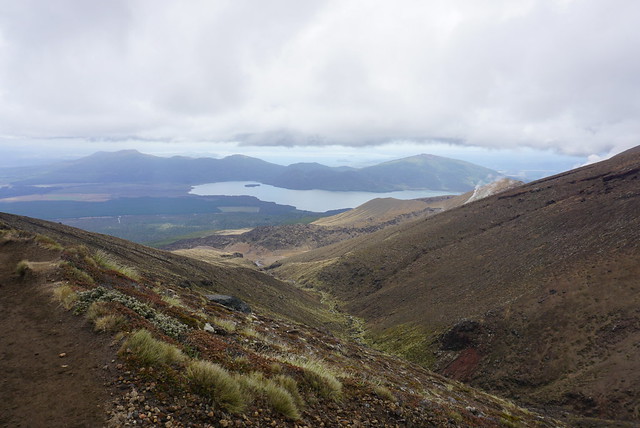
As soon as you leave Blue Lake though the landscapes change again entirely. Hiking the volcanoes and craters really felt like being in a wasteland, but as soon as we rounded the corner of the lake and started hiking down the other side, it was like coming back to Earth. I still wouldn’t exactly call the vegetation ‘lush’, but it sure felt that way after hiking across a volcanic desert. From there the last 8km are just winding back down the side of the mountain to the highway. There’s a great view of Lake Taupo and you can still see steam coming from the Te Mari Crater, which last erupted in 2012. There’s chunks of volcanic rock spewed across the landscape, which is a good reminder of the danger still associated with the park. The Te Mari Crater erupted in 2012, putting holes in one of the huts on the Tongariro Great Walk. Fortunately no one was injured, but only because the eruption took place in the middle of the night in winter. There was no prior warning, so had it been any other time of year, there almost certainly would have been fatalities.

DSC04651

It’s definitely a sobering reminder and it seems lucky they’ve avoided disaster in the park up until now. One of the placards by Mount Ngauruhoe told the story of a school group that was hiking the volcano in the 1970’s when it suddenly started erupting, cutting off the way back and forcing them to have to evacuate over to the Red Crater. Fortunately nothing of the sort occurred on our journey. The rain disappeared as quickly as it had started and we had an uneventful hike down to the end of the trail. We felt really accomplished when we finally reached the end and had our car waiting for us!

I’m so glad we weren’t too jaded from the glacier experience to try this hike as it ended up being one of my favourite parts of the trip! We had a lot of fun goofing around on the trail, re-enacting the Lord of the Rings and taking pictures of me pretending to me Frodo, Sam, and Gollum at various parts of the trail. It’s not a hike to underestimate, but it’s also not a hike to miss!
DSC04677

Welcome to the North Island

Abel Tasman had a bit of a weird feel to it because it was our last major stop on the South Island and after more than 3 weeks on vacation already, it kind of felt like it should have been the end of the trip. But we still had almost 2 weeks to go to explore the North Island, so it was far from over!

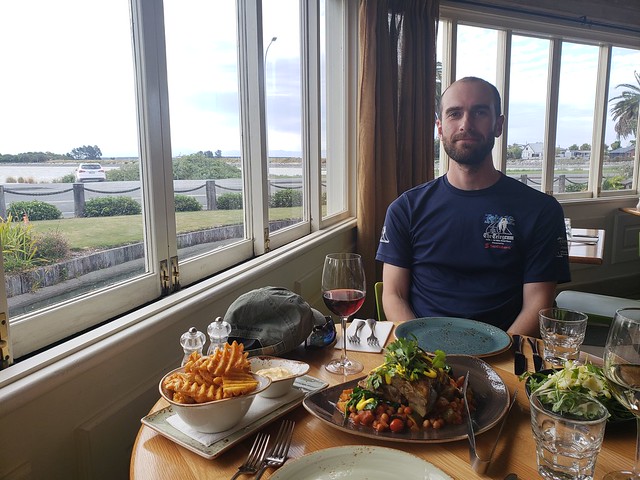
We stopped in Nelson for 1 night and stayed at this really quaint villa-type hotel. We pampered ourselves with a huge in-suite jacuzzi and went out for a really nice meal at a nearby restaurant. Since there’s sheep everywhere, Seth wanted to try lamb at least once while we were there, so we had a delicious lamb platter and stuffed ourselves silly!

20200104_185406

It’s a short 3 hour drive to Picton to catch the inter-island ferry. We stopped at Middle Earth Wines to pick up some novelty wine and had lunch looking out over the bluffs. Then we boarded our 3-hour ferry ride to Wellington, which was an interesting experience. I feel like we tend to shit on BC ferries, but honestly I would sail BC ferries 7 days a week rather than have to take the inter island ferry again. It’s a huge boat that can fit a lot of cars, but it is the least efficient operation I can think of. It’s a lot bigger than any of the ferries I’ve been on in BC, but it only loads one car at a time, so you have to be there super early and it pretty much takes them a full 90 minutes to load the boat. This isn’t helped by the fact that people then have to funnel up to the lounge through one entrance, which creates a ton of pedestrian traffic while cars are still trying to drive on.

Once on board it becomes evident that they pack the boat to capacity and there is literally no where to sit. We walked around for ages before finally finding two bar seats in the cafeteria. It appears we were lucky though as I saw other people sitting on the floor to eat their lunches. I didn’t get sea sick on the ferry, but it does have a sustained sway through most of the sailing which made me too nervous to do anything besides talk to Seth (normally I would read or write). It did have a gorgeous view of Marlborough Sound as you leave Picton though and I ran up to the deck a few times to take photos as we passed through the strait.

DSC04270

About halfway through the sailing we got a bit of entertainment when we were informed that the crew would be practicing an emergency scenario on board for “drill purposes only”. It was hilarious to watch the crew running around pretending there was a fire in the cafeteria, assembling at the muster points, preparing the lifeboats, and then eventually evacuating the ship. I’m sure it was mildly unsettling to non-english speakers who couldn’t understand the constant “for drill purposes only” messages on the loudspeaker, but we got a kick out of watching the staff (and Seth got a free lunch for volunteering for the lifejacket demonstration). Apparently they do the drills once a week!

We blew through Wellington pretty fast, almost literally because it’s a super windy city. We met up with a friend that we met on the Milford Track who lives there and she took us to Zealandia to do a bit of a birdwatching. It’s another of New Zealand’s many eco-sanctuaries (maybe the biggest one?) and we had a renewed vigour for spotting birds because there were a ton of new species on the North Island that we hadn’t seen yet. Seth was hoping to see a North Island Saddleback, which we unfortunately didn’t see, but we did spot a Tuatara and a ton of other new birds.

20200106_092003

From there it was a windy drive to Tongariro National Park. The North Island was when we really got into the Lord of the Rings locations. I regret not going to the Weta workshop in Wellington, but Seth wrongly assumed I would know about it and sadly I did not. Anyways. Tongariro is the location of Mount Doom and Mordor and I was stoked to do the 20km Alpine Crossing.

The whole park is basically a volcanic wasteland with 3 major volcanoes in the park. The biggest of the three (and the largest active and tallest volcano in New Zealand) is Mount Ruapehu. Whahapapa Village is located in the middle of the park and the village is defined by the infamous Chateau Tongariro, which appears to sit right at the base of the massive volcano and housed many of the Lord of the Rings cast while filming. We’re not quite classy enough to stay there, but we did manage to score a place right next door at the Skotel Alpine Resort. It was around 4pm when we rolled into the hotel, but it’s located right at the trailhead to Taranaki Falls, so we decided to do a short hike to see the falls and do a bit of exploring around.

20200106_162450

There’s some really awesome photos of Mount Ruapehu from it’s last major eruption in 1994-1995 and it has continued to be active sporadically throughout the 2000’s, causing its volcanic activation code to be elevated from green to yellow (I don’t really know what that means, but it doesn’t sound good). It’s pretty barren hiking around the park, but a lot of vegetation and low shrubs have grown in the area. It was a nice hike out to the falls. We had a quick glimpse of Mount Ngauruhoe, the second largest volcanic most well known for its depiction as Mount Doom, on the way in, but otherwise we didn’t see much on our hike because it had clouded in. Unfortunately it was also quite cold and we bundled up a lot.

We returned to our hotel to learn that our shuttle for the Alpine Crossing the next day had been cancelled. The temperature forecast along the trail was 0 degrees at the summit and was calling for 80km/h winds, so the park restricts the shuttles from running in those conditions. I was really disappointed at this announcement because I felt the weather was stymieing us at every turn. Granted we still managed to fit in all the activities we wanted to do, but I was constantly having to move things around and I’d had enough of the repeated disappointments.

DSC04323

I was a little weary after my experience on the glacier to try and rearrange things for the hike, but I’m a persistent person and I decided to try anyways. Our next stop was going to be Taupo, but I hadn’t booked anything for it yet. It’s only an hour away from the park, so we decided to make a joint booking for jetboating and white water rafting and hope that we’d get a second chance at the Alpine Crossing a day later.

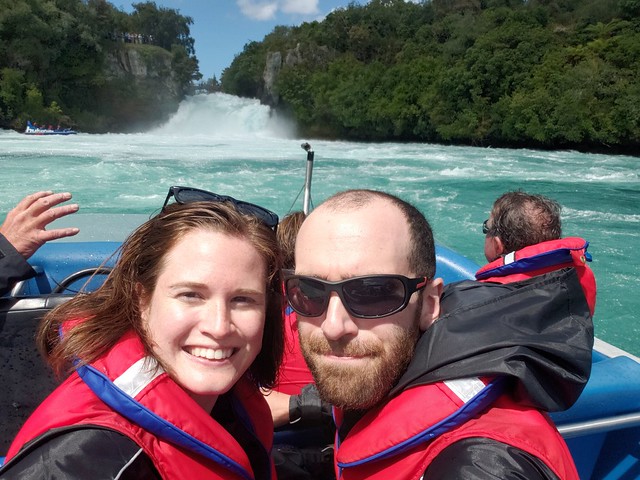
Seth was skeptical about jet boating. New Zealand is basically the birthplace of any extreme sport you can think of and is a paradise to adrenaline junkies. Jet boating is one of their claims to fame and is basically just riding around in a really fast boat with a big engine. I was curious to try it, so we drove out to Huka Falls to make a go of it in the morning. Both of us ended up loving it!! Seth describes it as a “water roller coaster” and you basically just do all these crazy donuts in the water. The driver pretends like he’s going to crash into all this debris in the river, but then does a crazy serve at the last second. It helped that our boat had a bunch of kids in the back who were having the time of their lives screaming at every turn. They really captured the spirit of the activity. The pictures look hilarious though because we didn’t have a full boat and Seth and I both wanted to sit on the edge, so we ended up sitting on opposite ends of the boat and everyone who sees the picture jokes you’d never believe we were on our honeymoon sitting so far apart!

20200107_111559

I’m a sucker for white water rafting and will take any opportunity to go, so I was really excited about rafting the Tongariro River. It has Class III rapids, which I’ve since decided are no longer quite adventurous enough for me (I like the thrill of the class IV rapids a little more), but I still had a great time on the river. We had a fun boat with two other young couples from Ireland and Sweden, and our guide was from BC. The river runs through a canyon for much of the rapids, so it’s really scenic and I liked how frequent the rapids were. We didn’t have to do that much paddling to propel us between rapids.

GOPR3511_1578645412042_high

It was also wild how many Blue Ducks we saw on the river. Visiting the Tongariro River you’d never think they were endangered. The trapping programs have really been working and the rapids are just crawling with them. After the drought of blue ducks on the Milford Track, is was fun to see so many on the trip.

We finished the day off with a walk down to Taupo Lake and enjoyed a few beers along the waterfront. We re-booked on another shuttle for the next day and went to bed praying for a good day for hiking in the morning.

Kayaking the Abel Tasman

It was a long drive to Abel Tasman after our stressful day on the glacier, but we split the driving between us and finally pulled into our accommodations around 9pm. We did some rearranging of our packs to make sure all our gear was in waterproof bags and then hit the sack to catch up on sleep for the next busy day ahead of us.

Abel Tasman National Park is well known for its gorgeous golden sand beaches, which you can visit either on foot, by kayak, or by water taxi. When I’d initially started researching Abel Tasman, I’d intended for us to just chill out in some kind of beach lodge for 3 days, but there’s actually no roads in the park, so we decided to make a pretty forgiving (read, slow) itinerary to see the park by kayak. Kayaking has been our newest hobby in Vancouver, so we were excited to try it out in New Zealand.

DSC04098

You can kayak the park either on a guided tour or you can self-explore in rented kayaks. We’ve gotten pretty comfortable on the water and it’s a lot cheaper to rent, so we opted for the self-guided option. We rented from Abel Tasman Kayaks and they run a pretty smooth operation, starting with 2 hours of classroom/on water kayak training before letting you embark on your own. Then they loaded us into a water taxi with our kayak and shuttled us up to the end of the park so that we could spend the next 3 days kayaking back to base at our leisure.

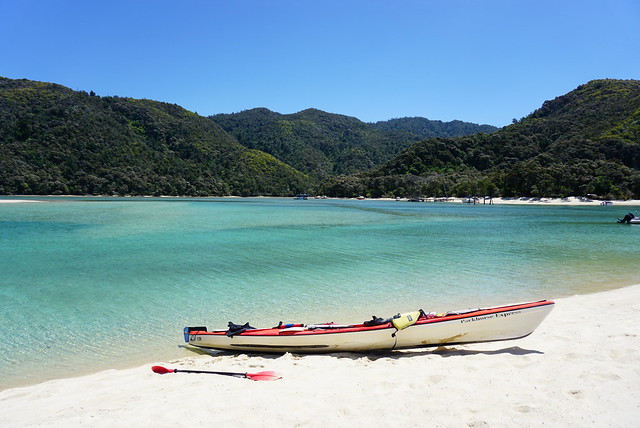
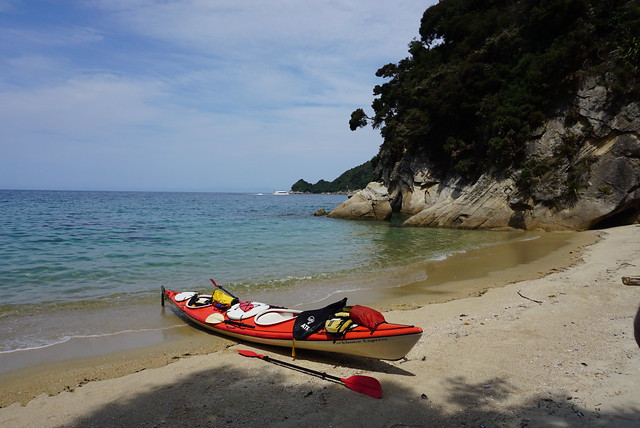
We always rent single kayaks in BC and we weren’t too impressed when they forced us to rent a double kayak for “safety” reasons. I was pretty skeptical because everything I’ve learned about kayaking in Canada has reinforced that it’s a lot easier to rescue someone when you have two boats. But ATK insisted that because of the wind in the area, its safer in one kayak – after having now completed the trip, I’ve decided I agree with them. Our kayak was called the “Packhorse Express” and with good reason. It was a BIG kayak. A lot wider than I was used to and extremely heavy. We struggled to lift it with 2 people even when it was empty, but more on that later!

DSC04037

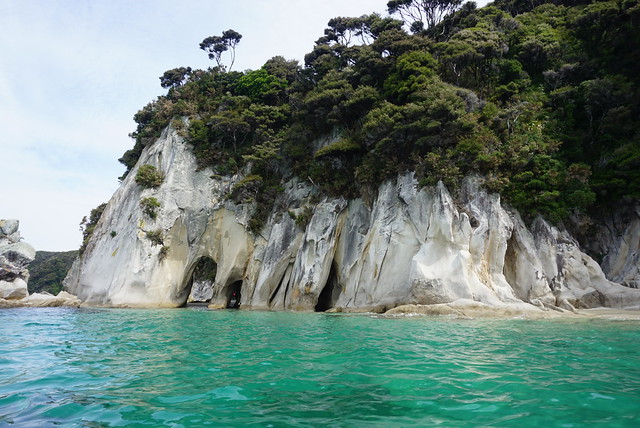
Our shuttle dropped us a Onetahuti Beach, which is a gorgeous golden sand beach that stretches in a long half moon around the coast. It was noon by the time we landed on the beach and got our kayak packed, so we just had our lunch right there before setting out. Like I said, we planned for easy paddling days, so we decided to kayak up the coast in the opposite direction for a little while to visit Shag Harbour (Cormorants are known as Shags in NZ and NL people!). We’d heard it was really nice during high tide because you can paddle back into this river/tidal lagoon, which was really neat. It was a bit of a slow paddle up because we had a bit of a headwind, but it just made for a quicker paddle back down after! We stopped at another beach to go for a swim and then visited the Tonga Arches before paddling around the headland to Mosquito Bay, our campsite for the night.

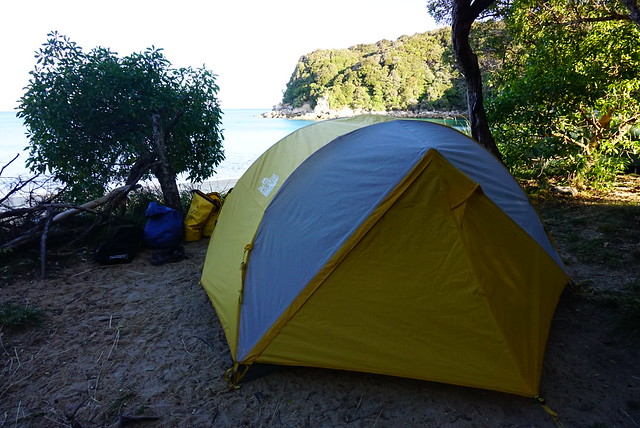
Despite its name, Mosquito bay didn’t have any mosquitoes. It was still close to high tide when we landed, which was good because the beach is very shallow and there is a huge difference between the length of the beach at either tide and we didn’t want to have to carry our kayak up to high tide. The Heaphy Track, which is another of NZ’s Great Walks, runs along the coastline through the park as well, so a lot of the beaches and campsites are shared with hikers. But we picked Mosquito Bay because the track doesn’t run by the beach and you can only access it by boat, so we figured it would be less crowded.

DSC04120

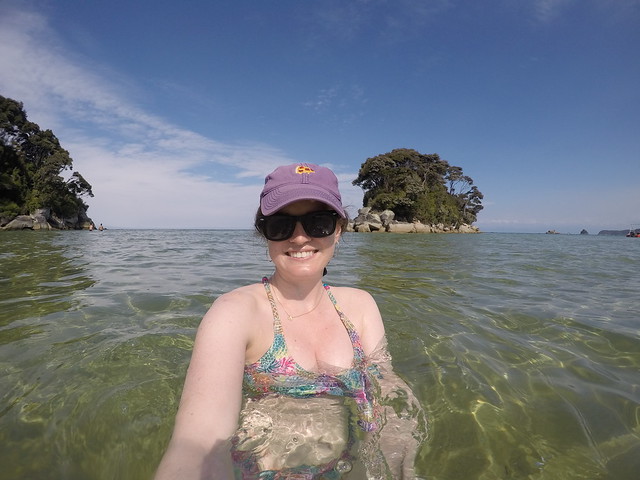
That was a good idea in theory, but it was also still summer holidays for the locals and we discovered that a popular activity is beaching your boat on the shore at high tide and then camping in it overnight. So there was a whole line of tiny sailboats that had sailed into the tidal lagoon and were now beached up on the shore. But it was a beautiful campsite and the water was really warm, so I had a great swim. After some really questionable weather on the Milford Track and Fox Glacier, Abel Tasman rewarded us with sunny, hot days!

The weka’s were a lot more rampant in the Abel Tasman though and were real pests around the campsites. Seth loved it of course, but they were constantly pecking around waiting for you to let down your guard so they could swipe your food. We actually misplaced one of our little ziploc garbage bags on the second night and all we can figure is that a weka climbed into our tent vestibule overnight and swiped it out of our bag (just a reusable shopping bag). We felt really bad about it and searched the woods all around the campsite to see if we could find any garbage, but there was no sign of it.

G0013348_1578123134909_high

We had a lazy evening at Mosquito Beach and I convinced Seth to sleep with the fly off the tent so that we could watch the stars overnight. I don’t think Seth really did any stargazing, but I had a great time and I did see a ton of stars and the milky way. It was interesting sleeping conditions though, probably because it was so warm, and I woke up with a layer of dew right over my sleeping bag, which has never happened to me in BC mountains when I sleep with the fly off.

Day 2 was my favourite day of the trip. We had a lazy start, but unfortunately this time we did have to drag the kayaks all the way down the beach to put out at a much lower tide. High tide is really better in the Abel Tasman because you can access the tidal lagoons when the tide is up, so we had a lazy paddle to Bark Bay and Sandfly Beach and did a little exploring on the beaches since we couldn’t get into the lagoons.

DSC04082

We had a little setback when we tried to go to one of the islands to look for seals, it was just too windy out there and after a lot of splashing around we gave up and navigated back to the shore. We had lunch in Frenchman’s Bay and then kayaked over to Torrent Bay, which was one of my favourite beaches. Torrent Beach juts right out into the bay with a massive tidal lagoon behind it. I think the lagoon always has some water in it, but how far back into the lagoon you can go is dictated by how high the tide is. 2 hours before and after high tide is the best time, so we decided to go for a swim on the lagoon side of Torrent Beach to kill some time. The water was so warm and as someone who loves swimming, I was so content swimming around in the bay.

2 hours before high tide we started to make our way in to the bay and landed our kayaks at the end. ATK had recommended checking out part of the Heaphy Track and hiking up to a little swimming hole called Cleopatra’s Pool. Unfortunately, we got the wrong landing point for the trail, so our walk was a few kms longer then it had to be, but it was neat to explore another one of the great walks. Between backpackers and hikers, there were a lot of people on the beach. There’s a big hut at nearby Anchorage Beach, so I think the trail draws a lot of day traffic from there. The pool was pretty nice – colder than the ocean, but not as cold as the glacial rivers. There were several little waterfalls, so we explored around a bit before heading back to our kayaks.

DSC04087

It was around 4pm when we finished, so we decided it was time to make our way to our next campsite at Te Pukatea Bay while we still had the high tide working for us. Te Pukatea Bay is located just on the other side of the headland, separating it from Anchorage. It’s only about a 10-15 minute walk between them, but a bit more of a challenging paddle going around the headland. We had a headwind and it was windy, but still manageable. I was happy when we finally pulled up to the beach though.

Te Pukatea Bay ended up being my favourite beach! There were no boats or yachts along the beach and surprisingly few people camping there. It seems the facilities at Anchorage draw most of the crowds. We went for our third and final swim of the day and then took it easy and enjoyed the views. We went on a short walk around sunset and found a lookout gazing out towards anchorage and were rewarded with the most gorgeous pink sunset! Then on our way back to the campsite, we finally found the elusive morepork, a little owl that Seth had been trying to see since the start of the trip. They have a distinctive call and we’d heard them several times, but one almost dived bombed Seth’s head and we finally got a good look at it sitting in the tree at dusk – it was very cute!

DSC04173

Our last day was a bit of a challenge. Keeping with the theme of the rest of the trip, Abel Tasman was experiencing “abnormal summer weather”. The first section after Te Pukatea Beach is known as the “Mad Mile”, so we knew it was going to be a rough paddle, but figured at least our arms would be fresh after a day of rest.

It was really windy and by far the hardest part of the trip. At first it seemed manageable and we were feeling pretty good about ourselves, but the further we went around the headland, the less it seemed we were moving forward. We had a headwind coming at us from the front, but there was also a swell on – so we had to keep away from the shelter of the land because the swell kept crashing against the rocks. So we had the wind against us in front and a side swell to battle at the same time. I think I may be prone to anxiety because I had a bit of a freak-out in the middle of the paddle because I felt we were going nowhere and the waves made me really nervous. But Seth was super calm; he knew we were making progress and that we just had to push through.

DSC04112

That one mile is why I changed my mind about the double kayak. Single kayaks seems to be the way to go in BC, but our Packhorse Express was definitely made for big waves and at no point during the paddle did I feel at any risk of tipping the boat. I’ll also appreciated being in the same boat as Seth in that moment because he is a stronger paddler than me and I think we would have become separated if we’d been in two boats, which would definitely have stressed me out a lot more.

But we finally made it to the next beach and hauled the kayak up on shore for a well deserved break. It was still windy, but the paddling was easier so we had a nice time exploring a few more beaches on the way back. We decided to aim for Appletree Beach for lunch, which is the last stopping point before you head back to the rental. The map told us that they run water taxis from Appletree Beach because sometimes the wind gets too strong going back and to wait there if you didn’t think you could make it around the headland.

DSC04035

I think we could have gone all the way back, but the weather got noticeably windier the closer we got to Appletree Beach and we had a hard time landing the kayak on the beach. I decided it was time to call it quits and figured we could just wait for a water taxi while we ate our lunch. We got super lucky though and ATK went by in their boat just after we landed on the beach (we were still bailing the water out of the kayak from our awkward landing). I flagged them down right away and he didn’t hesitate in loading our boat on board and bringing us straight to the end. He said it was not good conditions at all and I think he was pretty much just running around retrieving people.

We only skipped about an hour of paddling, but I definitely think it was worth it. We were thrilled to have a hot shower back at the base camp and eat our lunch there. It was a challenging last day, but overall I had so much fun kayaking around the Abel Tasman. It was hot, sunny, and had amazing views, which is really all you can ask for!