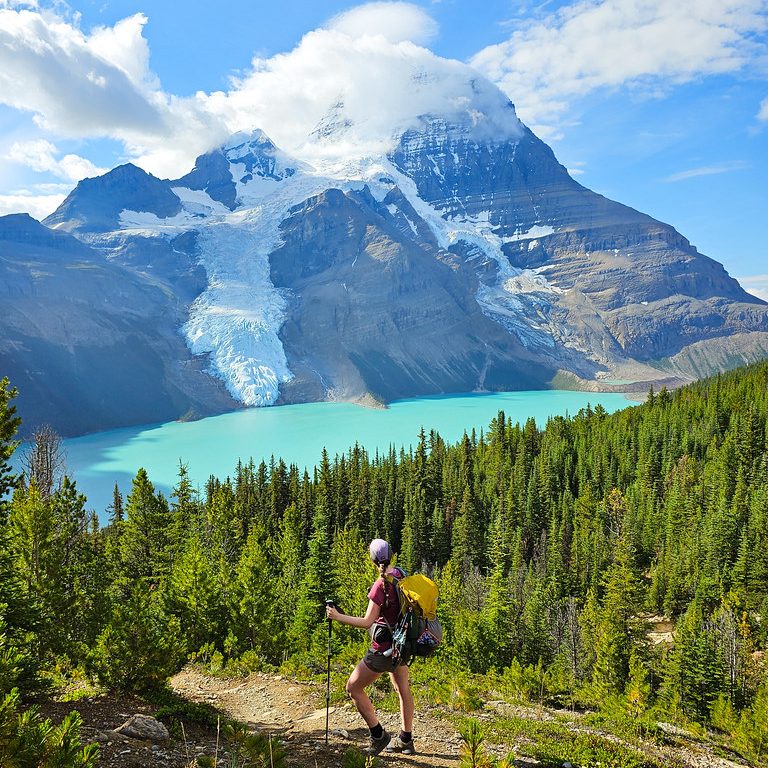
13 Backcountry Campsites in BC that Don’t Need Reservations

Camping is incredibly popular in BC, especially near Vancouver. The popular campsites require reservations that release 4 months out and being coordinated to plan so far in advance can be a real challenge for people. 

Didn’t plan a trip and now you want to go camping this weekend and aren’t sure where to go? I’ve got you covered! It might seem like all the good campsites are booked, but there are lots of great options that don’t require advance bookings. 

Welcome to my 2-part series to help you get out camping with minimal advance planning, in any season! Part 1 focuses on permitted campsites (that don’t require reservations) and Part 2 will focus on unpermitted (free) campsites! 

A photo of an orange North Face tent at the backcountry campsite in Chilliwack Lake Provincial Park for Lindeman Lake in BC.

Backcountry Registration vs. Reservations

What is the difference between registration and reservations? This is a common question from visitors to BC Parks camping website. Both are different types of permits for backcountry campsites located in provincial parks. Campsites with backcountry reservations have a set number of permits that release 4 months in advance of your trip date. Once all reservations are sold for a specific date, it’s not possible to camp at that site. In contrast, campsites with backcountry registration don’t have a set capacity limit. You still need to purchase a permit, but they only release 2 weeks in advance of your trip date and are unlimited, so you can wait until as late as the day of your trip to purchase. Both types of bookings are made on camping.bcparks.ca

These permits exist so that BC Parks can monitor how the backcountry is being used and collect fees towards park maintenance. Permits are usually $5 per person, per night, and don’t have the $6 reservation fee. In this post, I’m focusing only on backcountry registration.

Campsites Near Vancouver

Viewpoint Beach / Half Moon Beach 

20210605_071031

Viewpoint Beach and Half Moon Beach are both located in Golden Ears Provincial Park and have been steadily growing in popularity over the last few years. There are no formal tent pads at either site, but there’s a large open beach where you can fit quite a few tents. It’s a 4km hike along the East Canyon Trail to Viewpoint Beach along easy terrain (great for beginners), whereas it’s another 6km to Half Moon Beach on a more technical trail. Both sites have an outhouse and bear cache. 

Lindeman Lake

DSC09886

Lindeman Lake is a popular campsite in Chilliwack Lake Provincial Park. The campsite has a limited number of tent pads, but there is room to pitch a tent on the ground (though space is somewhat limited). It’s a gorgeous campsite and only a short hike from the trailhead. It’s under 2km, but it has almost 400m of elevation gain, so it’s a steep trail. There is a bear cache and pit toilet. If you want to avoid the crowds, continue hiking another 5km past Lindeman Lake to the campsite at Greendrop Lake.  

Mowich Camp

DSC00958

Mowich Camp is located on The Skyline II Trail in E.C. Manning Provincial Park. It’s been several years since I visited this campsite, so I’m not sure if it’s been growing in popularity, but I haven’t seen much about it online, so I suspect not (it’s similar to the much more popular Heather Trail, which recently moved to the reservation system). It’s a 13km hike to this campsite through beautiful alpine meadows. You can do it as a there-and-back hike, or you can leave a car in Skagit Valley Provincial Park to do it as a thru hike. There is an outhouse and bear cache at the campground, but the water source is only a small stream that can be unreliable, so plan accordingly. 

Alder Flats / Panorama

20250719_210418

Alder Flats and Panorama Campsites are both located in Golden Ears Provincial Park, along the West Canyon Trail, which travels to popular Golden Ears Peak. It’s a 6km hike to Alder Flats and another 6km after that to the Panorama Campsite. Over the course of this trail you will gain 1500m in elevation, so it is a very challenging trail and not for beginners. Both sites have pit toilets, but not bear caches, so a bear bin is recommended, especially for Panorama, which is in the alpine.

Campsites on Vancouver Island

Sombrio Beach

Sombrio Beach is located on the Juan de Fuca Marine Trail in Juan de Fuca Provincial Park. There are several campsites located along the 47km long marine trail, but as of 2025, the majority of the trail is closed due to impacts to the trail from winter floods. Sombrio Beach is a beautiful beach around the midpoint of the trail that can be accessed a few hundred metres from the car park. There are formal tent pads on both sides of the river and there is an outhouse and bear cache at the site.

Landslide Lake

20220912_161033

Landslide Lake is located in Strathcona Provincial Park along the Elk River Trail. There are two campsites to choose from before Landslide Lake, known as Butterwort Flats and Upper Gravel Bar. Butterwort Flats Campsite is located in the forest 7km along the trail, while Upper Gravel Bar Campsite is located along the banks of the river 9.5km along the trail. Both campsites are ideal for visiting Landslide Lake. I don’t think either site has formal tent pads (I can’t quite remember, sorry) as well as an outhouses and a bear cache.

Bedwell Lake

20220916_094024

Bedwell Lake is another backcountry site located in Strathcona Provincial Park. It’s approximately 6km to the campsite at Bedwell Lake, but the trail is quite technical, with several rope sections. If you want a slightly easier hike, you can stop at the Baby Bedwell Campsite. Both sides have an outhouse and bear cache, as well as several formal tent pads. It should be noted that the condition of the access road to the trailhead can vary depend on when it was last graded. Sometimes it’s in good condition, other times I’ve heard that 4×4 is recommended. 

San Josef Bay

20250420_085733

San Josef Bay is a popular coastal site located in Cape Scott Provincial Park. It is a remote part of Vancouver Island, located at the end of a 65km gravel road, but it is an incredibly popular site. San Josef Bay is a golden sand beach that has been voted as one of the most beautiful beaches in the world. It’s a 3.5km hike along very easy, flat terrain, and there are lots of outhouses and bear caches interspersed along the back of the beach.

Winter Campsites

Lightning Lakes

DSC08721

If you’re looking to get into snow camping, Lightning Lakes in E.C. Manning Park is a great place to start! The entire lake freezes over in the winter and you can do wild camping at the end of the lake. You can follow the lakeside trail, or snowshoe over the lake, but always use the trail when crossing between the first and second lakes, as the river usually doesn’t freeze. It’s ~6km round trip to the back of the second lake, but you can continue further to the campsite at Strike Lake. There are no facilities.

Poland Lake

IMG-20220123-WA0031

Poland Lake is also located in E.C. Manning Provincial Park. The trail is located in simple avalanche terrain and is ~8km each way. You must park at Strawberry Flats overnight and hike along the road to the ski resort. At the ski resort, there is a trail that follows the edge of one of the runs and then branches off to the winter trailhead. You cannot use the summer trail from Strawberry Flats as it passes through the middle of the resort. There are no facilities.

Water Access Campsites

Alouette Lake / Pitt Lake

20250427_104218

Alouette Lake and Pitt Lake are both located (partially) in Golden Ears Provincial Park. Alouette Lake is very popular for frontcountry camping, but there are also several marine access campsites in the park. There are several marine sites at the midpoint and far north end of Alouette Lake (well past all the frontcountry sites) and there are two campsites (Raven and Osprey) located on the east side of Pitt Lake. I haven’t had the opportunity to visit any of these campsites yet, but hope to one day!

Rum Island

DSC07798

Rum Island is the only campsite on the list not located in a BC Park. Rum Island is located in the Gulf Islands National Marine Reserve, so permits for this site should be obtained from Parks Canada. You can paddle from Sidney on Vancouver Island, along the edge of several gulf islands to get to Rum Island. It’s a small island with only 3 campsites that are first-come-first-serve, but I went on a long weekend and didn’t have trouble getting a site. You can for the permit on the island, so make sure to bring cash with you. There is an outhouse, but no bear cache since there are no bears on the island.

Desolation Sound / Copeland Islands

20230519_182118

Desolation Sound and the Copeland Islands are each their own respective marine reserves managed by BC Parks. There are approximately a dozen marine access campsites spread around the park and it makes for a great multi day trip. I recommend Copeland Islands if you’re looking for a shorter trip, which can be paddled from Lund. If you’d like a longer trip, check out the Curme Islands campsites! There are outhouses at each campsite, but only the mainland campsites have bear caches.

Bowron Circuit Kayak Trip: Isaac Lake

My last blog post covered the basics of the Bowron Lake Circuit and a re-cap of our first day on the circuit. After a warm and cozy night on Indianpoint Lake, we were up early to continue our adventure to Isaac Lake. We packed up the boats and were on the water by 8am. Sadly, we only had a short 1km paddle to the end of Indianpoint Lake, followed by yet another portage. Fortunately, the portages keep getting shorter. This one was only 1.5km, and it would be our last portage for 2 days.

I’m really glad we opted to stay at Campsite #8 on Day 1 rather than pushing to Isaac Lake. I was exhausted after our second portage on Day 1, but I felt a lot more rested on Day 2. The portage was a bit annoying in that it had a lot of potholes and Seth’s kayak took a sideways tumble early in the portage. But overall, it was pretty flat and it felt like the easiest of the 3 portages to me.

PSX_20250529_081717
PSX_20250529_082124

I should note that Seth and I did not purchase or rent an expedition cart for this trip. We already owned small carts that we use to get our kayak from the car to the launch, and we opted to just use those. They have plastic wheels and are lower to the ground then the expedition carts, but honestly, they worked great! Everyone else was using expedition carts, which are a little higher, and everyone complained about them being really tippy. At first, I babied my cart, but by the end of the trip, I was just hauling it over every bump, root, and rock. It held up for the entire trip with no issue and very limited tipping. We did bring a spare wheel with us in case we blew out a tire (since they’re plastic), but we didn’t end up needing it.

Eventually we arrived at Isaac Lake, the biggest lake on the circuit. I think it’s time to share a map of the circuit to give you an idea of the unique topography of this area. The circuit is very rectangular, with Isaac Lake having a notable corner in it. The west arm is ~7km long, while the main arm is ~31km long. We paddled Isaac Lake for 2 full days and it is definitely one of the more memorable lakes (both good and bad).

The water was really calm when we arrived and we could see a lot of the other groups still packing up along the shore from Campsites #11 and #12. I always live in fear of the afternoon headwind (which seems to be a thing everywhere we paddle), so our goal was to have early mornings and do as much paddling as possible before lunch. Since the water was so calm, we ended up paddling the entire 7km of the west arm in one go, over about an hour and a half. Overall, we paddled pretty fast on this trip, usually averaging around 4km an hour.

I should also mention that there are two kinds of campsites on the circuit: individual sites and group sites. If you have more than 7 people in your party, you have to make a group reservation. The benefit of the group reservation is that you have guaranteed campsites. Only 1 group leaves per day and only that group can stay at the group campsites. The downside is that you have to follow a fixed itinerary (I think it’s 8 days). There was no group on the circuit when we did it, so we were able to use group sites if desired. We made a stop at the group campsite (#14) at the end of the arm for a snack, and then continued our paddle down the main arm.

PSX_20250529_081836
PSX_20250529_082234

Isaac Lake is quite beautiful. It’s so long that you cannot see the entirety of the lake at any point and it is completely surrounded by mountains. The mountains were a bit coy when we paddled the lake because of the weather. It didn’t rain very much on Day 2, but it was overcast and the clouds hid a lot of the mountains. It did start to get a bit windy as we paddled down the main arm, so we stopped at Campsite #18 for lunch.

Campsite #18 is another campsite with a shelter. The wind really picked up while we were having lunch, so we strongly debated just having a short day and spending the night to take advantage of the shelter. But I knew there was another shelter 8km away at Campsite #20, so I was really on the fence. Our goal was to get to the end of Isaac Lake by the end of Day 3, and that would be a lot easier from Campsite #20. But the wind seemed to drop down after a while and we decided to make a go for it. We did have to fight with a headwind for a few kilometres, but the wind dropped off entirely before we got to Campsite #20 and it was almost flat water when we arrived. Thanks to the extra distance, it was one of our bigger days on the circuit and we travelled a total of 23km.

PSX_20250601_210929

We had to name the other groups we were sharing the circuit with to differentiate them from one another. There was a group of 5 kayakers that we creatively named 5 Guys (but apt because they were young burgers-and-beer kind of guys), and they were already settled in when we arrived at the campsite. They were very friendly and there was one tent pad left, so we took it and got to know their group a bit better around the campfire. We didn’t get any more rain for the rest of the night, so we ended up not needing the shelter. 5 Guys had a pretty raging campfire, so that kept us warm for the evening, and we had a good laugh as they regaled us with stories of accidentally capsizing in Kibbee Lake, 20 minutes into their trip!

On Day 3, we really got a bit of everything. We were up early and on the water by 8am again. When we paddle at home, the ocean is usually dead calm at 8am, and will often stay that way until at least 11am. I was surprised by some of the conditions on the Bowron circuit. I wouldn’t say it was windy in the mornings, but it was rarely flat water, even at 6am. The wind was never concerning in the mornings, but always a bit more breezy than I was anticipating.

PSX_20250529_082033
PSX_20250601_211113

We got in a few hours of easy paddling along the shoreline, but we had 21.5km to go to get to the end of Isaac Lake. Isaac Lake has a lot of little headlands along it, where the mountain meets the water and creates a small point. Around 11am, it started getting really windy. Usually it’s windier when you go around a headland, but once you make it to the other side, the wind dies down because you’re somewhat protected by the next headland. At 11am, we went around one headland where it felt like we were getting completely assaulted by the full strength of the wind across the lake. We could see really far down the lake and it felt like the wind was tunneling the whole way up it to hit us broadside. The way the wind was blowing, there was no shelter from the next headland and we had a very slow paddle through some nasty waves.

Eventually we reached the next headland and got a small break directly behind it. We were afraid to go around because we knew we’d be getting hit directly again on the other side, so we decided to wait it out for a little while. Like I said, the weather was all over the place on this trip and it was fairly normal for the rain and wind to storm up and down the lake, so conditions changed quickly and frequently. We figured if we waited even for 15 minutes, the wind could change, so we pulled our boats onto the very limited amount of available shoreline and settled in to wait.

PSX_20250601_211724
PSX_20250601_211806

Unfortunately, the wind only seemed to get worse and we could see whitecaps forming in the lake. After about a half hour, 5 Guys caught up with us and also opted to pull into the lakeside to wait. Shortly after they arrived, me and Seth decided to make an attempt at the headland, but the second we became exposed, we were getting hit by whitecaps, so we quickly did a 180 and returned to shelter. We ate our lunch while studying the waves for another 45 minutes or so. Eventually it looked like the wind was coming down a little bit, and we decided to go for it as a group. It was still pretty nasty, but definitely better than our first attempt and this time we made it through to the next section.

I think we were probably just at the windiest part of the lake and it did seem like the only way out was through. Once we made it through the next section, the wind definitely died down a lot and we all felt comfortable to keep going. Me and Seth took a short break at a real campsite, but then the rain showed up and we decided it was more comfortable to weather the rain in the boats.

PSX_20250601_211547
PSX_20250601_211444

One upside of the rain is that it does generally calm the wind and it can sometimes be windier on sunny days. The wind continued dropping and by the time we paddled through the rain, we seemed to have passed through one storm into another. The wind actually switched direction and we ended up getting a nice little tailwind for the rest of the day. The group of canoers that we nicknamed Canoe Bros, caught up with us later in the day and said that they had experienced the same thing. They described it as two storm fronts and they ended up catching a break for a while when they got caught in the calm between the two, and were able to ride it out for a few hours.

Fortunately that was the end of our wind woes for the day. 5 Guys branched off to do some fishing and Seth and I enjoyed the gentle tailwind propelling us the rest of the way to the campsite. Our goal for the day was Campsite #28, which is the last campsite on Isaac Lake. It’s a large site and I think it’s a popular spot for people to stop. It’s combined with a group site, but since there were no groups, we put it to good use between us, 5 Guys, and the Canoe Bros. It has a large shared shelter with a set of picnic tables and a woodstove, although the woodstove isn’t super useful because it’s an open-air shelter.

PSX_20250602_202718
PSX_20250602_202439

But the weather really cleared up in the afternoon and we actually got a couple of hours of sun! So we all lay out on the banks of the lake to soak in as much warmth as possible. The reason this site is so popular though, is because of it’s proximity to the most notorious water feature on the circuit, the Chute. It’s an optional paddling feature for those brave enough to try it, so people like to stop at the campsite for the night to assess the objective and hope to see someone else attempt it first!

It’s basically a line of standing waves, with an eddy on either side. What makes it tricky is that there’s a sharp turn at the end of the chute and if you exit to early, you can get caught in the eddy and then the waves will hit you broadside and quickly capsize your boat. No one attempted the chute in the evening, but we all spent hours discussing and sizing it up. Trying to figure out who was going to run it and whether we could wait around long enough to watch them attempt it first!

PSX_20250603_193526
PSX_20250602_202657

Seth was all for running the chute (mostly because he didn’t want to portage any extra distance). We assumed 5 Guys would all be down for the challenge, but they were having serious doubts after their capsize in Kibbee Lake. We caught an absolutely gorgeous sunset over the lake while debating it and Seth and I decided that since we had wetsuits, we would give it a try in the morning, but were really hoping to see someone else attempt it first.

Tune in next week to find out if we were successful in running the notorious Chute!

20250520_204237

Bowron Circuit Kayak Trip: A Paddler’s Paradise

I’m so excited to write about this trip! I’ve been wanting to paddle the Bowron Lake Circuit for a while now, and Seth and I finally took a week off to do it in mid-May 2025. Bowron Lake is traditionally known as a 116km canoe circuit, but it can be done in a canoe or a kayak, so we were thrilled to undertake this adventure with our 16 foot sea touring kayaks.

The Bowron Lake Circuit is a renowned paddling route for it’s premier access to remote wilderness and wildlife. It’s an 8-10 hour drive from Vancouver, located ~700km north of Vancouver and 2 hours east of Quesnel. It’s a series of 12 lakes, which are connected by either rivers, or 11km of portaging trails. It’s a loop circuit, so you don’t have to undo any of the distance you paddle, and there are 54 campsites spread out around the circuit. It does require a permit, which indicates your starting date, and then you have up to 14 days to complete the circuit, staying at any of the first-come-first-serve campsites along the way. In order to maintain the remote wilderness setting, there is a limit on how many boats and people can start the circuit every day.

20250517_193638

From what I understand, the circuit is very busy in the summer and the permits often sell out. It is less busy in the late Spring and early Fall, which is why we opted to paddle the circuit in mid-May, just 1 day after it opened for the season. It was a bit busier than we were expecting (several others started at the same time as us, around the May long weekend), but still relatively empty. We didn’t have any trouble getting campsites and had the campsite completely to ourselves more than once.

We had a long time to wait in anticipation of this trip because the permits for it released in October 2024. The circuit is located in Bowron Lake Provincial Park and is managed by BC Parks, but they don’t follow the same 4 month release timeline as other parks. A number of reservations released in October, which is when we booked ours, but it seems that it was only half of the reservations, with the rest releasing in March. In any case, we went early enough that the permits weren’t sold out on our starting date.

20250517_184829
20250517_205052

There’s a few benefits to going so early in the season. The biggest is that there aren’t a lot of crowds, but other perks were that there were limited bugs, no smoke, and no fire bans. So we enjoyed having a campfire every night and didn’t have to worry about getting eaten by mosquitoes. However, there are also several downsides to doing this circuit in May, the biggest of which is the weather. Bowron Lake is located quite a bit north of Vancouver, and it was a lot colder. The ice actually only melted off the lakes 2-3 weeks before we started the trip, and the weather was pretty variable. It rained most days that we were on the circuit and it dropped near zero degrees celsius most nights. Plus, it could get pretty windy some afternoons and even some mornings. We still had a great time and don’t regret going in May, but we missed out on some of the other attractions of the circuit, like swimming.

I plan to write a full guide to paddling the circuit, but I want to dedicate these initial posts to my trip reports and sharing about our personal experience on the circuit. At 116km, this was by far the longest paddling trip we’ve ever gone on. It was our first major lake trip (we usually do sea kayaking) and our first time portaging the boats. Bowron Lake is a good option for kayakers though because the portage trails are all accessible with a cart, so you don’t have to do an overhead carry with your boat, making it accessible to kayaks and canoes. You have 14 days to finish the circuit, but we opted to complete it in 7 days and 6 nights. This seemed to be the most popular duration, though we did meet one group doing it in 6 days and one group doing it in 8 days. I think I would prefer to go slower in the summer to enjoy swimming in the lakes, but 7 days was a good duration for May.

PSX_20250525_154327
20250518_121608

The trip started with a full day drive to Bowron Lake Provincial Park. We left Vancouver early in the morning, stopping in Cache Creek for lunch and Quesnel for supper. It’s still a good 2 hour drive from Quesnel on highway 26, so it was quite late when we finally arrived. We did play tourist on the way there though. There’s a historic gold rush town located just before the turn-off to the park, Barkerville, and we figured there was no better time to visit. Barkerville is now just a tourist attraction, but it’s definitely worth the stop. It has more than 125 heritage buildings dating back to the mid-1800’s gold rush era, including Barkerville’s Chinatown, as well as evidence of early indigenous settlement dating back more than 10,000 years!

Our experience was unique in that the attraction was open for the season, but because we arrived in the evening, it was technically closed for the day. They leave the gate open for people to browse, so we were able to walk the completely empty streets of Barkerville, which was honestly, a bit spooky! It’s definitely a can’t-miss experience if you happen to be in the area.

20250518_111140

We did see another attraction along the highway to Bowron Lake – wildlife. Shortly after turning onto the highway we encountered about a dozen deer, which reminded us to slow down our speed. Once we got our of deer territory, we moved into bear territory, spotting 3 separate black bears along the way. We were getting a bit nervous about what we might encounter on the circuit, but we didn’t end up seeing any bears along our paddling route. Before arriving to Bowron, we spotted a fox along the road, which was probably the most exciting encounter!

There are a few options for where to stay before starting the circuit. There is a mandatory orientation at the park registration centre before starting the circuit, which is offered from 8am-noon, so you do need to arrive quite early. You could stay in Quesnel and drive in, or there is limited lodging in the small town of Wells on highway 26. We wanted to get an early start, so we stayed on the lake itself. The options I learned of were Becker’s Lodge, Bowron Lake Lodge and Campground, or the BC Parks Bowron Lake Campground.

PSX_20250527_185457
PSX_20250527_185644

My preference would have been to stay at the BC Parks site, which is the cheapest, but I couldn’t book a single night at the campground because it was over a long weekend and the system only allows you to book the entire weekend. We probably could have got in FCFS, but I opted to book 1 night at the Lodge Campground instead. It’s located right on the lake and is quite beautiful. The Lodge also rents canoes, but most people seemed to be renting and staying at Becker’s Lodge rather than Bowron Lodge. We own our kayaks, so we didn’t have to navigate rentals.

We were up early on Sunday morning to head over to the Registration Centre to complete our orientation. It was pretty straightforward and we got our permits to start the circuit. If you’re going in a canoe, you also have to get your gear weighed. To limit impacts to the portaging trail, you’re only allowed to portage with 60lbs of gear in your boat, everything else has to go in a backpack that you wear. It turns out they don’t weigh kayaks (I guess it’s harder to overload the kayak hatches than a canoe), but we followed the same rules as the canoes anyways. We didn’t want to be towing fully loaded kayaks (it’s hard on both us and the boats), so we also brought backpacks to carry gear while portaging. Logistically, this was more challenging as a kayaker, because we had to pack and unpack the backpacks at every portage and squish the empty backpack into the hatch, but we made it work.

PSX_20250529_081759
PSX_20250527_185624

We had 7 days to complete the 116km circuit, which works out to an average of 16.5km per day. In reality, we did a lot more than that and I ended up tracking 135km on my GPS (which would average to 19km a day). That said, I tried to pace our days to do shorter distances on days with portages, and longer distances on days with only paddling. The circuit is very front-end loaded when it comes to portaging, so I planned for a pretty slow first day, especially since we’d be portaging with all our food weight.

There’s 3 portages totaling ~6km in the first 15km of the circuit. The third portage ends at Isaac Lake, which is the biggest lake on the circuit. On the day we started, there were several other groups starting. There was a group of 5 male canoers, a group of 5 male kayakers, a group of 3 male canoes, and a solo male kayaker. You can probably notice a common denominator in all those groups: male. We got to know a lot of these guys over the course of the week, and they’re all nice people, but I was the only woman on the circuit the entire time, which was a little disappointing. Ladies – Bowron is really fun, add it to your bucket list!

PSX_20250527_185605
PSX_20250528_181552

My point is that all of these groups had the goal of making it to Isaac Lake on day 1. I considered if we would also head for Isaac Lake, but I didn’t really want to overdo it early in the trip, nor did I want to do 3 portages in one day. So we decided to make the end of the second lake our goal for day 1, which I think was a good decision.

The circuit immediately starts with the longest portage, a 2.5km trail to Kibbee Lake. We were the first people on it for the day and the trail was in relatively good shape. The challenge was that it’s mostly uphill and we were fully loaded. It is humbling to drag a 45lb kayak while wearing a full backpack and we were quickly out of breath and sweating. That said, I think we did a pretty good job at our first portage, taking about an hour to finish it. It was threatening rain all morning, but it stayed dry until we arrived at Kibbee Lake.

20250518_195822

Kibbee Lake is only a 2.5km paddle before you’re back at the next portage. The launch point at Kibbee Lake is really nice and starts with a leisurely paddle through the lake’s inlet. It started raining pretty much exactly when we got to Kibbee Lake, but we preferred that timing. I don’t really mind paddling in the rain. With our neoprene skirts and rain jackets, we get less wet paddling than we would on land, so it wasn’t too big a deal. Since the forecast for the week was pretty cold, I purchased a pair of neoprene gloves before the trip and they were worth every penny throughout the week! They kept my hands nice and warm, even when wet.

It rained pretty much every day that we were on the circuit, but it was one of the least defining parts of the trip if I’m being honest. I thought it would be miserable to be out in the rain for a full week. But it was the kind of rain that moves around a lot. It would rain for 15 minutes and then move on. At no point on the trip did it rain so much that our waterproof layers wetted through, so it honestly didn’t bother me.

PSX_20250528_181637
PSX_20250528_181657

We had a nice paddle across Kibbee Lake, but too quickly we arrived at our second portage. This one was a little bit shorter, at 2km, but it felt so much worse. Looking at the map, the topography on the second portage is actually more gentle than the first portage, but I guess I was feeling tired, because it did not seem that way! It starts with a hill and I was pretty quickly cursing my kayak. I don’t really use those arm muscles very much, so my forearms were screaming from pulling the kayak and my hands were hurting from dragging it. But I think my biggest problem was that I was hungry. I complained for the entire first half of the portage, which was all uphill, before finally pulling over and claiming that I couldn’t go a step further without having lunch!

The rain stopped again when we started portaging, so I think it was a good call to stop and eat. We parked our kayaks on the side of the trail and opted to just eat our lunch in the woods. I felt much better afterwards and let the downhill half of the trail propel me to our next milestone, the start of Indianpoint Lake.

PSX_20250528_181457
PSX_20250528_181905

At this point, some of the bigger groups had caught up with us, but they all had the goal of getting to Isaac Lake. I had studied the campsite map before the trip and noted that some of the campsites have shared shelters. I’m not sure how popular these shelters are in the summer when it’s warm, but they ended up being pretty popular on our trip, given that it was cold and wet. Indianpoint Lake is 6.5km long, but campsite #8, which is located near the end of the lake, is noted as having a shelter. So I made campsite #8 my goal for the day.

First, we decided to try our luck at a woodlot. The circuit has a number of woodlots scattered throughout the park where you can stop and pick-up wood. I thought this was going to be national park style woodlots, but it’s really just specific areas of forest with lots of blowdown. The woodlots aren’t marked on any map because it seems that BC Parks regularly moves them around, so you can just see the signage from the water. There’s one located early on Indianpoint Lake, so we decided to check it out, but it ended up being our first and last woodlot. Since it was early in the season, it was really easy to forage deadwood around the existing campsites, so we didn’t bother with any of the other woodlots after that because it was a pain to lug the wood around in my kayak.

20250518_204503

After checking out the woodlot, we had a very enjoyable paddle to the end of Indianpoint Lake. It rained again, on and off, but the lake was actually very calm. The wind usually comes up in the afternoon, so we were expecting it to be windy and were pleasantly surprised to arrive at 1pm and find completely flat water! The mountains around the lake were mostly clouded in, but it actually looked kind of mystical with the rain.

Everyone else opted to bypass Campsite #8 on their way to Isaac Lake, so we ended up being the only ones staying there! It was our good luck, because I totally loved this campsite! It only has two tent pads, but it has an old log cabin with a woodstove(!) and the most beautiful view of Indianpoint Lake. It was nice not to overdo it and we still tracked a total of 13.5km on my GPS. We got our tent set up and then hung out under the under-hang of the cabin, sparing me from having to set up the tarp. We had a few snacks and then around suppertime, Seth got a fire going in the woodstove and we spent a very enjoyable evening in the warm cabin. Someone has insulated the roof inside with reflective material, so it reflected the heat quite well. We felt so cozy in the warm cabin listening to the rain hitting the tin roof.

PSX_20250528_181813
PSX_20250528_181757

Later in the evening, Seth decided to take advantage of the warm cabin to do some cold therapy and ran down for a quick swim in the lake. Usually I’m down for swimming in any lake and my cold tolerance is quite high, but I didn’t swim very much on this trip. It was probably the main downside of going early in the season. I was chilled for a lot of the trip and rarely willing to subject myself to the cold water (though I did eventually relent twice later in the trip)! Eventually the rain cleared up and we got some really beautiful photos of the lake around golden hour. We didn’t catch too many sunsets on the circuit – partially because of the mixed weather – but also because it was light so late in the evenings that we usually went to bed before sunset! Paddling is all about the early rise, so it was a small sacrifice to make.

I’ll conclude this blog post here because it’s already quite long! I’m hoping to cover two days each on my future posts, so tune back in next week to hear about the gnarly weather conditions we battled while paddling almost 40km along Isaac Lake, the biggest lake on the circuit!