Let’s Talk: Winter Camping

To-date, I’ve written about all of my snow camping adventures (find them here). All of my posts include useful information and lessons learned about snow camping, but I decided to make a guide to Winter Camping to compile the key things I’ve learned in one place for those debating taking up snow camping! It’s a lot more work than summer camping, but I find it hugely rewarding! Please keep in mind that I am still only a novice snow camper/snowshoer – I always stick to low risk avalanche zones and sleep in a tent – if you’re looking for advice on snow shelter construction or ski touring, you’ll have to look elsewhere.

Safety
Safety is the number one consideration if you’re thinking of taking up snow camping. I know the pictures of us hanging out and camping in the snow look awesome (at least I think they do, others *Emily* think it looks like a nightmare), but if you think snow camping may be beyond your ability or you’re not prepared, do not go. It’s not something you do for the ‘gram, it’s dangerous. But if you think you’re ready, be prepared with the 10 essentials and lots of warm clothing and sleeping gear. Wear proper footwear and bring lots of hand and foot warmers with you. See my blog post on personal safety for more information about the 10 essentials.

But the most important consideration is avalanche safety. Avalanche Canada is a wonderful resource for assessing avalanche risk and always check it before you go. There are lots of places to snowshoe and camp outside of avalanche terrain, but if we’re going into avalanche terrain, our personal rule is that we won’t go anywhere that’s higher than moderate risk, end of story. We’ve all taken the Avalanche Safety Training and Brandon owns a transceiver, probe, a shovel. Me and Carolyn just own shovels right now, but rent probe and transceiver when needed.

Even with training, we still avoid high risk areas, but taking the training allowed us to learn how to start identifying avalanche terrain and risk so that we are equipped with the knowledge to make decisions. Avalanche safety is about a lot more than just checking the bulletin. Even on days where the risk is low or moderate, you can still trigger avalanches and get into trouble if you don’t understand how to assess the conditions and control your exposure to risk. When in avalanche terrain, it’s not enough for 1 person to be experienced. Everyone needs to be equipped with the proper gear and knowledge.

Gear

DSC05439

I think that gear is probably the biggest bottleneck to getting into snow camping. Camping gear in general is expensive and in the winter you definitely benefit from warm and lightweight gear. It took us a while to get started with snow camping because we were weary of investing in a ton of expensive gear for something we might not enjoy, so we cut a lot of corners and bought some cheap gear to try it out. The downside was that because we loved snow camping, a lot of the gear had to be replaced again, which is a bit wasteful, but can generally be sold secondhand. Plus check what you can get second hand in the first place to help you get started!

My main tip for saving money is to supplement your existing gear. Buy a cheap blue foamy to go under your existing sleeping pad and a warm sleeping bag liner or blanket (or both) to increase the warmth of your existing sleeping bag. The downside is that this is not lightweight and you can expect to have a heavy pack on the first trip. The other alternative is to rent gear, which is a great option if you really think you’re going to love it. See the sections below for more detailed information on specific gear.

Shelter
DSC05463

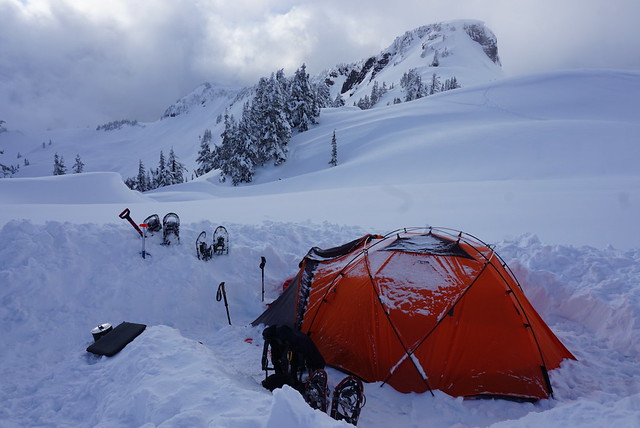
Shelter is obviously one of the biggest considerations when you’re snow camping and is one of the things that can be the most expensive, or the cheapest. The first time me and Carolyn went out we took my parents ancient 4 season tent, it held up, but was definitely not meant for snow camping and weighed a whopping 10lbs. Fortunately (for us) it was only a 2 person tent and Brandon decided he wanted to be included on these adventures, so he decided to invest in a winter tent so that the 3 of us could go together!

The main feature of a winter tent is that it’s double walled, so basically it has no fly and the poles are exposed, but the double wall and lack of mesh keep you warm inside. Brandon’s tent works great, but it came at a super high price tag, so it’s not practical if you’re just starting out. If this is the case, one thing you can consider is building your own snow shelter. I’d really like to try this some day, but we were a bit overwhelmed with everything we had to learn about snow camping that we didn’t want to add shelter building to the list. It’s something we hope to explore in the future though.
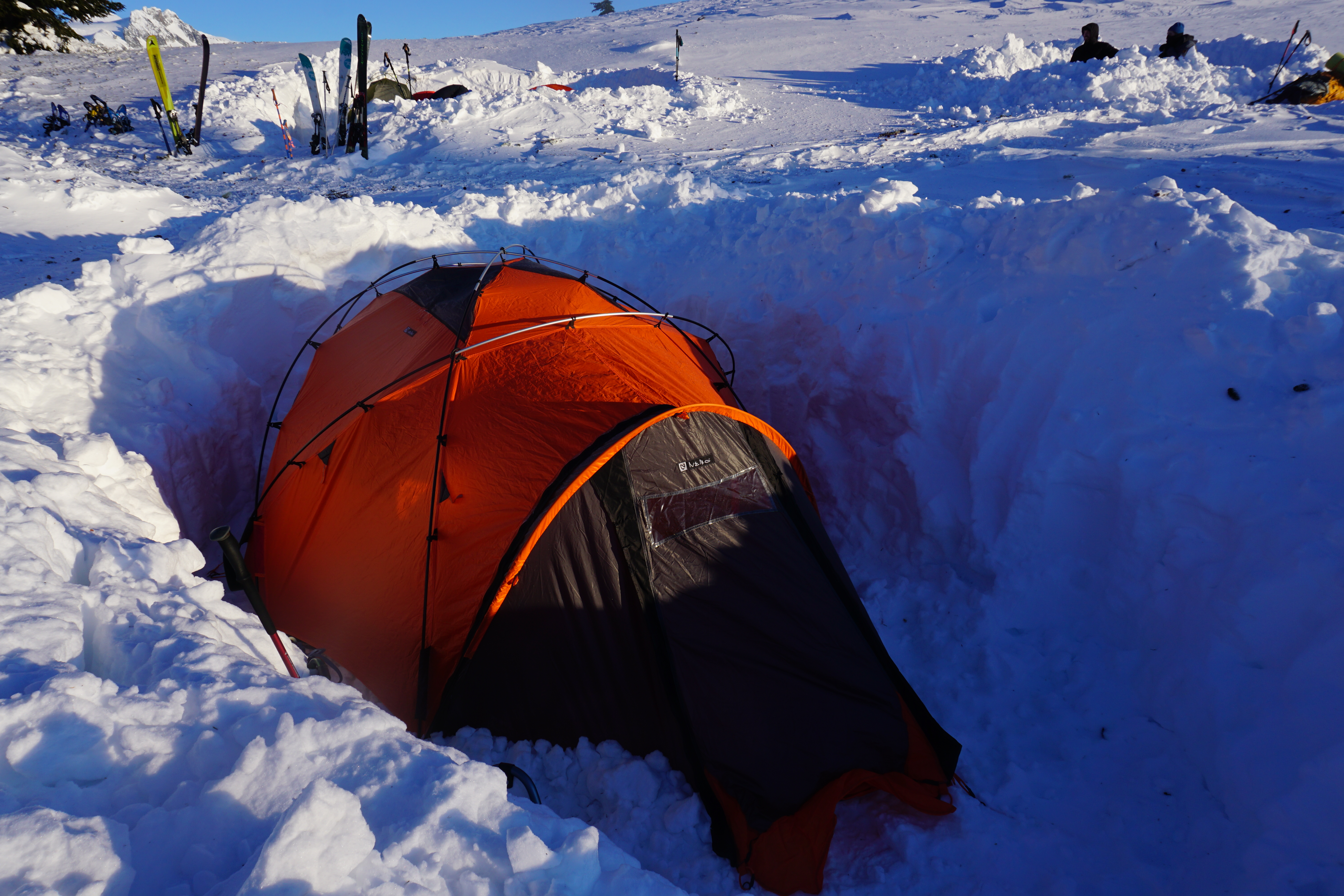
However, even though we use tents, there is still a lot to consider when making camp. You want to protect yourself from the elements as much as possible and of course you can’t just set up a tent on top of powder. We always start with digging a hole big enough for the tent and then stomping down the base with our snowshoes to make it as compact as possible. Location and weather conditions will usually dictate how deep our hole is. I recommend approximately 1 metre, especially if it’s windy because the snow walls will provide a natural shelter, as well as insulation. One tip for when you’re setting your tent up is giving consideration to how you will peg it. In the snow, the risk of losing your pegs is super high, so we either tie rope on the peg, or just skip pegs altogether and bury the rope. The snow will freeze around the rope, so when you’re done, it’s a lot easier to pull the rope out than to dig out frozen pegs.

We have also tried snow camping in a 3 season tent. It’s not ideal, especially if it’s really cold, but if you pack the sides of the tent with snow for insulation, it’s actually not too bad. We made sure to pack the snow up so that it closed the gap between the fly and the inner tent to avoid a draft, but because most 3 season tents are made of mesh, it’s unavoidable that it will be cooler than a true winter tent. Finally, make sure you fill in your hole at the end of your trip to avoid creating a hazard for future users. If the hole fills with powder, it may confuse a skier and could easily result in a broken leg if they don’t know it’s there.

Sleeping
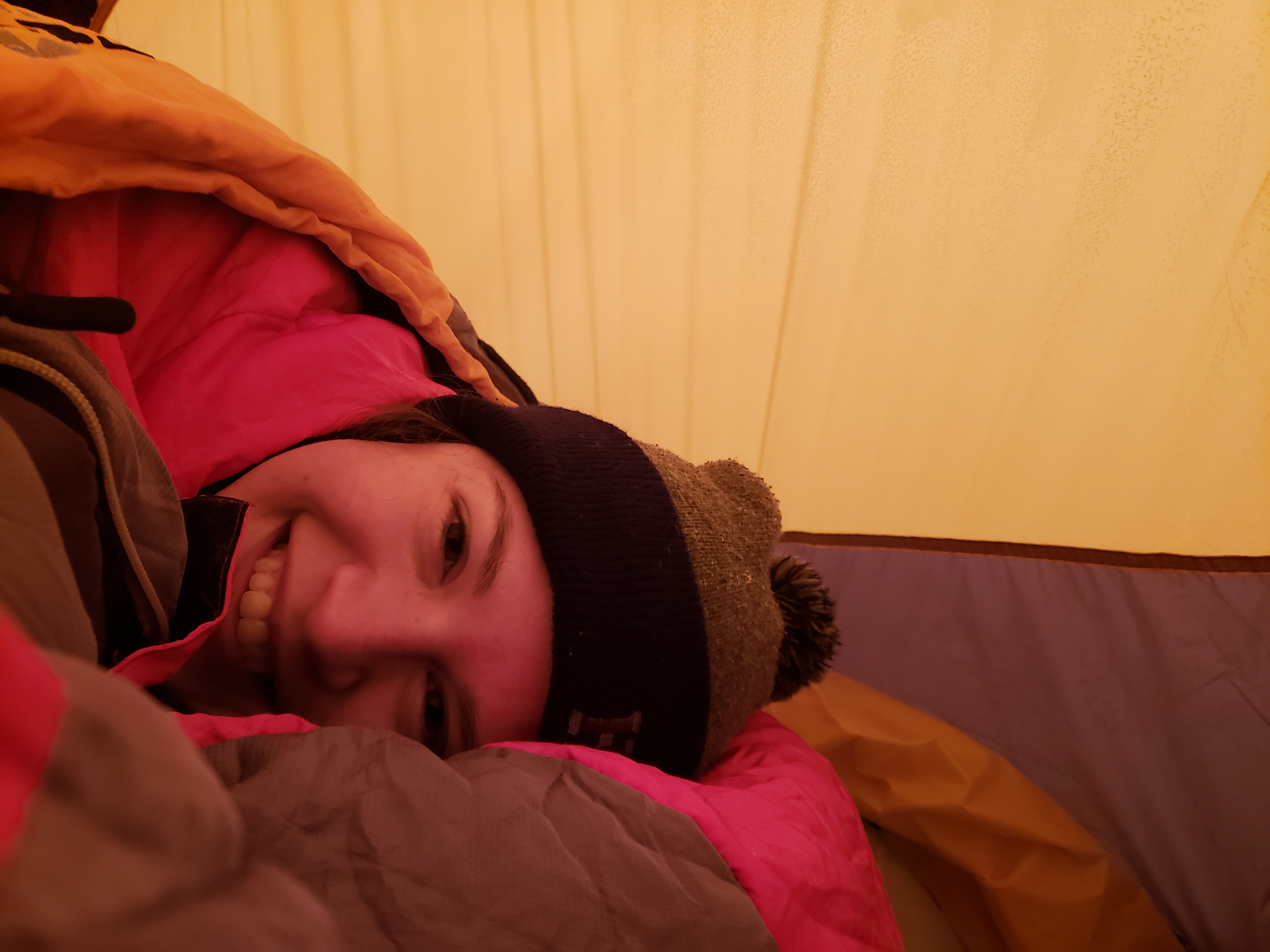
So like I said, when we first started, we cut some corners on our sleeping gear. Depending where you’re going, you’ll want a really warm sleeping bag and a sleeping pad with a combined R-value of 5 or higher. Eventually we all ditched our double pad system in favour of the Thermarest Neoair XTherm, which is rated to R6 and can be used on it’s own. After camping in -20 degrees celsius at Elfin Lakes, Brandon invested in a -30 sleeping bag (Thermarest polar ranger), but Carolyn and I continued to use cheap -15 synthetic bags from Teton paired with a liner and blanket. I’m not going to link the bag because honestly it’s not very good and I think I’d be just as warm in my quality -7 down bag. If you already have a good summer bag (-7 or warmer), you can probably get away with pairing your summer bag with a liner and blankets, provided it’s not super cold. This year me and Carolyn finally gave in and bought North Face’s -29 Inferno bag and Marmot’s -18 Lithium bag respectively and to date, it’s been a lot easier to sleep warm. When picking your bag, I recommend sticking to down and checking what the sleeping bag’s comfort rating is.

I can’t lie, staying warm at night is a lot of work when you’re snow camping. In addition to my gear, I sleep in fleece lined leggings under a pair of pants, several merino layers under a puffy jacket, balaclava, hat, gloves, and socks with slippers. I put foot warmers in my slippers and Carolyn stuffs all her pockets with hand warmers. We also all boil water to put in our nalgene bottles before bed to use as hot water bottles in our sleeping bags. I have an insulator for my nalgene to keep it warm longer.

I take my blanket into the sleeping bag with me (it’s warmer this way and less likely to fall off) and then to finish it off, I overlay my parka over my middle/butt area because I’m a side sleeper and line my snowpants between my bag and the tent to avoid a draft and stay insulated if I accidentally touch the side of the tent. With my new bag, I’m able to leave the liner and blanket at home. It can take a while to get warm in the sleeping bag because it takes a while for your body to heat the space. Try doing sit-ups in your bag right after you get in to warm it up. As a side sleeping, I also recommend starting on your back (it’s warmer this way because your sleeping pad reflects your body heat back at you), then switch to your side once you’re toasty warm.

My last tips are to cocoon into your sleeping bag, but avoid breathing into your bag as this will introduce moisture into your bag, which will make you colder. If you find yourself needing to pee, just get up and do it. Everyone hates getting out of the warm tent, but a full bladder will make your colder and keep you awake. I find that I will usually be a lot warmer after getting up to pee just by virtue of moving around. Your boots will likely freeze overnight, so know that they’ll be a challenge to put on when you leave the tent.

Clothing
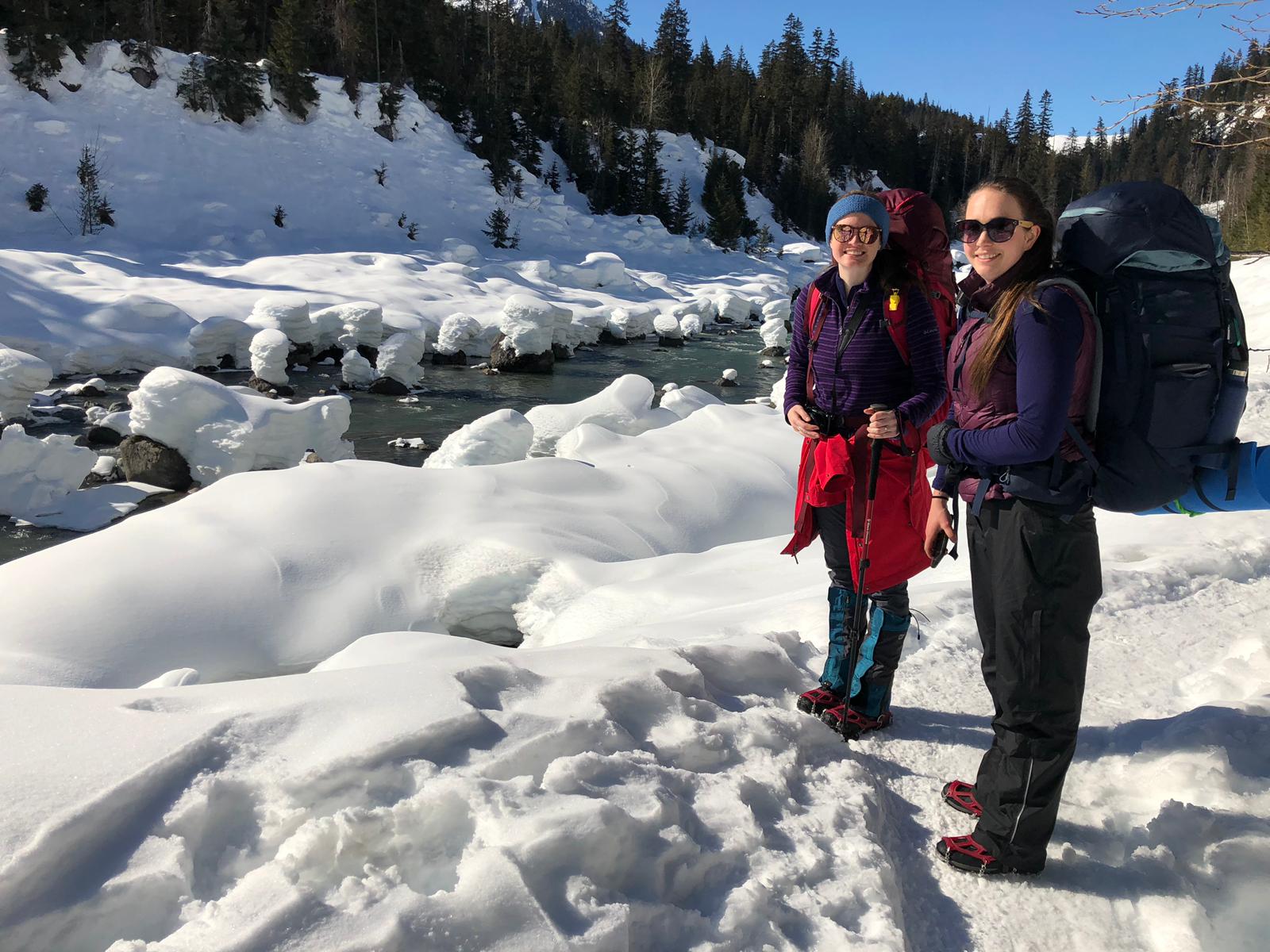
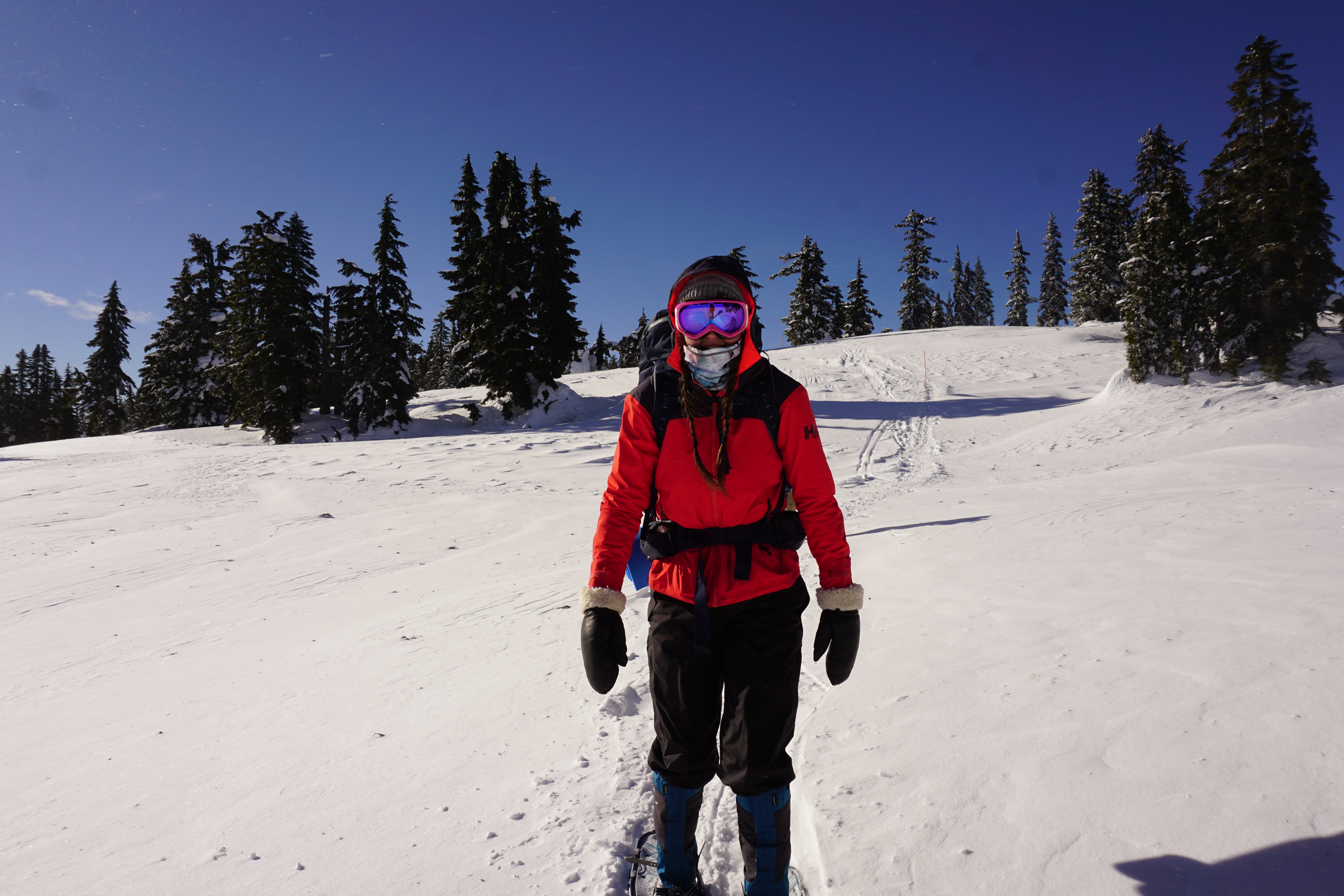
Winter camping is all about layers. You don’t want to dress too warmly on the snowshoe in because you are going to sweat and you want to avoid sweating into all your layers. I usually just wear a thin merino sweater (Costco) under a fleece (Columbia). If I’m still cold or it’s snowing, I’ll add the shell of my ski jacket (but not the liner because it’s overkill). The removable liner was one of the main features I wanted in a winter jacket, I’m on my second “interchange jacket” from Columbia and really like it. I usually start with the shell and ditch either the shell or the fleece once I start sweating (pending if I need the waterproof layer on top). On bottom, I usually wear a pair of tights under my normal water resistant hiking pants. MEC’s sandbagger pants are my favourite and I hike in them in all seasons, although just searching them now I’m sad to find they don’t make the women’s version anymore! Then I pack a pair of snowpants to put on when we get to our campsite and my lightweight puffy for sleeping.

Merino is key when you’re snow camping. It really does still keep you warm when wet and it dries a lot faster than other fabrics. I’ve slowly been accumulating merino layers over the years and one of the best finds for me was switching to merino underwear and bra. It’s expensive and surprisingly hard to come by, but I love how much more quickly they dry. I recommend SmartWool and Icebreaker for merino undergarments. Changing your underwear is really hard and cold in the winter, so switching to merino meant I could go the whole trip (I’ve only done 1 nighters to date) without having to change my base layer. If I did 2 nights, I would bring a second set.

The other trick to winter camping is to bring lots of hats and mittens. Make sure you have a separate toque for sleeping as you don’t want to have to sleep in the hat you’ve been sweating into all day (or is wet from snow). I usually bring several pairs of thin gloves for mobility, a pair of waterproof insulated ski mitts, and another thinner pair of mittens for sleeping.

Footwear

IMG-20210131-WA0002

Don’t skimp on footwear. Having a comfortable pair of boots that will keep you warm and dry all day is essential. I used to use a pair of snow boots from Sportchek that had really good waterproofing, but I found my feet would get cold after a while. Lots of boots have temperature ratings and I recommend getting something really warm, but not too bulky if you can avoid it.

Last winter I decided to try snow camping in mukluks and I love them. Manitobah Mukluks is a Canadian, indigenous owned company and I thought who would know better about how to keep your feet warm! I love my muks for warmth, but they can be challenging to pair with snowshoes. They don’t have thick soles like a lot of boots so it’s a challenge to get a really tight fit on the snowshoe, which is another important consideration when picking both your boots and snowshoes. What I do love about these boots though is that they are super warm and because they’re made with natural materials like rabbit fur, they did not freeze on me overnight! Plus a lot of their boots are waterproof – I tested mine snowshoeing in heavy rain for 5 hours and they stayed completely warm and dry!

Being prepared with both snowshoes or microspikes, depending on your trip, is also very important. Most of our snow camping has been done in remote locations with high snow accumulation where snowshoes were definitely required. My snowshoes were from Costco and getting a bit dated, so I picked out a new pair this year, MSR’s Lightning Ascent. The main reason I picked them is because the basket where you connect to your shoe is really comfortable and gets a tight fit to your boot. The straps on a lot of snowshoes can dig into your feet after awhile. Depending where you’re going though, you might be better off with microspikes. We used them when we camped at Keyhole (see photo under ‘clothing’), plus I use them a lot in the shoulder seasons on day hikes. I recommend Kahtoola, but I’ve heard Hillsound is great too.

Cooking
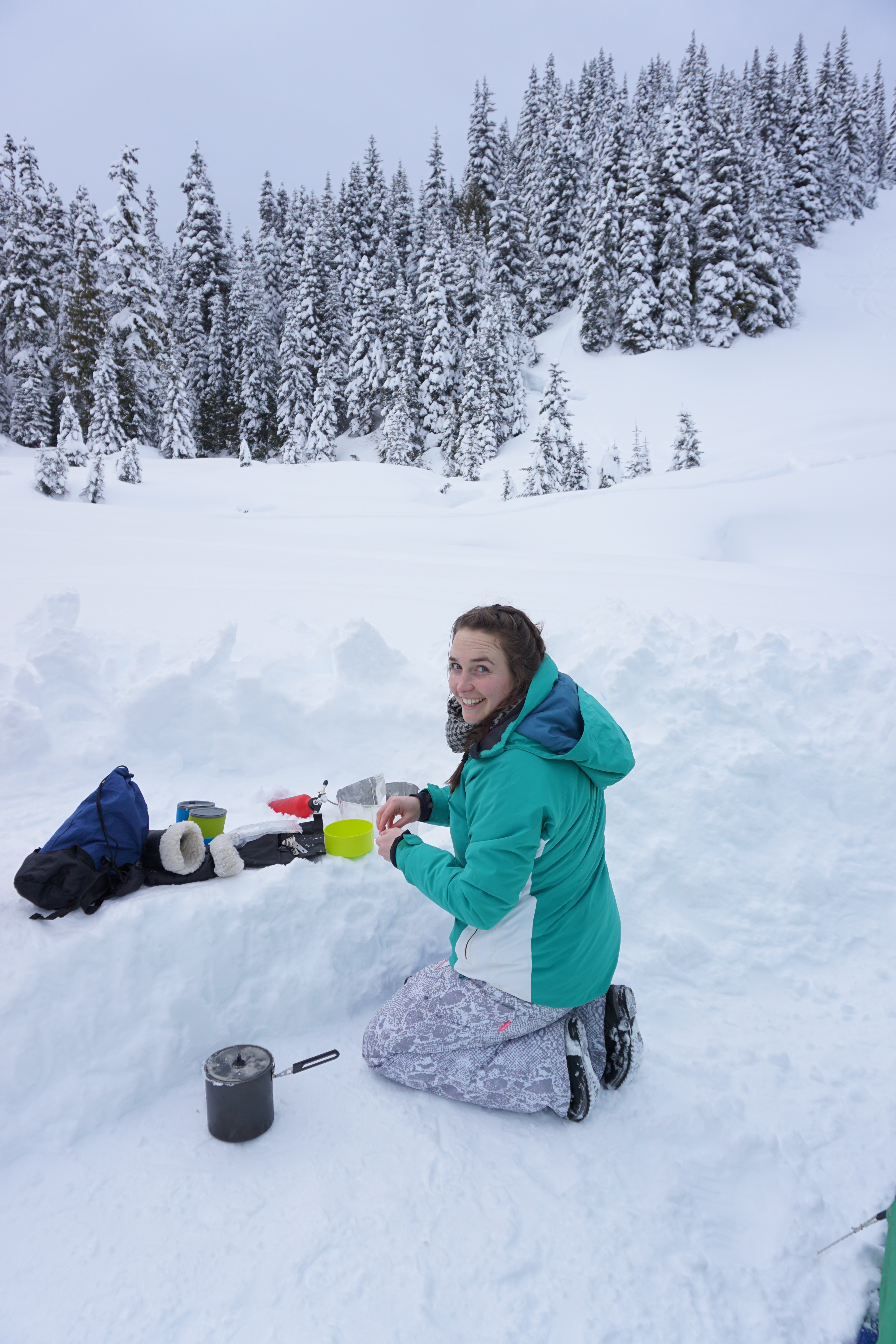
Cooking when snow camping is not that different from backpacking, but there are a few considerations to keep in mind. The first is fuel. Avoid propane and iso-butane mixed gas when snow camping because they can freeze. Stick to white gas stoves if possible or find some way to insulate your fuel canister to keep it warm. Second, up your calorie intake. Being out in the cold for a long time burns a lot of calories, so be prepared with high energy treats that won’t freeze.

The last consideration is water. As I learned on my first trip, melting snow takes a long time and unless its super fresh, it tastes really bad. Melt the snow until its warm and then start adding more to the pot, each time warming it but not boiling. It takes a long time to boil, so once you get enough water, just boil it all at once at the end. It’s not required it you’re boiling it, but consider filtering the water anyways to improve the taste, or bring drink mixes to make it palatable. Also, avoid your platypus on snow trips as the straw will freeze. I usually take a nalgene and a thermos that I pre-fill with tea to keep me warm along the trail. Then I refill my thermos before bed for a nice warm treat when I wake up (or if I get cold overnight).

DSC08682

Building a snow kitchen is one of the fun parts of snow camping though! Plan ahead when digging your hole and pile the snow in one area for your kitchen counter. It’s not a difficult concept, we usually just consolidate the snow into a bit of couch/counter combo so that have somewhere to hang out. I always bring my inflatable sit upon to provide insulation against the snow. We’ll either put the pot right on the counter, or dig a little pit for it if it’s windy.

Bathrooms

Unless you go to Elfin Lakes (or somewhere that caters to winter visitors), it’s unlikely you’re going to have access to an outhouse. Even if where you’re going has outhouses, they’re likely to all be buried in the winter. The good news is, digging a hole is a lot easier in the winter! Just be mindful that your poop is going to stay frozen until Spring, so make sure to use the bathroom somewhere discreet once the snow melts. In winter though, you have to take all your toilet paper with you – there’s no burying paper in the winter.

In some cases, depending on location, you may need to bring a bathroom bag with you to carry your waste out. I’ve written a whole blog entry on backcountry bathrooms, so check it out for more information.

Feel free to ask any questions in the comments, I’m happy to share my experience – snow camping is tough, but it’s rewarding and me, Carolyn, and Brandon look forward to it every year!
Elfin Lakes Girl Guide Trip

Since I just wrote about the bike trip I took with Girl Guides, I figured I’d continue the trend by writing about a backpacking trip I did in September 2019 to Elfin Lakes. I wrote this post almost right after the trip, but I never got around to posting it, so with the changing of the seasons (foreshadowing), I thought it was finally time! This was my most recent trip to Elfin Lakes, but I’ve been 3 other times, all of which were very different experiences. Read about my Fall day hike, summer tenting trip, and winter snow camping experience for my stories about the trail.

20190927_184739

I’ve been wanting to take my Pathfinder group into the wilderness, but you need previous experience on backcountry trips with girls before you can lead your own, so I jumped at the opportunity to join the North Vancouver Trex group on this trip. It was only my second trip into the backcountry with Girl Guides, but for some reason I always seem to encounter the craziest weather on guide trips, and this one was no exception!

We were a group of 12 and we planned to hike up to Elfin Lakes on Friday, tent for 2 nights – day hiking to Opal Cone on Saturday – and then hiking back down on Sunday. Needless to say, things did not go quite as planned. We do our best to be prepared as girl guides. The forecast was calling for rain on Friday and temps down to -8 degrees celsius overnight, so we packed lots of rain gear and warm clothes for sleeping. However, the temperature ended up dropping a lot faster than we expected and the rain started to turn to snow just before we reached Red Heather Hut, which is almost the halfway point up to the lakes.

DSC00558

The girls were thrilled about the snow, which was falling gently, and I have to admit, hiking in the snow is a lot nicer than hiking in the rain. We had hot noodle soup for lunch before continuing on to the lakes. It was still September at this point and it was obvious it was the first snowfall of the year. However, the snow started to accumulate pretty quickly and it started snowing heavier as we continued on from the hut. Fortunately, there was no wind, but visibility wasn’t great and we couldn’t see any of the views on the way up. I admit, the further we hiked, the more apprehensive I got.

I wasn’t really nervous about camping in the snow, because I have done that before and we had brought really warm gear, but we didn’t have snow boots or snow pants and it was increasingly obvious we weren’t going to be able to hike to Opal Cone the following day. Even though it was calling for sun and blue skies on Saturday and Sunday, there was too much snow to hike further without proper footwear. But we just focused on getting to the hut and the girls did really well managing the conditions. Fortunately no one got cold or wet feet on the way up!

DSC00553

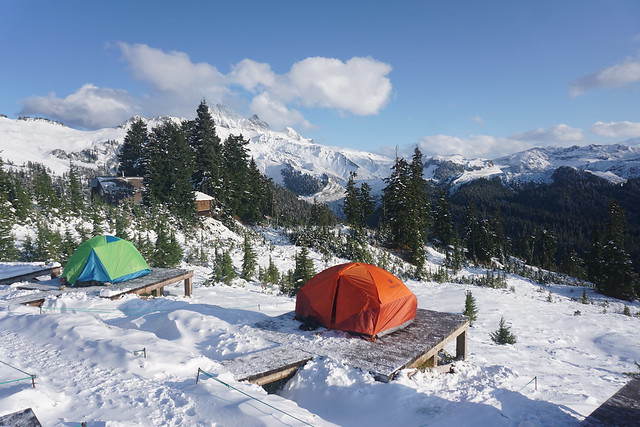
We hit the hut around 4pm and everyone was thrilled to go inside. I think the girls were thinking we were going to abandon the tenting idea and just sleep in the hut, but as we had only booked tent pads and there were 12 of us, that wasn’t really an option (although obviously in an emergency we would have camped out on the floor if we had to.) We made them hot drinks to warm up and everyone hung their wet gear by the fire. I have to say, the girls had a great attitude when we told them we were still planning to camp. The snow did start to slack off and was almost stopped when we went back outside an hour later to scope out the tent pads. Fortunately the clouds had started to lift and you could just start to see the surrounding mountains (which are incredibly striking from the tent pads at Elfin Lakes), so the girls started to get excited again about tenting.

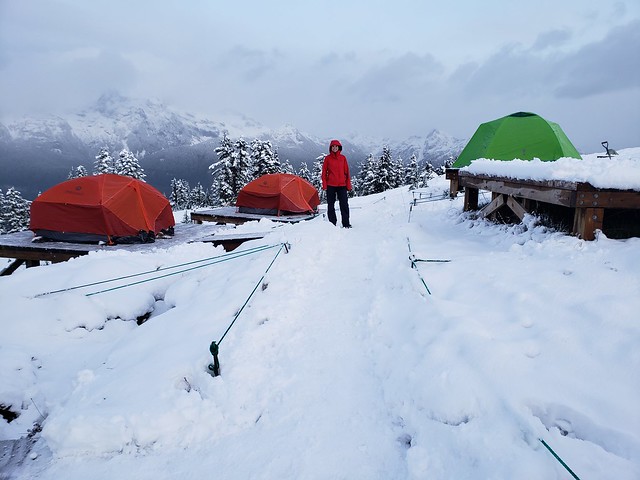
We shoveled off the tent pads and set up 4 tents. This proved to be a bit more of a challenge than we anticipated because it was pretty darn windy when we were setting them up. We had to weigh them down with rocks and then shove all our gear inside them to hold them down. Then we had the added difficultly that we couldn’t peg them because of the tent pad, but we eventually managed to get them set up and soon after that the wind died down and I didn’t give it much more thought.

DSC00526

By the time we finished it had really cleared off and we had fun getting some photos of the mountains and the tents. Time really got away from us with the weather though and it was 8pm before we finally had supper in the hut. We had pesto pasta and re-hydrated coleslaw for dinner, with 2 bite brownies and reese peanut butter cups for dessert. After that we pretty much hit the sack because we were all exhausted. Unfortunately we decided we couldn’t stay for a second night because it just wouldn’t be safe to hike to Opal Cone and the girls didn’t have the appropriate gear to play in the snow, so it made the most sense to just hike back out on Saturday. The girls took the news pretty well and were very understanding.

I stayed up to get some star photos and then nestled into my sleeping bag for the night. It was pretty calm when we went to bed, so I thought that was the end of it, but oh was I ever wrong. Around 3 or 4am a wind storm blew in that totally put our tents to the test. I grew up in Newfoundland, which is super windy, but I never really did much tenting there, and not in recent years, so sadly I’ve kind of gotten used to tenting without wind. As a result, I never guy line my tent and only ever peg it really to protect from the rain. So it never really occurred to me to guy line the tents. It had occurred to the other leader though, but she had forgotten her rope, so she never brought it up (not realizing I always bring extra rope with me).

20190928_105126

Anyways, I’m sure you see where this is going, but the wind was really strong. I’ve never tented in wind like that and it was totally billowing the tent in and out. It woke everyone up and the girls started freaking out a bit, but everyone’s tents looked fine, so we told them to go back to sleep. Then I was woken up again at 5:30am by one of the other Guiders when her tent collapsed on her and two girls. When we looked at the other two tents the girls were in, it really looked like they were going to collapse soon too. So we had to put the first tent back up and then I got my rope and we guylined them all to the tent pads. Somehow my tent was the only one that didn’t look close to collapsing, but we were in a slightly different area than the rest of the tents, so the wind may have been blowing slightly differently.

It was still super windy in the tent, but the guylines did the trick to prevent any more collapses and we were able to go back to sleep until 8am. The wind never really let up though and it battered us all morning when we tried to take the tents down as well. but it was a beautiful sunny day and the blue sky and fresh snow made for a really beautiful view. We had sunrise spuds for breakfast and then packed everything up again to head down.

DSC00587

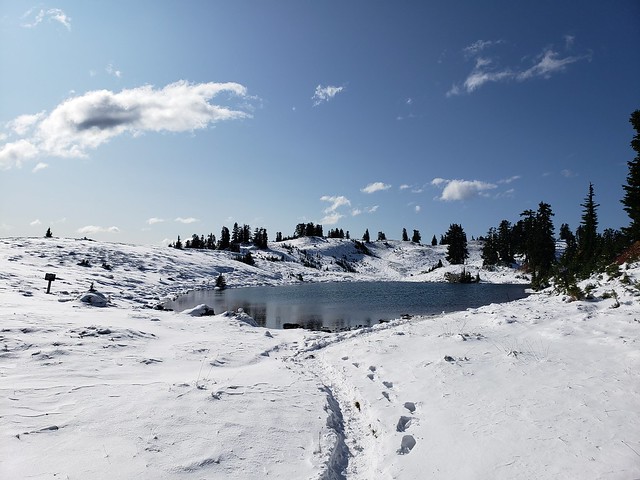
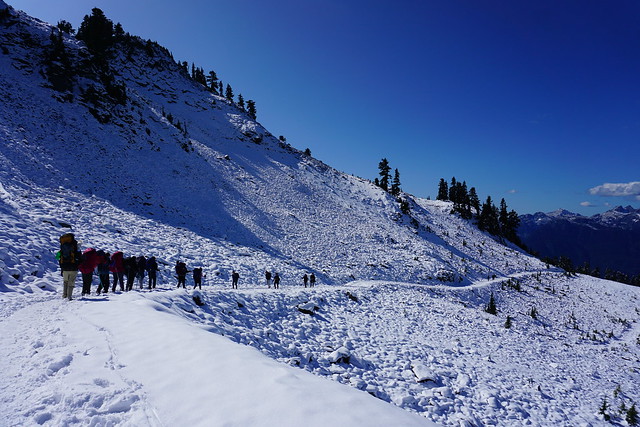
I was worried it was going to be super slippery on the way down and was concerned about not having spikes (my friend once broke her arm in similar conditions), but the snow was still fresh enough that it hadn’t been compacted into ice yet, so it wasn’t too bad. We had a little photo shoot on the ridge looking down on the lake and then hiked back to the Red Heather hut for lunch again.

We had one more spot of adventure on the way down. One of the girls rolled her ankle about a kilometre from the end, but fortunately it seemed to be only sprained and she was able to slowly walk the last little bit out. We divvied up some of her gear and strapped the rest of the pack to my front to carry it out and we all made it down to the parking lot in one piece!

With the exception of the first photo, all pictures were taken on Day 2!

DSC00598

Artist Point Snow Camping

Well it’s that time of year again! Time for my annual snow camping trip with Carolyn and Brandon! It’s a new hobby for us, so we’ve been trying to get out at least once a year to work on our snow camp skills. Carolyn broke her ankle back in July last year and it’s been a really long time healing, so this was our first time out together since last Spring. We have a few snow camps on our bucket list, but we wanted a shorter one for her first snowshoe since breaking her ankle, so we decided to try Artist Point in Washington. It has a fair bit of elevation gain, but it’s not very long – only 6km round trip.

DSC05439

Our first discovery though was that camping across the border sucks. I made a few trips down to Washington this year with Lien for day hikes, but when you’re trying to pack for an overnight trip, it’s a big hassle. We had to leave snacks like jerky, dried mango, cheese, and trail mix behind, and modify our normal camp dinner. Brandon makes a mouth watering backcountry thai curry chicken that we eat on almost every adventure, but we couldn’t bring the chicken or veggies across, so we opted for my dehydrated vegetarian chili and macaroni instead. The chili is fine, it’s just not quite as rewarding as thai curry chicken (okay A LOT less rewarding).

So crossing the border was definitely a pain, but I have to admit, we’ll probably keep on doing it because there are some really great hikes in the Baker-Snoqualmie National Forest. The actual border crossing was quick because we crossed in Abby at the Sumas Crossing and drove to Mount Baker from there. I snowshoed to Artist Point last year, which was what inspired me to try snow camping there this year. In the summer you can drive most of the way up to Artist Point, but the road and parking lots aren’t plowed in the winter. There’s a ton of open space at the top for the parking lots, which is why I thought it would be a great place to snow camp!

IMG-20200301-WA0035

We started hiking up sometime around noon. The last time I’d hiked up there it was a bluebird day and there was a million other people on the trail, but it was a bit overcast when we went, so there was definitely less people around, which was nice. The area had also received a massive dump of snow the night before (60 cms!), so the entire area was covered with a fresh blanket of shimmering powder. It was definitely a snowshoe day (as opposed to spikes). We had nice views hiking up, though the occasional clouds moved through, sometimes obscuring our view of the mountains, but not our visibility.

That changed a bit when we reached the top. You come up a pretty steep slope before getting to a large flatish base area where the parking lot(s) are located in the summer. The area attracts a lot of backcountry skiers and from there some hike up to Artist Point (another ~15-20mins), while others continue on to table mountain or down into the bowl going back towards the (base) parking lot. We didn’t want to camp right on Artist Point because it’s pretty exposed, but planned to find a somewhat sheltered spot around the parking area. Once we crested the last slope though, the fog moved in and it became harder to see where we were going. Plus in the winter it’s really hard to tell what is actually the parking lot. We wanted somewhere sheltered, but also with a good view. We ended up picking a spot looking out towards Table Mountain and Mount Baker that had a few banks sheltering it on either side.

DSC05463

Fortunately the fog moved out again and our visibility improved a lot while we were setting up camp. We always dig out tent hole too small, so Carolyn outlined a truly massive site for us to shovel out this time. It was clearly too big, but for some reason none of us argued with her and just got to work shoveling! It took quite a while because there had been so much snow the night before and we had to dig down about a metre before we could finally start stomping it down and compacting the snow. Eventually we got enough space for the tent and realized we’d kind of over-shoveled a bit if we still wanted a snow wall to provide some shelter for the tent, so we built up a snow counter on the last side and made a pretty slapdash kitchen that actually ended up being pretty good.

The later it got, the fewer people around, but one giant group showed up in the middle of the afternoon – it must have had 40 people! We think it was an avalanche safety course because there seemed to be one guide and they started digging some shelters themselves. It was obvious from their packs they weren’t staying overnight, so we kept joking they should come dig out our hole for us since they weren’t going to use theirs anyways!

DSC05530

The temperature was around -5 degrees, which in my opinion is perfect for snow camping because you don’t want the snow to be wet at all. It continued to snow on and off as we were setting up our shelter, but the wind kept down and we didn’t have any problems. I love snow camping, but it is definitely a lot more work. It was pretty late in the afternoon by the time we finished the shelter and we decided we wanted to start melting snow for water right away since it takes forever and it gets dark early. It did take a long time, but fortunately the snow was all very clean and it tasted a lot better to drink than the snow on some of our previous trips. We started dinner before dark, but it was definitely dark by the time we finished and started cleaning up.

We puttered around camp for a bit with our headlamps, cleaning up and sharing Carolyn’s flask. Eventually we climbed into the tent because we always look forward to getting into our sleeping bags on a cold winter night. By the time we were all geared up and ready for bed, Carolyn asked me to check the time and I turned on my phone to see 7:30pm staring back at me! I couldn’t believe it! We all knew the sun sets early, but we had a good laugh at ourselves all set up and ready for bed that early! At Elfin Lakes I’d set up and done some star photography, which kept us up a bit later, but the clouds were moving around a lot and it wasn’t really a great night for star photos, though we did catch a great view of Orion at one point.

DSC05598

We read for a little bit, but it’s cold with your hands and arms out of your sleeping back, so it was probably still only 8:30pm when we turned off the lights and went to bed. Carolyn was thrilled about it because she loves to go to bed early without anyone making fun of her for it! As usual, it was a fair bit of work to keep warm overnight, but we all managed it and it was 7:30am before we finally got up.

It was a big change from the previous night when we crawled out of the tent. It was a gorgeous bluebird day with the sun shining down on us! We wanted to make first tracks up to Artist Point, so we grabbed some snacks and postponed breakfast to hike up to the point. It was definitely a good way to warm up! We were all sweating by the time we reached the top and we stayed up there for a while taking photos and goofing around in the snow. The landscape looked much the same as the last time I’d snowshoed up there, which was also a bluebird day, but the big difference was that we were the only people on the mountain.

IMG-20200301-WA0005

The point gives a great view of Mount Shuksan, but the Baker side stole my attention on this trip because there were a ton of clouds sitting in the valley around it and it felt really cool to be up above the clouds. While we were up there we noticed the fog was starting to creep up the valley on both sides and we decided to trek back to the campsite for breakfast. By the time we got back the fog had totally moved in and within 30 minutes you couldn’t see any of the view any more! I felt bad for all the day hikers and skiers coming up later, but lucky that we got to enjoy the nice weather before the clouds moved it. It wasn’t snowing, but visibility was pretty bad and I can see how it would be easy to get lost in those conditions. So it was a good reminder of how fast things can change in the backcountry.

Otherwise it was a pretty uneventful climb down. Snowshoes definitely aren’t as fun going downhill, so we had a few stumbles on the way down, but no more injured ankles! I think we can definitely call this trip another success!