14 Free Backcountry Campsites in BC

Welcome back to the second part of my 2-part series to help you get camping with minimal advance planning, in any season! Part 1 focused on permitted campsites (that don’t require reservations) and Part 2 focuses on unpermitted (free) campsites! 

Camping is incredibly popular in BC, especially near Vancouver. The popular campsites require reservations that release 4 months out and being coordinated to plan so far in advance can be a real challenge for people. It might seem like all the good campsites are booked, but there are lots of great options that don’t require advance bookings!

HOP_4999

Why do some campsites require a permit and others are free?

The simple answer is that a lot of free campsites are located on crown land or in BC recreation sites (also considered crown land). The land doesn’t have park status, so it generally receives limited maintenance or it is maintained by users and volunteers. As a result, free campsites are often more rustic than traditional permitted campsites. There are lots of campsites located on crown land that are privately managed, either by for-profit or non-profit groups, and those campsites will usually have a campsite fee to go towards ongoing maintenance, though some non-profits will fundraise for the upkeep of facilities, like on the Sunshine Coast Trail.

That said, there are still some free campsites located in provincial parks, especially the further you get from the lower mainland. I don’t know the exact reason why some campsites have permits and others don’t, but I think it’s likely related to the popularity of a park and how much maintenance the park gets. For example, I visited South Chilcotin Provincial Park last year for 6 nights and didn’t pay any camping fees, but the park is very remote, has limited infrastructure, and several of the places we camped were considered wild camping (no outhouse or bear cache). When sites become more popular, permits will often be introduced.

If you are visiting a free campsite that does not have bear cache facilities or an outhouse, it is absolutely essential to practice bear safety and leave no trace practices. You must hang your food or bring a bear bin. In addition, you must be prepared to dig catholes or use a wag-bag, and pack out your toilet paper, pads, and tampons. It is not acceptable to poop in the woods without burying it, or to leave your toilet paper around the backcountry. We are so lucky to have access to incredible backcountry in Canada and we need to respect it.

Campsites Near Vancouver
Hanging Lake

DSC09695

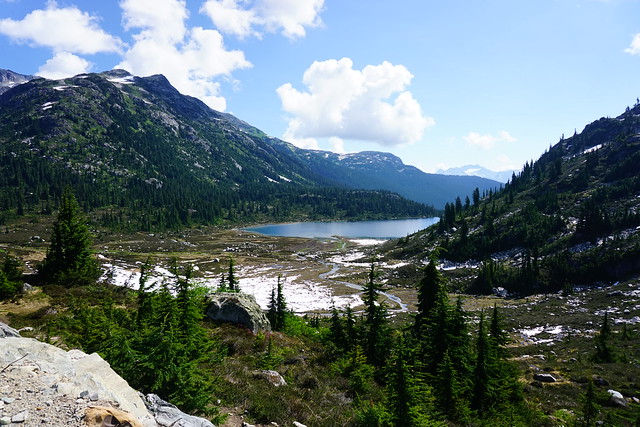
Hanging Lake is located in Whistler, sharing a trailhead with the Rainbow Lake trail on Alta Lake Road. Rainbow Lake is Whistler’s water supply, and as such, it’s a protected watershed area, so you’re not allowed to camp there. But if you hike a few more kilometres over Rainbow Pass to Hanging Lake, you can enjoy a nice view from the pass and a relaxing night at the lake. It’s a 10km trail to the lake, but the real challenge comes from climbing 800m of elevation along the way. There’s a fair bit of space for tents at Hanging Lake and there is an outhouse and a bear cache. You can also access this trail from the Rainbow Madeley trailhead near Madeley Lake.

Tikwalus

20220528_140213

In my opinion, Tikwalus Heritage Trail is an underrated trail along the Fraser Canyon. To access it, you take Highway 1 past Hope until you pass Alexandria Bridge Provincial Park. The Tikwalus Heritage Trail has been used by indigenous peoples for generations, and in more recent history, it was used by fur traders. It’s only 6km along a semi-loop trail to the campsite, but you’ll climb almost 800m in elevation, so it’s steeper than Hanging Lake. Most of the trail is in the trees, but there are some beautiful mountain views from the campsite. There’s lots of space for tents, as well as an outhouse and a bear cache. There’s no water source directly at the campsite, so fill up at the creeks on the way up to save yourself having to backtrack.

Brunswick Lake / Deeks Lake

DSC07712

Deeks Lake and Brunswick Lake are both located on the Howe Sound Crest Trail, but are accessible from the northern trailhead at Porteau Cove if you’re not doing the 30km thru hike from Cypress Mountain. Both lakes are beautiful and offer an easier alternative to the strenuous Howe Sound Crest Trail. It’s 6.5km to Deeks Lake (which is the smaller site) and 10km to Brunswick Lake, however there’s almost 1200m of elevation gain along the way. Most of the elevation gain is in the first 6.5km to Deeks Lake, making this part of the trail the steepest on my list. Of the two lakes, Brunswick is the most scenic and has more room for camping. It’s also important to note there are no facilities at either site, so be prepared to hang your food and dig catholes.

Flatiron

DSC06682

Keeping in theme with the previous trails, the trail to Flatiron is just as steep, climbing over 800m in ~5.5km, with most of the elevation gain in the first 3.5km. It’s located in the Coquihalla Summit Recreation Area off Highway 5 and shares a trailhead with Needle Peak. The first section of the trail is a huge slog through the forest, but the views are incredibly rewarding. Once you pass the junction for Needle Peak, there’s a small lake where you can camp. You can also camp at the summit of Flatiron, but there’s no water source up there. There are no facilities at either site, so be prepared to hang your food and dig catholes.

Brew Lake

PSFix_20201005_141152

Brew Lake is less steep than some of the other trails on this list, but still a big hike, covering 900m of elevation gain over 8.5km. However, if you have access to a 4×4 vehicle, you can reduce some of that distance along forestry roads. We parked along Brew Creek FSR, at the entrance to Branch 50, and hiked the entire trail from there, including 3.5km along other FSRs. This isn’t a very popular site, so it’s a nice place to go to escape the crowds. There are no facilities, so be prepared to hang your food and dig catholes.

Fairview Bay / Manzanita Bluffs

20220804_200318

We have finally arrived at some options that are not super steep! Both of these sites are located on the Sunshine Coast Trail, which has lots of possibilities for backpacking trips. The whole trail is 180km long, but there are lots of sections that can be done over a day or two. The campsite at Manzanita Bluffs, located on the north end of the trail, is especially beautiful. I also really like the campsites at Fairview Bay and Rainy Day Lake, located on the south end of the trail. All campsites along the trail have outhouses and most of them have bear caches or huts. They do not all have water sources, so plan accordingly. While these sites are free, I do recommend a donation to qPAWS if you opt to stay in one of the huts.

Campsites Accessible by 4×4 Vehicle
Tricouni Meadows

20220820_132359

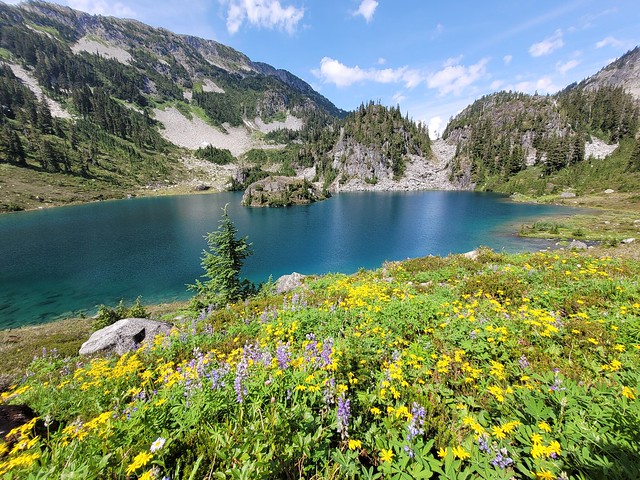
Tricouni Meadows is a popular campsite located northwest of Squamish. The trailhead is located on Branch 200, off of Squamish River FSR. If you can make it all the way to the trailhead, the hike to the campsite is just over 3km, with 250m of elevation. However, there was a large wash-out on Branch 200 when I did this hike in 2022. If you park at the wash-out, it adds 3km to the trail. In 2022, some vehicles could get through, but I’ve heard it’s gotten worse, so play it safe. There are 3 lakes near the meadows, with the campsite located at the middle lake: Spearhead Lake. It’s not a large campsite, so I recommend getting there early. There are no facilities, so be prepared to hang your food and dig catholes.

Blanca Lake

20240721_074347

Blanca Lake is another campsite located northwest of Squamish. In general, I would say this road is in better shape than the road to Tricouni, but it’s further away. The trailhead is located off E300 on the Elaho Mainline. The trail is 4.5km, with almost 500m of elevation gain. It starts off pretty steep, but then levels out along the middle. The view from Blanca Lake is incredible and there is tons of space for camping. Give yourself extra time to explore around the alpine once you get to the lake. There are no facilities, so be prepared to hang your food and dig catholes.

Conglomerate Flats / Manson Ridge

PSX_20230807_175855

Both of these campsites are located on the HBC Heritage Trail that runs 70km between Hope and Tulameen. Manson’s Campsite is located on the Hope end of the trail (off Peers Creek Road), so you don’t need 4×4 to access this site, but if you want to access Conglomerate Flats for a night, then you need 4×4 to get the trailhead at Jacobson Lake Rec Site (off Tulameen FSR). Both sites are beautiful, though Conglomerate Flats is the more stunning of the two. It’s 6.5km and 600m of elevation gain to Manson’s Camp from the southern trailhead, and 2.5km and 150m of elevation gain to Conglomerate Flats from Jacobson Lake. Both campsites have outhouses and bear caches.

Winter Campsites

Falls Lake / Zoa Subpeak

PSX_20210314_215122

Both of these sites are located in the Coquihalla Summit Rec Area off highway 5. Falls Lake is a great site for beginners because you only have to snowshoe 1km along the road (which isn’t plowed in the winter) and 1km to the lake. Zoa subpeak is a bit more challenging as it’s 550m of elevation gain over 4km. Both trails are located in simple terrain, but make sure to stop at Zoa Subpeak – if you try and snowshoe all the way to the true peak, you will be entering challenging avalanche terrain. I’ve never actually been to Falls Lake, but I believe there is an outhouse. There are no facilities at Zoa Subpeak.
Ottomite Peak

20230204_135419

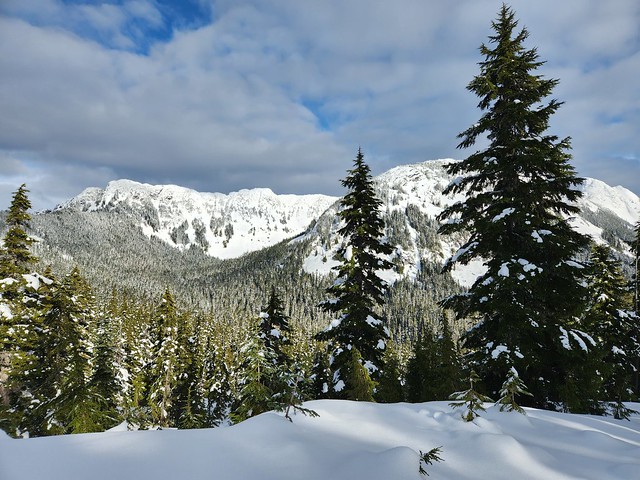
Ottomite Peak is also located in the Coquihalla Summit Rec Area off highway 5. The trailhead is at the Zopkios Rest Area. It’s a 4.5km trail with 300m of elevation gain to get to the summit. It was completely empty when I camped there, but the general area is popular among ski tourers, so you may see people along the trails for the day. The trail is in simple terrain, but always exercise caution – in general, I always recommend taking an AST1 course. It’s not a challenging trail, but there are no facilities.

Water Access Campsites
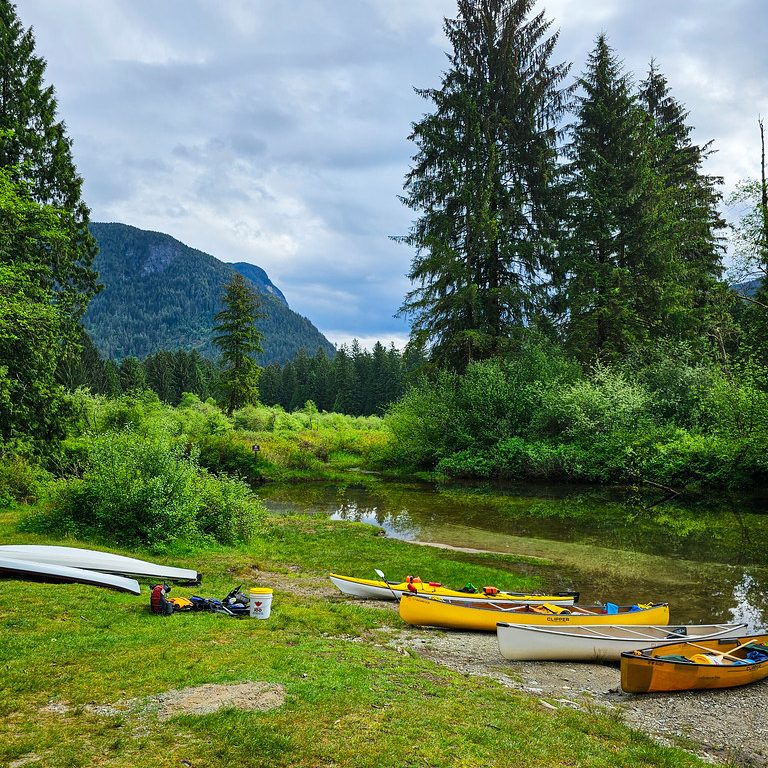
Widgeon Creek

A photo of a line of canoes on the shore of Widgeon Creek at the Widgeon Campsite in Pinecone Burke Provincial Park, with the mountains and trees in the background on a cloudy day in BC.

Widgeon Creek is located near the lower mainland and is extremely popular on summer weekends. It’s a ~5 paddle across the Pitt River and up Widgeon Creek to get to the campsite. You can rent canoes or kayaks at Pitt Lake. There are lots of campsites and great facilities, including a large bear cache and 2 outhouses. But I recommend getting their early on a nice weekend to beat the crowds. From the campsite, you can do a day hike to Widgeon Falls.

Twin Islands / Granite Falls

20240810_114057

Twin Islands and Granite Falls are two campsites located in Indian Arm, so they are very accessible from the lower mainland. As a result, they are very popular on summer weekends, attracting paddle boats and motorized boats. You can rent kayaks from Deep Cove. It’s only 5km to paddle to Twin Islands, so this is the easier campsite to access. You’re only allowed to camp on the north island, but it has an outhouse (no bear cache since it’s an island). Granite Falls is at the far end of Indian Arm and is an 18km paddle from Deep Cove, so you should be an experienced paddler if you want to do this trip. It has 2 outhouses and a bear cache, but it’s severely undersized. Be prepared for northern afternoon winds.

Nine Mile Point / Kunechin Point
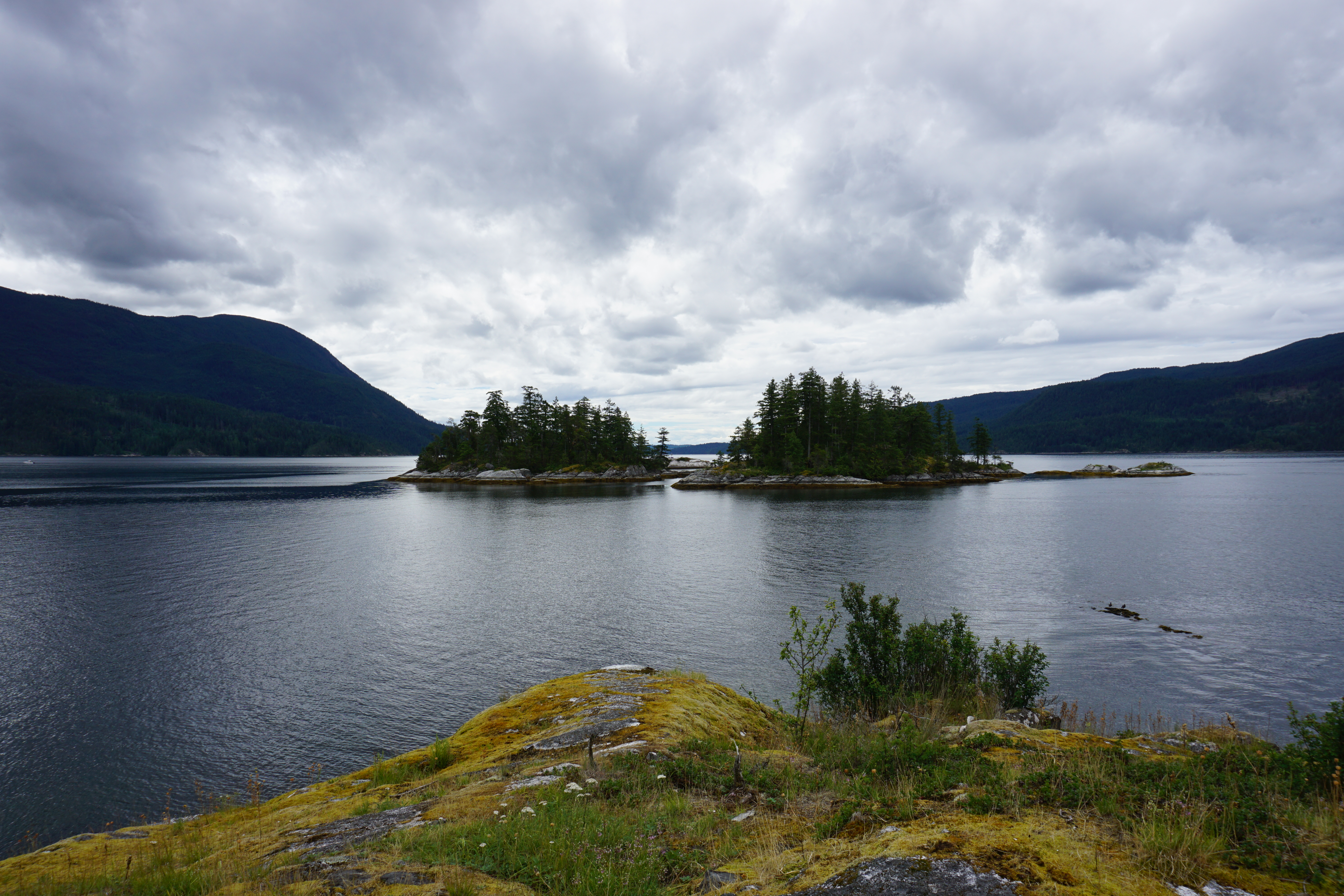
A photo from Kunechin Point in Sechelt Inlet on a kayaking trip, with the water and mountains in the background on the Sunshine Coast in BC.

Nine Mile Point Beach and Kunechin Point Campsite are both located in Sechelt Inlet on the Sunshine Coast. There’s a kayak rental place at the end of Sechelt Inlet Road, where you can launch from. It’s ~6km to paddle to Nine Mile Beach and ~10km to paddle to Kunechin Point, but the latter involves crossing the arm of the inlet, which can get windy. Both are beautiful sites and have outhouses, but no bear caches.
Garibaldi Provincial Park Guide

If you live in BC, chances are you’ve heard of Garibaldi Provincial Park. I’m not sure if it’s quite as popular as some of BC’s National Parks, but it’s certainly developed a pretty wide-reaching reputation. Garibaldi Park is a large backcountry access park near Vancouver that captures a lot of the wilderness area east of Squamish and Whistler. You can’t drive to any of the park attractions, but it has not slowed down the number of visitors to the park. 

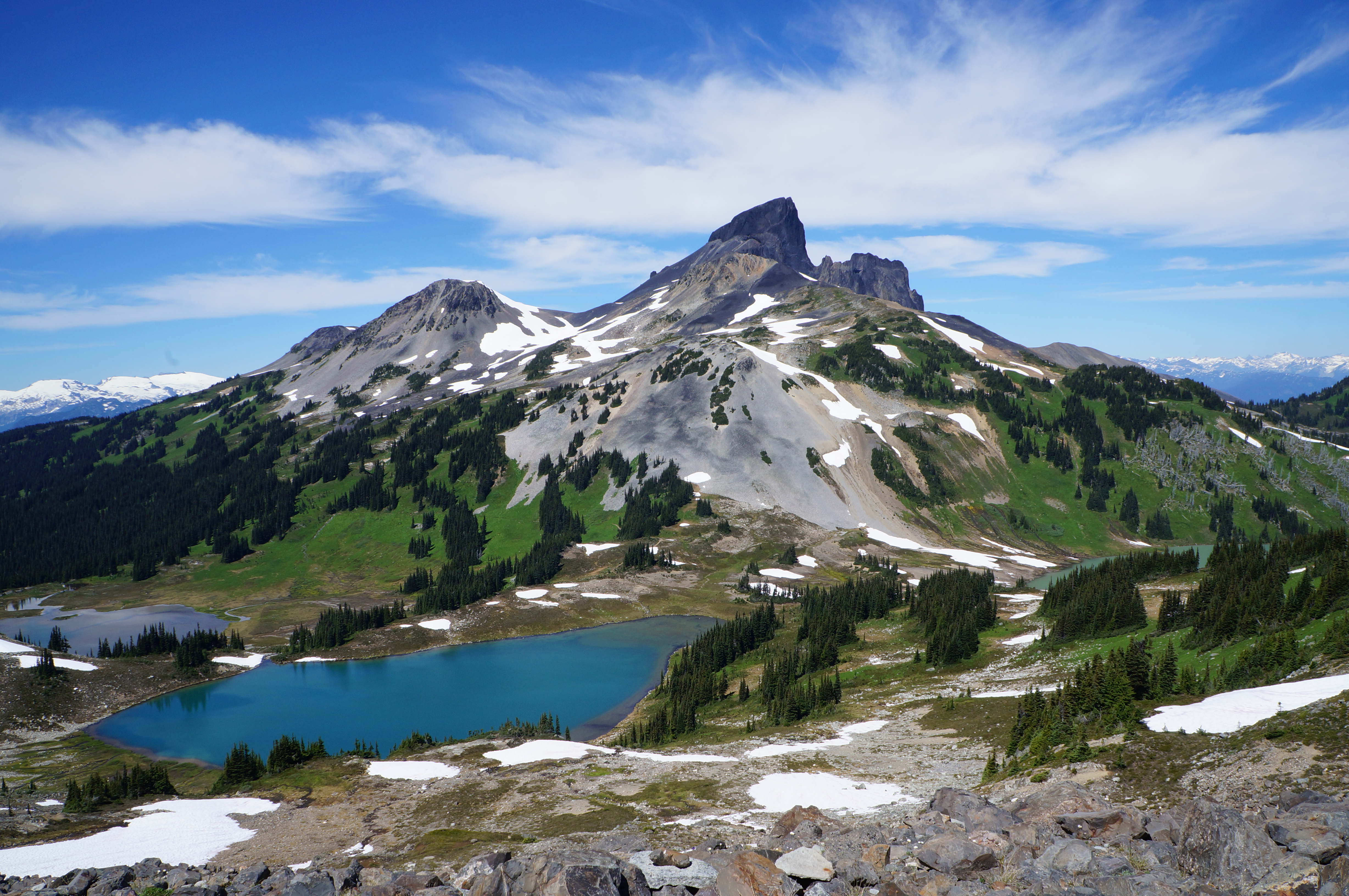
A photo of Black Tusk as seen from Panorama Ridge in Garibaldi Park on a blue sky day in the summer, with the alpine meadows and mountains in the background and lake in the foreground in BC.

Getting There

It’s impressive that Garibaldi Park gets as many visitors as it does when the access to the park is solely self-powered. The park is located between Squamish and Whistler, with several key park entrances at Diamond Head, Rubble Creek, Cheakamus, Whistler, and Wedgemount. Diamond Head is closest to Squamish, while the rest of the park entrances are closer to Whistler, so it can be a bit of a drive from Vancouver. I always give myself 1.5-2 hours of driving to get to the trailhead. Parking is generally secure, but there’s always the risk of break-ins, so don’t leave anything in your car.

Driving is by far the easiest way to get to the park, as public transit is not available. There is a park shuttle (Parkbus) that runs from Vancouver to Rubble Creek (the trailhead to Garibaldi Lake and Panorama Ridge) during late June to early October. The bus only runs on Fridays and weekends, and will book up early for Saturdays. Otherwise, there’s not many options and you’re best off trying to carpool with others via a facebook hiking group if you don’t have a car. 

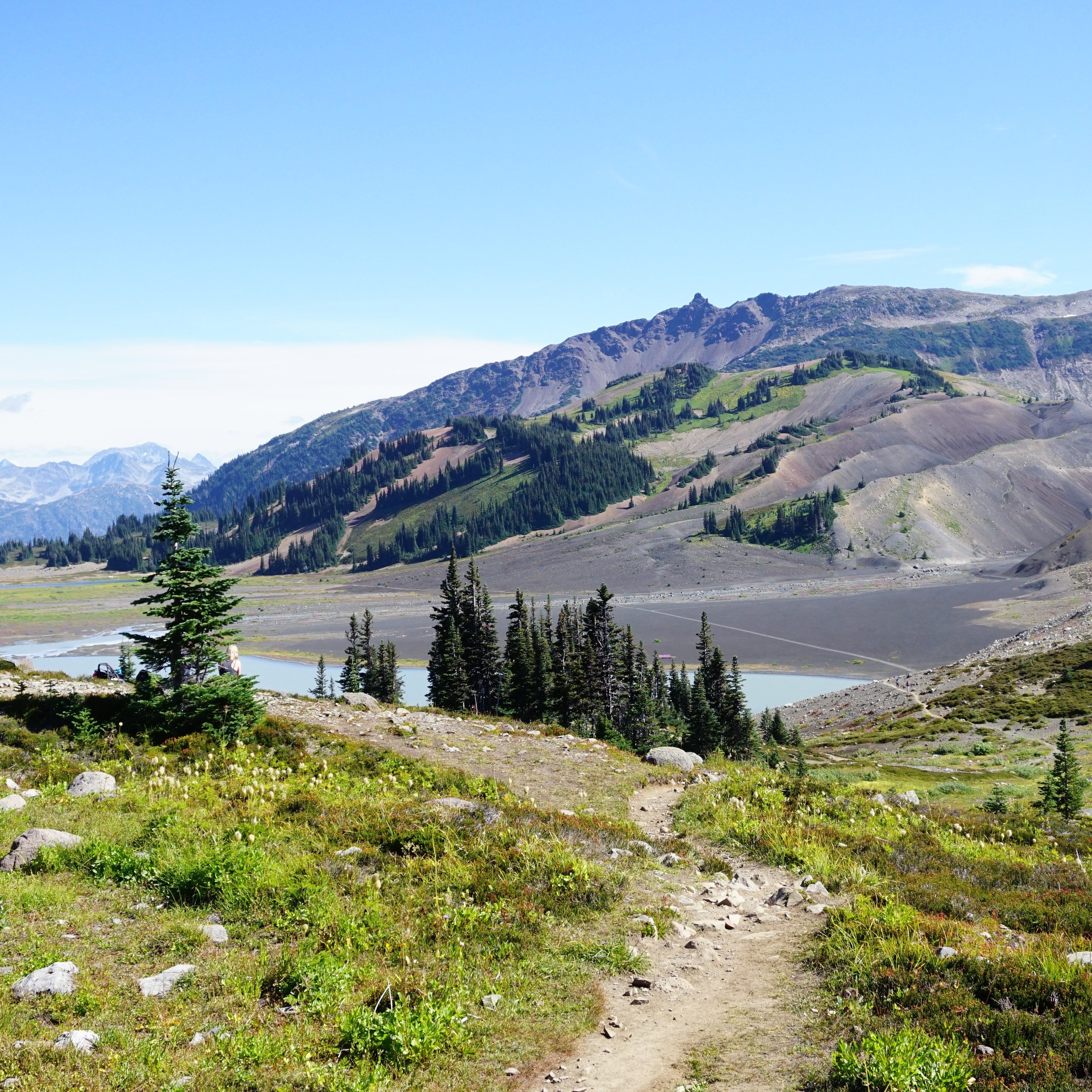
A hiking trail extends through the alpine of Garibaldi Provincial Park towards Helm Lake, with the forest and mountains in the background on a sunny day in British Columbia, Canada

Activities

The most popular activity in the park is day hiking. Visitors park at a trailhead and spend the day hiking to various viewpoints in the park. The trails are all well maintained and make for a very scenic day in the backcountry. However, most of the trails cover considerable distance and elevation gain in a remote environment, so visitors should be prepared with the 10 essentials and leave a trip plan with someone they trust. For more information on trip preparedness and trip planning, see my Safety post.

Backpacking is also popular as there are 10 beautiful campsites spread throughout the park that can be visited as single night trips or along thru hikes. Biking isn’t permitted everywhere, but you can bike from Diamond Head and Cheakamus Lake, which is a popular activity for cyclists. Finally, lots of winter visitors use the park for snowshoeing or ski touring, either as a day trip, or for an overnight expedition. There is one hut available for camping at Elfin Lakes, which is popular in winter. Avalanche Safety Training is highly recommended if you are recreating in the park during the winter. See my Avalanche Safety post.

A group of 3 skiers traverse the ridge on the way to the Elfin Shelter at Elfin Lakes in Garibaldi Provincial Park, BC. It's a beautiful sunny day with lots of snow and the forest and Diamond Head Mountain in the background.

Permits and Day Passes

In the 10+ years I’ve lived in BC, Garibaldi has always had a reputation as a crowded park. In 2016, BC Parks brought in a reservation system for their backcountry campsites to reduce the impact to the natural environment from overflow camping. If you want to camp at any of the backcountry campsites, you will need an overnight permit. These are available on camping.bcparks.ca for $10 per person ($5 for youth), per night, and release 4 months in advance of your desired date. So if you want to camp on Aug. 15, make sure to book your pass on Apr.15. 

During the pandemic, BC Parks further regulated park use by employing a free day pass system from mid June to mid October to manage parking at the trailhead and impacts to the park from overuse. While these passes are free, they have generated a lot of criticism and frustration from visitors struggling to obtain a pass. The day passes release 2 days before your desired date at 7am, and from what I understand, they can be challenging to obtain due to popularity. My recommendation is to be ready at 7am and keep refreshing for up to 15 minutes. If you make a reservation on Parkbus, it includes a day pass.

The sun shines down during golden hour on Wedgemount Lake with the hut and the mountains in the background in Garibaldi Provincial Park, BC.

When to Visit

The park is popular year round, but it is important to understand that travel through the park has much higher risks in Winter and Spring. The most popular time to visit the park is in the summer (from July to September), but be aware that summer in the mountains is much later than summer in the city. You can usually hike to Garibaldi Lake starting in late June, but the snow in the alpine and along the trails to Panorama Ridge and Black Tusk may have snow on them into late July. Early Fall is also a good time to visit the park, but be aware that temperatures will drop quickly in the mountains and that limited daylight hours can make certain trails more challenging. 

Winter can also be a great time to visit the park, but avalanche safety training is highly recommended no matter where you’re going. Snowshoers and ski tourers will travel to Elfin Lakes and the privately managed Kees and Claire Hut at Russet Lake in the winter. Both of these routes pass through challenging avalanche terrain and I strongly advise completing an AST1 course before attempting these routes. The Red Heather Hut is also a popular location for skiers who want to do a few laps on Round Mountain before heading home. This carries less risk than the other trails because the route is only in simple avalanche terrain, but you should still exercise caution and be prepared. 

A female hiker looks tiny in comparison to the large Wedgemount Glacier in the background in Garibaldi Provincial park, BC.

Trails

There are so many trails to explore in Garibaldi Park. I’ve hiked all of them, with the exception of the winter glacier routes. Here’s some more information on trail options and links to dedicated resources for each trail. Please note that trail distances and elevation gain are approximate.

Garibaldi Lake (18km, 800m gain) – A great option for summer day hiking, or winter snowshoeing (with AST1). Probably considered the most popular hike in the park, with the trailhead at Rubble Creek.

Panorama Ridge (29km, 1500m gain) – Completed by some visitors as a long day hike (12 hours), but recommended as part of a backpacking trip (day hike from the campsite at Garibaldi Lake or Taylor Meadows). This is a very popular trail, with the trailhead at Rubble Creek. Only recommended in the summer.

Black Tusk (25km, 1400m gain) – Completed by some visitors as a long day hike, but recommended as part of a backpacking trip (day hike from the campsite at Taylor Meadows). This is a very popular trail, with the trailhead at Rubble Creek. Only recommended in the summer.

Mount Price (25km, 1400m gain) – Completed by some visitors as a long day hike, but recommended as part of a backpacking trip (day hike from the campsite at Garibaldi Lake). This trail is not very popular and requires some wayfinding, with the trailhead at Rubble Creek. Only recommended in the summer.

Helm Creek (16km, 650m gain) – Most often used as an alternative route when backpacking to Panorama Ridge or as a thru hike from Garibaldi Lake. The trailhead is at Cheakamus Lake and this route is less popular than the trails from Rubble Creek. Only recommended in the summer.

Garibaldi Thru Hike (~30km, 1500m gain) – Only completed as a backpacking objective in the summer. People will hike from Rubble Creek to Cheakamus Lake, camping at Garibaldi Lake, Taylor Meadows, or Helm Creek along the way.

Cheakamus Lake (9km, 50m gain) – A great option for beginner hikers, backpackers, and mountain bikers. It can be completed in a single day or as an overnight trip, camping at Cheakamus Lake Campsite. The trail is popular in the summer, with the trailhead at Cheakamus Lake. Can also be completed in the winter, but the access road is not plowed, making it a much longer hike.

Singing Creek (16km, 50m gain) –  A great option for beginner hikers, backpackers, and mountain bikers. It can be completed in a single day or as an overnight trip, camping at Singing Creek Campsite. The trail is popular in the summer, with the trailhead at Cheakamus Lake.

Elfin Lakes (22km, 600m gain) – A great option in the summer for day hiking and mountain biking, and in the winter for snowshoeing or ski touring (with AST1). Complete as a day hike or stay overnight at the campground or hut. A very popular trail, with the trailhead at Diamond Head (chains required for your tires in winter). 

The Saddle/The Gargoyles (27km, 900m gain) – An extended trail option from Elfin Lakes, can be completed from the parking lot in a single day, or shortened as a day hike from Elfin Lakes. The trailhead is located at Diamond Head. Only recommended in the summer.

Opal Cone (13km, 350m) – This trail can be completed as a day hike from the campsite at Elfin Lakes, or as a stop along the way when backpacking to Rampart Ponds. The trailhead is located at Diamond Head. Only recommended in the summer.

Rampart Ponds (18km, 500m gain) – This trail can be completed as a day hike from Elfin Lakes, or as a backpacking objective if you plan to stay at the campsite. The trailhead is located at Diamond Head. Only recommended in the summer.

Mamquam Lake (22km, 600m gain) – This Trail can be completed as a day hike from the campsite at Elfin Lakes, or as a shorter route from the campsite at Rampart Ponds. The trailhead is located at Diamond Head. Only recommended in the summer.

Russet Lake via Musical Bumps Trail (24km, 1300m gain) – Completed by some visitors as a long day hike (12 hours), but recommended as part of a backpacking trip, staying at the Russet Lake Campground overnight. This route requires paying for a sightseeing pass on the Whistler Gondola and hiking along the High Note or Half Note trails and the Musical Bumps trail. The trailhead is located at Whistler. It can also be visited in winter, but AST1 is required and a backcountry pass from Whistler Resort. 

Russet Lake via Singing Pass Trail (27km, 1200m gain) – Completed by some visitors as a long day hike, but recommended as part of a backpacking trip, staying at the Russet lake Campground overnight. The trailhead is located at Whistler and this route avoids having to pay for a pass for the gondola. Only recommended in the summer.

Wedgemount Lake (14km, 1200m gain) – This trail can be completed as a day hike or an overnight backpacking trip to the Wedgemount Lake Campsite. Overnight is recommended due to the substantial elevation gain. The trailhead is located at Wedgemount Creek. Only recommended in the summer.

Garibaldi Neve – This is a winter route for experienced alpinists only as it involves glacier travel. It is generally completed over 2-3 days and avalanche training and snow camping experience are required. I don’t have any experience with this route, please look elsewhere and do sufficient research and training before attempting.

Spearhead Traverse – This is a winter route for experienced alpinists only as it involves glacier travel. It is generally completed over 3-4 days and avalanche training and snow camping experience are required. I don’t have any experience with this route, please look elsewhere and do sufficient research and training before attempting.

A group of campers sit on the ground surrounded by camp food, pots, and stoves, preparing their dinner on the beach with the trees and lake in the background at Cheakamus Lake Singing Creek Campsite in Garibaldi Provincial Park in British Columbia, Canada.

Campgrounds

All campgrounds in Garibaldi Park require permits from camping.bcparks.ca. These release 4 months in advance of your desired date. They are popular, so it is recommended to book exactly 4 months before you want to visit. Backcountry permits are $10 per person ($5 for youth), per night. 

Elfin Lakes Campground – Reservable year round. There are 35 tent pads, several outhouses, picnic tables, a bear cache, and a cooking shelter. 

Elfin Lakes Shelter – Reservable year round. There are 33 bunks and an outhouse. You must bring your own sleeping pad and sleeping bag. 

Red Heather Campground – Reservable in winter only (Dec-Apr) for snow camping. There are no tent pads, but there is an outhouse and a cooking shelter. You are not permitted to sleep in the cooking shelter.

Rampart Ponds Campground – Reservable year round. There are 12 tent pads, an outhouse, and a bear cache. Sometimes this site floods in the summer and is closed.

Garibaldi Lake Campground – Reservable year round. There are 50 tent pads, several outhouses, picnic tables, bear caches, and four cooking shelters.

Taylor Meadows Campground – Reservable year round, except in September and October (I’m guessing because of bears). There are 40 tent pads, several outhouses, picnic tables, a bear cache, and two cooking shelters.

Helm Creek Campground – Reservable year round. There are 30 tent pads, an outhouse, and a bear cache. 

Cheakamus Lake Campground – Reservable year round. There are 10 tent pads, an outhouse, and a bear cache.

Singing Creek Campground – Reservable year round. There are 6 tent pads, an outhouse, and a bear cache.

Russet Lake Campground – Reservable year round. There are 7 tent pads, an outhouse, and a bear cache.

Kees and Claire Hut – While located in the park, this hut is managed by the Spearhead Huts Society (not BC Parks). Bunks can be booked year round for $60 per night and are most popular for touring in the winter.

Wedgemount Lake Campground – Reserable year round. There are 20 tent pads, a seasonal pit toilet, and an emergency hut that can be used as a bear cache. 

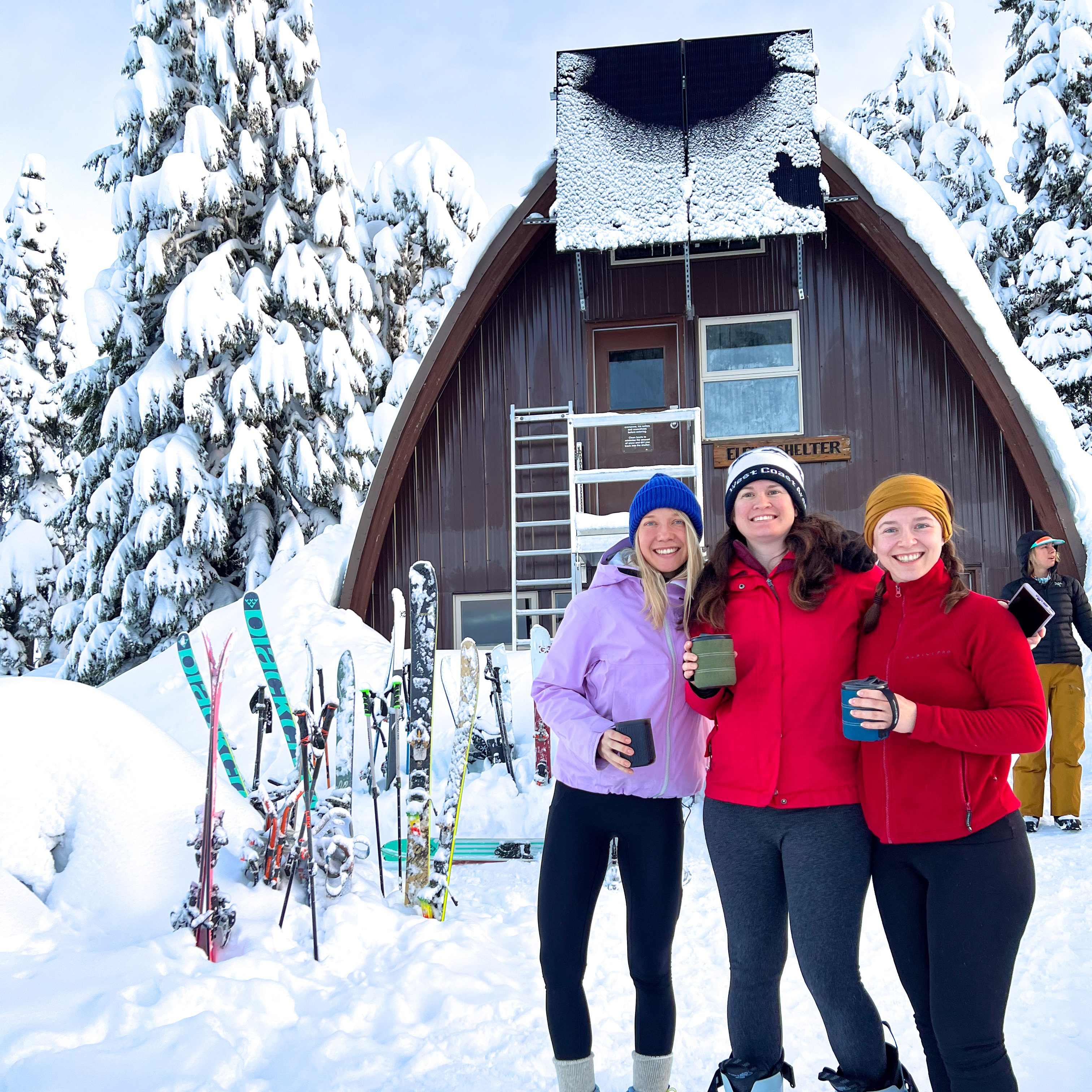
Three female skiers pose in front of the Elfin Lakes shelter on a sunny day in winter with the hut in the background and snowy trees in Garibaldi Park, BC.

Hiking Starvation Lake

I don’t often write about some of the smaller hikes I do, but there are some really nice, lesser known, short hikes out there that can make for a great adventure in the right conditions. Starvation Lake is one of those trails! 

I laughed a bit when I stumbled upon this trail, because the name really doesn’t sell the location. The lake is located not too far out of Squamish, but it’s often overlooked in favour of more ambitious hikes. I stumbled upon it in early July 2024 when I was looking for somewhere to hike that wasn’t still inundated with snow (it was a late snowmelt year). 

20240706_114205
20240706_151139

Starvation Lake is actually a thru-hike trail, measuring ~7km in length. It can be accessed from either Paradise Valley Road or from the Sea to Sky Highway. The lake is located pretty much exactly at the halfway point, so you can choose either end, or park a car on both sides. We opted for the Paradise Valley side of the trail because we didn’t want to park off the highway, but mostly because we also wanted to visit Fergie’s Cafe! 

Fergie’s Cafe is a popular brunch restaurant in Squamish. It’s located on Squamish Valley Road, right before the branch to Paradise Valley Road. It’s nestled along the Cheakamus River and serves the best food! They don’t take reservations, so be prepared for a wait. We managed to get a nice outdoor table where Sadie could “chill”, while we enjoyed our meal. 

20240706_143451
20240706_124749

From Fergie’s, you take the branch on to Paradise Valley Road and drive to the end of the road. Eventually the road turns to gravel for about 400m, so you can either park before the gravel section or drive to the end. If you have the appropriate vehicle, you can continue further along the road by the river, but we opted to just enjoy walking it (to Brandon’s dismay). There’s several FCFS rec campsites along the river, which would make a nice place to camp. 

It’s ~3-3.5km to the lake along fairly well maintained trail. The trail diverges from the river after a kilometre and you start an uphill hike towards the lake. It’s a bit rocky in places, but it flattens out again in the middle of the trail. There’s a final uphill push through the trees and then you end up at the south end of lake. There are a few pocket beaches on the south side, but it’s a small lake, so I recommend continuing around to the other side. There’s a rec site on the north side and there’s more space to have a bit of a beach day. To be clear, there is no beach, it’s just rock, but there’s more space to set up some chairs and relax for a few hours. 

20240706_124803
20240706_143133

It was a hot day, so our main reason for doing this trail was to laze around at the lake. We ended up spending several hours swimming before heading back down to the car. In my opinion, Starvation Lake is the perfect swimming lake! It’s not very big, so it warms up very quickly. I don’t think it’s glacier fed, which also contributes to it being warmer. It only took me about 10 minutes to swim across the lake, which Brandon also did from his floatie. A few other people stopped by while doing the hike or a bike ride and did a quick dip in the lake, but we were the only ones spending extended time there.

I really liked this hike because it’s easy and a great location for swimming. By committing to a 1 hour hike, we managed to avoid the kind of congestion that you find at swimming holes that are directly accessible by car (like Brohm Lake and Murrin Lake). Generally I do prefer to take advantage of the summer season to do bigger hikes, but if you’re looking for a relaxing lake day, this is a great choice! I really enjoyed the experience.

20240706_151625