10 Epic Thru-Hikes in BC

If you’re an avid backpacker already and looking for an epic adventure, there are lots of multi-day trips in British Columbia to whet your appetite. I’ve only done a small sample of what BC has to offer, but these are some of my favourite thru hikes! If you’re a beginner, check out my Guide to Backpacking and Overnight Trips for Beginners posts, as well as my safety resources.

A thru-hike is basically a trip that starts and ends at different locations, allowing you not to repeat any trail. They can be somewhat harder to coordinate and plan because 2 vehicles are often needed and the trailheads may be several hours apart from one another. I don’t recommend any of these trails for true beginners as they are all multi-night trips, several of which are in more challenging or technical terrain. But if you’re an intermediate or experienced backpacker and looking to get outside for extended periods of time, check out some of these trails!

Howe Sound Crest Trail 

The Howe Sound Crest Trail (or HSCT), is the closest trail to Vancouver on this list, as well as one of the shortest. That might lead you to believe that it’s one of the easier trails, but that is not the case. I think a lot of people stumble onto this trail who are not quite prepared for the steep and technical terrain, so definitely proceed with caution. The trail is 30km long and runs from Cypress Mountain to Porteau Cove. It can be done as a 1 or 2 night hike and most people start from Cypress because then it’s a net downhill trail. There are no facilities, so be prepared to do a bear hang and dig cat holes for your waste.

I prefer to do this trail as a 2-nighter and camp at the Enchantments and Brunswick Lake, but there is no water on trail until the halfway point, so if you camp at the Enchantments, you need to do a large water carry. The trail crosses between the Lions and up and down through several small summits. The start and end to the trail are pretty straight forward, but the trail gets very technical in the middle. If you’d like to extend the trip, you can consider summiting Mount Harvey and Mount Brunswick along the way. It’s a gorgeous trail with unparalleled views of Howe Sound. 
Helm Creek Trail

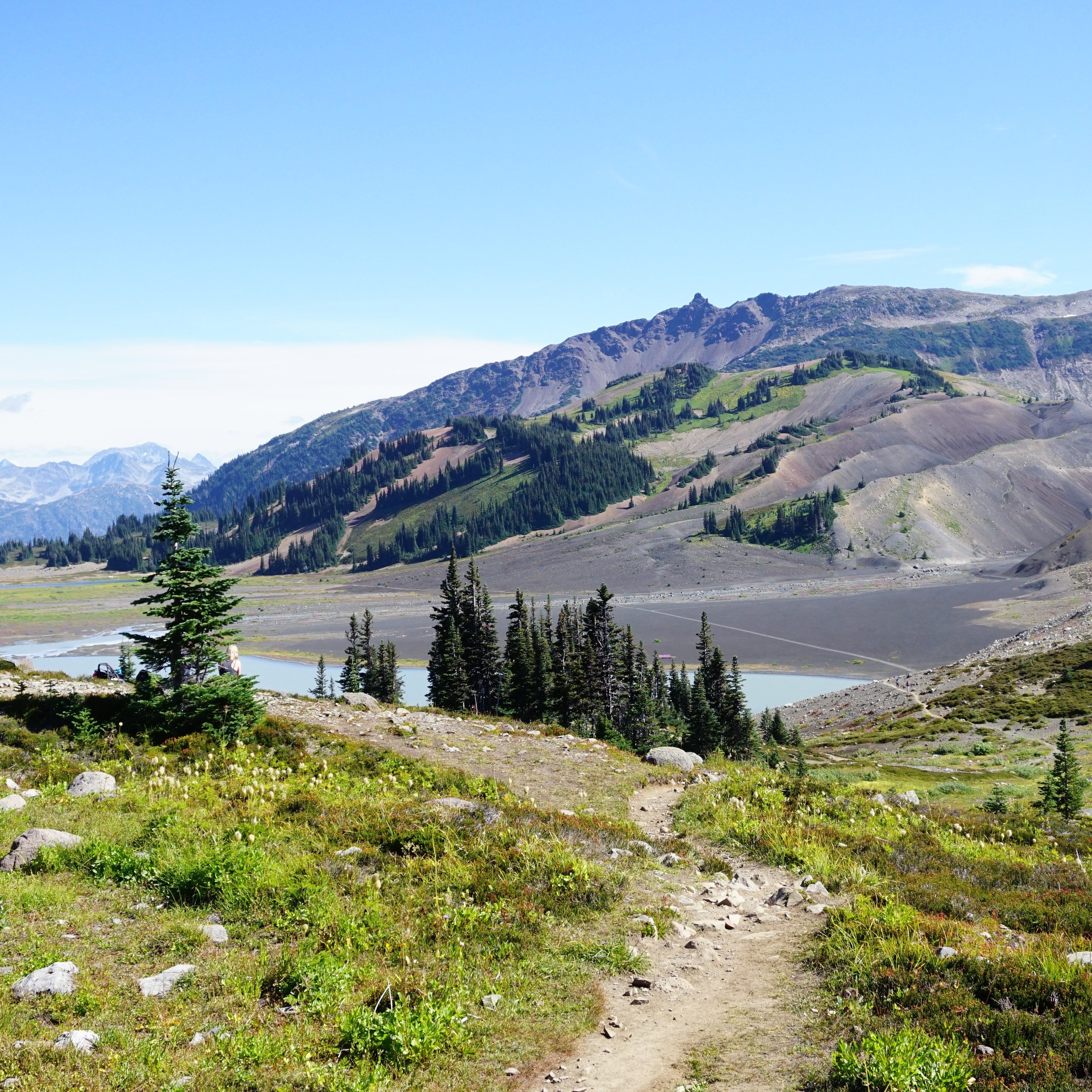
A hiking trail extends through the alpine of Garibaldi Provincial Park towards Helm Lake, with the forest and mountains in the background on a sunny day in British Columbia, Canada

This route doesn’t have a formal name, but extends from Rubble Creek to Cheakamus Lake in Garibaldi Provincial Park, near Whistler. If you’re on my website, most likely you’re familiar with this trail because of the popular trips to Garibaldi Lake, Black Tusk, and the iconic Panorama Ridge. Lots of people explore these trails as a day hike or a 1-nighter from Garibaldi Lake or Taylor Meadows. But I always recommend turning it into a multi-day trip by continuing on to Helm Creek. This trail is more appropriate for newer backpackers because of its substantial facilities. 

This hike can be customized to whatever length you prefer. Start at Rubble Creek and spend a few nights at Taylor Meadows or Garibaldi Lake and explore Black Tusk or Mount Price. When you’re ready to go to Panorama Ridge, pack up your camp and stop at the ridge on the way to the Helm Creek Campsite, which takes you through the gorgeous Helm Lake area. From there, you hike down towards the Cheakamus Lake parking lot. If you want to extend the trip further, make a detour to Cheakamus Lake or Singing Creek campsites. This hike requires camping reservations, which release 4 months in advance of your date from camping.bcparks.ca.

HBC Heritage Trail

A photo of Palmers Pond on a summer day, with the green meadows, forest, and mountains in the background, on the Hudson's Bay Company (HBC Trail) near Hope in British Columbia, Canada.

In my opinion, this is one of the most challenging trails on the list (except for maybe the North Coast Trail). HBC stands for Hudson Bay Company and is a historic trail that was originally used by the First Nations and later by the fur trade. The trail is 74km long and extends through the mountains from Hope to Tulameen. A lot of the trail is through the forest, but it has some gorgeous campsites and views along the way. It’s not an overly popular trail and you likely won’t see many people on it if you like solitude. 

What makes this trail challenging right now is the state of the trail. The trail has been revitalized in recent years and has a dedicated volunteer maintenance group, but the 2021 flood was particularly hard on this area. Volunteers have been working to clear the trail, but there is still quite a lot of blowdown in some sections and the trail does require fording at least 3 rivers. All of the campsites have nice facilities, so if you give yourself enough time to navigate the technical terrain, it is a beautiful trail.
Heather Trail

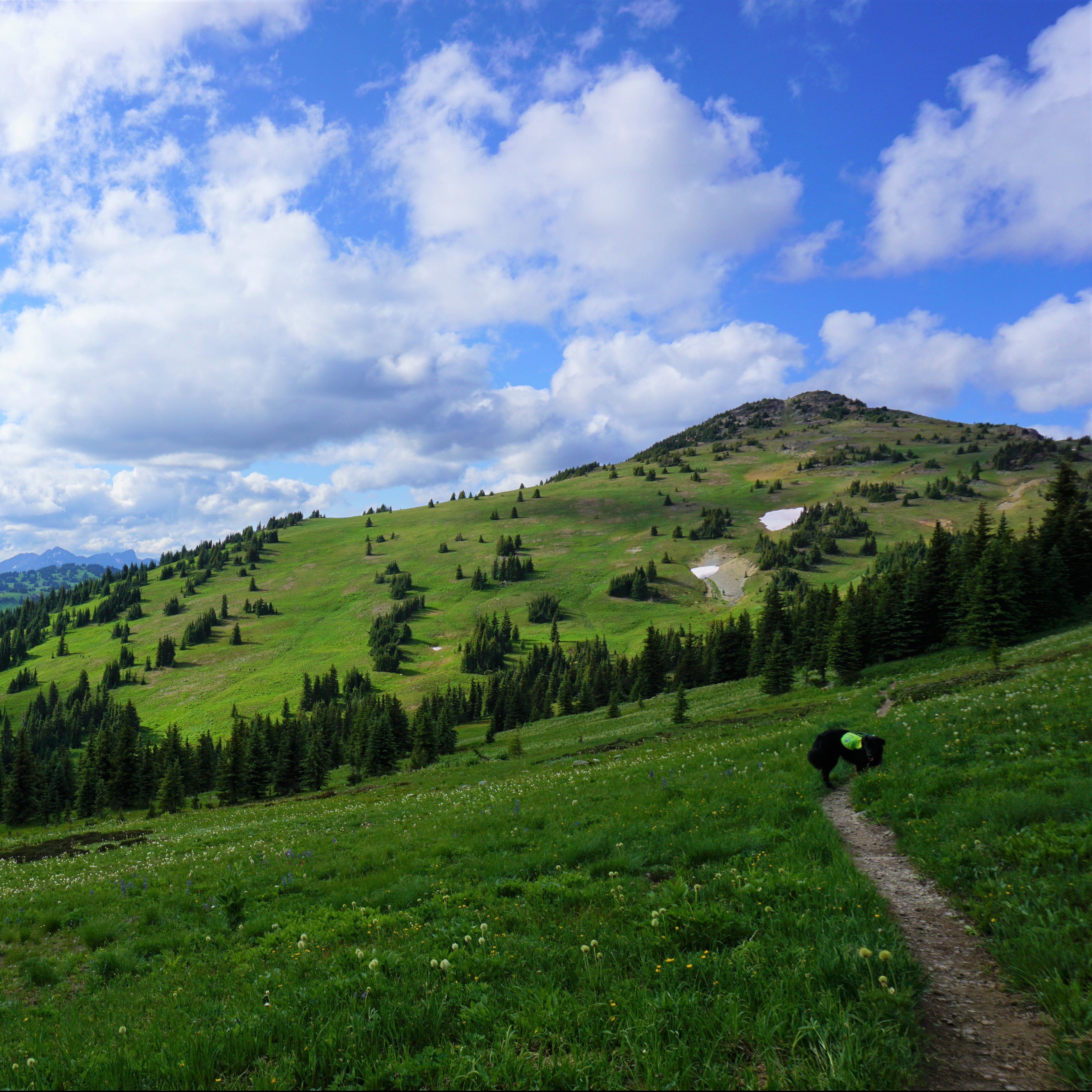
If you’re new to thru-hiking, the Heather Trail would be my recommendation. This is a relatively easy trail, with gorgeous views and brand new facilities. It’s located in E.C. Manning Park and can be done over 2-3 days. The trail starts at the top of Blackwall Road, which means most of the challenging elevation gain is done in the car. Technically, the Heather Trail is 21km, ending at Nicomen Lake and requiring an out-and-back trip. However, if you connect to the Grainger Creek and Hope Pass Trails from Nicomen Lake, you can turn this into a ~40km thru-hike, ending at Cayuse Flats.

Over 2 nights, I would camp at Kicking Horse and Nicomen Lake, or you could add a night at Buckhorn Campsite at the start of the trip and take your time. The trail is all in the trees after Nicomen Lake, and even though it’s 17km from Nicomen to Cayuse Flats, it’s a very easy trail, though there is another campsite option at Grainger Creek. You do need backcountry reservations to stay at these sites as of 2024, which can be obtained 4 months ahead of your trip at camping.bcparks.ca.

Skyline II Trail

I love Manning Park and the Skyline II Trail is one of my all time favourites. This trail is more difficult than the Heather Trail, but still a relatively easy trip. The trail is approximately 25 kilometres from Strawberry Flats in Manning Park to Whitworth Meadow in Skagit Valley Park. There is one campsite at the halfway mark, Mowich Camp. 

While this hike can be done in one night, I highly recommend doing 2 nights at Mowich Camp and making a detour to hike the 15km round trip trail along Hozomeen Ridge and back. This trail will take you to the border monument and a fantastic view of Hozomeen Mountain in the US. The trail itself is easy to follow and takes you through gorgeous alpine meadows. The campsite is pretty basic and the water source can run dry later in the summer. A backcountry permit is needed and can be obtained 2 weeks prior to your trip at camping.bcparks.ca.

Sunshine Coast Trail

Sunny view of the ocean and beach at Fairview Bay on the Sunshine Coast Trail in British Columbia, Canada

This is the longest trail on my list, but is hands down my favourite thru-hike ever! The Sunshine Coast Trail (or SCT) is 180km and extends through the entire upper Sunshine Coast, from Sarah Point on the Malaspina peninsula, to Powell River, and down to the ferry at Saltery Bay. The SCT is unique because it is a hut-to-hut hiking route, which means you can do the entire trail, staying in free mountain huts along the way. 

The trail can be a challenge to coordinate in terms of transportation and food carries, but it is incredibly well maintained by volunteers, with gorgeous facilities. You can do a section of the trail, or commit to the entire thing. The trail is primarily in the forest and tackles a lot of cumulative elevation gain. There are tons of lakes to enjoy a cool swim and some amazing viewpoints along the way. The trail can get busy, so if you plan to stay in the huts, you should still bring a tent with you as a back-up.

Juan de Fuca

The Juan de Fuca trail is often touted as a great beginner coastal trail. It is good in that it’s a lot easier than its more popular sister trail, the West Coast Trail, but it is still challenging in its own right. It’s a 47km trail on Vancouver Island between Port Renfrew and China Beach. There are several nice campsites located both in the forest and along the beaches, but like all the coastal trails on the island, it can be very technical and muddy.

It’s been several years since I did this trail and I have heard that some parts have received much needed maintenance since I did it, but it will still be quite muddy in early summer and there are several tidal points on the trail that require advance planning to cross. The nice thing about this trail is that there are several bailout points that connect to the highway if the trail is too challenging. Backcountry permits are required and can be obtained 2 weeks in advance from camping.bcparks.ca.
North Coast Trail

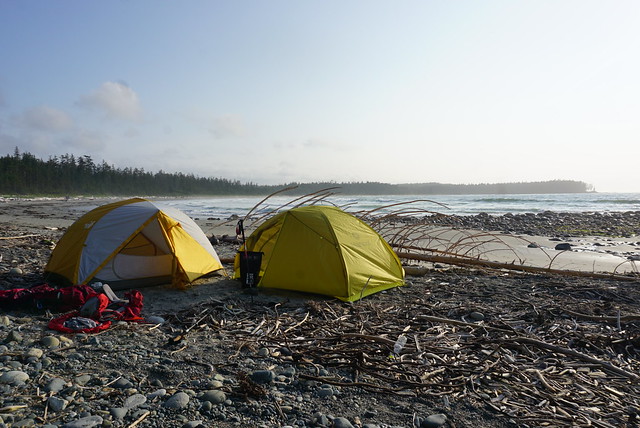
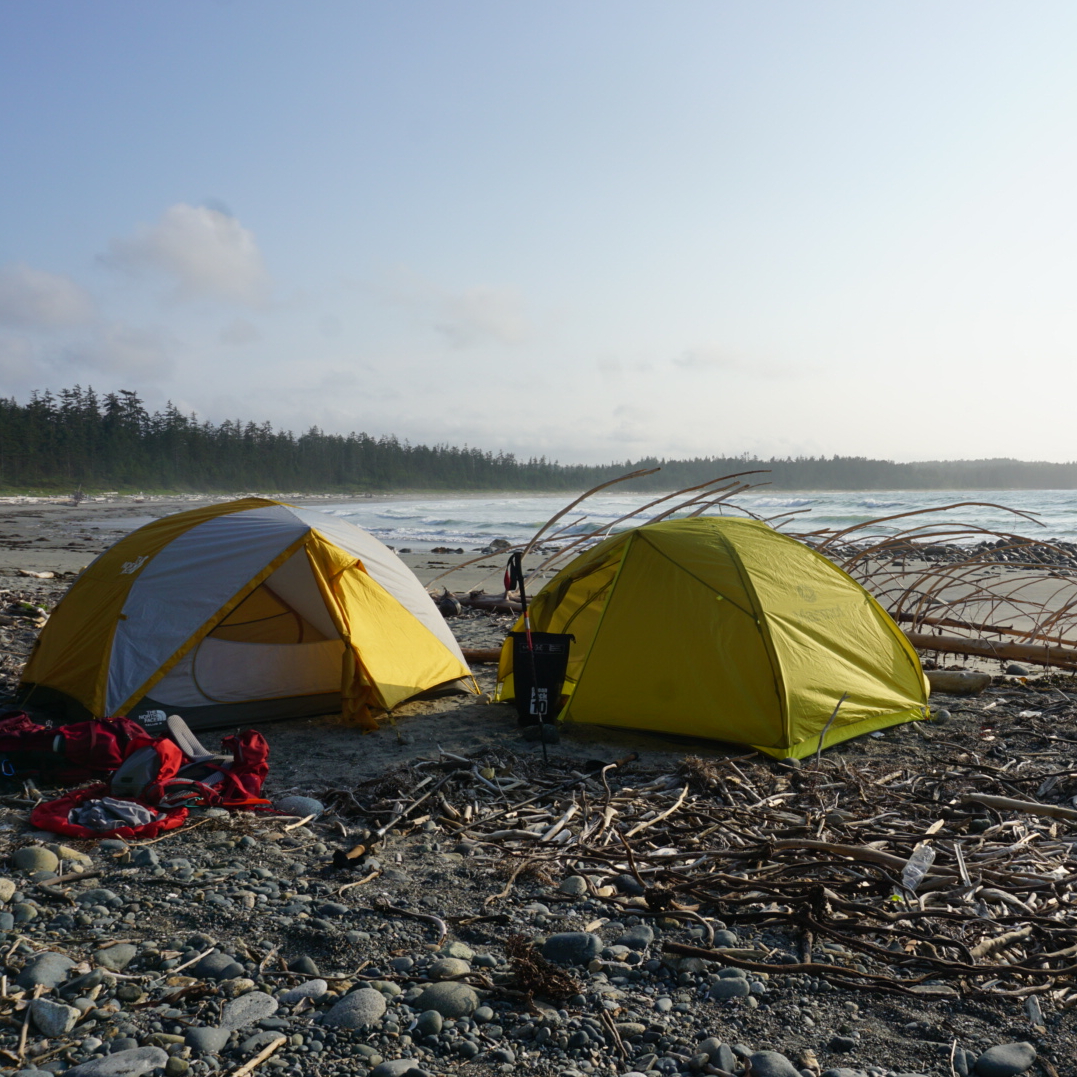
Two tents camping on a golden sand beach with drift wood and the forest and waves of the pacific ocean in the background at sunset on Irony Creek Beach in Shuttleworth Bight on the North Coast Trail on Vancouver Island in British Columbia, Canada.

The North Coast Trail (or NCT) is probably the hardest hike on this list. It’s much less popular than the West Coast Trail, but the traffic to this hike has definitely been growing. The NCT is a ~60km hike on the far north coast of Vancouver Island. It has a reputation for being extremely muddy and it doesn’t get very much maintenance. The NCT is only accessible by water taxi, so most people add on another ~25km of hiking to Cape Scott to finish this trail.

The Cape Scott Trail is accessible by dirt road and is better maintained than the NCT. The highlights of both trails are the gorgeous, remote beach campsites. There are several tidal points on the trail and you should be prepared for a very slow hiking pace through extremely technical terrain. But you’ll also likely get to view bears, eagles, and if you’re lucky, maybe even a wolf. Backcountry permits are required for this hike and can be obtained 2 weeks ahead of your trip at camping.bcparks.ca.

Mount Assiniboine

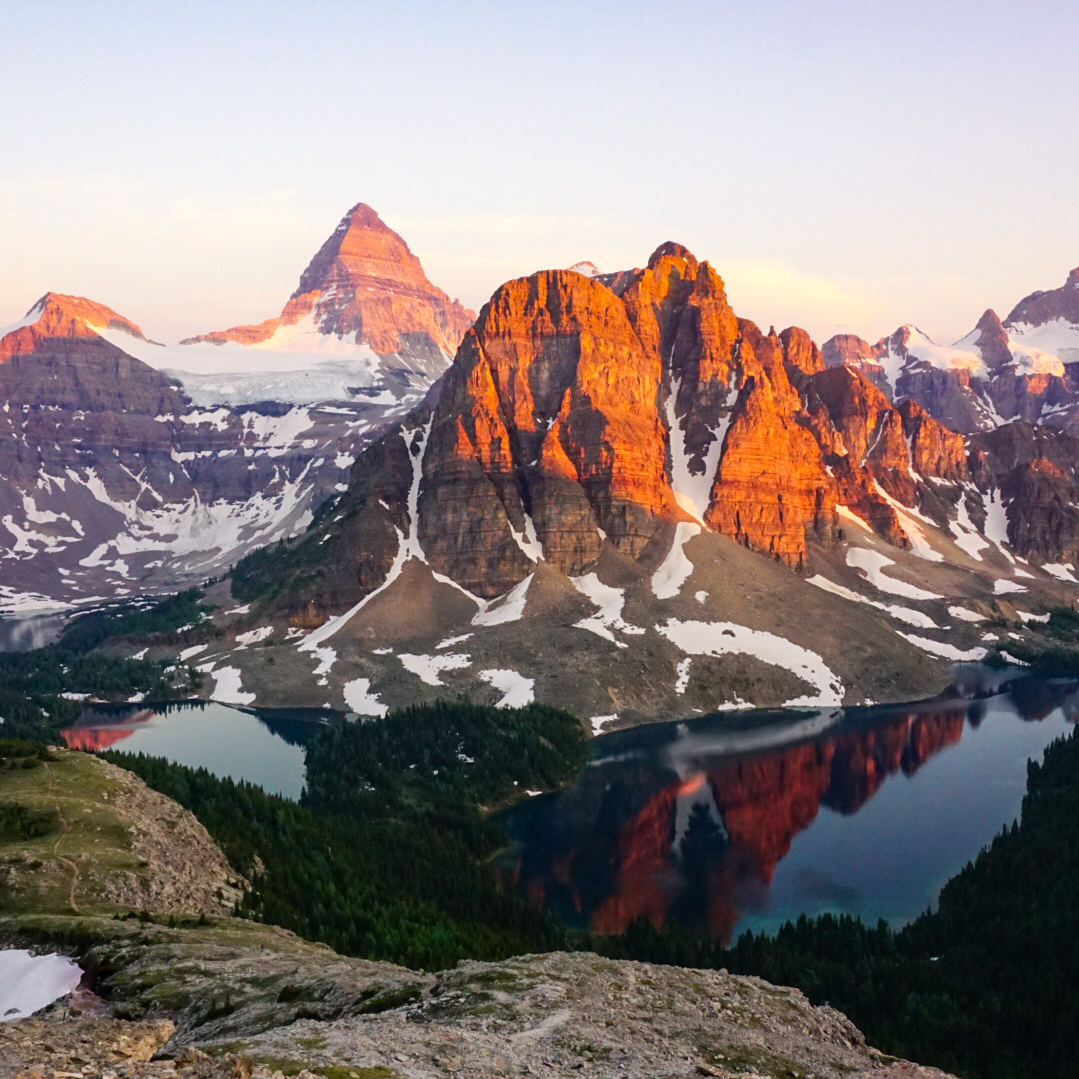
A photo of Mount Assiniboine and Sunburst Mountain and Cerulean Lake at sunset from the Nub in Assiniboine Provincial Park in British Columbia, Canada.

Mount Assiniboine can be accessed as a loop trail, thru hike, or by helicopter. Of course, I did the thru hike option. Mount Assiniboine is one of BC’s premier mountain campsites and there is a lot to explore from the core area of the park. We planned for 3 nights in the Magog Lake Campground, and 1 night on either end of the trip to hike in and out. While Assiniboine Park is located in BC, the hike is accessed through Banff National Park in Alberta.

Take the gondola up to Sunshine Village and hike through the alpine meadows to Porcupine Camp on night one, then continue to Assiniboine for several days in the park. Explore Magog Lake, Cerulean lake, and Sunburst Lake, as well as the iconic hike up to the Nub for sunset. On your way out, hike through beautiful Wonder Pass and camp at Wonder Lake before ending your hike at Mount Shark. You will need to coordinate 2 vehicles and book backcountry reservations for Assiniboine 4 months in advance at camping.bcparks.ca, as well as backcountry reservations for Wonder Lake at reservation.pc.gc.ca, which release sometime in March for the entire season. 

Rockwall Trail

The Rockwall on a sunny day with the mountains in the background and the forest in the foreground with blue sky in Kootenay National Park in British Columbia, Canada.

The Rockwall Trail is another extremely popular trail located in Kootenay National Park. It’s a 55km trail from Paint Pots to the trailhead for Floe Lake that is incredibly scenic. There are a number of campsites along the trail and it can be done in 3-4 nights. Floe Lake is the most popular campsite on the trail, but I also highly recommend staying at the Helmet Falls campsite. Along the way, you can stay at Tumbling Creek, Numa Creek, or both, they’re pretty similar sites. 

The trail is very well maintained and has lots of facilities. Campsites release for the entire season in March at reservation.pc.gc.ca, so make sure you watch for the release date, because the sites will sell out immediately. If you’re lucky enough to score permits, enjoy this beautiful trail through the Rocky Mountains and past the iconic Rockwall. 

Favourite Hikes in Southwestern BC Part III

I moved to BC in 2014. In late 2016, I wrote a post sharing my top 10 favourite hiking trails in Southwest BC, which I followed up with Part II in late 2018 with 10 more of my favourite trails. I’ve been wanting to write a follow up post for a while, but I’ve hiked well over 100 more trails since my last post in 2018, so it’s a lot a trails to choose from! I decided to break it into two more posts. Part III will cover another 10 of my favourite trails that I hiked between 2019 and 2020, while Part IV will cover 2021 to 2022. Is this a bit excessive? Maybe… but my blog, my rules! I like the symmetry of a top 10 post for every 2 years I’ve been here, so I guess you’ll get Part V at the end of 2024!

Without further ado, here’s a few of my favourite hikes from the 2019-2020 era!

HOP_5389

#10 High Falls Creek – Squamish has a few hidden gems and in my opinion, this is one of them. It’s located about 30 minutes out on Squamish Valley Road and after a quick ascent, boasts beautiful views of both High Falls Creek and the Squamish River. It’s a bit of a scramble on the way up, so I would save it for a fair weather day. The waterfall is the main highlight, but my favourite part is the viewpoint after the waterfall and the peaceful forest walking. Turn this into a loop by walking back the Forest Service Road, which has more incredible views of the Valley! (10km, 500m elevation gain, 4 hours)

DSC00125

#9 Mount Norman – I stumbled upon this short little hike when I kayaked around Pender Island. The formal hike starts just past the bridge to the South Island and it’s a short uphill hike to a viewpoint over Bedwell Harbour and the surrounding Gulf Islands. It’s only 3km round trip, but if you’d like to extend it, take the left branch before you get back to the road and hike down to the Beaumont Campground, which has gorgeous views out over the bluff and along Bedwell Harbour. (3-6km, 300m elevation gain, 1-2 hours)

PSX_20210605_203736

#8 Viewpoint Beach – This hike is located in Golden Ears Park and has been gaining a lot of popularity since the pandemic as a good beginner backpacking trail. Because of it’s low elevation, it’s snow free in the Spring and is an easy 8km round trip hike along Gold Creek to Viewpoint Beach. It makes for a great day trip, or an overnight trip, though it can get busy. I’d recommend hiking in Friday night or early Saturday morning. The trail continues on to Half Moon Beach if you’d like to extend the trip, but it’s not well maintained, so be prepared for a bit of route finding. (8km, 200m elevation gain, 3 hours)

PSX_20210314_180305

#7 Zoa Peak – I’ve attepted Zoa Peak twice now, once in the Fall (where I got smoked out by wildfires) and once in the Winter. For this reason, I’ve never made it past the sub-peak, but I still recommend it as a good all year hike. I think the Coquihalla Summit Rec Area is vastly underrated and Zoa makes for a scenic hike in the summer and a relatively safe snowshoe in the winter. Don’t go past the sub-peak in the winter without your Avalanche Safety Training, but it’s a popular area for ski touring in the winter! (10km, 700m elevation gain, 5 hours)

DSC01099

#6 Elk/Thurston Mountain – Elk Mountain is a popular hike in the summer and especially in the Fall when it gets a pop of colour. There’s a lot of elevation gain, but it’s a relatively simple trail until close to the top, when you pop into the woods for a steeper ascent to the summit. It’s 8km round trip to the Elk Mountain Summit, but 800m in elevation gain, so don’t underestimate it! If you have the time, I recommend continuing on another ~2km as the hike continues along the ridgeline to Thurston Peak. It’s an 16km round trip to go all the way to Thurston, but there’s no view from Thurston Peak, so if you’d like to save yourself a bit of time, just enjoy the ridge walk for a few kilometers and then turn around. From Elk Mountain onwards are beautiful views of Chilliwack Valley and Mount Baker. (8-16km, 800-1000m elevation gain, 4-8 hours)

#5 Pinecone Burke Provincial Park – Pinecone Burke was one of my best pandemic discoveries. When we weren’t allowed to leave our neighbourhood in 2020, I spent a lot of time hiking around Eagle Mountain, Minnekhada, and Pinecone Burke. Pinecone Burke is located right on the northern edge of Coquitlam (in the Burke Mountain area) and it’s BC Parks least funded park. As a result, it has no infrastructure (not even a toilet) and gets few visitors. It’s mostly frequented by mountain bikers, but there are some truly lovely trails in this park! My personal favourite is to extend the Woodland Walk up to Sawblade Falls, but the Coquitlam Lakeview Trail is also reasonably popular. The park is primarily forest views, so it’s a perfect rainy day or Spring hike. You can hike the Woodland Walk year round, but the Lakeview Trail usually has snow until June. (8-14km, up to 700m elevation gain, 2-6 hours)

PSFix_20201005_141057

#4 Brew Lake – Brew Lake is another relatively unknown trail off the Sea to Sky Highway, just before Whistler. Even I discovered this trail by accident when the Rainbow Lake trailhead was closed due to an aggressive bear. We decided to hike to Brew Lake instead and spend the night in early Fall and were rewarded with beautiful lake views and an empty trail. We didn’t know what condition the road was in, so we parked at the Whistler RV Park and hiked the full 17km round-trip trail. But if you have the proper vehicle, you can considerably shorten the trail along forestry roads. If you have time, extend the hike a little further to Brew Hut, which I still have to return for. (17km, 900m elevation gain, 9 hours)

DSC08281

#3 Minnekhada Regional Park – Minnekhada Park was my other pandemic discovery and remains one of my favourite places near the city for a leisurely hike. The highlight of the park is High Knoll, which is known as the “Quarry Rock of Coquitlam” and has beautiful views down to the Pitt River and Pitt-Addington Marsh. Part of the park burned down in 2022, but it recently re-opened and is great for bird watching along the lakes. (5-8km, 200m elevation gain, 2-3 hours)

DSC06277

#2 Cape Scott and the North Coast Trail – This is where I stretch the boundary of “Southwestern BC” just a little bit. Cape Scott and the NCT are at the far northern tip of Vancouver Island, but I feel this was one of the defining hikes I did between 2018 and 2020. We hadn’t planned to do this hike, but when our Assiniboine trip got cancelled during the pandemic, we decided to hike 85km along this intense and remote coastal trail instead. This trail is a real challenge and is not for the faint of heart. Be prepared for an incredibly slow pace and knee high mud, but boy is it a rewarding hike. One of my most memorable. (85km, 5-7 days)

DSC07622

#1 Howe Sound Crest Trail – This is another incredibly challenging trail that tested my endurance when I did it in 30 degree weather, but it’s a trail I think about often. It was on my bucket list for 3 years before I finally did it over the course of 2 nights and was able to soak in every inch of this scenic trail. The trail provides the opportunity to summit the West Lion, Mount Harvey, and Mount Brunswick. I didn’t summit any of them, but I camped beneath the Lions and lounged in vibrant Brunswick Lake instead. I’d like to return one day for each of these summits, but this was a trail where it was more about the journey than the summits. (30km, 1500m elevation gain, 2-3 days)

Continue to Part IV.

Cape Scott and North Coast Trail: Part VI

Woohoo! We made it to my final post! If you’re just joining us, start at Part 1.

After a week on the trail, we finally reached our final day. Day 5 was really long and tiring and unfortunately, we never really had enough time to recover. We’d strolled into the campsite at 8:30pm the previous night and had to get up at 5am to give ourselves enough time to catch the water taxi. Because we never really had any down time, we all had trouble falling asleep and it was a really restless night. We woke up feeling unrested for the long hike ahead of us. We’d collected water the previous night, but it was salty tasting and not thirst quenching, so I went back to the river at low tide to collect more. When I saw how different the river looked from high tide to low tide, there was no question the river was tidally influenced and that we’d been straight up drinking filtered salt water the night before. The river had shrunk to about a 10th of the size of the previous night and instead of a huge river, it was now a tiny creek flowing down. I collected a little bit of water from it, but the whole area is covered with salt water debris, so despite the fact that it was definitely freshwater flowing down, it still tasted brackish from flowing across the tidal riverbed.

I drank a big mug of hot chocolate for breakfast because it was the only way I could stomach the water and we concluded that we would have to get water at Skinner Creek 2km later. It wasn’t ideal because it would blow a lot of our critical time filtering 3 litres each, but obviously we had no choice as we couldn’t be drinking salt water all day. We learned later that you’re supposed to get your water at the cable car crossing when you camp at Nahwitti River. I read the entire North Coast Trail guidebook and knew about pretty much everything else we encountered on the trail, so I’m really not sure how I missed this.

DSC06424

Day 6 was the most beautiful day on the trail. The one benefit of waking up at 5am is that I got to watch the sun rise over the ocean and up into the cloudless sky. It was beautiful walking along the rest of the beach, but it was going to make for hot hiking weather. As I said in my last post, I carried the group through Day 5, but I did not have the energy for it on Day 6. I’m a very type A personality and I wanted to make a quick hike to Skinner Creek to refill our water and hit the rest of the trail to the end. We left the campsite by 7am, which had been our goal, but we were moving pretty slow because no one was properly rested. I was kind of cranky cause I wanted to move faster and frankly I was really thirsty, so I pushed on ahead mostly on my own through the woods. I think I needed a bit of time on my own, so it was better I just continued on.

It’s 2km to Skinner Creek, about 1km of which is in the woods. It was muddy, but fortunately not too difficult and we did the 2km in an hour. The last section before you reach the beach though is crazy steep and you have to scale a rope about 20metres down this gully to reach the beach. It took a while for us to get down because we each had to wait for each other before the next person could use the rope, but when we finally reached the beach we were treated to one of the most beautiful views! I’m sure many of the other beaches were just as beautiful, but coupled with the beautiful blue sky and clear weather, Skinner Creek just seemed so much more beautiful. It’s a black sand beach that stretches for about 2 kilometres. I can see why everyone decided to camp at Skinner and Sutil and skipped Nahwitti (as beautiful as Nahwitti was, it couldn’t compete with Skinner). Like I said in my previous post, if I could do the trail again, I would add an extra day and camp at Skinner and Sutil instead.

DSC06435

It was a relief when we finally reached the creek at around 8:30am. We were all so thirsty and we dumped out our water bladders and gave everything a good rinse in the river before refilling. Unfortunately we killed a lot of time because we had to filter 12 litres of water, but it was obviously necessary so we just enjoyed the view while we waited. There were several campers having a lazy morning at the campsite, though less than we expected. It seems like a ton of people had been dropped off on July 1 when the taxi started running, but that the traffic had immediately dropped off after that. Most people were continuing on to Sutil, but there was one group of guys that was doing the same thing as us. The only difference was that they were camping at Shushartie Bay and getting picked up the following morning. That had been our original plan, but there’s no water source or beach at Shushartie Bay, which means you have to lug a ton of water there, so we’d been lucky to get our pickup time changed to the afternoon. The guys informed us there was another group doing the same thing as us, but with a 2:30pm pickup, so they had already left.

It was 9:30am by the time we finally had enough water and took off again. It looked like the trail continued up behind the outhouse and crawled back up the bluff, so we headed up that way. After about 10 minutes it became pretty obvious we were going the wrong way and we think we’d gotten on the high tide track back towards Nahwitti River. There was a lot of confusion after that. The creek is filled with a ton of log debris, so we spent a lot of time poking around the area trying to find the trail head before Emily and Brandon finally discovered it up past the debris. They called out to me and Lien and we started climbing over the logs to catch up with them. There’s no obvious trail, so we were kind of bushwacking our way around the edge of the creek – I found Emily and Brandon and Lien was right behind me, but in the confusion he stepped on a bad branch and I watched almost in slow motion as he tried to recover his balance after the branch snapped under him and the momentum of his backpack pulled him over the edge. He rolled about 6ft over the edge of the bank and landed flat on his back in the creek. I jumped down immediately to help him – he was bleeding from several scratches, but fortunately he was otherwise uninjured, although I’m sure he had a few new bruises the following morning.

HOP_4510

As with most accidents on the trail, it was a reminder that there’s not a lot of room for mistakes or complacency. We were getting anxious about struggling to find the trail and in his rush to catch up with us, Lien took a bad step. Fortunately he was okay and no lasting harm done, but it put him off kilter for a while after that. I bandaged up his knee and we continued on. The last 8.5km of the trail is probably the most notorious section on the North Coast Trail. It’s the first section of trail for most people and it’s entirely inland through what can only be described as a swamp. It’s known for its copious amounts of mud and I can see how it would be a pretty rough start to the trail. In fact, a lot of people straight up skip it and start at either Nahwitti River or Cape Sutil (I guess the boat can’t land at Skinner Creek?). On Brandon’s first traverse of the NCT, he skipped it and started at Nahwitti River instead. To be honest, after completing this section, I’m not really sure why they even bothered cutting the trail there. There’s absolutely nothing of value to see along the trail – I wanted to do it just so I could say I did the whole trail, but if I ever do the NCT again, I would skip it.

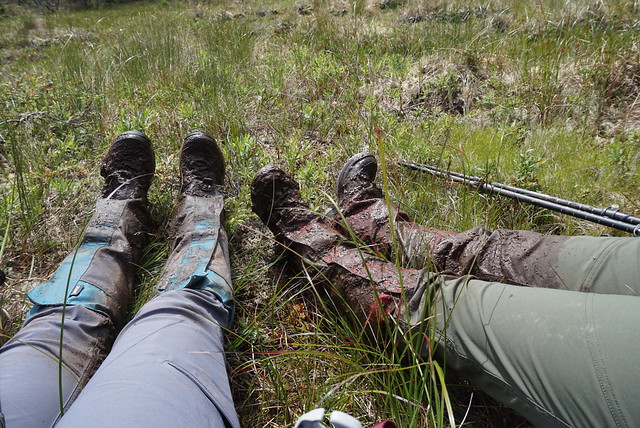
Fortunately, the biggest obstacle is mud. There’s obviously some other obstacles, but it’s primarily mud. 9km of mud gets pretty exhausting though and we gave up any attempt of trying to stay dry. It would be nice to just tramp right through it, but you do have to avoid it to some extent or you’d legitimately get stuck. Emily took a bad step at one point and sunk down beyond her knees. The only reason she was able to get unstuck is that she sunk into it near a tree that she was able to use to pull herself out. Lien took several tumbles, as did me and Brandon. Brandon was our cheerleader for the last day, which was a relief to me because I didn’t have the energy for it after Day 5. He kept us on task all day, giving us small breaks for snacks, but generally no more than 5 minutes.

DSC06441

The worst part about this section is that there is absolutely no breaking point. The only landmark on the entire trail is a single trail marker at the halfway point. The marker isn’t even legible anymore, but it was the main thing we were aiming for the first half of the trail. Its along a small boardwalk section, so we allowed ourselves a 10 minute break at the monument, though we never did stop for lunch. It took us 3 hours to reach the half way point (4.3km) and we had neither the time nor the energy to get our lunch out, so we went the whole day on just snacks. I really wish the park would invest in a tent pad or two with some benches at the halfway point. Not so people can camp there, but just so that there’s somewhere on the trail to pull over and have a proper break/lunch. There’s absolutely no where to stop across the full 9km, so we ended up hiking the whole thing continuously, taking a whopping 6.5 hours.

At the halfway point, the group of guys from Skinner Creek caught up with us on the trail. When they’d heard we were on a 4:30pm boat, they decided to hike to Shushartie to try and catch a ride on our boat since we seemed to be the only people on it. They were another group of witches and we gawked at how nimble and clean they were as they passed us. Meanwhile Emily was standing there with mud almost up to her crotch…

HOP_4537

It was another rough day for Emily. She didn’t complain because she knew there was nothing else to be done about it, but she hit her limit about three quarters through the hike. Lien found his stride again during the last section of the trail and him and Brandon were leading us while me and Emily lagged behind. They were waiting for us at a stretch of boardwalk, just before we got there I heard Emily yell, but I continued on to the guys figuring she’d catch up in a minute, but when she did join us there were tears pouring down her face. She’d bumped her head on a tree and while she hadn’t really injured herself, it was kind of her breaking point and she just needed to let out the frustration.

We’d been tracking our pace all day and we were right on time to make it to the boat, so we decided that we were close enough to tell the guys to go on without us. I find it frustrating to have to wait for others when you’re already tired and we figured that if we were a little bit late, the guys could at least hold the boat til we got there (not that it would have left without us). So we set the guys free and actually our mood improved a lot after that. It took away the stress of having someone waiting for you and we ended up having a good sister chat along the way, which took our mind of the trail and our exhaustion.

DSC06442

Other than the group of guys that had passed us, we only saw 2 other people on the trail all day. It seems no one had taken a morning taxi in and they had come in on the 2:30pm pick up for the other group. We passed them about 45 minutes from the end and I felt really bad for them. I can’t imagine having a late start like that and then having to go through all that mud. Plus neither of them had gaiters and their packs looked really heavy.

Eventually we crested the hill and could see down towards the water of Shushartie Bay, which unfortunately still looked a bit far away. The last section of the trail was downhill and while the mud disappeared, it did get a little more technical. We suffered through it and were relieved when we finally saw the tent pads for the campsite sitting up in the trees. The last section of the trail is super steep and we had to take another rope rappel down to the bottom. I can’t imagine starting off the trail with all that steep uphill and then straight into mud for 9km – what a brutal beginning to a week long trail. As we were coming down the rope section we heard the water taxi coming into the Bay. We hollered down to Brandon that we were almost there. Our timing literally could not have been any better. Me and Emily exited the trail at exactly 4:30pm and literally walked straight onto the boat after 6.5 hours of continuous hiking. It turned out the boys were only about 10 minutes ahead of us at the end of the day.

IMG_20200721_233335_738

The other group of guys shared the boat with us and were saved from having to camp at Shushartie. They’d had time to change out of their hiking boots and clean themselves up, but we walked on just as we were and plunked our bags down at the front of the boat. It was a little jarring boarding the boat. I’d honestly forgotten about Covid while we were on the trail (it was lovely), but we were quickly thrust back into it and asked to don face masks for the journey.

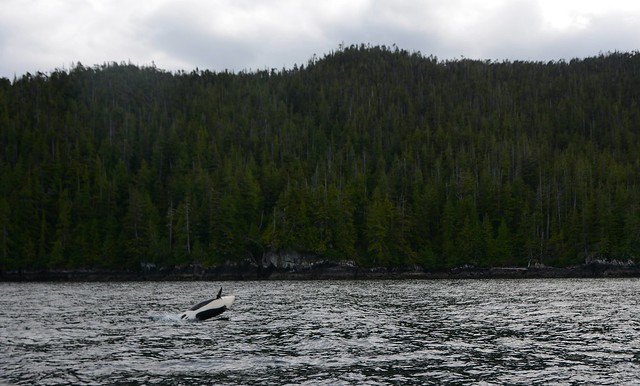
It’s about an hour back to Port Hardy and we had a pretty magical boat ride to end the trip. About half way back we stumbled upon a group of 20-25 orcas making their way through the pass. We could see them swimming all around us and several breached right in front of the boat (photo cred to Brandon)! They gave us an amazing show – it was nice to have some kind of reward after hiking through all that mud. It was hard to get up from the seats when we arrived at Port Hardy and we were super stiff when we exited the boat. Our original plan had been to camp at San Jo since we had to go back for our other car anyways, but we pretty much all knew that was not going to happen after the last two days. Until Day 5 we’d still been on board with the plan, but the last 2 days were just too much and we walked off the boat and straight into the first hotel we saw. We booked two rooms, peeled off our smelly clothes, showered, and then hit up the local pub for dinner.

HOP_4579-2

So it was a bit of a rough end to the trip, but as I learned on the Juan de Fuca, there’s still something so rewarding about these long coastal hikes. It’s the longest hike I’ve ever done and it really does beat you down, but honestly, as brutal as the last two days were, the second I stepped off the water taxi, I still thought, “I would do that again”. I would do it totally differently, but I would definitely do it again. First I’ll need to do the West Coast Trail, but I still wouldn’t be deterred from returning to the NCT. Hiking really challenges you in ways you don’t expect, but the challenge is part of what adds to the accomplishment. Sure, it would have been idyllic to have had an easier hiking plan, or it would have been harder had it actually rained on us, but we did what we did. The trail beat us all down, but we still finished it. If you’re thinking of doing a multi-day coastal through-hike, maybe don’t start with the NCT, but get out there and challenge yourself on the Juan de Fuca, because it is a uniquely rewarding experience.

I’m going to finish of this series with a description of our trip plan and how I would plan the trip differently if I was to do this trip again. So the first column is what I did, but the second column is what I’d recommend for everyone else 🙂

Day What I did What I’d Recommend
Day 1 Ferry to the island, drive to Port Hardy, flat tire and camp on service road Ferry to the island, drive to Port Hardy and stay in hotel overnight
Day 2 Hiked 9.5km to Fisherman River Water taxi to Nahwitti River, hike 2km to Skinner Creek and pretend like you hiked the 9km mud pit (or do the mud pit if you must)
Day 3 Hiked 12km to Guise Bay and 5km day trip to Cape Scott Hike 7km to Cape Sutil
Day 4 Hiked 17km to Laura Creek Hike 8km to Irony Creek
Day 5 Hiked 13km to Irony Creek Hike 13km to Laura Creek
Day 6 Hiked 13km to Nahwitti River Hike 17km to Guise Bay
Day 7 Hiked 11km to Shushartie Bay, water taxi back to Port Hardy and stay in hotel 5km day trip to Cape Scott, Hike 12km to Fisherman River
Day 8 Drove back to Vancouver Hike 12km to San Josef Bay
Day 9 Drive back to Vancouver