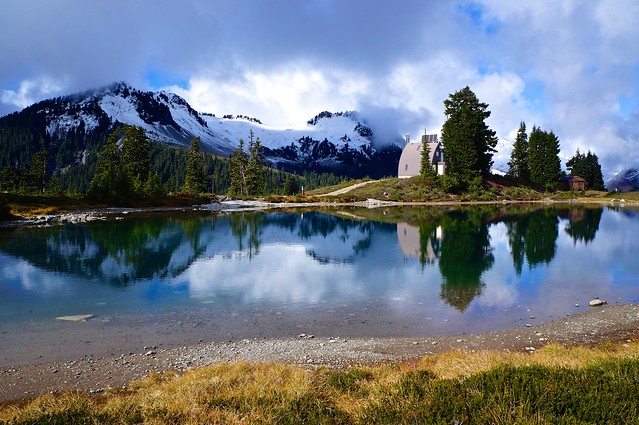
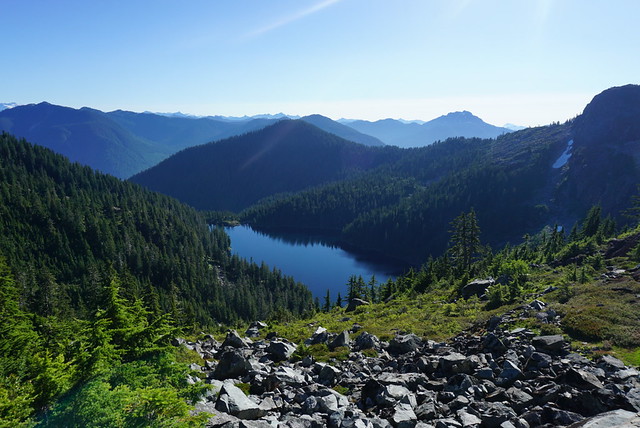
14 Free Backcountry Campsites in BC

Welcome back to the second part of my 2-part series to help you get camping with minimal advance planning, in any season! Part 1 focused on permitted campsites (that don’t require reservations) and Part 2 focuses on unpermitted (free) campsites! 

Camping is incredibly popular in BC, especially near Vancouver. The popular campsites require reservations that release 4 months out and being coordinated to plan so far in advance can be a real challenge for people. It might seem like all the good campsites are booked, but there are lots of great options that don’t require advance bookings!

HOP_4999

Why do some campsites require a permit and others are free?

The simple answer is that a lot of free campsites are located on crown land or in BC recreation sites (also considered crown land). The land doesn’t have park status, so it generally receives limited maintenance or it is maintained by users and volunteers. As a result, free campsites are often more rustic than traditional permitted campsites. There are lots of campsites located on crown land that are privately managed, either by for-profit or non-profit groups, and those campsites will usually have a campsite fee to go towards ongoing maintenance, though some non-profits will fundraise for the upkeep of facilities, like on the Sunshine Coast Trail.

That said, there are still some free campsites located in provincial parks, especially the further you get from the lower mainland. I don’t know the exact reason why some campsites have permits and others don’t, but I think it’s likely related to the popularity of a park and how much maintenance the park gets. For example, I visited South Chilcotin Provincial Park last year for 6 nights and didn’t pay any camping fees, but the park is very remote, has limited infrastructure, and several of the places we camped were considered wild camping (no outhouse or bear cache). When sites become more popular, permits will often be introduced.

If you are visiting a free campsite that does not have bear cache facilities or an outhouse, it is absolutely essential to practice bear safety and leave no trace practices. You must hang your food or bring a bear bin. In addition, you must be prepared to dig catholes or use a wag-bag, and pack out your toilet paper, pads, and tampons. It is not acceptable to poop in the woods without burying it, or to leave your toilet paper around the backcountry. We are so lucky to have access to incredible backcountry in Canada and we need to respect it.

Campsites Near Vancouver
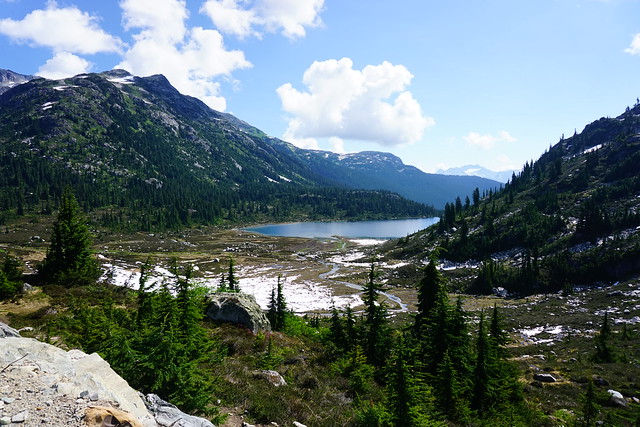
Hanging Lake

DSC09695

Hanging Lake is located in Whistler, sharing a trailhead with the Rainbow Lake trail on Alta Lake Road. Rainbow Lake is Whistler’s water supply, and as such, it’s a protected watershed area, so you’re not allowed to camp there. But if you hike a few more kilometres over Rainbow Pass to Hanging Lake, you can enjoy a nice view from the pass and a relaxing night at the lake. It’s a 10km trail to the lake, but the real challenge comes from climbing 800m of elevation along the way. There’s a fair bit of space for tents at Hanging Lake and there is an outhouse and a bear cache. You can also access this trail from the Rainbow Madeley trailhead near Madeley Lake.

Tikwalus

20220528_140213

In my opinion, Tikwalus Heritage Trail is an underrated trail along the Fraser Canyon. To access it, you take Highway 1 past Hope until you pass Alexandria Bridge Provincial Park. The Tikwalus Heritage Trail has been used by indigenous peoples for generations, and in more recent history, it was used by fur traders. It’s only 6km along a semi-loop trail to the campsite, but you’ll climb almost 800m in elevation, so it’s steeper than Hanging Lake. Most of the trail is in the trees, but there are some beautiful mountain views from the campsite. There’s lots of space for tents, as well as an outhouse and a bear cache. There’s no water source directly at the campsite, so fill up at the creeks on the way up to save yourself having to backtrack.

Brunswick Lake / Deeks Lake

DSC07712

Deeks Lake and Brunswick Lake are both located on the Howe Sound Crest Trail, but are accessible from the northern trailhead at Porteau Cove if you’re not doing the 30km thru hike from Cypress Mountain. Both lakes are beautiful and offer an easier alternative to the strenuous Howe Sound Crest Trail. It’s 6.5km to Deeks Lake (which is the smaller site) and 10km to Brunswick Lake, however there’s almost 1200m of elevation gain along the way. Most of the elevation gain is in the first 6.5km to Deeks Lake, making this part of the trail the steepest on my list. Of the two lakes, Brunswick is the most scenic and has more room for camping. It’s also important to note there are no facilities at either site, so be prepared to hang your food and dig catholes.

Flatiron

DSC06682

Keeping in theme with the previous trails, the trail to Flatiron is just as steep, climbing over 800m in ~5.5km, with most of the elevation gain in the first 3.5km. It’s located in the Coquihalla Summit Recreation Area off Highway 5 and shares a trailhead with Needle Peak. The first section of the trail is a huge slog through the forest, but the views are incredibly rewarding. Once you pass the junction for Needle Peak, there’s a small lake where you can camp. You can also camp at the summit of Flatiron, but there’s no water source up there. There are no facilities at either site, so be prepared to hang your food and dig catholes.

Brew Lake

PSFix_20201005_141152

Brew Lake is less steep than some of the other trails on this list, but still a big hike, covering 900m of elevation gain over 8.5km. However, if you have access to a 4×4 vehicle, you can reduce some of that distance along forestry roads. We parked along Brew Creek FSR, at the entrance to Branch 50, and hiked the entire trail from there, including 3.5km along other FSRs. This isn’t a very popular site, so it’s a nice place to go to escape the crowds. There are no facilities, so be prepared to hang your food and dig catholes.

Fairview Bay / Manzanita Bluffs

20220804_200318

We have finally arrived at some options that are not super steep! Both of these sites are located on the Sunshine Coast Trail, which has lots of possibilities for backpacking trips. The whole trail is 180km long, but there are lots of sections that can be done over a day or two. The campsite at Manzanita Bluffs, located on the north end of the trail, is especially beautiful. I also really like the campsites at Fairview Bay and Rainy Day Lake, located on the south end of the trail. All campsites along the trail have outhouses and most of them have bear caches or huts. They do not all have water sources, so plan accordingly. While these sites are free, I do recommend a donation to qPAWS if you opt to stay in one of the huts.

Campsites Accessible by 4×4 Vehicle
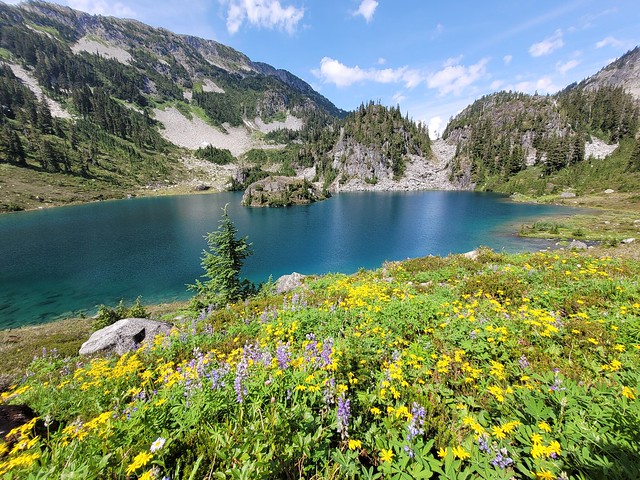
Tricouni Meadows

20220820_132359

Tricouni Meadows is a popular campsite located northwest of Squamish. The trailhead is located on Branch 200, off of Squamish River FSR. If you can make it all the way to the trailhead, the hike to the campsite is just over 3km, with 250m of elevation. However, there was a large wash-out on Branch 200 when I did this hike in 2022. If you park at the wash-out, it adds 3km to the trail. In 2022, some vehicles could get through, but I’ve heard it’s gotten worse, so play it safe. There are 3 lakes near the meadows, with the campsite located at the middle lake: Spearhead Lake. It’s not a large campsite, so I recommend getting there early. There are no facilities, so be prepared to hang your food and dig catholes.

Blanca Lake

20240721_074347

Blanca Lake is another campsite located northwest of Squamish. In general, I would say this road is in better shape than the road to Tricouni, but it’s further away. The trailhead is located off E300 on the Elaho Mainline. The trail is 4.5km, with almost 500m of elevation gain. It starts off pretty steep, but then levels out along the middle. The view from Blanca Lake is incredible and there is tons of space for camping. Give yourself extra time to explore around the alpine once you get to the lake. There are no facilities, so be prepared to hang your food and dig catholes.

Conglomerate Flats / Manson Ridge

PSX_20230807_175855

Both of these campsites are located on the HBC Heritage Trail that runs 70km between Hope and Tulameen. Manson’s Campsite is located on the Hope end of the trail (off Peers Creek Road), so you don’t need 4×4 to access this site, but if you want to access Conglomerate Flats for a night, then you need 4×4 to get the trailhead at Jacobson Lake Rec Site (off Tulameen FSR). Both sites are beautiful, though Conglomerate Flats is the more stunning of the two. It’s 6.5km and 600m of elevation gain to Manson’s Camp from the southern trailhead, and 2.5km and 150m of elevation gain to Conglomerate Flats from Jacobson Lake. Both campsites have outhouses and bear caches.

Winter Campsites

Falls Lake / Zoa Subpeak

PSX_20210314_215122

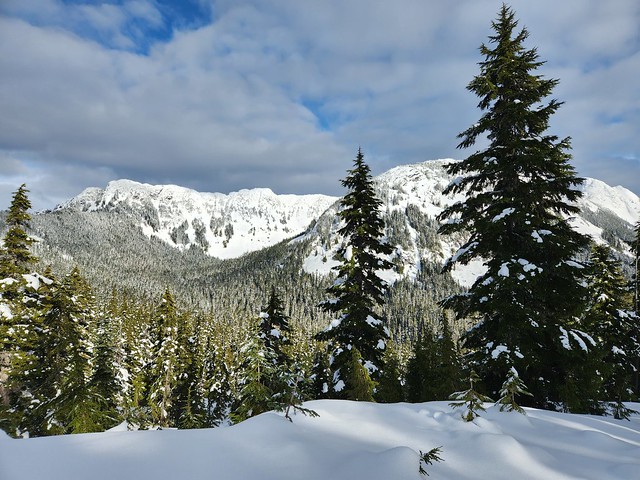
Both of these sites are located in the Coquihalla Summit Rec Area off highway 5. Falls Lake is a great site for beginners because you only have to snowshoe 1km along the road (which isn’t plowed in the winter) and 1km to the lake. Zoa subpeak is a bit more challenging as it’s 550m of elevation gain over 4km. Both trails are located in simple terrain, but make sure to stop at Zoa Subpeak – if you try and snowshoe all the way to the true peak, you will be entering challenging avalanche terrain. I’ve never actually been to Falls Lake, but I believe there is an outhouse. There are no facilities at Zoa Subpeak.
Ottomite Peak

20230204_135419

Ottomite Peak is also located in the Coquihalla Summit Rec Area off highway 5. The trailhead is at the Zopkios Rest Area. It’s a 4.5km trail with 300m of elevation gain to get to the summit. It was completely empty when I camped there, but the general area is popular among ski tourers, so you may see people along the trails for the day. The trail is in simple terrain, but always exercise caution – in general, I always recommend taking an AST1 course. It’s not a challenging trail, but there are no facilities.

Water Access Campsites
Widgeon Creek

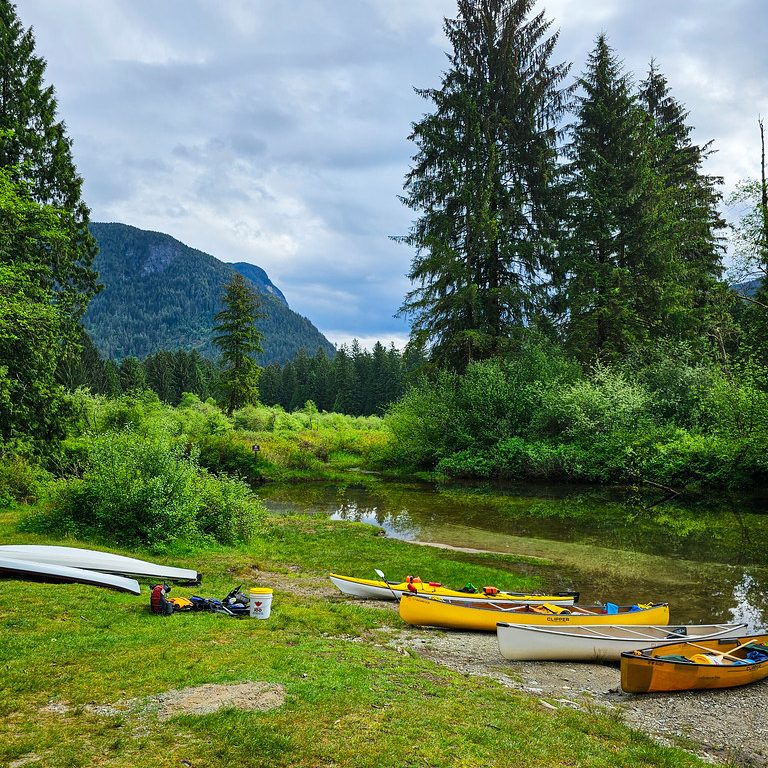
A photo of a line of canoes on the shore of Widgeon Creek at the Widgeon Campsite in Pinecone Burke Provincial Park, with the mountains and trees in the background on a cloudy day in BC.

Widgeon Creek is located near the lower mainland and is extremely popular on summer weekends. It’s a ~5 paddle across the Pitt River and up Widgeon Creek to get to the campsite. You can rent canoes or kayaks at Pitt Lake. There are lots of campsites and great facilities, including a large bear cache and 2 outhouses. But I recommend getting their early on a nice weekend to beat the crowds. From the campsite, you can do a day hike to Widgeon Falls.

Twin Islands / Granite Falls

20240810_114057

Twin Islands and Granite Falls are two campsites located in Indian Arm, so they are very accessible from the lower mainland. As a result, they are very popular on summer weekends, attracting paddle boats and motorized boats. You can rent kayaks from Deep Cove. It’s only 5km to paddle to Twin Islands, so this is the easier campsite to access. You’re only allowed to camp on the north island, but it has an outhouse (no bear cache since it’s an island). Granite Falls is at the far end of Indian Arm and is an 18km paddle from Deep Cove, so you should be an experienced paddler if you want to do this trip. It has 2 outhouses and a bear cache, but it’s severely undersized. Be prepared for northern afternoon winds.

Nine Mile Point / Kunechin Point
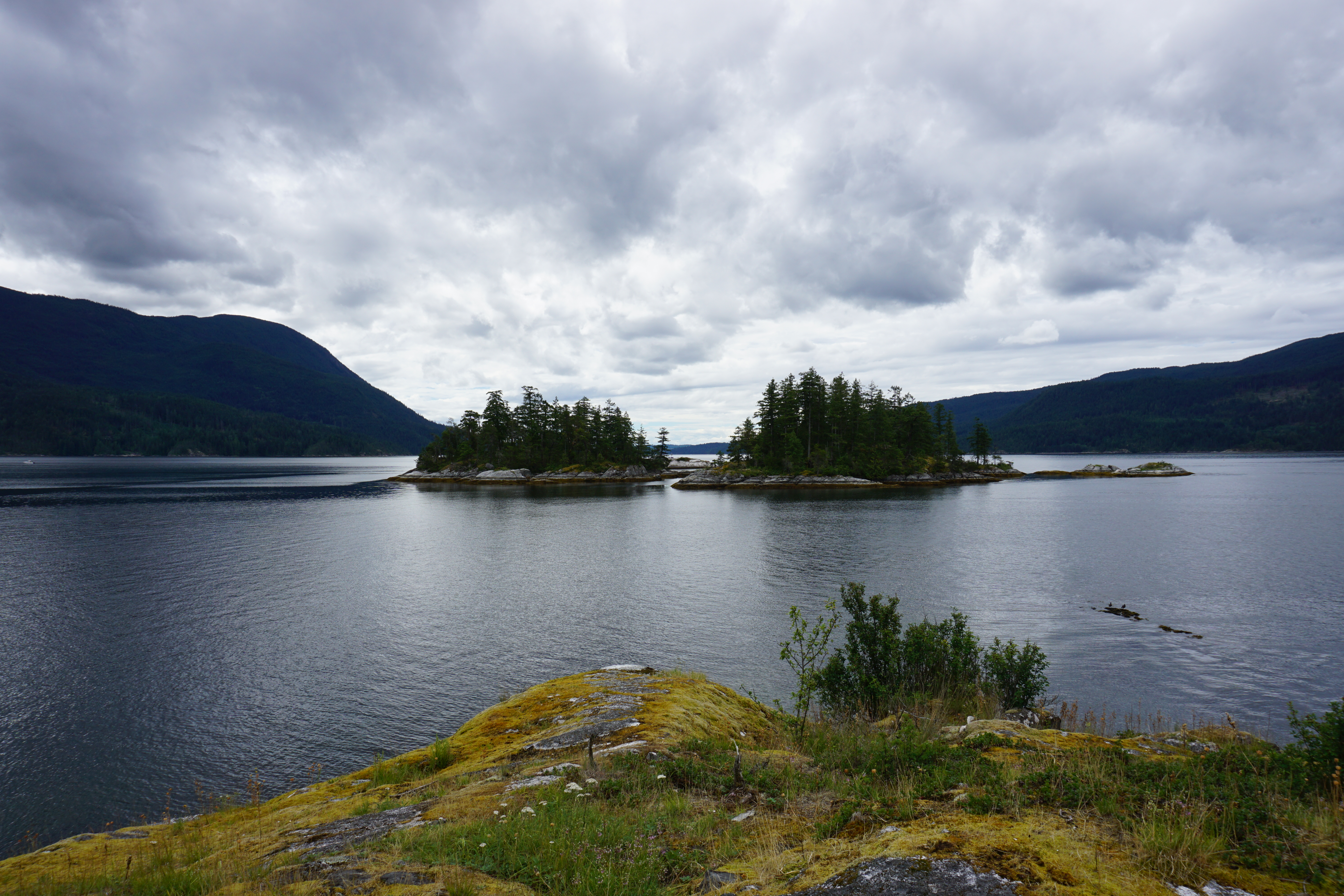
A photo from Kunechin Point in Sechelt Inlet on a kayaking trip, with the water and mountains in the background on the Sunshine Coast in BC.

Nine Mile Point Beach and Kunechin Point Campsite are both located in Sechelt Inlet on the Sunshine Coast. There’s a kayak rental place at the end of Sechelt Inlet Road, where you can launch from. It’s ~6km to paddle to Nine Mile Beach and ~10km to paddle to Kunechin Point, but the latter involves crossing the arm of the inlet, which can get windy. Both are beautiful sites and have outhouses, but no bear caches.
8 Great Hikes for Swimming

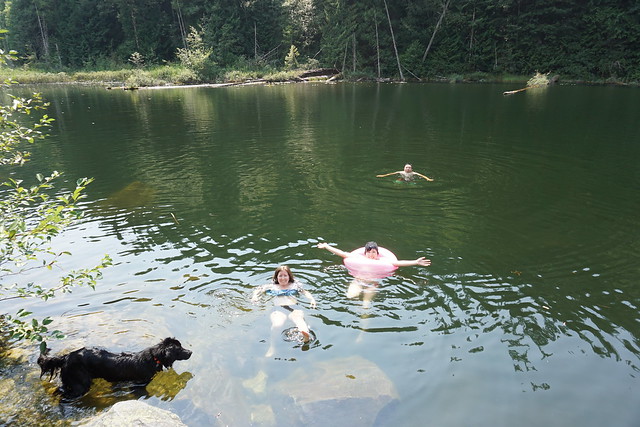
I love to swim! I’ll hike any trail, but I find hikes with somewhere to swim to be some of the most rewarding trails, especially on a hot summer’s day! A lot of the lakes in BC are fed by glaciers or snow-melt, which makes for a really cold swim, but over the years I’ve become a big fan of those quick, cold dips and will swim in almost any lake from May to October. That said, I’ve tried to focus my list on some of the warmer swimming spots, but we do live in Canada, so to be honest, they’re still all quite cold.

Just a few things to remember before you swim in any body of water. Practice Leave No Trace principles, which means don’t swim in lakes that are also used for drinking water and don’t alter the site in any way or move rocks to create pools. Remove sunscreen, fly spray, moisturizer, etc, before entering the water.

Without further ado, here’s some of my favourite swimming hikes!

Brohm Lake

DSC06113

Brohm Lake is an awesome place to visit in the summer because there’s access to a ton of hiking trails and you can opt to go around the lake, up to the Tantalus viewpoint, or hike through the interpretive forest, finishing each hike with a dip in the lake. The only downside to this hike is that the lake is located right next to the highway and is popular for picnicking – so if you want to make sure you get parking on a hot day, arrive early!

Buntzen Lake

20210418_104713

Located in Anmore, Buntzen lake is a popular attraction for hikers, boaters, and picnickers. This is another location you need to get to early, but it’s a much bigger lake, so there’s more room to spread out. My preference is to hike down to the far side of the lake where there’s a smaller picnic area and wharf with a lot less people. You can either take the lakeview trail, which has minimal elevation, or the Diez Vistas trail, which climbs up over the lake and has beautiful views of Indian Arm. This is definitely a colder lake, but refreshing after a day of hiking!

Deeks Lake and Brunswick Lake

DSC07744
DSC07712

Both lakes are located on the north end of the Howe Sound Crest Trail and are best done as an overnight trip. You can do them in a single day, but it does make for a lot of walking. Deeks is the first lake and a great place to swim, but if you’re willing to walk a few kilometres farther, Brunswick Lake is really the shining gem of the trail. Both are cold, but when the sun hits the water on Brunswick Lake, it turns the most brilliant shade of blue and looks like a tropical paradise!

Elfin Lakes

DSC02679

I feel like most people don’t think about Elfin Lakes for swimming because they’re so small and completely fed by snow melt, but the last time I visited in the summer was a scorching day and I couldn’t get enough of lazing around in the water. Of the two lakes, swimming is only permitted in one – the other is solely for drinking water and swimming is not allowed. I recommend later in the season for this hike because the lake will heat up a lot by the end of the summer.

Alice Lake

DSC05163

When I think of Alice Lake, I tend to think of it more as a frontcountry campground rather than a good place for hiking, but if you’re looking for a shorter hike that can end in a swim, this is a great one! It’s only a few kilometers to walk around the lake, but if you’re looking for something longer you can also extend it to do the four lakes trail loop. Similar to Brohm and Buntzen, get here early to secure a parking spot as you will be sharing the lake with picnickers.

Lightning Lakes

20200508_150708

This is another one that might surprise a few people because Lightning Lakes isn’t one of the warmest lakes, but on a nice day, I really love this lake. Definitely make sure it’s going to be sunny before driving out to Manning Park because it can be really cold and windy on an overcast day, but this is a great place for boating, swimming, and hiking on a hot day. Hike around 1st lake or 2nd lake (or both) and then finish with a dip in the water!

Cheakamus Lake

DSC08885

I’ve only swam in Cheakamus Lake in May, so it was quite cold, but I imagine it probably warms up later in the summer. I decided to include it because it’s a great lake for either day hikes or overnight trips. There are two campsites, one at the foot of the lake and another halfway up, and both have beaches from which you can swim. It’s a big body of water, so it’s always going to be cold, but a great place to hang out and dip in and out of the water.

Lindeman Lake

DSC09886

Lindeman Lake is another one I’ve only swam in May, but I really love this lake. It’s a short, but steep, hike in Chilliwack Provincial Park and you can swim at both the foot and head of the lake. It’s tempting to swim right when you arrive at the lake, but I prefer to hike up to the back of the lake and jump of the rocks into the water from there. It’s definitely another cold one, but has the most gorgeous views!

Howe Sound Crest Trail: Part II

Though we went to bed pretty early on Day 1, we didn’t get the best night’s sleep. It was definitely not cold, but Emily woke up with heartburn in the middle of the night and had to go for a little midnight stroll to ward it off. Then she proceeded to read her book in the middle of the tent with the light on, so I went and made some unsuccessful attempts at star photography. All while Carolyn slept on oblivious. She doesn’t usually sleep very well, so we were all surprised by this, but she’s also generally pretty cold at night, so maybe it had something to do with actually being warm for once. Either way, when me and Emily finally drifted off to sleep in the early morning, Carolyn was awake and ready to go at 5:45am. Yay.

DSC07616

It was a pretty dismal breakfast. While we weren’t running super low on water, we were definitely conserving, so we boiled the bare minimum for our oatmeal and then packed up camp for the day. On the plus side, it was another gorgeous day and it was already hot enough for shorts at 8am, so it was probably a good idea to get an earlier start. We departed the campsite at 8:30am with somewhere between 1-1.5L of water each and 3.5km to go to the first water source.

Unfortunately, it was some of the hardest 3.5km. Between the Lions and Magnesia Meadows, the trail follows peak after peak after peak. It was gorgeous and breath-taking, but a little stressful when you’re sweating buckets, thirsty, and running low on water. If it hadn’t been so hot, I think our water would have gone a lot further and we would have been a lot less tired, but there’s very little shade along the trail and it’s still very technical, so it makes for a slow go. I had sussed out the topography before we left camp and we could pretty much see our end goal when we started, but it didn’t make the morning go any faster. The hours dragged on as we lugged our packs up and down peak after peak. Carolyn was feeling strong, but me and Emily were definitely struggling, mostly I think because of our anxiety about the water situation, but the heat certainly didn’t help.

DSC07622

Finally, we started the last climb up the pass to Magnesia Meadows. We could see Mount Harvey looming over the meadow and we were just hoping the water source wasn’t located very far off the trail. We’d intended to summit Mount Harvey since we only had about 10km of hiking to do that day, but after 3.5km took us 3.5 hours of hiking, water was our main priority. We could see the red roof of the emergency hut as we crested the slope and from there we all but ran to the water source, relieved to see a small, but pretty clean water hole off the side of the trail.

We all finished off the dregs of our platypuses and then set to filtering enough water for the rest of the day. Since it was now noon and we were all in need of a break, we decided to have lunch in the meadow and made the pretty much unanimous decision to skip Mount Harvey. It was a little bit of a bummer to skip it, because we were so close to it, but it also looked really steep and we were all tired, so it’s important to know your limits. Plus you know, it’s always worth leaving something to come back for.

DSC07646

The hiking improved a lot after lunch. It wasn’t as scenic as the morning, but the trail was a lot easier and mostly hiked around the bowl of Magnesia Meadow. We were thrilled to discover there were still some wildflowers in bloom and had a pretty nice hike up to the branch for Brunswick Mountain. Again, we had planned to summit Brunswick Mountain, but we decided that, given the heat, we’d rather spend our time swimming in Brunswick Lake than hiking up another mountain. So Brunswick Mountain will also have to wait for another day.

I don’t regret the decision though. We ended up arriving at Brunswick Lake around 3pm and we were all zonked. We hadn’t decided in advance exactly where we were going to camp, but we’d originally been thinking Deeks Lake, which was a few kilometres further along the trail, but we’d heard from many people that Brunswick Lake was nicer. We could see the beautiful blue hues of the lake poking through the trees and as we exited the woods next to the lake, I truly could believe we were in a tropical paradise. The water was so clear and blue and looking super inviting. We knew it was freezing of course, but it still looked inviting.

DSC07712

So we decided to stay there. We dropped our bags in an empty clearing and made a beeline straight for the water. As expected, it was cold, but honestly we were expecting it to be worse, so we were pleasantly surprised. We didn’t want to stay in the water too long, but it wasn’t the run-in-and-out-as-fast-as-you-can kind of cold… if you know what I mean.

The rest of the afternoon was lovely and lazy. We lounged in the sun and did a whole lot of nothing. There was definitely a lot more traffic at Brunswick Lake, especially since it was a Saturday. There were probably 4 or 5 tents when we showed up and more backpackers kept showing up throughout the day, all the way until 9pm. The last people that I was aware of were 2 girls who had hiked all the way from Cypress that morning. They said they’d been hiking for 12 hours, which I admire, but definitely don’t envy.

DSC07692

Carolyn made us chili for dinner and we enjoyed watching the sun go down over the mountains. Even though there were tons of people at the lake, we were some of the only ones who hung out on the beach into the evening. It was pretty buggy and most people were taking refuge from the mosquitoes in their tents. As beautiful as Brunswick Lake is, the real downside to the Howe Sound Crest Trail is that there are no outhouses anywhere on the trail. I’m fine with peeing in the woods and digging catholes, but there were a lot of people camping at Brunswick Lake and there are few private places to use the washroom. With so many people, I do think it’s time for BC Parks to invest in an outhouse at each of the campsites, if only to protect the landscape. Check out my recent post on Backcountry Bathrooms if you looking for some tips for when there are no facilities.

It was another warm night in the tent and I think we all slept better on the second night and actually slept in until almost 8am the next morning. We took our time with breakfast, so it was a bit of a later start, but it was nice and chill. It’s about an hour hike to Deeks Lake, passing by Hanover Lake and some beautiful waterfalls. We were pretty much done with the views for the trek, but it was nice to hike in the shade of the forest for a change. Deeks Lake is bigger than Brunswick Lake and also very beautiful, but there’s not very many campsites and they’re all in the trees, so I definitely don’t regret staying at Brunswick Lake – in my opinion it’s the better of the two lakes.

DSC07744

We decided to finish off the trek with a swim in Deeks Lake. It was also very cold, but we thought it was slightly less cold than Brunswick and stayed in the water for a while. After that it was ~8-9km hike down to the parking lot. There’s not a lot to see along the trail and you undo a lot of elevation gain. In total we did about 1500 metres in elevation gain over the entire trail, but we also had almost 2400 metres in elevation loss, half of which was on the last day, so it was mostly a climb down on Day 3. It’s pretty steep for the first section after you leave Deeks Lake, but it eventually levels out a bit into a steady downhill. The last section of trail is outside of the park and mostly along old forestry roads. The very end of the trail now has a detour because of mining work happening on private land at the end of the trail. We were pretty fast coming down the trail, but I could see it being a bit of a slog if you were hiking the other direction. Though there were a lot of people at the Lake, I think the majority of them had hiked up from Porteau Cove. A handful of us had done the whole trail from Cypress, but I think we were the minority.

And that concludes our adventure on the Howe Sound Crest Trail! We didn’t summit any of the mountains we’d planned to summit, but we did still climb a lot of peaks and saw a lot of amazing views. I would do it differently in future (mostly with the water), but I wouldn’t be deterred from coming back. I think if I was to return, I’d maybe hike up from the Mount Harvey or Brunswick trailheads and camp either in the meadows or at the Lake. There’s lots of different ways to customize the trip and still lots left to explore on the trail!