Hiking Starvation Lake

I don’t often write about some of the smaller hikes I do, but there are some really nice, lesser known, short hikes out there that can make for a great adventure in the right conditions. Starvation Lake is one of those trails! 

I laughed a bit when I stumbled upon this trail, because the name really doesn’t sell the location. The lake is located not too far out of Squamish, but it’s often overlooked in favour of more ambitious hikes. I stumbled upon it in early July 2024 when I was looking for somewhere to hike that wasn’t still inundated with snow (it was a late snowmelt year). 

20240706_114205
20240706_151139

Starvation Lake is actually a thru-hike trail, measuring ~7km in length. It can be accessed from either Paradise Valley Road or from the Sea to Sky Highway. The lake is located pretty much exactly at the halfway point, so you can choose either end, or park a car on both sides. We opted for the Paradise Valley side of the trail because we didn’t want to park off the highway, but mostly because we also wanted to visit Fergie’s Cafe! 

Fergie’s Cafe is a popular brunch restaurant in Squamish. It’s located on Squamish Valley Road, right before the branch to Paradise Valley Road. It’s nestled along the Cheakamus River and serves the best food! They don’t take reservations, so be prepared for a wait. We managed to get a nice outdoor table where Sadie could “chill”, while we enjoyed our meal. 

20240706_143451
20240706_124749

From Fergie’s, you take the branch on to Paradise Valley Road and drive to the end of the road. Eventually the road turns to gravel for about 400m, so you can either park before the gravel section or drive to the end. If you have the appropriate vehicle, you can continue further along the road by the river, but we opted to just enjoy walking it (to Brandon’s dismay). There’s several FCFS rec campsites along the river, which would make a nice place to camp. 

It’s ~3-3.5km to the lake along fairly well maintained trail. The trail diverges from the river after a kilometre and you start an uphill hike towards the lake. It’s a bit rocky in places, but it flattens out again in the middle of the trail. There’s a final uphill push through the trees and then you end up at the south end of lake. There are a few pocket beaches on the south side, but it’s a small lake, so I recommend continuing around to the other side. There’s a rec site on the north side and there’s more space to have a bit of a beach day. To be clear, there is no beach, it’s just rock, but there’s more space to set up some chairs and relax for a few hours. 

20240706_124803
20240706_143133

It was a hot day, so our main reason for doing this trail was to laze around at the lake. We ended up spending several hours swimming before heading back down to the car. In my opinion, Starvation Lake is the perfect swimming lake! It’s not very big, so it warms up very quickly. I don’t think it’s glacier fed, which also contributes to it being warmer. It only took me about 10 minutes to swim across the lake, which Brandon also did from his floatie. A few other people stopped by while doing the hike or a bike ride and did a quick dip in the lake, but we were the only ones spending extended time there.

I really liked this hike because it’s easy and a great location for swimming. By committing to a 1 hour hike, we managed to avoid the kind of congestion that you find at swimming holes that are directly accessible by car (like Brohm Lake and Murrin Lake). Generally I do prefer to take advantage of the summer season to do bigger hikes, but if you’re looking for a relaxing lake day, this is a great choice! I really enjoyed the experience.

20240706_151625

8 Spring Backpacking Trips near Vancouver

Earlier this season I posted a list of some of my favourite Spring day hikes. As much as I love day hiking, backpacking is my favourite activity and I’m always excited to start camping once the weather gets nice. Spring is tricky for backpacking because the alpine is still full of snow until at least late June, but if you pick the right trail, Spring can be a really nice time for hiking because it’s not too hot and there’s usually not a fire ban in effect. Every year is different and just because a trail is generally snow-free in a previous year, doesn’t mean it will always be snow-free. Make sure to do real time research before heading out to the trail to confirm the conditions. Make sure to Leave No Trace and always be respectful of the land and indigenous territories through which you are hiking. Here’s a few of my favourite Spring backpacking trips!

Lindeman Lake

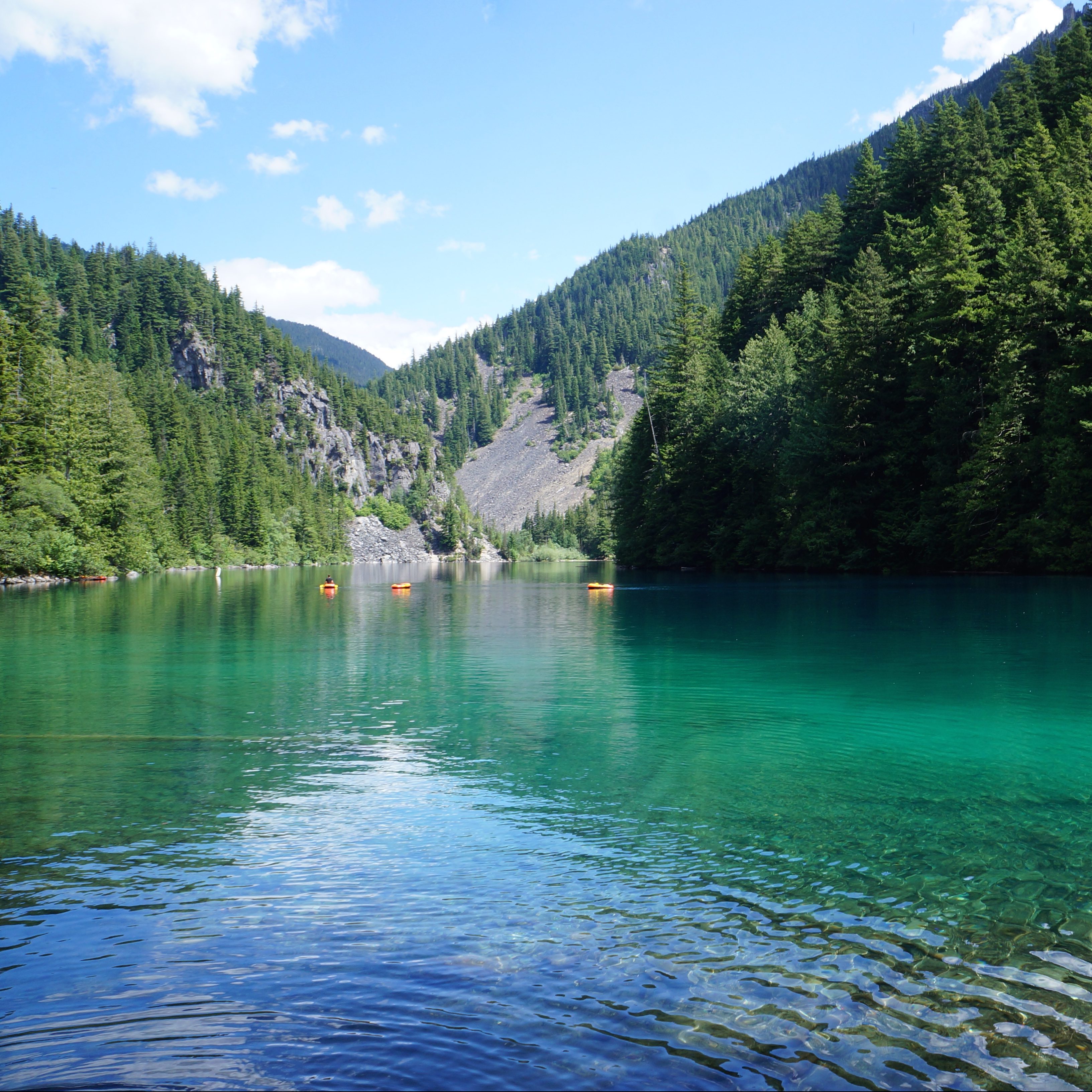
The blue green hues of Lindeman Lake on a sunny day in summer while people lounge on the water with the mountains in the background in Chilliwack Lake Provincial Park in BC.

Located in Chilliwack Lake Provincial Park, this is a really popular hike. There’s somewhat limited space for tents, so I advise going early in the day or on a weekday if you want one of the tent pads. The hike to Lindeman Lake is less than 2km, but it is quite steep, with 350m of elevation gain. The parking lot is often targeted by thieves, so make sure you don’t leave anything valuable in your car. There is a bear cache and outhouse, but it’s only a throne-style toilet, meaning there are no walls. Due to the high volume of crowds at this location, I think it could use a little TLC from BC Parks. Get a backcountry permit for $5pp per night from camping.bcparks.ca. Campfires are NOT permitted, so enjoy a swim in the clear, but cold, lake instead!

Viewpoint Beach/Half Moon Beach 

A photo overlooking Gold Creek and Golden Ears Mountain from Viewpoint Beach on a sunny day in Golden Ears Provincial Park in BC.

Viewpoint Beach is located very close to the lower mainland, in Golden Ears Provincial Park, and as a result, it’s also very popular. The nice thing about this location is that it’s an easy 4km hike and there’s lots of space for tents. There is an outhouse and bear cache, but the bear cache is severely undersized for the number of visitors, so be prepared to hang your food. Some people cross the river to access Hiker’s Beach, but be careful doing this when the river is running high. Also, be aware there’s no cache or outhouse on that side. If you want to avoid the crowds, you can hike another 6km to Half Moon Beach, but this trail isn’t in great shape, so be prepared for a slower, muddy hike. Get a backcountry permit for $5pp per night from camping.bcparks.ca. Campfires are NOT permitted.

Tikwalus Heritage Trail

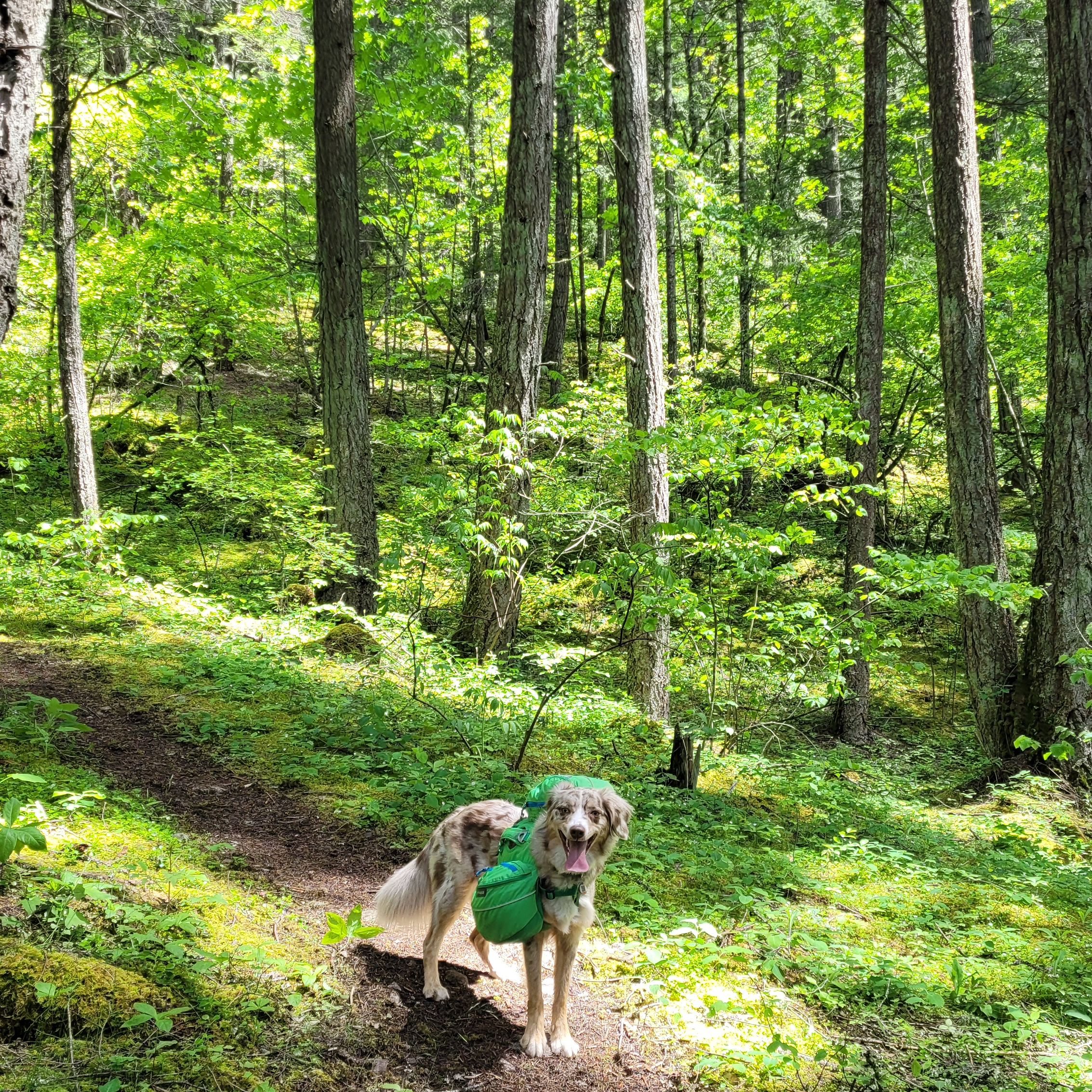
A cute red merle Australian Shepherd dog poses on a dirt trail with a large dog backpack, with green forest in the background while hiking on the Tikwalus Heritage Trail in British Columbia, Canada.

The first two trails on this list are very popular, so if you’re looking to avoid the crowds, Tikwalus Heritage Trail is located near the Fraser Canyon on Highway 1. It’s a 6km hike to get to the campsite, but the challenge with this trail is an elevation gain of 750m, so be prepared for a climb! This trail is mostly forested, but has lovely views of the backcountry from the campsite. These are all first-come-first-serve sites, but there’s a fair amount of space and in my experience, it’s not that busy. There is an outhouse and bear cache, but there’s no water source immediately at the campsite, so fill up at the river located 1km before camp. There are no permits for this campsite and campfires are permitted if there’s no fire ban.

Levette Lake/Hut Lake

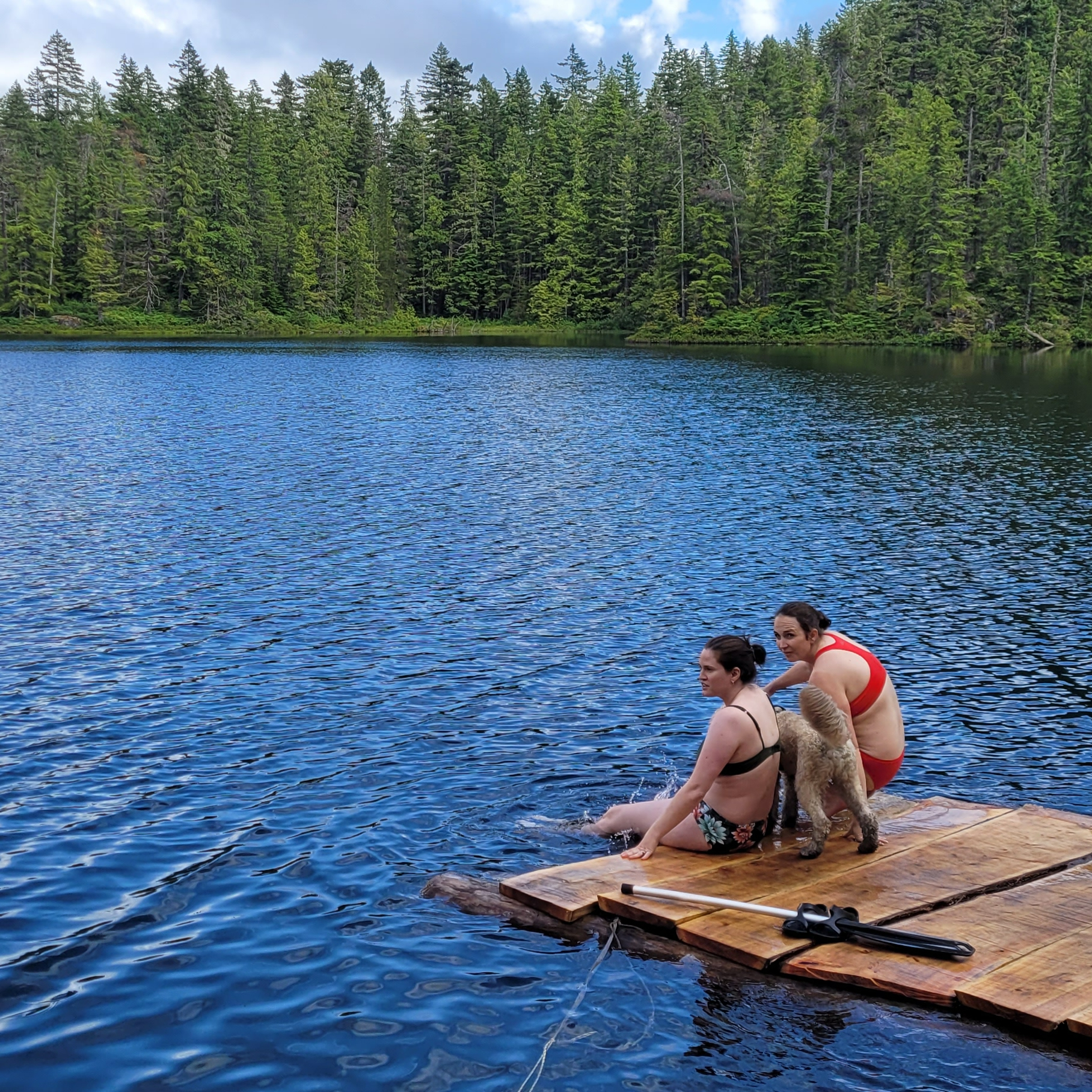
Two women sit in swimsuits on a dock with a dog, looking out at the forest and blue water of Hut Lake Recreation Site, Northwest of Squamish in British Columbia, Canada.

Levette Lake and Hut Lake are free rec sites located in the backcountry near Squamish, off Paradise Valley Road, but the vibe is very different at each lake. Levette is popular among locals and depending if the road is open, you can generally drive right up to the lake to camp. If you want to avoid the crowds, it’s a 5km hike from Levette Lake to Hut Lake. The trail is along rugged road and some hardcore off-roaders will drive all the way to Hut Lake. There’s not a lot of space for tents at Hut Lake and there’s no bear cache or outhouse, but we were the only people at this campsite when we visited on a weekend in mid-July. It’s a great option for a rainy weekend and we enjoyed swimming in the lake. There’s no permit for this site and campfires are permitted if there’s no fire ban.

Juan de Fuca/West Coast Trail

A photo of Mystic Beach on a sunny, blue sky day with the forested cliffs in the background and the waves washing up on the beach on the Juan de Fuca Marine Trail on Vancouver Island, BC.

The Juan de Fuca Trail is a great option for Spring as it’s located along the coast of Vancouver Island and is open year round. However, it’s closed in 2025 due to damage from winter storms, so I’ve opted to include the West Coast Trail as an alternative. The WCT opens May 1 for the season and is extremely popular, so be prepared to book your permit from Parks Canada when they release in Jan/Feb. Both trails are long, multi-day hikes, though it is possible to do shorter trips along the Juan de Fuca trail. If you’re hiking the Juan de Fuca, backcountry permits are required for $10pp per night from camping.bcparks.ca. Both trails are recognized for their coastal beauty and campfires are permitted when there’s no fire ban.

San Josef Bay/Cape Scott Trail

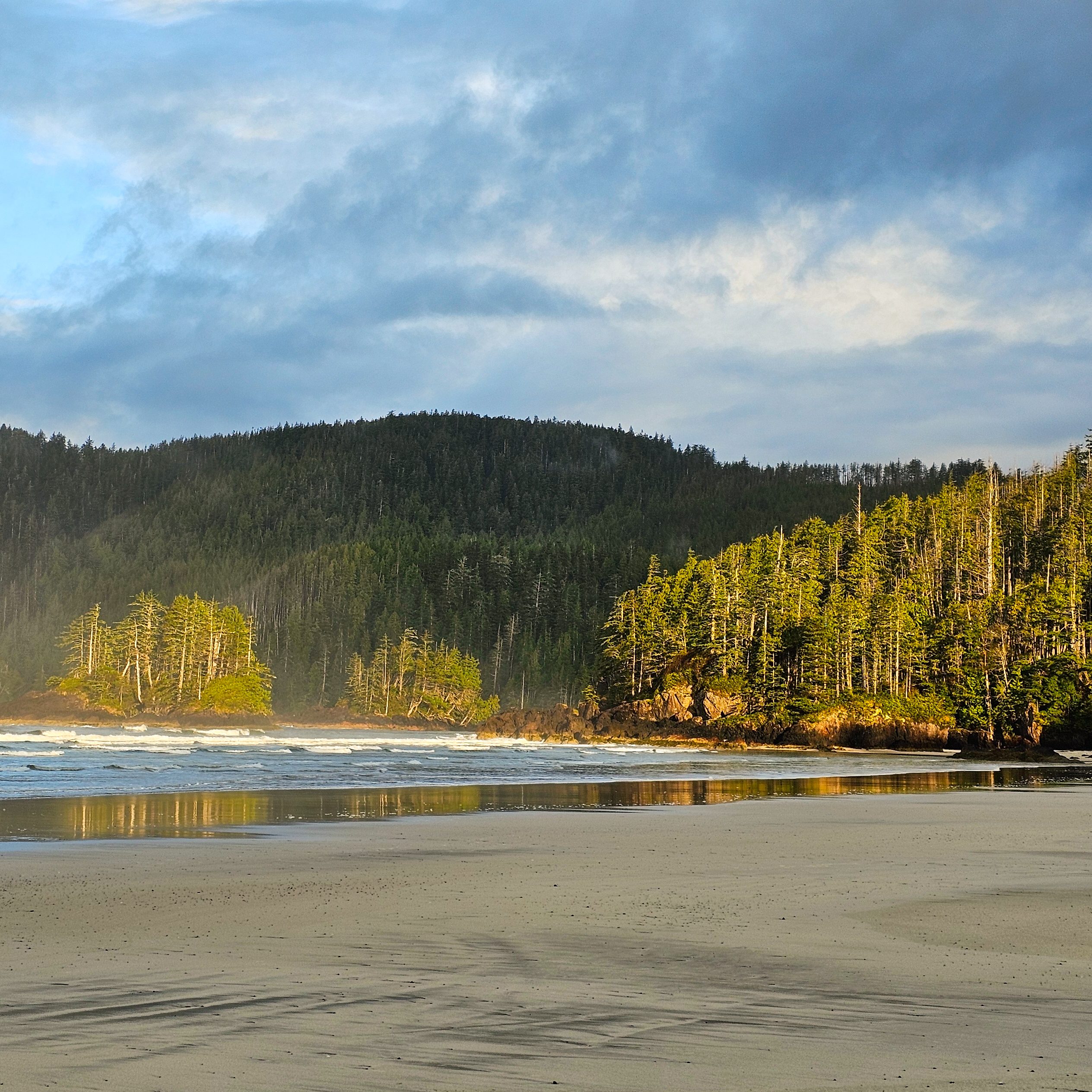
A photo of San Josef Bay on a cloudy, moody day, with the forest lit by the sun and the waves crashing onto the sand in Cape Scott Provincial Park on Vancouver Island, BC.

Given the challenges with the Juan de Fuca Trail this year, visiting San Josef Bay or Cape Scott on the northern part of Vancouver Island is a great alternative! San Josef Bay is recognized as one of the most beautiful beaches in the world and is only 3km from the trailhead along well maintained trail. If you’re more ambitious, there’s a fully developed trail that travels 25km each way to the historic lighthouse at Cape Scott. This trail is more challenging, but still relatively well maintained, with several campsites on beautiful beaches. All campsites have an outhouse and bear cache and you can get a backcountry permit for $10pp per night from camping.bcparks.ca. Campfires are permitted when there is no fire ban. Be prepared to drive along 65km of gravel road to access the trailhead – any car can make the trip, but be prepared to drive slow.

Sunshine Coast Trail

A female hiker / camper sits on a bench on Manzanita Bluff over looking the trees and blue water of the Salish Sea along the Sunshine Coast Trail in British Columbia, Canada.

The Sunshine Coast Trail is a 180km trail through the wilderness of the upper Sunshine Coast. The entire trail will not be accessible until summer, but there are a few options for Spring hiking in the first 50km of trail between Sarah Point and Powell River. You can do the entire 50km section, or you prioritize one of the shorter trail options, such as Manzanita Bluffs, Appleton Canyon, Rieveley Hut, or Little Sliammon Lake. This is a very well maintained trail with facilities at every site. It is free to hike, but I recommend a donation to qPaws if you’re using the huts. The trailhead at Sarah Point is along rugged road, so I recommend booking a trip with the Sunshine Coast shuttle to access the trailhead. Be aware that not all campsites have a reliable water source (or any water source) and plan accordingly.

Cheakamus Lake

Two backpackers stand and stare at beautiful Cheakamus Lake while hiking to the campsite at Singing Creek on a beautiful, blue sky day with mountains in the background in Garibaldi Provincial Park, BC, Canada.

Cheakamus Lake is a popular campsite near Whistler. I include this option with a caveat to check the trail conditions before going. I’ve hiked the trail in May when it’s been completely clear of snow, but I’ve also had to cancel a June trip when the snowmelt was particularly late. It’s a great option for beginners as it’s a mostly flat trail. There’s two campsites on the trail, the first is a 4km hike from the trailhead and the second is a 7km hike. Reservations are required to stay at these sites and release 4 months in advance of your date from camping.bcparks.ca for $10pp per night. Campfires are NOT permitted, but there is an outhouse and bear cache. 

Hiking Raft Cove

Seth and I finished hiking out from San Josef Bay around 11:30am on Easter Sunday (see previous post). Our friends departed earlier in the morning because they had to return to work on Monday. Lucky for us, we had one more day off, so we planned to explore further around the backcountry! 

I shared in my previous post that there is 65km of gravel roads connecting Port Hardy and San Josef Bay. The main road to San Jo is really only the tip of the iceberg in this area and there’s an extensive network of forestry roads connecting all around the north part of the island. You do have to be careful driving around though because there is active logging happening. I don’t believe there’s logging on the main road, but if you’re on one of the branch roads on a weekday, you should use a radio. 

The town of Holberg is a central location connecting several of these roads. It’s really just a small community that I’m assuming is mostly loggers and truckers, but they do have a small restaurant called the Scarlet Ibis that is worth checking out along the way! Other options are taking the FSR’s down to Winter Harbour or Grant Bay, which I haven’t had the opportunity of visiting.

20250420_135521

Our route was a little bit different. In exploring other options for backpacking in the area, I discovered Raft Cove. It’s another beautiful golden sand beach that’s located down Ronning Main, which branches off San Jo Main a few kilometres before you get to the trailhead. It’s about a 30-45 minute drive from the San Jo parking lot, depending how fast you drive on the sketchy roads. We did the drive to San Jo Bay as a convoy of two vehicles, which I prefer in case you have car troubles. But our friends had left, so I was a little bit nervous about driving down Ronning Main on our own. 

Fortunately, our experience was that Ronning Main was actually in better condition than San Jo Main and we drove slow with no issues. We even saw a black bear on the road along the way! Ronning Main continues to Cape Palmerston, which we didn’t visit, but a few kilometres before the end of the road, there’s a small parking lot for Raft Cove. There were only 3 other cars when we visited, so it’s not a very popular location. 

20250420_145835
20250420_145452

The trail to Raft Cove is 2km through the woods and then 1km along the beach to the campsite. So it’s a similar distance to the trail at San Jo Bay, but it’s in very different condition. The 2km through the forest are much more emblematic of what I experienced on the North Coast Trail. It’s a muddy trail through the woods, with lots of technical sections. Some of the reviews online are pretty intense – I didn’t find the trail all that bad, but maybe I was just prepared for a rough trail and it met my expectations. It took us ~45 minutes to reach the beach on the way in and closer to an hour on the way back. 

Dogs are permitted at San Jo Beach and Raft Cove, but definitely exercise caution. Both beaches are in bear, wolf, and cougar territory, so always keep them leashed. We did let Sadie run a little bit on the wide open empty beach, but we kept her very close to us (and leashed) on the trail. The trail hikes up and over and small headland, so be prepared for a little bit of elevation gain. Sadie loves technical trails, the muddier the better, so she had a blast!

20250420_145719
20250420_134843

Raft Cove is breathtaking. I’ve heard it described as “San Jo Bay without the tourists” and that was pretty accurate to our experience. The beach is over a kilometre long and it was completely empty when we arrived. We lucked out and it was low tide, so we checked out the tide pools and sea arches along the coast before walking down the beach. There’s a campsite at the end of the beach where the Macjack River meets the ocean. We encountered a few other people and learned that a slightly more popular way to visit Raft Cove is to paddle ~5km along the Macjack River to the campsite. Accessing the put-in seems slightly more challenging though. I did some research and it looks like you have to take the road to Winter Harbour out of Holberg instead, and then drive up along Topknot Main to the parking lot. I don’t know anything about the condition of the road, but it looks to be a bit of a longer drive. 

In my original itinerary for the trip, I planned for us to spend our last night camping at Raft Cove. I’m sad we never ended up doing it because it’s a beautiful place to stay, but we changed our visit to a day trip instead. Our ferry reservation had gotten moved earlier, to 3pm, and it would be way too exhausting to have to hike out 3km in the morning, drive 2.5 hours on gravel road, and then still have to drive 4 hours from Port Hardy back to Nanaimo. So we made the most of the visit as a day trip and really enjoyed the solitude along the beach. Always leave something to come back for right?

20250420_140140

Instead, we hiked back to the parking lot, returning to our car around 4pm. We wanted to get most of the gravel road done to save ourselves the trouble on Monday morning. Seth drove all weekend and did a great job navigating all the potholes. I have to conclude that he is a better driver than Brandon, because we didn’t get any flat tires on our trip! 

It was over 2 hours to drive back and ~5km before exiting the gravel road, we turned off on Georgie Main to drive 6km down to Georgie Lake Rec Site. I slept at Nahwitti Lake Rec Site for a night when we had the flat tire, but that campsite is now listed online as closed due to dangerous trees. It didn’t appear closed from the road, so I’m not sure how recent that information is. In any case, I wanted to try a new rec site and we decided to try for a site at Georgie Lake instead. Georgie Main is in worse condition than the main road, but still doable in any vehicle, there’s just a lot of potholes.

PSX_20250429_084008
PSX_20250429_083908

There are currently two old campers taking up the two large spots at the back of the site. Neither is occupied, so I’m not sure if someone is just storing them there or if they’re abandoned. Fortunately, there’s 5 much nicer sites down by the lake and only one was occupied when we arrived. Shortly after us, 3 more vehicles arrived and we thought all the sites were taken, but two of the vehicles were just using the rec site for day use and had a fire down by the lake. So in total, 3 sites were occupied on Easter Sunday of the long weekend, so I think it’s reasonably reliable that you could get an impromptu site here. We weren’t there for a long time, only for one night, but we enjoyed a beautiful sunset over the lake before heading to bed.

We were up early again on our final day to drive back to Nanaimo. It didn’t take us too long to exit the gravel road and then it was smooth pavement all the way to Nanaimo! We stopped briefly in Port MacNeil for a sink bath and then had a delicious meal at The Fork and Arrow in Campbell River. It was a great trip and I’m glad I got to visit two beautiful beaches. There’s still a lot more to do in this area, but I’ll probably give it another 5 years before I return to tackle more attractions. There’s always something exciting to explore in BC!

20250420_195623