Garibaldi Provincial Park Guide

If you live in BC, chances are you’ve heard of Garibaldi Provincial Park. I’m not sure if it’s quite as popular as some of BC’s National Parks, but it’s certainly developed a pretty wide-reaching reputation. Garibaldi Park is a large backcountry access park near Vancouver that captures a lot of the wilderness area east of Squamish and Whistler. You can’t drive to any of the park attractions, but it has not slowed down the number of visitors to the park. 
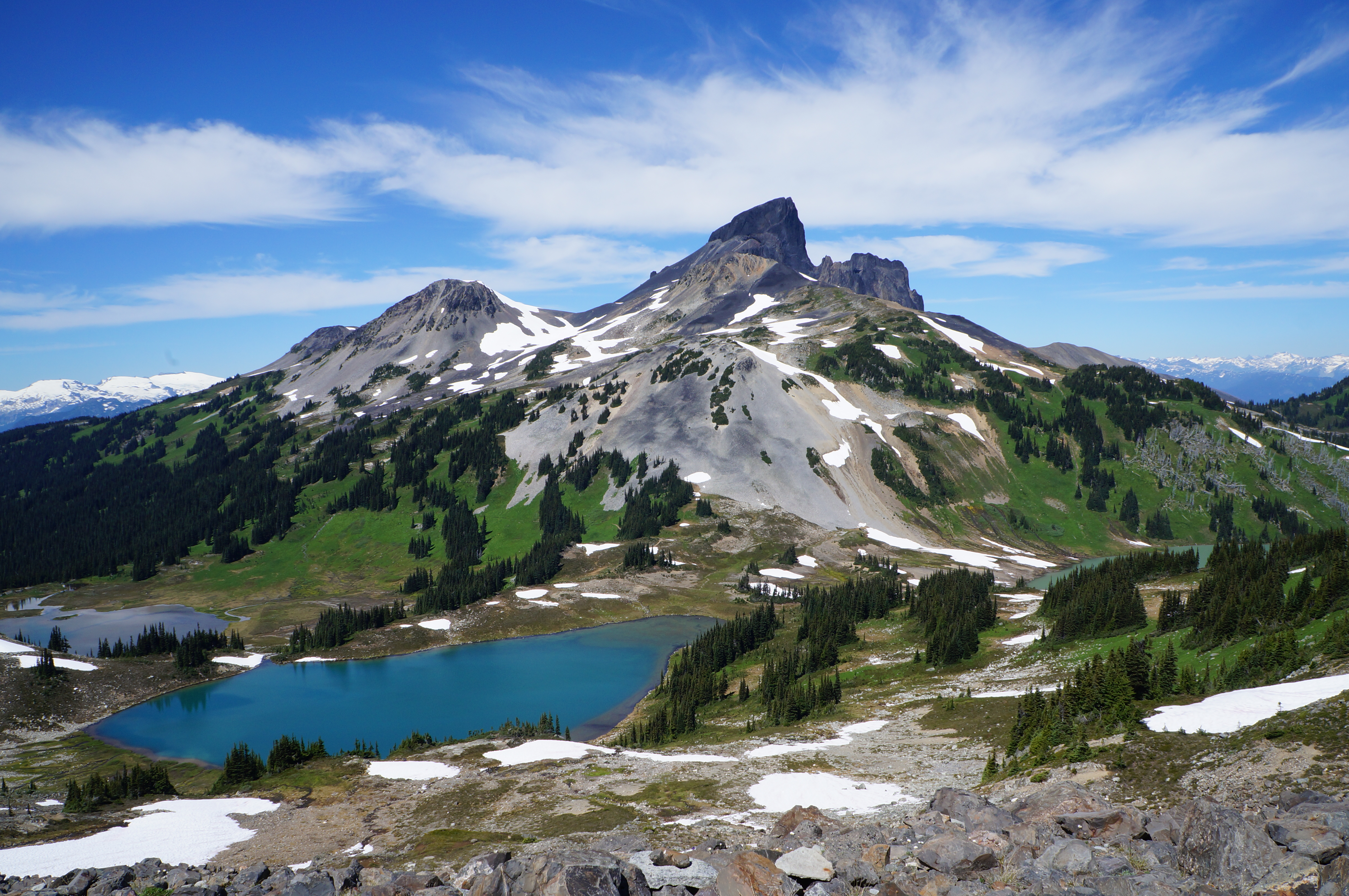
A photo of Black Tusk as seen from Panorama Ridge in Garibaldi Park on a blue sky day in the summer, with the alpine meadows and mountains in the background and lake in the foreground in BC.

Getting There

It’s impressive that Garibaldi Park gets as many visitors as it does when the access to the park is solely self-powered. The park is located between Squamish and Whistler, with several key park entrances at Diamond Head, Rubble Creek, Cheakamus, Whistler, and Wedgemount. Diamond Head is closest to Squamish, while the rest of the park entrances are closer to Whistler, so it can be a bit of a drive from Vancouver. I always give myself 1.5-2 hours of driving to get to the trailhead. Parking is generally secure, but there’s always the risk of break-ins, so don’t leave anything in your car.

Driving is by far the easiest way to get to the park, as public transit is not available. There is a park shuttle (Parkbus) that runs from Vancouver to Rubble Creek (the trailhead to Garibaldi Lake and Panorama Ridge) during late June to early October. The bus only runs on Fridays and weekends, and will book up early for Saturdays. Otherwise, there’s not many options and you’re best off trying to carpool with others via a facebook hiking group if you don’t have a car. 
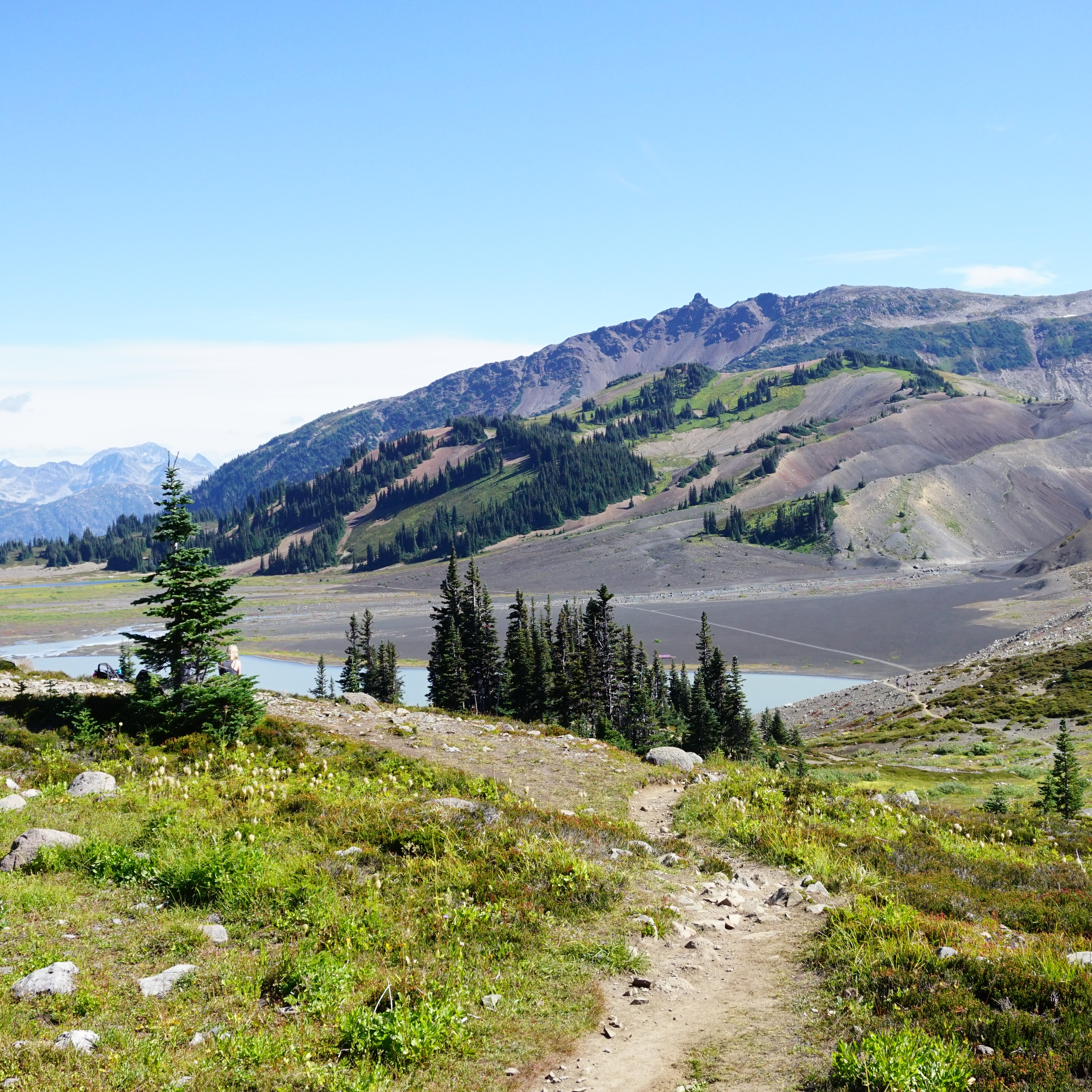
A hiking trail extends through the alpine of Garibaldi Provincial Park towards Helm Lake, with the forest and mountains in the background on a sunny day in British Columbia, Canada

Activities

The most popular activity in the park is day hiking. Visitors park at a trailhead and spend the day hiking to various viewpoints in the park. The trails are all well maintained and make for a very scenic day in the backcountry. However, most of the trails cover considerable distance and elevation gain in a remote environment, so visitors should be prepared with the 10 essentials and leave a trip plan with someone they trust. For more information on trip preparedness and trip planning, see my Safety post.

Backpacking is also popular as there are 10 beautiful campsites spread throughout the park that can be visited as single night trips or along thru hikes. Biking isn’t permitted everywhere, but you can bike from Diamond Head and Cheakamus Lake, which is a popular activity for cyclists. Finally, lots of winter visitors use the park for snowshoeing or ski touring, either as a day trip, or for an overnight expedition. There is one hut available for camping at Elfin Lakes, which is popular in winter. Avalanche Safety Training is highly recommended if you are recreating in the park during the winter. See my Avalanche Safety post.

A group of 3 skiers traverse the ridge on the way to the Elfin Shelter at Elfin Lakes in Garibaldi Provincial Park, BC. It's a beautiful sunny day with lots of snow and the forest and Diamond Head Mountain in the background.

Permits and Day Passes

In the 10+ years I’ve lived in BC, Garibaldi has always had a reputation as a crowded park. In 2016, BC Parks brought in a reservation system for their backcountry campsites to reduce the impact to the natural environment from overflow camping. If you want to camp at any of the backcountry campsites, you will need an overnight permit. These are available on camping.bcparks.ca for $10 per person ($5 for youth), per night, and release 4 months in advance of your desired date. So if you want to camp on Aug. 15, make sure to book your pass on Apr.15. 

During the pandemic, BC Parks further regulated park use by employing a free day pass system from mid June to mid October to manage parking at the trailhead and impacts to the park from overuse. While these passes are free, they have generated a lot of criticism and frustration from visitors struggling to obtain a pass. The day passes release 2 days before your desired date at 7am, and from what I understand, they can be challenging to obtain due to popularity. My recommendation is to be ready at 7am and keep refreshing for up to 15 minutes. If you make a reservation on Parkbus, it includes a day pass.

The sun shines down during golden hour on Wedgemount Lake with the hut and the mountains in the background in Garibaldi Provincial Park, BC.

When to Visit

The park is popular year round, but it is important to understand that travel through the park has much higher risks in Winter and Spring. The most popular time to visit the park is in the summer (from July to September), but be aware that summer in the mountains is much later than summer in the city. You can usually hike to Garibaldi Lake starting in late June, but the snow in the alpine and along the trails to Panorama Ridge and Black Tusk may have snow on them into late July. Early Fall is also a good time to visit the park, but be aware that temperatures will drop quickly in the mountains and that limited daylight hours can make certain trails more challenging. 

Winter can also be a great time to visit the park, but avalanche safety training is highly recommended no matter where you’re going. Snowshoers and ski tourers will travel to Elfin Lakes and the privately managed Kees and Claire Hut at Russet Lake in the winter. Both of these routes pass through challenging avalanche terrain and I strongly advise completing an AST1 course before attempting these routes. The Red Heather Hut is also a popular location for skiers who want to do a few laps on Round Mountain before heading home. This carries less risk than the other trails because the route is only in simple avalanche terrain, but you should still exercise caution and be prepared. 

A female hiker looks tiny in comparison to the large Wedgemount Glacier in the background in Garibaldi Provincial park, BC.

Trails

There are so many trails to explore in Garibaldi Park. I’ve hiked all of them, with the exception of the winter glacier routes. Here’s some more information on trail options and links to dedicated resources for each trail. Please note that trail distances and elevation gain are approximate.

Garibaldi Lake (18km, 800m gain) – A great option for summer day hiking, or winter snowshoeing (with AST1). Probably considered the most popular hike in the park, with the trailhead at Rubble Creek.

Panorama Ridge (29km, 1500m gain) – Completed by some visitors as a long day hike (12 hours), but recommended as part of a backpacking trip (day hike from the campsite at Garibaldi Lake or Taylor Meadows). This is a very popular trail, with the trailhead at Rubble Creek. Only recommended in the summer.

Black Tusk (25km, 1400m gain) – Completed by some visitors as a long day hike, but recommended as part of a backpacking trip (day hike from the campsite at Taylor Meadows). This is a very popular trail, with the trailhead at Rubble Creek. Only recommended in the summer.

Mount Price (25km, 1400m gain) – Completed by some visitors as a long day hike, but recommended as part of a backpacking trip (day hike from the campsite at Garibaldi Lake). This trail is not very popular and requires some wayfinding, with the trailhead at Rubble Creek. Only recommended in the summer.

Helm Creek (16km, 650m gain) – Most often used as an alternative route when backpacking to Panorama Ridge or as a thru hike from Garibaldi Lake. The trailhead is at Cheakamus Lake and this route is less popular than the trails from Rubble Creek. Only recommended in the summer.

Garibaldi Thru Hike (~30km, 1500m gain) – Only completed as a backpacking objective in the summer. People will hike from Rubble Creek to Cheakamus Lake, camping at Garibaldi Lake, Taylor Meadows, or Helm Creek along the way.

Cheakamus Lake (9km, 50m gain) – A great option for beginner hikers, backpackers, and mountain bikers. It can be completed in a single day or as an overnight trip, camping at Cheakamus Lake Campsite. The trail is popular in the summer, with the trailhead at Cheakamus Lake. Can also be completed in the winter, but the access road is not plowed, making it a much longer hike.

Singing Creek (16km, 50m gain) –  A great option for beginner hikers, backpackers, and mountain bikers. It can be completed in a single day or as an overnight trip, camping at Singing Creek Campsite. The trail is popular in the summer, with the trailhead at Cheakamus Lake.

Elfin Lakes (22km, 600m gain) – A great option in the summer for day hiking and mountain biking, and in the winter for snowshoeing or ski touring (with AST1). Complete as a day hike or stay overnight at the campground or hut. A very popular trail, with the trailhead at Diamond Head (chains required for your tires in winter). 

The Saddle/The Gargoyles (27km, 900m gain) – An extended trail option from Elfin Lakes, can be completed from the parking lot in a single day, or shortened as a day hike from Elfin Lakes. The trailhead is located at Diamond Head. Only recommended in the summer.

Opal Cone (13km, 350m) – This trail can be completed as a day hike from the campsite at Elfin Lakes, or as a stop along the way when backpacking to Rampart Ponds. The trailhead is located at Diamond Head. Only recommended in the summer.

Rampart Ponds (18km, 500m gain) – This trail can be completed as a day hike from Elfin Lakes, or as a backpacking objective if you plan to stay at the campsite. The trailhead is located at Diamond Head. Only recommended in the summer.

Mamquam Lake (22km, 600m gain) – This Trail can be completed as a day hike from the campsite at Elfin Lakes, or as a shorter route from the campsite at Rampart Ponds. The trailhead is located at Diamond Head. Only recommended in the summer.

Russet Lake via Musical Bumps Trail (24km, 1300m gain) – Completed by some visitors as a long day hike (12 hours), but recommended as part of a backpacking trip, staying at the Russet Lake Campground overnight. This route requires paying for a sightseeing pass on the Whistler Gondola and hiking along the High Note or Half Note trails and the Musical Bumps trail. The trailhead is located at Whistler. It can also be visited in winter, but AST1 is required and a backcountry pass from Whistler Resort. 

Russet Lake via Singing Pass Trail (27km, 1200m gain) – Completed by some visitors as a long day hike, but recommended as part of a backpacking trip, staying at the Russet lake Campground overnight. The trailhead is located at Whistler and this route avoids having to pay for a pass for the gondola. Only recommended in the summer.

Wedgemount Lake (14km, 1200m gain) – This trail can be completed as a day hike or an overnight backpacking trip to the Wedgemount Lake Campsite. Overnight is recommended due to the substantial elevation gain. The trailhead is located at Wedgemount Creek. Only recommended in the summer.

Garibaldi Neve – This is a winter route for experienced alpinists only as it involves glacier travel. It is generally completed over 2-3 days and avalanche training and snow camping experience are required. I don’t have any experience with this route, please look elsewhere and do sufficient research and training before attempting.

Spearhead Traverse – This is a winter route for experienced alpinists only as it involves glacier travel. It is generally completed over 3-4 days and avalanche training and snow camping experience are required. I don’t have any experience with this route, please look elsewhere and do sufficient research and training before attempting.

A group of campers sit on the ground surrounded by camp food, pots, and stoves, preparing their dinner on the beach with the trees and lake in the background at Cheakamus Lake Singing Creek Campsite in Garibaldi Provincial Park in British Columbia, Canada.

Campgrounds

All campgrounds in Garibaldi Park require permits from camping.bcparks.ca. These release 4 months in advance of your desired date. They are popular, so it is recommended to book exactly 4 months before you want to visit. Backcountry permits are $10 per person ($5 for youth), per night. 

Elfin Lakes Campground – Reservable year round. There are 35 tent pads, several outhouses, picnic tables, a bear cache, and a cooking shelter. 

Elfin Lakes Shelter – Reservable year round. There are 33 bunks and an outhouse. You must bring your own sleeping pad and sleeping bag. 

Red Heather Campground – Reservable in winter only (Dec-Apr) for snow camping. There are no tent pads, but there is an outhouse and a cooking shelter. You are not permitted to sleep in the cooking shelter.

Rampart Ponds Campground – Reservable year round. There are 12 tent pads, an outhouse, and a bear cache. Sometimes this site floods in the summer and is closed.

Garibaldi Lake Campground – Reservable year round. There are 50 tent pads, several outhouses, picnic tables, bear caches, and four cooking shelters.

Taylor Meadows Campground – Reservable year round, except in September and October (I’m guessing because of bears). There are 40 tent pads, several outhouses, picnic tables, a bear cache, and two cooking shelters.

Helm Creek Campground – Reservable year round. There are 30 tent pads, an outhouse, and a bear cache. 

Cheakamus Lake Campground – Reservable year round. There are 10 tent pads, an outhouse, and a bear cache.

Singing Creek Campground – Reservable year round. There are 6 tent pads, an outhouse, and a bear cache.

Russet Lake Campground – Reservable year round. There are 7 tent pads, an outhouse, and a bear cache.

Kees and Claire Hut – While located in the park, this hut is managed by the Spearhead Huts Society (not BC Parks). Bunks can be booked year round for $60 per night and are most popular for touring in the winter.

Wedgemount Lake Campground – Reserable year round. There are 20 tent pads, a seasonal pit toilet, and an emergency hut that can be used as a bear cache. 
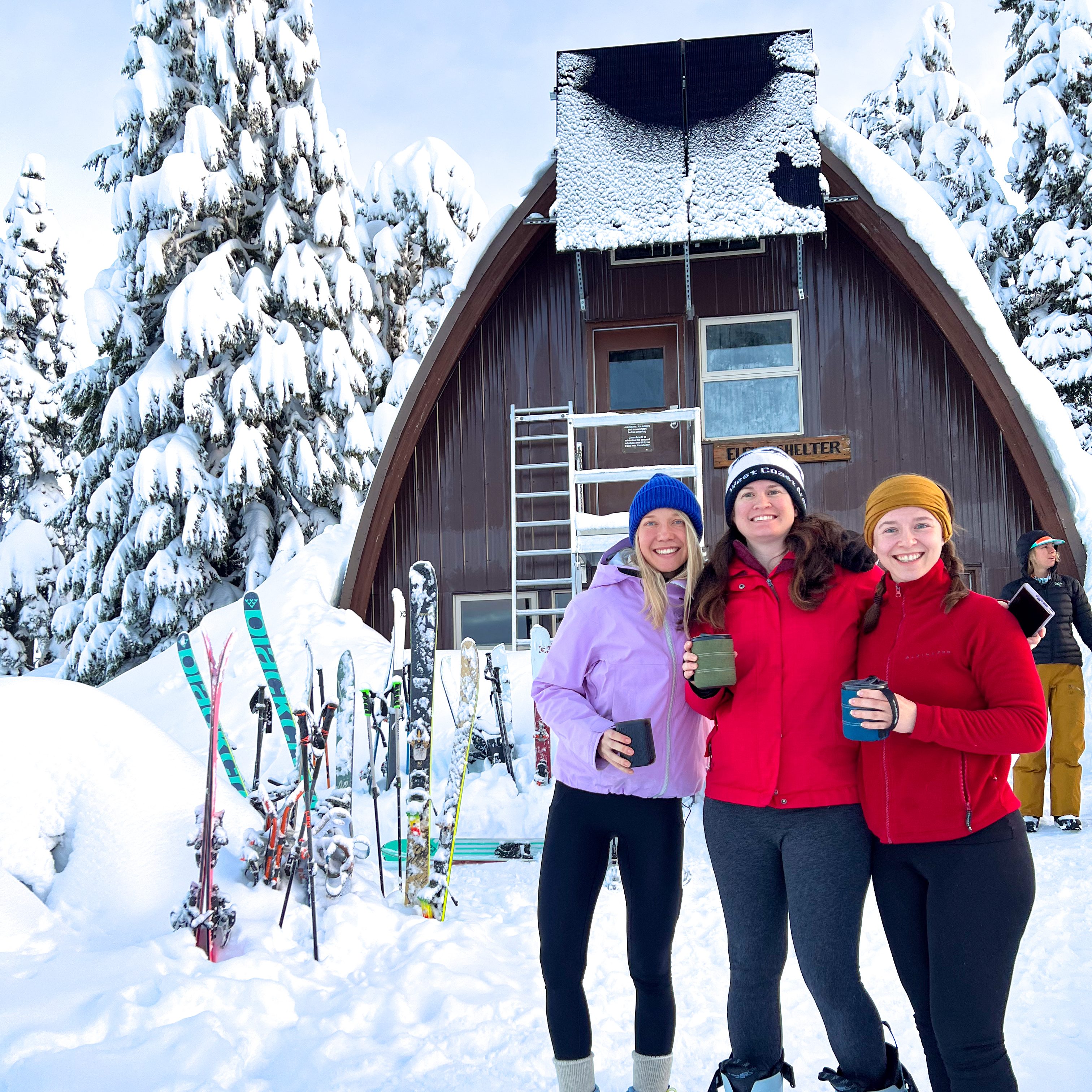
Three female skiers pose in front of the Elfin Lakes shelter on a sunny day in winter with the hut in the background and snowy trees in Garibaldi Park, BC.

A Guide to Ski Resorts near Vancouver

I’ve been living in Vancouver for over 10 years now and I’ve been downhill skiing every single one of those years. Most of my time has been spent at Whistler Blackcomb, but I make a point to try and ski a new resort every year. I haven’t made it to every ski resort on this list, but I’m sure I’ll get to them all one day!

Cypress Mountain

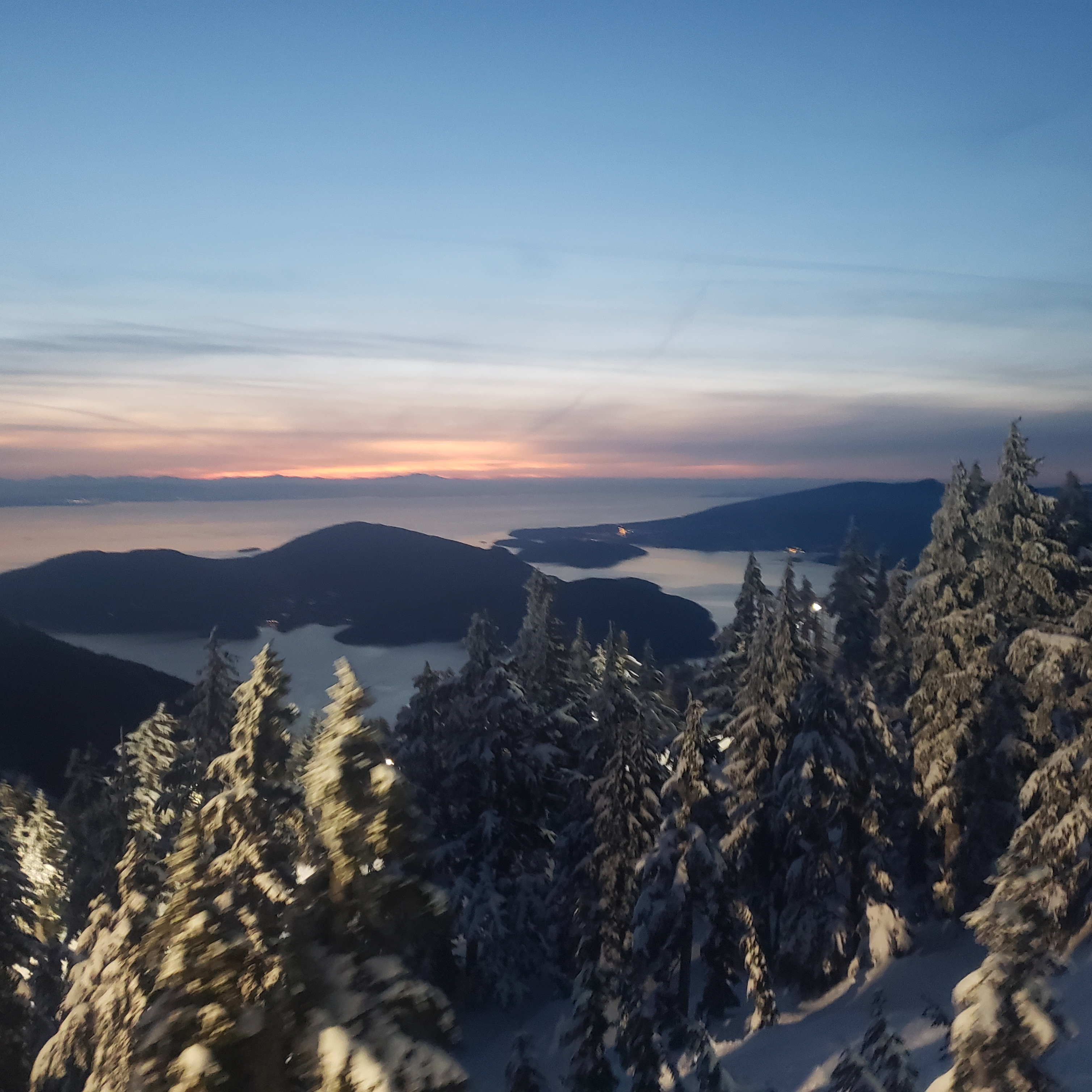
A view of the snowy forest and sunset over Howe Sound and Bowen Island from Sky Chair at Cypress Mountain Ski Resort near Vancouver, British Columbia, Canada.

Cypress is the biggest of the local mountains and the first resort I skied in BC. The resort is split between Black Mountain and Mount Strachan and has 4 major chair lifts. It’s a very busy mountain on weekends, so my preference is hitting up the mountain after work for night skiing! The highlight of this mountain is the view of Howe Sound from the Sky Chair.

Mount Seymour

A group of snowshoers head downhill in winter on a snowy mountain with snow covered trees and a view of Vancouver city in the background from Brockton Point in Seymour Mountain Provincial Park in British Columbia, Canada.

Seymour is a great family mountain. It has two lifts and is a great little mountain if you have kids or are learning to ski. It will be busy here as it’s a popular location for snowshoeing and touring as well. My favourite way to visit is to skin up to Brockton Point on my touring skis and then ski down through the resort. It’s a great place for night skiing and sunset views!

Grouse Mountain

A view of Crown Mountain from Grouse Mountain in the winter. The mountain is covered in snow in British Columbia.

Grouse is probably the most well known resort in the city as the ski slopes can be seen from all over the lower mainland, especially when they’re lit up for night skiing. Believe it or not, I have never actually skied Grouse, mostly because it’s the smallest resort and you have to take a gondola from the base to access anything, but I’ve heard the views are unparalleled!

Whistler Blackcomb

A photo of Peak Chair as seen from Roundhouse at Whistler. There is a Canadian flag in the foreground and snow covered mountain peaks on a blue sky day in the background, at Whistler, BC.

Whistler Blackcomb is by far the most well known ski resort on this list, and for good reason. It’s a premier ski resort and it has access to an incredible amount of terrain. I ski Whistler Blackcomb for 5-6 days every year and I never get tired of it. It will always be busy, so embrace the early morning rise to get in a few good runs before the crowds really pick up! My favourite areas to ski are 7th Heaven on Blackcomb and Symphony on Whistler.

Sasquatch Mountain

A female skier on the snowy slopes at Sasquatch Mountain Ski Resort on a sunny day in British Columbia.

Sasquatch is a small resort north of Harrison. It’s surprisingly close to the city, but difficult to access because it has a gravel road that requires snow tire chains. But it’s a really nice resort with 3 chairs and low crowds (even on weekends). It didn’t have much powder when I visited it, but I’ve heard it can get a nice amount of powder and the runs seem designed around this, with lots of gladed tracks down the mountain.

Manning Park

A view of lightning lakes covered in snow during the winter, with the trees and mountains in the background on a cloudy day in E.C. Manning Provincial Park in BC.

Manning Park is another small resort. It’s further than Sasquatch, but generally easier to access. The challenge with Manning is that there are very limited accommodations near the resort. So plan to either drive up and back in a day, or stay in Sunshine Valley or Hope. I adore Manning Park for its unlimited recreation activities and while its cross country trails are much more well known, it has a nice downhill resort as well.

Mount Baker

I have explored a lot around Mount Baker, but I haven’t had the opportunity to ski there yet (not for lack of trying, I had to cancel 2 trips). Odds are, most of the people skiing Mount Baker will be from BC to take advantage of the high amount of powder they get. The North Cascades are a beautiful place to visit and I love spending time in this area. There’s no where to stay on the mountain, but you can stay in Glacier, Bellingham, or drive there and back in a day. 

Sun Peaks

Sun Peaks is the next biggest resort after Whistler. It’s located just north of Kamloops and is a great ski destination! There are tons of accommodations and there is lots of terrain to explore. The runs span both sides of the highway and have a huge variety of alpine and glade runs. Some of the smaller resorts on this list can be visited in a day, but definitely give yourself at least 2 days at Sun Peaks!

Big White

Of all the resorts I’ve visited in the interior, Big White is probably my favourite. It gets great snow and it has some fabulous runs. It’s located east of Kelowna and has tons of chair lifts to keep you busy. I really liked the ski village in Big White – Sun Peaks felt really large, while other resort villages felt a bit small. I may have a soft spot for this resort because it was the location of my first group ski trip, but I definitely want to go back in the future.

Silver Star

Silver Star Resort is located north of Vernon and is smaller than Big White and Sun Peaks. It also attracts less crowds, but can feel busy due to the smaller number of chair lifts. I’ll admit, Silver Star wasn’t my favourite resort, but I think it’s mostly because it didn’t have great conditions when I visited. It has a really nice village and I’d definitely be willing to give it another try!

Apex

Apex is one of the lesser known resorts in the interior (or at least, it feels that way). It’s located further south, east of Princeton, but west of Penticton. It gets less crowds than the other resorts I visited, but it had some truly awesome powder! I’m not sure if this is a common theme, but I have heard it tends to get dumped on in the winter. It’s a small village, but my favourite part was the forest skate loop!

Mount Washington

Three skiers smile at the camera on a sunny day with the mountains in the background at Mount Washington Ski Resort on Vancouver Island, BC.

If you want to visit Vancouver Island, Mount Washington is pretty much your only option. Take the ferry to Nanaimo and then drive north to Courtenay. Mount Washington is on the boundary of Strathcona Provincial Park and while the road up the mountain isn’t it great shape, it is a really nice resort for skiing and snowshoeing!

Stevens Pass

A photo of snowy trees and ski slope, with the mountains emerging out of the fog and clouds in the background, taken from Stevens Pass Ski Resort in Washington State.

I discovered this resort because it’s included in my edge card/epic pass for Whistler. It’s located east of Seattle and is incredibly popular among the locals. There’s no ski village, so we stayed in Skykomish and drove into the resort in the morning. Be prepared for terrible traffic coming out of Seattle and aim for an early start. The lift passes will sell out and the parking lot will fill up, both of which will result in you being denied entrance. But it’s a great ski resort with some nice terrain if you plan accordingly!

Russet Lake Backpacking Trip

After a month of resting my foot from my plantar fasciitis injury on the HBC Trail, I was really determined to get back in the backcountry. To be honest, my foot was definitely not feeling 100%, but I had a two week hiking trip planned for the end of August and I really needed to test out hiking again before committing to that trip. We had permits to camp at Russet Lake in mid-August, so it was a good opportunity to test the waters. Me and Brandon bought our Whistler edge cards early this year, and the pass comes with a free summer sightseeing ride on the gondola, so our plan was to take the gondola up to the top of Whistler and hike to Russet Lake from there.

PSX_20230823_183246
PSX_20230823_182934

This was my first time hiking at Whistler-Blackcomb and I was totally blown away by it! I’ve never bothered to pay for the gondola up because it is expensive and I spend a lot of time there in the winter, but it is absolutely worth visiting in the summer. There are a ton of cool trails up there, as well as another entrance to Garibaldi Provincial Park. I’ve done all the other major hikes in Garibaldi Park (Garibaldi lake, Elfin lakes, Wedgemount lake, etc), so this was the last big hike in the park for me. That said, even with the gondola, Russet Lake is still a challenging hike. It’s not at all technical, but more psychologically challenging with the topography of the terrain.

PSX_20230823_183618

There’s a few options for hiking to Russet Lake. I think the most common option is to take the gondola up the mountain and hike from either Roundhouse or Peak Chair via the High Note trail (like we did). This route is approximately 12km long, with 600m of elevation gain. However the gondola pass is just shy of $100, so the free option is to hike up from Whistler base via the Singing Pass trail. It’s only 3km longer than hiking from peak chair, but it has more than 1400m of elevation gain. That said, it’s a gentle uphill most of the way.

IMG_4814

I didn’t do the Singing Pass trail, but the reason I say the route via High Note is psychologically challenging is because there’s a lot of up and down. Every time you finish a peak, you can see several kilometres forward to the next peak that you’re going to have to hike down and up again. We had to do this 4 times, so it some ways it felt harder. However, it’s worth noting that it’s a net downhill hike on the way to Russet Lake, so there’s more uphill on the way back. If you want to try both trails, you could hike down the Singing Pass trail on the way back instead.

20230819_140824
20230819_131856

Me and Brandon were joined by Carolyn and her friend Scott on this trip and they opted to hike up the Singing Pass trail. So between us we did both, but Carolyn and Scott joined us on the return trip to complete the rest of the High Note trail, which loops back to Roundhouse. I would say that Russet Lake is an ambitious hike for a single day (24km roundtrip), but the High Note trail is a great option for a day hike from the gondola. It starts at the top of the Peak chair and there’s a few cool new attractions, such as the Skybridge. From there it hikes down around the back of all the chair lifts, looping back to Roundhouse around Piccolo Summit. It’s a 10km loop option to do this trail, but I’d recommend adding on an extra 1km each way to go to the top of Flute Summit – in my opinion this was one of the best views along the entire trail.

20230819_163845

But let’s talk about Russet Lake. The biggest thing of note when we visited was the wildfire smoke. It was perfectly clear in Vancouver the night before we did the hike, but then a lot of smoke from Kelowna started to roll in in the early morning. The closer we got to Whistler, the smokier it got. Honestly, we probably shouldn’t have gone, the smoke is really not good for your lung health, but it seems to be a fact of life in the Pacific Northwest these days, so we opted to go anyways.

Carolyn and Scott headed off on the Singing Pass trail and beat us to Russet Lake by more than 2 hours. It took me and Brandon a while to get to the top because we had to take the Blackcomb gondola, followed by the Peak to Peak gondola, followed by Peak chair. But we had the best time on the trail and the views were fantastic! You leave the resort and enter Garibaldi Provincial Park just after Flute Summit. The biggest uphill section on the way there is right before Russet Lake and when you crest the top of the pass you can see the very fancy Claire and Kees Hut looking down to the lake.

PSX_20230820_222305
20230819_135118

The Hut is pretty incredible. It’s managed by the ACC and requires advance booking of course. The campsite is managed by BC Parks and also requires advance booking 4 months prior to when you want to go. Permits disappear quickly, so mark your calendar in advance! The hut is gorgeous, but the campsites are right on the lake, so personally I preferred the campground. From the campsite you can look out to Fissile Peak and Overlord Glacier, so it’s pretty cool.

IMG_4852

We went for a quick swim in the cold water immediately after arriving and then Carolyn and Scott left to head up to Whirlwind Peak for more views. Me and Brandon considered joining them, but my foot needed a break, so we ended up just climbing a short way up for a view of the lake to have our dinner instead. Carolyn and Scott opted not to go the whole way to Whirlwind Peak, but got a few more views of the area.

My foot was definitely tired when we got to Russet Lake, but overall doing well. I made a point to stop once an hour on the way there to roll it on a ball and stretch it. Regular breaks makes a huge difference and since then it’s become a part of my hiking regimen to make sure I stop every 5km to rest it.

PSX_20230821_231117
20230819_195839

The rest of our evening was spent lying out enjoying the views and being a bit giddy about being out in the backcountry again. We were eventually driven back to our beds as it got colder. It was pretty cool overnight, but warmed up quickly again with the sun in the morning.

Unfortunately, the smoke was worse in the morning and there was a real smell of bonfire in the air. When you’re out in it for too long, it definitely gets in your sinuses and I had a bit of a persistent cough for the next week, which is why I don’t recommend it. It helps to wear a wet mask, but it’s hard to hike uphill with a mask on. At one point even my eyes were watering from the smoke.

IMG_4897
IMG_4916

Carolyn and Scott joined us on the hike back to Roundhouse because we all wanted to go to the Umbrella Bar. It’s more uphill on the way back, but I actually preferred it because I find going uphill easier on my foot than going down. There’s a few cute lakes on the way back and you hike through the actual ski resort, so it was cool to compare the terrain in the summer to terrain that I’m very familiar with in the winter because it looks like a different world depending on the season.

IMG_4940

The Umbrella Bar turned out to be a bit of a bust. You can get drinks, but there’s very limited food, so we opted to download the gondola and eat in the village instead. We treated ourselves to burgers to celebrate a successful trip. For me, I was celebrating that my injury hadn’t prevented me from doing the trip and looking forward to heading to the Rockies just 1 week later. Overall it was an eye-opening trip for me – I feel like there’s a whole world of hiking at Whistler that I didn’t know about. So if you get the chance, definitely check it out!

PSX_20230820_221042