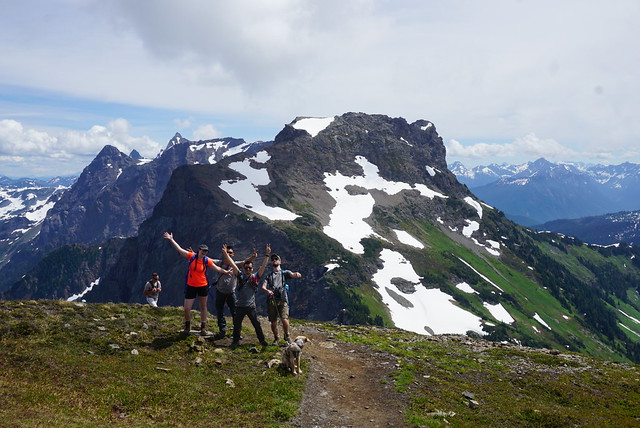
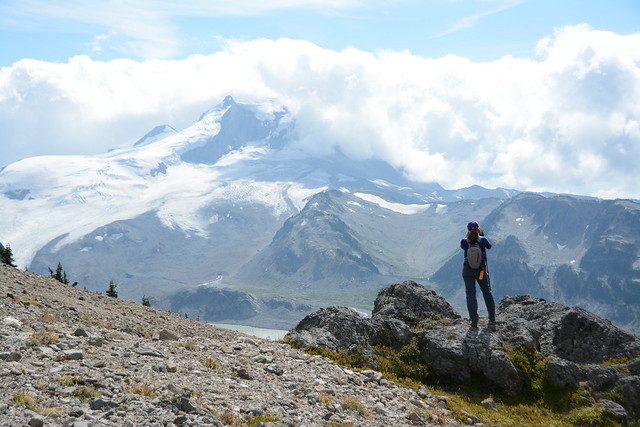
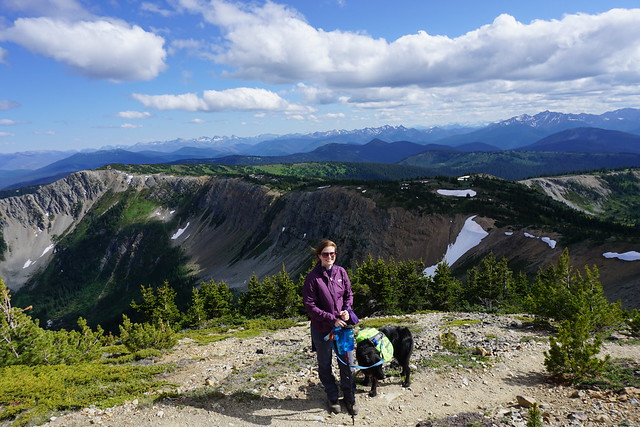
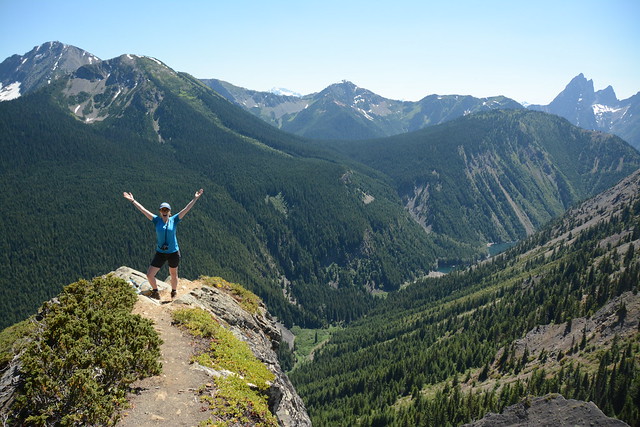
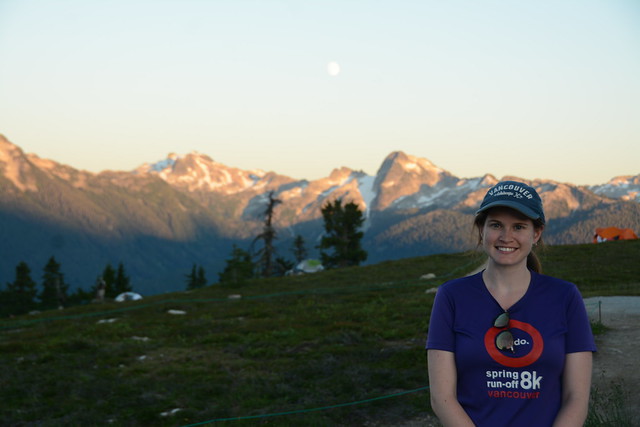
I’ve driven through Mount Revelstoke National Park many times, but I’ve never actually done any of the attractions in the park. It’s a pretty large park, but a lot of the wilderness is inaccessible. I think most visitors drive up the Meadows in the Sky Parkway to the top of the mountain and do some short hikes through the meadows, without exploring deeper into the backcountry.
Eva and Jade Lakes entered my radar over the past few years when I’ve been booking permits in the Rockies, and I impulsively decided to purchase tenting permits for 2 nights in August at the start of the season. You can visit both Eva and Jade Lakes as a day trip, but it’s just over 20km, so it makes for a big day. There were a fair amount of day hikers in the park when the weather was nice, but I think most people either just visit Eva Lake, or only hike as far as the top of the pass on the way to Jade Lake (not wanting to hike up and down the pass to the lake on the same day).
If you have the time, I’d definitely recommend going overnight. There’s only 4 tent pad sites at each lake, so it’s a really special experience when the crowds thin out and you have the National Park mostly to yourself for the evening. My permits were for Eva Lake on a Friday Night and Jade Lake on Saturday Night.
This did make for a very big trip out of Vancouver though. Brandon and I took Friday off and left Vancouver right after work on Thursday. Leaving on Thursday helped a lot with the traffic and it was pretty smooth sailing leaving the city. We stopped once for a pee break and made it to Costco in Kamloops just before closing to fill up the gas tank. It would be nice to book a hotel in Kamloops, but we’ve entered our BC Rec Sites era and decided to hit up one of the many free provincial rec sites instead!
The Harper Lake Rec Site suited our needs best and we drove in a long gravel road in the dark to get to the site. I could imagine that this might be a bit of a party site on the weekends, but it was completely empty on a Thursday night and we quickly set up the tent and went to bed. We were pleasantly surprised with the view in the morning – there’s a gorgeous lake with a little dock – but we didn’t have much time to enjoy it. We took off again early to get to Revelstoke to start our hike.
We stopped in the town of Revelstoke to pick up some sandwiches for lunch, and then drove to the top of Meadows in the Sky Parkway. Another reason I’m glad we started on Friday is that we were easily able to find parking. There’s not very much space in the top parking lot and when we returned to the car on Sunday, there was a steady stream of cars parking along the edge of the road. We arrived around noon and didn’t have any trouble.
But there was another contributing factor to the lack of crowds. As we climbed up the mountain, it slowly started to rain, and by the time we parked the car, it had escalated to a full on torrential downpour. I’ve never been less excited to start a hike. I don’t mind hiking out in the rain, but it’s a real bummer starting a hike in the rain. If we hadn’t driven 6 hours to get there, I may have said, “let’s try again next year”. We reminded ourselves that it was supposed to be much nicer the next two days, and slowly prepared ourselves for the hike.
We ate lunch in the car to postpone the inevitable, and then finally set forth in our full rain gear. My rain gear worked great, as did my boots, but it’s not a particularly enjoyable experience. It’s ~1km uphill from the parking lot to the top of the mountain, where there are a ton of other alpine meadow trails to enjoy (the “Meadows in the Sky” Parkway is very aptly named). The rain did lighten up after a while, but it was still extremely cloudy and we didn’t see any views. This resulted in us making pretty quick time along the 7km trail to Eva Lake and we arrived in the mid afternoon.
I’m so glad I picked Eva Lake for our first night! While we didn’t get to enjoy any of the views from Eva Lake, this campsite does have a small Ranger cabin that is over 100 years old. This was an absolute godsend on a rainy day! We had brought a tarp, but it was so lovely to be able to hang out in the cabin all evening rather than have to tough it out in the cold.
Like I said, there’s only 4 tent sites, and with the rain, the lake was pretty empty. There was one solo female camper from Salmon Arm already there when we arrived, as well as a small family. A group of 3 women showed up later in the evening and we all hung out in the cabin getting to know each other and hoping the rain would let up. We hung everything up to dry, but it was so humid everything remained pretty damp. It never really stopped raining, but it made for a cozy evening and reminded me a lot of the trip Brandon and I made to Lake O’Hara last year, where we spent the better part of the day sheltering in the O’Hara store while it poured and poured.
Fortunately, things improved the following morning. It was still completely clouded in when we woke up, but the rain had finally moved on overnight. We didn’t have too much hiking ahead of us, so we had a lazy start and enjoyed our breakfast by the lake. The clouds were moving around a lot and creating cool shapes. We got a few glimpses of the mountains overshadowing the lake, but never got a view of the mountains looking out from the lake. From other photos, it looks like it’s an amazing view, so something to come back for another time! But we did enjoy the 1km walk that’s available around the edge of the Lake. Check back next week to hear about the second part of our trip to Jade Lake!
It’s been over 10 years since I moved to British Columbia, so every 2 years I compile a list of my favourite hikes from the past 2 years. You can view my other favourite hikes in Part 1, Part 2, Part 3, and Part 4. This collection is my favourite trails that I hiked in 2023 and 2024. It’s always a mix of day hikes and backpacking trips!
#10 Starvation Lake
This hike is super easy and accessible, but chances are, you’ve never heard of it. The alpine snow was pretty slow to melt in the summer of 2024, so one day in July we decided to check out some of the lesser known trails in Squamish. We wanted to stay at a low elevation and take advantage of lake swimming season. We had Brunch at Fergie’s and then continued to the end of Paradise Valley Road to start this hike. The trail follows the Cheakamus River before a gentle hike uphill on the Sea to Sky Trail. We hiked as far as the Starvation Lake Rec Site and spent several hours lounging around and swimming in the warm water. You can continue hiking further to connect with the Sea to Sky highway (if you have two cars), but we enjoyed a round trip from the lake. (6km roundtrip, 130m elevation gain)
Brockton Point is well known among the skiing and snowshoeing crowd. It’s a hike I’ve done several times, but I only started to appreciate it in the past few years. I recommend doing it in the winter, just make sure to book a free parking pass for Mount Seymour Backcountry or you’ll be denied access. Recently I’ve been ski touring up to Brockton Point and then skiing back down through the resort trails, but it’s also a really nice snowshoeing trail. The trail starts at the back of the parking lot and hikes parallel to the ski run. Most users continue past Brockton Point to Pump Peak, but this takes you into avalanche terrain, so don’t go further without the proper gear and training. I always stop at Brockton because the view is great there anyways! (6km roundtrip, 270m elevation gain)
#8 Jade Lake
In line with my other posts, I’m not afraid to stretch the boundaries of what is considered “southwestern BC”. Jade Lake is located 6 hours away from Vancouver in Mount Revelstoke National Park, so it’s definitely a bit of a stretch to include it in this list, but it’s a great hike! Eva and Jade Lake can be done as either a backpacking trip, or a long day trip. It’s a little over 20km round trip if you want to do both lakes in a day, so I opted to visit overnight. The hike starts from the top of Mount Revelstoke and meanders through beautiful alpine meadows. After Eva Lake, the hike climbs up the pass for a beautiful view of Jade Lake. Most people stop at the Pass, but it’s definitely worth it to add the extra 2km down to Jade Lake, which is a gorgeous alpine lake that receives limited visitors compared to the rest of the park. (20km roundtrip, 525m elevation gain)
Widgeon Falls is a really unique hike because it’s only accessible by boat! In the summer, you can rent canoes from Pitt Lake and paddle across the Pitt River and up Widgeon Creek to the Widgeon Campsite (~1.5 hour paddle). It’s a pretty safe paddle, but you definitely want to be prepared if you’ve never canoed before. The Pitt River is tidally influenced and can become pretty fast moving, so research the current conditions before visiting. I think the best time to go is early spring or early summer. Avoid freshet, which causes high flows in the river, but also avoid late summer because then the flows in the creek can get too low. From the campsite, you can hike through the forest and along the river to Widgeon Falls. It’s an easy hike, but makes for a great adventure! (9km roundtrip paddle, 6km roundtrip hike)
If you know me well, you might be surprised to see this hike on the list. I did not have a great time on this hike. It’s 80km long and me and Carolyn completed the entire trail in 3 days, resulting in a foot injury. I was quite miserable along a lot of the trail, but it was definitely a type 2 kind of fun because I still think about this trail all the time. Like the name suggests, it’s a heritage trail that connects Hope to Tulameen and was used during the fur trade and by First Nations. The trail has a lot of forest walking and is not for the faint of heart after the 2021 flood caused a lot of blowdowns and washouts. Most of the trail has now been repaired by amazing volunteers, but the real reason you do this hike is for the solitude. We encountered a lot of people when we passed through Lodestone Lake Rec Site, but otherwise, we didn’t see a single person on the trail in the entire 3 day weekend we were hiking. Despite the challenges, I think this is a really special trail and you will be rewarded with views at Conglomerate Flats and Palmer’s Pond. It’s a great option if you like a challenge! (80km, 3300m elevation gain, 4-6 days)
#5 Skookumchuck Narrows
This is a small and easy trail on the Sunshine Coast, but I really enjoyed visiting it. After you take the ferry to Langdale, drive all the way north to Earls Cove and take the turn off to Egmont. It’s a relatively easy hike, so make a day of it and visit the small village of Egmont and go for a swim in Waugh Lake on the way back. There’s a tiny cafe along the trail, so you can reward yourself with a little treat. The trail hikes through the woods to a series of viewpoints at the Sechelt Rapids. The main reason to visit is to see the series of rapids that develop during tide change, which are popular among kayakers and whitewater enthusiasts. The views of Sechelt Inlet are gorgeous, and it’s really fun to watch the thrill seekers playing in the rapids! (9km roundtrip, 150m elevation gain)
Blanca Lake is still a relatively little known hike, but it is quickly becoming popular. It’s located really far down the Squamish River FSR, off the Elaho Mainline on E300 line. 4WD is required to get to the trailhead. You could try taking a car partway up the E300, but it’s 10km long and completely exposed. We picked up a few hitchhikers who were getting ready to quit from the heat. If you make it to the trailhead, it’s a short but steep hike up to the alpine. There’s a steep climb in the first 1.5km, but then the incline is more gentle for the remaining 3km up to the lake. You can visit as a day hike or an overnight. We stayed one night and there is a lot of space for tents. If you have the time, stay 2 nights to explore the surrounding alpine area. There’s no trails, but there’s lots of terrain to explore! (9km roundtrip, 500m elevation gain)
Tetrahedron Park is located on the lower Sunshine Coast and has an amazing hut system that can be utilized all year round. Drive to Sechelt and take Sechelt Inlet Road out to the Gray Creek FSR. A normal car will get you to the lower parking lot, or with 4WD, you can save 1km extra and drive to the upper lot. You can visit Tetrahedron as a day trip, but I really recommend overnight to take advantage of the huts (great for beginners). There’s ~30km of hiking and 4 huts. Batchelor Cabin is best for families, Edwards Cabin is a good base camp for day hikes, and the cabins at Mount Steele and McNair Lake are great for more adventurous hikers. I highly recommend summiting Mount Steele, but exercise caution in the winter and watch for avalanche terrain.
South Chilcotin is a huge park with so many options for hiking. It’s definitely not a trip you can do for a day, unless you’re a mountain biker, but it’s great for multi day backpacking trips. I visited the park in mid-summer and did a 90km loop around the core area of the park, from Tyaughton Creek, over Deer Pass, to Spruce Lake. Other trip options include exploring the park via the Castle Creek trail or through adjacent Big Creek Park. For a price, you can take a float plane into the core area of the park and stay at fancy mountain lodges with full catering. What’s really nice about this park is the limited number of people and we had the backcountry sites to ourselves most nights.
I decided on Russet Lake as my favourite hike of the last two years. It’s a popular hike in the Garibaldi backcountry, but due to trail length and campsite maximums, it’s hard to do as a day hike and not as busy as other trails in the park. You can access the lake via the Singing Pass Trail (free from Whistler base), or take the gondola and peak chair up to the top of the mountain and hike via the Musical Bumps trail (this is what I did). There’s a lot of up and down along this trail, but you’re in the alpine the entire time and it’s absolutely breathtaking! Once you reach the lake, you can pay more to stay in the very beautiful Kees and Claire Hut, or you can stay in the BC Parks campsite at the lake. Stay an extra day if you want to explore the surrounding area. (24km roundtrip, 550m elevation gain)
I feel like summer gets shorter every year that I live in Vancouver, but my bucket list of summer activities only gets longer. I love kayaking, but the alpine backpacking season is so short that I often forget to schedule in kayaking adventures. I always go kayaking with Seth, and we can’t take our dog with us, so it’s hard to find someone to look after her every time we want to go out. But we celebrated our 5 year wedding anniversary in August, and I was determined to go on an overnight trip!
We’ve done lots of kayaking in Indian Arm, more recently known as Say Nuth Khaw Yum Provincial Park or Selilwet, which is located right in the middle of the lower mainland and easily accessible from both the North Shore and Belcarra. Our favourite day trip is to launch from Belcarra and paddle up to Jug Island and Ferrar Cove, but we’ve never spent an overnight in the Arm. There’s 3 campsites scattered along the route and I’ve wanted to paddle up to the end for many years. Twin Islands is located at the southern end and is the most popular site. There are 2 more BC Parks sites at the northern end: Berg’s Landing and Granite Falls. We’ve paddled to Twin Islands a few times, but I really wanted to get to Granite Falls at the far end of Selilwet.
The first thing to be aware of is that this is an extremely popular trip. We planned it for a Saturday night, so we knew it would be busy with both kayakers and pleasure boaters (anything with a motor). If you’re able to go on a weeknight, I think it would be a much nicer experience. You can rent kayaks from either Deep Cove Kayaks or Takaya Tours in Cates Park. Deep Cove Kayaks seems to be the most popular option as they have a huge fleet and it’s a shorter paddling distance, but Takaya is also a great option to avoid crowded Deep Cove and support an indigenous owned company.
I wish we could start our trip out of Belcarra, which is the same paddling distance as Deep Cove and much closer to our home, but unfortunately there’s no overnight parking from Belcarra or Barnet Marine, so Deep Cove or Cates Park are the only options. Deep Cove gets insanely busy in the summer, so we got up really early on Saturday morning to beat the traffic. I dropped off Seth and the kayaks at the loading zone and then found parking. The nearby parking is 3 hours maximum, so it’s a bit of a walk, but it was relatively easy for me to find parking at 7:30am. It was insanely crowded when we returned the following day in the mid-afternoon, so definitely go early.
We were on the water around 8:30am and Seth dropped a crab trap at the mouth of Deep Cove. Selilwet is a beautiful place to paddle, but the second perk of getting up early is that the conditions are much better for paddling in the morning. The Arm gets a notoriously strong southerly wind in the afternoon and it can get quite choppy. We had a really enjoyable paddle out of Deep Cove and ended up paddling ~7.5km to Thywates Landing before taking a break. There were lots of kayakers on the water, but most of them weren’t going further than Twin Islands.
Another option for paddling is to stop at Jug Island or the campsite at Twin Islands, but both options require an open water crossing, which I usually try and avoid having to do too many times, so it depends what route you prefer. The thing I don’t like about paddling in the Arm is that there aren’t a lot of public rest locations. When the tide is low there are some places you can stop, but a lot of the beaches seem to be attached to people’s properties. In most cases, you can’t own the beach (unless your property is really old and you’ve been grandfathered into old bylaws), so you can pretty much stop wherever you want, but I’m never really sure and try to stick to public spaces.
Thywates Landing is a really great option on the west side of Selilwet. It’s a small beach, but it’s owned by Metro Vancouver Regional Parks, so it’s primarily meant as a stopping place for paddlers. There’s a short walk (100m) up to a little waterfall and pool, which is really nice. The water was still really flat by the time we got to Thywates Landing, so we only took a short break to take advantage of the optimal paddling conditions. We started seeing a few more paddlers heading up the Arm and the pleasure boaters increased throughout the day, stirring up wake.
We paddled another 7.5km to Berg’s Landing, which is the second campground owned by BC Parks. Along the way we passed Silver Falls, which is a real highlight going up the Arm. There’s lots of space at Berg’s Landing and there was only one other tent there when we arrived. I’m sure the campsite got busier later, but Granite Falls definitely seems to be the more popular of the two sites. We stopped at Berg’s Landing for lunch at noon, right around when the wind started to pick up. It’s another ~2km to Granite Falls (for 17km in total from Deep Cove). It was choppy for the last 30 minutes of paddling, but at least we had a tailwind!
Granite Falls was already quite busy when we arrived at 1pm, but there is a lot of space for tents and we didn’t have trouble finding a site. As a kayaker, you’re never going to beat the people in motorboats, so leave early enough that you don’t have to fight the waves on the way up. There’s always going to be a bunch of novice paddlers that show up much later in the afternoon and evening, so just do your best.
Berg’s Landing is mostly a big field with some campsites around the edges and a big beach. Granite Falls is more popular because it has a bunch of campsites along the coast and it has a large freshwater source in the form of the waterfall cascading down from the mountain. I have visited Granite Falls once before by zodiac in June and there is a big difference in the water flow in the Spring and late Summer. When I visited in June, the Falls were a violent, rushing cascade of water, versus in mid-August when it’s much more of a trickle. There’s a nice pool at the bottom that you can swim in and there were a lot of yachters visiting for the day. There used to be a public wharf, but it’s gone now, so it’s a bit trickier for the pleasure cruisers to access.
Granite Falls has 2 new outhouses and a bear cache. Unfortunately neither are really appropriate for this type of site. While Granite Falls attracts all kinds of campers, it’s a backcountry site that gets treated like a frontcountry site. By which I mean, it gets a lot of inexperienced campers and it’s not treated with the respect it deserves. I wanted to love the site – it’s very beautiful – but the other campers left me feeling frustrated. It’s a wilderness campsite that could easily be frequented by bears, but because it’s easy to access by motorized boat, it attracts a lot of party people and it gets treated like an urban picnic site. People bring in large coolers of food and beer and don’t bother to secure anything. I could easily see the public losing access to this campground in the future from misuse.
For this reason, I didn’t think the facilities were appropriate. There are only 4 small bear bins and there were easily 50 people staying at the site on Saturday night. So even if people practiced bear safety, there still wouldn’t be enough space for everyone. Several groups were hauling in coolers of beer, which they left unattended all night. Hard shell coolers are not bear proof, so either leave them on your yacht or at home. We overheard another camper say to their friend, “We’re not worried about bears are we? There’s so many of us.” Please, it’s not about being worried about bears. Bear safety is about avoiding opportunities for bears to become food habituated, which almost always results in the death of the bear and sometimes, the closure of the site.
The outhouses were actually really nice. They’re the urine diverting outhouses with the conveyor belt pump. Unfortunately, no one seemed to have any idea how to use them and people were not pumping the belt after using it, so they quickly became clogged. Bless Seth, he tried for the better part of 20 minutes to unclog the toilet using a stick, but had no success. I think they just need a bit more educational info in the stalls. But this technology might be too advanced for the party people. To be fair – a lot of the people at the site were very respectful, but a few large groups can really ruin it.
So I did leave this trip feeling a bit annoyed, but overall, I enjoyed the experience. Because of the paddling conditions, we arrived at the site early in the day and had lots of time to relax. We spent some time exploring the waterfall and we went for a swim in the ocean, which is really warm at this time of year. Seth took a nap in the shade and I read my book. It’s easier to bring fresh food when kayaking, so we had tahini yam and halloumi tacos for supper, which I had made the evening before. We went for a short evening paddle before sunrise, which is always a highlight for me. It was super warm since we were at sea level, and we went to bed early to prepare for an early rise.
We had bad luck in that we got a surprise rain shower right when we were getting up at 6am. It didn’t rain a lot, but enough to make all our equipment wet while we were packing it up. We were on the water by 7:30am. It’s tiring to get up so early, but I do love having an early start!
We paddled on the west side of the Arm on the way in, so we decided to stick to the east side going back. There’s definitely more places to take a break on the west side, but the water was flat, so we were pretty fast and didn’t need a lot of breaks. We paddled 8km to Buntzen Bay and pulled out on a small rocky beach for a break. It’s not a public area, but the mountain gets really steep after that, so it was the last opportunity to pull out. You get to pass by two hydroelectric facilities, which are a neat feature of the Arm. The northern facility is still in use and draws water from Buntzen Lake via a large penstock. The southern facility is decommissioned, but is an interesting piece of architecture. It was 4.5km from Buntzen Bay to Twin Islands, where we stopped on the South Island for lunch.
The wind did start to pick up again after noon, but it was very manageable. We paddled to Raccoon Island and then crossed back to the west side to kayak into Deep Cove. I drank a lot of iced tea at lunch and it caught up with me at this point, so I had to do a hurried paddle into Deep Cove to use the washroom while Seth checked his crab trap. He got 6 crabs, but only 1 that he was able to keep. We’ve only caught dungeness crab in the past, so this was our first time catching rock crab. It was smaller, but still yummy! We paired it with some Newfoundland cod tongues at home, along with local corn and beets.
We arrived in Deep Cove at 1pm. There were people everywhere and it was chaotic landing on the beach and moving our kayaks to the loading area. I had 3 cars fighting over my parking spot when I left and we had to load the kayaks really quickly (while also getting stopped every 3 minutes by people trying to take our spot, not realizing it was 15min parking). Overall, it was a fun trip and Selilwet is really beautiful, but I don’t think I’ll be in a rush to do it again. It’s one of the most accessible sea kayaking trips from Vancouver, but it’s a very different experience than, say, Desolation Sound or the Gulf Islands. Worth doing, but maybe only once.