After two relatively nice days in the Azores (Part I), we got to experience the other side of their Atlantic climate. It was calling for rain on Day 3, and boy did it ever rain! It poured all night and we had a slow start to the morning, waiting for the rain to subside. Eventually we couldn’t wait any longer and we started the drive towards Furnas to try and enjoy the geothermal highlights of the island.
Furnas is in the middle of the island, so it’s not too far a drive from our B&B. We tried for a few viewpoints along the way, but everything was socked in by clouds. As we entered town, the rain became absolutely torrential. Emily had to stop into the pharmacy and even though she was outside for a total of maybe 15 seconds, she got drenched.

One of the big attractions in Furnas is cozido, which is a local dish that’s cooked in a big pot in the hot springs. It’s a combination of meats, vegetables, and greens that are all stewed together and then separated out again and served to you on a plate. In my opinion, it’s basically Azorean Jiggs Dinner (a Newfoundland dish where you boil all your vegetables with salt meat). I really wanted to try it, so we decided to just have lunch right away since it was raining so hard. The only problem… finding somewhere to eat.
If you’re visiting the Azores, I’d definitely recommend making your lunch or dinner reservations in advance as much as possible. This wasn’t really an option for us because we never bought a local sim card and couldn’t make any calls. So even though we purposefully went for lunch at 11:45am (15 minutes before the restaurants open), we couldn’t get in anywhere because they were full from reservations. It was too wet out to spend forever walking around, so we ended up eating in a nearby cafe, which was pretty disappointing.


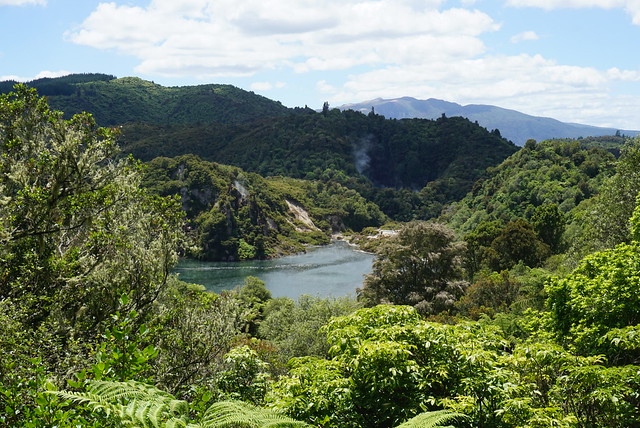
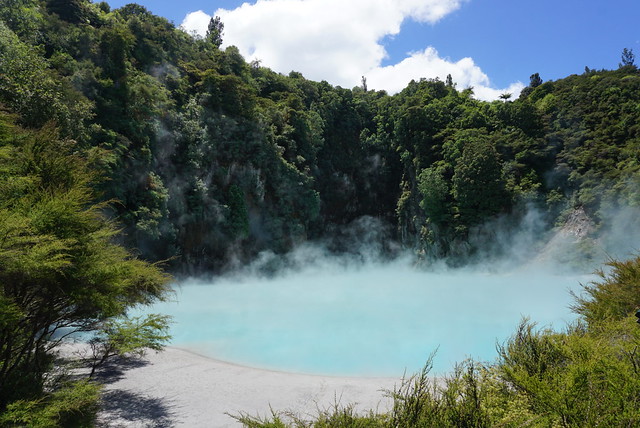
The rain finally slowed down after lunch and we walked to Jardim de Courela, which is located right in town and has a bunch of natural geothermal attractions. It’s cool to see, but it definitely smells like sulfur! We drove over to the Caldeiras das Furnas to see some more geothermal attractions, which is where the locals actually cook the cozido, so you can see the pots bubbling in the ground. There’s a short hike there to a waterfall, but it was either 10 or 15 euros per person (I can’t remember), and we were too cheap to pay for it. Instead we backtracked and visited some of the viewpoints we missed on the way in, particularly, Pico do Fero, which has a nice view of Lagoa das Furnas.

We improvised for the rest of the day and ended up driving towards the east end of the island to visit Parque Natural da Ribeira dos Caldeiroes. I feel like it would be easy to skip this park, but it was absolutely worth the drive! It’s a gorgeous park that follows the river down the valley with cascading terraces and an old water mill. The trail appears to end at the water mill, but there is a track through the forest that continues if you want to go further. My Gaia app told me there was a waterfall down there, but I wouldn’t recommend it. The trail was very muddy from all the rain and the waterfall is mostly just the river. It was an adventurous walk, but we could have skipped it.
To end the day, we stopped at Cha Gorreana, which is a tea factory near our B&B. It’s surprisingly popular, although it seemed most people were just doing a self guided tour and then hitting up the tasting room. They offer educational tours for free, so we did that and I really enjoyed it. I drink a lot of tea, so it was cool to see how the leaves get manufactured.


Finding somewhere to eat dinner that night proved more of a challenge. May 30, 2024 was Corpus Christi Day, which is a feast day to honour the body of Christ and is a holiday in the Azores. We’d had challenges earlier in the day trying to find a pharmacy and a post office that were open, and it proved almost impossible to find a restaurant at dinner time. All the restaurants in Furnas had been open – I guess because Cozido is so popular – but we had to drive around for ages to find somewhere to eat in the evening. It’s a moving holiday, so definitely pay attention to it if you’re visiting around that time.
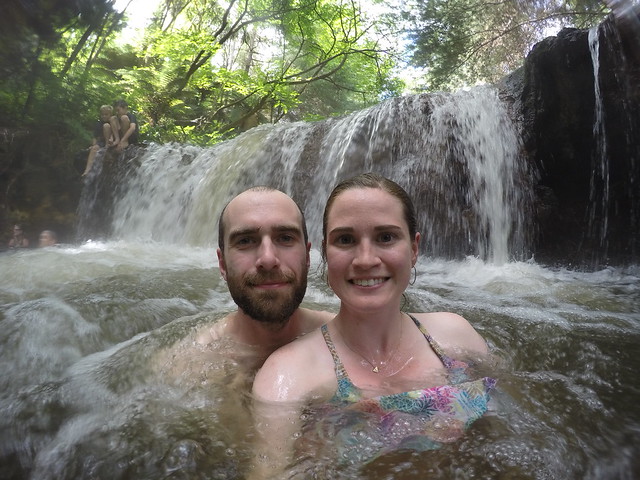
Day 4 was our last full day on the island. It rained on and off throughout the day, but our timing was really good and we were always either driving or inside whenever it happened to rain. I wanted to do a hike, so we drove to the southeast part of the island to do the Salto do Preggo waterfall hike in Faial da Terra. The hike is mostly uphill on the way there, but it’s only ~4km round trip, so it’s a nice little hike and only took us 2 hours, including a long break at the waterfall for lunch. The trail is mostly in the forest and the waterfall is quite beautiful, though the water is absolutely freezing!

We had to drive through Furnas again on our way back after the hike, so we decided to make another attempt at cozido and managed to find a restaurant to serve us since it was later in the day (2pm). At first, they told us they didn’t have room for walk-ins, but the restaurant was half empty, so I said we’d wait and they ended up seating us within 5 minutes. I honestly don’t know why they tried to turn us away because it never got any busier. The cozido is an absolutely massive serving, we shared 1 serving and still didn’t finish it, but it was delicious! I’m glad we were able to sample it while on the island since it’s really unique.


We finished the day by reviving some of the trip highlights. We went back to Praia dos Moinhos for another few hours and enjoyed briefly swimming in the rain at one point. We’d debated going to another beach, but figured, why mess with a good thing. Then we finished the trip with another visit to Mare Cheia for more seafood. The waiter was downright insulted when a group came in just before closing and asked him for a tuna steak (“tuna is not fresh! If any restaurant is serving you tuna, they’re feeding you frozen food!”). We commiserated with him and he poured us some shots of the local liqueur before returning to the B&B.
We hung out on the balcony as the sun set and into the night, chatting about whatever and reflecting on what a nice visit it had been to a pretty unique island. Even though the Azores was Emily’s pick for the trip, it was my favourite part too. I’d love to return some day and check out the rest of the islands. I definitely recommend it if you want to try something a bit different!

 The Road Goes Ever On