10 Epic Thru-Hikes in BC

If you’re an avid backpacker already and looking for an epic adventure, there are lots of multi-day trips in British Columbia to whet your appetite. I’ve only done a small sample of what BC has to offer, but these are some of my favourite thru hikes! If you’re a beginner, check out my Guide to Backpacking and Overnight Trips for Beginners posts, as well as my safety resources.

A thru-hike is basically a trip that starts and ends at different locations, allowing you not to repeat any trail. They can be somewhat harder to coordinate and plan because 2 vehicles are often needed and the trailheads may be several hours apart from one another. I don’t recommend any of these trails for true beginners as they are all multi-night trips, several of which are in more challenging or technical terrain. But if you’re an intermediate or experienced backpacker and looking to get outside for extended periods of time, check out some of these trails!

Howe Sound Crest Trail 

The Howe Sound Crest Trail (or HSCT), is the closest trail to Vancouver on this list, as well as one of the shortest. That might lead you to believe that it’s one of the easier trails, but that is not the case. I think a lot of people stumble onto this trail who are not quite prepared for the steep and technical terrain, so definitely proceed with caution. The trail is 30km long and runs from Cypress Mountain to Porteau Cove. It can be done as a 1 or 2 night hike and most people start from Cypress because then it’s a net downhill trail. There are no facilities, so be prepared to do a bear hang and dig cat holes for your waste.

I prefer to do this trail as a 2-nighter and camp at the Enchantments and Brunswick Lake, but there is no water on trail until the halfway point, so if you camp at the Enchantments, you need to do a large water carry. The trail crosses between the Lions and up and down through several small summits. The start and end to the trail are pretty straight forward, but the trail gets very technical in the middle. If you’d like to extend the trip, you can consider summiting Mount Harvey and Mount Brunswick along the way. It’s a gorgeous trail with unparalleled views of Howe Sound. 
Helm Creek Trail

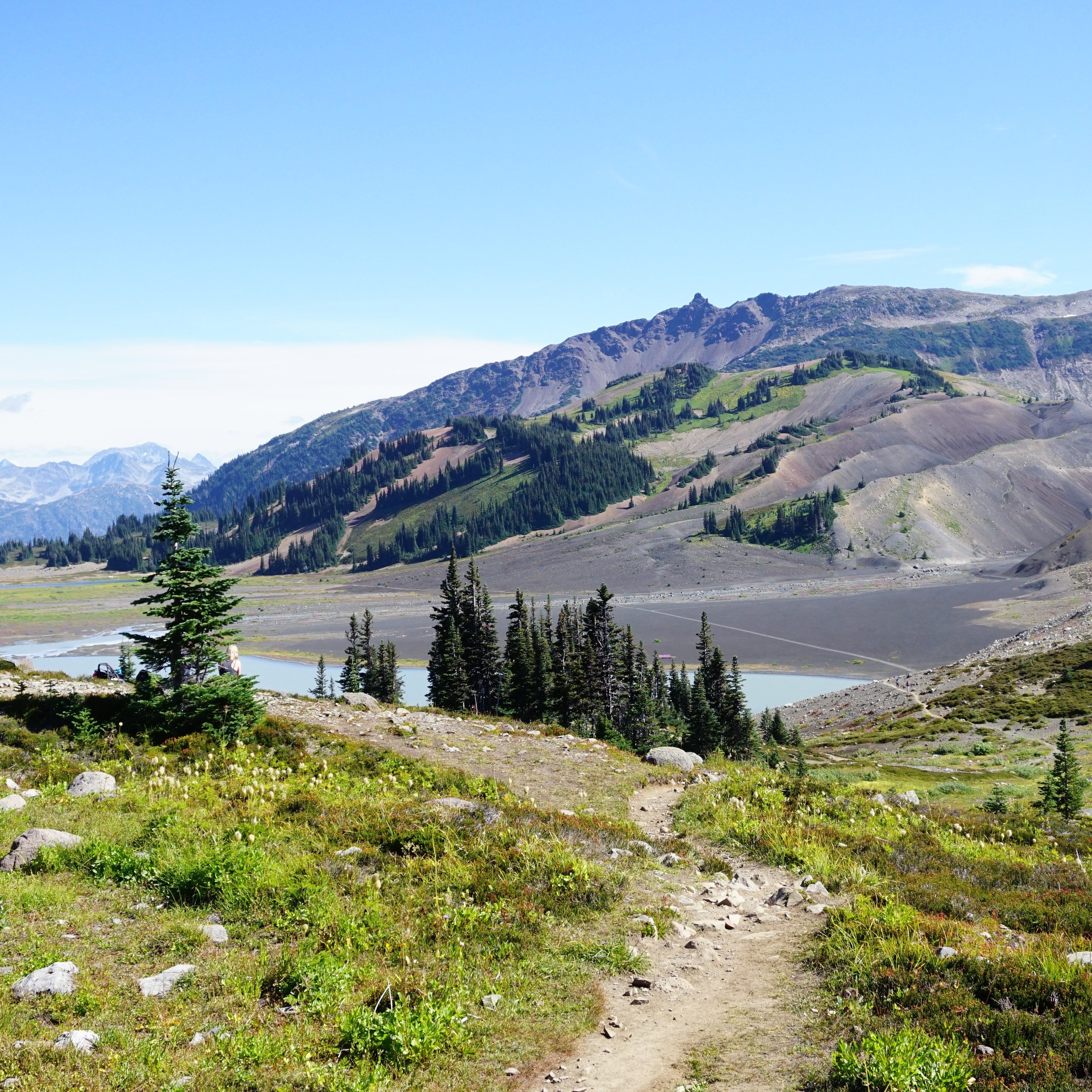
A hiking trail extends through the alpine of Garibaldi Provincial Park towards Helm Lake, with the forest and mountains in the background on a sunny day in British Columbia, Canada

This route doesn’t have a formal name, but extends from Rubble Creek to Cheakamus Lake in Garibaldi Provincial Park, near Whistler. If you’re on my website, most likely you’re familiar with this trail because of the popular trips to Garibaldi Lake, Black Tusk, and the iconic Panorama Ridge. Lots of people explore these trails as a day hike or a 1-nighter from Garibaldi Lake or Taylor Meadows. But I always recommend turning it into a multi-day trip by continuing on to Helm Creek. This trail is more appropriate for newer backpackers because of its substantial facilities. 

This hike can be customized to whatever length you prefer. Start at Rubble Creek and spend a few nights at Taylor Meadows or Garibaldi Lake and explore Black Tusk or Mount Price. When you’re ready to go to Panorama Ridge, pack up your camp and stop at the ridge on the way to the Helm Creek Campsite, which takes you through the gorgeous Helm Lake area. From there, you hike down towards the Cheakamus Lake parking lot. If you want to extend the trip further, make a detour to Cheakamus Lake or Singing Creek campsites. This hike requires camping reservations, which release 4 months in advance of your date from camping.bcparks.ca.

HBC Heritage Trail

A photo of Palmers Pond on a summer day, with the green meadows, forest, and mountains in the background, on the Hudson's Bay Company (HBC Trail) near Hope in British Columbia, Canada.

In my opinion, this is one of the most challenging trails on the list (except for maybe the North Coast Trail). HBC stands for Hudson Bay Company and is a historic trail that was originally used by the First Nations and later by the fur trade. The trail is 74km long and extends through the mountains from Hope to Tulameen. A lot of the trail is through the forest, but it has some gorgeous campsites and views along the way. It’s not an overly popular trail and you likely won’t see many people on it if you like solitude. 

What makes this trail challenging right now is the state of the trail. The trail has been revitalized in recent years and has a dedicated volunteer maintenance group, but the 2021 flood was particularly hard on this area. Volunteers have been working to clear the trail, but there is still quite a lot of blowdown in some sections and the trail does require fording at least 3 rivers. All of the campsites have nice facilities, so if you give yourself enough time to navigate the technical terrain, it is a beautiful trail.
Heather Trail

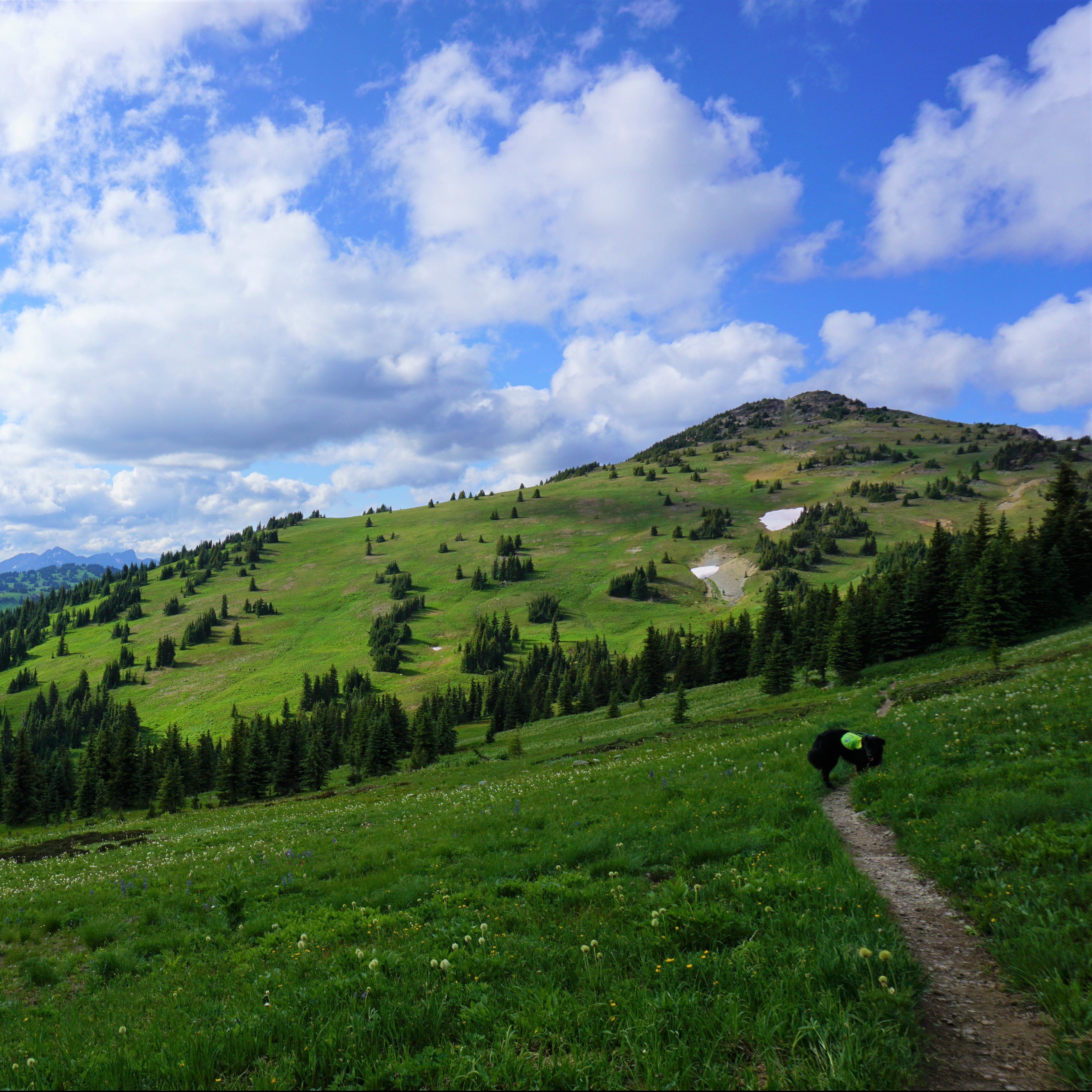
If you’re new to thru-hiking, the Heather Trail would be my recommendation. This is a relatively easy trail, with gorgeous views and brand new facilities. It’s located in E.C. Manning Park and can be done over 2-3 days. The trail starts at the top of Blackwall Road, which means most of the challenging elevation gain is done in the car. Technically, the Heather Trail is 21km, ending at Nicomen Lake and requiring an out-and-back trip. However, if you connect to the Grainger Creek and Hope Pass Trails from Nicomen Lake, you can turn this into a ~40km thru-hike, ending at Cayuse Flats.

Over 2 nights, I would camp at Kicking Horse and Nicomen Lake, or you could add a night at Buckhorn Campsite at the start of the trip and take your time. The trail is all in the trees after Nicomen Lake, and even though it’s 17km from Nicomen to Cayuse Flats, it’s a very easy trail, though there is another campsite option at Grainger Creek. You do need backcountry reservations to stay at these sites as of 2024, which can be obtained 4 months ahead of your trip at camping.bcparks.ca.

Skyline II Trail

I love Manning Park and the Skyline II Trail is one of my all time favourites. This trail is more difficult than the Heather Trail, but still a relatively easy trip. The trail is approximately 25 kilometres from Strawberry Flats in Manning Park to Whitworth Meadow in Skagit Valley Park. There is one campsite at the halfway mark, Mowich Camp. 

While this hike can be done in one night, I highly recommend doing 2 nights at Mowich Camp and making a detour to hike the 15km round trip trail along Hozomeen Ridge and back. This trail will take you to the border monument and a fantastic view of Hozomeen Mountain in the US. The trail itself is easy to follow and takes you through gorgeous alpine meadows. The campsite is pretty basic and the water source can run dry later in the summer. A backcountry permit is needed and can be obtained 2 weeks prior to your trip at camping.bcparks.ca.

Sunshine Coast Trail

Sunny view of the ocean and beach at Fairview Bay on the Sunshine Coast Trail in British Columbia, Canada

This is the longest trail on my list, but is hands down my favourite thru-hike ever! The Sunshine Coast Trail (or SCT) is 180km and extends through the entire upper Sunshine Coast, from Sarah Point on the Malaspina peninsula, to Powell River, and down to the ferry at Saltery Bay. The SCT is unique because it is a hut-to-hut hiking route, which means you can do the entire trail, staying in free mountain huts along the way. 

The trail can be a challenge to coordinate in terms of transportation and food carries, but it is incredibly well maintained by volunteers, with gorgeous facilities. You can do a section of the trail, or commit to the entire thing. The trail is primarily in the forest and tackles a lot of cumulative elevation gain. There are tons of lakes to enjoy a cool swim and some amazing viewpoints along the way. The trail can get busy, so if you plan to stay in the huts, you should still bring a tent with you as a back-up.

Juan de Fuca

The Juan de Fuca trail is often touted as a great beginner coastal trail. It is good in that it’s a lot easier than its more popular sister trail, the West Coast Trail, but it is still challenging in its own right. It’s a 47km trail on Vancouver Island between Port Renfrew and China Beach. There are several nice campsites located both in the forest and along the beaches, but like all the coastal trails on the island, it can be very technical and muddy.

It’s been several years since I did this trail and I have heard that some parts have received much needed maintenance since I did it, but it will still be quite muddy in early summer and there are several tidal points on the trail that require advance planning to cross. The nice thing about this trail is that there are several bailout points that connect to the highway if the trail is too challenging. Backcountry permits are required and can be obtained 2 weeks in advance from camping.bcparks.ca.
North Coast Trail

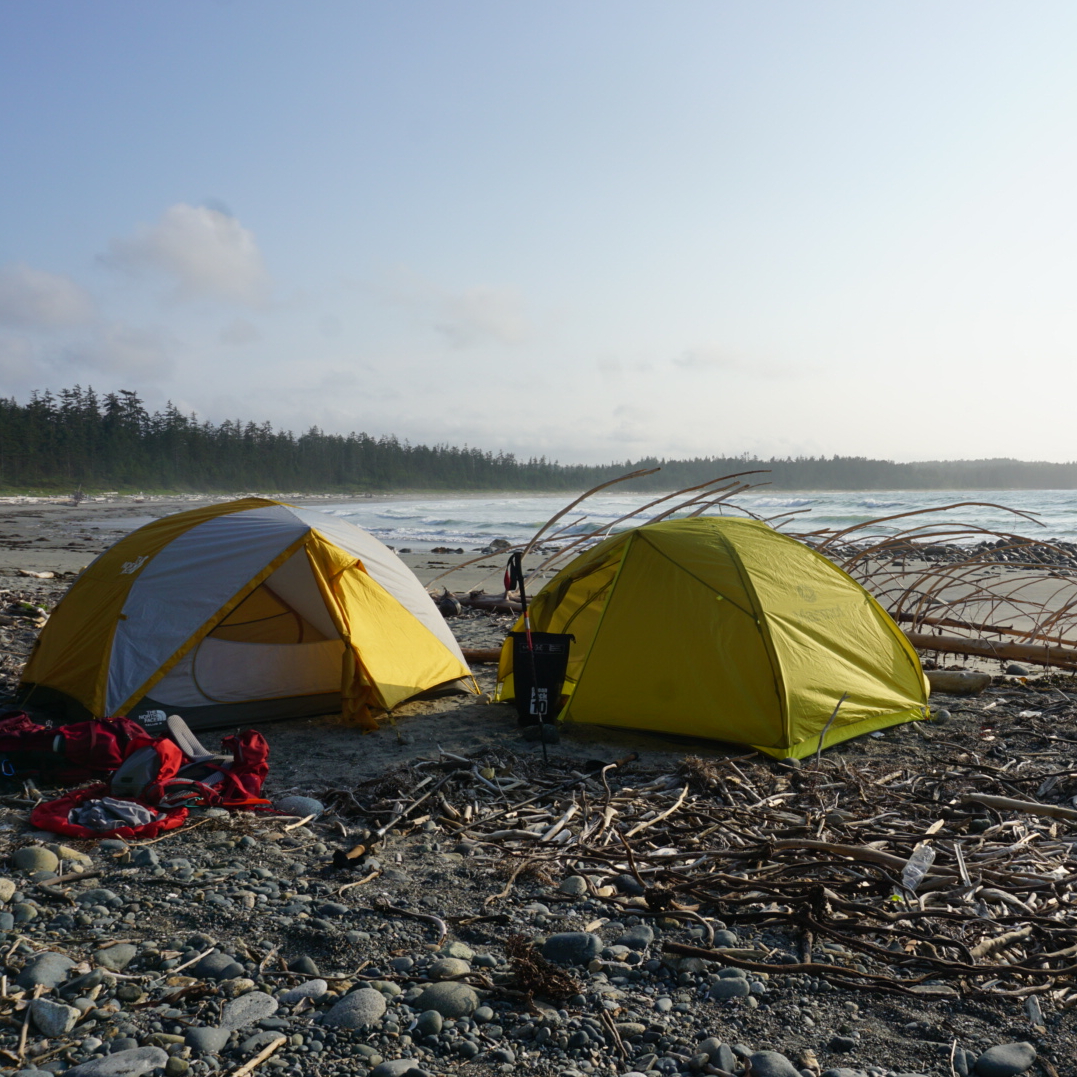
Two tents camping on a golden sand beach with drift wood and the forest and waves of the pacific ocean in the background at sunset on Irony Creek Beach in Shuttleworth Bight on the North Coast Trail on Vancouver Island in British Columbia, Canada.

The North Coast Trail (or NCT) is probably the hardest hike on this list. It’s much less popular than the West Coast Trail, but the traffic to this hike has definitely been growing. The NCT is a ~60km hike on the far north coast of Vancouver Island. It has a reputation for being extremely muddy and it doesn’t get very much maintenance. The NCT is only accessible by water taxi, so most people add on another ~25km of hiking to Cape Scott to finish this trail.

The Cape Scott Trail is accessible by dirt road and is better maintained than the NCT. The highlights of both trails are the gorgeous, remote beach campsites. There are several tidal points on the trail and you should be prepared for a very slow hiking pace through extremely technical terrain. But you’ll also likely get to view bears, eagles, and if you’re lucky, maybe even a wolf. Backcountry permits are required for this hike and can be obtained 2 weeks ahead of your trip at camping.bcparks.ca.

Mount Assiniboine

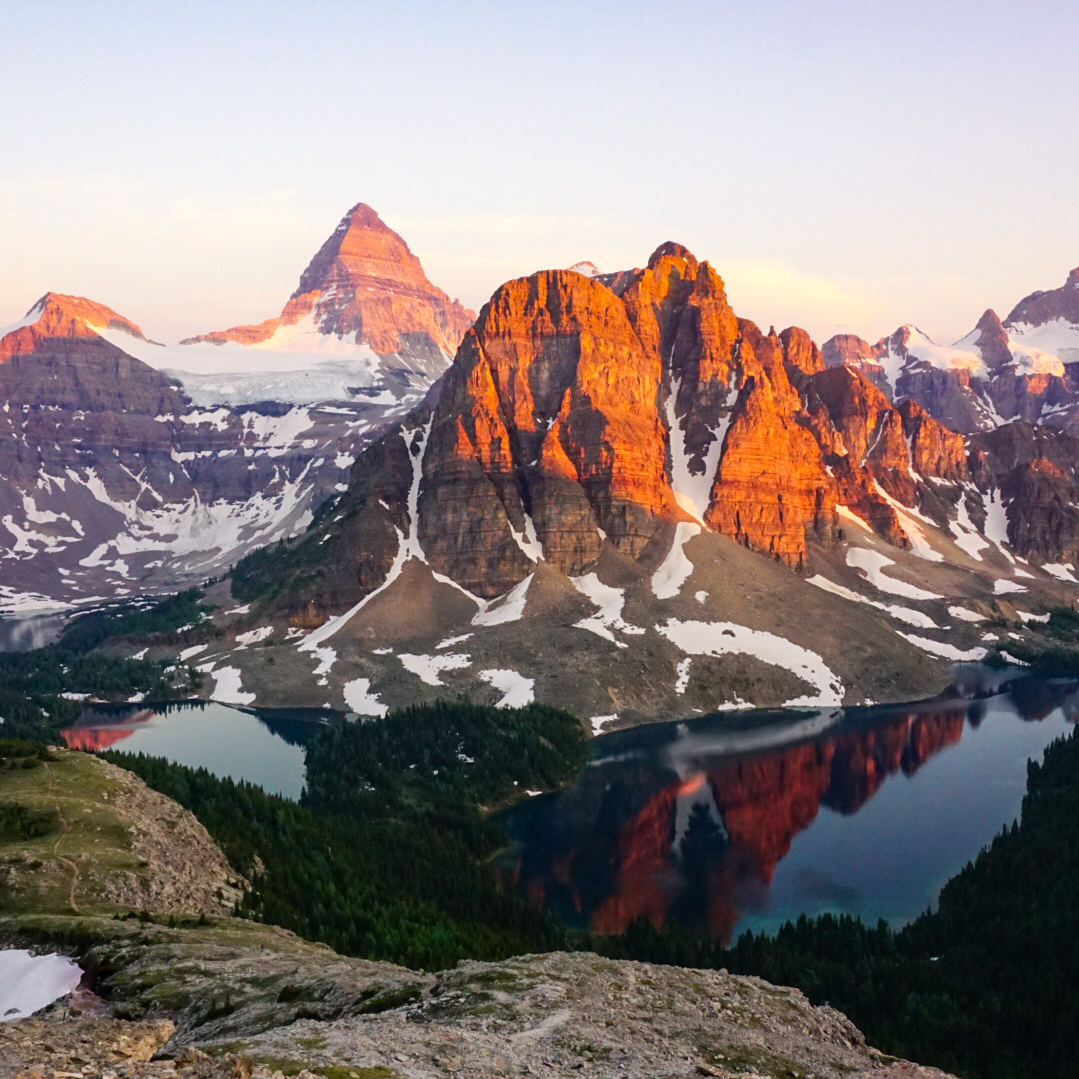
A photo of Mount Assiniboine and Sunburst Mountain and Cerulean Lake at sunset from the Nub in Assiniboine Provincial Park in British Columbia, Canada.

Mount Assiniboine can be accessed as a loop trail, thru hike, or by helicopter. Of course, I did the thru hike option. Mount Assiniboine is one of BC’s premier mountain campsites and there is a lot to explore from the core area of the park. We planned for 3 nights in the Magog Lake Campground, and 1 night on either end of the trip to hike in and out. While Assiniboine Park is located in BC, the hike is accessed through Banff National Park in Alberta.

Take the gondola up to Sunshine Village and hike through the alpine meadows to Porcupine Camp on night one, then continue to Assiniboine for several days in the park. Explore Magog Lake, Cerulean lake, and Sunburst Lake, as well as the iconic hike up to the Nub for sunset. On your way out, hike through beautiful Wonder Pass and camp at Wonder Lake before ending your hike at Mount Shark. You will need to coordinate 2 vehicles and book backcountry reservations for Assiniboine 4 months in advance at camping.bcparks.ca, as well as backcountry reservations for Wonder Lake at reservation.pc.gc.ca, which release sometime in March for the entire season. 

Rockwall Trail

The Rockwall on a sunny day with the mountains in the background and the forest in the foreground with blue sky in Kootenay National Park in British Columbia, Canada.

The Rockwall Trail is another extremely popular trail located in Kootenay National Park. It’s a 55km trail from Paint Pots to the trailhead for Floe Lake that is incredibly scenic. There are a number of campsites along the trail and it can be done in 3-4 nights. Floe Lake is the most popular campsite on the trail, but I also highly recommend staying at the Helmet Falls campsite. Along the way, you can stay at Tumbling Creek, Numa Creek, or both, they’re pretty similar sites. 

The trail is very well maintained and has lots of facilities. Campsites release for the entire season in March at reservation.pc.gc.ca, so make sure you watch for the release date, because the sites will sell out immediately. If you’re lucky enough to score permits, enjoy this beautiful trail through the Rocky Mountains and past the iconic Rockwall. 

Wedgemount Lake Backpacking Trip

It’s been 3 years since I hiked Wedgemount Lake, but this trail still haunts me!

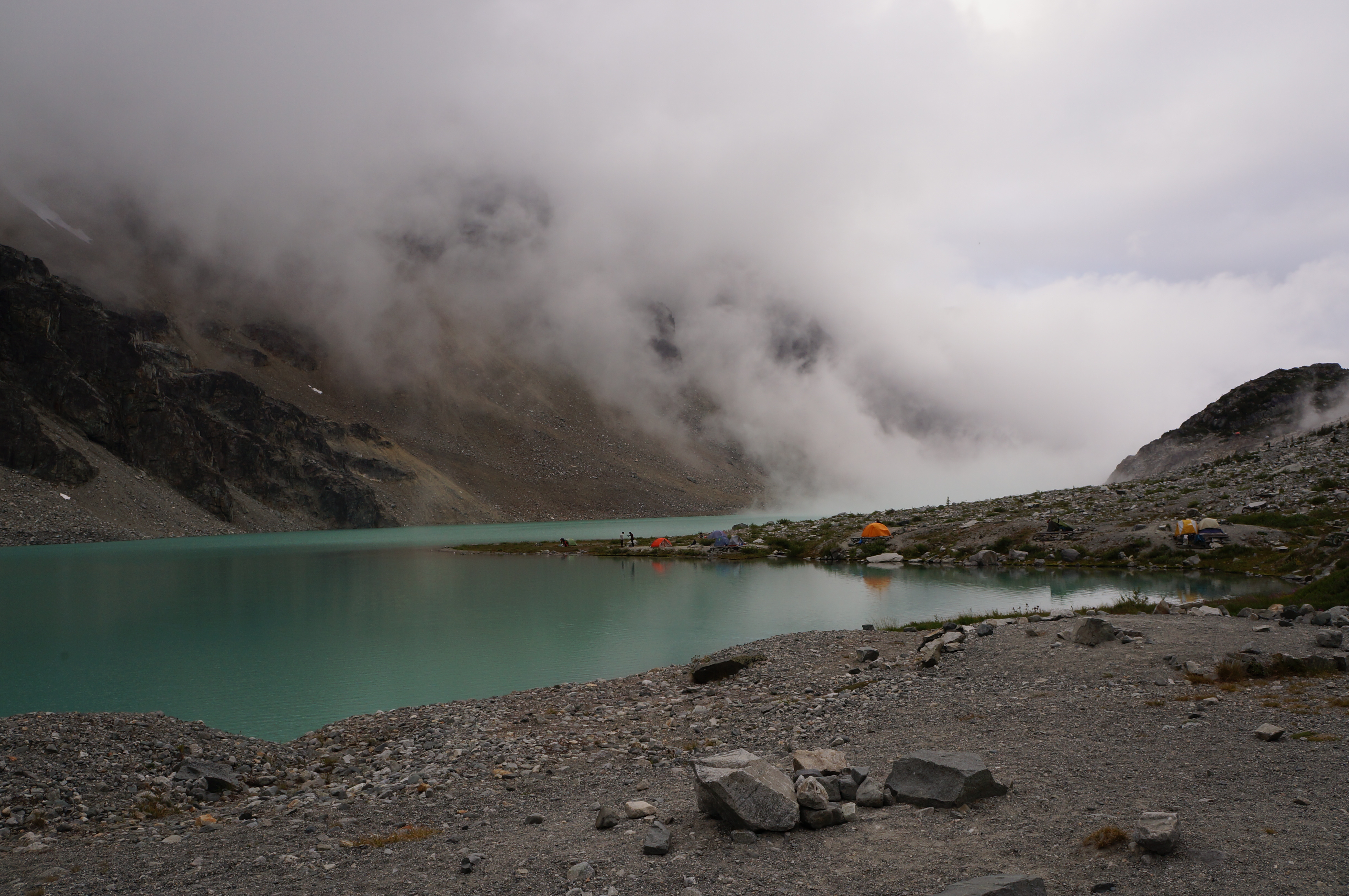
Wedgemount Lake is a 14km round trip hike with a whopping 1200 metres in elevation gain. All I can say is, don’t underestimate it. Wedgemount has recently been added to Garibaldi Park’s database of reservable sites, so you now have to book to go up there, which wasn’t the case when I visited. I suspect this may have actually increased the traffic up there though because people that aren’t able to get a spot at Garibaldi Lake or Elfin Lakes, see it on the map and decide to go there instead. I don’t actually know if this is true or not, but I did meet a group of 5 guys at the trailhead to Elfin once who were changing their plans to go to Wedgemount when they realized Elfin was full, but just a guess!

Wedgemount is incredibly scenic once you get to the top, but boy is it a long slog to get there. I went in late August with Brandon the first summer I started camping and I believe we started hiking sometime after noon. There’s very little to see but forest until you reach the halfway point across a short boulder field. After that, it’s back into the woods again until just before the end when you have to climb a steep boulder field to get up to the top. Don’t get me wrong, the whole trail is steep, but the boulder field is definitely tough with overnight packs as you’re basically climbing up over the rocks.

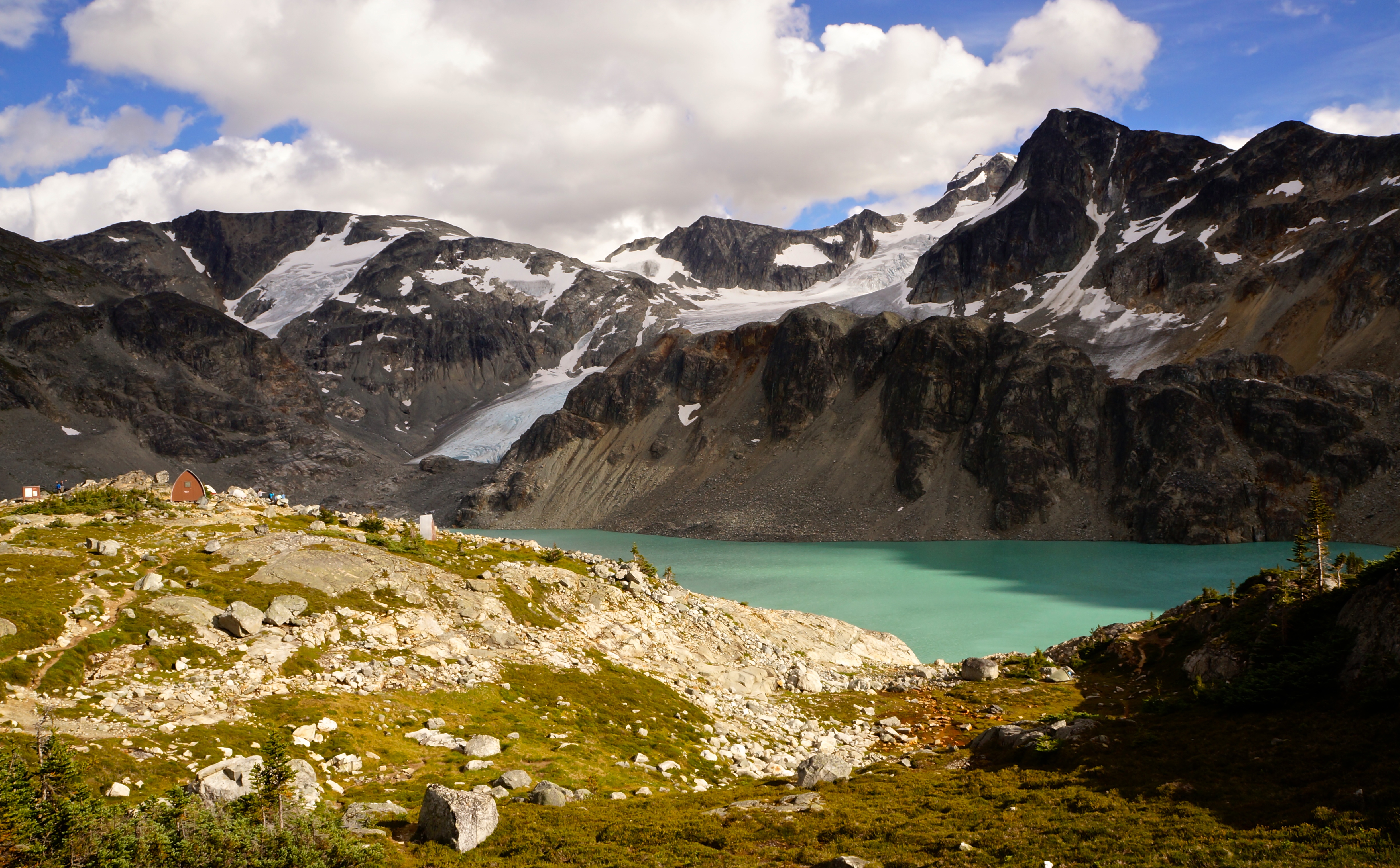
When you get to the top of the landslide, you’re in a valley of sorts, with Wedgemount lake at the bottom, surrounded by another set of peaks and the Wedgemount glacier. You hike down into the valley, which is completely wide open with very little shelter. Over the years, people have moved the rocks around to create little rock-walled campsites to protect from the wind that funnels in through the valley across the lake. There is a small hut up there as well, but I think most people opt to camp as there’s tons of space up there and lots of sites to choose from.

It was certainly windy when we went up there. Even though it was August, it’s one of the coldest camping trips I can remember. I was fine once I got in my sleeping bag and went to bed, but until then, it’s freezing sitting out on the ridge with nothing to shelter you from the wind. We set up our tent as fast as we could and tried to find the most sheltered place to quickly make and eat out supper. Then we hit the sack pretty early because it was just so cold outside.

It’s a beautiful location though. Wedgemount Lake itself is quite large, but the soils must be a lot siltier than other lakes in the park because it has a much paler blue hue to the water. The wind died down overnight and we got up early to do a little exploring around the lake. Like I said, it’s a wide open space surrounded by other mountain peaks, so there’s tons to explore up there. Our exploration was pretty limited, which kind of makes me what to go back, but that landslide still haunts me and I don’t want to have to haul my backpack up over it every again.

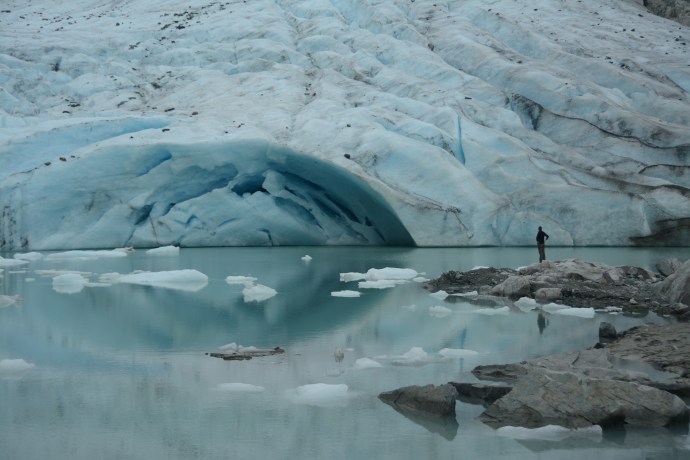
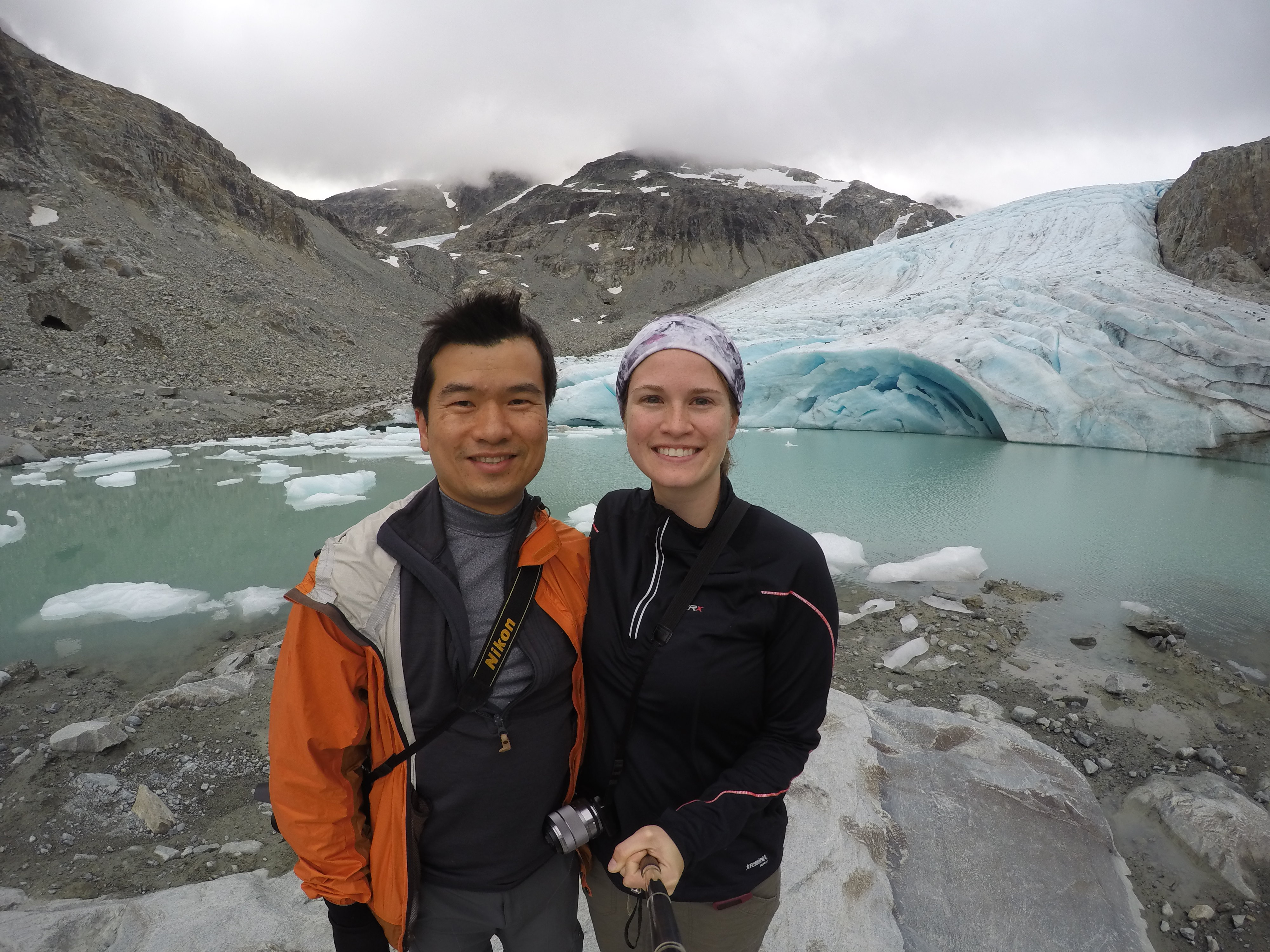
We did explore to the glacier though. If you walk around to the head of the lake, you can see the Wedgemount glacier. I’m sure it looks different every year depending on how the ice changes and melts, but the year we visited had left another lake at the base of the glacier with lots of bergy bits (real technical term – I’m a Newfoundlander, I would know) floating around. The glacier is huge and looks misleading in pictures, but Brandon got a few great photos of me standing at the base of the glacier that really put the size in perspective.

The lake is nice, but the glacier was definitely the highlight for me. The only other glacier I’ve hiked to is the glacier at the top of Brandywine Mountain, so it was a landscape quite unlike where I usually hike (the Brandywine Glacier was very different as the ice melt was flowing down the mountain instead of pooling).  I can’t decide whether Wedgemount makes for a better day hike or overnight though. A day hike seems like it might be rushed, but having just a day pack sounds a lot nicer, so it might be a judgement call based on your fitness level.

The clouds were looking pretty threatening though, so we didn’t stick around too long at Wedgemount. We packed up our things just before the rain hit and hiked back over the landslide and down again. Wedgemount is just as tough going down as it is going up. It’s a steep hike over the landslide and then the trail feels like it goes on forever after that, with nothing to look at and no respite for your knackered knees. It was a relief when we finally hit the parking lot.

Favourite Hikes in Southwestern BC

I feel like I haven’t been in BC long enough to be advising anyone on hiking, but it’s become a favourite pastime of mine and since I moved here I’ve done 42 hikes (I counted!), so I’m going to share some of my favourites. (all photos taken my me!)

dsc01315

#10 Garibaldi Lake – I’m starting with Garibaldi Lake because it is easily one of the most popular day hikes and it was my first major hike (15+ km). I was totally blown away by the view at Garibaldi Lake, which both deepened my love of the outdoors and inspired me to take up backcountry camping this summer. The downside to this hike is that the trail to the lake is a bit of a slog. It starts with 6km of switchbacks, but the view at the end is phenomenal! (18km, 800m gain, 7 hours)

dsc08157

#9 Joffre Lakes – Another super popular hike – the best part about Joffre Lakes for me is that, unlike Garibaldi Lake, the entire hike is incredibly gorgeous! The scenery is so amazing throughout the entire hike, it’s almost overwhelming. What’s definitely overwhelming though is the crowds. Everyone knows this a relatively easy hike for the payoff and it’s been heavily marketed to tourists. I think it’s great to see so many people out enjoying the beautiful landscapes, but it does take away from the backcountry feel. I’d recommend doing on a weekday if possible. (11km, 350m gain, 5 hours)

20160123_125823_hdr

#8 Hollyburn Mountain – I’ve only gone snowshoeing on Hollyburn Mountain, but it was so much fun! It’s a pretty steep walk up to the top, but it’s not a long distance. The steep ascent is worth it though because then you can participate in the fun tradition of sliding back down the whole thing on your bum, So make sure to bring a garbage bag with you! The view from the top looking out into the watershed is beautiful! (10km, 400m gain, 4 hours)

dsc02035

#7 Wedgemount Lake – Located just past Whistler, this is tough, steep hike. I did this as an overnighter and was totally pooped by the time we made it to the lake. There’s a breathtaking view of the valley as you make your way up to Wedgemount and a beautiful view of the lake from the top. It’s a scramble up to the top though, so expect to spend the better part of an hour climbing up loose rock. The highlight of Wedgemount for me though is the glacier, which is another 20-30 minute walk from the lake. (14km, 1200m gain, 7 hours)

dsc02679

#6 Elfin Lakes – The second most popular hike after Garibaldi Lake, which I just completed this past weekend. It’s a long trail at 22km, but it’s one of the easier hikes on the list. The trail is extremely well maintained and fairly easy along the entire length. It was pretty foggy on the day I visited, so I didn’t get the best view of the surrounding mountains, but there’s a beautiful walk along the ridge on the way there and a hut you can stay in overnight, which is super popular during the winter. (22km, 600m gain, 6 hours)

dsc00945

#5 Tenquille Lake – This is a tough one to get to without 4WD, which significantly shortens the hike along the service road, but has a beautiful view during the last few kilometers of the hike. This was my first foray into backcountry hiking and we camped overnight at the lake, which I would highly recommend! The views around the lake are incredible and I’d love to go back and explore more around the area. I was too early for most of the alpine flowers, but still got to see a few in the meadow! (14km, 6 hours)

dsc01086

#4 Semaphore Lakes – A short drive from Tenquille Lake, but the trailhead is much more easily accessible. It’s a short hike (which is nice if you’re trying backcountry for the first time), but it’s pretty steep, so don’t be deceived by the 3km length. The view at the top is amazing though and this is one place where it’s easy to escape the crowds (maybe I shouldn’t be boasting about it?). There’s several lakes to explore and you’ll be surrounded by beautiful snow-capped peaks and glaciers! (5km, 300m gain, 3 hours)

20160723_130743

#3 Three Brothers Mountain– This hike is located in Manning Park and is part of the Heather Trail. We hiked the first 10 kilometres of the trail to climb up Three Brothers Mountain. What I loved about this hike is that it’s scenic the entire way, made even more amazing during late July/early August, when the meadows are covered in thousands of wildflowers. You do most of the elevation gain on the way up to the trailhead, so it’s not a difficult hike, just long. My favourite part was hiking along the ridge of Three Brothers Mountain with a 360 degree view all around! (21km, 500m gain, 6 hours)

dsc08942

#2 Brandywine Meadows/Mountain – Another hike that is made much easier with a 4WD, this was one of my favourites due to the incredibly low volume of people. I think we saw about 5 people the entire day, which is in stark contrast to most of the trails. The hike to the meadows is very short if you take 4WD the whole way up, so we decided to extend our hike up Brandywine Mountain where I stood on my first glacier! The view of the valley from the top is breathtaking. (12km, 1200m gain, 5 hours)

dsc01425

#1 Panorama Ridge – Definitely tops my list as one of the all-around best hikes. If you’re super intense, you can do Panorama as a 30km round-trip day hike, but we opted instead to camp at Garibaldi Lake overnight. Like I said, the hike to Garibaldi Lake is kind of boring until you reach the lake, but Panorama Ridge is scenic the whole way. You spend the first half of the hike looking out at the ridge, then you have an excellent view of Black Tusk until you reach the top where you are rewarded with the most amazing view of Garibaldi Lake and the surrounding mountains. (15km, 600m gain, 6 hours)

Continue to Part II.