As someone who grew up on the East Coast, Fall was a very beautiful season. I love living in Vancouver and I would say that seasonally, the west coast is nicer than the east coast in almost every season (winter and spring for sure, summer less so with the forest fires), but Fall is conclusively better on the East Coast. At least, compared to Southwestern BC. If you want sweeping forests of red, yellow, and orange, you likely won’t find it here – there’s too many Douglas Firs and Cedars, but there are still some gorgeous views to explore, especially with a mountain backdrop. Here’s a few of the trails I’ve discovered over the years that really shine in the Fall:
Fall Colours near Vancouver
Mount Strachan – 8.5km, 600m gain

I wouldn’t say Mount Strachan has the most outstanding fall foliage, but it’s the closest hike to the city on this list, which makes it very accessible! The colours on this trail mostly come from the changing colours of the shrubs and it’s a great hike on a crisp Fall day. Get on the Baden-Powell Trail from Cypress Resort and hike parallel to Collins ski run. Then follow the sky chair up to the top of Mount Strachan to enjoy beautiful views of Howe Sound. From here, you can continue back the way you came, or you can make it a loop and hike down through Christmas Gully to catch up with the Howe Sound Crest Trail, checking out the views from Bowen Island Lookout on your way back. Make sure you pick up a free backcountry pass from the BC Parks lodge (at the back of the parking lot) before starting your hike. Take care on Christmas Gully when descending from Mount Strachan, it is easy to get lost or injured here. (photo taken in mid-November)
Flatiron – 11km, 800m gain

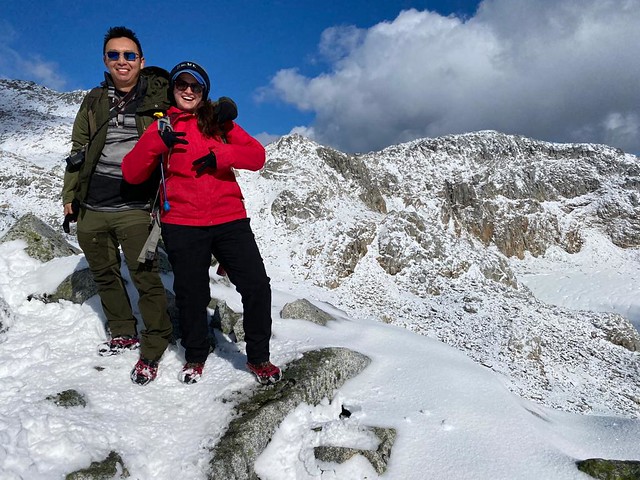
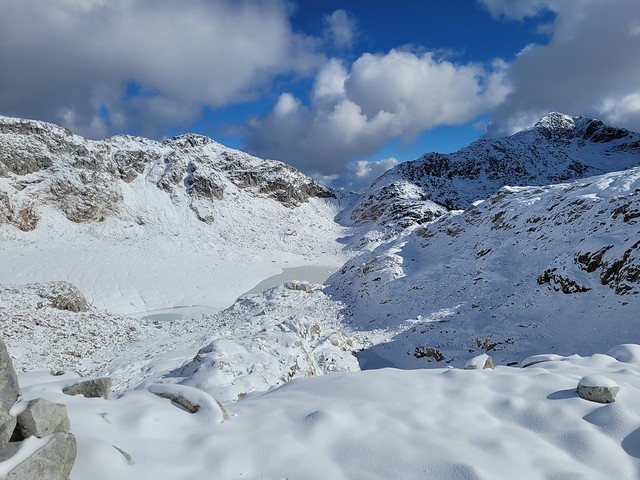
The Flatiron hike is located in the Coquihalla Summit Rec Area and shares 80% of the trail with Needle Peak. Both trails could be done in a day if you’re ambitious, but I’d avoid Needle Peak if there’s any snow or ice. It’s a very steep hike up the side of the mountain from the highway, but once you reach the branch to Needle Peak, it levels off. There’s a nice lake below the flatiron and in the Fall the shrubs all turn bright red along the mountainside. It’s relatively bare at the top, but the view of the surrounding mountains is amazing! (photo taken in early October)
Elk/Thurston Mountain – 9-15km, 1000m+ gain

This is a more traditional Fall trail and there are deciduous trees that will be changing colour as you walk through the forest toward the summit. Most of the hike is in the trees, but you eventually pop out along the ridge. It’s a steep hike near the end, but you can see all the way to Mount Baker, with bursts of colour in the forest below. I really like continuing a few kilometres along the ridge towards Thurston Mountain, but the peak itself is pretty uninspiring, so I usually turn around when I hit the forest. The hike is 9km to Elk Mountain and back, and 15km to Thurston. There’s over 1000m of elevation gain, so it’s a good workout! (photo taken in mid-October)
Illal Meadows – 16km, 750m gain

This trail is a bit of a drive and makes for a long day as a day hike, so start early! Illal Meadows is located off the highway along the Coquihalla Summit Rec Area and involves an extra half hour of driving along the Tulameen FSR. The trail starts with a 3km hike up a decommissioned road, and then it’s a steep ascent through the meadows to the alpine. There are lots of small trees and shrubs changing colour and the meadows turn yellow and red. Continue to the base of Jim Kelly Peak, where you have the option to do an additional ascent (it’s a scramble!) or head back the way you came. (photo taken in late September)
Snow Camp Mountain – 17.5km, 900m gain

This is a beautiful hike any time of year. In the summer, the meadows are filled with wildflowers, and in the Fall, the meadows turn yellow and have gorgeous views looking out over the Manning Park backcountry. The trail starts from Strawberry Flats and hikes steadily uphill for 5km. There’s a fantastic viewpoint at the top of Despair Pass, but continue on through the trees to reach the ridge going up to Snow Camp Mountain. I find this trail doesn’t get crowds in the Fall and is a really gorgeous hike. (photo taken in mid-September)
Larch Tree Hikes
If BC isn’t known for it’s Fall colours, it’s definitely known for the larch trees! Larch trees have needles like a pine or fir tree, but these needles turn yellow in the Fall and fall off. There are some really beautiful larch tree hikes on the West Coast. Most of them are located in the Rockies or Washington State, but if you’re willing to drive a little distance, you’ll be rewarded! In the interest of transparency, the only hike in this section I’ve actually done in the Fall is Mount Frosty, the other trail descriptions are based on trips I took in the summer. That’s why my photos don’t show any Fall foliage.
Frosty Mountain – 18-22km, 1000m+ gain

This is probably the most well known larch hike in the province, mostly by virtue of the fact that it’s close to Vancouver, so it attracts very large crowds. Definitely arrive early in the morning to get parking and get ahead of the mass of people (or go on a week day). The larch trees generally only turn yellow over the span of 2-3 weeks, so you can expect it to be busy during that time. Frosty Mountain itself is a really big hike, but you don’t have to go all the way to the summit to see the larch trees. After a big climb up to the campsite, you’ll eventually pop out in the larch meadow. But continue to the top of Mount Frosty for some really epic views! (photo taken in late September)
Sentinel Pass – 8-12km, 500-700m gain

The Sentinel Pass trail is a really popular trail in Banff National Park and requires a bit of advance planning to visit. The hike starts from Moraine Lake, which is one of the most popular locations in Banff. You can no longer drive to the lake, so you need to arrange to take the Parks Canada shuttle. From the lake, hike up a set of switchbacks to reach the larch meadows and continue on towards Minnestima Lakes. You don’t have to hike to the top of Sentinel Pass, but it’s a nice add on to enjoy the views looking back towards the lake and the surrounding Mount Temple area. It’s roughly 3.5km to reach the meadows, or 12km round trip if you go to the top of the pass and back. (photo taken in early August)
Floe Lake – 28km, 1000m gain

I would say that Floe Lake is the Moraine Lake of Kootenay National Park. It’s extremely popular, though much less accessible as you can’t drive all the way to the lake. This is a big hike for a single day, so I’d recommend camping one night at Floe Lake if you’re able. That said, it’s a big uphill to the lake and would likely be considerably faster with only a day pack. The larches are actually located above Floe Lake, so you’ll be rewarded with the beautiful view at the lake, but need to push another 3km uphill after the lake to be rewarded with a view of both the larch trees and Floe Lake. In total, be prepared for an almost 30km day, so leave before sunrise. (photo taken in late August)
Lake O’Hara – 7km, 200m gain

Of all the hikes on this list, Lake O’Hara is probably the most exclusive. There’s a permit lottery for bus shuttle passes up and down the 11km access road. You can hike all the way from the base if you’re prepared for an almost 30km day (like Floe Lake), otherwise, the shuttle saves you a lot of time. From the bus stop, you can do a 7km loop around the lake and up to the Opabin Prospect Lookout, which is the most renown view in the park. If there’s no ice, you could also consider hiking the famous alpine circuit, but I wouldn’t attempt it on a slippery day and you might prefer to have more time to enjoy the larches around the lake. (photo taken in early September)
Hiking Near the North Cascades
One of my favourite things to do in the Fall is cross the border and go hiking in the Mount Baker Wilderness area of Washington State. If you drive a little further into the cascades, there’s some really awesome larch hikes like Maple Pass, Blue Lake and Easy Pass. I haven’t done any of these yet, because there are so many colourful hikes to explore closer to Vancouver by Mount Baker.
As a disclaimer: I wrote this blog post at the end of last Fall season. I personally have decided not to travel to the US right now (but I really hope to feel safe doing so in the future). It’s out of my personal comfort zone right now, but no judgement either way, here are some of my favourite Fall hikes south of the border.
Chain Lakes/Ptarmigan Ridge – 12-19km, 600m gain

These two trails share a trailhead from the ski parking lot at Mount Baker. Grab a parking pass online before crossing the border, or pick one up from the visitor centre. If the road is open all the way to Artist Point, park at the top and do the Ptarmigan Ridge hike. If the road is already closed for the season, park at the base and do the Chain Lakes Trail. Both hikes go up towards Artist Point and cross a ridgeline into the backcountry. The Ptarmigan Ridge trail heads out towards the base of Mount Baker, while the Chain Lakes trail goes behind Table Mountain and climbs to the top of a saddle before heading back down to the base. Both hikes are incredibly scenic and colourful in the Fall. Chain Lakes is a 12km loop trail, while Ptarmigan Ridge is 19km out and back to the Portals viewpoint. (photo taken in mid-October)
Yellow Aster Butte – 13-15km, 700m gain

Yellow Aster Butte has gotten incredibly popular in the past few years. Pick up a parking pass online or at the visitor centre, and then drive up a gravel road to get to the trailhead. There’s limited parking, so get there early to avoid the crowds. The trail climbs up through the trees for 3km before you reach the alpine and the beautiful yellow aster meadows. It’s 3km further to get to the sub-peak, and another 1km from there to the true peak. This area can get snow early, so plan accordingly. (photo taken in early October)
Winchester Mountain – 5km, 400m gain

Winchester Mountain is the final hike on the list, and the only trail that requires 4×4 to reach the trailhead. This trail starts at the campsite for Twin Lakes and hikes up to the peak of Winchester Mountain, where there’s an old fire lookout. The trail is only 5.5km round trip and is located past the parking lot for Yellow Aster Butte. So if you don’t have 4×4, you could add on 3.5km to hike up the road each way (or try and hitch a ride on the way up). The entire trail hikes through colourful meadows while the trees change colour. It’s an easier hiking option with a huge payout. (photo taken in early October)










 The Road Goes Ever On