Favourite Hikes in Southwestern BC Part III

I moved to BC in 2014. In late 2016, I wrote a post sharing my top 10 favourite hiking trails in Southwest BC, which I followed up with Part II in late 2018 with 10 more of my favourite trails. I’ve been wanting to write a follow up post for a while, but I’ve hiked well over 100 more trails since my last post in 2018, so it’s a lot a trails to choose from! I decided to break it into two more posts. Part III will cover another 10 of my favourite trails that I hiked between 2019 and 2020, while Part IV will cover 2021 to 2022. Is this a bit excessive? Maybe… but my blog, my rules! I like the symmetry of a top 10 post for every 2 years I’ve been here, so I guess you’ll get Part V at the end of 2024!

Without further ado, here’s a few of my favourite hikes from the 2019-2020 era!

HOP_5389

#10 High Falls Creek – Squamish has a few hidden gems and in my opinion, this is one of them. It’s located about 30 minutes out on Squamish Valley Road and after a quick ascent, boasts beautiful views of both High Falls Creek and the Squamish River. It’s a bit of a scramble on the way up, so I would save it for a fair weather day. The waterfall is the main highlight, but my favourite part is the viewpoint after the waterfall and the peaceful forest walking. Turn this into a loop by walking back the Forest Service Road, which has more incredible views of the Valley! (10km, 500m elevation gain, 4 hours)

DSC00125

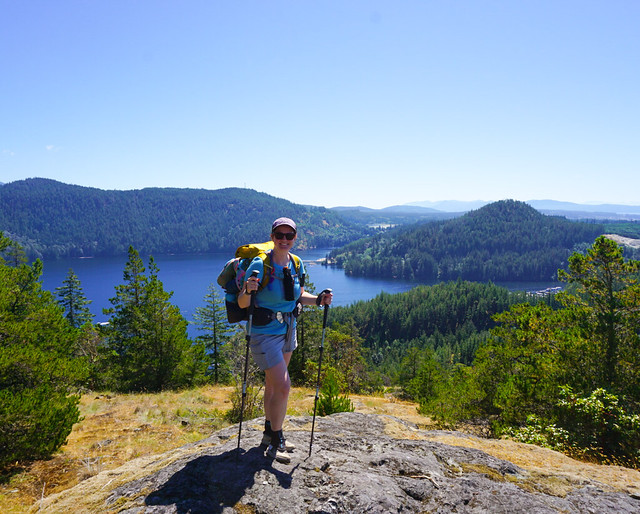
#9 Mount Norman – I stumbled upon this short little hike when I kayaked around Pender Island. The formal hike starts just past the bridge to the South Island and it’s a short uphill hike to a viewpoint over Bedwell Harbour and the surrounding Gulf Islands. It’s only 3km round trip, but if you’d like to extend it, take the left branch before you get back to the road and hike down to the Beaumont Campground, which has gorgeous views out over the bluff and along Bedwell Harbour. (3-6km, 300m elevation gain, 1-2 hours)
PSX_20210605_203736

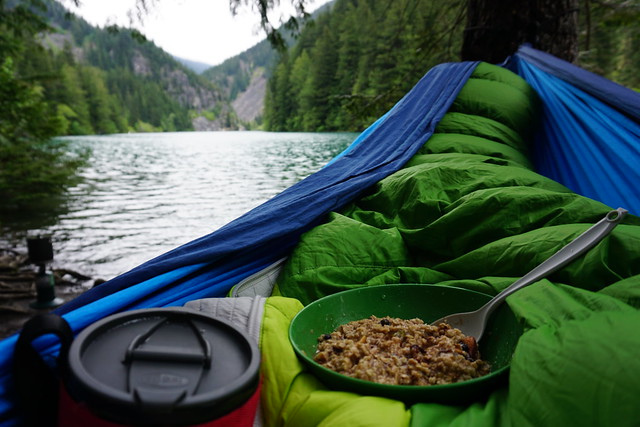
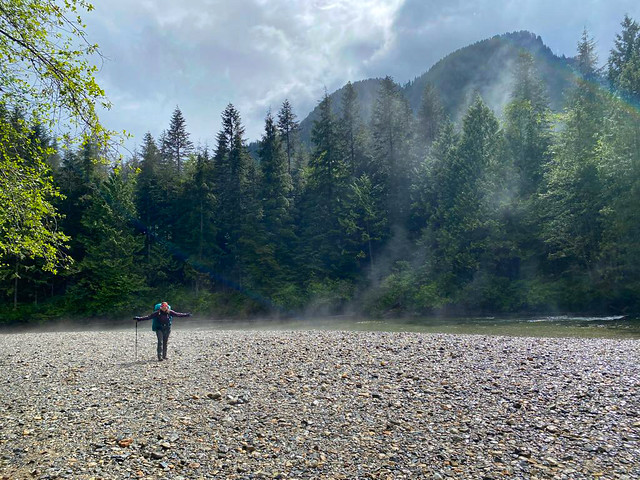
#8 Viewpoint Beach – This hike is located in Golden Ears Park and has been gaining a lot of popularity since the pandemic as a good beginner backpacking trail. Because of it’s low elevation, it’s snow free in the Spring and is an easy 8km round trip hike along Gold Creek to Viewpoint Beach. It makes for a great day trip, or an overnight trip, though it can get busy. I’d recommend hiking in Friday night or early Saturday morning. The trail continues on to Half Moon Beach if you’d like to extend the trip, but it’s not well maintained, so be prepared for a bit of route finding. (8km, 200m elevation gain, 3 hours)
PSX_20210314_180305

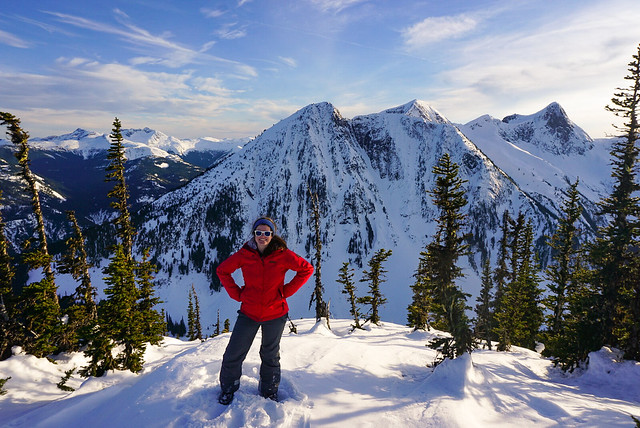
#7 Zoa Peak – I’ve attepted Zoa Peak twice now, once in the Fall (where I got smoked out by wildfires) and once in the Winter. For this reason, I’ve never made it past the sub-peak, but I still recommend it as a good all year hike. I think the Coquihalla Summit Rec Area is vastly underrated and Zoa makes for a scenic hike in the summer and a relatively safe snowshoe in the winter. Don’t go past the sub-peak in the winter without your Avalanche Safety Training, but it’s a popular area for ski touring in the winter! (10km, 700m elevation gain, 5 hours)

DSC01099

#6 Elk/Thurston Mountain – Elk Mountain is a popular hike in the summer and especially in the Fall when it gets a pop of colour. There’s a lot of elevation gain, but it’s a relatively simple trail until close to the top, when you pop into the woods for a steeper ascent to the summit. It’s 8km round trip to the Elk Mountain Summit, but 800m in elevation gain, so don’t underestimate it! If you have the time, I recommend continuing on another ~2km as the hike continues along the ridgeline to Thurston Peak. It’s an 16km round trip to go all the way to Thurston, but there’s no view from Thurston Peak, so if you’d like to save yourself a bit of time, just enjoy the ridge walk for a few kilometers and then turn around. From Elk Mountain onwards are beautiful views of Chilliwack Valley and Mount Baker. (8-16km, 800-1000m elevation gain, 4-8 hours)

#5 Pinecone Burke Provincial Park – Pinecone Burke was one of my best pandemic discoveries. When we weren’t allowed to leave our neighbourhood in 2020, I spent a lot of time hiking around Eagle Mountain, Minnekhada, and Pinecone Burke. Pinecone Burke is located right on the northern edge of Coquitlam (in the Burke Mountain area) and it’s BC Parks least funded park. As a result, it has no infrastructure (not even a toilet) and gets few visitors. It’s mostly frequented by mountain bikers, but there are some truly lovely trails in this park! My personal favourite is to extend the Woodland Walk up to Sawblade Falls, but the Coquitlam Lakeview Trail is also reasonably popular. The park is primarily forest views, so it’s a perfect rainy day or Spring hike. You can hike the Woodland Walk year round, but the Lakeview Trail usually has snow until June. (8-14km, up to 700m elevation gain, 2-6 hours)

PSFix_20201005_141057

#4 Brew Lake – Brew Lake is another relatively unknown trail off the Sea to Sky Highway, just before Whistler. Even I discovered this trail by accident when the Rainbow Lake trailhead was closed due to an aggressive bear. We decided to hike to Brew Lake instead and spend the night in early Fall and were rewarded with beautiful lake views and an empty trail. We didn’t know what condition the road was in, so we parked at the Whistler RV Park and hiked the full 17km round-trip trail. But if you have the proper vehicle, you can considerably shorten the trail along forestry roads. If you have time, extend the hike a little further to Brew Hut, which I still have to return for. (17km, 900m elevation gain, 9 hours)

DSC08281

#3 Minnekhada Regional Park – Minnekhada Park was my other pandemic discovery and remains one of my favourite places near the city for a leisurely hike. The highlight of the park is High Knoll, which is known as the “Quarry Rock of Coquitlam” and has beautiful views down to the Pitt River and Pitt-Addington Marsh. Part of the park burned down in 2022, but it recently re-opened and is great for bird watching along the lakes. (5-8km, 200m elevation gain, 2-3 hours)
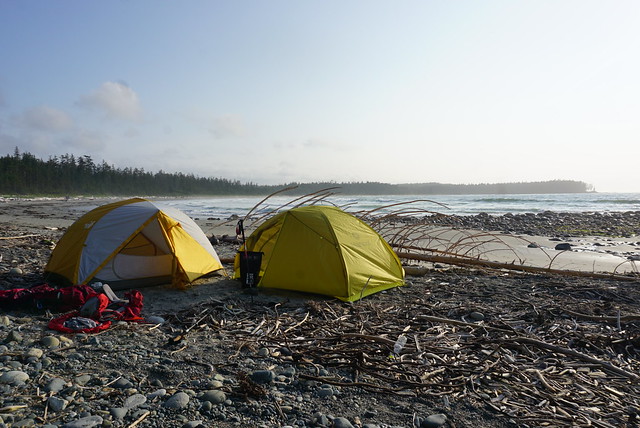
DSC06277

#2 Cape Scott and the North Coast Trail – This is where I stretch the boundary of “Southwestern BC” just a little bit. Cape Scott and the NCT are at the far northern tip of Vancouver Island, but I feel this was one of the defining hikes I did between 2018 and 2020. We hadn’t planned to do this hike, but when our Assiniboine trip got cancelled during the pandemic, we decided to hike 85km along this intense and remote coastal trail instead. This trail is a real challenge and is not for the faint of heart. Be prepared for an incredibly slow pace and knee high mud, but boy is it a rewarding hike. One of my most memorable. (85km, 5-7 days)

DSC07622

#1 Howe Sound Crest Trail – This is another incredibly challenging trail that tested my endurance when I did it in 30 degree weather, but it’s a trail I think about often. It was on my bucket list for 3 years before I finally did it over the course of 2 nights and was able to soak in every inch of this scenic trail. The trail provides the opportunity to summit the West Lion, Mount Harvey, and Mount Brunswick. I didn’t summit any of them, but I camped beneath the Lions and lounged in vibrant Brunswick Lake instead. I’d like to return one day for each of these summits, but this was a trail where it was more about the journey than the summits. (30km, 1500m elevation gain, 2-3 days)

Continue to Part IV.

Desolation Sound Kayak Trip Part III

On day 3 of our paddling trip to Desolation Sound Marine Park, we got up at 6am to get ahead of the wind (as I explained in Part II). We packed up our campsite on East Curme Island and were on the water around 8am. It was flat water at this time, so we had a very leisurely paddle over to Otter Island and along the coast to Bold Head Campground.

I was really curious about Bold Head because I’d read it was a nice site. It’s backed right again the cliffside and there are several tent pads up at the head, but it was empty. I could understand why – as nice as it is, I’d still pick the Curme Islands when given the choice, so I suspect it may act primarily as overflow for the islands.

20230521_091954(0)

The campsites in the Park are all first-come-first-serve and according to BC Parks, if the tent pads are all taken, you should move on to another site. Though they do state that if moving on isn’t safe, find the least impactful spot (somewhere with no vegetation that looks like people have camped there before). Fortunately we didn’t have any issues with availability on the May Long weekend, but I could see it being an issue in the height of summer. The problem is, the islands are all very small, and while there’s 3 of them, there’s limited options for overflow camping since most of the sites are set on bedrock. Fortunately there are a lot of tent pads, and I assume that’s why.

But if you do find the islands full, head over to Bold Head – it’s not far and it is nice. The toilet situation is quite different though. The other campsites I visited all had an outhouse (sometimes two), but Bold Head just has a throne toilet and at the time of our visit, it had a wasp nest inside! There are bear caches at all the mainland sites, but none on the island sites. It is also a tricky landing on Bold Head, but manageable.

20230521_131900

Unfortunately our simple paddling was short lived as the wind came up suddenly while we were touring around Bold Head. It wasn’t too bad at first, but as soon as we started paddling across Tenedos Bay, it really caught us unaware and started hitting us broadside. It was still manageable, but definitely veering into uncomfortable territory for me as I could see some small white caps forming. It’s ~1km to cross, so we really powered it to the bay on the other side. I had put on my spray skirt, so I had no issue, but Seth didn’t have his on. This wouldn’t have been a problem, but I accidentally bumped him and almost put him in the water… oops! This was the closest anyone came to a capsize on the trip though, so all in all, it was fine.

20230521_121649

We continued up through Call Bight to Portage Cove. Seth took a quick break along the rocks to get his skirt on and we powered up to Portage. This turned out to be the most challenging part of the entire trip. It was definitely windy and while the waves weren’t bad along the shore, it was slow moving through the headwind. I was very excited to pull into Portage Cove and take a proper break, but we were disappointed to learn that Portage Cove is private property and not actually in the park (as we were informed by the numerous trespassing signs).

I know these properties long pre-date the park, but it was a low moment for me. There’s not a lot of pull-outs between Bold Head and Hare Point when you’re taking the southern route and I needed a proper break. Fortunately, the tide was coming down, so we pulled out on a tidal beach for a reset. This proved to be a good idea because I was getting a bit upset and stopping to have a snack and talk things through helped a lot.

20230521_154749

We decided to get properly suited up in our wetsuits and come up with a plan for the rest of the day. There’s a longer stretch between Portage Cove and Galley Bay with no beaches, so our plan was for me to lead (as the weaker paddler) and Seth to come right behind. This worked really well for us and we stayed close together throughout the paddle.

It was a bit rough coming out of Portage Cove, but then the wind either dropped down or was sheltered by Zephine Head. I think it was actually the former as it was gusting pretty strong at times, but overall, the sustained wind speed wasn’t too bad. We ended up actually having a nice paddle along the cliffside before stopping in Galley Bay for lunch.

Once we hit Galley Bay I felt much better because we would have the wind at our backs when we turned down Okeover Inlet. We’d started the trip from Lund, but we were planning to finish at the public wharf in Okeover instead to switch up the trip. In fact, we ended up not actually repeating any coastline, which made for a more diverse trip.

20230521_184506

As soon as we got around Zephine Head, the wind pretty much died and we had a simple paddle down the inlet to Hare Point. There’s a huge campsite at Hare Point and we landed at the main beach to assess. There’s two key areas to the site, with a bunch of tent pads at the back of the beach and a bunch more along Hare Point. We were the only people there, so we decided on a site along the Point and then paddled back to land on the rocks instead. We kept the same strategy of tying the boats on and letting the tide bring them up for us.

We were joined later in the afternoon by another family of kayakers who camped in the other section of the tent pads, otherwise we didn’t see anyone else. I really liked our site at Hare Point, but the wind was unquestionably getting worse. To be fair, we were on a pretty exposed tent pad, but I ended up guy-lining the tent to the rock for peace of mind and it was the only night we used the fly.

20230521_194220

The wind was supposed to be even worse the next day, so we had to do a bit of risk management. I was reassured by the fact that it’s a lot calmer in Okeover Inlet than in the Sound, and that the wind would be at our backs. In case you’re wondering, I use both the Windy App and the weather network for wind information. I usually find Windy to be good, but on this trip the Weather Network was more reliable for wind speed (though the Windy app was still accurate for direction). We’d been planning to get weather updates on our marine radio and via inreach message from Carolyn (who had our trip plan), but there was cell service in pretty much the entire park, so I ended up just using my phone.

What arose as more of a concern as we watched the inlet from our campsite, was the currents. Okeover Inlet is huge, with lots of other inlets branching off it, so with up to 5m of difference between high and low tide, that’s a huge amount of water coming up and down the inlet twice daily. We arrived at Hare Point at slack tide, so we had no trouble getting there, but as the tide changed, the current got quicker and quicker, until it was really clipping down the inlet at a fast pace.

20230521_194716
20230521_180629

We’d already decided to get up at dawn the following morning to try and get ahead of the wind, and this decision became much more important when we realized that the tide would be switching again at 7:30am. It would be working with us until then and we didn’t want to have to battle it the whole morning.

It ended up working out really well. It was hard crawling out of bed so early, but we were on the water by 6:45am and with the wind at our backs and the current with us, we absolutely flew down the inlet! It was super fun! It’s 10km of paddling back to the public wharf, which would usually take us around 3 hours with breaks, but we ended up doing the whole thing in about 90 minutes. The wind looked pretty intense later in the morning when we returned to Powell River, but we managed to get ahead of it and actually had a very enjoyable paddle.

20230522_073103

Our ferry reservation out of Langdale wasn’t until 8pm, but since we’d finished so early, we decided to power back to try and get on an earlier ferry. Unfortunately this didn’t really pan out. BC Ferries was so busy over the long weekend that it actually crashed the website, so we couldn’t check the ferry times and ended up being way out of sync with them. We waited for the ferry at Saltery Bay for the better part of 2 hours. Then we rushed down to Langdale for 2pm, only to be told to keep our 8pm reservation because we probably wouldn’t get on any earlier than that anyways. So we ended up burning 6 hours in Gibsons instead. In hindsight, I would have preferred to spend some more time in Powell River, but you can never know that at the start of the day.

We had a nice time in Gibsons. We explored some shops and enjoyed a pint at Tapworks and a really nice meal at Buono Osteria. We finished with a nice walk along the waterfront. Overall it was a fantastic trip. Seth and I used to do a 3 day paddling trip every year, but we missed 2021 and 2022, so this one was long overdue and a good reminder of how much we enjoy the trips. We do lots of day paddles, but overnight trips definitely have a very different feel. I don’t think we’ll have time to do a second trip this summer (mostly because it’s hard finding someone to watch our dog), but I’m really desperate to do another trip, so we’ve already started brainstorming for next year!

There are lots of things to consider when visiting Desolation Sound, but May turned out to be good timing for us. We’re so lucky to live in a place with so many epic places to explore and I can’t wait until the next trip!

20230522_183628

Maria’s Updated Gear Guide

I’ve already written one gear guide, but it’s a bit outdated compared to what I currently use, so I decided it’s time for an update! These days I’m a lot more focused on ultralite gear, so my set-up is quite different. I’ll try and share a few options for each key part of my camping set-up, depending on your preference!

Backpack

PSX_20220917_112741

My opinion hasn’t changed that much from my last post – I still think Gregory has some of the best value backpacks on the market. They’re lightweight and cheaper than brands like Osprey, while still being super comfortable and well designed. I don’t think you can go wrong with a Gregory pack, especially if you’re a beginner. However, if you’re looking for something ultralite, I swear by Gossamer Gear, which I think are super light without compromising on comfort or utility. A lot of ultralite packs aren’t super comfortable because they either don’t have any internal frame, or only a very small one. Gossamer Gear has a small metal frame providing some structure, but more importantly, they have a removeable sit-light pad that provides more structure to the bag and can also be used as a sit-upon. I hiked 180km with the pack on the Sunshine Coast Trail and it was so comfortable.

Can you use an ultralite pack even if you’re a beginner? You sure can! But make sure you assess your other gear first. Ultralite packs can’t carry as heavy loads as traditional packs. So assess how much your other gear weighs before committing to one. Beginners tend to have heavier packs because it’s expensive to buy a lot of gear at once and you typically have to compromise on quality to afford everything you need or borrow it, plus beginners tend to take a lot of comfort items while they’re learning. There’s absolutely nothing wrong with this approach, but consider how heavy your gear realistically is before getting an ultralite pack. In addition, most outdoor stores don’t stock many ultralite options, so they often have to be ordered from the US. There are a lot of benefits to trying your backpack on first to make sure it’s comfortable, especially for beginners, which is why I like to also recommend Gregory packs. If you’re a beginner and starting from scratch, I would probably start with a 60L pack. If you have smaller gear, I personally prefer a 50L pack or smaller (I use the Gossamer Gear Gorilla 50).

If you’re shopping for a day pack, always look for a pack that has waist straps as this will make hiking so much more comfortable. Consider what you’ll be using the pack for, if it’s mostly for summer, a smaller pack may suit you better (though I don’t like anything smaller than 20L because I always take my essentials); but if you plan to use it in the winter, you may want a larger pack to house your cold weather gear, or consider a pack with snowshoe straps or space for avalanche gear.

Note: keep in mind that while the Gossamer Gear backpacks appear similarly priced to Gregory, these are listed in USD and you will have to pay both shipping (~CAD$50) and duties (~CAD$60).

Best Value / Best for Beginners: Gregory Jade 53/63 (women’s); Gregory Amber 55/65 (women’s); Gregory Stout 60 (men’s)

Best Ultralite: Gossamer Gear Gorilla 50 (unisex); Gossamer Gear Mariposa 60 (unisex)

Best Summer Daypack: Gregory Maya 20 (women’s); Gregory Juno 24 (women’s); Gregory Miko 20 (men’s); Gregory Citro 24 (men’s)

Best Winter Daypack: Deuter Freerider 28 (women’s); Deuter Freerider 30 (men’s); Gossamer Gear Kumo 36 (unisex)

Sleeping Bag

DSC04795

In my opinion, if there’s one item you’re going to splurge on, make it your sleeping bag. There’s no compromise for a comfortable night’s sleep and a really warm and lightweight bag will cost you money. Personally I prefer down bags for warmth, but pay close attention to the comfort and survival ratings when choosing your bag. My experience is that cheap bags typically have a larger gap between the comfort and survival rating. The closer the ratings are to one another, the more I generally trust the rating. Women’s bags typically run a bit warmer and fit better (less empty space for cold air to settle), so consider a women’s bag if you’re female.

It’s hard to recommend sleeping bags because everyone is different and where you live will really govern how warm it needs to be. Living in Canada, I would never buy a bag rated less than -5 degrees celsius. When picking a bag, it’s really a balance of weight to warmth to cost. Consider how much money you’re willing to spend and how much weight you’re willing to carry. If you’re a beginner, I recommend a standard mummy zip bag, but if you’ve been backpacking awhile, do yourself a favour and consider buying a quilt.

A quilt compromises on weight by acting more like a blanket that’s strapped to your sleeping pad. They generally have an enclosed footbox, but no back. The bottom of your sleeping bag doesn’t give you very much warmth – the warmth underneath you comes from your sleeping pad, which insulates you from the ground – so by cutting out the back of the bag, you can save on weight and still be able to stay warm. However, this only works with a quality sleeping pad, so don’t compromise one for the other. I bought my first quilt last year that’s rated to -6 degrees celsius and I am obsessed with it! My quilt is from UGQ Outdoors – I love this option because every quilt is custom; and my sleeping bag is from MEC, which I think make quality bags with a decent price tag.

If you’re looking for a winter sleeping bag, there are limited options on the market and they will cost you a lot of money. I have a -30 degree bag for snow camping that I paid a lot of money for, but it’s not my favourite because it’s a unisex bag and it’s too big for me. It does keep me warm, but it’s a bit of work for me to get warm in such a large bag. I have lots of thoughts on winter bags if you ever want to DM me, but I don’t want to recommend a bag I haven’t tested.

3- Season Sleeping Bag: MEC Delphinus -9 (women’s); MEC Draco -9 (men’s)

Quilt: UGQ Bandit -6/-12

Sleeping Pad

It’s so easy to overlook your sleeping pad, but it’s such an important part of your sleep system. You could have the warmest bag in the world, but if you go to sleep on a crappy sleeping pad, you will still be cold. Personally I think Thermarest has the best sleeping pads on the market. They are expensive, but they are so warm and comfortable (some people think they are crinkly and noisy, but it’s never been a problem for me). For backcountry, I swear by the Neoair line because they are both the lightest and smallest on the market. I use the Xlite for 3-season camping (rated R4.5) and I use the Xtherm for snow camping (rated R7). I’ve recommended a few cheaper sleeping pads if you’re on a budget; I don’t find them as comfortable, but there’s nothing wrong with them, just make sure the R-value is 3.5 or higher, especially if you’re in Canada.

If you’re snow camping on a budget, just put a foamy under your 3-season pad for extra insulation. Otherwise, commit to the Xtherm, trust me, it’s the best.

Best 3-season: Thermarest Neoair Xlite (R4.5)

Best 4-season: Thermarest Neoair Xtherm (R7)

Budget 3-season: MEC Reactor (R3.8)

Tent

PSX_20220929_122048

If you’re trying to lighten your pack, you’ll get the most bang for your buck with your tent. A standard 2p tent can weigh 5-6lbs, which you can easily lighten by going with an ultralight or non-freestanding version. If you’re a beginner, I recommend sticking with a freestanding tent, they’re much easier to set up and generally more comfortable. But if you’re a little more experienced and don’t mind dealing with condensation and a more nuanced set-up, you can lighten your pack a lot with a non-freestanding tent (usually doesn’t come with poles and is erected using your trekking poles and tension from the pegs).

For freestanding tents, a lot of people swear by the MSR Hubba Hubba, but I’ve never tried it. Personally, I like Marmot for an easy-to-use lightweight tent. For non-freestanding tents, which are popular among thru-hikers, an important thing to understand is that most of them are single walled, meaning they don’t have a separate fly. They work great in California, but if you live in Canada and hike in the alpine, it means the inside of your tent will generally be filled with a lot of condensation every morning. I use a single walled non-freestanding tent from Gossamer Gear, but I’ve had some growing pains with it because I don’t like dealing with the condensation. The people who prefer them generally learn to deal with it, or else they don’t hike in the Canadian alpine and therefore don’t have to. Fortunately, there is a double walled non-freestanding tent on the market and unsurprisingly, it’s made in Canada! It’s a bit heavier than a single walled, but Carolyn has one and she loves it. So I will begrudgingly link my Gossamer Gear tent, which I love for it’s size and how easy it is to set up, but be prepared to deal with condensation.

Standard 2p Tent: Marmot Tungsten

Lightweight 2p Tent: Marmot Tungsten Ultralight

Non-freestanding (single wall) 2p Tent: Gossamer Gear The Two

Non-freestanding (double wall) 2p Tent: Durston X-Mid

Kitchen

IMG_0347

I don’t have as many opinions on stoves and pot sets as I do for the “big 4” described above. But I have learned a few things over the years.

For stoves, I like to use an isobutane stove. The stoves are very straight forward to use and fuel is relatively lightweight and easy to find. You can get away with an isobutane stove for most of the year, but if you’re going to be snow camping, consider getting a white gas stove instead (any of the white gas stoves from MSR). Isobutane can freeze in cold temperatures and a white gas stove is the most reliable option. Another alternative is an alcohol stove, but I don’t personally recommend these. I have 2 isobutane stove recommendations because I think one is better for solo trips (when you have a small pot) and the other is better for when you’re cooking on a full size pot.

Isobutane stove (solo trips): BRS mini

Isobutane stove (2+ people): Primus stove

White gas stove: MSR Whisperlite, Dragonfly, or XGK

For pot sets, I don’t have strong opinions. I have a small pot that I use for solo trips that I absolutely adore and is well priced. I don’t personally see the point in spending a lot of money on a pot set, they’re generally going to get beat up over time, so don’t break the bank on it. The most important thing for me is a well-fitting pot lid. Some people really like the sets that come with dishes, but I just like something that easily fits my stove inside it. For multi pot sets, I prefer to have a lid for each pot rather than a shared lid (but I’ve yet to find a set that comes with 2 lids and no dishes).

Solo pot: GSI Halulite Minimalist

Other Gear

Sit-upon: I’ve been using the MEC Seat Cushion for years and I love it!

Pillow: I used to use my sit-upon as a pillow too, but I recently switched to the MEC Pillow and it’s a lot comfier

MugGSI Infinity Mug 

Microspikes: I think every hiker needs a good paid of microspikes, I use Kahtoola Microspikes 

Communication Device: A satellite device could save your life, I used one in 2021 when my friend had a serious medical emergency and highly recommend the Garmin InReach Mini 

Clothing

You don’t need a bunch of expensive clothing for hiking. I try to avoid cotton, but you can find pretty much everything you need at Costco, you just need to time your purchases for some of their featured items. They sell nice merino shirts from cloudveil once a year in the Fall and they sell lightweight puffy jackets every winter. They also stock merino wool socks in the winter and have base layer merino year round from paradox (though be aware, this brand is only about 15% merino, but still made with poly and appropriate for the backcountry). Other items I’ve found throughout the years include a lightweight pair of puffy slippers for winter camping and hiking shorts from Eddie Bauer.

The only thing I don’t really trust from Costco is a quality rain jacket, so I decided to spend a bit more money on this item. If you’re looking for a more environmentally sustainable company than Costco, I personally like Patagonia.