SCT Part I: Sarah Point to Manzanita

The Sunshine Coast Trail – I feel like this trail has been dominating my thoughts for the last 2 years. Every time I do a thru-hike I want to stretch the boundaries and the Sunshine Coast Trail is pretty much the pinnacle of thru-hiking in the lower mainland (in my opinion). I wanted to hike this trail in 2021, but I felt really burnt out after doing Assiniboine. I had some PTSD from the heat stroke incident and I was desperate to see my family because I hadn’t seen them in 2 years because of COVID. I had planned to do the SCT in late July, but I ended up going back to Newfoundland for 2 weeks instead.

So in 2022, I was really determined to do it. I wanted to do it with Carolyn and Emily and we did as much coordination as we could to make it happen. We decided on the first two weeks in August. Emily flew into Vancouver and we prepped for a few days before making a 10-night attempt at the trail. Carolyn didn’t have quite as much holiday time as us, so she was planning to do it in 8-nights and catch us halfway through. The Sunshine Coast Trail is 180km of “hut-to-hut hiking” on, you guessed it, the Sunshine Coast. Unlike the West Coast Trail and the North Coast Trail, it’s not really a coastal trail, but rather a mountain trail that takes its name from its location on the Sunshine Coast.

PSX_20220819_080401

Things started off very promising. I spent several weeks in July dehydrating food to lighten our loads and we had a full dehydrated menu weighing in at 11 pounds for 10 days (this is actually incredibly lightweight – the average is 2lbs of food per day). We shared our gear among the two of us, with 3 days of food in our packs and the other 7 days in a dry bag for our resupply. There are 2 easy re-supply points at Powell River and Lang Bay. About a third of the way into the trail you pass through Shingle Mill Pub in Powell River, which will store your resupply for you. Two thirds into the trail you can store a second cache at the General Store in Lang Bay, but it’s 2.5km off trail each way, so we opted for just one re-supply. In total, my bag weighed 32lbs when we left, which included 3 days of food and 3L of water – definitely a lightweight record for me!

On Wed, Aug. 3rd, we departed for the trail. There are lots of options to get to Powell River and we opted for one of the cheapest, but longest routes. We couldn’t take my car because Seth needed it for work, so we opted to take public transit the entire way. If you catch the 9:50am ferry from Horseshoe Bay, there is a once-per-day shuttle that will pick you up in Langdale and drop you in Earl’s Cove for the subsequent ferry to Saltery Bay. It’s $55 per person, but allows you to only have to pay to walk on the ferries. This shuttle is the limiting factor if you transit to Powell River because it only goes once a day.

When we got to Saltery Bay, we took city buses the rest of the way. The No. 12 bus does a run from Saltery Bay to Powell River Town Centre, where we jumped on the No. 14 bus (to Lund) and got off at the Shingle Mill Pub. We dropped off our re-supply (and Carolyn’s), charged our devices, and had a delicious meal before the shuttle picked us up at 5:30pm.

PSX_20220818_214003

Getting to the Sarah Point Trailhead, which is the far northern part of the trail, is the second tricky bit. The trailhead is only accessible by 4WD and high clearance vehicles, so even if you can drive all the way to Powell River, you may not be able to get to the trailhead in your own car. There’s a wonderful company called the Sunshine Coast Shuttle that will pretty much drop you anywhere (and offers resupplies) for a price. The tricky part is that there’s a 4 person base rate, so you can save a lot of money if you’re able to coordinate with other groups. For the longest time I thought it was just going to be me and Emily on the shuttle, but I managed to find two other women on the facebook group and another group of 2 women joined us, so we ended up with 6 of us on the shuttle.

It would have been a pretty uneventful ride to the trailhead, except that my cheesy pasta from the pub did not sit well once we started bumping around on the gravel roads. So it was a pretty stressful ride for me until I finally had the shuttle pull over so I could use the bathroom in the woods. TMI? Maybe, but I’m committed to honesty on this blog, plus I was none the worse for it in the end and now me and Emily just laugh about it. The highlight was that we saw a mama bear and 2 cubs and a deer on the drive in.

The lovely thing about the shuttle is that it drops you right at the trailhead and the first hut it also located right at the trailhead! Like I said, the Sunshine Coast Trail is advertised as a “hut-to-hut” hiking trail, which means you could theoretically stay in huts for the entire duration of the trail, meaning you could leave your tent at home! The only tricky bit is there’s a large gap between huts when you go through Powell River, so you’d likely want to stay in Powell River overnight. However, most people still bring a tent just in case it’s really busy at the huts (which I’ve heard it can be, but was not busy at all in 2022).

PSX_20220820_225236

The first hut is the Sarah Point Hut at km 0. We were planning on staying either at Sarah Hut or the Feather Cove campsite at km 3, but it was an easy choice to stay at Sarah Point. It was 7pm when we got there and because of my… ahem… digestive distress, I didn’t have much interest in going further. Plus, it’s an absolutely gorgeous location!

Sarah Point is one of the few campsites actually located on the ocean coast and overlooks the Strait of Georgia out towards Cortes Island. In addition to the hut, there’s a composting outhouse, a bear cache, 4 tent pads, and several benches and picnic tables, as well as a small stream as a water source. It’s a really beautiful spot. Two of the women in our shuttle immediately took off on the trail, but the rest of us opted to stay. One women slept in the hut and the other set up on the covered porch under the hut. It was threatening rain on and off all day and her logic was, she wanted to sleep in her tent without it getting wet.

We opted to take the tent pad closest to the water. Because my tent is a single walled tent, it gets condensation on the inside, so it was going to be wet whether it rained or not and we both wanted to stay outside. It really was an amazing view.

20220803_204337

We checked out Sarah Point and did a little bit of beach walking before playing Scat and 99 with some playing cards we found in the hut. It had rained a little on us earlier in the day, but the rain stayed away after that. It did rain again overnight, but it was over by the time we got up and we didn’t see any more rain on the trip. We packed the tent up wet, unpacking it at lunch where it quickly dried out in the sun.

Our first full day on the trail was really awesome. We had yet to hike any distance, so we were up and ready to go for 9am. Our goal for the day was to hike 16km to the hut at Manzanita Bluff. It wasn’t too hot when we started, but it was humid and the first 3km were a little more tiring than we anticipated. Our legs had to get used to the up-and-down nature of the trail and we were quickly sweating. The first point of interest on the trail is only 0.6km in when you reach the other Sarah Point campground. This Sarah Point is the real one, which is located in Desolation Sound Marine Park and used primarily by boaters (though I’m not sure how they access the camp because there is no beach). I’d definitely give the edge to the first Sarah Point campsite and we quickly continued on.

Our first break was at Feather Cove Campsite (km 3), which is also located in Desolation Sound Marine Park. Of the two in the park, I would definitely say Feather Cove is the nicer site. It has an easy beach to land on and has 9 tent pads spread out between the woods and the bluff. It also has a bear cache and an outhouse, so it would be a nice place to stay (Sarah Point 2 also had an outhouse, but no bear cache, and neither camp has a water source).

DSC00768

We had a few snacks and kept going. Fortunately, the trail got a lot easier after that. I’ve done the Juan de Fuca Trail and the North Coast Trail, both of which are challenging coastal trails. The Sunshine Coast Trail has a very different vibe and while it is still challenging in its own way, it’s not overly technical, so it’s easier to trek more distance per day. It’s fairly easy walking through the woods from Feather Cove to Hinder Lake and we were thankful for the shade. Hinder Lake is 100% a pond and not very nice, so I wouldn’t plan for a stop here.

The trail meanders a bit after Hinder Lake and you climb up to “the Knob”, which has a nice forested view of Okeover Arm. Then it’s a quick downhill to Bliss Portage Road and Bliss Landing Hut. There’s supposed to be a small seasonal stream at Bliss, but it was dry when we came through. To avoid mentioning every water source on the trail, I’ll just say that a lot of them were dry. The later you go in the summer, the more you’ll have to rely on ponds and lakes.

PSX_20220823_192406

Somehow I didn’t know about Bliss Landing Hut. I believe it’s the newest hut, so it was a surprise when we stumbled upon it. It’s located at km 8 and has a composting outhouse, some picnic tables, a bear cache, and a few flat spots for tents. It was empty when we came through and we decided to stop for part 1 of our lunch. Our lunches were all cold soaks and a little on the large side. I don’t like feeling bloated when I have to hike, so we ate most of our lunches over two stops.

All of the huts are slightly different, but Sarah Point and Bliss were very similar. They were both fully enclosed huts with large covered porches. Some of the huts are open on the bottom and have picnic tables and counters for cooking. Most have covered sleeping lofts which can be accessed by a step-ladder. They’re all empty in the loft so that 6-12 people can sleep in them. Both were extremely clean and well take care of.

From Bliss Landing, it was another 4km to Wednesday Lake. The trail had lots of ups and downs, but wasn’t overly difficult. It was getting very hot though, so we were hoping to have a good swim at Wednesday Lake.

PSX_20220824_083115

Wednesday Lake was not what I was expected, but was lovely nonetheless. There is a very poor outhouse in the woods there and enough space for maybe 2 tents, but otherwise it’s not much of a campsite and there’s no other facilities. The lake itself is lovely and it made for a great lunch break, but I’m glad we didn’t camp there. The trail stops at the lake and there’s a small knoll with a bench overlooking the lake. There’s no beach, so it’s not very easy to get in and you pretty much have to jump in off the rocks (they are not high though).

We hadn’t seen a single person since we left Sarah Point, so we opted for a swim in our birthday suits – the water was so warm and I took my first shower of the trip! It was the perfect way to cool down and we finished our lunch on the bench while the tent dried. Before leaving, we walked a few metres further to the outlet stream and filled up our water bladders. It’s the last water source until after Manzanita Bluff, so we needed enough water to see us through the next morning. We opted to take about 4.5L each, which is about 10lbs in weight, so not light! We probably could have taken less, but we’re both overly cautious after the time we almost ran out of water on the Howe Sound Crest Trail, so we always take extra!

We had 4km more to go to our campsite for the night at Manzanita. This was the most challenging part of the trail in that it was a steady uphill and it was hot, but it wasn’t technical, so we managed it in about an hour and a half, arriving at the bluffs just before 5pm.

20220804_200318

Manzanita Bluffs is awesome! The main downside is that there’s no water source, but it’s totally worth it because the views are amazing! What I loved most about day 1 were all of the arbutus trees and Manzanita Hut is constructed right on the bluff, surrounded by arbutus trees and a beautiful view looking out to Vancouver Island, with Cortes and Savary Islands in the foreground. There were a few day hikers at the hut when we arrived, but otherwise we were the only campers there.

The Manzanita hut is a partially open hut, with no wall on the front and several picnic tables inside. There’s not much room for tents at Manzanita, maybe 2-3 good spots and a handful of okay ones. We were still in the mood to tent, so we took the best spot and starting soaking our supper while enjoying the view. Of our two companions from the night before, we knew one was planning to camp at Wednesday Lake, but we weren’t sure about the other one. She ended up showing up at Manzanita around 7pm and we had a lovely chat with her while watch the sunset over the bluff.

PSX_20220831_104055

In addition to the hut, Manzanita has a composting outhouse and several picnic tables and benches, but no bear cache. Me and Emily had brought Ursack bear bags with Opsaks to store our food for the trip. We left them in the cache on the first night, but on this night we tied them to a tree away from our tent to stop a bear from walking off with them. Fortunately they weren’t tested.

Bear safety is a big subject on the SCT. Some people stick to the caches and others commit to doing bear hangs. However, handmade bear hangs are often pretty ineffective and not always possible, so most people bring some kind of bear can or bag. The bear can is definitely the most foolproof method and the one I’d recommend, but the cans do weigh about 2lbs empty. I couldn’t stomach that extra weight, so we brought Ursack bear bags, which weigh 0.5lbs. They’re made of kevlar, so bears can’t get into them, but they’re not as reliable as the cans. This is because with the sack, a bear can’t get your food, but could still carry it off or crush it. The can’s are designed so that they’re pretty much impossible for the bear to carry off and your food won’t get crushed. We took our chances with the sacks, but that’s why we always secured them to a tree (looping the rope around the trunk of the tree rather than hanging it).

I’ll end Part 1 there, but I have lots more to write about it Part 2!

ECT Series: Motion Path Backpacking Trip

The last few years I’ve been home I’ve brought all my camping gear with me in hopes of getting in an overnight on the East Coast Trail. Last year I was finally successful with Cape Broyle Head Trail and this year we were lucky enough to hike Motion Path overnight!

I feel like a broken record, but this may be one of my all time favourite sections! It’s definitely up there with the Spout and since they share the same coastline I hope to one day do them back to back. Together Motion Path and The Spout make up ~31km of continuous coastline between Petty Harbour and Bay Bulls – this is the longest uninterrupted stretch on the entire trail and there are two campsites, one on each path. I’m assuming they’ve been broken up into 2 trails due to the length, with Shoal Bay Road delineating between them. Shoal Bay Road is an old overgrown ATV road that runs from the Goulds to the midpoint of the trails. It’s not considered official ECT, so it adds ~7km to whichever hike you’re doing.

20220617_163721

We didn’t have enough time to do the whole thing, so we just did Motion Path, which runs from Shoal Bay Road to Petty Harbour, totaling ~21km. I went with Emily and because she’s working all week, we only had one shot at the trail and prayed the weather would cooperate. She worked until 3pm on Friday and then we picked her up and our Dad dropped us off at the entrance to Shoal Bay Road in the Goulds. We’ve both done Shoal Bay Road before when we day hiked The Spout and Emily has also done Motion Path as an overnight once before. So we knew what to expect with Shoal Bay Road. It’s completely in the woods with a lot of loose gravel and water ponding. It’s not difficult, but 7km of boring access road does feel like a slog. It’s usually very wet, but it hadn’t rained all week, so it was pretty dry and we only had to detour around large puddles twice.

20220617_181554

It was a really nice day and the sun was shining as we set out on the trail. It was around 4pm when we started and it took us about an hour and a half to reach the coast. It started to cloud over along the way and we could see the fog hanging out offshore as we started the 2km of coastal trail to the campsite at Miner’s Point. This section wasn’t particularly scenic, but we did see a few waterfalls and get some nice views looking north towards Heart’s Point.

It was a really nice day and the sun was shining as we set out on the trail. It was around 4pm when we started and it took us about an hour and a half to reach the coast. It started to cloud over along the way and we could see the fog hanging out offshore as we started the 2km of coastal trail to the campsite at Miner’s Point. This section wasn’t particularly scenic, but we did see a few waterfalls and get some nice views looking north towards Heart’s Point.

PSX_20220629_225641

It took us another hour to get to the campsite and we strolled into the sheltered birch forest where it’s located around 6:30pm. We fully expected to be the only people camping there, but there were two guys already set up and another couple showed up shortly after up – so pretty busy for the ECT! There is one premium camping spot, which the guys had snagged, but it’s pretty slim pickings after that. A lot of the ECT campsites have tent pads, but Miner’s Point just has some flat grassy spots. We counted 5 or 6 of them, but they were all pretty small and bumpy except for the one good one. Fortunately it was grassy though, so it made for a soft bed!

PSX_20220628_140452

We picked the best place to pitch the tent and then spent the rest of the night taking it easy and making supper. The fog rolled in really thick right after we arrived, but the wind kept changing direction and sent it rolling in and out of the campsite. When it was sunny, it was quite nice with the birch trees. There is a small stream running through the campsite, but it’s definitely not the best water source and I could see it running dry if there was a particular dry spell (although that’s pretty rare in NL). We were able to find one section that was running decent, but you definitely need a filter. If you continue on towards motion point, you will cross some better sources.

PSX_20220630_174803

It took us a little while to get warm overnight with the fog and we must have been on a slope because we woke up with both of us bunched to one side of the tent. It was an early wake up call because the sun was out in full force in the morning and it felt like we were being cooked inside the tent! I woke up at 6:30am and opened up the vestibules to get some air flowing, but we were both up and making breakfast shortly after 7am.

I haven’t done much overnighting in Newfoundland, but Emily would agree with me in saying we’ve never had such a warm morning on the trail in Newfoundland! There wasn’t any wind in the trees and the sun was shining right down on us, so I immediately put on shorts and sunscreen. Unfortunately the lack of wind also brought the flies, so it gave us the motivation for a quick breakfast and pack-up. We were all done and ready to hike at 8:30am, which must be a new record for us.

20220618_103133

Our plan for the rest of the day was to hike the 11.5km back along Motion Path to Petty Harbour. You leave the birch forest and then pretty much the entire rest of the hike is exposed along the coast. It would be brutal in the rain, but on a sunny day like we had, it was an absolute dream! 11.5km of unbroken coastal views!

I can see this trail being a bit challenging as a day hike due to the length, but as an overnight it makes for a really great day of hiking. There’s a few short climbs, but overall it’s an easy trail, you just need extra time to accommodate photographing all the amazing views along the way! There’s a few water sources right after the campsite and then you start climbing up towards Heart’s Point. From there you can see all the way back to the lighthouse in Bay Bulls and the trail undulates up and down once you get to the top of the bluff.

PSX_20220705_103940

My favourite part of the trail is coming down from Heart’s Point towards Lower Cove – you can see all the way out to Motion Point and it is really cool to see the ponds sitting so close to the ocean. On a nice day, I would love to try swimming in Lower Pond, but even though it was sunny, it was quite windy and we would get cold whenever we stopped (though it was comfortable in shorts when we were moving). The trail loops right around Motion Head and we were super enthused to hear some whales surfacing when we stopped for a snack break!

It took us a little while to find them, but we could see several offshore, which meant the caplin had finally arrived. I wasn’t expecting to see whales in mid-June, so I felt lucky to see them just as they arrived and I was getting ready to leave. Right before we hit Lower Cove Head we were treated to a real show! The trail descends pretty close to the water in this section and there just so happened to be a few whales fishing right off the coast! We think they were minke whales and saw a mama and calf from a very close distance!

VideoCapture_20220715-103723

We passed 2 other hikers going in the other direction around Motion Head and anther trio close to the end of the trail, otherwise we didn’t see anyone else on the trail on day. We made pretty slow progress in the morning, but picked up the pace around Motion Head, where the trail is really flat and easy. At Motion Head we had the privilege of seeing a humpback whale breaching way off in the distance, but after we turned the corner towards Petty Harbour we didn’t see any more whales and the weather started to shift.

20220618_105902

The day had started out with blue skies and not a cloud to be seen, but things don’t often stay that way in Newfoundland and the clouds were blowing in over the trail. We still weren’t too concerned as we continued along Motion Bay and stopped for lunch at Merrymeeting Point. Unfortunately the wind was picking up, so it was chilly and we made it a quick break before starting the last climb into Petty Harbour. We made pretty quick time on the hike up because some pretty ugly looking rain clouds were rolling in and we quickly alerted Dad to come and pick us up before the rain began.

If you’re not used to climbing, this is definitely the most challenging part of the trail. The trail ascends about 120m up over the head, where there’s a short flat section and the final descent into Petty Harbour. It’s a bit steeper on the Petty Harbour side and more gradual going out towards Motion Head if that influences your decision about which direction to hike the trail. We didn’t like the steep drop into Petty Harbour, but it is very short and only took us about 10 minutes. It did start to drizzle as we were descending, but it was only a small amount of rain. Normally that wouldn’t both me, but I had a flight back to Vancouver early the next morning and didn’t want wet gear, so I put on my pack cover and hurried down the trail.

20220618_122848

We hit Petty Harbour after 4 hours of hiking and only had to wait 5 minutes for Dad to pick us up. The rain picked up right after we finished and it was a good reminder how quickly the weather can change! But lucky for us, we were dry at home after an excellent overnight trip. I’m so glad I got to squeeze this trail in and hope to return one day and do the entire section from Petty Harbour to Bay Bulls. It’s a bit on the long side for a day hike, but if you’re looking to try overnighting, this is a great trail! Super scenic and not too difficult, I’d recommend.

20220618_124003

Ski Resort Series: Lake Louise

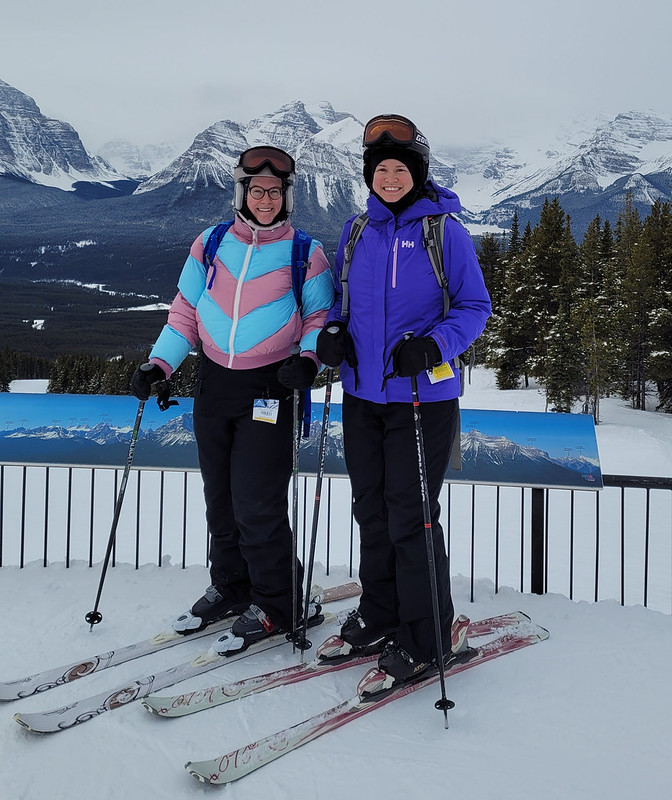
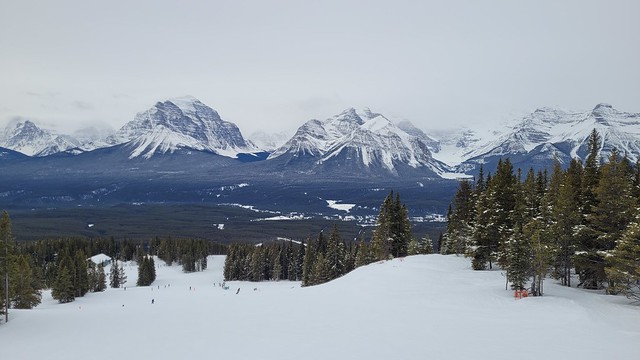
Lake Louise was undoubtedly the most popular of the Banff resorts when we visited. I suspect it draws the most tourists because of its association with the famous lake, as well as it also attracts a lot of locals to its open alpine skiing and back bowls. Plus, the awesome views of the surrounding mountains don’t hurt!

Lake Louise is about a 45 minute drive from Banff, so it is the furthest, though I regularly drive 2 hours to Whistler each way in a single day, so I didn’t find the drive too bad. There are some accommodations in Lake Louise if you’re just there to ski and want to stay nearby, but then I think your restaurant choices would be a lot more limited than if you stayed in Banff.

20220302_094401

Of the three resorts, I found Lake Louise had the most confusing parking. Norquay and Sunshine have straightforward massive lots, but Lake Louise has several smaller lots and several sections of the lot are allocated specifically for VIPs or pay parking. Clearly we weren’t VIPs and we didn’t want to pay, so we ended up parking in the road parking – it wasn’t a long walk to the resort, but the longest of the 3 resorts and we were annoyed to walk past the huge empty VIP lot right next to the lodge.

Lake Louise had a pretty different set-up than Sunshine. At Sunshine, I found a lot of the lifts went to the same locations but had different bases from which to board at the bottom. Whereas at Lake Louise, a lot of the lifts left from the same central area at the bottom and went to different parts of the mountain, which I think is a bit preferable. The main difference is that the Lake Louise base is at the same elevation as the highway, whereas at Sunshine you take a gondola up to the base and at Norquay you drive several switchbacks up the mountain. As a result, I found the ski conditions at Lake Louise were unfortunately, the worst of the 3 mountains.

PSX_20220304_220921

It’s partially because of the weather and timing of when we visited that we didn’t get any powder, but overall, I found Louise to be icier because it’s a lower elevation mountain. I also found the runs to be more confusing because it’s a lot of alpine, so there’s not really any discernible runs in a lot of locations. In some ways I really liked that because you could really ski wherever you wanted, but it also made it hard to figure out where you were and we ended up going down a few more advanced runs because we got lost. Not that big a deal, but since it was an icy day, it wasn’t the best conditions for challenging yourself.

So it was a bit of a rough start as we figured out the mountain, but we did still have a good time. We started off on Glacier chair and did a few runs on the Top of the World chair before going up Summit chair once to see the view from the highest point. I liked this area, but it’s where we kept making mistakes and ended up down a gully a few times. One of the biggest attractions at Lake Louise is the back bowls, which is pretty much just all free black run skiing. My biggest regret is that we didn’t ski the back bowl in the morning when we had fresh legs and decent visibility. We were a little bit intimidated by it and there’s so much to explore, so we decided to save it for later.

PSX_20220304_222706

After a few runs up at the top we switched over to the Grizzly gondola and explored around some of the bottom part of the mountain. Lake Louise is deceivingly large. Sunshine Village felt large because the lifts are spread out and there’s so many different areas, whereas Lake Louise is more concentrated, but still has a lot of runs, many of which I think are longer than at Sunshine. We didn’t do as many runs in the morning, mostly because it was just taking us longer to do each run.

We had decided to buy lunch at Lake Louise, which was a good decision because packed lunches aren’t allowed in the Lodge of Ten Peaks (though you can eat them at Whiskeyjack Lodge). The nice thing about Louise was that there were several lodges, I don’t know how busy it was over at Temple Lodge, but we found Lodge of Ten Peaks to be a lot less crowded than at Sunshine.

20220302_143543

In the afternoon we made our way over towards the backside of the mountain to get the areas we hadn’t yet explored. We did a few runs on Ptarmigan chair and a few on Larch chair. I ended up really liking the Larch area, likely because it had some easier runs, or maybe because they are more well defined. I think I would really like Lake Louise if I got to ski it more often, but because I only had one day, I wanted to get a lot a variety and in the alpine, I guess I felt like I was just skiing the same thing run after run. It’s why it’s nice to have more than one day at a ski resort, because you get to try everything on the first day, and then return to areas you liked or try things you missed on the second day.

Emily wasn’t really keen to do the back bowls at all, but like Goat Mountain at Sunshine, I still really wanted to tackle every part of the mountain, so I convinced her to do one run with me. We got to scope it out a bit more on the Paradise chair, which runs up the back of the mountain, and I think on a good powder day I would be pretty comfortable skiing in the back bowl (at least in the area under Paradise chair, which is black diamonds as opposed to double blacks). Unfortunately, our mistake was waiting too late in the day. We took the one easy run down the back bowl, but it had really bad flat light when we did it and we felt like we were skiing blind, so we weren’t inclined to try a second run, hence why I say I wish we’d done it in the morning.

20220302_130648

Anyways, sometimes you live and learn. We still ended up having a great time at Lake Louise and surprisingly Emily liked it more than me. I can’t really pinpoint why, but of the three, Lake Louise was probably my least favourite. I may get slammed for that because not a lot of people seem to like Norquay, so I’m inclined to blame the weather on this occasion (we got some great powder at Norquay). In any case, I won’t be too quick to judge it and I would definitely return to try it again and properly ski the back bowl. Overall I think it might just be the vibe that I got from Lake Louise. It was more crowded and seemed a bit more elitist than the others, so I’d be just as happy to ski at Sunshine or Norquay as well. Either way, it’s definitely an iconic resort.

20220302_094500