Into the Amazon

After three and a half weeks, we’re finishing up our trip to Peru. We’re flying back to Lima today and then back to Canada tomorrow. It’s definitely been an incredible trip and the longest period of time I’ve spent on vacation! We spent the last week in Manu National Park, it’s located on the eastern side of Peru and is a part of the Amazon Rainforest.

We left Cusco last week and drove for a full day to get to Salvacion, the town we stayed in. We left the Andes and traveled through the mountainous beginnings of the cloud forest as we descended in altitude towards the rainforest. It was one of the scariest roads we’ve traveled on in Peru. We were in a huge bus and the roads felt like they were barely wide enough for us, it had some beautiful views though!

Manu National Park

Manu National Park

We decided to do a work and travel program in the Amazon in order to save money. We thought we’d be working part time on a conservation project, but it turns out the website we’d booked on was a little out of date and we didn’t end up actually doing any work. The company we worked with is owned by a couple and it ended up just being us on the tour, so we had a very specialized trip!

We spent two nights in town and we spent another two nights in a cabin in the rainforest. We had the opportunity to go bird watching at an oxbow lake and we went on lots of walks in the jungle looking for animals. Seth got lucky and we saw lots of birds! We saw macaws, heron, and the ridiculous looking hoatzin and Amazonian umbrella bird. We also saw lots of different monkeys, frogs, and insects. Seth even saw a few snakes and opossums.
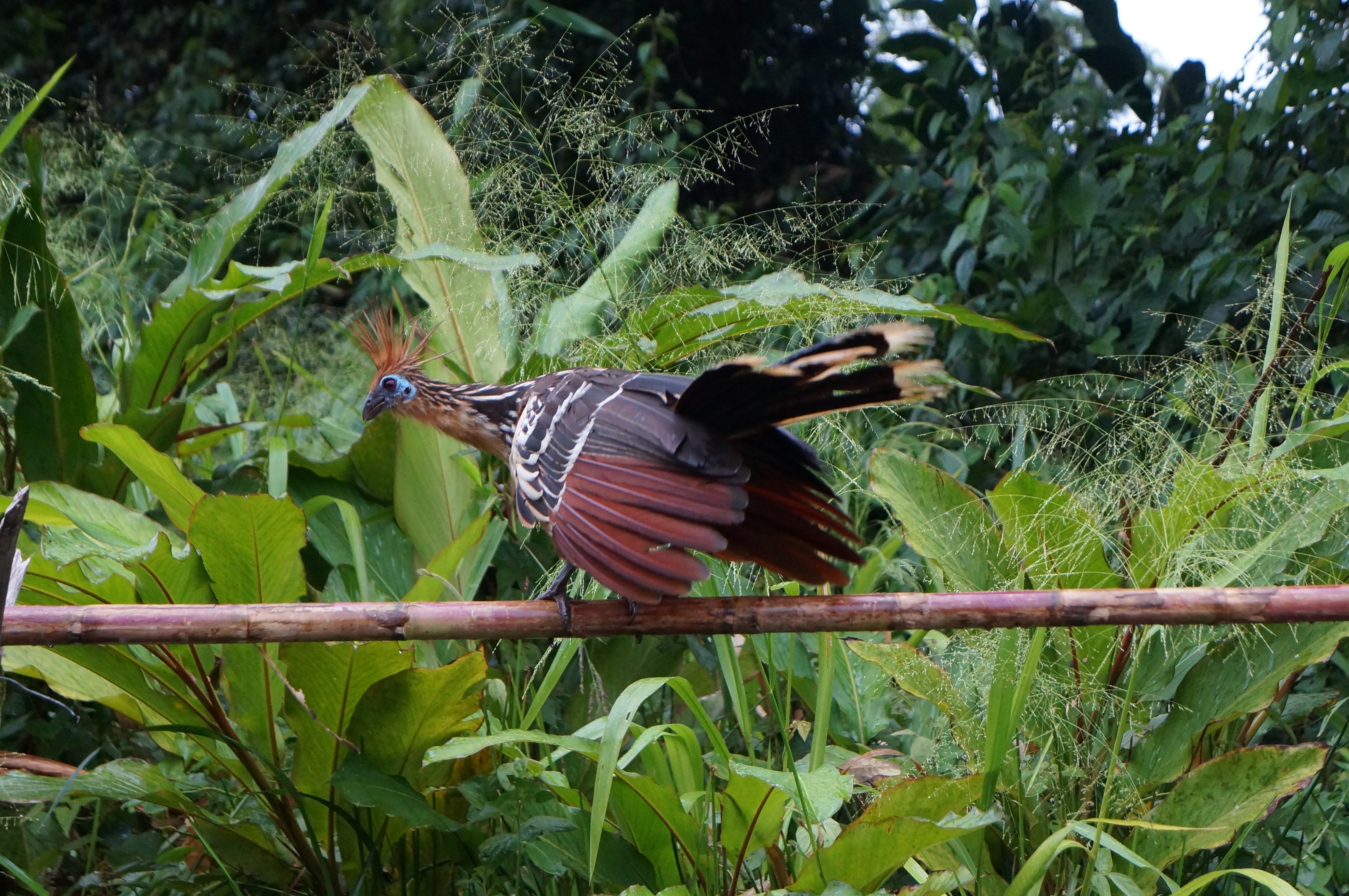
Hoatzin

Hoatzin

On our last day, we went out for a motorcycle ride to see some more birds and animals. Luckily it was overcast the first two days we were there, when the sun comes out it gets so hot that you can’t really do anything! Overall the trip was different than we expected, but we had a great time exploring in the park. Aside from the animals we saw, we also saw some incredible flora. Everything grows so high in the rainforest, almost no sunlight makes it down to the jungle floor. We saw a kapok tree, the biggest tree in the Amazon, and we spent a lot of time near the Madre de Dios river which eventually flows into the Amazon river.

Kapok Tree

Kapok Tree

We’ve been spending our last few days in Cusco. We were going to visit some more Incan ruins, but they’re actually pretty expensive and we decided we’d seen enough ruins, so we’ve been trying some other things. We did some shopping and had an hour long massage with hot stones for the low price of $10! We even spent one afternoon at Cusco’s very own ChocoMuseo, a museum all about chocolate! It was actually super interesting and they had all kinds of chocolate treats for tasting, we particularly enjoyed a chocolate tea that they make.

Yesterday we decided to go white water rafting on the Urubamba River! I’ve been rafting once before in BC and I wasn’t really sure what to expect, but it ended up being really fun! The rapids were all class 2 and 3, so they weren’t too overwhelming, but we still had a few laughs when two of the girls fell out of our raft and pulled the guide in with them! Seth and I both managed to stay in the raft the whole time, although I did jump out for a swim at one point. The river runs through the Sacred Valley outside Cusco, so it was a pretty scenic trip with the Andes all around us!

All suited up for white water rafting!

All suited up for white water rafting!

I’m so glad we got to spend several weeks here and had the opportunity to check out a lot of different sites; there’s so much to do in Peru! We skipped several big tourist attractions and we didn’t visit the top half of Peru at all, we easily could have spent several more weeks here. But I am excited to be coming home now and ready to get that piece of paper that says I have a degree! See you all soon!

Love Maria
Trekking from Salkantay to Machu Picchu

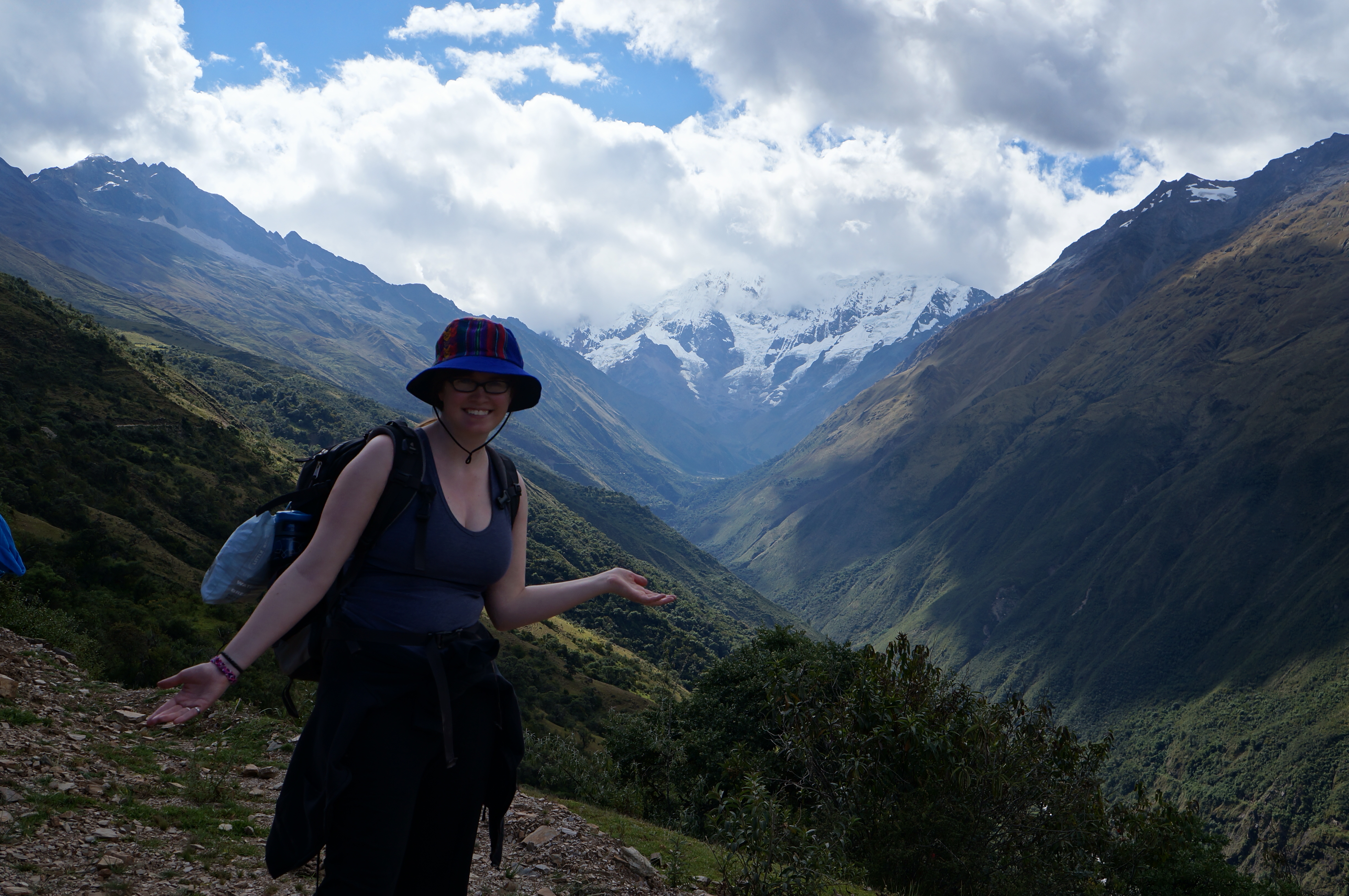
I’m going to postpone writing about lake Titicaca for now as I’ve just spent the last week hiking from Salkantay to Machu Picchu. Machu Picchu is, of course, one of the biggest attractions in Peru and one of my motivations for wanting to come here. We decided we wanted to trek there to make the experience a little more special, so we hiked for four days to Aguas Calientes and arrived in Machu Picchu on the fifth day.

There’s a few different options for trekking, the most popular of which is the Inka Trail. The Inka Trail is a tough hike with something like 15,000 stone steps. We opted not to do this one in the interest of cost, and instead decided to hike the Salkantay Trail, which hikes up to the Salkantay glacial peak and then down through the beginning of the Amazonias and the cloud forest. This was definitely the most physically challenging thing I’ve ever done. On the first and second day of hiking I was definitely regretting the decision to go on a trek, but I really did enjoy the last few days and I’m really proud that I finished it.

My "I'm not sure why I'm doing this" pose from the first day of hiking

My “I’m not sure why I’m doing this” pose from the first day of hiking

We started off hiking in Mollepata (2900m) and hiked 20km to the base of humantay glacier (3900m). The altitude completely exhausted me on this portion of the trek, which was mostly uphill, and I had a hard time keeping up with the group. I don’t think I ever really acclimatized. The views were incredible though! We hiked along the edge of the mountains all day until we reached the snowy peak of the Humantay Glacier.

Luckily, we didn’t have to do anything on the trek except walk. We had cooks who met us at our lunch stops and campsites to prepare us meals, and horses that carried out luggage. We just had to hike with our day packs. The first night under the glacier was the coldest night of the trek. In the mountains it gets very hot during the day and very cold at night. We had to bundle up in all our clothes, but we had the most amazing view of the night sky. I’ve never seen so many stars before. It was easy to pick out the Milky Way, the whole sky was just lit with stars!

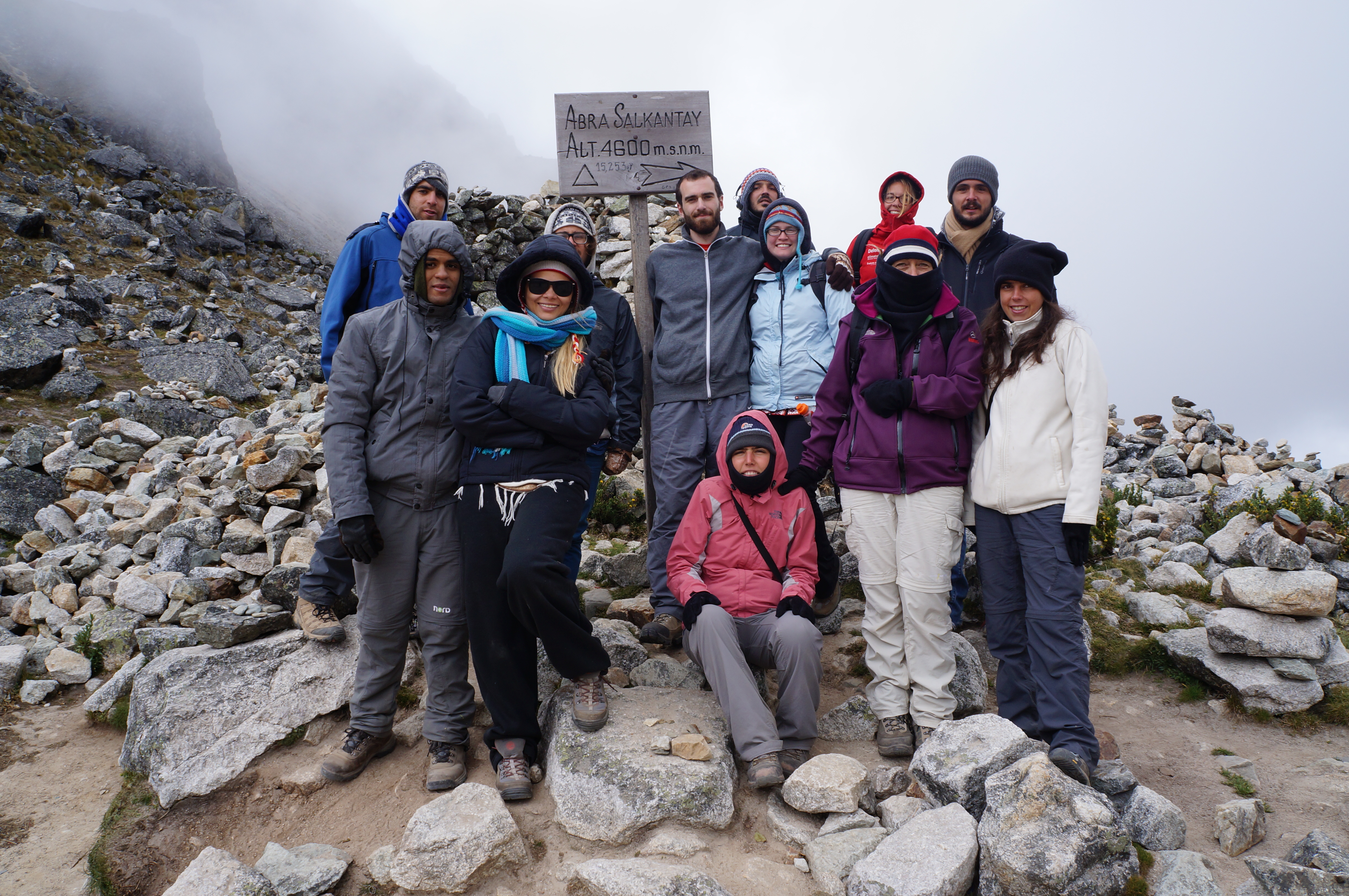
A little bit cold at the Salkantay Peak!

A little bit cold at the Salkantay Peak!

What challenged me most on this hike was learning about my own limitations. On the second day, the group hiked up another 700m to the Salkantay glacial peak. This is one of the most challenging parts of the hike, so there was the option to take a horse up to the top. I wish I could have hiked it, but I decided to take a horse instead of trying to hike up at such a high altitude. Seth did the whole trek and I met him at the top. From there we hiked down 1700m out of the mountain pass and into the cloud forest and the beginning of the Amazon. We hiked for 11 hours on the second day, but the quickly changing scenery was amazing. We went from the foggy mountain pass into the lush green of the cloud forest. Cloud forests are a pretty unique habitat, they’d be like a rainforest but for the high altitude at which they’re located.

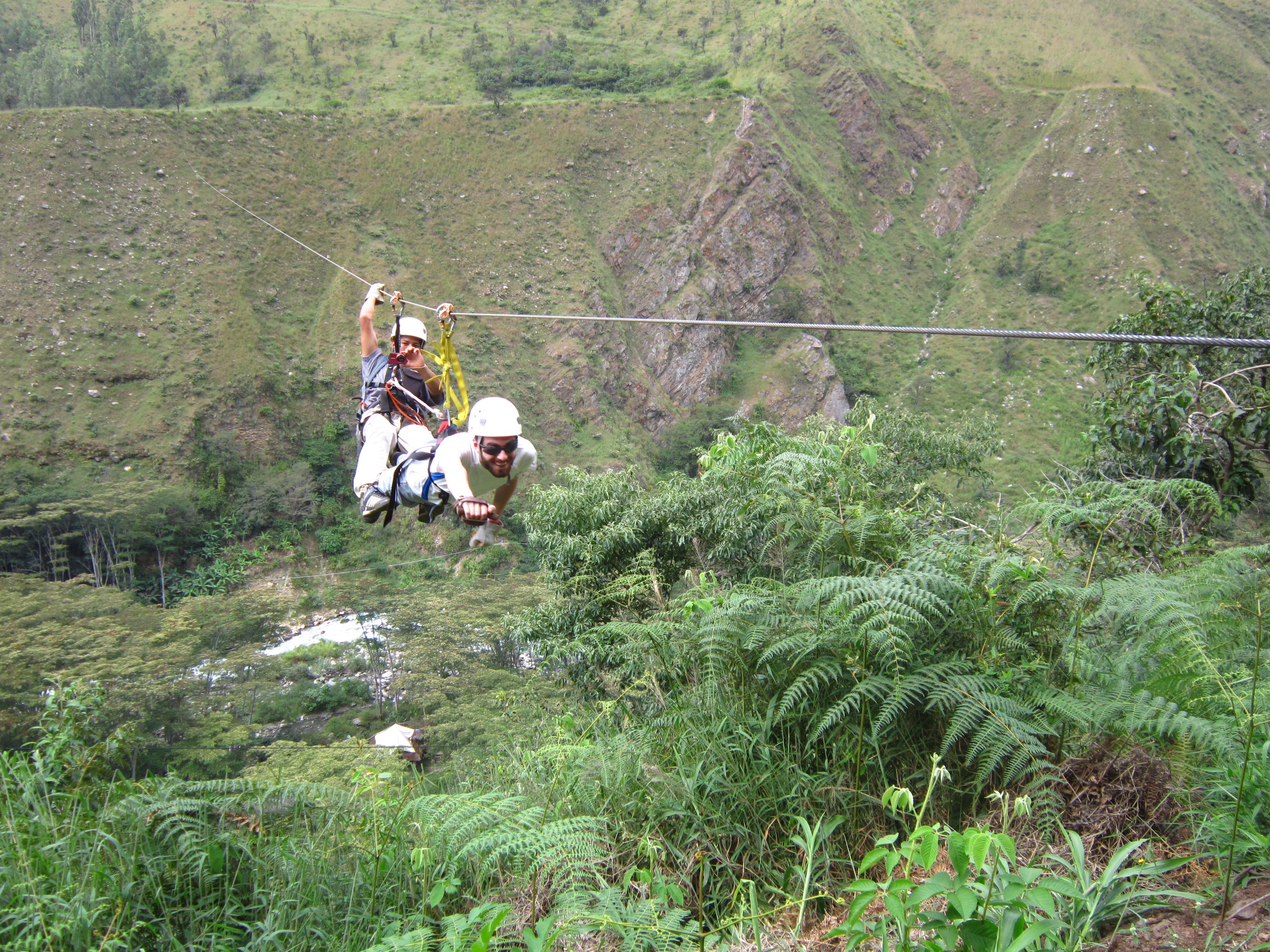
The last two days of trekking after that were at lower altitudes, had shorter distances, and were much more enjoyable. On the third day we hiked through the forest to Santa Teresa where we went to a hot springs, and on the last day we had the opportunity to go zip lining across the valley! We did 6 lines and the guides wanted to make sure you had as much fun as possible (while still being safe). Seth did one line upside down and did another “superman” style by wearing his harness backwards! We finished off by hiking along the train tracks behind Machu Picchu to Aguas Calientes.

Seth flying over the river

Seth flying over the river

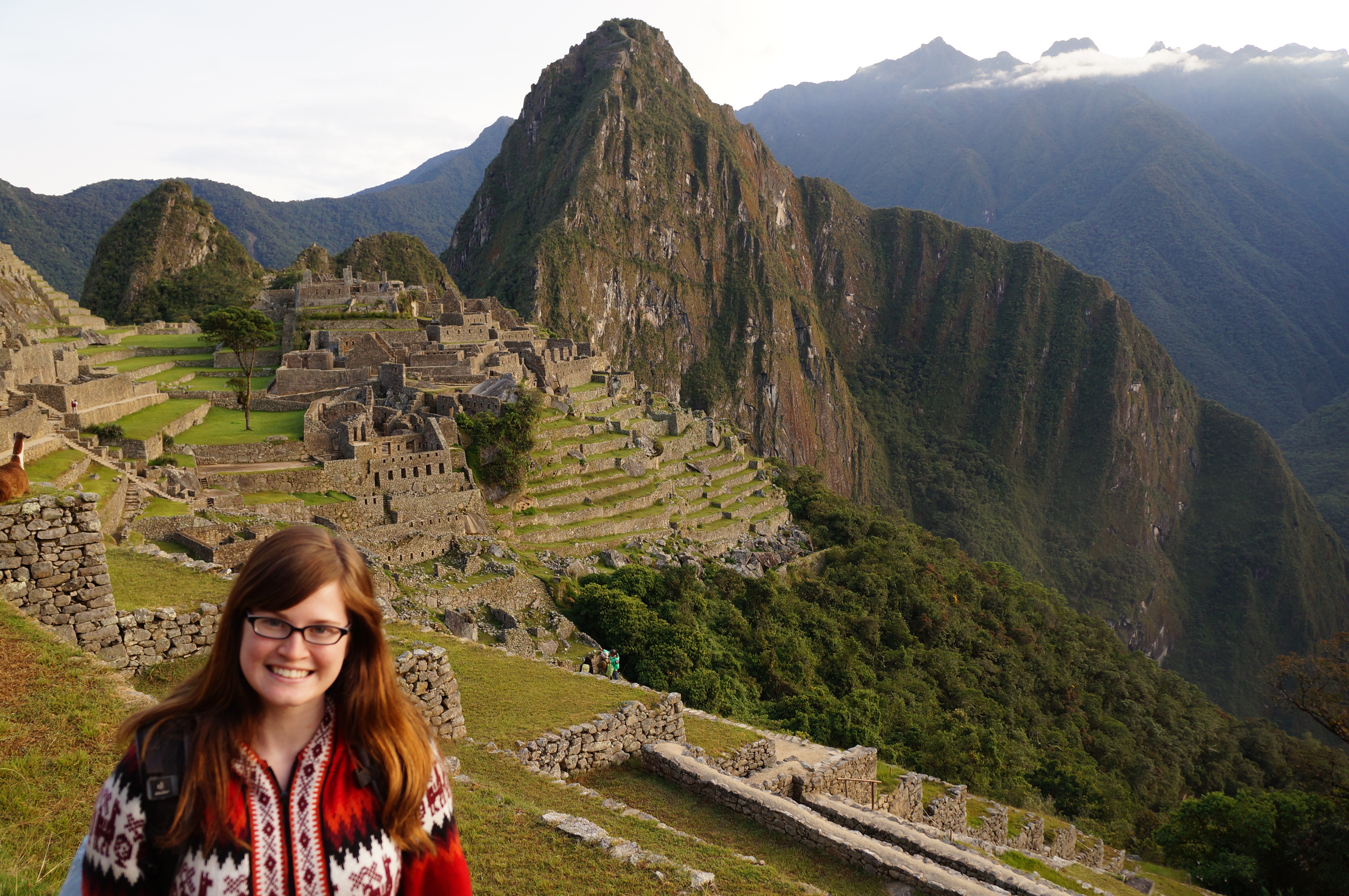
It was an early rise on our last day to go up Machu Picchu. We got there for opening time at 6am and watched the sun rise over the Andes. We had a guided tour and then we had the rest of the day to explore on our own. I can’t believe we’ve been there now, it felt like the whole trip had been leading up to Machu Picchu. It did not disappoint at all and was incredible! There’s such an amazing view of the surrounding mountains and its incredible how much of the huge Inkan city is still standing (only 30% was restored). It’s hard to believe they built an entirely self sustaining city up there. There’s a fountain system which runs through providing water and all of the stones used to create the buildings and terraces were taken from the mountain. The city is divided into two parts, the terraces are used for agriculture as rain water easily irrigates from one terrace to the next, and the buildings form the actual city where people lived.

Beautiful Machu Picchu!

Beautiful Machu Picchu!

Anyways, it was definitely an incredible experience and I’m proud I was able to finish the hike. We’re back in Cusco now and soon starting the last part of our trip. We’ll soon be off into the Amazon for a week, hopefully to see lots of interesting plants and animals!

Cheers,
Maria

Traveling through the Andes

Picking up where I left off in my last blog, we traveled from Paracas to our next destination, Arequipa, by bus. This was the longest bit of driving on the trip, so we decided to take an overnight bus. The main bus company here is Cruz del Sur and apparently they are years ahead of bus systems in the rest of the world, almost to the point of excessive. Their buses all have two floors, you check your luggage before you get on and need a baggage ticket to claim it afterwards, they serve meals on pretty much every route, and they give you pillows and blankets. We even played a round of bingo on our route! This definitely made the trip a bit more bearable, but it was a 12 hour bus trip, so by the end we couldn’t wait to get off!

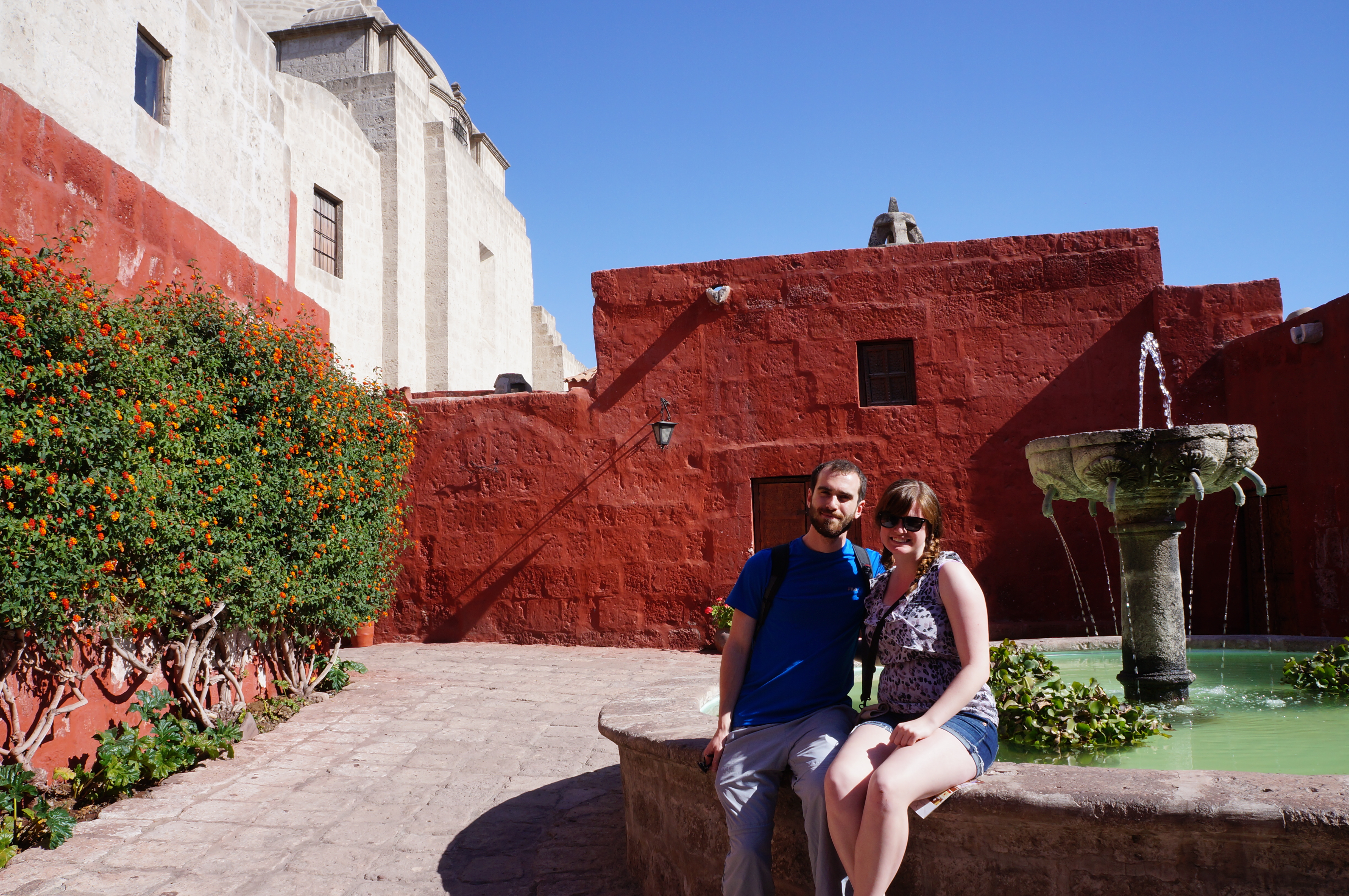
Arequipa is a pretty nice city. We didn’t spend much time there and didn’t see much of the city, but I liked the vibe a lot better than Lima. We visited the monastery of Santa Catalina, which was one of the most beautiful buildings. It had tons of indoor courtyards with lots of different trees and flowers and several outdoor streets contained within the convent, which all had individual quarters for the nuns. What made the monastery so beautiful though was the colours. The walls were all painted bright blues and reds, it just made the place seem very welcoming.

Convento de Santa Catalina

Convento de Santa Catalina

Other than the monastery, we just did a bit of exploring and shopping around the city. Peru has some of the nicest textiles! Every city we go to had loads of women selling their knitted wool garments and their textiles. I’ve already been suckered into buying a wool hat, mitts, and a warm sweater for when we go hiking, all with llamas on them!

The next part of our trip was a two day trip out to Colca Canyon and the town of Chivay. This is where we first experienced the challenges of traveling at higher altitudes. Arequipa was at an altitude of ~2300m, which is a pretty comfortable altitude. But on the drive to Chivay, we passed through altitudes up to 4900m above sea level before settling in Chivay at 3600m.

View on the way to Colca Canyon

View on the way to Colca Canyon

I’d read about altitude sickness, but I wasn’t really sure what to expect and I didn’t really think it would affect us that much. You can’t really feel it if you’re just sitting around, but as soon as you start to do any kind of strenuous activity (i.e. walking up a flight of stairs in this case) your lungs have to work twice as hard to get the oxygen your brain needs, so you get winded really quickly. I’ve definitely been having a bit of a hard time acclimatizing. It makes you feel like you’re really out of shape because of all the extra work your lungs have to do. Luckily we’ll have been at this altitude a week by the time we start hiking, so hopefully it will get easier!

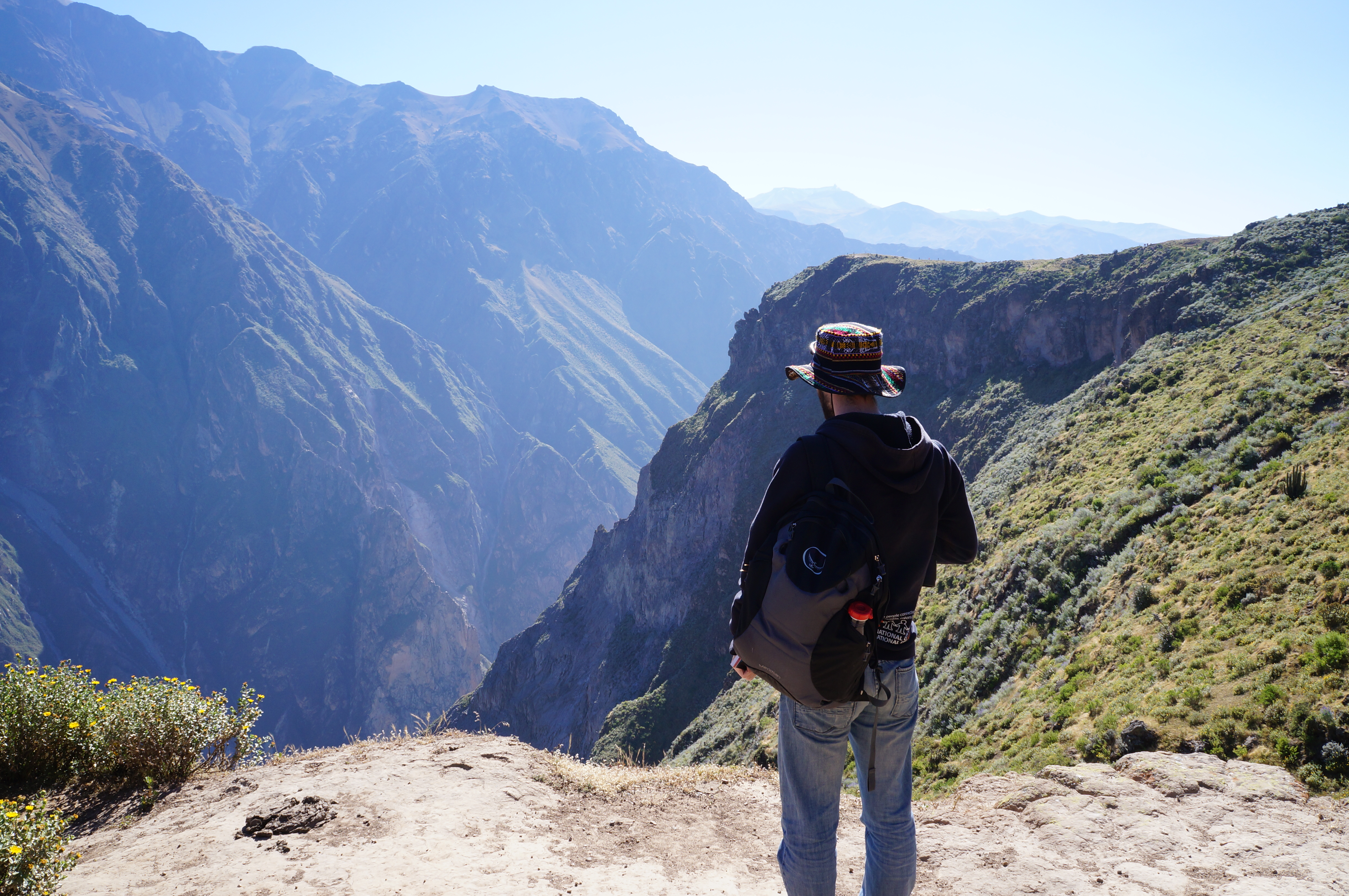
Chivay is a pretty small town, but it is right in the middle of the most gorgeous setting! It is located in the valley, so everywhere you look, you are completely surrounded by huge mountains. On the first day, we went to a natural hot spring and had dinner in a restaurant with traditional dancers and musicians. On the second day, we drove along the valley to Colca Canyon. Colca Canyon is the deepest canyon in the world. At the point we visited, the canyon was ~2700m deep, but at other locations, it goes as deep as 4100m.

Cruz del Condor at Colca Canyon

Cruz del Condor at Colca Canyon

The other main attraction at Colca Canyon is the condors. Condors are one of the largest birds in the world, with a wingspan between 2.5 and 3 metres. I was a little bit skeptical that we would actually see condors, but I could see them soaring overhead before we’d even gotten off the bus! They are very large and it’s impossible to miss them, they would soar right over us and I got some great pictures. I think the constant presence of condors is partly due to the fact that the national park uses money from entrance fees to make sure there’s always a dead cow or two in the area (condors are vultures). We spent the morning walking along the side of the canyon, from viewpoint to viewpoint. I don’t think I ever actually got a glimpse of the bottom of the canyon though, it was very deep.

The majestic Condor

The majestic Condor

Overall, the canyon was my favourite part of the trip thus far (in the first week anyways). It had some of the most amazing vistas and the people there were very friendly. Instead of returning to Arequipa, we decided to take a bus transfer to Puno, which is located on the shores of Lake Titicaca, the next portion of our trip. I’ll fill you in on our time there in my next entry!

Cheers,
Maria