A Tour of Rio’s Top Attractions

On our second visit to Rio we stayed in Zona Sul, home to Copacabana and Ipanema beach. We immediately preferred it to Lapa. Our hostel was located just 4 blocks from Copacabana beach and the atmosphere was immensely different. Copacabana stretches for 5 kilometers in an arc across south Rio until it reaches the Copacabana fort and Arpoador, where it continues into Ipanema and Leblon beach for another several kilometers. The weather cooperated great and we headed straight for the beach upon our arrival.

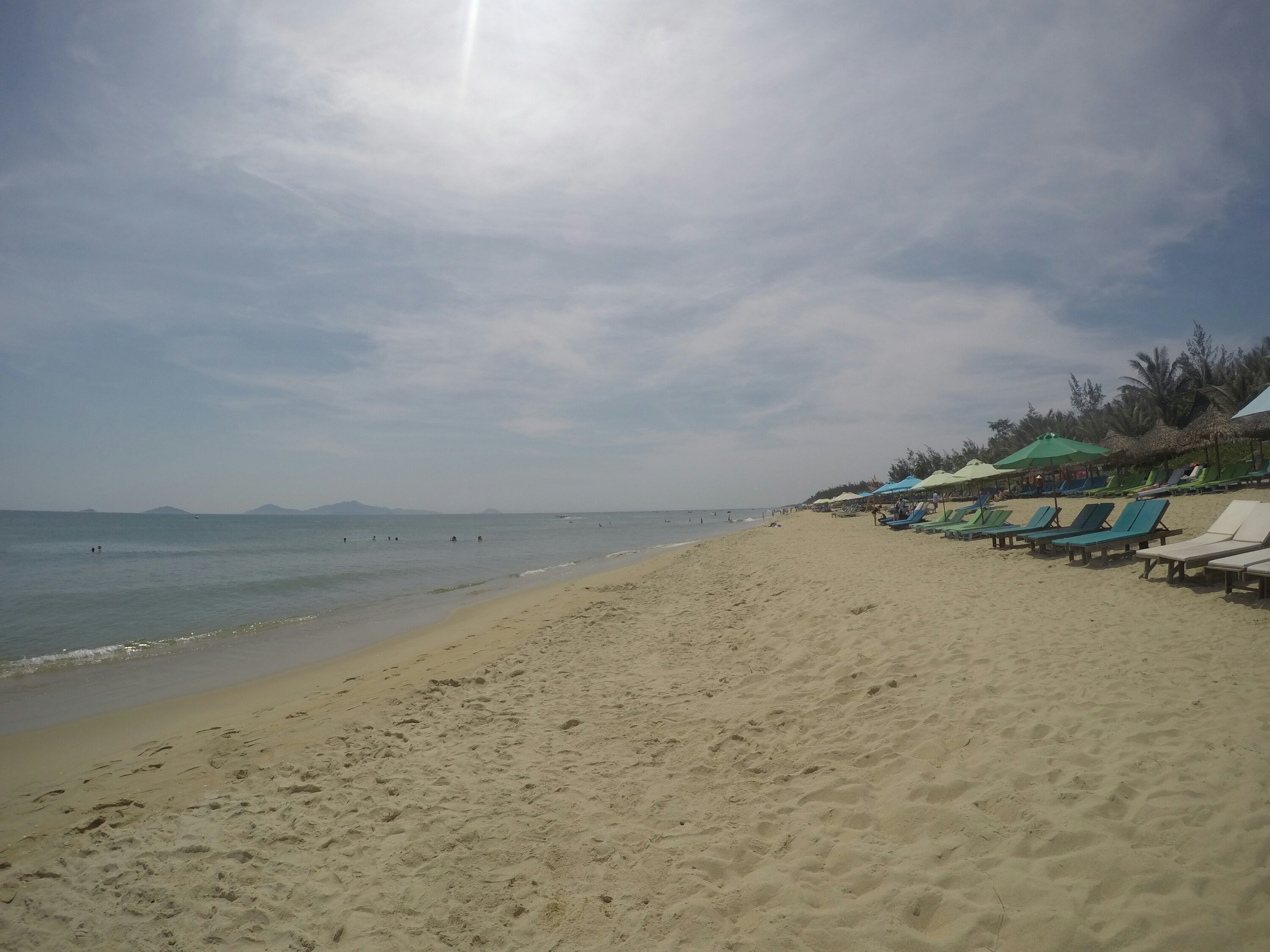
We arrived on a Saturday, so the beach was packed with locals and tourists alike. We found a nice place to lay our towels and settled in for the afternoon. The waves along the beach are enormous, but it’s so hot and humid it doesn’t stop anyone from cooling off in the water. We had to be so vigilant with sunscreen while at the beach, but managed to avoid getting burnt (except for the tops of our feet).

You can’t spend very long at the beach without noticing how many people make their livelihoods from it. There are locals roaming the beach all day selling every kind of product imaginable. The first people you notice are those renting beach chairs. It seems each person manages a different area of the beach and as soon as you enter their section, they try and get you to rent a chair or umbrella from them. Then there are the people selling beach goods, from towels and cover-ups, to sunscreen, bikinis, sunglasses, hats, beach buckets, and even inflatable children’s pools. Finally, there’s the people selling food and drinks. They’re my favourite, you could easily spend the whole day on the beach without having to go in search of food. There are guys selling sandwiches, mozzarella sticks, prawn skewers, chips, ice cream, and our favourite, acai! The second day we went to the beach Emily flagged the acai guy down from halfway up the beach! The last are those selling drinks. I still find it very strange that drinking alcohol in public is legal in Brazil, so there are tons of guys roaming the beach all day with coolers of beer and trays of caipirinhas.

Sunset over Ipanema Beach

Sunset over Ipanema Beach

On our first day, we decided to walk up Copacabana Beach to the Arpoador in Ipanema to watch the sunset. The Arpoador is a huge rock that juts out into the ocean between Copacabana and Ipanema. It has a great view of the sunset over the mountains and was packed with people on every inch of the rock on Saturday evening! We found a spot and enjoyed watching surfers ride the waves as the sun dipped behind Ipanema.

It was calling for a cloudless day on Sunday, so we decided to attempt to see Sugarloaf and Christo Redentor in one day. We visited Sugarloaf first; it was pretty early so we had a quick ride to the top without any wait. The cable car first takes you up to Morro da Urca, the smaller of the two mountains, and then a second cable car takes you to the top of the iconic Sugarloaf mountain. The view from the top gives you an amazing 360 degree view of Rio. We could see straight out to the Christ the Redeemer statue, with the beaches on one side and Lapa and Centro on the other. After we snapped a few photos, we discovered a little path going down the back of the mountain that it seems most tourists ignore. You couldn’t see the view there, but you could enjoy the jungle on the back of the mountain instead. We saw some interesting bugs hanging around and watched a group of marmosets jumping from tree to tree.

View from Sugarloaf

View from Sugarloaf

We messed up the bus stop location after we left Sugarloaf and spent a fair bit of time wondering around, somehow ending up at Botafogo Bay, but we found it eventually and hopped on a bus to Corcovado. We were impressed with our quick ascent up the Sugarloaf, but we paid for it at Corcovado. The later in the day you wait, the longer the lines get. In order to go up to the Christ the Redeemer statue, you have to take an old tram through Tijuca National Park, up the side of the Corcovado, so only so many people can go up at once. Fortunately we didn’t have to wait too long to get tickets, but our tram ticket was for about an hour and a half after when we purchased it. Things could have been a lot worse though and we just used the extra time to go in search of lunch.

It was a nice ride up to the statue, but I have to admit the tram was a bit dated. It’s a narrow ride up to the top, so there’s only one track and you have to stop 3 or 4 times on the way up at wider sections to wait for the tram coming down to pass. It took about 30 minutes, but we were dying at the end from the heat in the un-air conditioned carriage. The view from the top was worth it though!

Christo Redentor

Christo Redentor

If we had to pick, we both agree that the view from the Corcovado was better than the view from the Sugarloaf. However, the crowd was not. It’s a very narrow platform at the top with a lot of people crammed in taking pictures of both the statue and the view. It made me almost thankful for the bottleneck at the bottom, which at least slowed down the flow of people. We stayed for a little while to take our pictures and admire the view, but it was a bit too crowded for us. You can’t help but admire the statue though!

View of Sugarloaf from the Corcovado

View of Sugarloaf from the Corcovado

Up until now, our schedule has been pretty packed with activities, so on Monday we finally had a nice relaxing day at the beach. We slept in and then made our way down to Copacabana Beach. Our strategy was to spend an hour or so in one spot and then pack up and move a little further down the beach, eventually making our way to the end of Ipanema Beach. It was extremely hot, so we spent a fair bit of time cooling down in the waves. It was definitely a nice relaxing day and was less crowded since it was a week day. We finished off with some shopping in Ipanema and took a break from Brazilian food and shared a huge plate of nachos on the beach for supper.

A great day at the beach!

A great day at the beach!

We’re in Ilha Grande now for the last leg of our vacation. It looks like our good luck with weather has finally run out and it’s calling for rain the next few days. But we’re going to try and make the best of it and hopefully we’ll still get to enjoy Ilha Grande’s premier beaches!

Maria

A Visit to Iguazu Falls

We’re back in busy Rio, but we just had the most amazing 3 days in Iguazu Falls! We flew through São Paulo to get to Foz do Iguacu; we’re not spending any time in São Paulo, but we got a quick glimpse of it from the plane on the way to and from Rio. I thought Rio de Janeiro was a big city, but São Paulo was enormous! There were miles of skyscrapers as far as we could see! Rio has about 10 million people in the city and surrounding area, but São Paulo has 20 million. I’m sure it’s a cool city, but it was kind of a relief not to have to have to navigate such a large city.

We arrived in Foz do Iguacu in the early afternoon and decided to drop by the tri-border. Rio Iguazu, the river Iguazu Falls is located on, marks the border between Brazil and Argentina. A few kilometers from the falls, the river intersects with Rio Parana, which marks the border between Paraguay and Brazil. The tri-border is where the rivers meet and you can see Argentina on one side of the river and Paraguay on the other! There’s a monument on each side painted like the respective country’s flag. We had fun snapping a few pictures of all three countries.

In Foz do Iguacu, we finally got the opportunity to try acai, which we’ve been hearing a lot about from other travelers we’ve met. Acai is a berry that is very popular in Brazil; they serve it frozen and whipped like sorbet. We tried it with cupuaco, a sour tasting fruit, with bananas and granola on top. We ordered a large bowl to share and had a great laugh when we were served a gigantic bowl with acai piled up to about twice the height of the bowl! It was delicious though and we actually finished almost all of it.

A heaping bowl of acai

A heaping bowl of acai

Since the falls are located on the border between Brazil and Argentina (and since we’ve flown so far to see them), we decided to spend a day on both sides of the falls. In case you’ve never heard of Iguazu Falls, it’s a series of waterfalls that flow from the enormous Iguazu River. There’s more than 200 different waterfalls stretching along the river, approximately 70% in Argentina and 30% in Brazil. We honestly couldn’t pick which side we liked better as both sides were very different.

We spent our first morning on the Brazil side. There’s only 1.5 kilometers of trails on the Brazil side, but since most of the falls are on the opposite side of the river, you get a great panoramic view of them as you walk along the trail. You start at the downstream end of the falls, so as you progress upstream, the waterfalls just keep getting more and more impressive! You finish just downstream of Devil’s Throat, the biggest waterfall, which extends in a huge horseshoe around the river and has the largest flow of water. The viewpoint on the Brazil side has walkways that jut out over the bottom of the river and look up at the huge wall of water that is Devil’s Throat. It is an incredible view and the volume of water pouring over the falls every second is mind-boggling!

Iguazu Falls - Brazil Side

Iguazu Falls – Brazil Side

Since the waterfalls are located in a preserved area, Iguazu National Park, there were lots of animals and birds to see around as well. It’s easier to see wildlife on the Argentina side, but we still saw lots on the Brazil side. The most common mammal is the quati (or coati). I can only describe it as a South American raccoon. They have really long noses and striped tails and at first you think they’re really cute, but then you quickly realize what a pest and a nuisance they can be. I put my bag down at one viewpoint and when I looked back, the quati’s had swarmed it! Then at lunch, we saw one jump up on the table and grab an entire box of french fries from a surprised couple. There were lots of swallows and vultures flying around the falls, but the most numerous thing we saw was butterflies. There were butterflies of every size, shape, and colour flying all over the park!

Since we only needed a morning to see the Brazil side, we spent the afternoon at a bird park called Parque Das Aves. It was enormous and we saw every type of South American bird imaginable, including toucans, which I’ve always wanted to see up close. They have a few aviaries set up in the park where the birds all fly around together and you can walk through. In one of them there was a little red-breasted toucan just hanging around on one of the rails and he let us pet his head! We were surprised because it wasn’t something set up by the park, it was just a stroke of luck.

Red-breasted toucan

Red-breasted toucan

We wondered if we might get tired of the falls on the second day, but it was impossible as they are so incredible and both sides of the river offer very different perspectives. To make logistics easier, we went with a tour group to see the Argentina side. We all crossed the border together and spent the day exploring the falls as a group, except when Emily and I did a boat tour. The boat ride was called the Gran Aventura, or the Great Adventure, and was one of the first things we did. It starts with a 20 minute ride through the jungle, before loading into boats that will take you up the river to the falls (they called them boats, but they were really just gigantic rafts with a motor).  I was slightly terrified on the ride up the river as we went over some really large rapids. We had a great view of the falls from the boat though and the captain finished by essentially driving us under a few of the waterfalls. We got absolutely soaked… well Emily did. I had a poncho, so I didn’t get too wet, but with only a rain jacket, Emily got really wet. Still a fun experience though!

Since there are so many more falls on the Argentina side, there are a lot more trails. There was no time to rest if we wanted to fit everything in, so as soon as we got off the Gran Aventura, our group whisked us away on another boat to cross to San Marten Island to do the trail over there. We did a little hike around the island; there’s a lot of viewpoints and they’re all amazing. We were a little preoccupied though because we were both dying to pee after our first boat trip and we had a laugh at each other trying to find somewhere to go in the woods that wasn’t surrounded by tourists!

Iguazu Falls - Argentina Side

Iguazu Falls – Argentina Side

We spent the afternoon doing the rest of the trails, including the upper and lower circuits above and below the falls. As promised, the wildlife was much more impressive on the Argentina side. We saw tons of birds, including a real, live, wild toucan! It was a toco toucan and we had a great view looking down on him perched in one of the trees. We also saw a family of brown capuchin monkeys! They were hanging around in the trees near one of the paths, but we were really sad to see people feeding them bread. There are signs all around the park explaining not to feed the wildlife because our food is not natural to their diets and being fed all the time can cause them to become aggressive or develop diabetes. We experienced this first hand we one of the women in our group got attacked by a quati. It tried to steal her bag and then gave her a huge scratch down the back of her leg. We just hope she goes and gets the appropriate shots!

Brown Capuchin Monkey

Brown Capuchin Monkey

We finished the day with a visit to Garganta do Diablo (Devils Throat). Since it’s located on the Argentina side, this time we approached it from the top. We got a better idea of the huge scope of the river when we had to walk a full kilometer on walkways across the river to get to Devils Throat. It was unbelievable! The river flows over the edge in a huge horseshoe, with water pouring over all sides. The viewpoint is located on one side of the horseshoe, so you can see the water thundering over the edge below your feet and all around you! We got wet again from all the mist, but we stood watching the river pounding over the edge for quite a while before walking the trail back across the river.

Iguazu Falls has been on my bucket list for a while and it absolutely lived up to the hype. I wasn’t sure if it would live up to my expectations after having already seen so many pictures of the falls, but it definitely surpassed them!

We’re almost at the halfway point in our trip already, but we’re looking forward to more time in Rio and hoping that the weather cooperates for our visit to Ilha Grande (sadly it’s not looking that way right now). We’ve had unbelievable weather thus far though, so we shouldn’t complain! Talk to you soon,

Maria

First Impressions of Rio de Janeiro

It’s been an eventful start to our trip so far! Our plans got sidetracked almost immediately; we were supposed to meet in Rio on Sunday morning, but I arrived in Seattle to a text from Delta informing me my flight into Rio had been delayed by 8 hours. I called customer service and they told me the flight had been rescheduled due to an ash cloud that was approaching Rio from Calbuco volcano in Chile, which has been erupting over the past few days. However, the ash cloud apparently moved out to sea and Emily’s flight on United took off without too much delay. Even my pilot admitted Delta was a little over-cautious canceling a 10 hour flight so far in advance.

As a result, I ended up spending my first night in a hotel in Atlanta and got up early Sunday morning to catch my delayed flight. It definitely could have been worse, but I was annoyed with Delta, who wouldn’t supply hotels to their passengers. When I arrived back at the airport I was surprised to find half of the passengers sleeping on the floors all around the gate. I ended up missing a full day in Rio, but we made the best of it and had a nice dinner outside under the Lapa Arches when I arrived, where we were accompanied by some local musicians. We tried a few Brazilian appetizers, which were all delicious. We had these cassava balls fried with cheese, pumpkin baked with cream, and these meat pastries.

On our first full day in Rio, we decided to go on a walking tour to get acquainted with the city. Rio is absolutely enormous and split into a number of neighborhoods. We were staying near Centro, the oldest part of the city, in Lapa. The Portuguese first arrived in Brazil in 1500 and starting building the city from Centro. Rio de Janeiro literally translates to January River. It’s named because it was “discovered” on January 1st, but it’s a bit of a misnomer because the river the Portuguese were referring to is actually Guanabara Bay (which is also funny because Guanabara means bay in the native language, so the Portuguese accidentally named it “Bay Bay”).

Our tour guide took us all around the city centre, starting at Largo da Carioca, a square near the downtown. We stopped at the famous Confeitaria Colombo bakery for some delicious treats and visited 15th Square, the Imperial Palace, and vibrant Cinelandia, home to the theatro municipal, city hall, and the museum of fine arts. Towards the end of the tour we stopped into Havaianas, Brazils premier flip flop shop, before finishing at Escadaria Selaron, a set of stairs located at the base of Santa Teresa. Rio is located in the mountains and large parts of the city extend up into the hills. The neighborhood of Lapa borders Santa Teresa, which is located along the mountainside near the Corcovado. Escadaria Selaron starts in Lapa and ascends up into Santa Teresa. The steps were made famous by Chilean artist Jorge Selaron, who decorated more than 200 steps with colourful tiles of green, blue, and yellow for the Brazilian flag. The steps are incredible because partway through the project he ran out of money, but instead of asking for grants, he asked for people to donate tiles. The steps are now covered in tiles from all over the world and bring pride to the neighborhood of Santa Teresa.

Escadaria Selaron

Escadaria Selaron

The mountainside neighborhoods are actually an important part of Rio’s class system, which is largely split between the wealthy and the poor. The city originally expanded north from Centro before the wealthy eventually started developing the city in the south zone along the beaches. When slaves were freed in Rio in the mid 1800’s, many of the wealthy kicked them off their properties and with nowhere else to go, they started living in shanty towns up the sides of the mountains. These shanty towns now form Rio’s slums, or favelas, with the exception of Santa Teresa. They’re a defining and important part of the city, but the juxtaposition of the favelas against the beachside resorts really demonstrates Rio’s class disparity.

We had planned to take the tram up the Corcovado to see Christo Redentor in the afternoon, but when we arrived, we were told that it was clouded in at the top. We decided to visit the Jardim Botanico at the base of the mountain instead. Evidently the clouds didn’t stick around too long though because we had a great view of Christo Redentor from the garden. The Jardim was gorgeous and we spent an hour exploring all the different plants and animals we could find (based on its size, I’d call it more of a park than a garden). We saw tons of green macaws flying overhead and a great egret hanging out in the water, but our favourite was a group of tiny little marmosets that we saw jumping around in the trees!

Jardim Botanico

Jardim Botanico

We finished off the day with a huge bowl of Feijoada, Brazil’s national dish. It’s a meat stew cooked with black beans and served with rice. The flavour of the stew was delicious (so was the sausage in the stew), but we were surprised at the huge quantities of meat fat and gristle in the stew, so it wasn’t one of our favourites. Emily’s been eating vegan for the last few months, but she’s taking a break in Brazil. Lucky for me because Brazilians are huge meat lovers!

On our second day we left the city and had a wonderful day hiking in Tijuca National Park, one of Rio’s urban forests. Even though the park is surrounded by Rio, it’s so large that once you enter you feel as though you’ve completely left the city behind. We went into the park with our wonderful guide, Ed, as a party of six. The tour we were doing was called peaks and waterfalls and we started off visiting a few viewpoints and one of the parks many waterfalls. Unfortunately, Rio has been experiencing dryer summers lately and many of the waterfalls have been drying up. Ed was happy that the first waterfall we visited was almost up to it’s normal flow.

We started hiking around 11am and spent about 5 hours in the jungle. We first hiked to Pica da Tijuca, which was thought to be the highest peak in Rio for many years, up until they got GPS and realized that another peak was 6 meters higher. Tijuca is still the most beloved though! We hiked up through the jungle for about 400 meters in elevation until we reached a set of stairs carved into the stone. The steps ascend along the side of the mountain to the peak. They were constructed in the early 1900’s in preparation for a visit from the king of Belgium. The king loved adventure and rock climbing, so they decided to build the steps to show him one of Rio’s best views. However, the king loved rock climbing so much that he was disappointed to see the steps and instead used ropes to climb up the mountainside parallel to the new stairs.

View from the stairs in Tijuca National Park

View from the stairs in Tijuca National Park

We opted to take the steps. It was a pretty steep and scary climb and Ed told us to strictly watch our feet as we went, so when we finally stopped and he told us to turn around, we were privileged to the most amazing view of Rio! We could see the city sprawled out beneath us, with Guanabara bay and the city of Niteroi behind it. We ate our lunch at the top while enjoying the beautiful view. We were literally above the clouds, so the other side of the peak was clouded over when we reached the top. Fortunately, they cleared out just before we left and we had another incredible view of the rolling hills and peaks of Parque da Tijuca, all the way out to the Atlantic Ocean.

After lunch, we hiked down to Tijuco Mirim, the pico’s smaller, but no less impressive, cousin. The rest of the hike took us down around the back of the peak, but we enjoyed it even more than the hike up. The path was much wilder and parts of the trail followed the bare rock of the peak. We saw a few hummingbirds, another marmoset, a snake, and some enormous spiders on the way down. Near the end we stopped at another waterfall; unfortunately it had been reduced to mostly just sprinkles, but it was nice to stand under to cool off.

Hiking down Tijuca Mirim

Hiking down Tijuca Mirim

Even though it’s autumn here, we are finding it pretty hot and humid. But we should count ourselves lucky because we’ve been informed that Rio has two seasons: summer and hell. Temperatures can go into the high 40’s during Rio’s summer. Ed had the perfect surprise for us at the end of the hike, ice cold Antarctica beer, one of Rio’s local beers. A cool beer never tasted so good!

It feels weird to be leaving Rio already since we haven’t done that much yet. We checked out of the hostel this morning and flew to Iguazu Falls for the next few days. I can’t wait to experience the waterfalls tomorrow though and we’ll be back in Rio soon enough!

Unfortunately I wasn’t able to upload any photos to share, but they’ll all make it to Facebook when I get back!

With love from Brazil,
Maria