Beach Life

I think I can say with full certainty that crossing the border into Panama was one of the most confusing border crossings I’ve ever experienced (except perhaps when I almost went to Nigeria by mistake on my way to Malawi). Between leaving Costa Rica and entering Panama we had to go through 4 checkpoints, pay 2 entry/exit fees, and walk across a rickety bridge connecting the two countries.

image

From there we got a bus to Almirante and then a boat to Bocas del Toro, where we spent 4 days. The weather was not good to us and about halfway through our boat ride the heavens opened up and we had the most trecherous crossing through the rain. I’ve never been so relieved to have both feet back on solid ground.

Bocas del Toro is an Caribbean archipelago on the far west side of Panama. Its a popular tourist destination for its beautiful golden sand beaches. Bocas was the longest period of time that we remained stationary and we were anxious to do a bit of relaxing after our quick paced tour of Costa Rica.

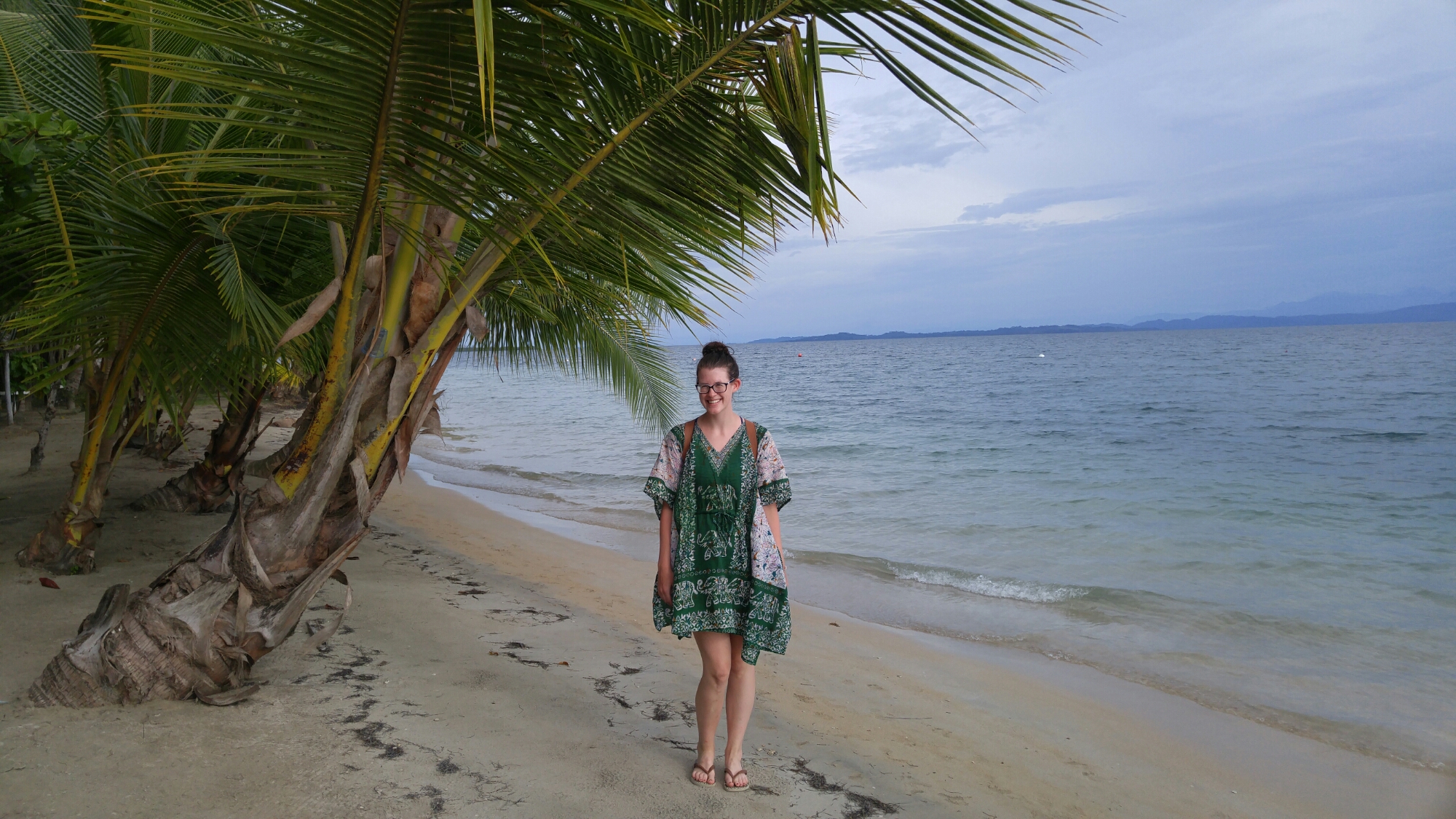
On our first day we had no plans but to head to the beach. We were staying in Bocas Town on Isla Colon and took a bus early in the morning across the island to go to Starfish Beach. It’s one of the most popular beaches on Isla Colon, but we weren’t sure we were at the right place when we arrived because we were the first people on the beach for the day! We were anticipating rain, so we hadn’t planned to stay the whole day, but the hours kept stretching on and with no sign of rain, we ended up staying all day.
image

Starfish Beach is named for its calm waters that attract many starfish to the shallows. We went snorkeling and spotted quite a few hanging around. We ate a traditional Panamanian lunch of rice, patacones (fried plantains), and fish on the beach. The fish was red snapper and Emily wasn’t too impressed to have it served to her whole.

image

We had misgivings about 4 days in Bocas when we saw a full week of thundershowers on the weather forecast, but overall the weather was decent. The sun didn’t come out much, but the rain mostly stayed away. It was so hot that a reprieve from the sun was even kind of nice. The exception was our second day, when we booked a snorkeling tour around the islands.

The tour started off in Dolphin Bay, where the wild dolphins gave us quite the show chasing our boat around the bay. This was followed with snorkeling at Coral Cay, one of the best snorkeling locations in Bocas. We didn’t see much for fish, but there was a lot of coral and it was all very bright and interesting to look at.

image

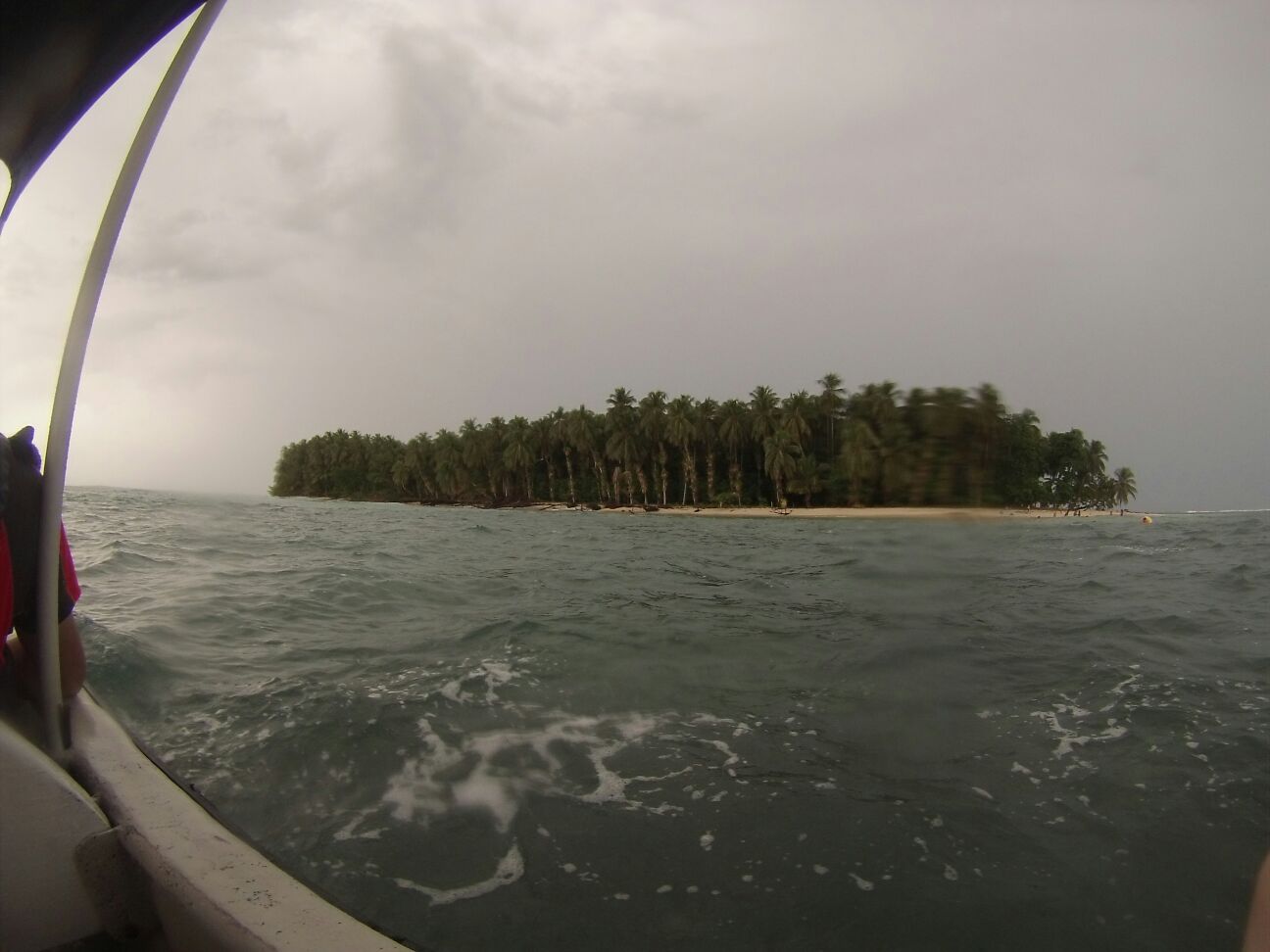
The main stop of the tour was to Cayo Zapatillas, which is two small islands that are located out from Bocas and are a protected national park. Most of the pictures I’ve seen of Zapatillas are incredibly beautiful, but they were also all taken on sunny, calm days, so it looked a bit different when we were there. Because it’s wet season and the islands are located in open ocean, the waves were very large and the currents were very strong.

There is a huge amount of natural reef off the islands though, so it was here that we tried snorkel boarding (aka amphibia boarding) for the first time. Its a clear plastic board that is dragged along behind the boat. You hold on and can steer it through the water behind the boat as you look at the reef. We were expecting it to be a goggle disaster (and it was at some points), but it was also a lot of fun and a different take on snorkeling.
image

Shortly after it poured on us again and we had to take refuge in a little gazebo on the island. Fortunately the rain doesn’t usually stick around too long and it didn’t impede our snorkeling, just our departure since the ocean was pretty rough. It always surprises me how quickly the rain can start, how intense it is, and how quickly the sun comes out again after! We learned to ignore the forecast, which like Newfoundland, means absolutely nothing.

On our last day in Bocas we decided to visit Red Frog Beach and go ziplining. Red Frog Beach is named after the tiny little strawberry poison dart frogs that can be found all over the island. We had a nice morning chilling on the beach before going ziplining.

image

I’ve gone ziplining a few times, but this course was quite different than other ones I’ve done and had a series of obstacles between each of the ziplines. It included a vertical rappel, two suspension bridges, a Tarzan rope, and the scariest, a tight rope. It was extremely long and high, with only a single rope to hold on to above our heads, I don’t think either of us looked down once!

image

Sadly our trip is almost over now, but we have two more stops in Boquete and Panama City. See you soon!

Maria

Pura Vida

Pura Vida translated means pure life. It is the motto and mantra of pretty much every Costa Rican we’ve met. It can be used as hello, goodbye, or thank you – or even as the response to the question ‘how are you?’ with only the inflection used to indicate how the person is actually feeling. It’s a sentiment of freedom and contentment in life.

We didn’t really notice how much the country has taken this mantra to heart though until we left. It is so chill in Costa Rica that as soon as we crossed the border into Panama we felt we were being bombarded by people. Not that Panamanians aren’t nice people, they just have a little less chill than Costa Ricans and we were a bit overwhelmed upon crossing the border.

But I’m getting a head of myself. We spent our last few days in Costa Rica along the southern Caribbean side of the country in Cahuita and Puerto Viejo. In Cahuita we had our first day of rain. May is shoulder season for tourism as the dry season is just ending and the wet season beginning, but we like traveling in shoulder season since there are less people around and things are cheaper. We expected some rain and couldn’t believe it held off as long as it did. Often it will only rain for an hour or so and then clear off again, but it stuck around for the whole day when we were in Cahuita.

image

We’d planned to do an 8 km hike through Cahuita National Park, which is known for its wildlife, but it poured on us so we called it off about 2 kms in. It didn’t hinder our ability to see wildlife though and we still caught a glimpse of two white faced capuchin monkeys playing in the trees and got a close up look at a wild three-fingered sloth!

We decided to cut our loses on the hiking and instead took the bus to a nearby sloth sanctuary to learn all about sloths! The sanctuary does extensive research on sloths and takes in injured sloths, nurses them back to health, and then re-releases them into the wild. There are 4 resident sloths who unfortunately can no longer be returned to the wild due to extensive injury. There is also a sloth nursery for sloth babies that are injured or abandoned and they are just the cutest little guys ever! Everybody loves sloths, so here’s some fun sloth facts we learned at the sanctuary:

image

– There are two types of sloths (which are quite different from each other): two-fingered and three-fingered sloths.
– They’re more often known as ‘two-toed’ and ‘three-toed’ sloths, but the santuary refers to them as ‘fingered’ since both have three toes and are differentiated by the number of fingers.
– Two-fingered sloths are nocturnal while three-fingered sloths are active during the day. Although both sleep for up to 19 hours a day!
– Sloths spend most of their time in the trees and feel very unsafe on the ground. In fact, they can’t even walk on the ground and are forced to drag themselves along by their elbows. A grounded sloth is a vulnerable sloth.
– Sloths cannot use the bathroom in the trees and go to the ground just once a week to use the bathroom for about 20 minutes. The average sloth will then release about a litre of pee and a kilo of poop!
– They have 4 stomachs and eat only leaves. They move so slowly and sleep so much to conserve energy because of how little they eat.
– The most common injury for sloths is getting eletrocuted from climbing on power lines and then falling.

I could continue, but I’ll stop there. I’m sure you get the gist – sloths are awesome!

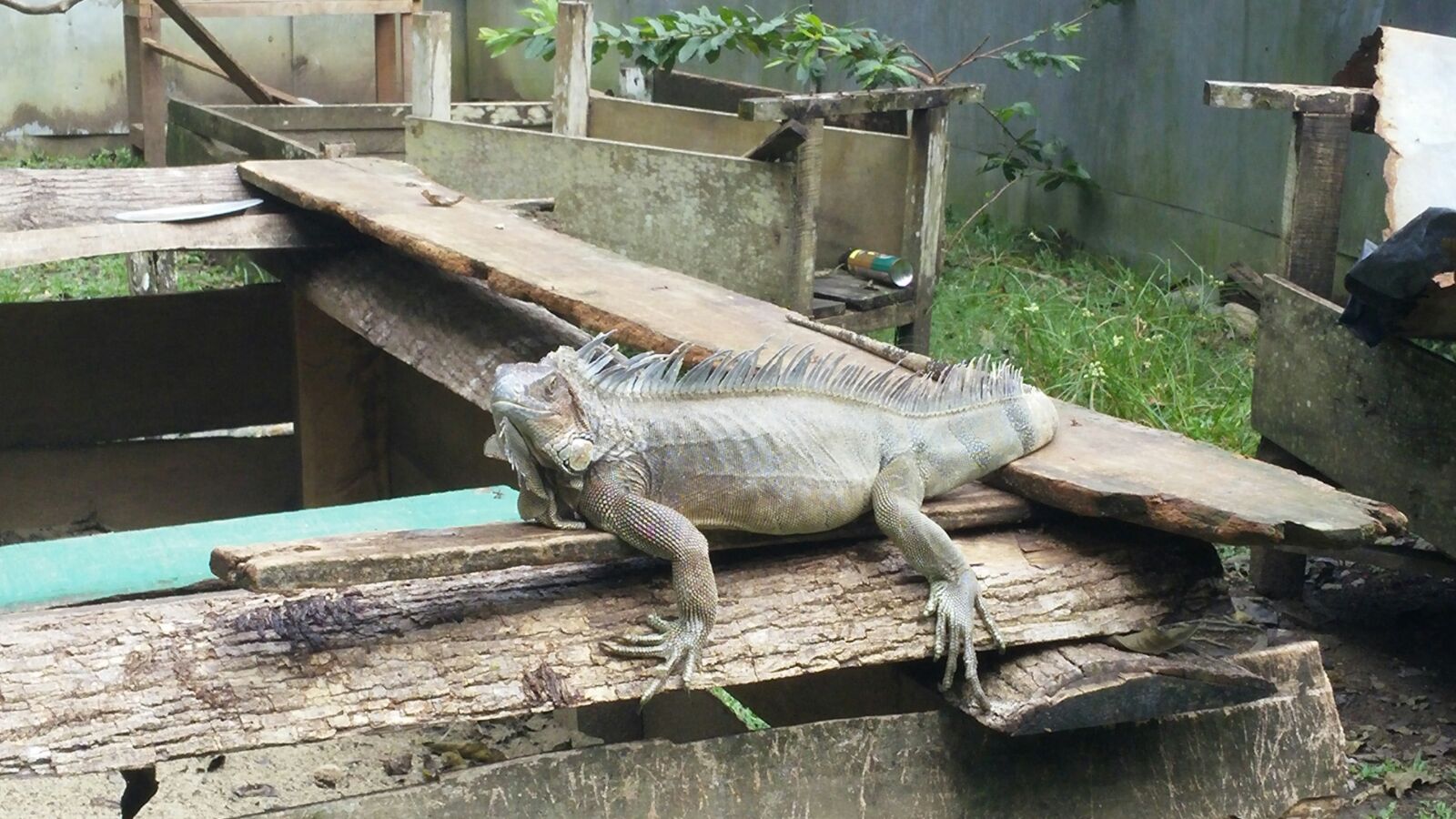
While in Cahuita we also made a short visit to an Iguana Farm and a Cacao House. Green Iguanas were endangered in Costa Rica, so the iguana farm was started as a conservation project by indigenous people. They breed iguanas and take care of them for 2 years. There are many similar projects around central America and as a result, populations have increased!

image

The Cacao House is also run by the indigenous Bri-Bri people, to whom cacao is a very important part of their culture. They use all parts of the cacao bean in their daily life and we really enjoyed learned about it’s multi-uses. They also make some pure cacao chocolate for tourists, so we stocked up!

It’s the first time I’ve ever tried a cacao bean. The bean is covered in a slimy white gel that looked pretty gross but actually tasted delicious, but the bean is very bitter. The beans are dried and roasted and then grinded into a paste. The paste is then boiled and the cacao oil is separated and used as a lotion or butter. It’s great for your skin so I bought a little pot of that as well! The great thing about the chocolate is that we don’t need to worry about it melting because it is pure cacao.

image

On our last day in Costa Rica the sun came out again and we hit the beaches of Puerto Viejo. I loved Puerto Viejo. They have totally embraced the beach life and I felt so content and relaxed there. I really wish we’d spent less time in Cahuita and more time in Puerto Viejo (although this may have been influenced by weather), but there’s no way to know these things in advance.

We rented some beach cruisers and biked along the coast. We spent the afternoon at beautiful Punta Uva Beach. Having just finished our beach hopping in Panama (that will have to be another post), I can conclude that Punta Uva was our favourite beach! It was miles of golden sand and clear water, so we split the afternoon between cooling off in the water and relaxing on the beach.

image

We were sad to leave so much of Costa Rica unexplored, but pura vida, we’ll just have to come back again some day! Onwards to Panama!

Love Maria

The View From The River

Our adventure continues with a rafting excursion, a wildlife hunt, excessive sunscreen and sunburns, and a whole lot of public transit.

We departed Arenal bright and early for a 5:45am transfer to Pacuare River, where we’d be white water rafting for the day. Pacuare River is the best river for rafting in Costa Rica and is rated #5 in the world for best white water rafting! Along with many class I-IV rapids, the river is incredibly scenic.

image

We had a huge rafting group on the day we went, and true to the rest of the trip, when the guide asked the bus who was from Canada, more than half of the bus raised their hands. So if you’re wondering where all the Canadians have gone recently, it’s Costa Rica. We also met two girls from Newfoundland who are making their way through Costa Rica and Panama as well – making them the first Newfoundlanders we’ve met while traveling!

We had an excellent team on the river and managed to keep everyone in the raft throughout the entire day, even through some of the more challenging rapids. Emily was one of our raft captains in the morning and we switched after lunch. The river is incredibly scenic and is surrounded by rainforest on both sides. We saw tons of birds and got out to swim a few times along the way. It was definitely the warmest rafting water I’ve ever swam in!

My favourite part of the day was near the end when the river narrows and flows through a canyon, with huge rock walls surrounding you on both sides. There’s several waterfalls flowing down into the gorge and it was just the most beautiful setting in which to end the day. The only downside was it was a challenge to reapply sunscreen and we both got some pretty bad sunburns.

image

image

Overall the heat has been unreal in Costa Rica and I feel as if I’m constantly fighting a losing battle with the sun. Between the sunscreen and sweat, I’m always coated in an extra 5 layers of grime, so we’re looking forward to our beach time coming up!

After Pacuare we made our way to remote Tortuguero National Park. This was a logical nightmare that eventually paid off, but involved a lot of hours on uncomfortable transit.

Tortuguero is a National Park on the far north Caribbean Coast. It gains it’s name from the 4 species of turtle that travel there every year to lay their eggs on the same beach from which they were born. As such, it is incredibly remote and involved taking a bus to the middle of nowhere, followed by a long boat ride up the river. The park has a number of canals running through it on the interior and borders the Caribbean Coast. The water was really warm, but the most we could do was dip our feet in due to the dangerous riptides offshore.

image

image

On our first night in Tortuguero we took another night walk in hopes of spotting some frogs and lizards. We would have loved to see a turtle of course, but sadly we visited just before leatherback turtle season and were unable to see any. We did see several lizards though, including the Jesus Christ lizard, named for his ability to run across water, and my favourite, the Emerald Basilisk (see picture), who we managed to avoid eye contact with! We haven’t seen much for frogs yet, but we did see a female Gaudy Leaf Frog who is 7 different colours and has red eyes.

image

We had another early morning in Tortuguero to do a canoe ride through the park. Morning is the best time to see animals and we certainly saw a lot! Mostly we saw birds, including many types of herons and kingfishers, but we also so several iguanas, caimans, spider monkeys, and crocodiles. We both loved the spider monkeys, who were extremely active, jumping around from tree to tree.

We left Tortuguero via a different route, but it still involved another long boat ride followed by bus. It was definitely a pain to get there, but it was very peaceful and serene and we loved seeing so much wildlife.

We’re currently south in Cahuita and l we’ll soon be making our way to Panama!

Love Maria