Torres del Paine Backpacking Trip Part II

Despite a long first day of hiking (see Part I), I was determined to visit the suspension bridges and glacier viewpoint north of Refugio Grey. This part of the trail is known as John Gardner Pass and has a reputation as the hardest part of the O-Trek. On the O-trek, hikers come from the opposite direction and have a steep hike over the pass before crossing 3 suspension bridges along the glacier on the descent to Refugio Grey. For those doing the W-trek, it’s common to hike up to either the viewpoint after the second bridge, or all the way to the third bridge. The third bridge was too far for me with my late start, but I was pretty confident I could get to the viewpoint.

I started my hike at 6pm and was making really good time until I got to a mirador just before the first suspension bridge. What I didn’t know is that the Park recommends anyone doing the day hike to start no later than 3pm. I don’t think it’s a hard rule, but it is a good idea from a safety perspective. I ran into a ranger at the mirador and while he was really friendly, he advised me against going to the viewpoint and recommended the first bridge instead. I reassured him I had a “turn-around time” and if I didn’t make it by then, I would come back to avoid hiking in the dark (even though I was prepared and could have hiked in the dark).

20240229_192713
PSX_20240309_220202

He didn’t stop me and I continued up to the first suspension bridge, but the interaction really made me doubt myself. I’d been so confident I had enough time to get to the viewpoint, and now I was second guessing my ability. I know there’s a lot of inexperienced hikers in the park, so these recommendations make sense, but I also have a good self-awareness and I think that because I’m pretty risk adverse, I make good choices.

I decided I had to at least cross the first bridge. It has a big ladder to get up to the top of the bridge and it’s quite intimidating! I held on tight to the rope handles as I crossed to the other side. There were some other hikers returning from their day hike, so I stopped to talk with one guy and told him about my interaction with the ranger. He reassured me that the view was definitely worth it and encouraged me to keep going. Apparently that was all I needed and I quickly took off again, setting my doubts aside.

20240229_184133

I’m really glad I did. My initial instincts had been right and I made it to the viewpoint with enough time to hang out for a bit and still get back to the refugio before dark. This was a case where the Ranger definitely had good intentions, but I was the person who knew my abilities best. I don’t like to break rules in the backcountry (and I definitely don’t advocate for it), but I later confirmed that they are recommendations rather than rules. Technically, everyone who hikes up to the Towers for sunrise is breaking the rules, and that is literally hundreds of people.

It took me an hour and 10 minutes to hike 4km up to the viewpoint. It’s uphill the entire way (~300m in elevation gain), so it was definitely a workout and I did it at a very quick pace. I saw another small group of people just before the second suspension bridge, but I didn’t see anyone for the rest of the evening after that. The viewpoint is located 5 minutes past the second bridge and has a beautiful view of the glacier. What made it even more special was that I had it entirely to myself! I hung out for ~20 minutes and took some selfies before starting my hike back down.

20240229_191708
20240229_184209

It was a lot faster on the way back, but I tried to pace myself because I was completely alone on the trail and didn’t want to get injured. It took me a little under an hour to get back and I arrived at the refugio shortly before 8:30pm. In total, I hiked 19km on day 1, so it made for a long day and I still hadn’t eaten supper!

We ate quickly and got ready for bed, realizing how woefully unprepared we were for the refugios. I’m so used to camping that I forgot we would have electricity and didn’t bring anything to plug my phone into the outlet (just a power bank). Nor did I think to bring shampoo for the shower, because I honestly forgot it was an option. But I still greatly enjoyed a hot shower on my first night before falling asleep.


There were a lot of people doing the same itinerary as us on the W-trek, but most of them do the hike to the suspension bridges on their second morning. The reason I had to cram this hike into my first day was because we had booked a kayaking tour for day 2 instead. It was quite windy, so I was convinced the kayak tour would be cancelled, but to my great surprise, it was scheduled as planned!

20240301_100712

It’s always windy in Torres del Paine, so it takes a fair bit of wind for them to cancel the tours. Because of this, I was worried that the tour company, Bigfoot Patagonia, didn’t have a very good safety culture. I’m happy to report that is far from the truth! They pre-emptively cancelled the afternoon tour and both tours the following day because it was forecasting high winds, but our morning tour was what they consider “borderline”, so they decided to run it. For additional safety, they increased their guide-to-tourist ratio from 1 guide per 2 kayaks to 1 guide per kayak, meaning we had a dedicated tour guide for just me and Seth.

It was almost 40km/h winds, which I would never even consider going out in in Canada, but our guide was fantastic! Me and Seth were in a large double boat, so it was very stable. I doubt I’ll ever get to kayak in such windy conditions again, so we embraced it and had a lot of fun. Our guide is Chilean, but in Patagonia’s offseason, he does kayak guiding on Vancouver Island, so he was excited to learn we lived in Vancouver and we had a lot of fun talking about different trips!

PSX_20240408_102829
20240301_103441

The tour leaves from Bigfoot Patagonia’s base at Playa Grey and you kayak around the headland to the ice garden, which is a little bay where ice from the glacier gets caught. We paddled around the garden and along the shore to some waterfalls draining down the mountain. You can’t go too close to the glacier for safety reasons, but the wind briefly died down for ~10 minutes and we took the opportunity to paddle into the channel for a fantastic view of the glacier. The calm didn’t last long, but we got an excellent tailwind on the way back to base. If you ever get the chance, I would highly recommend this tour. We debated between Glacier Grey and Perito Moreno for our kayaking adventure, but I’m glad we picked Grey. The balconies at Perito Moreno are so close to the glacier already that kayaking seemed unnecessary.

20240301_104834

We finished our tour just before lunch and decided to eat at the refugio. It absolutely poured while we were cooking, so the second it stopped, we hit the trail to cover as much distance as possible before the rain re-started. Seth was still popping pepto-bismal, but overall feeling a lot better than the previous day. We only had to hike 11km back to Paine Grande, so we knew exactly what was ahead of us.

We were much faster on Day 2 and made it all the way to the mirador, which is the halfway point, before the rain returned. Pretty much the entire hike is exposed, but there are small treed sections, so we took a break in the forest when it started drizzling. It rained on and off through the rest of the afternoon, but it never heavy enough to really get wet. We ended up doing the full hike in just over 4 hours, so we were about an hour faster than the previous day, arriving at Refugio Paine Grande around 4pm.

20240301_144439

Because Paine Grande is one of the main arrival/departure points for hikers, it’s one of the flagship refugios. It’s an absolutely gorgeous building since its location next to Lago Pehoe makes it easier to transport supplies. The other refugios are much more remote, and as a result, the structures and facilities are more rudimentary. Refugio Paine Grande has modern architecture and huge windows looking towards the lake and the horns.

We didn’t really get to know the other campers in our room at Grey since I spent such limited time in the room. Two of our bunkmates at Paine Grande were from Hong Kong and halfway through their O-trek, while the other two were solo American and Canadian hikers who were doing the W-trek in the opposite direction. I got some good tips from them for our hike to Mirador Britannico the following day.

20240303_111245
20240301_162232

We took it easy for the rest of the day and enjoyed the views before making supper. I mentioned in my last post that there are very strict rules about where you are allowed to cook in the park, and this was probably one of the most annoying challenges. What’s really unique about Torres del Paine is that, you don’t actually have to bring food with you. If you really want to pack light, you can pre-order your meals at every refugio and get a “packed lunch” to go. A lot of the people staying at the refugio opted to eat all their meals in the dining hall, as well as some campers, but it is very expensive ($100 per day, per person).

What I found annoying is that the refugio’s only cater to people paying for meals. The cost was one reason why we opted to bring our own food, but it was also because I love dehydrating and prefer to eat comfort food in the backcountry. But if you want to cook your own food, your only option is to use the campground shelter. It’s not the end of the world, but some of the shelters were very crowded and cold. It was also really good that we brought all cold-soak lunches, because there’s no cooking allowed outside the shelters (because of the fire risk), so you can’t heat or cook food for lunch unless you’re at a campground. Regardless, it was our last night staying in a refugio, so we took advantage of the hot showers and got a good night’s rest! Check back for Part III.

PSX_20240408_102116
20240302_085936

An Expensive Welcome to Argentina

After a very sad winter (weather-wise), I was thrilled to have a big trip on the agenda for mid-February to early March! Me and Seth started travelling again last year with a visit to my cousin, who is studying in Finland. We had an incredible time, so I convinced Seth that 2024 was the year to finally cross a major trip off my bucket list – hiking in Patagonia! I still had some banked vacation time from 2020, so we booked off 3 weeks to explore around Southern Argentina and Chile.

In order to get to Patagonia, we had to go through some major cities first, and like most plane trips these days, it was chaotic. We booked an Air Canada flight to Buenos Aires through Toronto. We planned to stay for 2 days before catching a flight to Patagonia, which is the region that encompasses the southern portion of both Argentina and Chile.

The trip almost got off to a rough start. We weren’t due to leave Vancouver until 1pm, and I woke up early on Saturday morning to an email from Air Canada saying our flight had been cancelled and we’d been rebooked 2 days later through LONDON HEATHROW. I know it’s an automated re-booking, but it’s just unfathomable to me why any program would ever re-book a flight from Western Canada to South America, with 2 crossings of the Atlantic Ocean.

20240218_154350
20240219_123431

We would have lost our entire 2 days in Buenos Aires with this itinerary (and maybe even our flight to Patagonia), but fortunately, with a little detective work we were able to solve the problem. It was only our flight from Vancouver to Toronto that had actually been cancelled, so we re-booked that portion of the flight 2 hours earlier and rushed to get to the airport in time to make the original booking. Fortunately I’d woken up early, otherwise we might have had a really bad start to the trip.

Our flight did still end up being a bit delayed and we arrived in Buenos Aires ~4 hours late, just in time for a pretty sunset. We had very limited time in the city and there was a lot to explore! I would have preferred to spend a few more days in Buenos Aires, but I had to limit myself because our trip was primarily about Patagonia and I’m committed to the idea of returning to visit Northern Argentina and Chile on a subsequent trip.

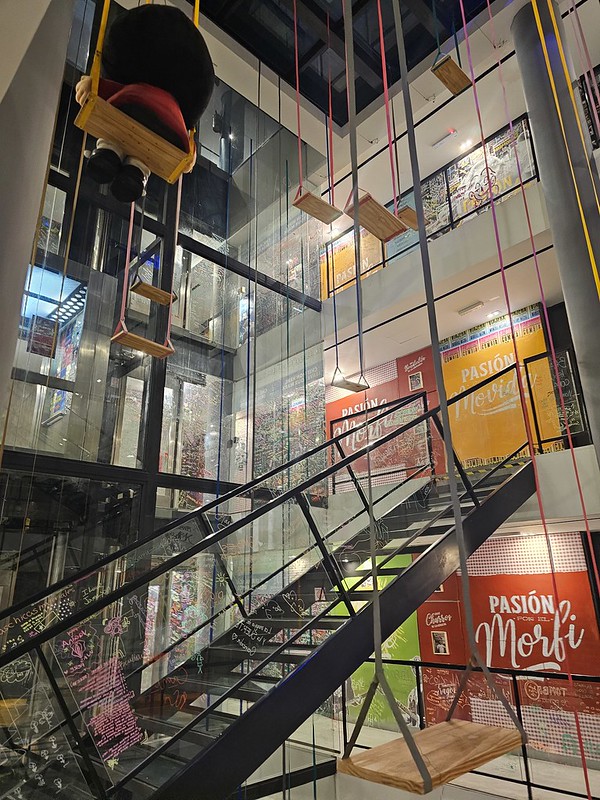
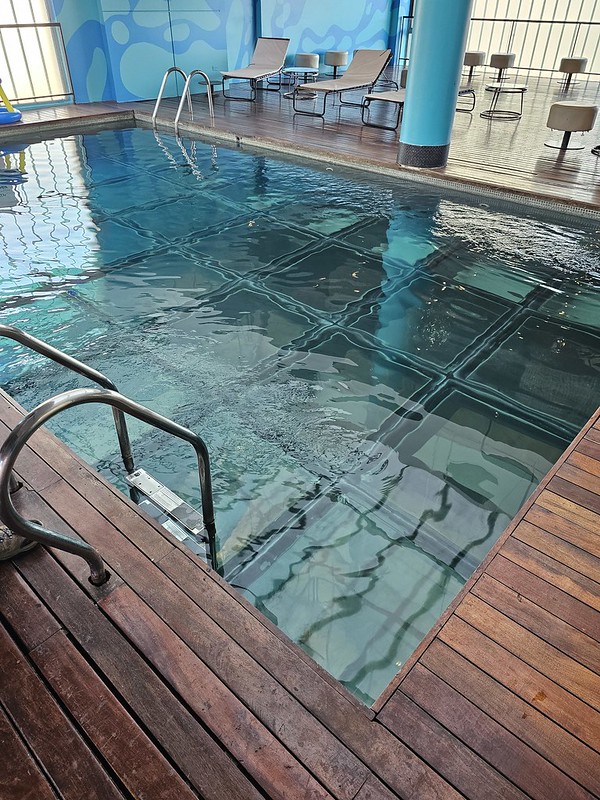
There are a lot of neighbourhoods in Buenos Aires and I had a hard time trying to decide where to stay. I was mostly between San Telmo (for location) and Palermo (for atmosphere). I’d heard mixed reviews about how safe San Telmo was, but ultimately decided on a hip hostel because the location was so ideal. It ended up being great! We didn’t really go out after dark, but I never felt unsafe in San Telmo and our hostel was really nice. We had a private room, but our hostel had a lot of community space, including a bar and 2 pools. The entire front atrium is made of glass with crisscrossing glass staircases (very Harry Potter). The coolest part was that it had a glass bottom floor pool on the roof! So the atrium was always kind of shimmery from the light reflecting off the pool, through the glass floor, and across the walls. It was really neat.

20240218_222150
20240219_175331

With limited time, we could only do a few activities in Buenos Aires. This was further exacerbated by the fact that we ended up having major money problems in Argentina that we needed to solve before leaving the capital.

Argentina’s currency is the Argentine peso, which is problematic because it is a very volatile currency that has seen rapid inflation and de-valuing of the currency in recent years. It seems to be a bit of a pariah currency internationally and we couldn’t get any of it in Canada before we left. For this reason, Argentinians prefer to try and keep their savings in US currency because it’s much more stable, so we brought several hundred dollars of USD with us, and assumed we could get pesos from ATM’s once we arrived.

Argentina’s main problem is that the official government rate from USD to pesos is about a 3rd of the actual rate. So ATM’s are not really an option because they give you a terrible conversion rate; they can only dispense a maximum of ~$20USD at a time; and they charge you high fees to take the money out. So to take out the equivalent of $20USD in pesos from an ATM would likely cost you more like $60USD. However, because Argentinians prefer to keep their savings in USD, there’s incentive for them to change money on the street. So there’s a separate conversion rate known as the “blue rate”, which people use colloquially to change money. So stores will indicate that they will accept USD at the “blue rate” or you can exchange cash in Argentina’s thriving black market.

20240220_115711

This seemed completely wild to me and I’m still a bit shocked that we actually did it. Honestly, I would have been good to just exchange the US currency we brought and pay for everything else on card, but our money problem was further exacerbated by the fact that Argentina is a cash based economy and we heard horror stories about more remote towns not accepting credit cards. There’s definitely a preference for cash and many stores will list their retail items at two different prices: a “cash rate” and a “card rate”. I was very worried we would get to Patagonia and not be able to use our credit cards, leaving us with no way to get any more money than the USD we’d brought with us.

This turned out to be very much not the case. You can pay for most things in Argentina on credit card, even in Ushuaia, El Calafate, and El Chalten. They are all small towns, but tourism is their main source of revenue, so they have adapted to accept credit cards. It does cost you a bit more to pay on card because of the fees – which used to be exorbitant as well, but were regulated in 2022 – so while cash is still king, the rate I got on my visa was fine. It’s pretty much just street markets, buses, and taxis where you need cash. But even that was hit or miss. Lots of taxis do take card, as do some of the major bus depots. I think this cash myth is perpetuated around the country because paying with cash on the blue rate is the most economical way to spend money and most Argentinians can’t imagine having the luxury of paying a bit more to simplify your life. So I recognize that that is a privilege we had as tourists.

But I didn’t know most of this when I arrived in Buenos Aires, so we immediately became stressed out about how to obtain enough cash for the entirety of our time in Argentina. We exchanged some of our USD on the black market, but even then we got scammed. It sounds shady, but it’s a pretty accepted practice and there’s a street in Buenos Aires where you can go to change money. We found someone and he led us back to an apartment building where he had set up a bit of a secret office. He only let one of us go in, so Seth went and changed half of our money. The largest bill Argentina has is the 1000 peso, which is worth ~$1USD. So it’s basically the equivalent of everyone in America walking around and paying for everything with stacks of $1 bills. To manage their stacks of cash, a lot of people and businesses use electronic bill counters. The guy we were buying from counted out the money for Seth using the machine, but when we counted the bills later, they had clearly rigged the it and we got short-changed.

20240219_101738
20240219_114707

It turns out, the most reliable way to get money is through Western Union. I only have good things to say about Western Union after this experience because they offer a great rate and you can basically send yourself money in Canada and pick it up in Argentina in pesos. So it’s the easiest way to get your hands on cash without getting scammed. The problem is, we couldn’t send ourselves money once we got to Argentina. So my Mom ended up going into a Western Union in St. John’s and sent us all the money we needed and we picked it up in cash in Buenos Aires. It’s still somewhat challenging because a lot of the small branches run out of cash, but there’s a few big branches, including one near our hotel, that was very reliable. So after much difficulty, we finally got enough cash for the trip and I was able to breathe easy.

Mostly I’m relieved we started the trip in Buenos Aires because I think this would have been much more difficult if we’d started the trip in El Calafate or Ushuaia. My recommendation for anyone going is to wire yourself a ton of money through Western Union before the trip, pick it up in Buenos Aires, and avoid the blue rate altogether. We ended up keeping the rest of our USD for an emergency. We didn’t exchange it for pesos and ended up just taking it home. Maybe not ideal if you’re European, but as a Canadian, I don’t mind having some USD around.

So it was a hectic and stressful welcome to Argentina, but fortunately the trip improved a lot from there! Check back next week to hear about the fun things we got up to Buenos Aires and make sure you adequately research the money situation if you decide to visit Argentina! Economically, Chile is much more stable, so it was only Argentina where we had issues.

Ski Resort Series: Mount Norquay

Mount Norquay was the last ski resort we visited while in the Rockies. It’s the smallest of the three and I’d heard it is quite steep, so we decided to leave it until last in case we wanted to re-do one of the others instead. Although, really I knew we’d end up going because I wanted to be able to say I’d skied all of the Big 3.

Norquay may be the smallest, but it’s the closest to Banff town. You don’t even need to get on the highway, it’s just a 15 minute drive along switchbacks up to the base of the mountain. Because it’s smaller, it seems like Norquay has tried to diversify itself and it also has night skiing and snow tubing. I ended up liking it a lot more than I thought I would! Dare I say I maybe even preferred it over the infamous Lake Louise? It may have been because we got really good conditions at Norquay – about 10-15cm of fresh powder the night before – so I felt a little more adventurous with the soft powder base.

PSX_20220322_180106

There’s only 2 big lifts at Norquay and 2 smaller lifts. The North American lift is located on the front of the mountain and is almost entirely black runs. Like I said, Norquay is a pretty steep mountain and there were a lot of moguls on it when we visited, so we opted not to ski that lift at all. Instead we made our way over towards the far lift, which is called Mystic, and had a great day skiing over there!

PSX_20220307_191032

If you don’t like steep runs, then I definitely wouldn’t recommend this mountain. Even the blue runs were quite steep, but the fresh powder helped. We did pretty much every run on the Mystic side of the mountain and had a great time working on our mogul skiing skills. There are a few black runs down the centre of the lift with a lot of moguls, but since there was so much powder, which makes for gentle falls, we decided to give them a try. I don’t mind moguls at all, but I definitely like having good conditions for them.

PSX_20220313_161653

Later in the day we did a few runs on the Spirit Chair as well, which I really liked even though it has shorter runs. It was the best visibility day we had all week, so there were beautiful views of the surrounding mountains throughout the day (though still limited blue sky).

We decided not to stick around for night skiing because it’s really only the small cascade chair that is lit. I definitely wouldn’t recommend going and paying for night skiing because it’s so limited, but if you already have a day pass it would be fun to stick around for it!

20220304_174136

Instead we decided to go snow tubing because it was included in our pass. Tubing was fun, but I think they sell too many tickets, so it’s a really long wait to take the magic carpet up to the top. The first run wasn’t too bad, but more and more people kept showing up and since the tickets hadn’t cost anything, we decided to move on after 3 runs.

So even though Norquay is the smallest of the three, I still think it’s worth visiting, and thanks to the excellent conditions, we ended up having a great time!

Banff-Norquay_pistemap