Two days in Buenos Aires

My last post ended up being a step by step instructional on how not to get scammed out of your money in Argentina, so now let’s talk about the actual fun things we did in the city! Our first activity in beautiful Buenos Aires was a walking tour to try and get a lay of the land and learn a bit of the city’s history. As with most major cities these days, there’s a free walking tour that leaves daily. Buenos Aires is such a big city that they actually have multiple tours, we decided to do one of the Retiro and Recoleta neighourhoods, but I’d really like to the do the city center tour as well.

I find free tours are always excellent because they rely solely on tips (so tip well)! I’ll admit, our tour guide was a bit long winded and the tour was close to 4 hours, which is a bit on the long side, but we learned a lot of interesting history that served us well through the rest of the trip. Probably the most interesting tidbit was about the Falklands War between Argentina and Great Britain in the 1980’s. GB claims ownership over the Falklands, which Argentina disputes, so in 1982, they invaded the Falkland Islands and were at war with Britain for 10 weeks until Argentina surrendered.

20240219_113057

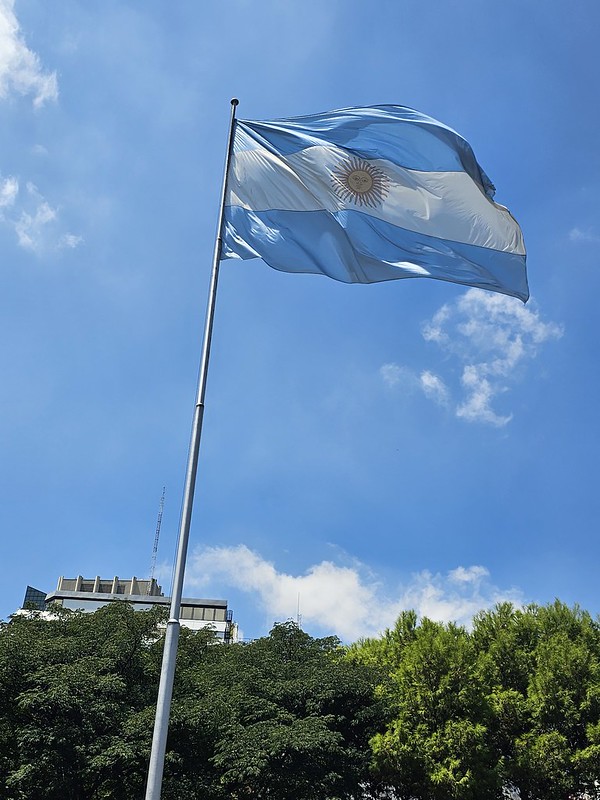
What was interesting wasn’t so much the war, but rather all the government propaganda that we observed about it after the fact. The Falkland Islands are known as Islas Malvinas in Argentina and even though it’s still a part of Great Britain – and hundreds of Argentinians lost their lives in the war – there is still (40 years later) government-published propaganda all over the country stating “las Islas Malvinas son Argentinas”. I’m definitely not going to make any sort of political comment on the sovereignty of the islands, but it was interesting to observe public opinion throughout Argentina. It reminded me a little of Quebec trying to claim Labrador as part of Quebec on contemporary maps, even though Labrador is a part of the great province of Newfoundland and Labrador! But I digress, lol.

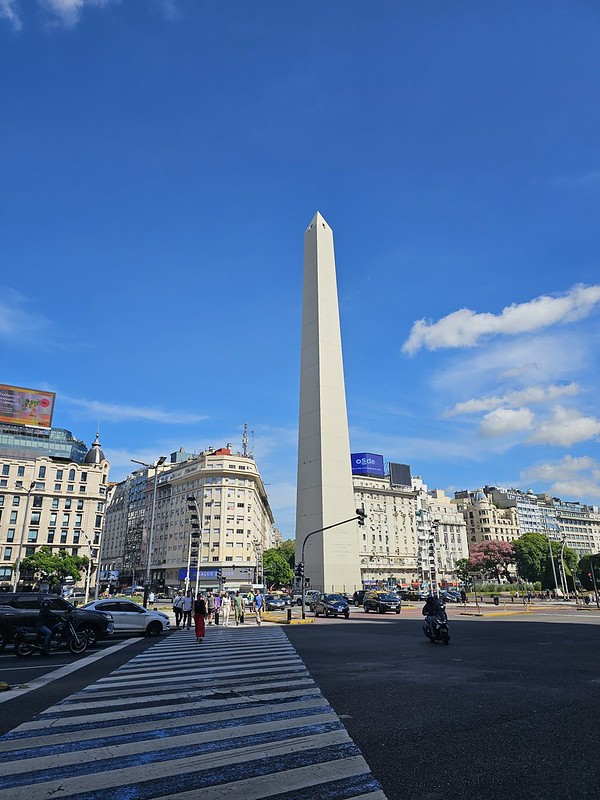
Buenos Aires is a city that has been heavily influenced by the French (architecturally anyways). We witnessed the same thing in Santiago. Even though both countries were colonized by the Spanish, they’ve been independent since 1816 and 1810 respectively. So quite a long time. Traditionally Buenos Aires was considered an aristocratic city and was very wealthy, but as we saw with the country’s inflation issues, that’s no longer the case. The thing I thought was missing from the Buenos Aires walking tour (that we got on the Santiago tour), was a discussion of the indigenous history. But they love to brag about Avenido 9 de Julio (the widest street in the world) and how they won the most recent world cup! Messi definitely has a presence in the city!

20240219_123453
20240219_134151

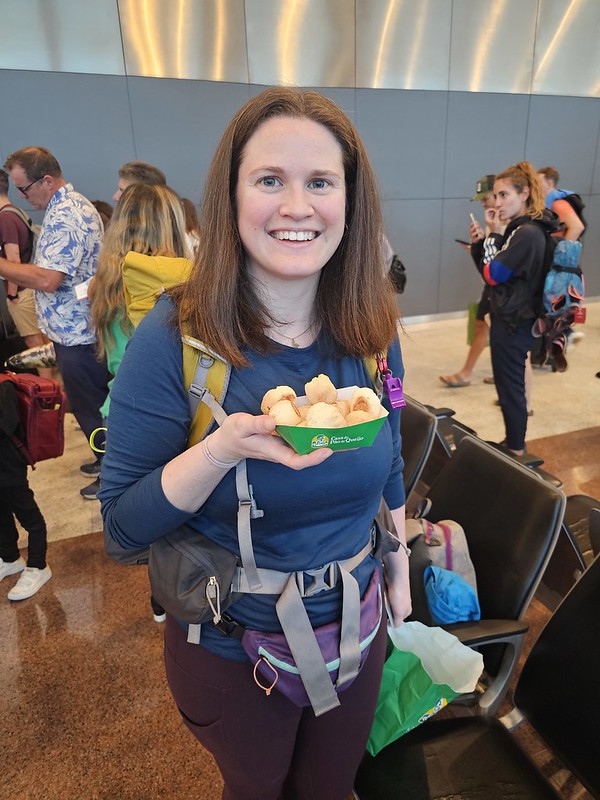
So the two neighbourhoods we visited looked very wealthy and European. We ended the tour at the gates of the Recoleta Cemetery, which is basically a sub-city of mausoleums. We decided to have lunch first and I had my first serving of risotto and seafood. The food is definitely interesting in Buenos Aires (and Argentina in general). I was expecting a more vibrant food scene in Buenos Aires, but to be honest, it’s a lot of hamburgers and pizza. Seafood was easy to come by (and for a very good price), as was risotto, which is a personal favourite of mine. Otherwise, the only thing in Buenos Aires that seemed at all “Argentinian” was the empanadas. But they were unbelievably delicious, so I made it a point to track down one a day for a snack during the rest of my time in Argentina.

The cemetery really did feel like a city of the dead. Some of the mausoleums were very elaborate, while others were decrepit or downright creepy. You have to pay to go in, but it’s clear the graves are only being managed by surviving family and not the city. Eva Peron’s (Evita) seemed to be the most popular one, but it’s a bit lackluster in comparison to some of the more elaborate monuments. The whole place is a bit spooky, but it was a cool experience.

20240219_150808
20240219_152247

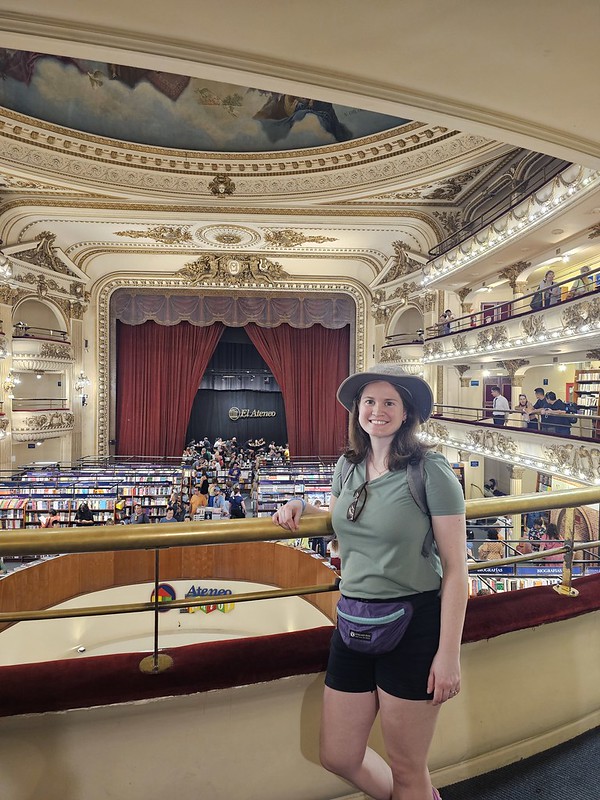
The main thing I wanted to do during my short time in Buenos Aires was to visit El Ateneo Grand Splendid bookstore. El Ateneo is located in a former theatre and was named as the “the most beautiful bookstore in the world” by National Geographic in 2019. As an avid book lover, I think every bookstore is beautiful, but architecturally, this one definitely has an edge over others! Plus there’s a really cute café located at the back of the store on the old stage.

We actually ended up visiting a lot of bookstores while in South America. What was most striking to me – compared to some of my other travels – was that because Spanish is so widely spoken, pretty much every bookstore we went to stocked Spanish books exclusively. Comparatively, when I visited Finland and Vietnam, there were a lot more English books. It was still fun to visit the bookstores, but it felt a little like being starving at a feast!
20240219_161255
20240219_161004

After the bookstore, we returned to our hostel for a leisurely swim in the rooftop pool and enjoyed a free drink at the bar before walking nearby to our tango show for the evening. There are a huge number of tango shows in the city and we picked the El Querandi dinner and tango show, mostly because it was located close to our hostel. But it ended up being a great show! The dinner was fantastic – they had all local dishes, so I sampled the humita, which is a local corn dish from Northern Argentina, and the Patagonia stew, which features lamb. The show was also great and takes you through the history of tango, showcasing different styles of how tango has evolved in the past 100 years. In my opinion, it’s just gotten sexier over time!

20240219_232355

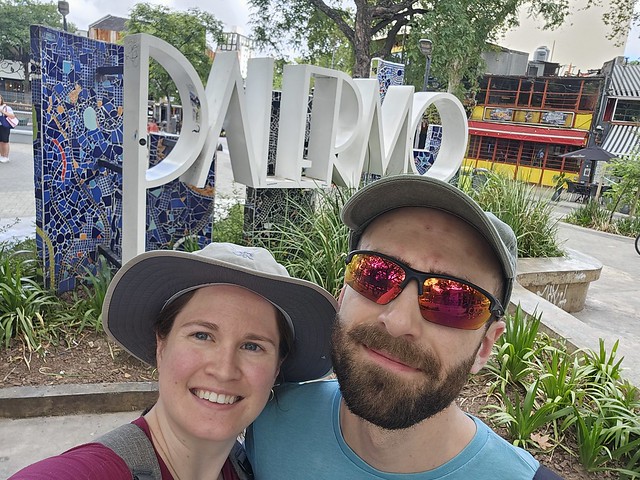
On day 2, I was determined to visit Palermo. I’m not sure why I was so obsessed with visiting Palermo over other parts of the city, but I heard it was really nice and it drew my attention. First we did a bit of walking around city centre to see the Playa de Mayo and Casa Rosada, and then took a bus over to Palermo. To be honest, I thought Palermo was a bit of a letdown. It’s a nice enough area, with leafy streets and lots of restaurants and shops. We went for a walk all over the neighbourhood, but ended up just getting acai bowls for lunch. We took the bus back to San Telmo a bit early and decided to visit the San Telmo Market instead. I really liked the market! It had a lot of food options and I had the best empanada’s of my entire trip!

And that was pretty much it for our time in Buenos Aires. Like I said, there’s a lot of attractions that we didn’t do. It’s a very large city and our time there was so limited. I would have loved to sample some more wine while we were there, but it will have to wait for a future trip to Mendoza. We got a taxi to the airport in the late afternoon to catch our flight to Patagonia. Our first stop was to Ushuaia, the most southern city in the world! Check back for the next part!

20240220_104032
20240220_143216

An Expensive Welcome to Argentina

After a very sad winter (weather-wise), I was thrilled to have a big trip on the agenda for mid-February to early March! Me and Seth started travelling again last year with a visit to my cousin, who is studying in Finland. We had an incredible time, so I convinced Seth that 2024 was the year to finally cross a major trip off my bucket list – hiking in Patagonia! I still had some banked vacation time from 2020, so we booked off 3 weeks to explore around Southern Argentina and Chile.

In order to get to Patagonia, we had to go through some major cities first, and like most plane trips these days, it was chaotic. We booked an Air Canada flight to Buenos Aires through Toronto. We planned to stay for 2 days before catching a flight to Patagonia, which is the region that encompasses the southern portion of both Argentina and Chile.

The trip almost got off to a rough start. We weren’t due to leave Vancouver until 1pm, and I woke up early on Saturday morning to an email from Air Canada saying our flight had been cancelled and we’d been rebooked 2 days later through LONDON HEATHROW. I know it’s an automated re-booking, but it’s just unfathomable to me why any program would ever re-book a flight from Western Canada to South America, with 2 crossings of the Atlantic Ocean.

20240218_154350
20240219_123431

We would have lost our entire 2 days in Buenos Aires with this itinerary (and maybe even our flight to Patagonia), but fortunately, with a little detective work we were able to solve the problem. It was only our flight from Vancouver to Toronto that had actually been cancelled, so we re-booked that portion of the flight 2 hours earlier and rushed to get to the airport in time to make the original booking. Fortunately I’d woken up early, otherwise we might have had a really bad start to the trip.

Our flight did still end up being a bit delayed and we arrived in Buenos Aires ~4 hours late, just in time for a pretty sunset. We had very limited time in the city and there was a lot to explore! I would have preferred to spend a few more days in Buenos Aires, but I had to limit myself because our trip was primarily about Patagonia and I’m committed to the idea of returning to visit Northern Argentina and Chile on a subsequent trip.

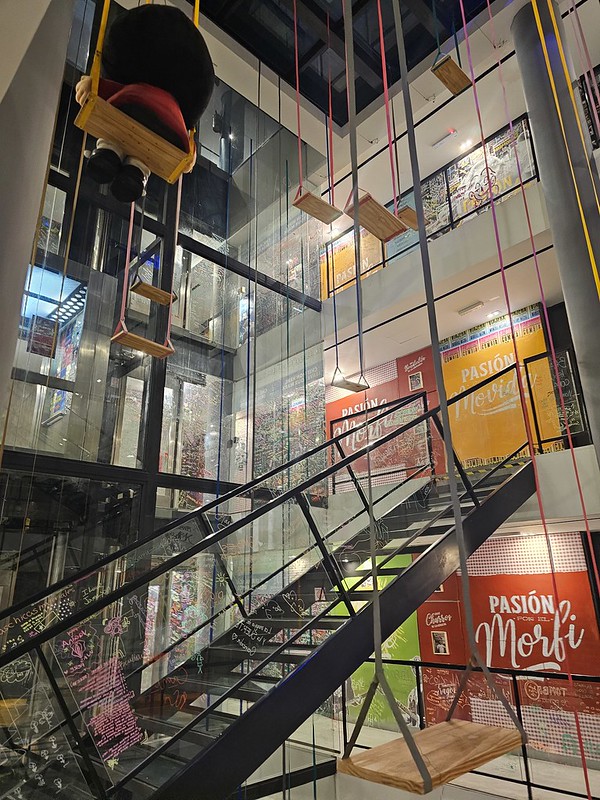
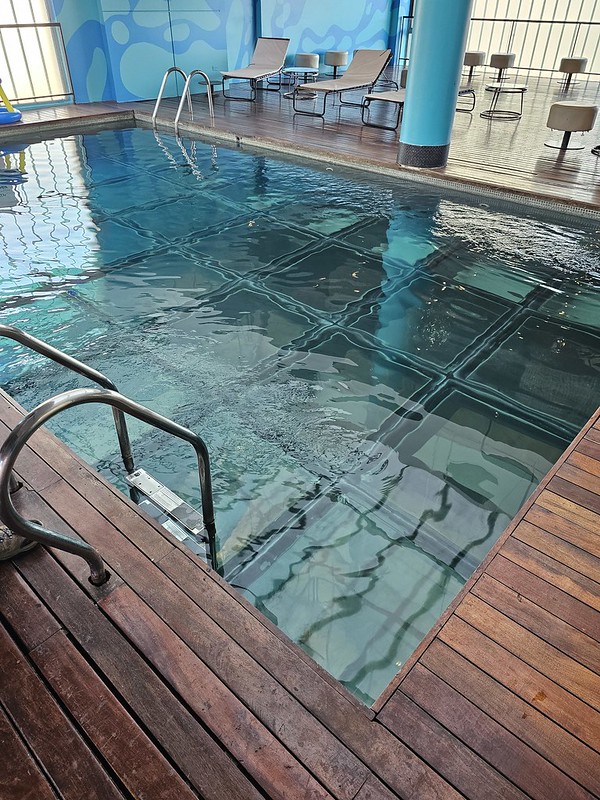
There are a lot of neighbourhoods in Buenos Aires and I had a hard time trying to decide where to stay. I was mostly between San Telmo (for location) and Palermo (for atmosphere). I’d heard mixed reviews about how safe San Telmo was, but ultimately decided on a hip hostel because the location was so ideal. It ended up being great! We didn’t really go out after dark, but I never felt unsafe in San Telmo and our hostel was really nice. We had a private room, but our hostel had a lot of community space, including a bar and 2 pools. The entire front atrium is made of glass with crisscrossing glass staircases (very Harry Potter). The coolest part was that it had a glass bottom floor pool on the roof! So the atrium was always kind of shimmery from the light reflecting off the pool, through the glass floor, and across the walls. It was really neat.

20240218_222150
20240219_175331

With limited time, we could only do a few activities in Buenos Aires. This was further exacerbated by the fact that we ended up having major money problems in Argentina that we needed to solve before leaving the capital.

Argentina’s currency is the Argentine peso, which is problematic because it is a very volatile currency that has seen rapid inflation and de-valuing of the currency in recent years. It seems to be a bit of a pariah currency internationally and we couldn’t get any of it in Canada before we left. For this reason, Argentinians prefer to try and keep their savings in US currency because it’s much more stable, so we brought several hundred dollars of USD with us, and assumed we could get pesos from ATM’s once we arrived.

Argentina’s main problem is that the official government rate from USD to pesos is about a 3rd of the actual rate. So ATM’s are not really an option because they give you a terrible conversion rate; they can only dispense a maximum of ~$20USD at a time; and they charge you high fees to take the money out. So to take out the equivalent of $20USD in pesos from an ATM would likely cost you more like $60USD. However, because Argentinians prefer to keep their savings in USD, there’s incentive for them to change money on the street. So there’s a separate conversion rate known as the “blue rate”, which people use colloquially to change money. So stores will indicate that they will accept USD at the “blue rate” or you can exchange cash in Argentina’s thriving black market.

20240220_115711

This seemed completely wild to me and I’m still a bit shocked that we actually did it. Honestly, I would have been good to just exchange the US currency we brought and pay for everything else on card, but our money problem was further exacerbated by the fact that Argentina is a cash based economy and we heard horror stories about more remote towns not accepting credit cards. There’s definitely a preference for cash and many stores will list their retail items at two different prices: a “cash rate” and a “card rate”. I was very worried we would get to Patagonia and not be able to use our credit cards, leaving us with no way to get any more money than the USD we’d brought with us.

This turned out to be very much not the case. You can pay for most things in Argentina on credit card, even in Ushuaia, El Calafate, and El Chalten. They are all small towns, but tourism is their main source of revenue, so they have adapted to accept credit cards. It does cost you a bit more to pay on card because of the fees – which used to be exorbitant as well, but were regulated in 2022 – so while cash is still king, the rate I got on my visa was fine. It’s pretty much just street markets, buses, and taxis where you need cash. But even that was hit or miss. Lots of taxis do take card, as do some of the major bus depots. I think this cash myth is perpetuated around the country because paying with cash on the blue rate is the most economical way to spend money and most Argentinians can’t imagine having the luxury of paying a bit more to simplify your life. So I recognize that that is a privilege we had as tourists.

But I didn’t know most of this when I arrived in Buenos Aires, so we immediately became stressed out about how to obtain enough cash for the entirety of our time in Argentina. We exchanged some of our USD on the black market, but even then we got scammed. It sounds shady, but it’s a pretty accepted practice and there’s a street in Buenos Aires where you can go to change money. We found someone and he led us back to an apartment building where he had set up a bit of a secret office. He only let one of us go in, so Seth went and changed half of our money. The largest bill Argentina has is the 1000 peso, which is worth ~$1USD. So it’s basically the equivalent of everyone in America walking around and paying for everything with stacks of $1 bills. To manage their stacks of cash, a lot of people and businesses use electronic bill counters. The guy we were buying from counted out the money for Seth using the machine, but when we counted the bills later, they had clearly rigged the it and we got short-changed.

20240219_101738
20240219_114707

It turns out, the most reliable way to get money is through Western Union. I only have good things to say about Western Union after this experience because they offer a great rate and you can basically send yourself money in Canada and pick it up in Argentina in pesos. So it’s the easiest way to get your hands on cash without getting scammed. The problem is, we couldn’t send ourselves money once we got to Argentina. So my Mom ended up going into a Western Union in St. John’s and sent us all the money we needed and we picked it up in cash in Buenos Aires. It’s still somewhat challenging because a lot of the small branches run out of cash, but there’s a few big branches, including one near our hotel, that was very reliable. So after much difficulty, we finally got enough cash for the trip and I was able to breathe easy.

Mostly I’m relieved we started the trip in Buenos Aires because I think this would have been much more difficult if we’d started the trip in El Calafate or Ushuaia. My recommendation for anyone going is to wire yourself a ton of money through Western Union before the trip, pick it up in Buenos Aires, and avoid the blue rate altogether. We ended up keeping the rest of our USD for an emergency. We didn’t exchange it for pesos and ended up just taking it home. Maybe not ideal if you’re European, but as a Canadian, I don’t mind having some USD around.

So it was a hectic and stressful welcome to Argentina, but fortunately the trip improved a lot from there! Check back next week to hear about the fun things we got up to Buenos Aires and make sure you adequately research the money situation if you decide to visit Argentina! Economically, Chile is much more stable, so it was only Argentina where we had issues.

A Sunny Welcome to Lapland

We had an early departure from Tallinn for a flight to the far north of Finland. We had a layover in Helsinki, where we were joined by Katie and 2 of her friends, before flying to Rovaniemi. It was a sunny day from the air, but a thick layer of clouds hung over Rovaniemi and there was a fresh coat of snow on the ground and trees. I picked up my rental car, which was a tiny Toyota Yaris with studded tires, and we did our best to cram 5 people, 2 suitcases, and 5 backpacks into it – not an easy feat!

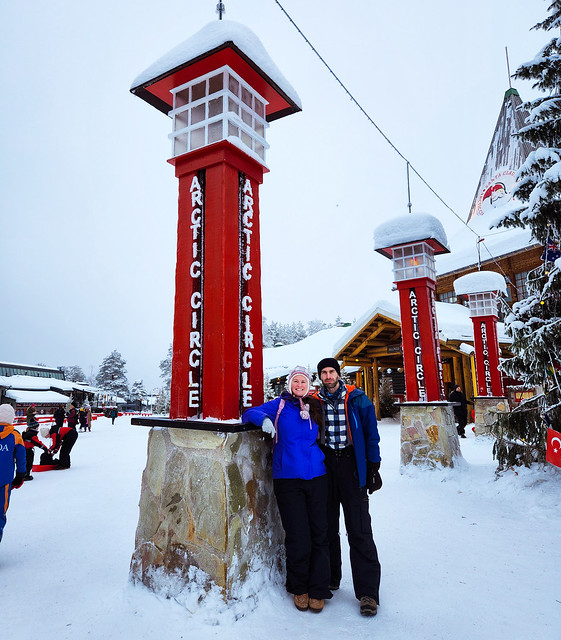
Rovaniemi is located right on the Arctic Circle and it’s a very popular tourist destination. I haven’t seen any stats about Finland’s tourism, but I’d argue that it’s probably stronger in the winter than in the summer, at least in the north. Lapland is a large region that dominates Finland’s North, attracting tourists who want to visit a snowy wonderland, see the northern lights, and participate in a range of traditional winter activities. Unlike Norway and Sweden, which are quite mountainous, Lapland is pretty flat and is characterized more by trees and barrens.

PSX_20230228_082849

In general, Finland actually reminded me a lot of Newfoundland. While it definitely has more topsoil than “the Rock”, the terrain is really similar. Finland in Finnish is called Soumi, which loosely translates to Swamp Land, so it boasts a lot of the same boggy mosses and lichens as Newfoundland. Lapland is filled with elk and reindeer, whereas Newfoundland has moose and caribou – but the most notable is the berries. Lingonberries and cloudberries are incredibly common and popular in Finland, which reminded me a lot of home, where they’re known as partridgeberries and bakeapple.

While maneuvering the luggage into the car, the clouds started to break up and they completely transformed the landscape in no time. Where it was cloudy and snowy when we arrived, the sun filled the sky, sparkling on the fresh snow. We were staying about 15 minutes outside of Rovaniemi in a quaint little cabin in the woods. It wasn’t very big and only had one bedroom, but there were 2 futons in the living room, a toasty fireplace, and a sauna.

PSX_20230228_185550

It was around 2pm in the afternoon, so we were all hungry for lunch and immediately returned to Rovaniemi in search of food. We opted for a chicken and waffles restaurant called 21, which was delicious and filled our bellies for exploring. Everyone was in search of some warmer items for the -20 degree weather we were expecting, so we set off wondering around town to do some shopping. It was about -10 degrees, which we thought wouldn’t be too bad for walking around in the sun, but the cold felt different in Lapland and I immediately wished for a few more layers. I may just be a wuss from living in Vancouver for the past 10 years, but we did get used to it over time.

Rovaniemi is a quirky town. Its big claim to fame is that it’s the “home of Santa Claus” and they’ve definitely leaned into the marketing. We passed everything from Santa’s “city office”, to “Santa’s Hotel”, to “Santa’s Luxury Boutique”, to my personal favourite, “Santa’s Donor Kebab”. We ended up at the Kemijoki River, which was mostly frozen over, and went for a very chilly walk along the riverbank, enjoying blue hour as the sun went down and the frost sparkled on the trees. When it started to get dark, we made a stop into the grocery store for some breakfast foods and pizzas before heading back to the cabin for the night.

PSX_20230228_230421

We spent the evening playing cards while periodically checking outside for the aurora. I had downloaded a bunch of aurora apps for the trip, the best of which was definitely “My Aurora Forecast & Alerts”. The forecast is indicated using KP, which measures geomagnetic activity and is an indicator of whether you’ll see the lights. Simply put though, the numbers just indicate how far north or south the lights will be/can be seen. So for a low KP, they will only be in the far north and difficult to see until you are also very far north. 0-2 is considered low on the index, though Rovaniemi is far enough north that you can still see them when the KP is 2. 3 is moderate, and 4-6 is quite high, though the index tops out at 9. Once the KP hits around 4, you can see the lights in Helsinki, and at 6 you can potentially see them in Scotland and parts of the UK. But of course, that’s only if the sky is also clear of clouds, so in addition to KP, the forecasting apps also tracks cloud cover.

20230224_173913

I didn’t really understand all of this until after the trip though. The forecast was only at 2 on our first night, so we kept popping outside, but only for short periods of time and we didn’t really know what we were looking for, so we didn’t see anything. Personally, I suspect they probably were visible, but when the KP is low, it takes a bit more patience to see them. I’ve since learned that they go through cycles when they are more visible and with a low KP, they can be pretty faint and won’t look how you expect. They photograph super well because it’s easy for all that light to show up on camera, especially when you leave the shutter open, so we expect them to look like all the viral photos we see on social media (which they do when the KP is high). However, when the KP is low, they are more of a faint white-ish glow, so it would be easy to mistake them for clouds if you didn’t know what you were looking for and you need to give your eyes a bit of time to adjust to the dark to see them best.

20230225_120215

In any case, I had 7 nights in Lapland, so I wasn’t too concerned and had a great night socializing with Katie and her friends instead. I get a lot of energy from other people, so it was fun to hang out in a cabin in the woods and play cards and enjoy the sauna. I knew a bit more what to expect from the sauna this time and it wasn’t as hot as Loyly, so I enjoyed it a lot more. We did a few sauna sessions, followed by a roll in the snow for cold therapy, before heading to bed. My favourite part of sauna was how well it helps you sleep!

We woke the next morning to cloudless skies! It was an absolutely beautiful day, but despite the sun, it was still very cold, around -10 again and going down to -20 overnight. We didn’t make any mistakes this time and fully bundled up before we went out. We decided to go for a little hike in the morning. Usually I dress on the light side for hiking, but I also don’t usually go out in such cold weather, so I decided to commit to the warm clothing. The snowpants were definitely overkill once we started walking, but they’re too hard to get off, so I ended up hiking in just my sweater and snowpants, which wasn’t too bad either.

PSX_20230402_194206

We went hiking in Ounasvaara, which is just across the river from Rovaniemi. It’s a popular outdoor spot and even has a small chair lift and a few ski runs – but it’s not very high, so I’m not sure I’d recommend it for skiing. Instead, we hiked up on the back side of the ski hill to a viewpoint. It’s really common in Lapland to come across small shelters out on the trails. I’m not quite sure about their history; I was guessing they might originally have been constructed for hunting, but maybe they’re just constructed by the municipalities for safety when adventuring. But it’s very common to find small cabins and lean to’s with a few benches and firepits for roasting sausage. The one at this viewpoint was heavily in use, but there was also a big wooden viewpoint to help you see over the trees, so we had a really lovely view of Rovaniemi and all the surrounding snow-covered forest.

20230225_113235

We did some more wandering along the trails before returning to Rovaniemi for lunch. We landed on a burger restaurant called Kauppayhtio and had the most delicious reindeer burgers! I was really adamant that I wanted to try reindeer while in Lapland and it ended up being incredibly easy. In addition to the burger, I also had reindeer pasta and pizza on the trip, though I was a little dismayed that the pizza was called “the Rudolph”.

There’s a few museums and art galleries in Rovaniemi, so we decided to visit the Arktikum after lunch. It was a bit of a mix of museum and science centre and had a lot of great exhibits. We didn’t get to do them all, but my favourite was their very large exhibit on culture and history in Lapland. It covered everything from the local Sami culture, to Lappish history, to the local flora and fauna. They also had a very large science exhibit on the arctic, which I enjoyed. The other big art gallery is Korundi House of Culture. Me and Seth skipped out on that one because we were heading further north, but Katie visited it before returning to Helsinki and said it’s also excellent. 

20230225_142931