After a very sad winter (weather-wise), I was thrilled to have a big trip on the agenda for mid-February to early March! Me and Seth started travelling again last year with a visit to my cousin, who is studying in Finland. We had an incredible time, so I convinced Seth that 2024 was the year to finally cross a major trip off my bucket list – hiking in Patagonia! I still had some banked vacation time from 2020, so we booked off 3 weeks to explore around Southern Argentina and Chile.
In order to get to Patagonia, we had to go through some major cities first, and like most plane trips these days, it was chaotic. We booked an Air Canada flight to Buenos Aires through Toronto. We planned to stay for 2 days before catching a flight to Patagonia, which is the region that encompasses the southern portion of both Argentina and Chile.
The trip almost got off to a rough start. We weren’t due to leave Vancouver until 1pm, and I woke up early on Saturday morning to an email from Air Canada saying our flight had been cancelled and we’d been rebooked 2 days later through LONDON HEATHROW. I know it’s an automated re-booking, but it’s just unfathomable to me why any program would ever re-book a flight from Western Canada to South America, with 2 crossings of the Atlantic Ocean.
We would have lost our entire 2 days in Buenos Aires with this itinerary (and maybe even our flight to Patagonia), but fortunately, with a little detective work we were able to solve the problem. It was only our flight from Vancouver to Toronto that had actually been cancelled, so we re-booked that portion of the flight 2 hours earlier and rushed to get to the airport in time to make the original booking. Fortunately I’d woken up early, otherwise we might have had a really bad start to the trip.
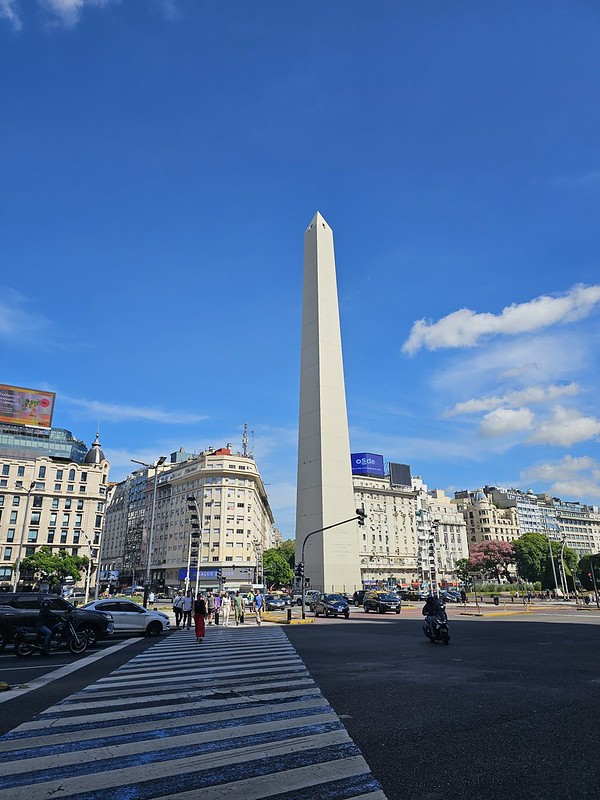
Our flight did still end up being a bit delayed and we arrived in Buenos Aires ~4 hours late, just in time for a pretty sunset. We had very limited time in the city and there was a lot to explore! I would have preferred to spend a few more days in Buenos Aires, but I had to limit myself because our trip was primarily about Patagonia and I’m committed to the idea of returning to visit Northern Argentina and Chile on a subsequent trip.
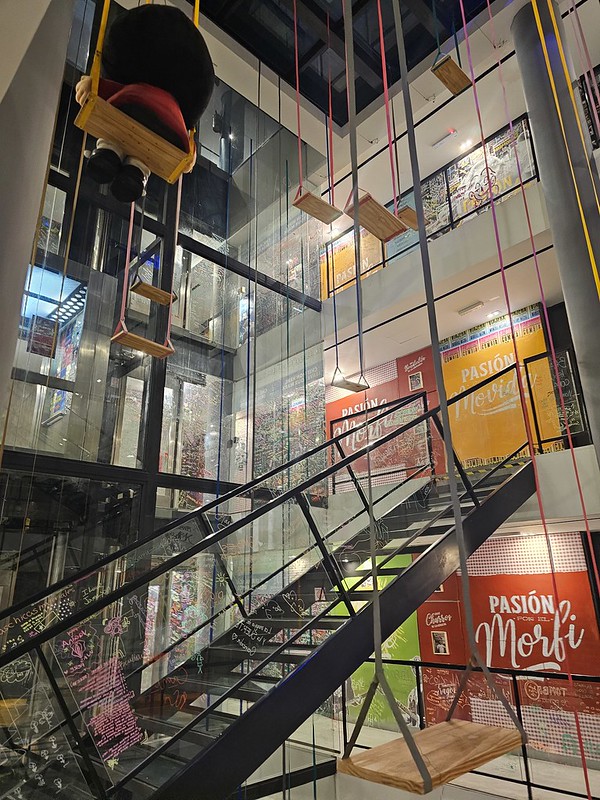
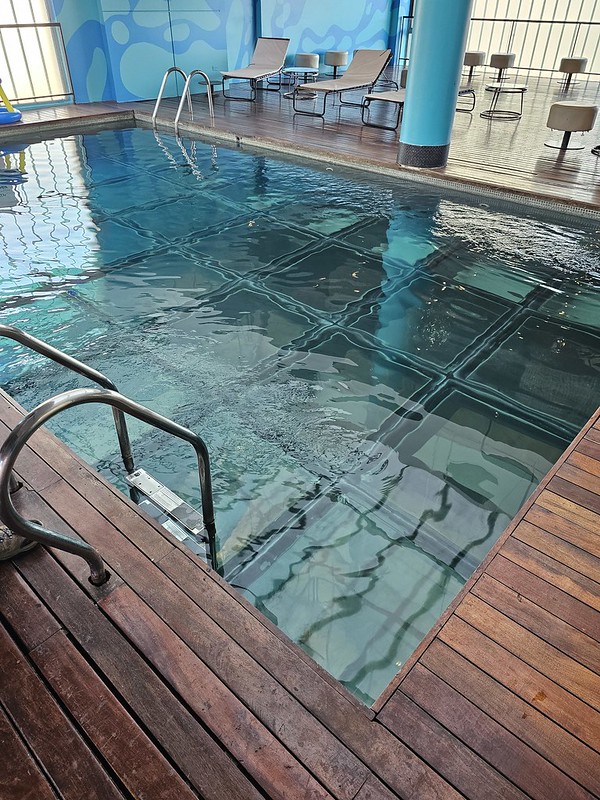
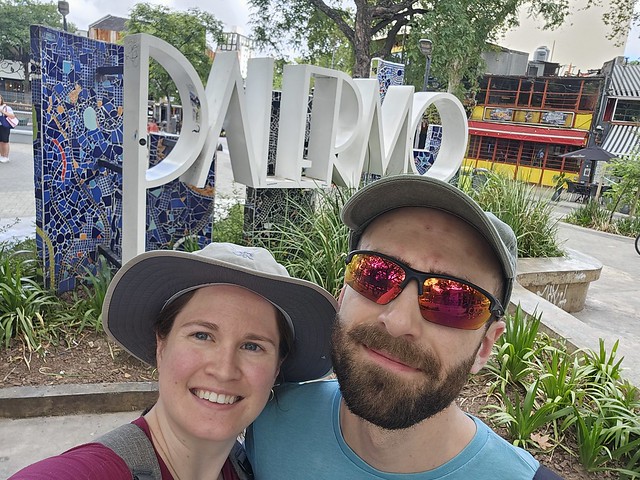
There are a lot of neighbourhoods in Buenos Aires and I had a hard time trying to decide where to stay. I was mostly between San Telmo (for location) and Palermo (for atmosphere). I’d heard mixed reviews about how safe San Telmo was, but ultimately decided on a hip hostel because the location was so ideal. It ended up being great! We didn’t really go out after dark, but I never felt unsafe in San Telmo and our hostel was really nice. We had a private room, but our hostel had a lot of community space, including a bar and 2 pools. The entire front atrium is made of glass with crisscrossing glass staircases (very Harry Potter). The coolest part was that it had a glass bottom floor pool on the roof! So the atrium was always kind of shimmery from the light reflecting off the pool, through the glass floor, and across the walls. It was really neat.
With limited time, we could only do a few activities in Buenos Aires. This was further exacerbated by the fact that we ended up having major money problems in Argentina that we needed to solve before leaving the capital.
Argentina’s currency is the Argentine peso, which is problematic because it is a very volatile currency that has seen rapid inflation and de-valuing of the currency in recent years. It seems to be a bit of a pariah currency internationally and we couldn’t get any of it in Canada before we left. For this reason, Argentinians prefer to try and keep their savings in US currency because it’s much more stable, so we brought several hundred dollars of USD with us, and assumed we could get pesos from ATM’s once we arrived.
Argentina’s main problem is that the official government rate from USD to pesos is about a 3rd of the actual rate. So ATM’s are not really an option because they give you a terrible conversion rate; they can only dispense a maximum of ~$20USD at a time; and they charge you high fees to take the money out. So to take out the equivalent of $20USD in pesos from an ATM would likely cost you more like $60USD. However, because Argentinians prefer to keep their savings in USD, there’s incentive for them to change money on the street. So there’s a separate conversion rate known as the “blue rate”, which people use colloquially to change money. So stores will indicate that they will accept USD at the “blue rate” or you can exchange cash in Argentina’s thriving black market.
This seemed completely wild to me and I’m still a bit shocked that we actually did it. Honestly, I would have been good to just exchange the US currency we brought and pay for everything else on card, but our money problem was further exacerbated by the fact that Argentina is a cash based economy and we heard horror stories about more remote towns not accepting credit cards. There’s definitely a preference for cash and many stores will list their retail items at two different prices: a “cash rate” and a “card rate”. I was very worried we would get to Patagonia and not be able to use our credit cards, leaving us with no way to get any more money than the USD we’d brought with us.
This turned out to be very much not the case. You can pay for most things in Argentina on credit card, even in Ushuaia, El Calafate, and El Chalten. They are all small towns, but tourism is their main source of revenue, so they have adapted to accept credit cards. It does cost you a bit more to pay on card because of the fees – which used to be exorbitant as well, but were regulated in 2022 – so while cash is still king, the rate I got on my visa was fine. It’s pretty much just street markets, buses, and taxis where you need cash. But even that was hit or miss. Lots of taxis do take card, as do some of the major bus depots. I think this cash myth is perpetuated around the country because paying with cash on the blue rate is the most economical way to spend money and most Argentinians can’t imagine having the luxury of paying a bit more to simplify your life. So I recognize that that is a privilege we had as tourists.
But I didn’t know most of this when I arrived in Buenos Aires, so we immediately became stressed out about how to obtain enough cash for the entirety of our time in Argentina. We exchanged some of our USD on the black market, but even then we got scammed. It sounds shady, but it’s a pretty accepted practice and there’s a street in Buenos Aires where you can go to change money. We found someone and he led us back to an apartment building where he had set up a bit of a secret office. He only let one of us go in, so Seth went and changed half of our money. The largest bill Argentina has is the 1000 peso, which is worth ~$1USD. So it’s basically the equivalent of everyone in America walking around and paying for everything with stacks of $1 bills. To manage their stacks of cash, a lot of people and businesses use electronic bill counters. The guy we were buying from counted out the money for Seth using the machine, but when we counted the bills later, they had clearly rigged the it and we got short-changed.

It turns out, the most reliable way to get money is through Western Union. I only have good things to say about Western Union after this experience because they offer a great rate and you can basically send yourself money in Canada and pick it up in Argentina in pesos. So it’s the easiest way to get your hands on cash without getting scammed. The problem is, we couldn’t send ourselves money once we got to Argentina. So my Mom ended up going into a Western Union in St. John’s and sent us all the money we needed and we picked it up in cash in Buenos Aires. It’s still somewhat challenging because a lot of the small branches run out of cash, but there’s a few big branches, including one near our hotel, that was very reliable. So after much difficulty, we finally got enough cash for the trip and I was able to breathe easy.
Mostly I’m relieved we started the trip in Buenos Aires because I think this would have been much more difficult if we’d started the trip in El Calafate or Ushuaia. My recommendation for anyone going is to wire yourself a ton of money through Western Union before the trip, pick it up in Buenos Aires, and avoid the blue rate altogether. We ended up keeping the rest of our USD for an emergency. We didn’t exchange it for pesos and ended up just taking it home. Maybe not ideal if you’re European, but as a Canadian, I don’t mind having some USD around.
So it was a hectic and stressful welcome to Argentina, but fortunately the trip improved a lot from there! Check back next week to hear about the fun things we got up to Buenos Aires and make sure you adequately research the money situation if you decide to visit Argentina! Economically, Chile is much more stable, so it was only Argentina where we had issues.


 The Road Goes Ever On