Garibaldi Provincial Park Guide

If you live in BC, chances are you’ve heard of Garibaldi Provincial Park. I’m not sure if it’s quite as popular as some of BC’s National Parks, but it’s certainly developed a pretty wide-reaching reputation. Garibaldi Park is a large backcountry access park near Vancouver that captures a lot of the wilderness area east of Squamish and Whistler. You can’t drive to any of the park attractions, but it has not slowed down the number of visitors to the park. 
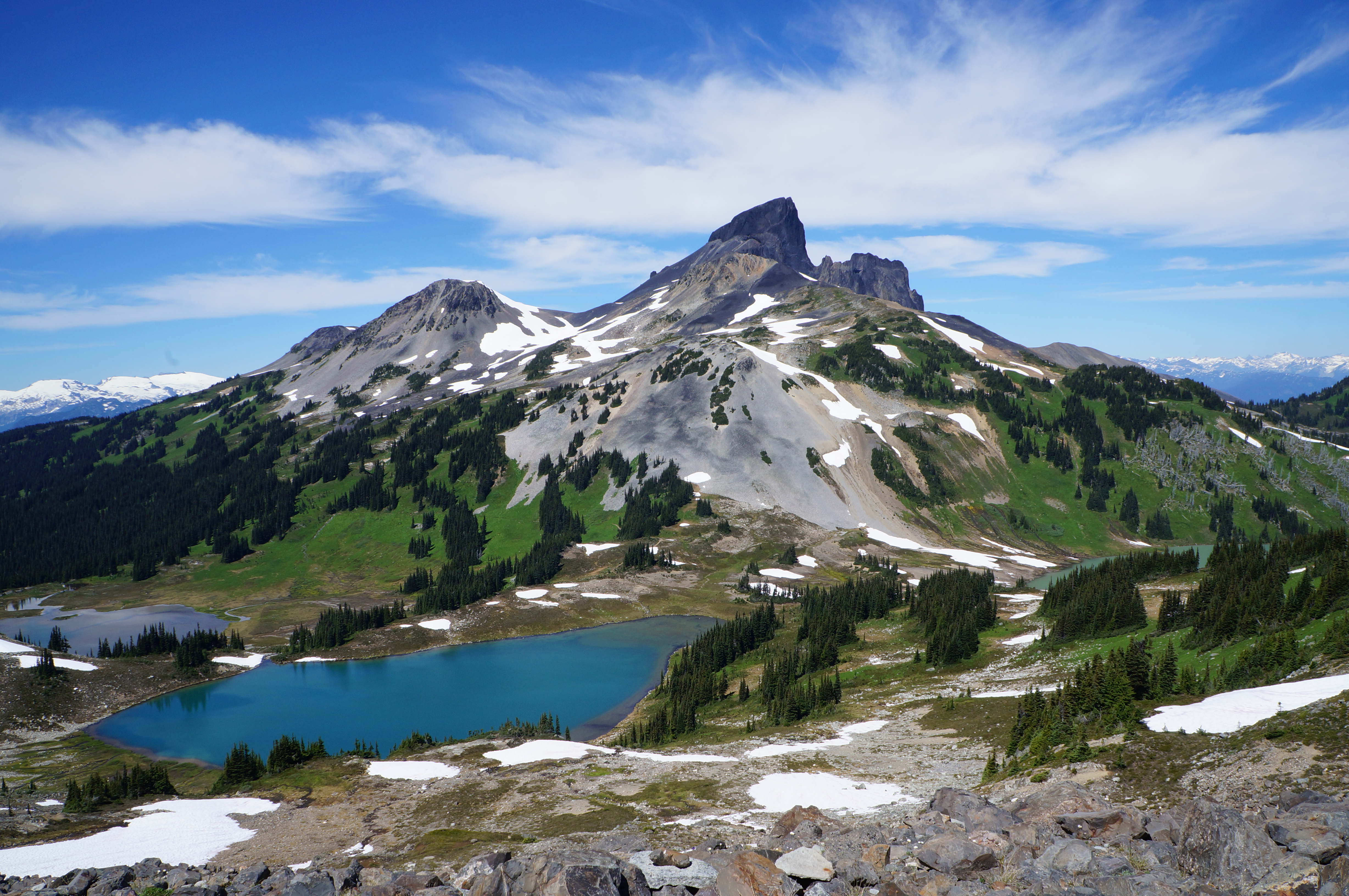
A photo of Black Tusk as seen from Panorama Ridge in Garibaldi Park on a blue sky day in the summer, with the alpine meadows and mountains in the background and lake in the foreground in BC.

Getting There

It’s impressive that Garibaldi Park gets as many visitors as it does when the access to the park is solely self-powered. The park is located between Squamish and Whistler, with several key park entrances at Diamond Head, Rubble Creek, Cheakamus, Whistler, and Wedgemount. Diamond Head is closest to Squamish, while the rest of the park entrances are closer to Whistler, so it can be a bit of a drive from Vancouver. I always give myself 1.5-2 hours of driving to get to the trailhead. Parking is generally secure, but there’s always the risk of break-ins, so don’t leave anything in your car.

Driving is by far the easiest way to get to the park, as public transit is not available. There is a park shuttle (Parkbus) that runs from Vancouver to Rubble Creek (the trailhead to Garibaldi Lake and Panorama Ridge) during late June to early October. The bus only runs on Fridays and weekends, and will book up early for Saturdays. Otherwise, there’s not many options and you’re best off trying to carpool with others via a facebook hiking group if you don’t have a car. 
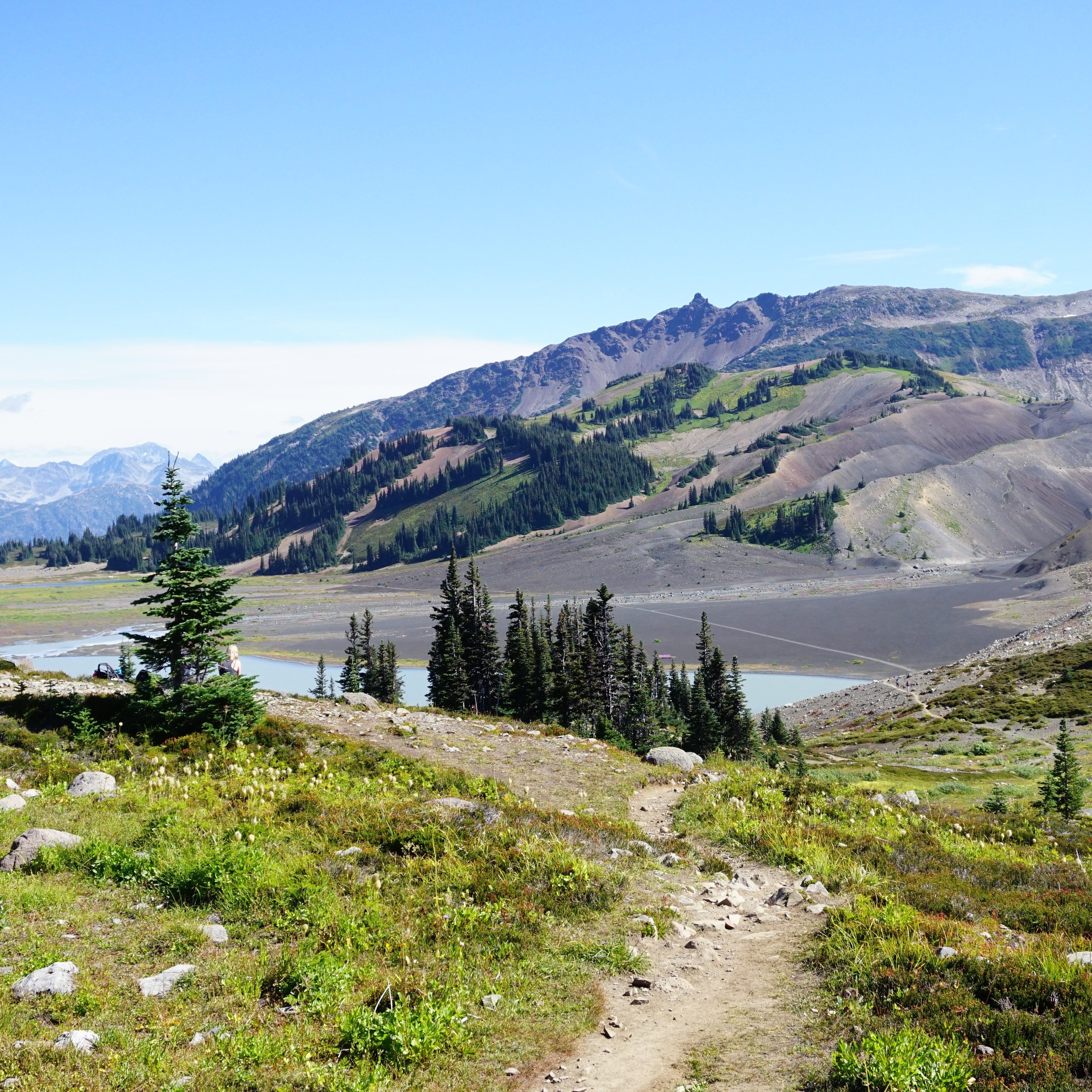
A hiking trail extends through the alpine of Garibaldi Provincial Park towards Helm Lake, with the forest and mountains in the background on a sunny day in British Columbia, Canada

Activities

The most popular activity in the park is day hiking. Visitors park at a trailhead and spend the day hiking to various viewpoints in the park. The trails are all well maintained and make for a very scenic day in the backcountry. However, most of the trails cover considerable distance and elevation gain in a remote environment, so visitors should be prepared with the 10 essentials and leave a trip plan with someone they trust. For more information on trip preparedness and trip planning, see my Safety post.

Backpacking is also popular as there are 10 beautiful campsites spread throughout the park that can be visited as single night trips or along thru hikes. Biking isn’t permitted everywhere, but you can bike from Diamond Head and Cheakamus Lake, which is a popular activity for cyclists. Finally, lots of winter visitors use the park for snowshoeing or ski touring, either as a day trip, or for an overnight expedition. There is one hut available for camping at Elfin Lakes, which is popular in winter. Avalanche Safety Training is highly recommended if you are recreating in the park during the winter. See my Avalanche Safety post.

A group of 3 skiers traverse the ridge on the way to the Elfin Shelter at Elfin Lakes in Garibaldi Provincial Park, BC. It's a beautiful sunny day with lots of snow and the forest and Diamond Head Mountain in the background.

Permits and Day Passes

In the 10+ years I’ve lived in BC, Garibaldi has always had a reputation as a crowded park. In 2016, BC Parks brought in a reservation system for their backcountry campsites to reduce the impact to the natural environment from overflow camping. If you want to camp at any of the backcountry campsites, you will need an overnight permit. These are available on camping.bcparks.ca for $10 per person ($5 for youth), per night, and release 4 months in advance of your desired date. So if you want to camp on Aug. 15, make sure to book your pass on Apr.15. 

During the pandemic, BC Parks further regulated park use by employing a free day pass system from mid June to mid October to manage parking at the trailhead and impacts to the park from overuse. While these passes are free, they have generated a lot of criticism and frustration from visitors struggling to obtain a pass. The day passes release 2 days before your desired date at 7am, and from what I understand, they can be challenging to obtain due to popularity. My recommendation is to be ready at 7am and keep refreshing for up to 15 minutes. If you make a reservation on Parkbus, it includes a day pass.

The sun shines down during golden hour on Wedgemount Lake with the hut and the mountains in the background in Garibaldi Provincial Park, BC.

When to Visit

The park is popular year round, but it is important to understand that travel through the park has much higher risks in Winter and Spring. The most popular time to visit the park is in the summer (from July to September), but be aware that summer in the mountains is much later than summer in the city. You can usually hike to Garibaldi Lake starting in late June, but the snow in the alpine and along the trails to Panorama Ridge and Black Tusk may have snow on them into late July. Early Fall is also a good time to visit the park, but be aware that temperatures will drop quickly in the mountains and that limited daylight hours can make certain trails more challenging. 

Winter can also be a great time to visit the park, but avalanche safety training is highly recommended no matter where you’re going. Snowshoers and ski tourers will travel to Elfin Lakes and the privately managed Kees and Claire Hut at Russet Lake in the winter. Both of these routes pass through challenging avalanche terrain and I strongly advise completing an AST1 course before attempting these routes. The Red Heather Hut is also a popular location for skiers who want to do a few laps on Round Mountain before heading home. This carries less risk than the other trails because the route is only in simple avalanche terrain, but you should still exercise caution and be prepared. 

A female hiker looks tiny in comparison to the large Wedgemount Glacier in the background in Garibaldi Provincial park, BC.

Trails

There are so many trails to explore in Garibaldi Park. I’ve hiked all of them, with the exception of the winter glacier routes. Here’s some more information on trail options and links to dedicated resources for each trail. Please note that trail distances and elevation gain are approximate.

Garibaldi Lake (18km, 800m gain) – A great option for summer day hiking, or winter snowshoeing (with AST1). Probably considered the most popular hike in the park, with the trailhead at Rubble Creek.

Panorama Ridge (29km, 1500m gain) – Completed by some visitors as a long day hike (12 hours), but recommended as part of a backpacking trip (day hike from the campsite at Garibaldi Lake or Taylor Meadows). This is a very popular trail, with the trailhead at Rubble Creek. Only recommended in the summer.

Black Tusk (25km, 1400m gain) – Completed by some visitors as a long day hike, but recommended as part of a backpacking trip (day hike from the campsite at Taylor Meadows). This is a very popular trail, with the trailhead at Rubble Creek. Only recommended in the summer.

Mount Price (25km, 1400m gain) – Completed by some visitors as a long day hike, but recommended as part of a backpacking trip (day hike from the campsite at Garibaldi Lake). This trail is not very popular and requires some wayfinding, with the trailhead at Rubble Creek. Only recommended in the summer.

Helm Creek (16km, 650m gain) – Most often used as an alternative route when backpacking to Panorama Ridge or as a thru hike from Garibaldi Lake. The trailhead is at Cheakamus Lake and this route is less popular than the trails from Rubble Creek. Only recommended in the summer.

Garibaldi Thru Hike (~30km, 1500m gain) – Only completed as a backpacking objective in the summer. People will hike from Rubble Creek to Cheakamus Lake, camping at Garibaldi Lake, Taylor Meadows, or Helm Creek along the way.

Cheakamus Lake (9km, 50m gain) – A great option for beginner hikers, backpackers, and mountain bikers. It can be completed in a single day or as an overnight trip, camping at Cheakamus Lake Campsite. The trail is popular in the summer, with the trailhead at Cheakamus Lake. Can also be completed in the winter, but the access road is not plowed, making it a much longer hike.

Singing Creek (16km, 50m gain) –  A great option for beginner hikers, backpackers, and mountain bikers. It can be completed in a single day or as an overnight trip, camping at Singing Creek Campsite. The trail is popular in the summer, with the trailhead at Cheakamus Lake.

Elfin Lakes (22km, 600m gain) – A great option in the summer for day hiking and mountain biking, and in the winter for snowshoeing or ski touring (with AST1). Complete as a day hike or stay overnight at the campground or hut. A very popular trail, with the trailhead at Diamond Head (chains required for your tires in winter). 

The Saddle/The Gargoyles (27km, 900m gain) – An extended trail option from Elfin Lakes, can be completed from the parking lot in a single day, or shortened as a day hike from Elfin Lakes. The trailhead is located at Diamond Head. Only recommended in the summer.

Opal Cone (13km, 350m) – This trail can be completed as a day hike from the campsite at Elfin Lakes, or as a stop along the way when backpacking to Rampart Ponds. The trailhead is located at Diamond Head. Only recommended in the summer.

Rampart Ponds (18km, 500m gain) – This trail can be completed as a day hike from Elfin Lakes, or as a backpacking objective if you plan to stay at the campsite. The trailhead is located at Diamond Head. Only recommended in the summer.

Mamquam Lake (22km, 600m gain) – This Trail can be completed as a day hike from the campsite at Elfin Lakes, or as a shorter route from the campsite at Rampart Ponds. The trailhead is located at Diamond Head. Only recommended in the summer.

Russet Lake via Musical Bumps Trail (24km, 1300m gain) – Completed by some visitors as a long day hike (12 hours), but recommended as part of a backpacking trip, staying at the Russet Lake Campground overnight. This route requires paying for a sightseeing pass on the Whistler Gondola and hiking along the High Note or Half Note trails and the Musical Bumps trail. The trailhead is located at Whistler. It can also be visited in winter, but AST1 is required and a backcountry pass from Whistler Resort. 

Russet Lake via Singing Pass Trail (27km, 1200m gain) – Completed by some visitors as a long day hike, but recommended as part of a backpacking trip, staying at the Russet lake Campground overnight. The trailhead is located at Whistler and this route avoids having to pay for a pass for the gondola. Only recommended in the summer.

Wedgemount Lake (14km, 1200m gain) – This trail can be completed as a day hike or an overnight backpacking trip to the Wedgemount Lake Campsite. Overnight is recommended due to the substantial elevation gain. The trailhead is located at Wedgemount Creek. Only recommended in the summer.

Garibaldi Neve – This is a winter route for experienced alpinists only as it involves glacier travel. It is generally completed over 2-3 days and avalanche training and snow camping experience are required. I don’t have any experience with this route, please look elsewhere and do sufficient research and training before attempting.

Spearhead Traverse – This is a winter route for experienced alpinists only as it involves glacier travel. It is generally completed over 3-4 days and avalanche training and snow camping experience are required. I don’t have any experience with this route, please look elsewhere and do sufficient research and training before attempting.

A group of campers sit on the ground surrounded by camp food, pots, and stoves, preparing their dinner on the beach with the trees and lake in the background at Cheakamus Lake Singing Creek Campsite in Garibaldi Provincial Park in British Columbia, Canada.

Campgrounds

All campgrounds in Garibaldi Park require permits from camping.bcparks.ca. These release 4 months in advance of your desired date. They are popular, so it is recommended to book exactly 4 months before you want to visit. Backcountry permits are $10 per person ($5 for youth), per night. 

Elfin Lakes Campground – Reservable year round. There are 35 tent pads, several outhouses, picnic tables, a bear cache, and a cooking shelter. 

Elfin Lakes Shelter – Reservable year round. There are 33 bunks and an outhouse. You must bring your own sleeping pad and sleeping bag. 

Red Heather Campground – Reservable in winter only (Dec-Apr) for snow camping. There are no tent pads, but there is an outhouse and a cooking shelter. You are not permitted to sleep in the cooking shelter.

Rampart Ponds Campground – Reservable year round. There are 12 tent pads, an outhouse, and a bear cache. Sometimes this site floods in the summer and is closed.

Garibaldi Lake Campground – Reservable year round. There are 50 tent pads, several outhouses, picnic tables, bear caches, and four cooking shelters.

Taylor Meadows Campground – Reservable year round, except in September and October (I’m guessing because of bears). There are 40 tent pads, several outhouses, picnic tables, a bear cache, and two cooking shelters.

Helm Creek Campground – Reservable year round. There are 30 tent pads, an outhouse, and a bear cache. 

Cheakamus Lake Campground – Reservable year round. There are 10 tent pads, an outhouse, and a bear cache.

Singing Creek Campground – Reservable year round. There are 6 tent pads, an outhouse, and a bear cache.

Russet Lake Campground – Reservable year round. There are 7 tent pads, an outhouse, and a bear cache.

Kees and Claire Hut – While located in the park, this hut is managed by the Spearhead Huts Society (not BC Parks). Bunks can be booked year round for $60 per night and are most popular for touring in the winter.

Wedgemount Lake Campground – Reserable year round. There are 20 tent pads, a seasonal pit toilet, and an emergency hut that can be used as a bear cache. 
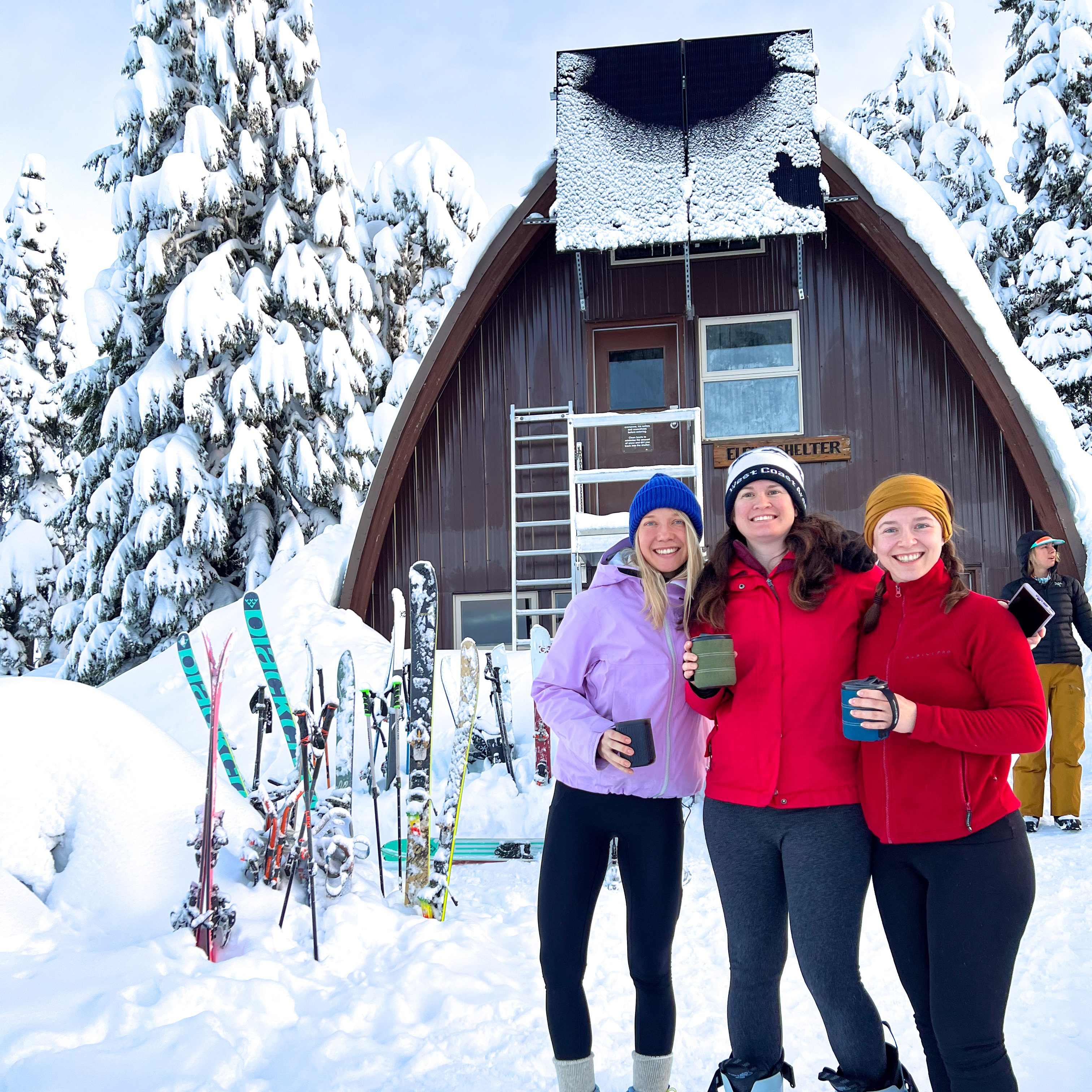
Three female skiers pose in front of the Elfin Lakes shelter on a sunny day in winter with the hut in the background and snowy trees in Garibaldi Park, BC.

Blanca Lake Backpacking Trip

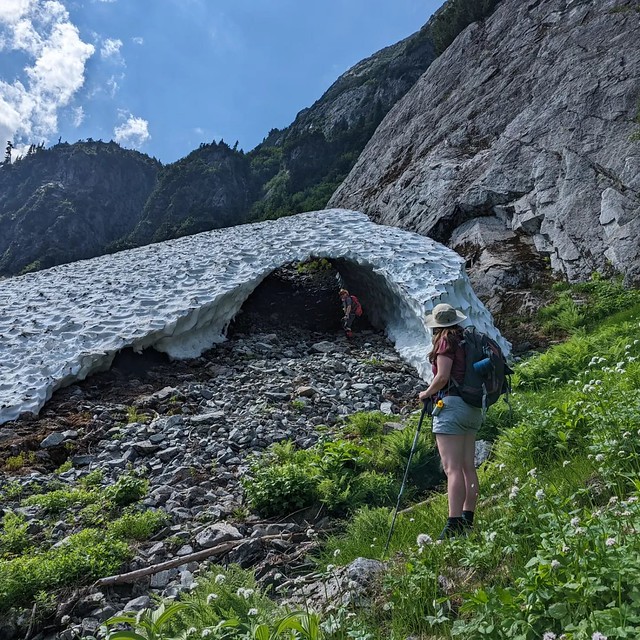
I hiked to Blanca Lake around the third week in July and it was the first weekend where it really started to feel like summer. The snow melt was very late in the mountains and I’d been tracking the hike via satellite all week. 5 days before we went, the entire lake was still frozen, but it was melting fast and by the time we hiked up there, it was almost entirely gone. 

Blanca Lake is not a well known hike, but it is starting to get more popular. It’s located pretty far up Squamish Valley Road and it does require 4×4 to get to the trailhead. The hike is only 4.5km, but the road to the trailhead is long and exposed, so I wouldn’t recommend hiking the extra distance on a hot day. We ended up picking up a few hikers along the road and they were about to give up and turn around before we drove by because it was so hot. 

IMG_4755

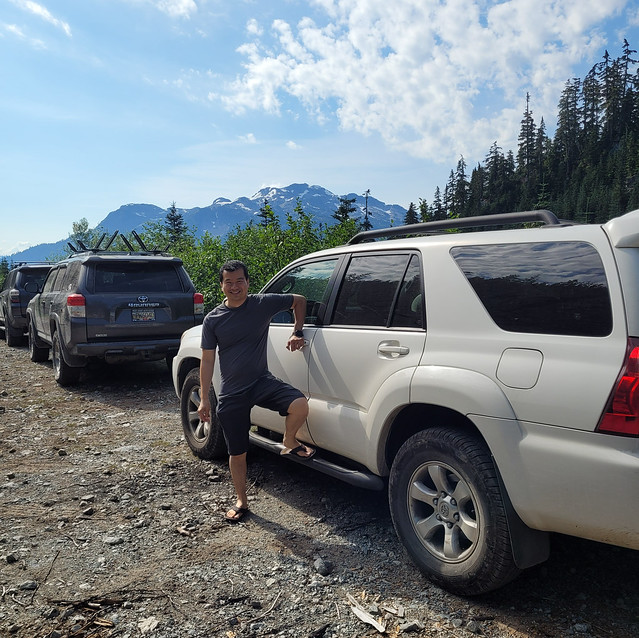
We had a great crew for this trip. Seth and Sadie both joined me for their second hike of the summer, and of course Brandon was ready with his 4runner. We were also joined by our friend Adriana, who we hiked Tetrahedron with last year, and a new friend, Victoria, who we met when hiking Hozomeen Lake several weeks earlier. I downed a lot of gatorade along the drive as we convoyed up to the trailhead in two cars. It’s a pretty long drive on Squamish Valley Road, as well as on the FSR. The road isn’t in that bad shape, but there are several water bars along the way and a sketchy washout before the top. A few cars parked before the washout as it’s not a long walk from that section.

To make the occasion more special, it was Brandon’s birthday! We ate sandwiches at the car and then started the hike up to the lake. The trail is flat for a short distance, but then you immediately do a big climb up through the trees. It was challenging because it was so hot, but at least we were in the shade. After the climb, the trail stays in the trees and is pretty flat again. You traverse through some small meadows and eventually come to a stream crossing before starting to climb again.

PSX_20240723_212149
20240720_154816

Some of the group was able to get across the stream crossing with their boots on, but I opted to just put on my sandals and wade through it. It was much easier and we all did it on the return trip. We encountered a few groups who were day hiking on their way down, but otherwise we didn’t see a lot of people. You continue through the trees again and then eventually come out on a boulder field that follows the river to the top. Seth really struggled from the heat on this section and the hike took longer than we expected it would, but eventually we all made it to the beautiful wide open view at the top.

20240720_162604

The final section of the trail and the lake are all in the alpine. Blanca Lake is really at the start of the alpine and if you have 2 nights to spare, it’s definitely worth it to stay up there for an extra day and explore around on your own. There aren’t any trails, but the terrain is easy to navigate and you can do a scramble to some of the other lakes and peaks.

Blanca Lake is the biggest lake, but there are several other lakes nearby, as well as a lot of tarns. I decided to swim in Blanca as soon as we arrived and it was so hot even Seth joined me! It was freezing cold (it had literally only finished melting 2 days ago), but it was refreshing. Adriana and Victoria opted to swim in the small lake just below Blanca, which was warmer, and Brandon scoped out a secluded place to pitch our tents by an even smaller tarn. 

PSX_20240722_184903
IMG_4680

There were quite a few people camping on Saturday night. Most of them camped right next to Blanca Lake, but there’s lots of room to spread out. I liked our spot over by the tarn because then Sadie wasn’t distracted by or a nuisance to the other campers. I swam in the smaller lake and 2 tarns, but not the other 2 large lakes. I can’t see any names for them on Gaia, but there’s a big circular lake west of Blanca, and another lake to the South. I hiked over to view both, but they were a bit farther away, so I didn’t swim in either.

We sent up the tents and proceeded to have an excellent evening hanging out in the alpine! We brought party hats for Brandon and celebrated his birthday with some cherry liqueur that I’d brought home from Portugal. We had Brandon’s infamous thai chicken curry for dinner and had a great time hanging out and enjoying the view during golden hour. 

20240720_184458
20240720_200051

There’s no facilities at Blanca Lake, so be prepared to dig catholes for your bathroom. There are some trees around, but it’s pretty barren, so we brought bear vaults and bear bags rather than hanging our food. It should be possible to find somewhere to hang your food, but it was definitely a lot easier using Carolyn’s bear vault, which I borrowed for the trip.

It was an absolutely gorgeous evening and we spent most of the night taking photos of each other. The sunset turned everything orange around us and we shared snacks to celebrate Brandon’s birthday. I made everyone worms and dirt (a girl guide classic!), but I guess our sugar tolerance is lower than my girl guides because we all ate way too much!

PSX_20240809_232610
PSX_1721796972974

I was the first one up in the morning thanks to Sadie. It gets bright so early and she wants out of the tent, so I decided to let everyone else sleep in and take her for a walk. She was my little dog sherpa and carried our essentials in her bag. Like I said, there’s a lot to explore, so we did a short hike up to some of the ridges to view the other lakes and have our breakfast. Blanca is cool, but in my opinion, the lake to the west has the most beautiful view. I wish we’d had more time to explore, but I’ll have to add it to my long list for a return trip.

20240721_074347

We took our time having breakfast and packing up and as a result, we were the last to leave. The campsite was completely empty, so I think it’s really only busy on the weekends. The hike back down the valley was nice and there were a lot of wildflowers around. We stopped for lunch shortly after crossing the river and then continued back to the cars. We stopped at the Water Shed in Squamish for dinner and then closed the books on a really nice weekend in the mountains! I took way too many photos on this trip, so here’s a few more!

PSX_20240809_233207
20240720_192804
20240720_203652
PSX_20240721_210601
20240720_191252(0)
PSX_20240723_071614

Hiking Tricouni Meadows

This might be my favourite hike of the year to date! I’ve been doing more exploring around the Squamish River area in the past few years and have had Tricouni Meadows on my radar for a while. I was keen to visit it as an overnight, but have almost exclusively done overnight trips this year and needed a break, so we opted to do it as a day hike instead. I was a little bit disappointed to have limited time to explore the area, but excited to get a taste because it is incredibly scenic!

The most important thing to be aware of with Tricouni Meadows is access. There’s a lot of mixed information about the forestry road on the internet, so definitely come prepared with the right vehicle if you want to drive the whole way to the trailhead. Conditions can vary year by year as well, so take this information with a grain of salt and check more recent sources if you’re doing this hike beyond 2022.

20220820_104456

Tricouni Meadows is located off Branch 200, off Squamish Valley Road. Squamish Valley Road is easily accessible and you drive past the bridge, the High Falls Creek Trailhead, and the hydroelectric facility, taking the right fork onto Branch 200. This is where things get variable. I’m no expert on vehicles, but Brandon is very knowledgeable and his assessment was that the road is in relatively good condition at this point. You don’t really need 4WD, but you may want a bit of extra clearance and good tires. SUV’s can likely handle it, but even the early part of the road isn’t in very good condition for cars. There was a station wagon stopped less a 1km in when we drove it that ended up turning around.

IMG-20220820-WA0129

The first 2 switchbacks are quite steep, but the condition of the road doesn’t require 4WD. Once you get up the switchbacks, the road really isn’t that bad for the first 7km. But if you want to get past the creek at km 7, you definitely need the proper set-up. There is a huge wash-out with a very steep and narrow dip in the road. Since it’s only 3km to the trailhead from here, most people had opted to park along the road and walk the rest of it. There were a lot of big trucks like the Ford F-150, that while they had high clearance, are very long and couldn’t do the washout without grounding out on the back.

IMG-20220820-WA0082

Brandon drives a Toyota 4-Runner – he sized up the washout for a few minutes and decided he could do it. Brandon loves off-roading and I did think he could probably do it, but I’m much more cautious and was nervous about this approach. He gave it a go, to much nervous yelling and swearing on my part, but was able to get down and out of it. He did ground out right on the back of his rear bumper, but there were no large rocks and so he didn’t get any damage. I think the shrubs actually did more damage to the vehicle as the road is very narrow and they were constantly scraping along the doors.

IMG-20220820-WA0053

In any case, the road still isn’t too bad after the washout until the last kilometre or so. It becomes very rocky after that and 4WD is definitely needed for the last portion of the road. But Brandon was thrilled when we finally made it to the parking lot to find we were only the 3rd car that had made it up there… and they were all 4-Runners! We’re pretty early in the day and when we exited the trail there were a lot more vehicles: 5 4-Runners, 2 Tacomas, and 2 Jeeps. So my recommendation would be to just park at the wash-out unless you are experienced. Honestly, driving up is barely any faster from this point, but it does conserve your energy.

20220820_125409

So with that out of the way, let’s talk about the actual hike, because it’s a really good one! There are two trails heading up along either side of high falls creek to Tricouni Meadows. They share one trailhead, but branch from each other almost immediately. The trail on the right (east side) is the original trail, which follows directly along the creek. This trail is known for being extremely muddy, which is why I suspect the second trail was developed. The second trail branches left (west side) and crosses the creek to ascend up to the meadows through the boulder field. It’s a slightly longer trail, but will take more than slightly more time because you go through the boulder field almost the entire hike.

20220820_132359

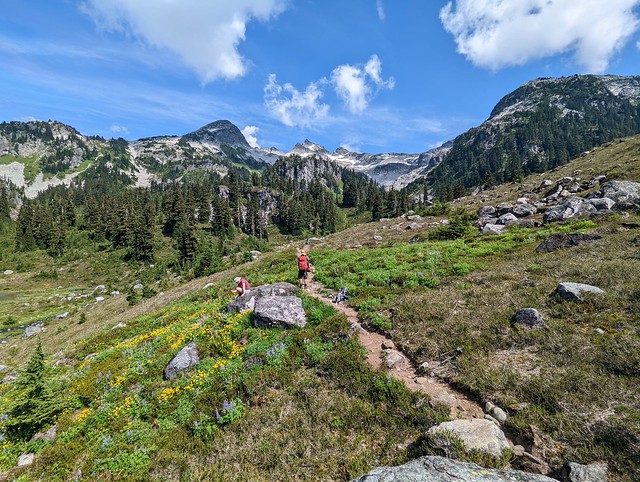
We opted to take the boulder field trail up and didn’t regret it. It’s a bit more technical, but it also has beautiful views of the mountains. There were still some wildflowers in bloom and we took our time since it was quite hot. The downside is, there’s very little shade and it is steep towards the end, so just take your time. It took us between 90-120 minutes to get up to the first lake.

I definitely recommend bringing 2 hiking poles for this hike because there are a lot of stream crossings. I managed not to get my feet wet by staying nimble, and Brandon kept his feet dry despite walking through the water because his boots are extremely waterproof, but Lien did get wet feet on some of the crossings. The first crossing when you start the hike is a bit tricky depending on water level, and then we crossed back over when we got to Pendant Lake, though this was an easier crossing.

20220820_153838

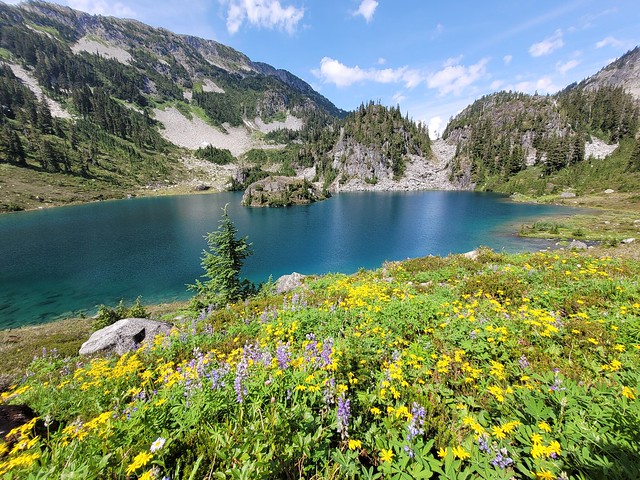
There are several lakes dispersed throughout the meadows. You can hike Pendant Lake, Spearpoint Lake, and Reflection Lake on your way up to Tricouni Peak, or Pendant Lake and Tricouni Lake on your way to Seagram Lake (requires wayfinding). We didn’t have much of a plan when we went up and stopped immediately at Pendant Lake to go for a swim and have lunch. Pendant Lake was probably my favourite of the 3, it has a beautiful little island in the middle and is shaped like a heart from above. The water was quite cold, but that didn’t stop me and Lien from taking a dip. Pendant also had a ton of wildflowers growing along the shore of the lake, which made it incredibly scenic!

20220820_134058

From there you hike up about 50m in elevation to get to Spearpoint Lake. This is the smallest lake, but has several flat areas to pitch a tent (something that’s mostly missing from Pendant Lake). We decided to save our swim in Spearpoint for later and continue up to Reflection Lake. Brandon floated around the idea of going all the way to the peak, but I didn’t really think we had time, so we decided to just start with Reflection Lake.

It’s another 100m in elevation gain to Reflection Lake, but the trail is infinitely more challenging. There’s not really a marked trail at this point and you pretty much just scramble up over the boulder field. There’s a beautiful waterfall, but it is very steep and not obvious where the trail is. Before the waterfall, you need to cross to the right side of the river and follow the landslide up to a cairn. This was by far the sketchiest part of the trail as it’s very steep and there’s a lot of run-out. I almost gave up and turned around, but decided to push on.

20220820_140213

Once you get up over the waterfall, there’s another boulder field, but it’s much easier to navigate and we soon made it to the lake. There are several creek crossings in between though, which is why I say to make sure to bring poles. There weren’t many campers when we arrived, but a lot showed up after us. Some set up at Spearpoint Lake and a lot were continuing up to Reflection Lake. Unfortunately there’s not a lot of flat spots anywhere really, so I recommend coming early and being prepared to get creative. Personally, I wouldn’t hike my big pack up to Reflection Lake.

IMG-20220820-WA0066

We abandoned the idea of going to the peak and instead chilled at the lake while watching other hikers start up over the scree. Despite the scramble up to the lake, I would say the view from Reflection Lake is worth it. You can see all the way to the peak from there – it’s very exposed alpine scree and boulder field. I’m not super keen on going all the way to the peak now that I’ve seen it, because there is limited trail and it’s mostly a technical scramble, but I could probably be convinced (likely by Brandon) to return and attempt it on an overnight trip (camping at one of the lower lakes). Instead, we had some more snacks and went for a swim in Reflection Lake, which is definitely the coldest of the three.

20220820_145847

There were a lot of mosquitoes when we visited, so be prepared for that. Brandon invested in a thermacell after we got eaten alive at Assiniboine last year and I have to say that it is worth every penny! We never go anywhere without it now and it made hanging out at the lake much more enjoyable. Brandon has the rechargeable one, which I think is the most effective, but I have the backpacking version (which uses isobutane) and also really like it – honestly you can’t go wrong with either!

IMG-20220820-WA0122

Of course, hiking back down was more nerve-wracking than the hike up, though more straightforward in terms of route finding. We stopped at Spearpoint Lake this time to go for our last swim of the day. Me and Lien swam in all 3 lakes, but Brandon just dipped in at Spearpoint. They’re all cold, but Spearpoint is the smallest and therefore slightly less cold than the other two. At this point there were A LOT of people exploring the area and the campsites, which were totally empty when we arrived, were completely filled up. We weren’t particularly early (starting the hike just before 11am), but it makes a big difference in getting a good site, so I recommend going earlier rather than later. There are no facilities though, so come prepared to dig catholes and I strongly recommend a bear can or bear bag as there are no good trees to make a cache.

20220820_162552

I’m definitely keen to return and spend a few days in the area, there’s a lot to explore! I’d like to visit Tricouni Lake and Seagram Lake, but it was too much for 1 day hike. It was around 5pm when we left Pendant Lake and we decided to take the muddy branch back to the car in hopes of saving some time.

The trail starts off pretty well and it’s definitely faster than descending through the boulder field. There are several mud pits along the way, but they were relatively dry and easy enough to walk over, so I didn’t get too muddy. Overall, the first 2 thirds weren’t too bad, but the last third was definitely a sloppy mess. I was ankle and calf deep in a few places, so I can only imagine how muddy it would be in the wet season (it was mid August when we went). I would only attempt the muddy trail in the height of dry season – otherwise stick to the boulder field. That said, it’s definitely faster and it only took us an hour to get back to the car.

20220820_132815

All in all, I loved this hike! It’s not the easiest to visit because of access and it has smaller crowds than a lot of popular hikes, but there were definitely more people there than I was expecting, so I think it’s growing in popularity. In addition to the mud, there are a lot of stream crossings, so I’ll probably stick to this one during the dry season, but I can’t wait to go back again!

IMG-20220820-WA0075