This snow camp post is going to be a bit different than my usual posts. Most notably because it was a snow camp that I did with Girl Guides, but more interestingly because it’s a snow camp experience that doesn’t require backpacking!
I’ve done two snow camps with Girl Guides now. The first was at the Mount Seymour Group Site, and the second at the Lone Duck II Group Site in Manning. Both are located ~100 metres from the car and have warming huts, so it makes for a great experience for beginners because you can try snow camping with the safety of a warming hut and without needing lightweight backpacking gear.
The challenge for the average person is that these are both group sites, so it’s hard to utilize them if you only have a small group. The good news is that, as the name suggests, Manning has a second site called Lone Duck I, which is a first come, first serve campground through the winter. So if you’d like to try snow camping for the first time, this site is a really great option because you can carry in whatever gear you need and there is a warming hut for this site too. It’s basically an open-campground, so you might even meet some cool new people!
The site is located past the Lightning Lakes day use area, but before the summer campground and strawberry flats area. You pull off the main road and there’s a parking lot for both sites. Both are located next to the lake and the cross country ski track, so depending on your interests, you can go for a long ski or take your snowshoes out on the lake, which is generally frozen through the winter.
We lugged our gear in along with a lot of firewood. We had lunch in the hut first and then got to work setting up our tents. Unfortunately there wasn’t a lot a snow, even in early January (and none of it was fresh), so we didn’t have to dig down very far, but it was also very crunchy conditions. Trex did really well setting up their tents, especially considering it was the first time snow camping for most of them.
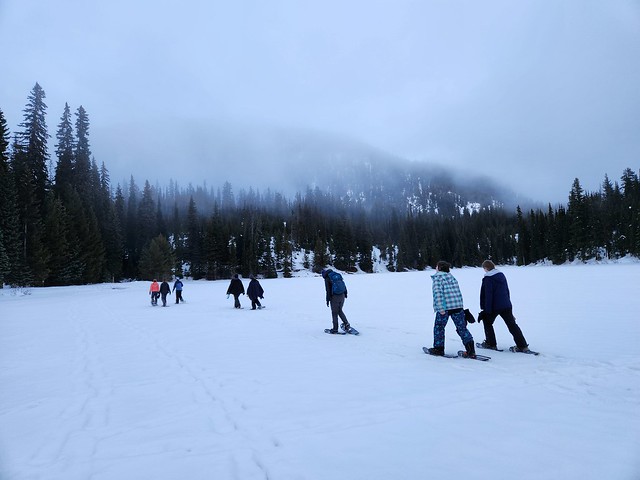
Once settled, we took our snowshoes out on the lake for an adventure. We stuck close to the shoreline as a precaution at first, but the lake was extremely frozen, so we eventually wandered a little bit further out. We snowshoed to the bridge that separates the two lakes (making sure to get back on the actual trail to avoid the river, which doesn’t usually freeze). We crossed the bridge before snowshoeing back across the lake to the campsite again. It was only ~3-4km, but it was good to do a bit of exploring. It had been pretty sunny when we arrived, but the clouds were doing really weird things, so we ended up with some interesting cloud formations on the lake.
After returning, we decided to get the woodstove going for the rest of the night. The conditions were really mild and it was only just below zero, so quite warm for first timers. But we still planned to keep the hut warm all night as a precaution in case anyone was really cold in the tent. I have to say… I love backpacking, but I was definitely a fan of the woodstove! It made the hut so cozy and it’s so large we were also able to use it as a 4 burner stove. It had a hard time actually boiling water, but it was great for melting snow and we even used it to cook our chili for the evening.
Our evening was pretty chill and we sang some campfire songs and played a lot of cards. Eventually we all crawled into our tents and one of the guiders kept the fire going overnight. Overnight reviews were a bit mixed. One tent stayed very warm, but another struggled. No one gave up and crawled into the hut, but there were definitely some improvements to be made.
Overall it was a great first trip and no one was freezing, but I’m not super enthusiastic about trying snow camping backpacking with Girl Guides. Finding warm enough gear that can be carried is a real challenge. I hope Elfin Lakes re-opens the hut again soon because I think that would be a good option for Guides. Though we are lucky that Girl Guides owns their own hut on Hollyburn Mountain as well, so we hope to explore there next year.
In conclusion, Manning Park is a great place for beginners and I’d recommend the Lone Duck I site if it’s your first time. Me and Carolyn actually tried to do Lone Duck for our very first snow camp, but we missed the turn-off to the highway and were 40 minutes down the Coquihalla before we realized, so we ended up doing Falls Lakes instead!
One of my favourite activities every winter is to go snow camping! Carolyn and I have been going for 5 years running and the trip has expanded to include Brandon and Steve. Every year we plan where we want to go and then always end up having to change plans at the last minute. You have to be flexible when going into avalanche terrain and every year it seems that the avalanche bulletin likes to mess up our trip plan at the last minute. We have a very low tolerance for risk in the winter, so we’re always changing location to ensure the safest trip possible.
This year we’d been planning to go to Pump Peak (on Seymour), but Vancouver had a particularly warm spell of weather the week before the trip, so we decided to switch to Manning Park instead in hopes of finding fresh powder. It was also calling for beautiful sunny weather on the weekend we went, so we decided on Fat Dog trail in Manning Park, which is supposed to have nice views of the park above the treeline. Then Avalanche Canada issued a special warning a few days before the trip about how the backcountry was experiencing spring-like conditions due to thaw, which meant higher risk, so we decided to change our plans once more.
I don’t think Fat Dog is a particularly high risk trail, but you do pass through a valley that is in the run-out zone of avalanche terrain at the start of the hike, so we decided to do Poland Lake instead, which we read didn’t have avalanche terrain and is shown as simple terrain on Avalanche Canada. Poland Lake has been on our radar for years, but for some reason we thought it wasn’t a very nice trail and always considered in a back-up trail.
We’re so glad we went to Poland Lake, because we ended up loving this location! To access Poland Lake, you have to drive almost to the end of the resort road and park at Strawberry Flats. You can save about 2kms if you hike directly from the ski resort, but there’s no overnight parking at the resort, so if you’re camping, you need to leave from Strawberry Flats. The trailhead is on the north side of the road near the end of the lot where the cross country ski trail starts back towards the lodge. There’s an off-shoot trail that heads up towards the ski resort, running parallel the road. This is the route we took, but we regretted it because it is all uphill and adds 2km’s of hiking. If we did it again, we would plan to leave our bags at the resort and just walk up the road.
If you do the trail right, you’ll eventually reach a small fork in the trail where the left branch heads back down towards the road and the right branch heads up to the mid-point of the ski hill. In the summer, you can reach Poland Lake via the middle of the hill, but this route is not practical in the winter. You’re supposed to go back down to the bottom of the ski hill and hike up along the western edge of the large green run called Horseshoe. But there was no signage on the left fork and nothing shown on our GPS apps, so we continued along the summer route unknowingly. This was definitely our error, we should have read more about the trail description instead of relying just on GPS, so I caution you here to go back and start from the resort base. In our defense, the resort route is not marked at all and does not look like a proper trail, so we gave resort staff some feedback.
In any case, we continued up to the midpoint of the ski resort and ended up having to snowshoe ski runs across the entire mountain. This is definitely dangerous as the runs are not wide or intended for snowshoers. Our only saving grace was that the slopes were extremely empty and we didn’t encounter many skiers. Eventually we got off the ski runs and ended up in some of the glades. We didn’t encounter any more skiers, but it was very steep terrain and had we not been in the middle of a resort (where avalanche risk is managed), we would have turned around. There’s no signage because it’s not a winter route, so we relied entirely on our GPS and way-finding to get back on the trail. Eventually we tracked down the official entrance to the Poland Lake trail (which is at the top back of the ski hill) and saw tracks leading in from the other side of the resort, which is clearly where we were supposed to come up.
By this point we were really tired from so much uphill travel and worry about where the trail was, but happy to finally be on a proper snowshoe trail. We’d already hiked about 4kms and it’s another 4kms to the lake, but fortunately the trail is a lot flatter along this section. There’s lots of ups and downs, but they are very gradual. It still took us a long time though because we were very tired and by the time we reached the lake, it had taken us just under 5 hours to go 8km. One of the other contributing factors to our pace was that we ended up having to break the trail for the better part of 3 kilometres! We were sharing the trail up until shortly after the 1km mark, but then the tracks abruptly stopped and we had to create the trail to the lake. This is such a rare occurrence in BC, where the trails are always busy, so we were excited to snowshoe in fresh powder and the prospect of having the lake all to ourselves. It is a lot more work to break trail though, so it did slow us down.
We’re still new to avalanche terrain, but we were surprised while hiking along the Poland Lake trail that it was said not to have avalanche terrain. It is marked on Avalanche Canada as simple terrain, but it is below some challenging terrain and we thought the trail could easily be in the run-out zone of an avalanche along some sections. Fortunately we all had avalanche gear, so we crossed some of the more sketchy looking sections solo to minimize our risk, mostly around the mid section of the trail, south of Grassy Mountain.
The sun was starting to set when we finally reached Poland Lake and we quickly got to work setting up camp. The official campsite is on the far side of the lake and there is a small emergency shelter over there. Due to imminent sunset, we opted not to go around the lake and found a nice spot to set up camp with a view of the sun setting over the lake. I’m not sure if we’re just getting more experienced, or if it was just that the snow was super light and fluffy and easy to shovel, but we were particularly quick in digging holes for our tents on this trip and it didn’t take us too long to get shelter up. We broke our headlamps out just as we were finishing setting up the tent, so fortunately we had daylight for most of it.
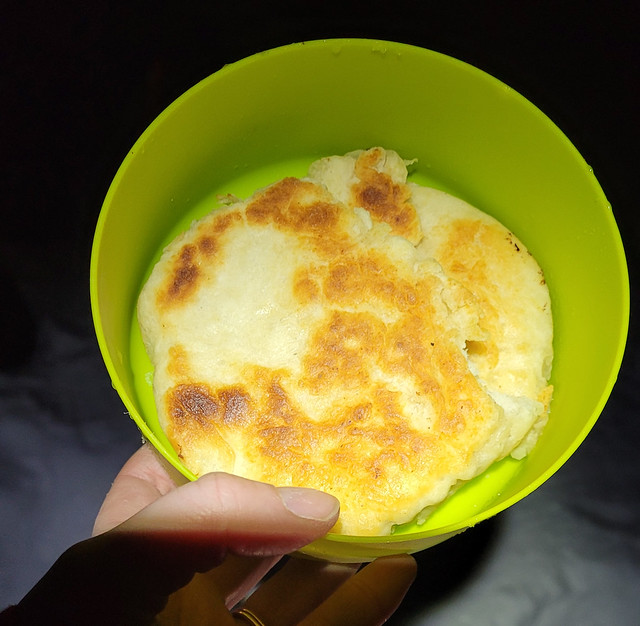
Unfortunately, we never took the time to build a proper snow kitchen on this trip. Once we got our beds set up it was dark and we were too tired to put in the effort. But we did have a delicious dinner! Brandon made us all miso soup and then me and Brandon had peanut soup and Carolyn and Steve had chicken soup. I tried something new and made bannock for dessert! It makes for a good backcountry bread because there’s no yeast, you just need to bring a bit of oil for frying. Honestly, it was delicious – I had practiced it at home, but it tasted way better in the backcountry. I just added the water right into the bag with the mix and kneaded it in the ziploc, so it didn’t even make any mess!
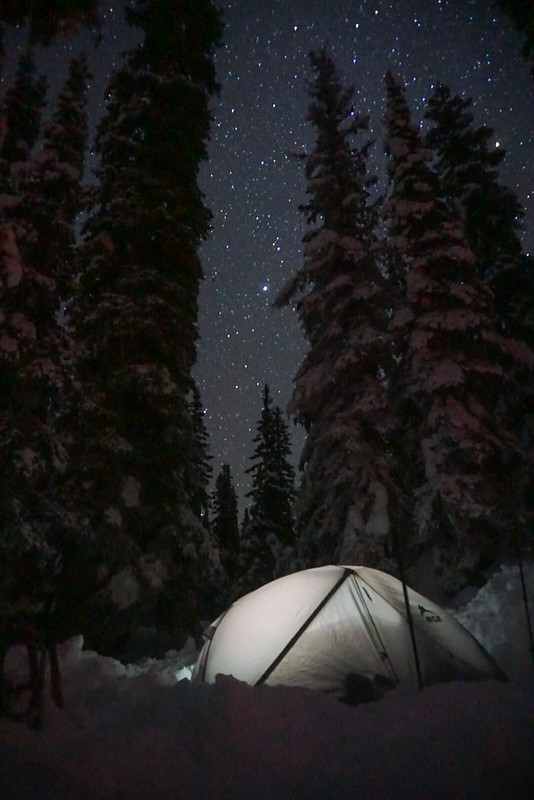
It had been a bit hit and miss with the sun all day, with it flitting in and out between the clouds, but in the evening all the clouds moved off and we had a completely clear night for stargazing! I bought a little star chart and had a good time trying to identify some of the constellations. I wasn’t planning to do any night photography, but the conditions were so good I ended up taking photos in the snow for the better part of an hour. I always get great star photos at Manning because it’s so far away from any ambient light!
Carolyn and Steve slept like the dead all night while me and Brandon listened to the cacophony of their snores. We had a bit of a lie in (for us) and got up around 8:30am. Meals are always a bit slow on snow camping trips because it takes so long to melt snow and boil water. Brandon decided to use his alcohol stove on this trip, which works well once it get’s going, but takes a long time to properly heat up. We concluded it’s good for cooking, but the traditional white gas stove is better for melting snow because the condensation on the pot was dripping into the alcohol stove and suppressing its burn.
After a leisurely breakfast we packed up everything to head back down the mountain. As always, when you’re done, make sure to fill in your holes so as not to leave hazards for future skiers. It was about noon when we left the campsite, but we made a much quicker descent than our 5 hour trek in. The actual Poland Lake trail is about 4km and it felt a lot easier after a day of rest. We went the correct way down the ski hill on the way back and hiked along the edge of the green run. We did see some signs pointing into the woods the for “Poland Lake trail”, but it was clearly a brand new trail that the resort was promoting and it didn’t look marked or established, so we opted not to use it. We did run into a resort employee in the parking lot and he confirmed it was new and said they were hoping to improve it, so hopefully next time we visit we’ll be able to use that trail!
We did encounter one odd thing on the trail that I wanted to bring up. When we were hiking along, we saw that someone had written “help” in the snow. It was right at the point where the previous tracks had stopped (where we started breaking our own trail), so we assume the individual turned around and went back. We did search around the area for anything suspicious and blew our whistle and did some voice calls, but didn’t find anything. We reported it at the resort before we left and they hadn’t received any missing person reports, so we think it was probably someone just messing around. Maybe it wasn’t, but something to think about when you are in the backcountry and what kind of message you are leaving for others.
Anyways, it only took us 2.5 hours to get to the bottom of the resort and then Steve and Brandon kindly offered to walk back the road to strawberry flats to get the cars. Me and Carolyn hung out and ate lunch while they were gone. I’ve been really into cold soaking my lunches lately and tried a cold soak taco salad that turned out amazing and was so delicious to eat! I’m working on lots of recipes for the upcoming summer season and hope to share them on the blog before then!
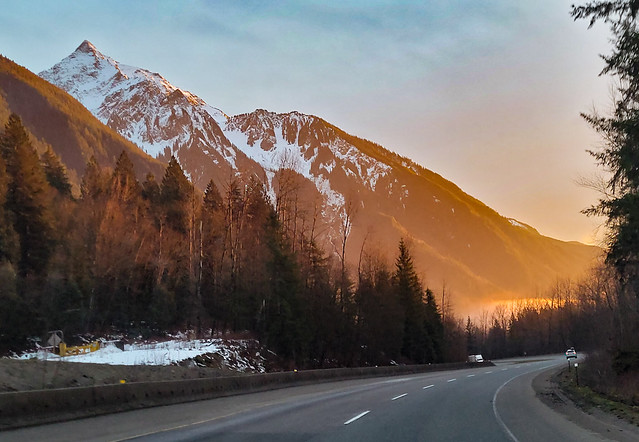
Otherwise it was a pretty uneventful trip back to Vancouver, although we did get a gorgeous sunset over the mountains driving back through Chilliwack! Definitely recommend Poland Lake after this experience, just make sure you take the winter route!
It hasn’t been the best year for winter activities. Between the pandemic restrictions and the avalanche ratings, it’s been hard to get out and enjoy the snow. We went snow camping at Lightning Lakes in late January and we’ve been trying to fit in a second trip ever since. The avalanche ratings have been pretty consistently at ‘Considerable’ and ‘High’ throughout the last month and we ended up cancelling our trip twice. But we finally got decent conditions this past weekend and decided to go for it as one last snow activity to close out the season.
Zoa is popular among backcountry skiers because it’s a relatively easy hike up an old forestry road and thanks to the low incline, most of the hike is in simple terrain. Interestingly, the first time Carolyn and I ever snow camped was at the base of the Zoa Peak trail. We’d intended to go to Manning, but a wrong turn on the highway landed us in the Coquihalla Rec Area and we decided to snowshoe 1km in to the Zoa Peak/Falls Lake trailhead and camp on the summer parking lot (which isn’t plowed in the winter). So we felt like we’d come full circle by returning to this area and hiking up to Zoa.
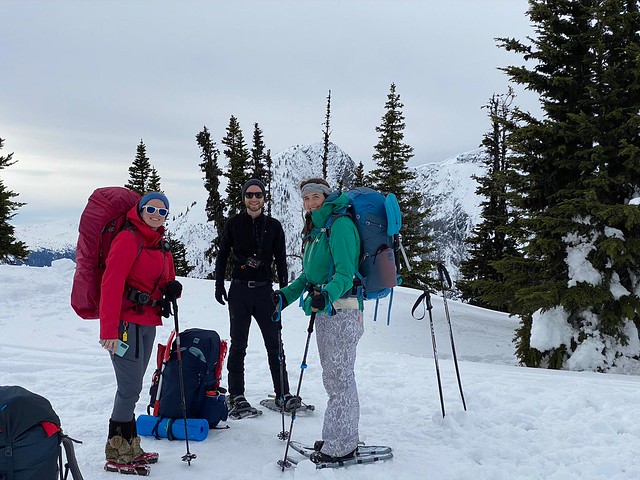
It was a busy day on the trail with both skiers and snowshoers, but we were the only ones staying overnight and the crowds quickly thinned out when we reached the top. However, it was a very challenging hike up the mountain. Because it was mid-March, it wasn’t really ideal snow conditions for any kind of activity. We debated for ages whether we should wear snowshoes or spikes and ended up with me and Brandon hiking in spikes and Carolyn and Steve in snowshoes. There was really no right answer, but in retrospect, I think snowshoes were overall the better choice.
The first kilometre along the access road was very well packed and I had no problem in spikes, but once we started climbing up the old forestry road, snowshoes were preferable. It was really sunny, so the snow became a bit slushy and while we weren’t punching through the snow with spikes, it was a bit like walking on sand and made for a very draining hike up. Most of the elevation gain is done on the forestry road and with the sun beating down on us and reflecting off the snow, it ate up a lot of our energy. We all wore sunscreen on our faces, but I ended up getting burned on the underside of my chin from the reflection off the snow!
After about 2.5km, you need to exit the road and hike into the woods. The summer trail exits the road earlier, but in the winter it’s better to continue further up since the grade is lower there. There is some pink flagging tape to mark the turn-off, but it’s easy to miss so I recommend being on the lookout and using a GPS. From there you hike up through the woods until you reach the ridge. It’s still steep, but the trail is more packed through the trees, so my spikes worked better here. It can be a bit confusing because the skiers take all kinds of different paths down through the trees, but as long as you keep going up, you really can’t go wrong and will eventually reach the ridge.
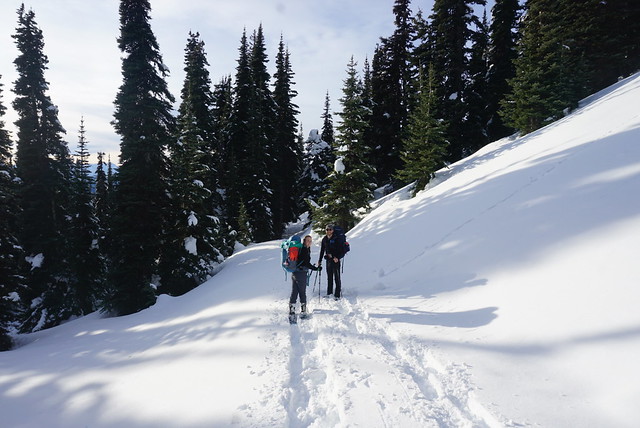
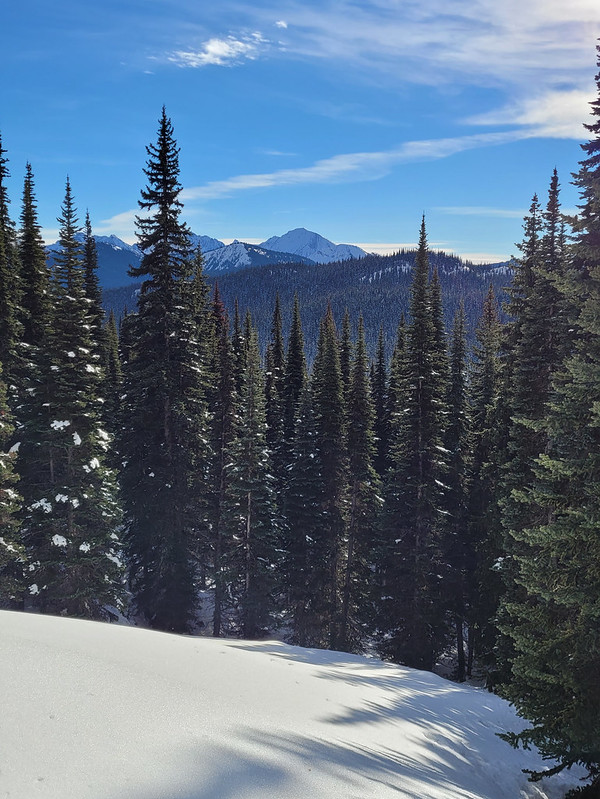
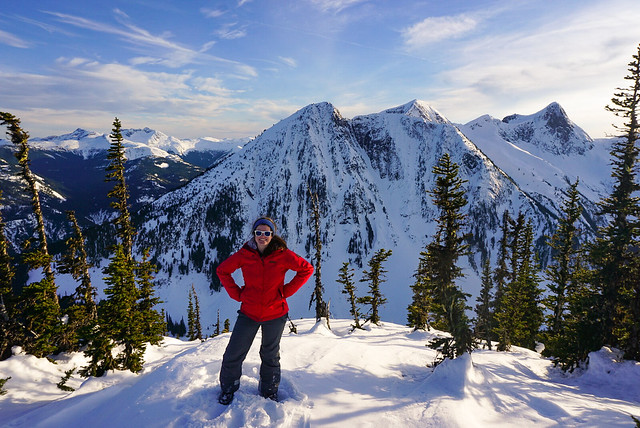
Snowshoeing along the ridge up to the sub-peak is gorgeous! I did part of Zoa in the fall once, but it’s much more scenic in the winter because the snow lifts you up higher among the trees, resulting in a better view and not confining you to a single area. In the summer, the brush makes it impossible to travel along the entire ridge and the trees limit a lot of the view, so I much preferred the winter views.
In total, it’s about 5km from the highway to Zoa Peak. We decided from the beginning that we would cut off a kilometre and only hike as far as the sub-peak. This is because after the sub-peak the trail gets steeper and the avalanche terrain changes from ‘simple’ to ‘challenging’. The avalanche risk on the day we went was ‘moderate’ in the treeline and ‘considerable’ in the alpine. Zoa seems to be kind of on the cusp between treeline and alpine, so we decided to play it safe and camp at the sub-peak.
By the time we reached the ridgeline, we were all exhausted, so we decided to camp just below the sub-peak. It was calling for a bit of wind overnight and we wanted to be sheltered, plus the views are gorgeous all along the ridge. So we found a good looking spot and got right to work on setting up camp. Unfortunately, stopping triggered a few issues for me and after a few minutes of shoveling I found myself getting really lightheaded. I think I was dehydrated, so I took a break and tried to re-hydrate with some electrolytes. We all suffered some mild dehydration throughout the hike, so it was a good reminder to drink lots of water prior to a hike as well. Fortunately we had lots of electrolytes and were all able to recover.
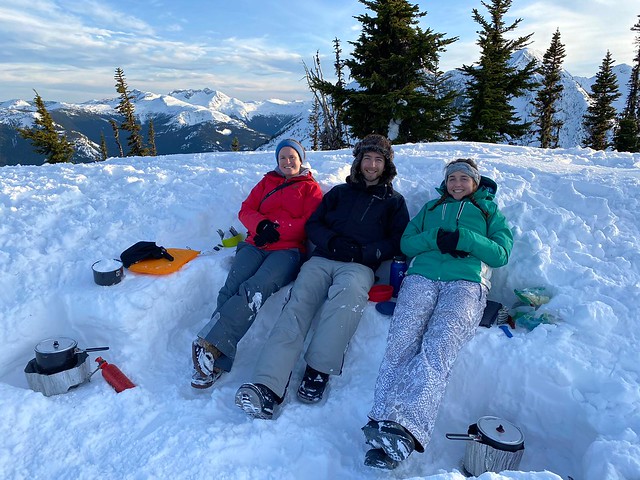
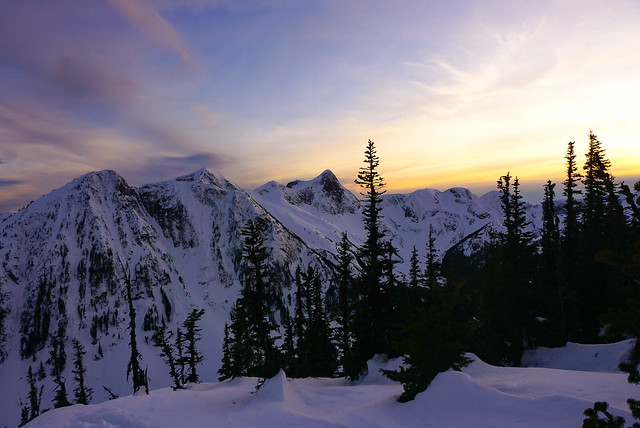
So Brandon did a lot of the shoveling for our set up and eventually I got to work on a snow kitchen. The snow was really sticky so it was good for setting up a kitchen and we didn’t have to pack it down too much. There were 4 of us, so Brandon and I shared one tent and Carolyn and Steve shared another. We had a great view of what I think was Thar, Nak, and the back of Yak Peak and enjoyed hanging out watching the mountains. One of the benefits of going so late in the season was that we had a bit more daylight in which to enjoy the view.
Brandon made us miso soup to help with rehydrating and then we all got to work on melting snow for dinner. I shared Brandon’s classic thai curry chicken, which is my absolute favourite backcountry meal! My parents had sent me some chocolate from Newfoundland Chocolate Company, which we enjoyed as a treat for dessert.
Usually when we go snow camping, we go to bed super early because it gets so cold and dark, but it was a warmer evening and the clouds had completely cleared out, leaving a beautiful view of the stars! So we stayed up much later than we usually do and I took star photos while Steve messed around with his radio to get us some tunes. Two night hikers passed us right after it got dark, but otherwise we were the only ones around and enjoyed a beautiful sunset. It ended up being 9:45pm by the time I finally crawled into the tent for bed, which is by far the latest I’ve ever stayed up snow camping!
I didn’t get the best night’s sleep as the wind picked up overnight and shook us around a bit. Nothing to be concerned about, but it did make it a little harder to sleep. I made an egg and bacon hash for breakfast and then Brandon and I hiked the last few metres up to the sub-peak to check out the view. Otherwise we just took down camp and packed up again to head home. It was a lot easier on the second day because the sun stayed behind the clouds, meaning the slush had become more solid and was easier to hike out in spikes. We didn’t see as much traffic and powered down the trail in just an hour and a half (versus the 3 hours it took us to hike up).
So overall it was definitely one of the more challenging hikes, but the weather and views from the top were amazing and we ended up having a great time!












 The Road Goes Ever On