Hiking The Chief

There are lots of popular hikes in Southwest BC, but I would argue that The Chief in Squamish is one of the most iconic. I had experience hiking before I moved to BC, but my practical knowledge was very limited and has grown enormously since I moved here. The only trail I was aware of before moving across the country was the West Coast Trail and I thought it was similar to the East Coast Trail in that it extended down the entire West Coast and could be day hiked in sections like in Newfoundland. I was obviously very wrong and quickly learned that it is actually a remote hike that requires substantial backpacking skills over 7+ days.
20220501_095306

Similarly, somehow I heard about The Chief soon after moving here and decided it was a great trail on which to start my west coast hiking adventures. So one sunny day in early June 2014 when my Dad was visiting, we drove out to Squamish to tackle the beast. Looking back on the experience now, it’s a bit comical. We left Vancouver late in the morning and were amazed that we couldn’t find anywhere to park (not a problem in Newfoundland). We ended up finding a place at Shannon Falls (this was before the Sea-to-Sky gondola) and decided to hike up to the First Peak from there. It’s easy to judge people that head blindly into the backcountry with no experience, but that was also how I first started adventuring when I moved here, so I can relate. There’s a very different culture on the East Coast, and while I think East Coaster’s could be a little more prepared, the level of risk associated with hiking in the mountains is a great deal higher on the West Coast.
20220501_094634

So I don’t think tackling The Chief as my very first hike was a great idea, but fortunately we didn’t get into any trouble on this hike, or any future hikes, while I was building up my safety and adventure smart knowledge. I remember the hike being very strenuous and it taking us a long time to hike up all the stairs to the top. I remember the rope and chain sections, but I don’t remember ever feeling unsafe on the trail. I bring this up because I recently re-visited this trail in May (8 years after my first visit) to hike to the Second Peak and it brought back a lot of memories that caused me to reflect on this trail and my journey since that very first hike.

The Chief is a hard trail. As my knowledge has grown and I’ve had experiences that required better trip preparedness and wilderness first aid, I’ve become both more safety conscious and risk adverse. It’s easy to walk blindly into situations that we are unprepared for in the wilderness and I’m not surprised to find that The Chief is one of the most visited places by BC Search and Rescue. I can’t quite trust my memory, so perhaps the First Peak is easier than the Second Peak, but returning there this year I felt quite astounded at how challenging The Chief is for how many visitors it receives.
20220501_091507

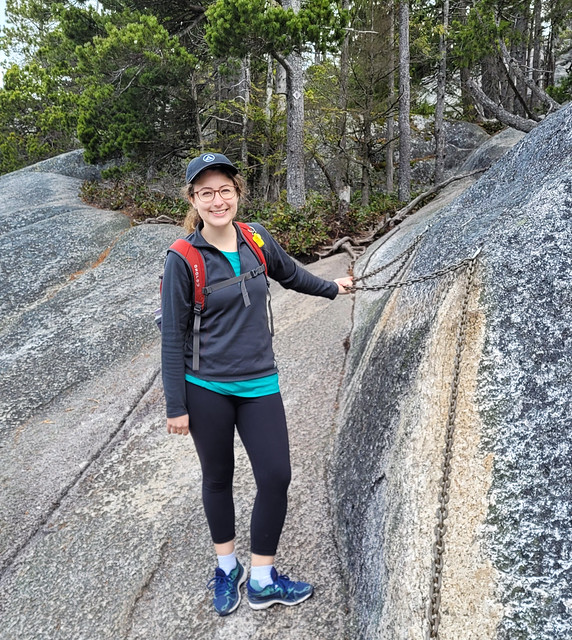
There are many rope climbs, narrow sections with steep drops, a ladder, and steep scrambles over slippery rock. The challenges are exacerbated by the crowds, which create bottlenecks at critical junctions. I’m sure this creates a sense of impatience among hikers that could result in mistakes at challenging locations if people are trying to hurry. I felt like it would be hard to lose the trail (though this does happen), but easy to get an injury. We were able to mostly avoid this with a very early hiking start, but it did make for a slower hike back down on the way out.

20220501_095607

So I definitely don’t recommend this hike for everyone. I’d like to return some day for the Third Peak, but after my last visit I can’t say I’m in a huge rush to do it again. Like I said, I’m reluctant to trust my memory, but given my recent experience with the Second Peak, I’m inclined to say that it’s a bit easier going up the First Peak (which I have done twice in the past). All 3 trails start at the same trailhead and it’s an easy flat walk through the walk-in campsites before you hit the stairs. Once you hit the stairs, it’s all uphill for the rest of the hike. It starts with constructed wooden staircase (which on its own is even challenging because the steps are very shallow and steep), but it quickly transitions to stone steps for the rest of the hike.

PSX_20220513_125703

Approximately 1.1km into the trail, there is a right branch that you can take to get onto the Sea to Sky trail or the branch to Third Peak. I’ve also done the Sea to Sky trail which climbs up to the gondola (you take the gondola down). It’s a very steep trail, but doesn’t feel as perilous as The Chief. I haven’t taken the branch to the Third Peak, but you can access it either through here or continuing on from the Second Peak. The topography looks a bit gentler than the trails to First and Second Peak, so if I do return for this peak, I’ll take that trail instead.

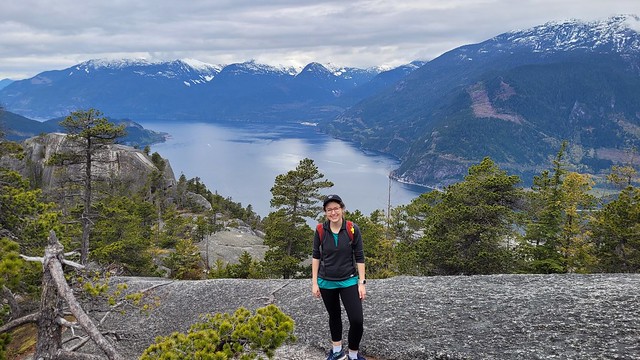
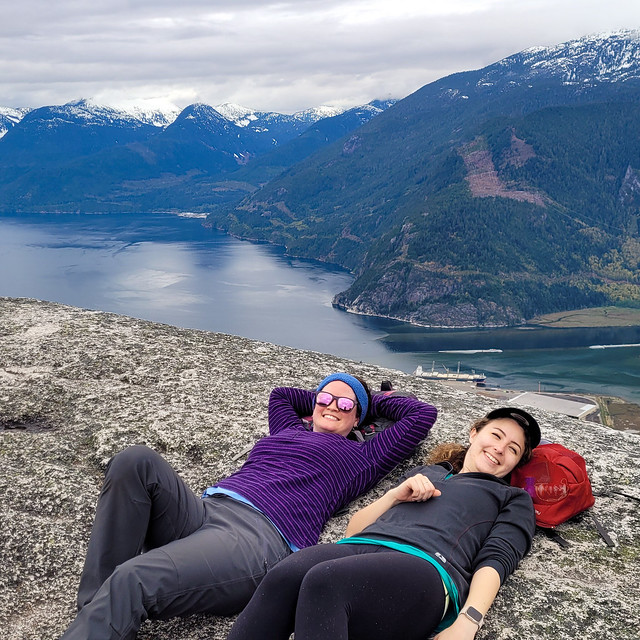
If you continue on past this branch, you’ll hit the second branch to the First and Second Peaks around 1.8km. It’s a shorter hike up to the First Peak – some apps show a trail connected the First Peak to the Second Peak trail, but it’s a climbing route, so do not attempt! In terms of views, both the First and Second Peaks have incredible views. The First Peak is the closest to Howe Sound, so if you want to snag some photos of the vibrant blue water, I’d pick this one. The Second Peak is higher and looks down on the First Peak and provides more of a bird’s eye view of Squamish.

20220501_092706_01

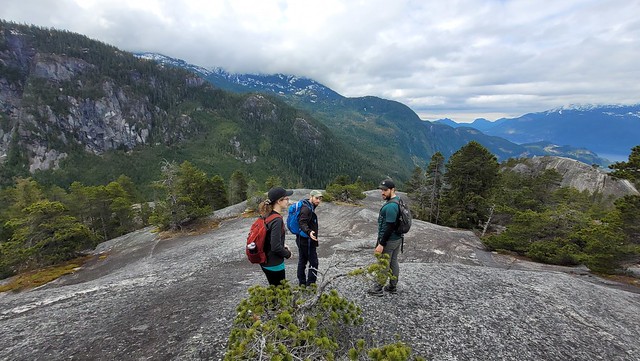
My visit to the Second Peak was a little sentimental because I hiked with Karen and Grant. Karen is my oldest friend (27 years and counting) and they recently moved back to Newfoundland after also spending the last 8 years in Vancouver. The Chief was my first ever hike here and also the last one that I did with Karen and Grant. We’ve all grown a lot since then and even though the climb is still strenuous, the stairs didn’t have us as breathless and panting as they did when we first moved here.
PSX_20220511_220643

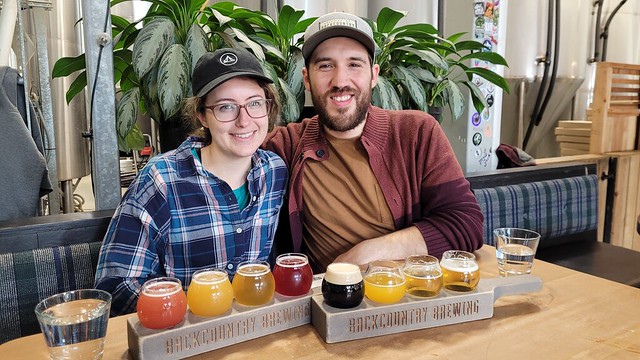
The Second Peak is quite exposed for the last section – there’s no marked trail, you just scramble up the rock until there’s no where higher to go. We had the summit mostly to ourselves due to our early start and we stayed up there for a while snacking and taking some photos before hiking back down to get beers and pizza at Backcountry Brewing. The climb is tiring, but I always find the hike down worse. Take your time and do the rope and ladder sections backwards. There’s one particularly challenging part before the ladder that me and Karen both struggled on because we are shorter. There were more people on the trail on the way back, which slowed us down, but we made sure not to rush on the top section and talked each other through it on the way back. My biggest word of advice would definitely be not to do this hike if it’s rainy as the rock will become a big slip’n’slide.
20220501_121541

So that is my assessment of The Chief. I feel really different about it now than I did 8 years ago and I think that comes from better understanding the risks. Sometimes a little knowledge is almost worse than no knowledge because you don’t understand the depth of your unknowns. If you’re new to hiking, I’d recommend taking the Sea-to-Sky gondola instead of hiking The Chief. It has just as incredible (if not better) views as The Chief, but has much easier and well-maintained trails. There’s no shame in doing the easier hike. I just want to present a bit of a different perspective on The Chief because I don’t want people to blindly walk into it the way that I did when I first moved here. I still think it’s a great hike, but something to work your way up to.

Ski Resort Series: Mount Norquay

Mount Norquay was the last ski resort we visited while in the Rockies. It’s the smallest of the three and I’d heard it is quite steep, so we decided to leave it until last in case we wanted to re-do one of the others instead. Although, really I knew we’d end up going because I wanted to be able to say I’d skied all of the Big 3.

Norquay may be the smallest, but it’s the closest to Banff town. You don’t even need to get on the highway, it’s just a 15 minute drive along switchbacks up to the base of the mountain. Because it’s smaller, it seems like Norquay has tried to diversify itself and it also has night skiing and snow tubing. I ended up liking it a lot more than I thought I would! Dare I say I maybe even preferred it over the infamous Lake Louise? It may have been because we got really good conditions at Norquay – about 10-15cm of fresh powder the night before – so I felt a little more adventurous with the soft powder base.

PSX_20220322_180106

There’s only 2 big lifts at Norquay and 2 smaller lifts. The North American lift is located on the front of the mountain and is almost entirely black runs. Like I said, Norquay is a pretty steep mountain and there were a lot of moguls on it when we visited, so we opted not to ski that lift at all. Instead we made our way over towards the far lift, which is called Mystic, and had a great day skiing over there!

PSX_20220307_191032

If you don’t like steep runs, then I definitely wouldn’t recommend this mountain. Even the blue runs were quite steep, but the fresh powder helped. We did pretty much every run on the Mystic side of the mountain and had a great time working on our mogul skiing skills. There are a few black runs down the centre of the lift with a lot of moguls, but since there was so much powder, which makes for gentle falls, we decided to give them a try. I don’t mind moguls at all, but I definitely like having good conditions for them.

PSX_20220313_161653

Later in the day we did a few runs on the Spirit Chair as well, which I really liked even though it has shorter runs. It was the best visibility day we had all week, so there were beautiful views of the surrounding mountains throughout the day (though still limited blue sky).

We decided not to stick around for night skiing because it’s really only the small cascade chair that is lit. I definitely wouldn’t recommend going and paying for night skiing because it’s so limited, but if you already have a day pass it would be fun to stick around for it!

20220304_174136

Instead we decided to go snow tubing because it was included in our pass. Tubing was fun, but I think they sell too many tickets, so it’s a really long wait to take the magic carpet up to the top. The first run wasn’t too bad, but more and more people kept showing up and since the tickets hadn’t cost anything, we decided to move on after 3 runs.

So even though Norquay is the smallest of the three, I still think it’s worth visiting, and thanks to the excellent conditions, we ended up having a great time!

Banff-Norquay_pistemap

Hiking Johnston Canyon

Johnston Canyon is a quintessential hike if you’re visiting Banff National Park, and the great news is you can hike it all year round! I thought I’d been there once before in the summer, but after visiting on this trip, I think this was actually the first time. It’s located about halfway between Sunshine Village and Lake Louise, but it can be a bit tricky to get to.

20220301_110755

It’s not off the main highway, but instead located on the Bow Valley Parkway, which runs parallel to Highway 1. It’s just a one-lane highway and it’s not in the best shape, so assume a much slower pace than driving on the main highway. You can enter the Parkway from just past Banff, or at the turn for Highway 93 that runs down towards the Kootneys. I’m not sure what the deal with the road is, but the exit outside of Banff isn’t always open, so even though you have to do a bit a backtracking, sometimes you have to go all the way to the second turn off to get on the Parkway (as was the case when we visited). It was disappointing because it results in a longer journey, though with the speed you can try on Highway 1 I’m not convinced it’s shorter on the Parkway. But I’ve heard the Parkway is incredibly scenic, so I’m sad we didn’t get to drive the whole thing.

20220301_123441

In any case, Johnston Canyon is a pretty popular place to visit and it’s nice that you can hike it all year round. There will be snow in the winter, and though it’s all packed down from the frequent traffic, microspikes or cleats are definitely required, especially on some of the uphill and downhill sections. We brought our own spikes with us, but if you’re just visiting, you can rent them from any of the outdoor equipment stores in Banff. There were a few people without them, but actually most people had some kind of traction and they were all very similar, so I assume most people were using the rented cleats.

20220301_111553

In the summer, I think you may need to get there early to secure parking, but it wasn’t a problem in the winter. Since it’s a shorter trail, there should also be a lot of turnover in the lot. The trail hikes through the forest and then along the side of the steep walls of the canyon. In many cases you go right through the canyon on grated walkways that are bolted to the side of the canyon wall. It’s a little scary in winter because the snow elevates the trail, meaning the rails only come up to about mid-thigh, so use caution when navigating some of the narrower parts of the canyon. A few times we waited for people to pass coming in the opposite direction so as not to crowd the trail.

20220301_111745

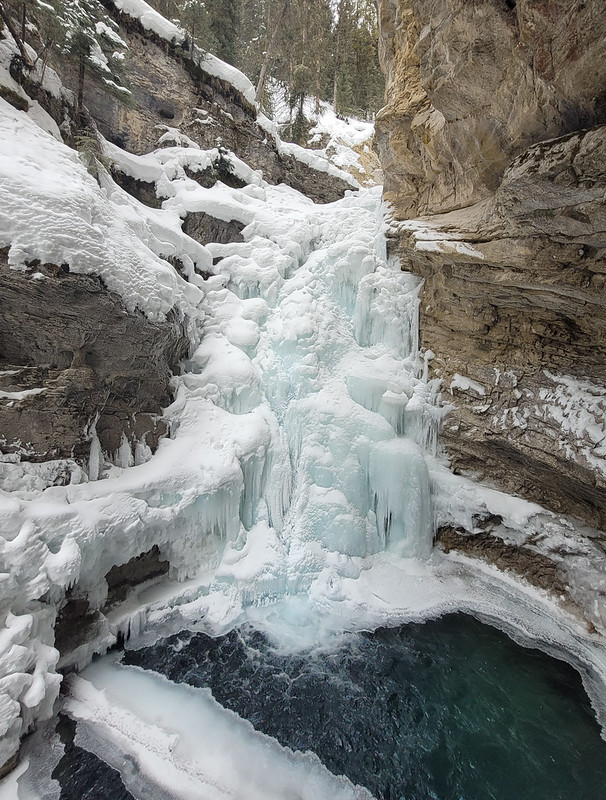
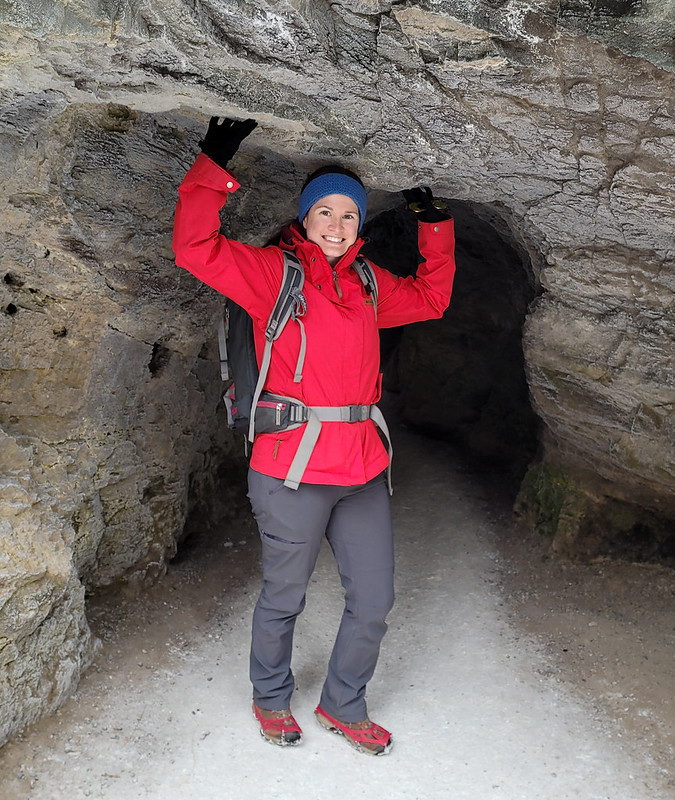
There’s lots to see along the way and we really enjoyed all the frozen waterfalls and ice structures that form along the side of the canyon. The first big attraction is the lower falls, which you descend down to and cross a bridge before walking through a short tunnel to get an even better view of the river and the lower falls. It’s quite unique, which is how I knew I hadn’t been there before. The tunnel is cool and we hung around for a bit watching the falls. The surface of the falls looks frozen, but the river is still running underneath, so it creates this cool, half frozen pool at the base.

20220301_112805

Some people just go as far as the lower falls and then turn back, but we decided to continue on to the upper falls. You go past several more waterfalls along the way and before you get to the upper falls, there is a path through the woods to go down to the river. At the right time of year, you can walk on the river to the upper falls. We opted not to because we could see a lot of dicey sections from the moving water along the river, but lots of people were walking on the ice, so I assume it was relatively safe. It’s a gentle uphill most of the walk to the falls and then when you finally reach the upper falls, there’s a big viewpoint looking down on them.

PSX_20220303_204944

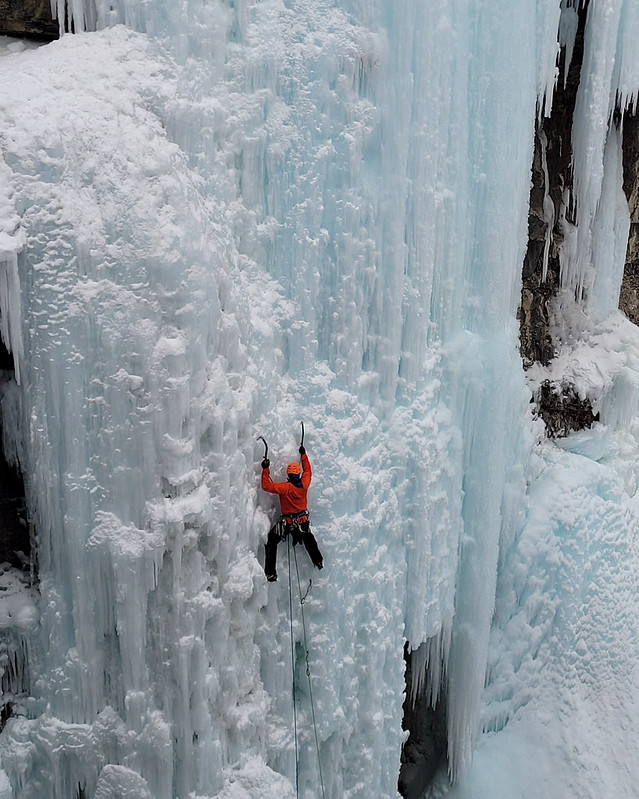
The upper falls were completely frozen this time of year, but we had the added benefit of getting to watch ice climbers! Turns out it’s a popular location for ice climbing and there were several groups climbing along different sides of the multiple ice faces. Ice climbing is definitely a sport that is too intense for me, but it’s really interesting to watch other people do it, so we settled down for our lunch and enjoyed watching the climbers while we ate. The trail was relatively busy, but manageable. We were able to see what we wanted to see and while there was a good number of people, it wasn’t crazy crowded. It was a weekday though, so it might be worse on the weekends and I’m sure it’s a lot busier in the summer.

All in all, the hike was approximately 5km to the upper falls and back, with about 130m in elevation. So it’s definitely a great hike for beginners and had a really interesting topography. But as always, exercise caution when going on any hike, especially in the cold season. We had a good time and I’m glad I got to cross this popular hike off my list.

20220301_121807