Bowron Circuit Kayak Trip: A Paddler’s Paradise

I’m so excited to write about this trip! I’ve been wanting to paddle the Bowron Lake Circuit for a while now, and Seth and I finally took a week off to do it in mid-May 2025. Bowron Lake is traditionally known as a 116km canoe circuit, but it can be done in a canoe or a kayak, so we were thrilled to undertake this adventure with our 16 foot sea touring kayaks.

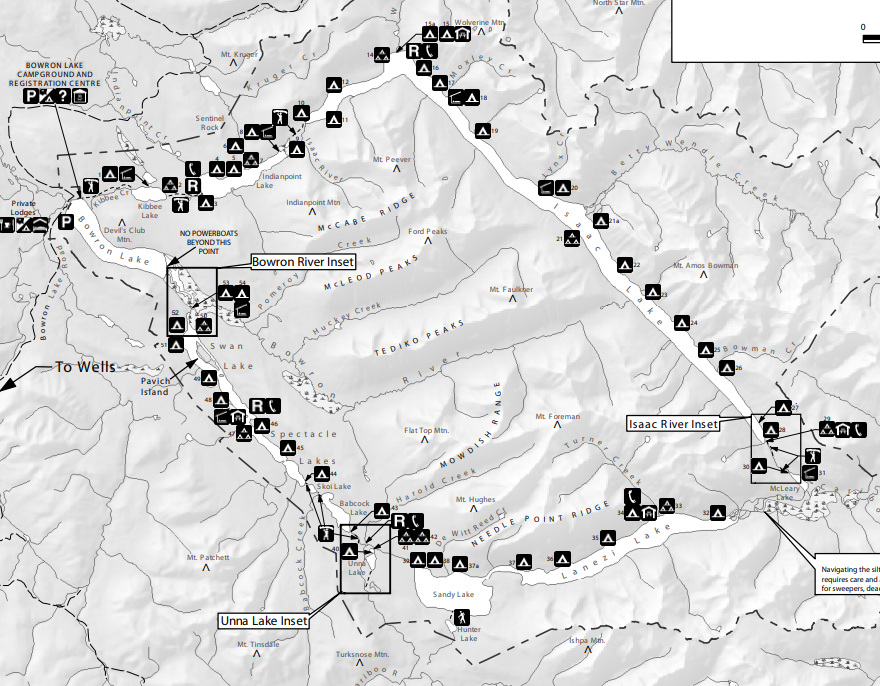
The Bowron Lake Circuit is a renowned paddling route for it’s premier access to remote wilderness and wildlife. It’s an 8-10 hour drive from Vancouver, located ~700km north of Vancouver and 2 hours east of Quesnel. It’s a series of 12 lakes, which are connected by either rivers, or 11km of portaging trails. It’s a loop circuit, so you don’t have to undo any of the distance you paddle, and there are 54 campsites spread out around the circuit. It does require a permit, which indicates your starting date, and then you have up to 14 days to complete the circuit, staying at any of the first-come-first-serve campsites along the way. In order to maintain the remote wilderness setting, there is a limit on how many boats and people can start the circuit every day.

20250517_193638

From what I understand, the circuit is very busy in the summer and the permits often sell out. It is less busy in the late Spring and early Fall, which is why we opted to paddle the circuit in mid-May, just 1 day after it opened for the season. It was a bit busier than we were expecting (several others started at the same time as us, around the May long weekend), but still relatively empty. We didn’t have any trouble getting campsites and had the campsite completely to ourselves more than once.

We had a long time to wait in anticipation of this trip because the permits for it released in October 2024. The circuit is located in Bowron Lake Provincial Park and is managed by BC Parks, but they don’t follow the same 4 month release timeline as other parks. A number of reservations released in October, which is when we booked ours, but it seems that it was only half of the reservations, with the rest releasing in March. In any case, we went early enough that the permits weren’t sold out on our starting date.

20250517_184829
20250517_205052

There’s a few benefits to going so early in the season. The biggest is that there aren’t a lot of crowds, but other perks were that there were limited bugs, no smoke, and no fire bans. So we enjoyed having a campfire every night and didn’t have to worry about getting eaten by mosquitoes. However, there are also several downsides to doing this circuit in May, the biggest of which is the weather. Bowron Lake is located quite a bit north of Vancouver, and it was a lot colder. The ice actually only melted off the lakes 2-3 weeks before we started the trip, and the weather was pretty variable. It rained most days that we were on the circuit and it dropped near zero degrees celsius most nights. Plus, it could get pretty windy some afternoons and even some mornings. We still had a great time and don’t regret going in May, but we missed out on some of the other attractions of the circuit, like swimming.

I plan to write a full guide to paddling the circuit, but I want to dedicate these initial posts to my trip reports and sharing about our personal experience on the circuit. At 116km, this was by far the longest paddling trip we’ve ever gone on. It was our first major lake trip (we usually do sea kayaking) and our first time portaging the boats. Bowron Lake is a good option for kayakers though because the portage trails are all accessible with a cart, so you don’t have to do an overhead carry with your boat, making it accessible to kayaks and canoes. You have 14 days to finish the circuit, but we opted to complete it in 7 days and 6 nights. This seemed to be the most popular duration, though we did meet one group doing it in 6 days and one group doing it in 8 days. I think I would prefer to go slower in the summer to enjoy swimming in the lakes, but 7 days was a good duration for May.

PSX_20250525_154327
20250518_121608

The trip started with a full day drive to Bowron Lake Provincial Park. We left Vancouver early in the morning, stopping in Cache Creek for lunch and Quesnel for supper. It’s still a good 2 hour drive from Quesnel on highway 26, so it was quite late when we finally arrived. We did play tourist on the way there though. There’s a historic gold rush town located just before the turn-off to the park, Barkerville, and we figured there was no better time to visit. Barkerville is now just a tourist attraction, but it’s definitely worth the stop. It has more than 125 heritage buildings dating back to the mid-1800’s gold rush era, including Barkerville’s Chinatown, as well as evidence of early indigenous settlement dating back more than 10,000 years!

Our experience was unique in that the attraction was open for the season, but because we arrived in the evening, it was technically closed for the day. They leave the gate open for people to browse, so we were able to walk the completely empty streets of Barkerville, which was honestly, a bit spooky! It’s definitely a can’t-miss experience if you happen to be in the area.

20250518_111140

We did see another attraction along the highway to Bowron Lake – wildlife. Shortly after turning onto the highway we encountered about a dozen deer, which reminded us to slow down our speed. Once we got our of deer territory, we moved into bear territory, spotting 3 separate black bears along the way. We were getting a bit nervous about what we might encounter on the circuit, but we didn’t end up seeing any bears along our paddling route. Before arriving to Bowron, we spotted a fox along the road, which was probably the most exciting encounter!

There are a few options for where to stay before starting the circuit. There is a mandatory orientation at the park registration centre before starting the circuit, which is offered from 8am-noon, so you do need to arrive quite early. You could stay in Quesnel and drive in, or there is limited lodging in the small town of Wells on highway 26. We wanted to get an early start, so we stayed on the lake itself. The options I learned of were Becker’s Lodge, Bowron Lake Lodge and Campground, or the BC Parks Bowron Lake Campground.

PSX_20250527_185457
PSX_20250527_185644

My preference would have been to stay at the BC Parks site, which is the cheapest, but I couldn’t book a single night at the campground because it was over a long weekend and the system only allows you to book the entire weekend. We probably could have got in FCFS, but I opted to book 1 night at the Lodge Campground instead. It’s located right on the lake and is quite beautiful. The Lodge also rents canoes, but most people seemed to be renting and staying at Becker’s Lodge rather than Bowron Lodge. We own our kayaks, so we didn’t have to navigate rentals.

We were up early on Sunday morning to head over to the Registration Centre to complete our orientation. It was pretty straightforward and we got our permits to start the circuit. If you’re going in a canoe, you also have to get your gear weighed. To limit impacts to the portaging trail, you’re only allowed to portage with 60lbs of gear in your boat, everything else has to go in a backpack that you wear. It turns out they don’t weigh kayaks (I guess it’s harder to overload the kayak hatches than a canoe), but we followed the same rules as the canoes anyways. We didn’t want to be towing fully loaded kayaks (it’s hard on both us and the boats), so we also brought backpacks to carry gear while portaging. Logistically, this was more challenging as a kayaker, because we had to pack and unpack the backpacks at every portage and squish the empty backpack into the hatch, but we made it work.

PSX_20250529_081759
PSX_20250527_185624

We had 7 days to complete the 116km circuit, which works out to an average of 16.5km per day. In reality, we did a lot more than that and I ended up tracking 135km on my GPS (which would average to 19km a day). That said, I tried to pace our days to do shorter distances on days with portages, and longer distances on days with only paddling. The circuit is very front-end loaded when it comes to portaging, so I planned for a pretty slow first day, especially since we’d be portaging with all our food weight.

There’s 3 portages totaling ~6km in the first 15km of the circuit. The third portage ends at Isaac Lake, which is the biggest lake on the circuit. On the day we started, there were several other groups starting. There was a group of 5 male canoers, a group of 5 male kayakers, a group of 3 male canoes, and a solo male kayaker. You can probably notice a common denominator in all those groups: male. We got to know a lot of these guys over the course of the week, and they’re all nice people, but I was the only woman on the circuit the entire time, which was a little disappointing. Ladies – Bowron is really fun, add it to your bucket list!

PSX_20250527_185605
PSX_20250528_181552

My point is that all of these groups had the goal of making it to Isaac Lake on day 1. I considered if we would also head for Isaac Lake, but I didn’t really want to overdo it early in the trip, nor did I want to do 3 portages in one day. So we decided to make the end of the second lake our goal for day 1, which I think was a good decision.

The circuit immediately starts with the longest portage, a 2.5km trail to Kibbee Lake. We were the first people on it for the day and the trail was in relatively good shape. The challenge was that it’s mostly uphill and we were fully loaded. It is humbling to drag a 45lb kayak while wearing a full backpack and we were quickly out of breath and sweating. That said, I think we did a pretty good job at our first portage, taking about an hour to finish it. It was threatening rain all morning, but it stayed dry until we arrived at Kibbee Lake.

20250518_195822

Kibbee Lake is only a 2.5km paddle before you’re back at the next portage. The launch point at Kibbee Lake is really nice and starts with a leisurely paddle through the lake’s inlet. It started raining pretty much exactly when we got to Kibbee Lake, but we preferred that timing. I don’t really mind paddling in the rain. With our neoprene skirts and rain jackets, we get less wet paddling than we would on land, so it wasn’t too big a deal. Since the forecast for the week was pretty cold, I purchased a pair of neoprene gloves before the trip and they were worth every penny throughout the week! They kept my hands nice and warm, even when wet.

It rained pretty much every day that we were on the circuit, but it was one of the least defining parts of the trip if I’m being honest. I thought it would be miserable to be out in the rain for a full week. But it was the kind of rain that moves around a lot. It would rain for 15 minutes and then move on. At no point on the trip did it rain so much that our waterproof layers wetted through, so it honestly didn’t bother me.

PSX_20250528_181637
PSX_20250528_181657

We had a nice paddle across Kibbee Lake, but too quickly we arrived at our second portage. This one was a little bit shorter, at 2km, but it felt so much worse. Looking at the map, the topography on the second portage is actually more gentle than the first portage, but I guess I was feeling tired, because it did not seem that way! It starts with a hill and I was pretty quickly cursing my kayak. I don’t really use those arm muscles very much, so my forearms were screaming from pulling the kayak and my hands were hurting from dragging it. But I think my biggest problem was that I was hungry. I complained for the entire first half of the portage, which was all uphill, before finally pulling over and claiming that I couldn’t go a step further without having lunch!

The rain stopped again when we started portaging, so I think it was a good call to stop and eat. We parked our kayaks on the side of the trail and opted to just eat our lunch in the woods. I felt much better afterwards and let the downhill half of the trail propel me to our next milestone, the start of Indianpoint Lake.

PSX_20250528_181457
PSX_20250528_181905

At this point, some of the bigger groups had caught up with us, but they all had the goal of getting to Isaac Lake. I had studied the campsite map before the trip and noted that some of the campsites have shared shelters. I’m not sure how popular these shelters are in the summer when it’s warm, but they ended up being pretty popular on our trip, given that it was cold and wet. Indianpoint Lake is 6.5km long, but campsite #8, which is located near the end of the lake, is noted as having a shelter. So I made campsite #8 my goal for the day.

First, we decided to try our luck at a woodlot. The circuit has a number of woodlots scattered throughout the park where you can stop and pick-up wood. I thought this was going to be national park style woodlots, but it’s really just specific areas of forest with lots of blowdown. The woodlots aren’t marked on any map because it seems that BC Parks regularly moves them around, so you can just see the signage from the water. There’s one located early on Indianpoint Lake, so we decided to check it out, but it ended up being our first and last woodlot. Since it was early in the season, it was really easy to forage deadwood around the existing campsites, so we didn’t bother with any of the other woodlots after that because it was a pain to lug the wood around in my kayak.

20250518_204503

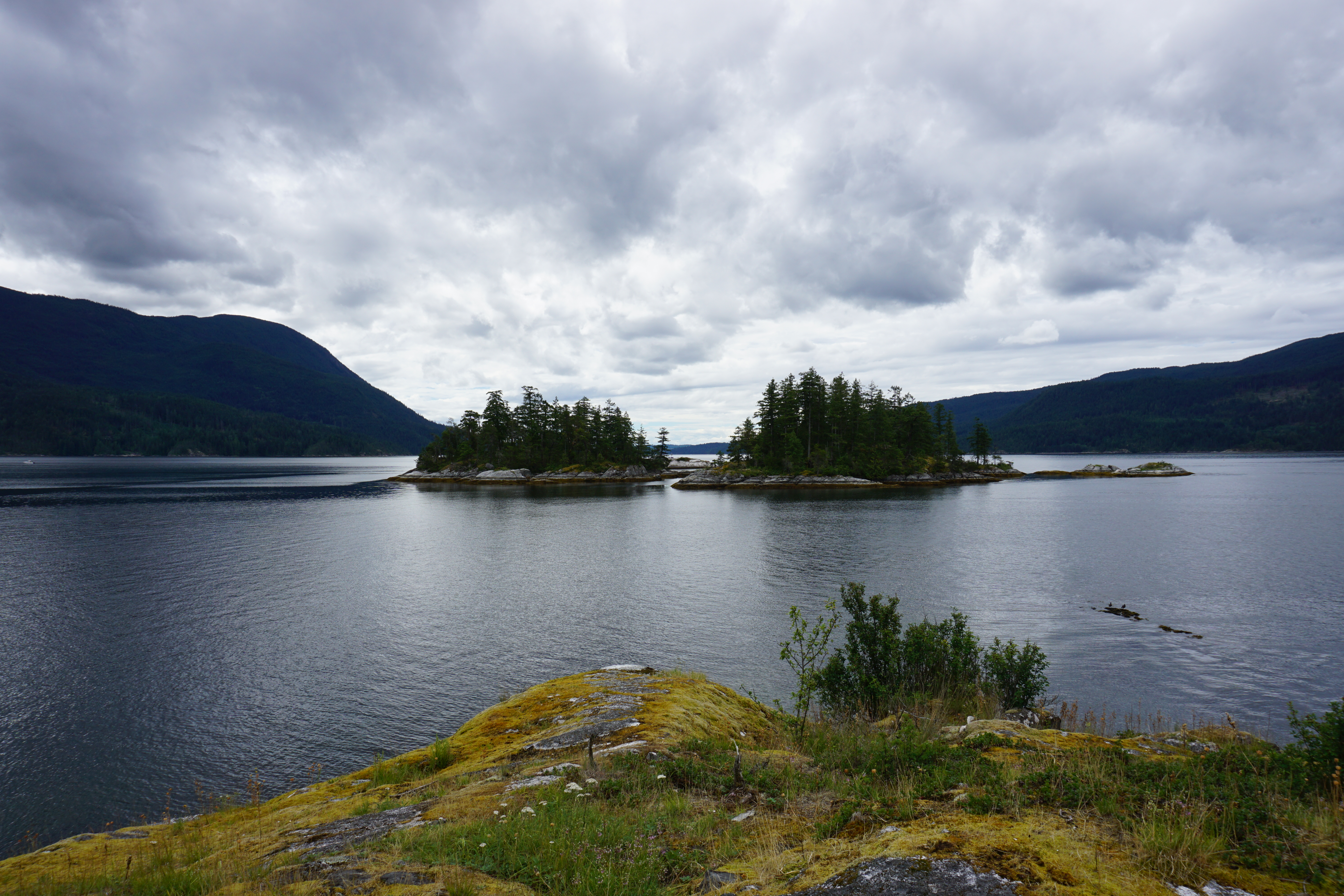
After checking out the woodlot, we had a very enjoyable paddle to the end of Indianpoint Lake. It rained again, on and off, but the lake was actually very calm. The wind usually comes up in the afternoon, so we were expecting it to be windy and were pleasantly surprised to arrive at 1pm and find completely flat water! The mountains around the lake were mostly clouded in, but it actually looked kind of mystical with the rain.

Everyone else opted to bypass Campsite #8 on their way to Isaac Lake, so we ended up being the only ones staying there! It was our good luck, because I totally loved this campsite! It only has two tent pads, but it has an old log cabin with a woodstove(!) and the most beautiful view of Indianpoint Lake. It was nice not to overdo it and we still tracked a total of 13.5km on my GPS. We got our tent set up and then hung out under the under-hang of the cabin, sparing me from having to set up the tarp. We had a few snacks and then around suppertime, Seth got a fire going in the woodstove and we spent a very enjoyable evening in the warm cabin. Someone has insulated the roof inside with reflective material, so it reflected the heat quite well. We felt so cozy in the warm cabin listening to the rain hitting the tin roof.

PSX_20250528_181813
PSX_20250528_181757

Later in the evening, Seth decided to take advantage of the warm cabin to do some cold therapy and ran down for a quick swim in the lake. Usually I’m down for swimming in any lake and my cold tolerance is quite high, but I didn’t swim very much on this trip. It was probably the main downside of going early in the season. I was chilled for a lot of the trip and rarely willing to subject myself to the cold water (though I did eventually relent twice later in the trip)! Eventually the rain cleared up and we got some really beautiful photos of the lake around golden hour. We didn’t catch too many sunsets on the circuit – partially because of the mixed weather – but also because it was light so late in the evenings that we usually went to bed before sunset! Paddling is all about the early rise, so it was a small sacrifice to make.

I’ll conclude this blog post here because it’s already quite long! I’m hoping to cover two days each on my future posts, so tune back in next week to hear about the gnarly weather conditions we battled while paddling almost 40km along Isaac Lake, the biggest lake on the circuit!

Garibaldi Provincial Park Guide

If you live in BC, chances are you’ve heard of Garibaldi Provincial Park. I’m not sure if it’s quite as popular as some of BC’s National Parks, but it’s certainly developed a pretty wide-reaching reputation. Garibaldi Park is a large backcountry access park near Vancouver that captures a lot of the wilderness area east of Squamish and Whistler. You can’t drive to any of the park attractions, but it has not slowed down the number of visitors to the park. 

A photo of Black Tusk as seen from Panorama Ridge in Garibaldi Park on a blue sky day in the summer, with the alpine meadows and mountains in the background and lake in the foreground in BC.

Getting There

It’s impressive that Garibaldi Park gets as many visitors as it does when the access to the park is solely self-powered. The park is located between Squamish and Whistler, with several key park entrances at Diamond Head, Rubble Creek, Cheakamus, Whistler, and Wedgemount. Diamond Head is closest to Squamish, while the rest of the park entrances are closer to Whistler, so it can be a bit of a drive from Vancouver. I always give myself 1.5-2 hours of driving to get to the trailhead. Parking is generally secure, but there’s always the risk of break-ins, so don’t leave anything in your car.

Driving is by far the easiest way to get to the park, as public transit is not available. There is a park shuttle (Parkbus) that runs from Vancouver to Rubble Creek (the trailhead to Garibaldi Lake and Panorama Ridge) during late June to early October. The bus only runs on Fridays and weekends, and will book up early for Saturdays. Otherwise, there’s not many options and you’re best off trying to carpool with others via a facebook hiking group if you don’t have a car. 

A hiking trail extends through the alpine of Garibaldi Provincial Park towards Helm Lake, with the forest and mountains in the background on a sunny day in British Columbia, Canada

Activities

The most popular activity in the park is day hiking. Visitors park at a trailhead and spend the day hiking to various viewpoints in the park. The trails are all well maintained and make for a very scenic day in the backcountry. However, most of the trails cover considerable distance and elevation gain in a remote environment, so visitors should be prepared with the 10 essentials and leave a trip plan with someone they trust. For more information on trip preparedness and trip planning, see my Safety post.

Backpacking is also popular as there are 10 beautiful campsites spread throughout the park that can be visited as single night trips or along thru hikes. Biking isn’t permitted everywhere, but you can bike from Diamond Head and Cheakamus Lake, which is a popular activity for cyclists. Finally, lots of winter visitors use the park for snowshoeing or ski touring, either as a day trip, or for an overnight expedition. There is one hut available for camping at Elfin Lakes, which is popular in winter. Avalanche Safety Training is highly recommended if you are recreating in the park during the winter. See my Avalanche Safety post.

A group of 3 skiers traverse the ridge on the way to the Elfin Shelter at Elfin Lakes in Garibaldi Provincial Park, BC. It's a beautiful sunny day with lots of snow and the forest and Diamond Head Mountain in the background.

Permits and Day Passes

In the 10+ years I’ve lived in BC, Garibaldi has always had a reputation as a crowded park. In 2016, BC Parks brought in a reservation system for their backcountry campsites to reduce the impact to the natural environment from overflow camping. If you want to camp at any of the backcountry campsites, you will need an overnight permit. These are available on camping.bcparks.ca for $10 per person ($5 for youth), per night, and release 4 months in advance of your desired date. So if you want to camp on Aug. 15, make sure to book your pass on Apr.15. 

During the pandemic, BC Parks further regulated park use by employing a free day pass system from mid June to mid October to manage parking at the trailhead and impacts to the park from overuse. While these passes are free, they have generated a lot of criticism and frustration from visitors struggling to obtain a pass. The day passes release 2 days before your desired date at 7am, and from what I understand, they can be challenging to obtain due to popularity. My recommendation is to be ready at 7am and keep refreshing for up to 15 minutes. If you make a reservation on Parkbus, it includes a day pass.

The sun shines down during golden hour on Wedgemount Lake with the hut and the mountains in the background in Garibaldi Provincial Park, BC.

When to Visit

The park is popular year round, but it is important to understand that travel through the park has much higher risks in Winter and Spring. The most popular time to visit the park is in the summer (from July to September), but be aware that summer in the mountains is much later than summer in the city. You can usually hike to Garibaldi Lake starting in late June, but the snow in the alpine and along the trails to Panorama Ridge and Black Tusk may have snow on them into late July. Early Fall is also a good time to visit the park, but be aware that temperatures will drop quickly in the mountains and that limited daylight hours can make certain trails more challenging. 

Winter can also be a great time to visit the park, but avalanche safety training is highly recommended no matter where you’re going. Snowshoers and ski tourers will travel to Elfin Lakes and the privately managed Kees and Claire Hut at Russet Lake in the winter. Both of these routes pass through challenging avalanche terrain and I strongly advise completing an AST1 course before attempting these routes. The Red Heather Hut is also a popular location for skiers who want to do a few laps on Round Mountain before heading home. This carries less risk than the other trails because the route is only in simple avalanche terrain, but you should still exercise caution and be prepared. 

A female hiker looks tiny in comparison to the large Wedgemount Glacier in the background in Garibaldi Provincial park, BC.

Trails

There are so many trails to explore in Garibaldi Park. I’ve hiked all of them, with the exception of the winter glacier routes. Here’s some more information on trail options and links to dedicated resources for each trail. Please note that trail distances and elevation gain are approximate.

Garibaldi Lake (18km, 800m gain) – A great option for summer day hiking, or winter snowshoeing (with AST1). Probably considered the most popular hike in the park, with the trailhead at Rubble Creek.

Panorama Ridge (29km, 1500m gain) – Completed by some visitors as a long day hike (12 hours), but recommended as part of a backpacking trip (day hike from the campsite at Garibaldi Lake or Taylor Meadows). This is a very popular trail, with the trailhead at Rubble Creek. Only recommended in the summer.

Black Tusk (25km, 1400m gain) – Completed by some visitors as a long day hike, but recommended as part of a backpacking trip (day hike from the campsite at Taylor Meadows). This is a very popular trail, with the trailhead at Rubble Creek. Only recommended in the summer.

Mount Price (25km, 1400m gain) – Completed by some visitors as a long day hike, but recommended as part of a backpacking trip (day hike from the campsite at Garibaldi Lake). This trail is not very popular and requires some wayfinding, with the trailhead at Rubble Creek. Only recommended in the summer.

Helm Creek (16km, 650m gain) – Most often used as an alternative route when backpacking to Panorama Ridge or as a thru hike from Garibaldi Lake. The trailhead is at Cheakamus Lake and this route is less popular than the trails from Rubble Creek. Only recommended in the summer.

Garibaldi Thru Hike (~30km, 1500m gain) – Only completed as a backpacking objective in the summer. People will hike from Rubble Creek to Cheakamus Lake, camping at Garibaldi Lake, Taylor Meadows, or Helm Creek along the way.

Cheakamus Lake (9km, 50m gain) – A great option for beginner hikers, backpackers, and mountain bikers. It can be completed in a single day or as an overnight trip, camping at Cheakamus Lake Campsite. The trail is popular in the summer, with the trailhead at Cheakamus Lake. Can also be completed in the winter, but the access road is not plowed, making it a much longer hike.

Singing Creek (16km, 50m gain) –  A great option for beginner hikers, backpackers, and mountain bikers. It can be completed in a single day or as an overnight trip, camping at Singing Creek Campsite. The trail is popular in the summer, with the trailhead at Cheakamus Lake.

Elfin Lakes (22km, 600m gain) – A great option in the summer for day hiking and mountain biking, and in the winter for snowshoeing or ski touring (with AST1). Complete as a day hike or stay overnight at the campground or hut. A very popular trail, with the trailhead at Diamond Head (chains required for your tires in winter). 

The Saddle/The Gargoyles (27km, 900m gain) – An extended trail option from Elfin Lakes, can be completed from the parking lot in a single day, or shortened as a day hike from Elfin Lakes. The trailhead is located at Diamond Head. Only recommended in the summer.

Opal Cone (13km, 350m) – This trail can be completed as a day hike from the campsite at Elfin Lakes, or as a stop along the way when backpacking to Rampart Ponds. The trailhead is located at Diamond Head. Only recommended in the summer.

Rampart Ponds (18km, 500m gain) – This trail can be completed as a day hike from Elfin Lakes, or as a backpacking objective if you plan to stay at the campsite. The trailhead is located at Diamond Head. Only recommended in the summer.

Mamquam Lake (22km, 600m gain) – This Trail can be completed as a day hike from the campsite at Elfin Lakes, or as a shorter route from the campsite at Rampart Ponds. The trailhead is located at Diamond Head. Only recommended in the summer.

Russet Lake via Musical Bumps Trail (24km, 1300m gain) – Completed by some visitors as a long day hike (12 hours), but recommended as part of a backpacking trip, staying at the Russet Lake Campground overnight. This route requires paying for a sightseeing pass on the Whistler Gondola and hiking along the High Note or Half Note trails and the Musical Bumps trail. The trailhead is located at Whistler. It can also be visited in winter, but AST1 is required and a backcountry pass from Whistler Resort. 

Russet Lake via Singing Pass Trail (27km, 1200m gain) – Completed by some visitors as a long day hike, but recommended as part of a backpacking trip, staying at the Russet lake Campground overnight. The trailhead is located at Whistler and this route avoids having to pay for a pass for the gondola. Only recommended in the summer.

Wedgemount Lake (14km, 1200m gain) – This trail can be completed as a day hike or an overnight backpacking trip to the Wedgemount Lake Campsite. Overnight is recommended due to the substantial elevation gain. The trailhead is located at Wedgemount Creek. Only recommended in the summer.

Garibaldi Neve – This is a winter route for experienced alpinists only as it involves glacier travel. It is generally completed over 2-3 days and avalanche training and snow camping experience are required. I don’t have any experience with this route, please look elsewhere and do sufficient research and training before attempting.

Spearhead Traverse – This is a winter route for experienced alpinists only as it involves glacier travel. It is generally completed over 3-4 days and avalanche training and snow camping experience are required. I don’t have any experience with this route, please look elsewhere and do sufficient research and training before attempting.

A group of campers sit on the ground surrounded by camp food, pots, and stoves, preparing their dinner on the beach with the trees and lake in the background at Cheakamus Lake Singing Creek Campsite in Garibaldi Provincial Park in British Columbia, Canada.

Campgrounds

All campgrounds in Garibaldi Park require permits from camping.bcparks.ca. These release 4 months in advance of your desired date. They are popular, so it is recommended to book exactly 4 months before you want to visit. Backcountry permits are $10 per person ($5 for youth), per night. 

Elfin Lakes Campground – Reservable year round. There are 35 tent pads, several outhouses, picnic tables, a bear cache, and a cooking shelter. 

Elfin Lakes Shelter – Reservable year round. There are 33 bunks and an outhouse. You must bring your own sleeping pad and sleeping bag. 

Red Heather Campground – Reservable in winter only (Dec-Apr) for snow camping. There are no tent pads, but there is an outhouse and a cooking shelter. You are not permitted to sleep in the cooking shelter.

Rampart Ponds Campground – Reservable year round. There are 12 tent pads, an outhouse, and a bear cache. Sometimes this site floods in the summer and is closed.

Garibaldi Lake Campground – Reservable year round. There are 50 tent pads, several outhouses, picnic tables, bear caches, and four cooking shelters.

Taylor Meadows Campground – Reservable year round, except in September and October (I’m guessing because of bears). There are 40 tent pads, several outhouses, picnic tables, a bear cache, and two cooking shelters.

Helm Creek Campground – Reservable year round. There are 30 tent pads, an outhouse, and a bear cache. 

Cheakamus Lake Campground – Reservable year round. There are 10 tent pads, an outhouse, and a bear cache.

Singing Creek Campground – Reservable year round. There are 6 tent pads, an outhouse, and a bear cache.

Russet Lake Campground – Reservable year round. There are 7 tent pads, an outhouse, and a bear cache.

Kees and Claire Hut – While located in the park, this hut is managed by the Spearhead Huts Society (not BC Parks). Bunks can be booked year round for $60 per night and are most popular for touring in the winter.

Wedgemount Lake Campground – Reserable year round. There are 20 tent pads, a seasonal pit toilet, and an emergency hut that can be used as a bear cache. 

Three female skiers pose in front of the Elfin Lakes shelter on a sunny day in winter with the hut in the background and snowy trees in Garibaldi Park, BC.

Widgeon Creek Paddling Trip

I’ve written about Widgeon Creek in the past when I visited as a day trip with my kayak, but this year I made an overnight trip to stay at the campsite! I only paddled the creek for the first time last year, but it’s quickly becoming one of my favourite paddling locations in the lower mainland. It makes for a great day trip or overnight objective. The campsite is large and hiking to the waterfall is a great side mission!

But let’s start from the top. I did this trip with my Girl Guide unit, and I specifically call it a paddling trip because they all travelled there in canoes! I intended to canoe too, but one girl got sick at the last minute, so I ended up taking my kayak since we had an odd number of people. This was my first time doing a trip like this with the girls and we’re lucky to have a very experienced canoeist Guider in the unit to lead the trip.

PSX_20250512_084335
PSX_20250512_083301

While I love my kayak, canoeing does seem a bit more quintessentially Canadian and I was happy to finally learn some canoeing skills. We did two training sessions on Deer Lake before this trip so that the girls could get used to the paddling strokes. Widgeon Creek isn’t a hard objective, but it does require crossing the fast moving Pitt River, and it was important for everyone to feel comfortable and confident paddling. I found canoeing to be a bit harder that kayaking because of the coordination required with your partner. There are more paddling strokes (at least, that’s how it felt) and I initially found in confusing which stroke to use to correctly change direction. But eventually it clicked and I had fun learning a new skill!

If you want to visit Widgeon Creek yourself, you can park at Pitt Lake. The first part of the trip is crossing the Pitt River, after which it’s a 4.5km paddle up the creek to Widgeon Campsite. You can bring your own boat, or once they open for the season, rent right at Pitt Lake. Fortunately, we were able to borrow enough boats for our group, so we were could go a little before rentals opened for the season. We only had a small group of girl guides, but they were enthusiastic and very good spirited!

PSX_20250512_084012
PSX_20250512_083904

We started our paddle early in the morning to avoid the wind and arrived at the campsite in time to set up our tents and eat lunch. The paddle takes ~90 minutes and we made one stop at a pullout along the way for a snack. It rained on us pretty consistently, but no one complained and I noticed that the campsite was considerably less busy than on a sunny day. We were the first to arrive and we were only joined by one other group later in the day.

The campsite is fairly large and has lots of bear caches and picnic tables. I imagine it gets busy in the summer, but there are quite a few tent pads and space to spread out. We started by setting up a tarped area to hang out in so that we wouldn’t continue to get wet from the rain. Fortunately, the rain died off after lunch and we opted to hike 6km round trip to Widgeon Falls. It’s a nice trail through the forest that took us around 2 hours, with a snack break to enjoy the view at the falls. Be careful when it’s wet though, the rocks near the waterfall can get very slippery, so we exercised a lot of caution looking for a place to sit have our snack.

PSX_20250512_083539
PSX_20250512_083658

There’s no campfires allowed any time of year at Widgeon Creek, so we returned to the campsite to make dinner and play some games instead. In the morning, we got lucky with nicer weather and we were able to pack down the tents in dry weather. We had a nice paddle back to Pitt Lake, but the wind always comes up in the afternoon and it did pick up just before we crossed the Pitt River at 11:30am. The Pitt River can have a fast moving current, especially in the Spring, around freshet, so we planned accordingly by paddling along the edge of the river, upstream of where we wanted to cross, and then crossing to the boat launch. The current did knock us back a little bit while crossing, but everyone made it without too much issue.

Timing is an important consideration for visiting Widgeon. The creek and the Pitt River are tidally influenced, so they can be a bit high in the spring, but get very low in late summer. I’ve heard that sometimes the creek gets so low you have to walk your boat in places. But it is a very manageable location to visit if you plan around the tides. I’ve been 3 times now and always had a great time! Most of the paddling is located in Widgeon Marsh Regional Park, but the campsite itself is in Pinecone Burke Provincial Park. There’s no permits required to camp there and it is free to visit. It’s a great paddling trip close to Vancouver. We had a great time visiting as an overnight trip!

PSX_20250512_083354
PSX_20250512_083758