10 Easy Day Paddles near Vancouver

The main focus of this blog is definitely backpacking, which is one of my favourite summertime activities. But I also spend a lot of time kayaking and have slowly been working my way around the easy paddling trips near Vancouver. My husband and I own two sea touring kayaks and for this post, I decided to compile some of our favourite day trips near the lower mainland! It’s easy to rent boats for a lot of these trips, but there are a few where it’s easier if you have your own.

Jug Island / Twin Islands

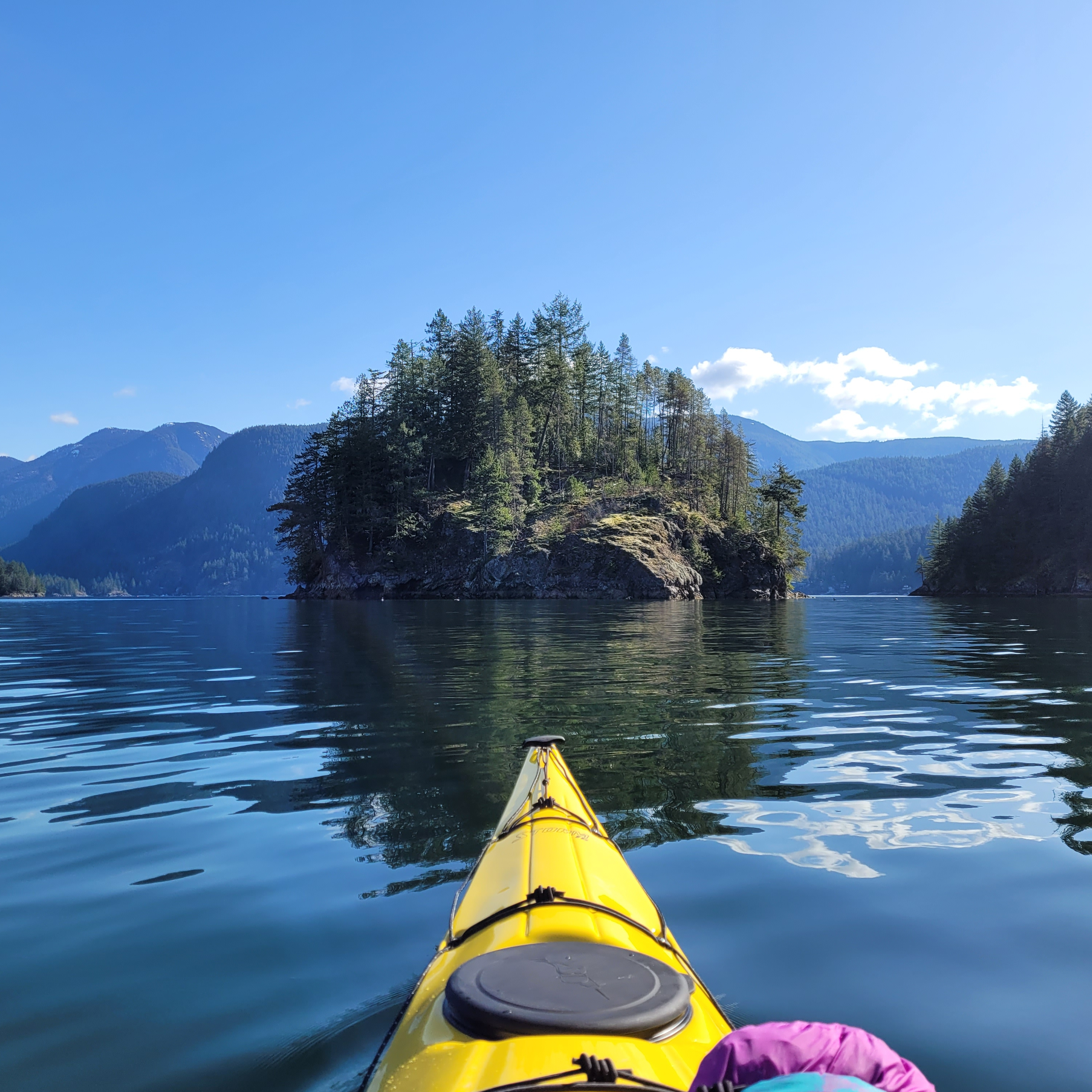
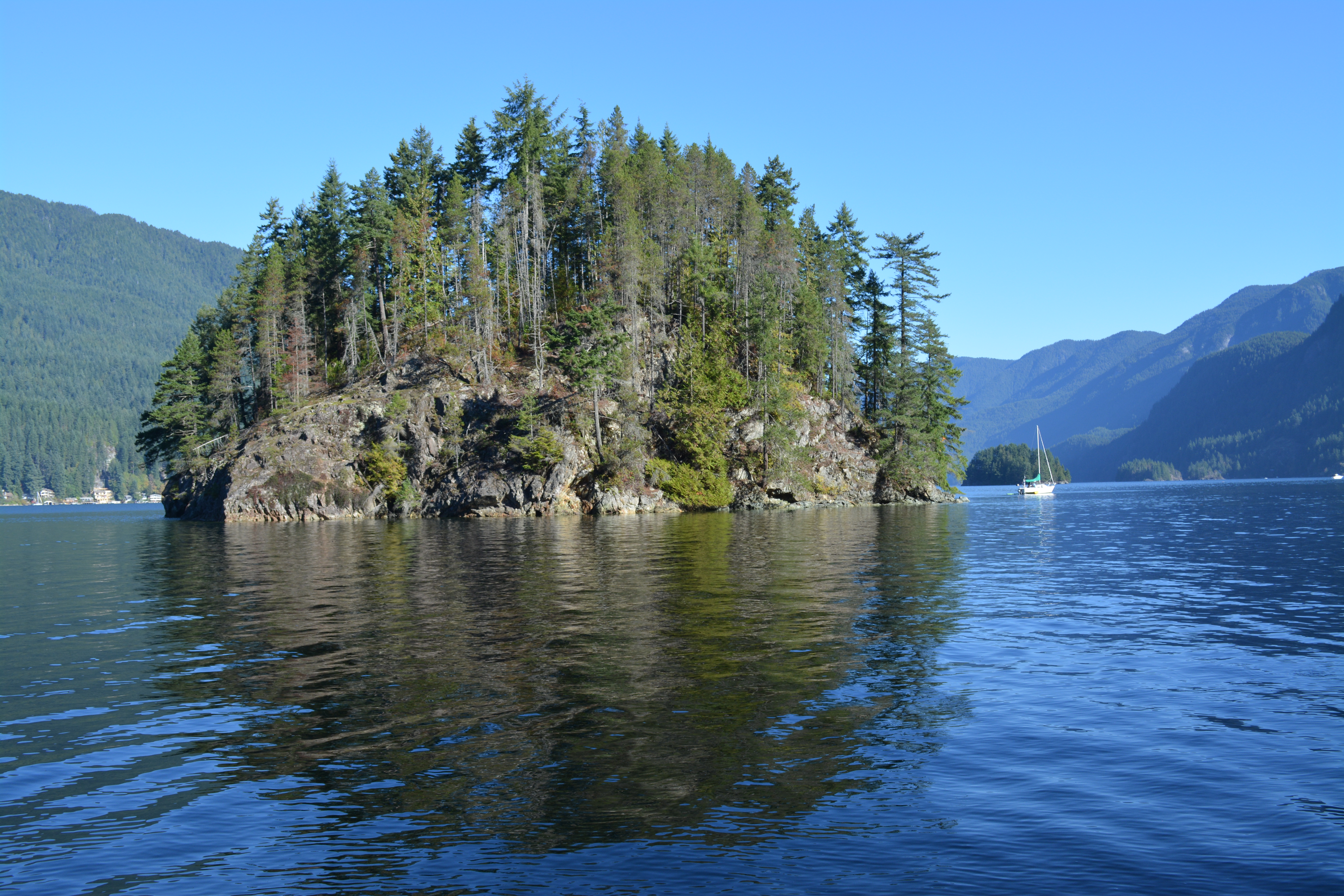
A kayaker paddles towards Jug Island on a sunny day with calm waters in Indian Arm. Jug Island is located near Belcarra Regional Park in Vancouver, BC.

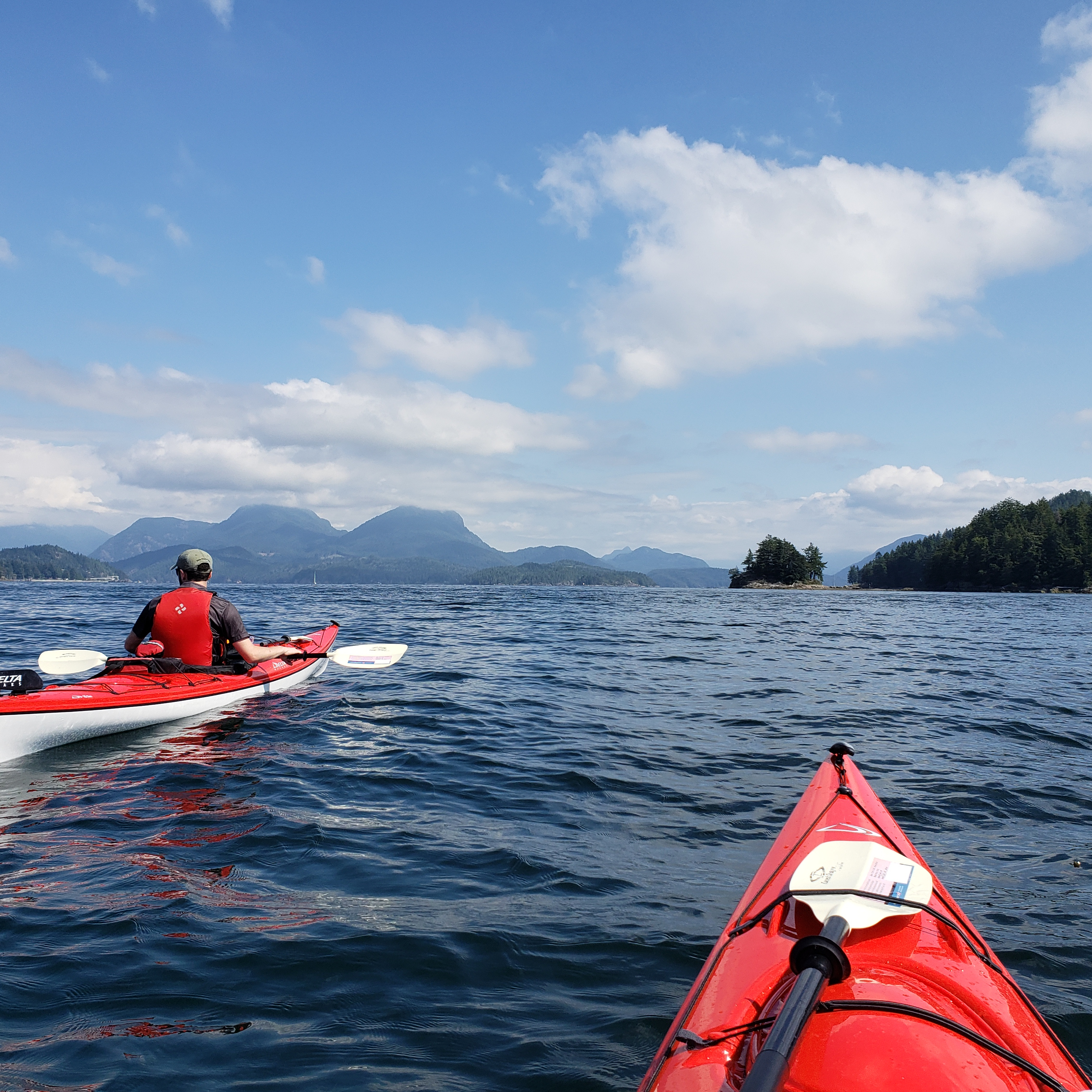
Jug Island is by far our most frequented kayak day trip. It’s located near Belcarra Regional Park and can be accessed from either Belcarra or Deep Cove. We always choose Belcarra since we live in Coquitlam, but it’s a ~5km round trip from both starting locations. There’s a large beach where you can land your boat and an outhouse, so it’s a nice place to stop. It usually takes us ~45 minutes to paddle there from Belcarra and we’ll often take a break and then continue on to explore Bedwell Bay or Twin Islands. Twin Islands makes for a longer day, as it’s a ~9-10km paddle, but it’s very beautiful there and it’s fun to swim from the south island. If you’re renting, you can choose from Deep Cove Kayaks or Takaya in Belcarra. Alternatively, you can also rent from Cates Park for a slightly longer paddle.

Barnet Marine Park / Rocky Point

A female kayaker wears a lifejacket and holds a paddle while smiling next to her yellow Boreal storm kayak on the rocky beach of Barnet Marine Park with the ocean and mountains in the background in Burnaby, British Columbia, Canada.

There are a few options for where you can paddle from Barnet Marine Park. I usually just use it as an alternative access point for Jug Island since it’s located in Burnaby and is sometimes a closer drive, but you can also paddle between Rocky Point and Barnet Marine from either location. Rocky Point is located in Port Moody and is a very easy access point. The annoying thing about Barnet Marine is that they now limit parking to 4 hours, which is difficult if you’re looking to do a longer trip. If you leave from Rocky Point, parking is also a challenge in the summer, but it’s easier to rent boats from Rocky Point than Barnet.

Buntzen Lake

20210418_104713

Buntzen Lake is located super close to the city, in the town of Anmore. It’s the perfect place for beginners because the lake isn’t that long, but it’s big enough to make for a nice paddle to the end and back, roughly 10 kms. Plus you can also explore around the river and hang out on either end of the lake. A day pass is needed in the summer, which is free, but must be obtained 2 days in advance from BC Hydro. There are often canoe rentals available along the south beach.

Whytecliff Park

Whytecliff Park is located in West Vancouver near Horseshoe Bay and is one of many paddling options in West Vancouver. You can launch your boat from Whyte Cove, which is located in the park, or from Batchelor Bay or Horseshoe Bay. If you don’t mind a longer paddle, you could also launch from Eagle Harbour, at the beach next to the yacht club. There are no rental options from this location that I am aware of, but it’s a fun place to explore. Watch out for ferry traffic if you are paddling around Horseshoe Bay.

Bowen Island

DSC09010

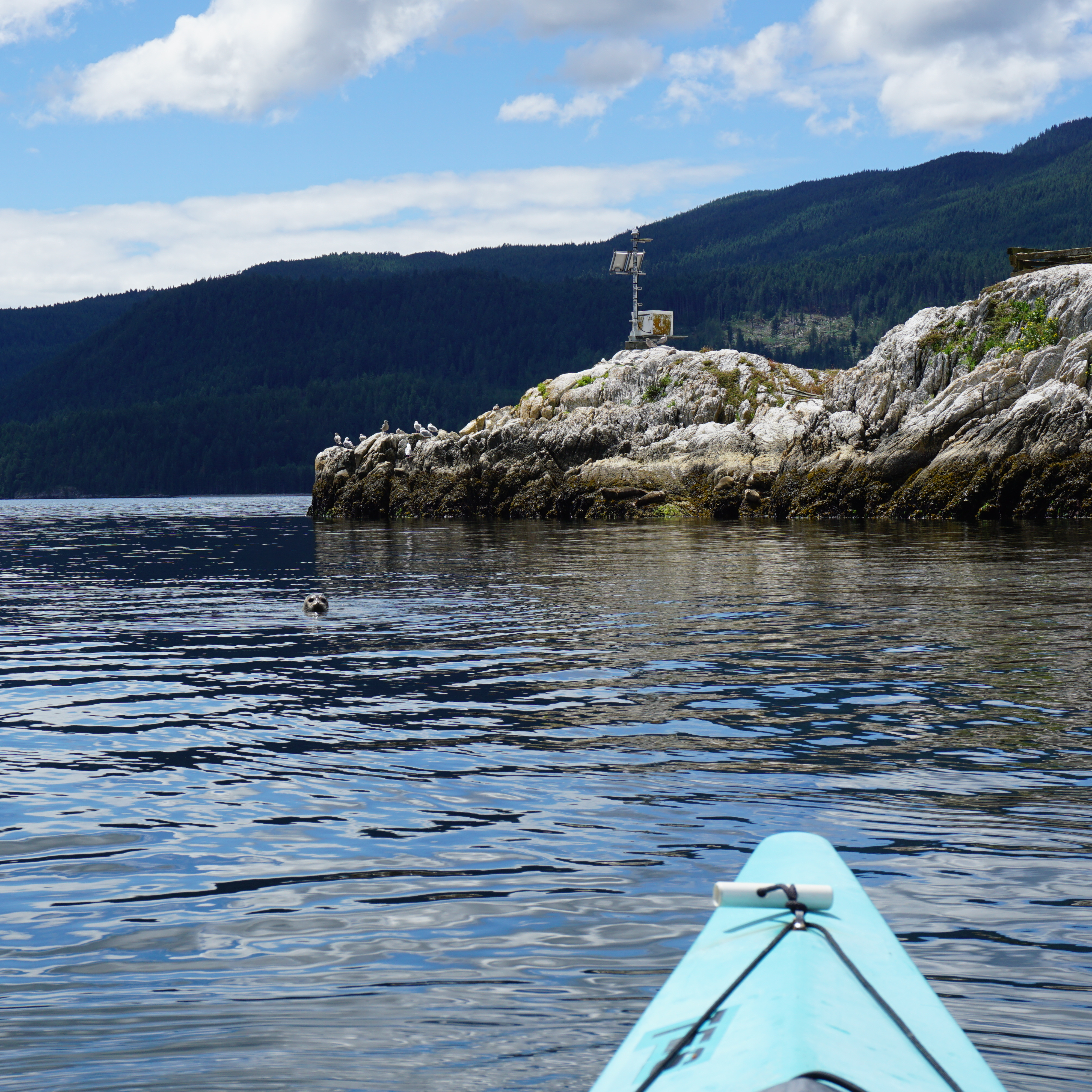
I haven’t actually done this trip myself, but I’ve heard Bowen Island is great for kayaking. The best option is to walk on the ferry from Horseshoe Bay to Bowen Island and rent boats from Snug Cove on the other side. From here, you can paddle around the edge of the island. I recommend heading north as there are more beaches to land at in this direction. I believe more experienced paddlers will cross from Horseshoe Bay on their own, but I don’t recommend this.

Keats Island

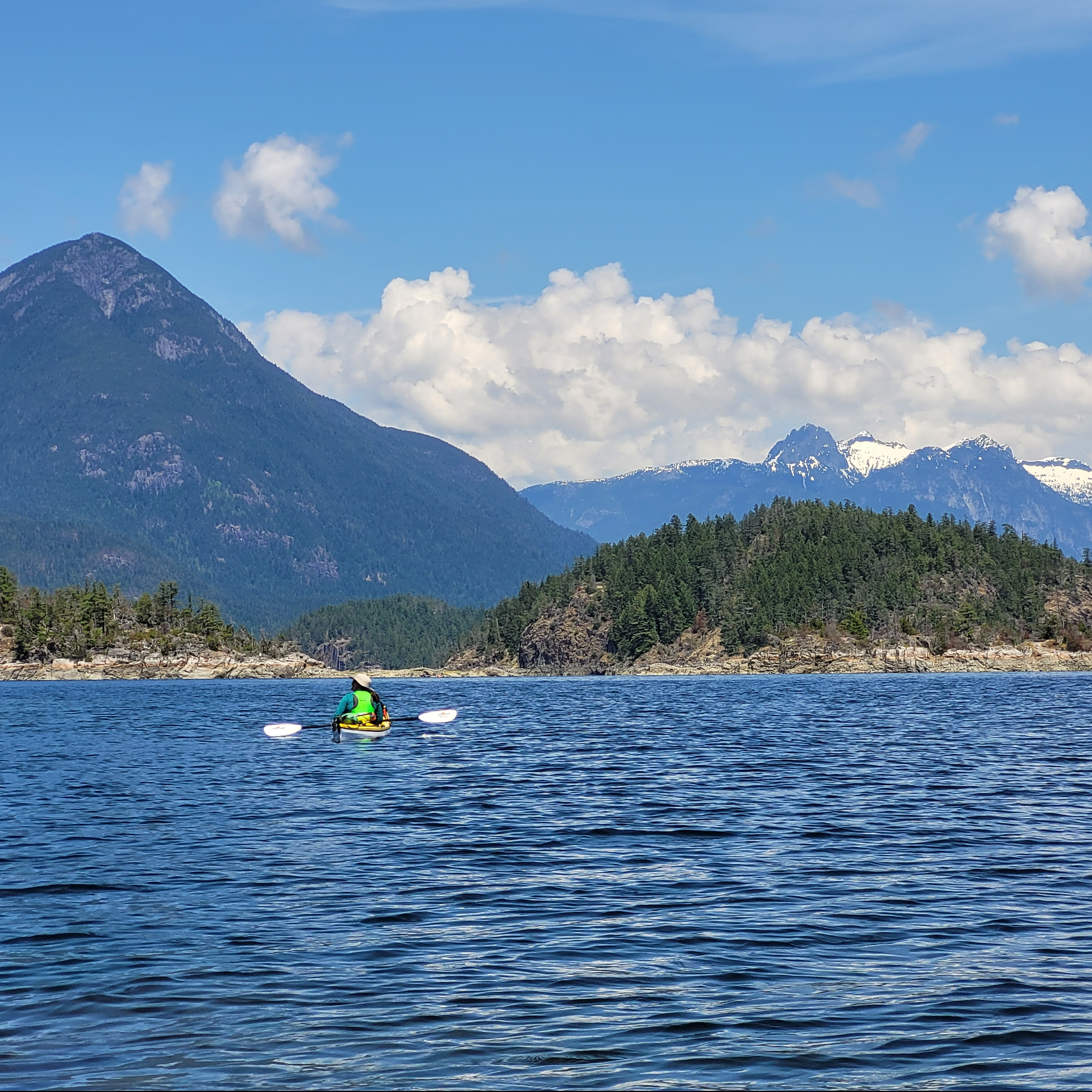
Two kayakers paddle on the Pacific Ocean towards Keats Island from Gibsons on the Sunshine Coast, BC on a sunny day, with the mountains in the background.

Keats Island is a great destination from Gibsons. You can launch from the marina and paddle across the straight to Keats Island. Follow the coast north past the Shelter Islets until you reach Plumper Cove Marine Park, which is a great place to hang out for the day or to camp overnight. It can be windy crossing the straight, so I recommend doing this trip early in the morning. Rentals are available from the marina in Gibsons.

Widgeon Creek

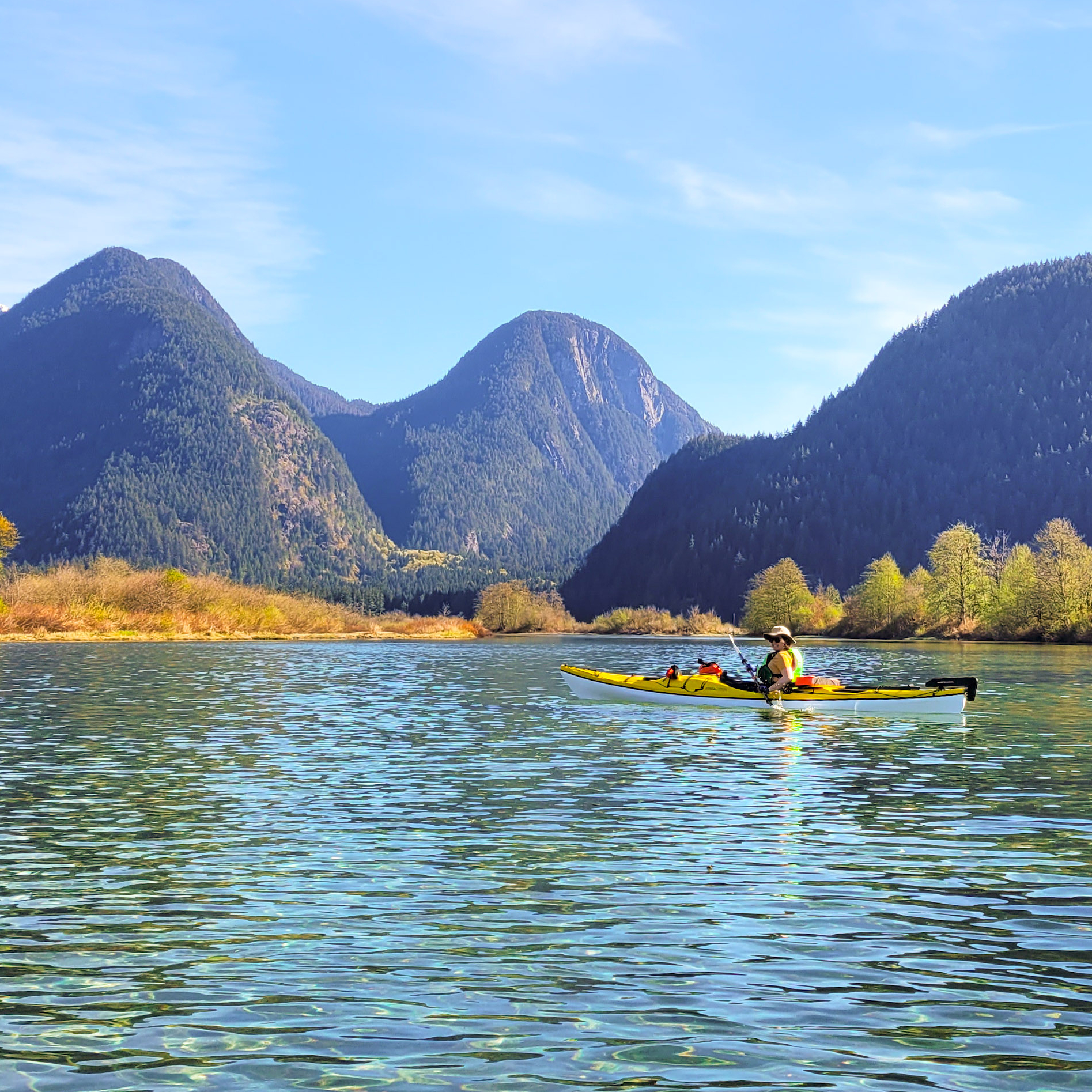
A woman in a yellow kayak paddles in crystal clear blue water on a sunny day with mountains in the background and a blue sky in Widgeon Creek by Widgeon Marsh in British Columbia, Canada.

Widgeon Creek is a very popular summer paddling destination in Pitt Meadows. Park at the main lot on Pitt Lake and paddle across the Pitt River to Widgeon Creek, which is a leisurely 6km paddle to the campsite. From there you can do a day hike to Widgeon Falls. This area is very busy in the summer, but head out in April or May to avoid the crowds. Be careful crossing the Pitt River, which can have strong currents, and leave early to avoid the wind. You can rent boats from Katzie in the summer, or through independent operators that deliver the boats to the lot.

Alouette Lake

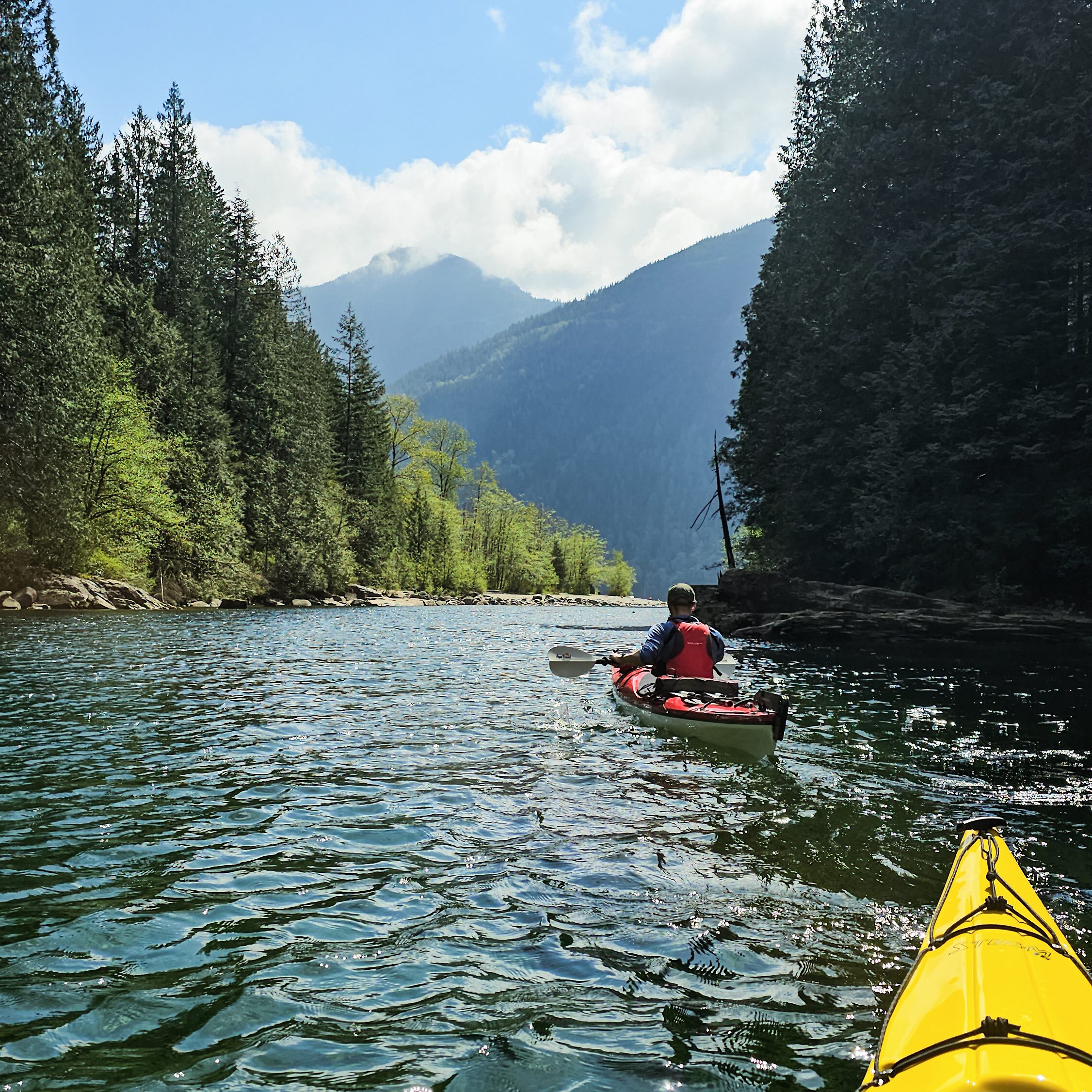
Two kayakers paddle up Gold Creek on a sunny day on Alouette Lake in Golden Ears Provincial Park. BC, with the forests and mountains in the background.

Golden Ears Park is most popular for paddlers in the Gold Creek area, especially for SUP. But I think all of Alouette Lake is a great option for paddling. The easiest location to launch from is the boat launch at South Beach, and then you can head north on either shore of the lake. But pick one or the other because it gets windy on the lake and it’s not easy to cross back and forth. I regularly like to go out for a few hours and paddle up to Gold Creek and back. You can usually rent canoes on South Beach in the summer.

Harrison Lake

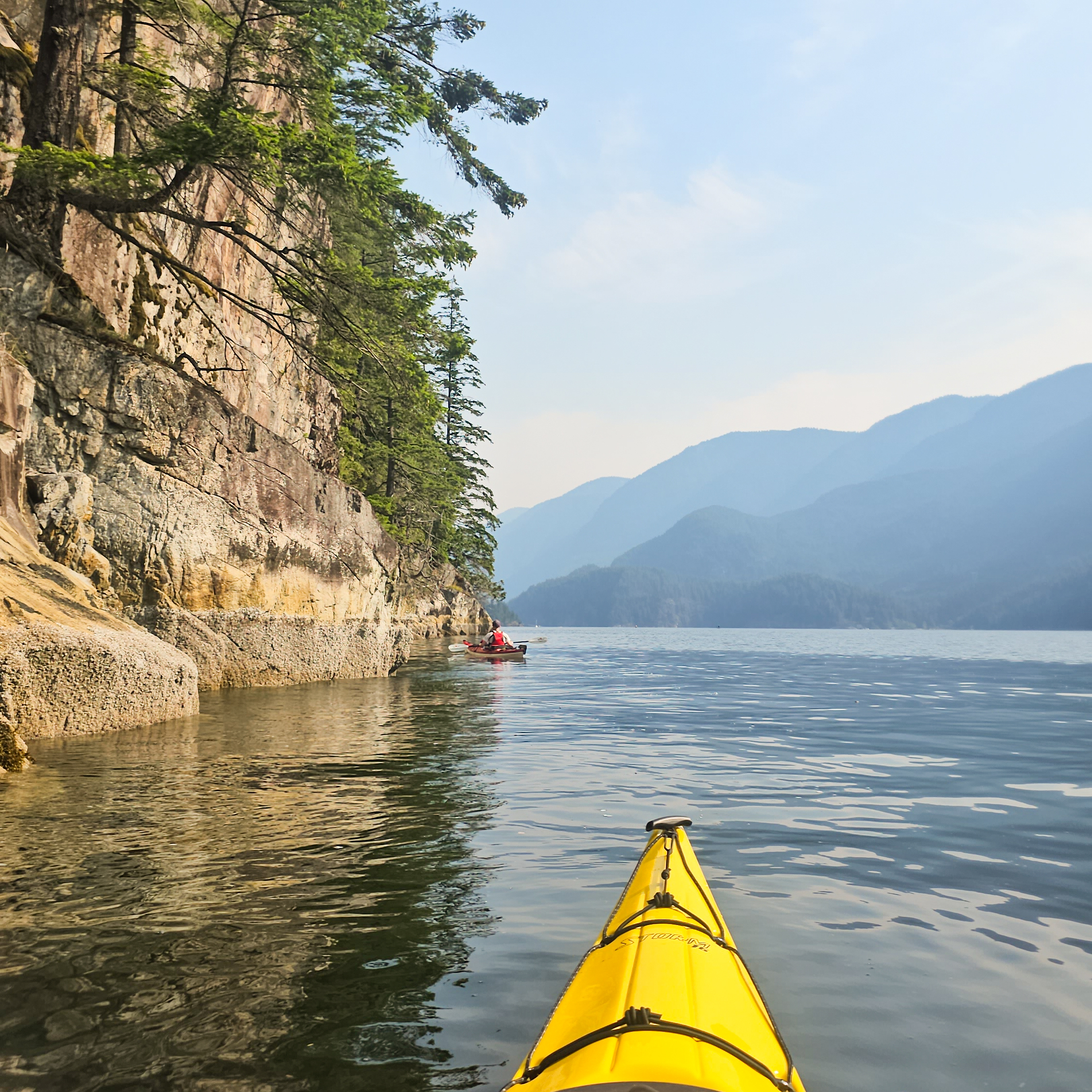
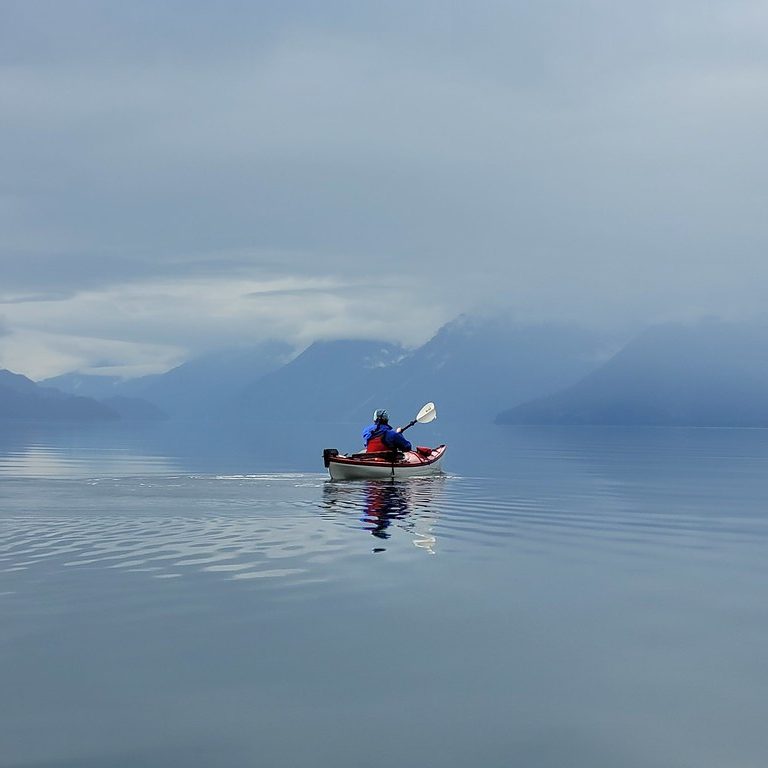
A female kayaker paddles on Harrison Lake on a cloudy morning with flat water and the mountains in the background.

Harrison Lake is somewhere that you need to be really careful paddling, but can make for a fun trip in the right conditions. It can be very windy at the lake, so my recommendation is to stick to early morning paddling and stay near to the edge of the lake. We camped at Bear Creek on a rainy weekend in June and stumbled into premium kayaking conditions. It was dead calm on the water and mystical with the cloudy skies. But exercise caution on a nice day.

Lightning Lakes

Lightning Lakes is a pretty safe place to kayak and is incredibly scenic. It’s located in E.C. Manning Park, east of Hope, and comprises two lakes connected by a small creek. It is possible to navigate between the two lakes, but it is narrow, so exercise caution. The views are beautiful and there’s no power boats, so it’s a great place to explore and enjoy the water and the mountains.

12 Easy Dog-Friendly Hikes near Vancouver

I hike a lot, but something I haven’t focused on much on this blog is dog friendly hiking. I have a 6 year old Australian Shepherd named Sadie. She sometimes features on my posts, but she’s always a consideration when I’m planning a hike, sometimes coming with me, sometimes staying behind. Unfortunately, she is a reactive dog, which for her, means that she is afraid of other dogs and will usually “react” if forced into close proximity with them. Her reactions mostly look like barking and pulling at her leash, unless we can successfully distract her. 

We’ve spent a lot of time training her to focus on us when presented with other dogs, and if we see the dog in advance, we can usually be successful at this by stepping off the trail and giving her with treats. For this reason, we stick to on-leash trails because it’s very hard to control her reaction when off-leash dogs approach her. If you’re taking your dog to dog-friendly trails, please make sure to respect the on/off leash rules. I personally don’t fault people for letting their dogs off-leash when there’s no one around, but please don’t let your dog approach any person or dog off-leash if you are on an on-leash trail. And please don’t let your dog off-leash if they do not have good recall or you cannot get them to go back on-leash when required.

Please also make sure to pick up after your dog. Dog poo is not natural and carries lots of harmful bacteria that has been proven to lead to e.coli in waterways. We live in a very populated city and these trails all see frequent use. If people don’t clean up after their dogs, it is death by a thousand cuts and it will impact the experience. So those are my PSA to dog owners, thanks for respecting trail rules! Here’s some great trails within a few hours drive that make for an easy hike with your furry friend!

Brandywine Falls/Nairn Falls

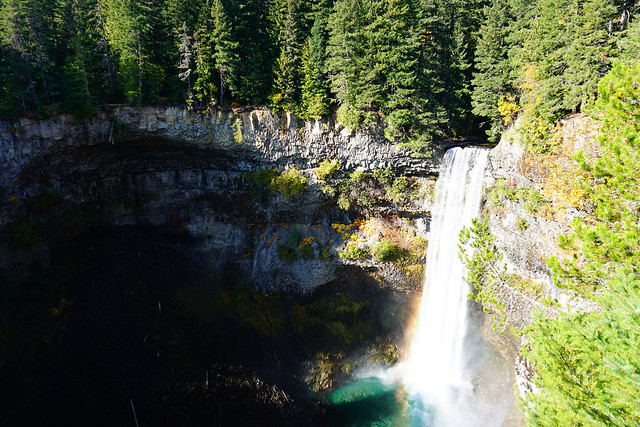
DSC07504

Location: Brandywine Falls Park/Nairn Falls Park (Whistler/Pemberton)
Season: April – November
Terrain: 1.5km, flat
Leash rules: on-leash
Description: These are both flat and easy trails located off the Sea to Sky highway around Whistler and Pemberton. Great if you love waterfalls. Do not try to hike to the base of Brandywine Falls, it is not permitted.

Starvation Lake

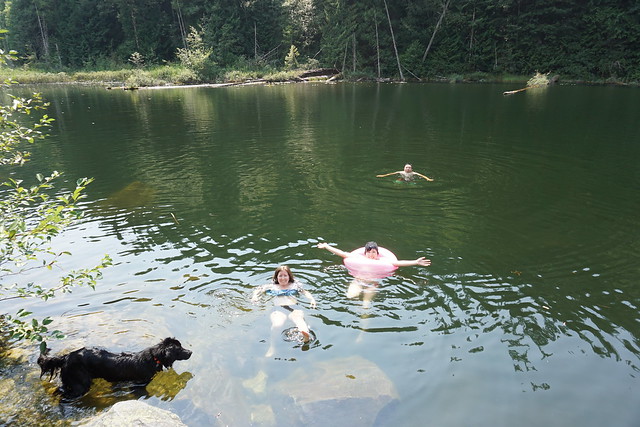
20240706_114205

Location: Starvation Lake Rec Site (Squamish)
Season: most of the year
Terrain: 6km, 130m elevation gain
Leash rules: recommended to keep on leash
Description: This is a nice trail to a beautiful lake, fantastic for swimming in the summer. It doesn’t get a lot of visitors and can be accessed from Paradise Valley Road or the Sea to Sky highway.

Brohm Lake

DSC06113

Location: Brohm Lake Forest (Squamish)
Season: most of the year
Terrain: 6km, 200m elevation gain
Leash rules: a mix of on and off leash trails
Description: This is a great trail for a forest walk in gloomy weather, or for a swim on a hot and sunny day. It is very popular in the summer and the parking lot fills up quickly. You cannot park on the road, so plan accordingly.

Jug Island/Admiralty Point

A photo of Jug Island and Indian Arm on a sunny day in Belcarra, BC.

Location: Belcarra Regional Park (Belcarra)
Season: year-round
Terrain: 5km, 150m elevation gain
Leash rules: on-leash
Description: This is a great year round hike along the ocean. Both trails leave the parking lot in opposite directions. They are similar in length, but Admiralty Point is the easier trail with scenic views along the way, while Jug Island has a beautiful beach at the end of the trail.

Woodland Walk

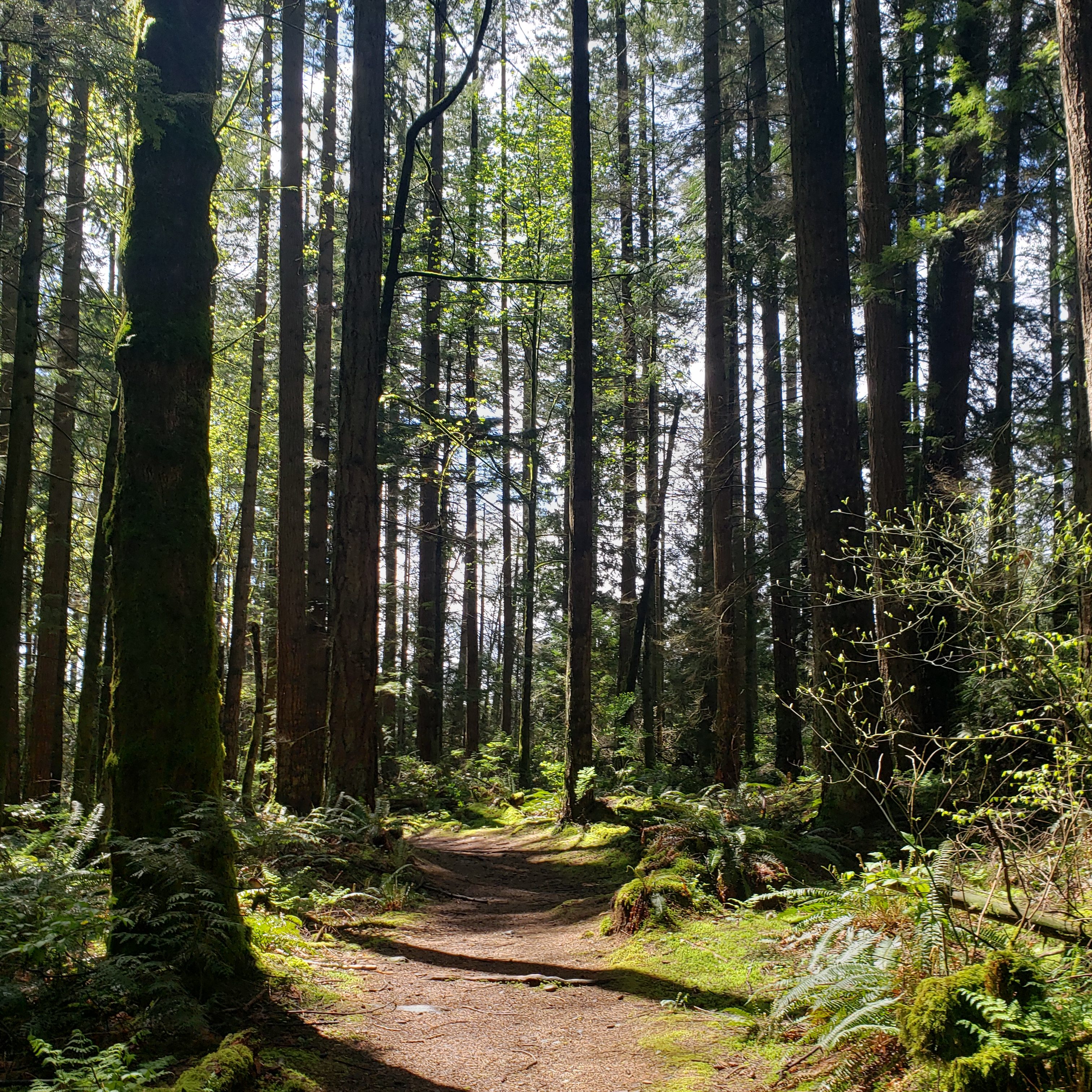
A photo of a forested trail in Pinecone Burke Provincial Park on a sunny day near Coquitlam, BC.

Location: Pinecone Burke Park (Coquitlam)
Season: most of the year
Terrain: 7.5km, 250m elevation gain
Leash rules: on-leash
Description: This is a lesser known park that is very close to the city. It attracts a lot of mountain bikers, who share the uphill access trail, but otherwise, you won’t encounter a lot of people. There is a shooting range nearby if your dog is bothered by loud noises. Access from the top of Harper Road.

Hunter Road

Three hikers and their dog pose at a viewpoint with the snow capped mountains and Stave Lake in the background at Hunter Road, near Mission, BC.

Location: Mission 
Season: most of the year
Terrain: 8km, 250m elevation gain
Leash rules: on-leash
Description: This is the only trail on the list that’s not in a park. The trail follows an old logging road to a scenic viewpoint of Stave Lake and it isn’t very busy in the off-season.

Lindeman Lake

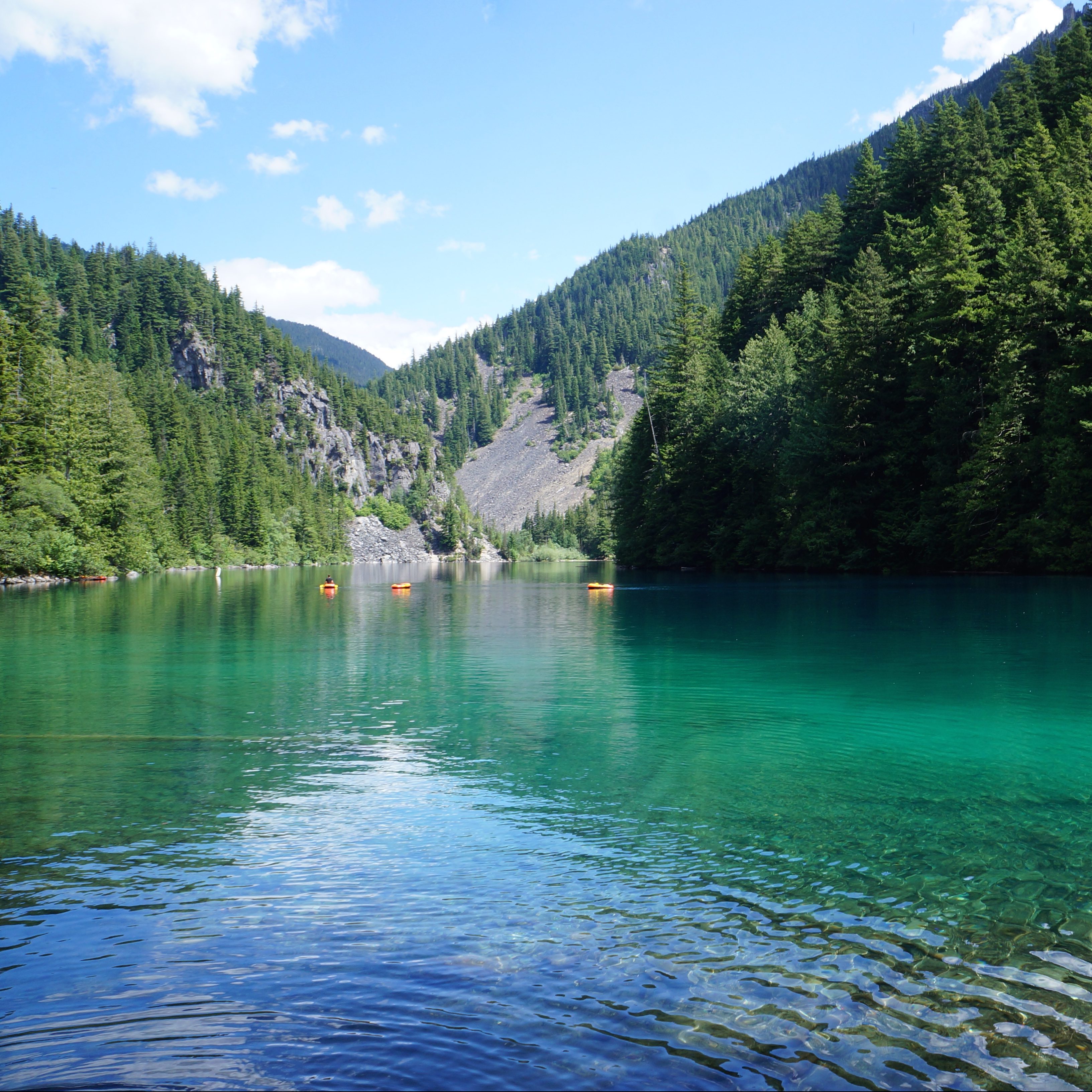
The blue green hues of Lindeman Lake on a sunny day in summer while people lounge on the water with the mountains in the background in Chilliwack Lake Provincial Park in BC.

Location: Chilliwack Park (Chilliwack)
Season: year-round, spikes are needed in the winter
Terrain: 4km, 200m elevation gain
Leash rules: on-leash
Description: This is a short but steep trail to a beautiful lake and campground. It is very busy year-round and the parking lot has been targeted for theft, so plan accordingly.

Falls Lake

Location: Coquihalla Summit Rec area 
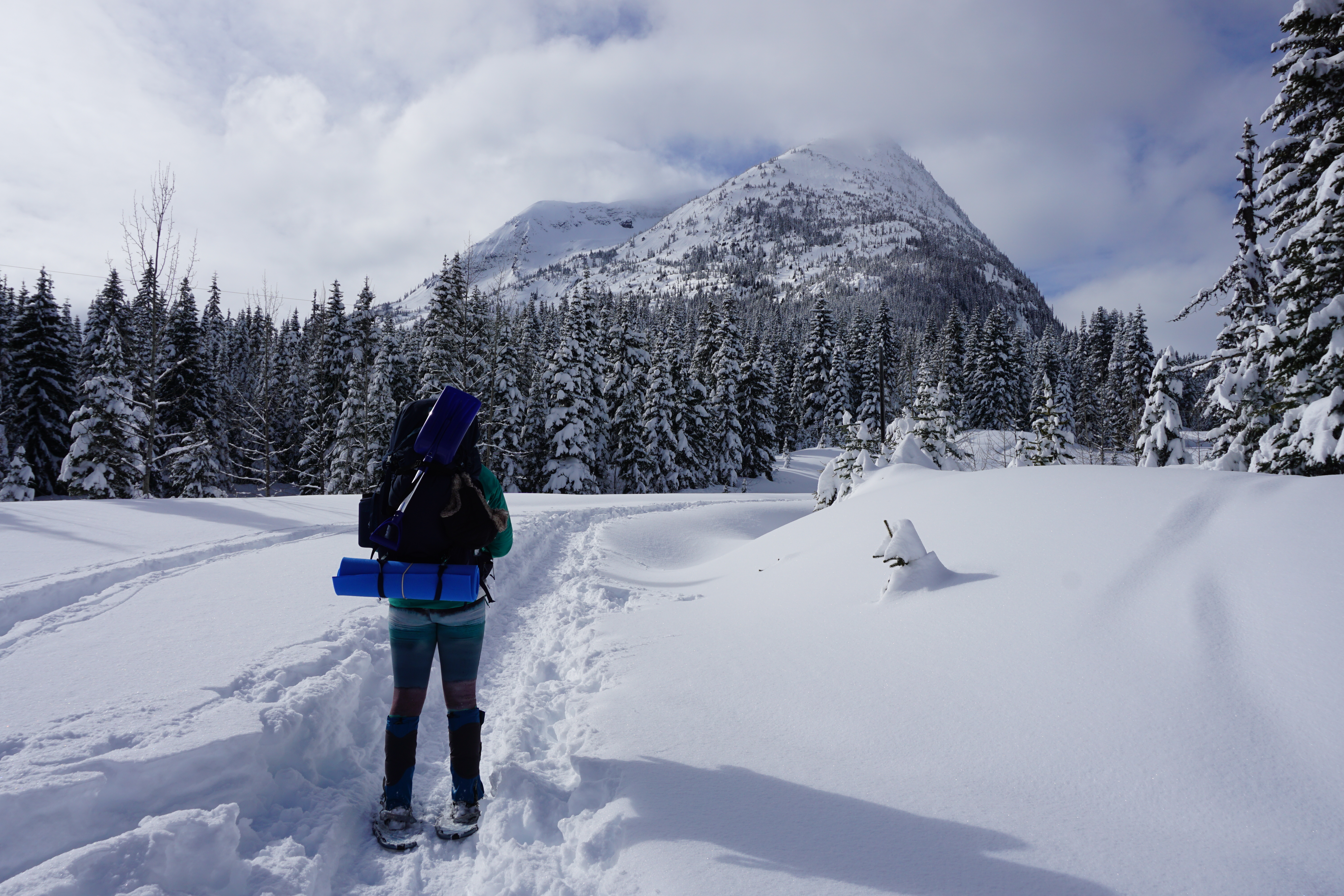
Season: year-round, but snowshoes are required in the winter
Terrain: summer – 2km, 70m elevation gain; winter – 4km, 100m elevation gain
Leash rules: on-leash
Description: This is a short trail that can be completed in the winter with snowshoes. However, the access road is not plowed in the winter, making the approach twice as long. 

Lightning Lakes

20200508_150721

Location: E.C. Manning Park 
Season: year-round, but snowshoes are needed in the winter
Terrain: 5-8km, flat
Leash rules: on-leash on trail, but off-leash at the dog beach
Description: This is an easily customizable trail where you can hike around one or two of the lakes. In the winter, it is usually possible to snowshoe across the lake, but return to the trail near the bridge as the river usually doesn’t freeze.

Skookumchuck Narrows

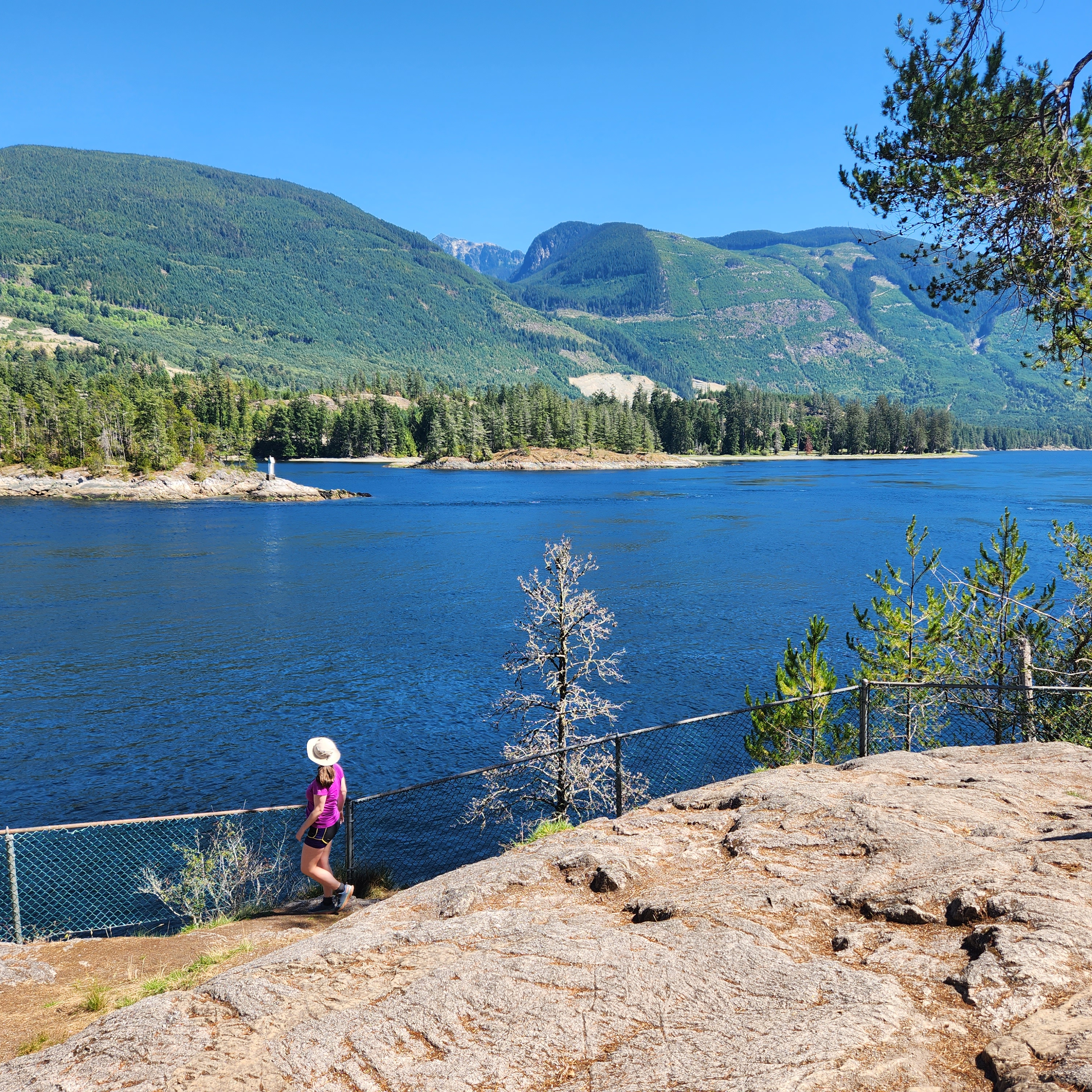
A female hiker stands next to a fence, looking out at the fast moving water of Sechelt Inlet near Skookumchuck Narrows, with the mountains in the background on a sunny, summer day, on the Sunshine Coast, BC.

Location: Skookumchuck Narrows Park (Sunshine Coast)
Season: year-round
Terrain: 9km, 150m elevation gain
Leash rules: on-leash, especially near the rapids!
Description: This is a forested trail to the Skookumchuck Narrows, a natural phenomenon that occurs during certain tides as the water funnels in and out of the channel. Check the best timing before your visit so you can watch adventure enthusiasts playing in the rapids.

Lower/Upper Myra Falls

Little Myra Falls cascades over bare rock and into Buttle Lake on a sunny day in Strathcona Provincial Park on Vancouver Island, British Columbia, Canada.

Location: Strathcona Park (Vancouver Island)
Season: April – November
Terrain: Lower – 1km, 50m elevation gain; Upper – 8km, 150m elevation gain
Leash rules: on-leash
Description: These are two separate trails with different access points, but both are located at the far end of Strathcona Park. Lower Myra Falls is the more scenic and easier trail, but the Upper Falls makes for more of a hike. 

San Josef Bay

PSX_20250428_203804

Location: Cape Scott Park (Vancouver Island)
Season: year-round
Terrain: 6km, flat
Leash rules: on-leash, highly recommended due to the presence of wolves
Description: This is the only part of Cape Scott Trail where dogs are permitted. It’s a short flat walk to the beach where you can camp or explore the sea stacks. Check the tides and visit at high tide to walk around the sea stacks to the second beach.

9 Spring Hikes near Vancouver

Spring is one of the most challenging seasons in the backcountry. It gets really nice in the city, which can trick hikers into thinking that it’s a good time to return to the mountains. Any time is a good time to be in the mountains, but you have to manage the risk accordingly. Snow will not melt at high elevations and in the alpine until the end of June and sometimes even as late as mid July. Spring is particularly dangerous because the rapid melt can create unseen hazards under the snow. What looks like a flat snowy trail may have creeks hidden under thin layers of snow that can easily collapse under your weight. So the safest approach is generally to stick to lower elevation hikes. Fortunately, there’s lots of those available in BC as well! Here’s a few of my favourites within close driving distance of the lower mainland.

Jug Island/Admiralty Point Trail

A photo of a yellow kayak resting on the beach in front of Jug Island on a sunny, blue sky day in Belcarra, BC.

Belcarra is a gorgeous coastal location for Spring hiking. If you park at the lot in Belcarra Regional Park, you can do a short, but scenic hike along either end of the peninsula. If you head south from the parking lot, you’ll follow the Admiralty Point Trail along the water, with lots of little viewpoints along the way. If you head north, you’ll hike inland along the Jug Island trail to a beach viewpoint. Both trails are approximately 5.5km long round trip, but Jug Island is more challenging because it hikes up over the headland and then down to the beach. Both trails can usually be hiked year-round.

Hunter Road

Three hikers and their dog pose at a viewpoint with the snow capped mountains and Stave Lake in the background at Hunter Road, near Mission, BC.

Hunter Road is an easy trail in Mission that can be done during most of the year. The trail starts from the end of Roach Street and is an easy hike along an old forestry road (Hunter Road). Eventually the trail loops back around on itself to climb up to the summit of a small overlook where you can enjoy views of Stave Lake and the surrounding backcountry. It’s a there and back trail, approximately 7.5km in length, 250m in elevation gain.

High Falls Creek

A female hiker nears and smiles at the camera from the High Creek Falls Trail with a view of the snow capped mountain peaks and forest of the Squamish Valley in the background, near Squamish, BC.

High Falls Creek is one of two hikes on this list that can be found along the Squamish River. It’s a more challenging hike than some of the others, but is great for Spring when the rivers are flowing at high capacity. The trailhead is located approximately 26km up Squamish Valley Road. The hike can be done as an out and back, but if you want to make it a bit longer, you can turn it into a loop hike by continuing up to Branch 200 FSR and hiking back along the road. The trail to High Falls is a bit technical, with some scrambling over rocky sections, so make sure to go on a dry day. It’s 1km each way to High Falls Creek, but if you do the loop, it’s 9km with 500m of elevation gain.

Crooked Falls

The view of Squamish Valley from a viewpoint on the trail to Crooked Falls that shows the forest, Squamish River, and mountains in the background on a beautiful blue sky day outside of Squamish, BC

Crooked Falls is the second hike along the Squamish River. It’s a similar distance from Squamish, but you take a left turn over the bridge off Squamish Valley Road and onto the Ashlu River FSR to get to the trailhead. The hike to Crooked Falls is approximately 5km round trip, with 400m of elevation rain. The waterfall is especially impressive in the Spring and makes for a fun day trip. If you want to extend the hike, you can continue along the Sigurd Creek trail to a small outcrop with a gorgeous view of the area. This hike is much harder and is approximately 12km round trip, with 900m of elevation gain. It may not be totally snow free in the Spring.

Woodland Walk/Sawblade Falls

A photo of a forested trail in Pinecone Burke Provincial Park on a sunny day near Coquitlam, BC.

Woodland Walk and Sawblade Falls are two lesser known hikes in Pinecone Burke Provincial Park. They’re super easy to access from Harper Road in Coquitlam and I think they’re very underrated for how close they are to the city. Woodland Walk is a leisurely 7km loop walk through the woods and is great for a rainy day. It only has 200m of elevation gain and makes for a fun forest adventure. It’s easy to extend the loop to also include Sawblade Falls, which is approximately 9km in length. My advice is to be familiar with using GPS maps if you explore this park. There are so many trails through the forest, I usually go and just make my own adventure.

Big Cedar and Kennedy Falls

Two hikers flex their muscles in front of the big cedar tree on the Kennedy Falls trail in North Vancouver, BC.

It’s been a long time since I did this hike, but it sticks out in my mind as a great Spring hike on the North Shore. It’s a bit on the longer side at 10km, and it climbs up and down, so it has a surprising amount of elevation gain (500m). The trail leaves from the Mount Fromme trailhead and is great for variety as it hikes through the forest to a large big cedar tree, and then on to scenic Kennedy Falls. The trail is more technical, with lots of climbing over tree roots, so it’s a good option for more advanced hikers. 

Norvan Falls

Another option on the North Shore – Norvan Falls is a classic Vancouver hike. The trail leaves from the end of Lynn Valley Road and is the longest trail on the list at 15km round trip. The trail hikes along Lynn Creek and then through the forest along the Hanes Valley Trail to Norvan Falls. There’s 600m of elevation gain along the trail, but there is an option to do a little loop through the forest along the way to make the hike more interesting. This is a great option in the Spring when the rivers are running full. The waterfall drops to a trickle in the summer and can be less impressive after the Spring snowmelt.

Stawamus Chief

Two female hikers lie back and relax and smile from the top of the bare rock of The Chief's second peak, with Howe Sound and the Tantalus Mountain Range in the background near Squamish, British Columbia, Canada.

I’d be remiss if I left the Stawamus Chief off this list. The Chief was the first trail I ever hiked after moving to Vancouver and it draws crowds at any time of year. It’s a challenging trail, as it’s mostly a stairmaster to the top, with lots of sketchy sections with ropes, ladders, and scrambling. The full trail is 11km, but it consists of 3 peaks, so people rarely hike all 3 at once. I’ve done the first and second peak, but I still have yet to return for the third peak. I recommend the first peak, because it’s the easier option and has incredible views of Howe Sound. This is a real bucket list hike that is worth the hype, but don’t do it on a rainy day or if you’re afraid of heights.

Widgeon Falls

A hiker stands on the edge of a rock next to Widgeon Creek with the forest and mountains in the background on a sunny day

This hike is a little trickier because it includes paddling, but it’s such a fun adventure, I wanted to include it! In the Spring and Summer, you can rent canoes or kayaks to cross the Pitt River and paddle up Widgeon Creek to the Widgeon Falls trailhead. It takes approximately 1.5 hours each way to paddle to the trailhead at the Widgeon Creek Campsite. From there, you can do a 5km loop trail through the forest up to Widgeon Falls. It’s a beautiful trail and makes for a really unique experience. That said, navigating the Pitt River can be a challenge depending on wind and current conditions, so don’t attempt this adventure without the proper research and experience. I have a full blog post on my experience if you’re looking for more information.