Strathcona Provincial Park

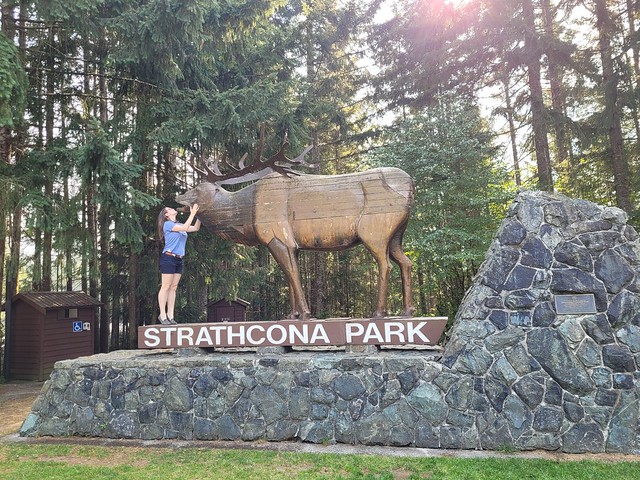
Well, after my 8 post series on the Sunshine Coast Trail, I needed a little break, but now it’s time to catch up on the week I spent in Strathcona Provincial Park immediately after.

It’s unreal how many provincial parks we have in BC. Me and Brandon were all booked to hike the Skyline Trail in Jasper National Park in early September, but then 3 days before the trip we got an email from Parks Canada asking us not to come because of the wildfires. Technically our trail wasn’t closed, but the entire town of Jasper was without power and Parks Canada was encouraging people to cancel, so we listened and made other plans.
20220911_160047

We floated around a lot of ideas for where to go instead, but we had so little time in which to execute the trip that a lot of them were quickly ruled out. Brandon suggested Strathcona Provincial Park, which has been on his bucket list for a long time, and it sounded like the perfect place to do a mix of front and backcountry camping with limited preparations. It was the second week of September, so fortunately the crowds were gone and we didn’t have to worry about reservations. We hoped on the ferry on Sunday morning to spend a week exploring the park!

First off, Strathcona Provincial Park is huge! There are other large provincial parks nearby, like Garibaldi, but Strathcona is largely accessible by car, so it gave us a lot of National Park vibes as we were driving through, though you can tell it receives much less funding than a National Park. It’s not so far from Vancouver that you couldn’t visit over a long weekend, but the size definitely warrants a longer trip. What makes it tricky is that it has multiple entrances and they are all very far away from each other. For example, there are some great trails that can be accessed through Mount Washington and Courtney, but we opted to skip these to focus on the core park area, which is closer to Gold River and a bit of a further drive.
20220911_171333

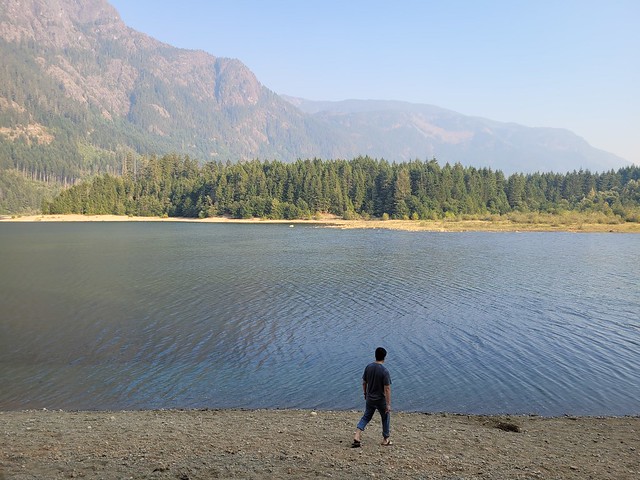
The core area of the park is centralized around Buttle Lake, which extends from tip to toe of the park. There are tons of backcountry campsites, but only 2 frontcountry campgrounds, both located on the lake. The Buttle Lake Campground is at the top of the lake, while the Ralph River Campground is down closer to the bottom. We opted to start at Buttle Lake and spent our first night exploring around the lake. It was a bit smoky when we arrived and the water level of the lake was really low. We went for a walk from our campsite and were able to walk right on to Rainbow Island due to the low water level. There’s a marine backcountry site located on Rainbow Island and I’m now keen to return to Buttle Lake with my kayak because there are several marine sites located along the opposite shore of the lake that would be fun to explore!

Since there’s so much to do, we only spent one night at Buttle Lake before making an overnight trek up to Landslide Lake, which is one of Vancouver Islands most popular backcountry hikes! Landslide Lake is a 20km trek on the northwest side of the park that is best done over 1-2 nights. We opted for 1 night and day hiked from the campsite up to Landslide and Foster Lakes. There’s a lot to talk about between those 2 lakes, so I’m going to write a whole separate post about that hike!

20220912_161033

After we finished the Landslide Lake hike, we decided to make a quick stop into Gold River to get lunch. It’s a tiny little town, but it has a lot of great eco tourism! It’s the launching spot if you’re doing the Nootka Trail, as well as if you’re doing any paddling around the coast. It has fishing and some great little tourist attractions if you’re just there for the day. We stopped into a little cafe for lunch and our waitress gave us a hot tip to check out the Heber River, which has the most beautiful little swimming hole! The water is vibrant blue and super clear, but boy is it cold! We both went for a dip, but it was a quick one!

20220913_152504

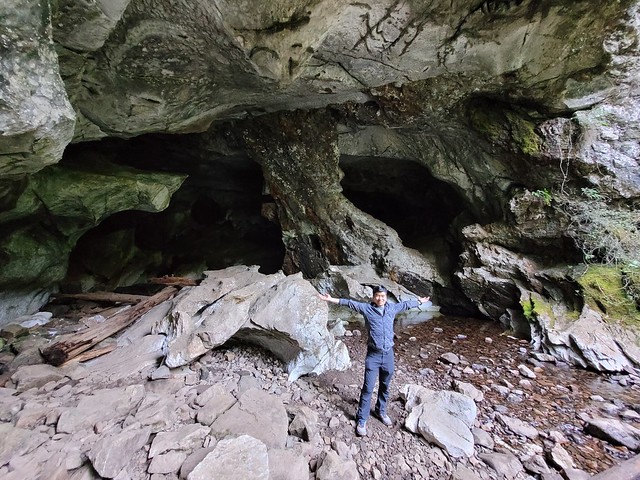
After our swim we got another hot tip when we were stocking up at the liquor store about an easily accessible cave system. About 20 mins west of Gold River, there’s a small Rec Site called Upana Caves. It’s a network of caves with 4 that are easily accessible after only 10 minutes of walking – just make sure to bring your headlamp! I’m a bit of a chicken when it comes to caving, but Brandon convinced me to go into a few and we ended up spending an hour crawling around. Our favourite was the last cave in the system, Resurgence Cave, which has a little river flowing through it and is pretty scenic. A bit of a different activity for us, but well worth the detour!
20220913_165056

Once we headed back into the park, we went on a bit of a tourist circuit of the easily accessible trails. There’s a ton of waterfalls in the park, most of which are located right off the highway. We stopped into Lady Falls, Lupin Falls, and Lower and Upper Myra Falls. Lower Myra Falls is definitely the shining gem of the park, so if you can’t get to them all, make sure you visit that one. You can swim in the falls, though it’s very cold. If you’re more adventurous, you can climb down from the falls to the bottom end of Myra Lake, which is a much nicer place to swim. Brandon and I had a proper bath here since we were in the park for a full week and neither of the campgrounds have showers.

20220914_102344

Since Lower Myra Falls is located at the bottom of the park, we opted to stay at the Ralph River Campground for 2 nights. Some of the sites appear to be “lakefront” which had us excited, but because the water level was so low, it was much more of a swamp then we were anticipating. We lugged all our gear out to the “beach” one night to cook, which was still nice, but I wouldn’t recommend it as a good place for swimming! In our case it started raining on us in the middle of our meal, but we were troopers and stuck it out anyways.

20220914_104306

The very end of the park is interesting because there’s actually an active mine right in the park! So a small part of the park is designated as “Strathcona-Westin Provincial Park”, which is basically just the extents of the mine. From what I understand, the mine already existed when they formed the park, so they let it continue operating. You actually have to drive right through it to get to some of the trailheads, including for Upper Myra Falls, so it’s an interesting experience!

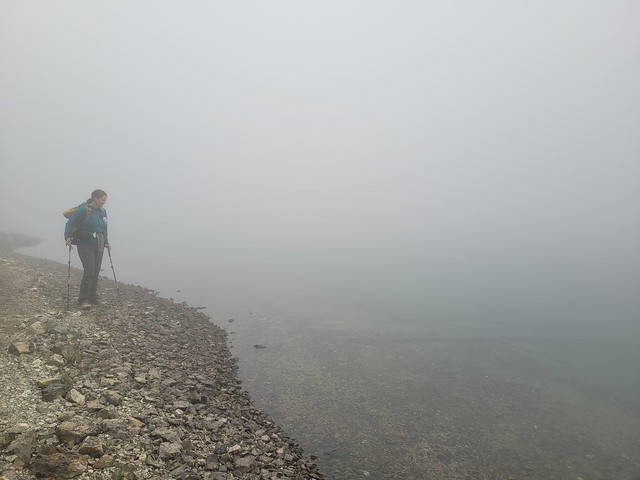
We decided to finish the trip with a second overnight hike up to Bedwell Lake. It’s also a very popular hike and our plan was to do both Bedwell and Cream Lakes. Unfortunately, the weather didn’t really co-operate with us for this hike. It was really nice when we started, but it got foggier and foggier the closer we got to the lake. After talking to some other people, it sounds like most of the park was clear that day, but a bunch of clouds got hung up in our area and unfortunately, we couldn’t see a thing. But I’m also going to do a full post about Bedwell Lakes, because it was still an eventful trip, even with the odd weather.
20220915_153608

We had planned to do one more hike in the park via Courtney on the way home, called Century Sam, but we got notice on the way to Courtney that the gate to the trailhead was closed. The road to the trail is on private property, so you are at the mercy of the property owners if you choose to visit that trail. There is no service anywhere in Strathcona Park, so be prepared for that when you visit.

The salmon were just starting to run when we were leaving the park, so we stopped along the river on our way out to watch people fishing and then hightailed it to the ferry when we heard Century Sam was closed. We ended up having a bit of a wait for the ferry, but were able to make it home the same night. So overall, I really liked Strathcona and I don’t think it’s a place I would likely have planned to visit without such an opportunity. That said, I left the park with even more trails on my bucket list then when I entered!

20220914_175941

Chance Cove Coastal Trail

I recently made my annual summer trip home to Newfoundland for 10 days in early June and had the best time exploring some new trails! I wasn’t thrilled about going home in June because it’s not the nicest weather in Newfoundland at that time, but I ended up having to eat my words because I had really good luck while I was home! I got such fine weather I ended up doing 55km worth of hikes in just 7 days – the first of which was Chance Cove Coastal Trail.

IMG-20220613-WA0016

Chance Cove is located about an hour and half outside of St. John’s on the far end of the Avalon peninsula on the isthmus. Chance Cove has definitely been trending on Newfoundland social media throughout the pandemic and I was starting to feel like everyone I knew on the island had been there over the past year. It looks incredibly scenic in photos, so I admit to being drawn to this hike by Instagram and I was determined to check it out for myself.

We got nice weather on our first weekend home and I convinced both mine and Seth’s families to do the hike with us. It’s only ~4km round trip and is fairly easy terrain, but it’s so scenic it ended up taking us 2.5 hours to do the whole thing!

20220612_124701

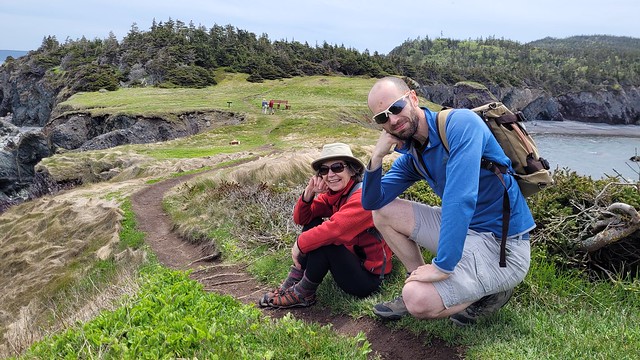
What makes this hike especially nice is that it’s a double loop hike (kind of like a figure 8), so you get different topography along the entire hike. We started by climbing up into the woods until we reached Chance Cove Beach, which extends across the cove to the main road, then we switched back to the coastal route up towards Green Head. It was overcast and extremely windy when we started, with Green Head being the most blustery part of the trail. We hiked up to the head, but didn’t stay long because it was so cold, though it was cool to watch the wind swirl erratic patterns through the water.

20220612_124910

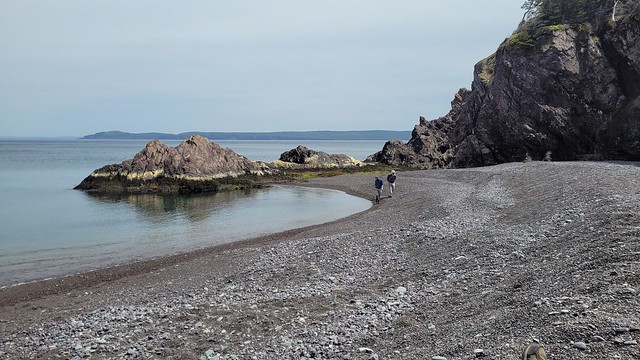
From Green Head, you continue along the headland past Chance Cove Island to Island Cove Beach, where fortunately, the headland shelters you from the worst of the wind. There’s a newly constructed set of stairs going down to Island Cove Beach, so we took a long break on the beach to eat our snacks and enjoy the warmer (less windy) weather. As we continued on, the clouds started breaking up and pretty soon the sun was shining down on us!

20220612_131238

The next attraction is Patrick’s Cove (also known as Big Cove), but first you can hike up to a series of viewpoints between the two coves. With the sun shining, it completely transforms the landscape and the water turned the most vibrant shade of blue! You could almost be tricked into thinking you were somewhere tropical, if not for the wind.

20220612_133325

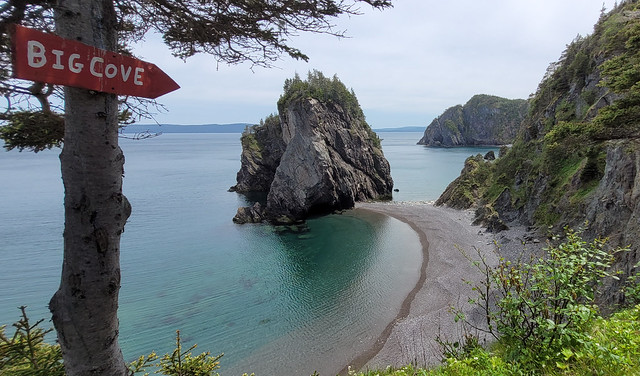
You can also hike down to Big Cove, which has a huge sea stack that is centered in most of the photos I’ve seen on social media. Unfortunately, there are no stairs going to Big Cove, just a large rope guiding you down the bank. I really wanted to see it, so I climbed down, but it’s still really steep and not for the faint of heart. The rope is positioned pretty awkwardly and some of my family members had some trouble, so I wouldn’t go down there if you’re not confident in your abilities. Definitely use caution.

PSX_20220612_182515
20220612_134748

If you do decide to climb down to beach, it is very lovely and would make a great place for a swim. Me and Emily toyed briefly with the idea of going for a dip, but we didn’t have swimsuits and it was a bit too breezy to air dry. We opted instead to wade out up to our knees. It wasn’t quite as cold as I was expecting at first, but it quickly starts to numb your feet and I had to stumble back to the beach to defrost!

PSX_20220615_101406

From there we hiked back up the bank to get what I’d call the “money shot” of the hike. A view from above of the curved beach and sea stack. It was no longer sunny when we got there, but no less scenic! After that it’s a pretty easy walk back to the parking lot. There’s a small climb and then you head back down towards Chance Cove. You can cross the beach if you prefer, but given the wind, we decided to just hike back along the water instead.

20220612_141428

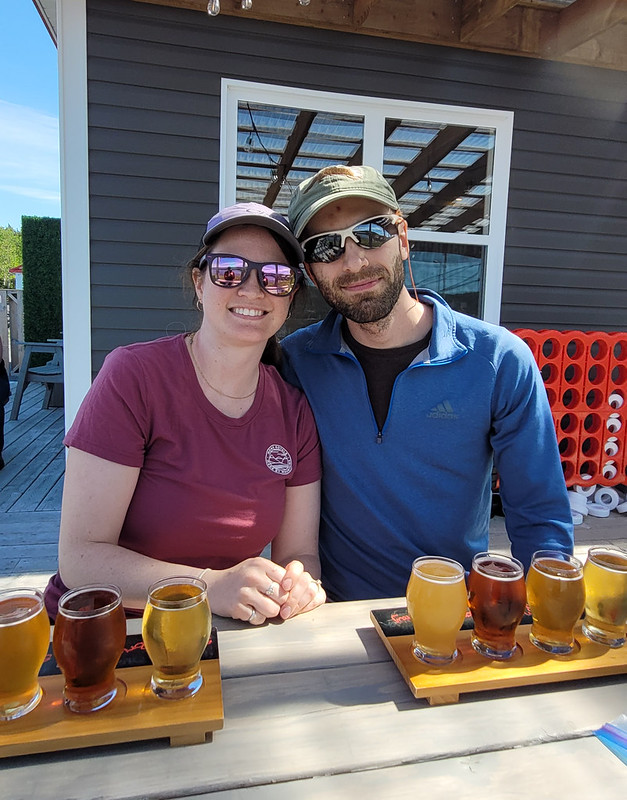
We concluded our day with a visit to Baccalieu Trail Brewing Co. in Bay Roberts to sample some of their beer and “legendary” cod chowder. The sun returned while we sipped our beers on the patio and we congratulated ourselves on a very successful day. Chance Cove Coastal Trail definitely lives up to the hype and I would recommend it to pretty much anyone. Use caution if climbing down to the beach, but otherwise it’s a fairly easy hike that’s great for beginners! We had a great time.

20220612_155122

Skating in Banff

As much as I loved skiing in Banff National Park, I can’t deny that one of the real highlights of the trip for me was when we went skating on Lake Minnewanka. Lake skating is such an iconic Canadian activity, yet I get so few opportunities to do it living in Vancouver. I was super keen to go skating while we were in the Rockies, so I crammed my skates into my checked luggage.

While you do have a lot more freedom to set your own schedule when you bring your own skates, it’s definitely not necessary. Emily didn’t bring it any, so we still had to rent them while we were there. We assumed we’d get the opportunity to skate on Lake Louise, but I was still keen to find a less commercial skating experience. The hardest part about free skating on natural ice is timing. You want the ice to be thick enough, but if you wait to late in the season, the ice will likely be covered in snow, resulting in a lot of work to shovel the skating surface. How the ice freezes will also play a large role in how easy the skating will be.

20220227_132016

Since we were visiting in March, I figured our odds of getting to go lake skating were pretty slim. But it had been really cold and sunny the week before we visited, so I was hoping some lakes might be clear. It was calling for snow most of the week we visited, so the first thing we did was search for some ice before it got covered again in the following days.

There are several places to rent adventure equipment in Banff – we rented from Banff Adventures for $15. I was told Lake Minnewanka and Two Jack Lake were good places to try, but the rental place told Emily the surface wouldn’t be good, so we decided to try the outdoor rinks first (I think the rentals are hesitant to recommend lake skating for liability reasons, so do your own research).

20220227_133259

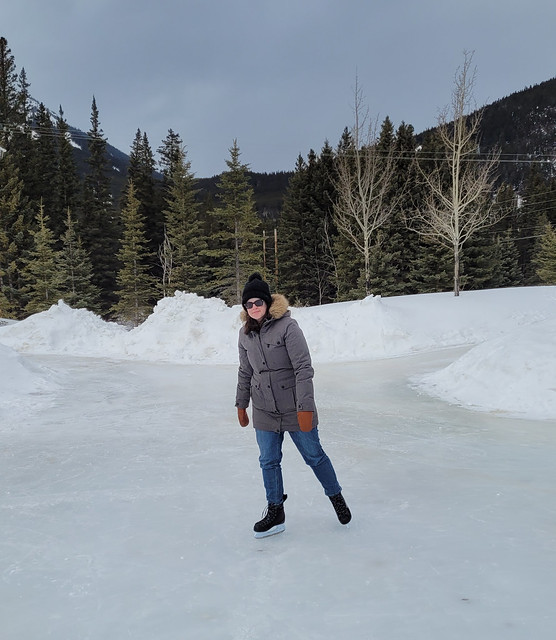
If you’re nervous about lake skating, there are a few options in Banff, there’s a small natural rink by the train station and a bigger one behind the curling arena. Driving by the train station rink first (and seeing how small it was), we opted for the arena. I’m glad we went here first because it had been several years since either of us had been on skates and it was a comfortable place to get used to it again. There were a few people around with hockey sticks, but it wasn’t overly busy, so we had a good time doing laps.

But I was still really keen to at least check out the lakes while we had the rentals, so we decided to go to Minnewanka anyways, figuring if we couldn’t skate we could at least go for a little hike. You have to drive by Two Jack Lake on the way to Minnewanka, so we scoped it out, but it was a mix of very bumpy ice and snow, so we kept going to Minnewanka. Likewise, Minnewanka was a bit of a mix of ice and snow, but there were much larger ice patches and lots of people out exploring around on the ice, so we figured it was worth a try.

20220227_151609

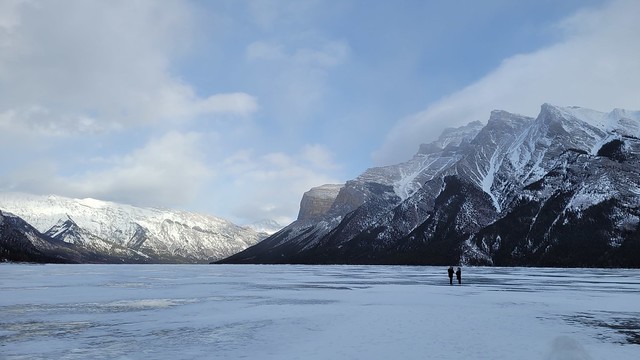
Minnewanka is a huge lake, extending 28km up through the mountains. It’s absolutely wild to me that such a large lake is able to completely freeze in the winter. The shallow part of the lake was completely covered in snow, so you have to walk about 500-1000m to get to the parts where you can skate. Always be cautious if you are going out of the ice. It had been -20 degrees the entire week before we got there and we’d read up that people had been out skating all the previous week before visiting. It is somewhat risky going out on the snow to get to the ice because it provides a relative feeling of safety, but you can’t see the ice quality until you’re further out.

It was jarring when we did finally reach the ice. The ice in Newfoundland generally doesn’t freeze very evenly and is usually completely opaque, but the ice in Minnewanka is clear and we could quickly see that we weren’t going to have any concerns about ice depth. From the ridges in the ice, you can easily see that it’s at least 1.5-2 feet thick. 6 inches is the safe depth for skating, so we weren’t worried about ice depth at all, just freaked out by how scary it is to be able to see right down through the ice!

PSX_20220227_162739

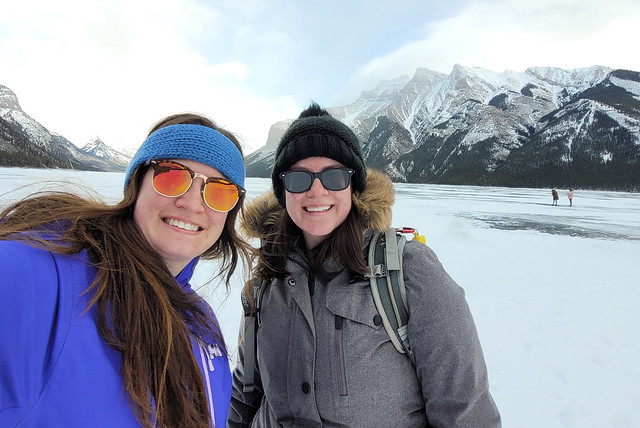
It was very cool though. When we got to the edge of the snow we laced up our skates and put our boots in our backpack to go for a skate. The ice was bumpy in places, but it was a much smoother surface than I was expecting and there was tons of room to skate all over the lake. You can see all the air bubbles frozen in the ice as they tried to rise to the surface and we kept skating around looking for interesting features. It was pretty windy skating on the lake, but I think that’s why more of the snow was gone. Pretty much every other lake we saw was snow covered, but I think the wind blows it off Minnewanka since it’s so large. It’s such a fun experience and frankly, I’ve never felt more Canadian then when ice skating on a frozen lake.

Fortunately, if you’re still a bit nervous about the idea of finding your own ice, you can skate on Lake Louise. It’s still not a totally risk free activity as the ice isn’t managed by anyone, but so many people skate there and it’s very close to shore, so I think it’s more manageable risk. Lake Louise does get covered in snow though, so you can’t skate on the entire lake, just the section at the end near the chateau where people keep in shoveled.

PSX_20220227_163106

Later in the week we wanted to make a go for Lake Louise as well. It’s such an iconic place, so we figured it was worth skating there too. Unfortunately the day we visited was the worst weather we had on the trip. It was overcast most days, but on the day we went to Lake Louise it snowed pretty heavily and the clouds and visibility were really low. The rink wasn’t shoveled when we got there, so we decided to snowshoe across the lake instead. Cross country skiers traverse across the lake and walkers go up and down the edge to the back of the lake where there are some ice climbing opportunities.

Unfortunately we didn’t catch much of the views with the poor visibility, but we have been there in the summer, so we just tried to enjoy the snow on the trees instead. There were some people starting to clear the ice when we got back, but it was a relatively small surface and a lot of people, so we decided to skip it since we’d had so much success at Minnewanka already.

So that’s my advice on skating in Banff National Park. Definitely go for it because it is a super fun activity, but stick to your comfort level and always make sure the ice is safe before going out onto it!

20220227_151645