Torres del Paine Backpacking Trip Part III

Following up from Part I and Part II. The weather forecast for Day 3 was our worst while on the trail. There wasn’t any heavy rain in the forecast, but more concerning was the alert for 80km/h winds. It was only 11km to our next campsite, but we wanted to attempt the day hike up to Mirador Britannico, which is another 11km round trip, so overall, it was our longest day of hiking in Torres del Paine.

PSX_20240408_101139

The clouds looked pretty foreboding when we left Paine Grande, and as anticipated, it was incredibly windy. But the moody weather produced some of the most striking photos of the stunning landscape! The dark clouds hung around the mountains, without always obstructing them, and occasionally the sun would break through, splintering rays of sunshine across the hillside. It was really pretty and we both loved the hike from Paine Grande to the ranger station at Italiano, which is where the day hike starts.

We arrived around lunch time, so we ate at the picnic tables as it started to rain. There’s a washroom with a big overhang for bag storage, so everyone leaves their backpacks while hiking up to the mirador. We re-packed our bags, putting everything we didn’t need in Seth’s, and everything we might want in mine. A lot of people just do the hike with a water bottle, but conditions were marginal and it is a remote trail, so I’m glad we brought all our essentials, as we did use them.

20240302_105053
PSX_20240408_100815

I struggled with the hike to Mirador Britannico. I think my biggest problem was that I’d heard from other hikers that it was an easier-than-expected trail. Even though there is 600 metres of elevation gain, I heard that it was pretty gradual and I didn’t properly manage my expectations. A large portion of the hike is a gradual incline, but it’s not the full story. The first kilometer of the trail is pretty flat, but then it gets quite steep very quickly and is surprisingly technical, with lots of tree roots and boulders. It was raining throughout the entire climb and I started overheating in my rain pants, so I got pretty cranky, despite gorgeous views of the surrounding glaciers.

20240303_122956
PSX_20240408_121306

After a while, the hike definitely flattens out, with one steep push to the top at the very end. About halfway to the summit, the rain transitioned to snow, so the visibility was pretty poor. I definitely questioned turning around, but couldn’t quite bring myself to do it. I picked up a lot of the slack for Seth on day 1 (giving him my hiking poles and carrying a bunch of his gear), and he came through for me on day 3. He ended up really liking this section and carried our shared pack most of the way there. On day 5, we transitioned again and I carried the pack for our sunrise hike when he was struggling, so overall, I guess we do make a good team!

20240302_172900
20240302_152046

We were pretty slow, but eventually we made it to the top! We didn’t get much of a view, but it was still a pretty cool experience. My new problem was that it was very cold and my pants were soaked through from the lack of breathability in my rain pants. This was definitely a flaw in my set-up, so I’m glad we had brought lots of extra emergency layers in our backpack and we layered up and enjoyed our snacks. Fortunately, my pants are quick dry, so they dried out really fast on the way down, which was helped by the fact that it finally stopped raining.

There were a lot of day hikers doing the mirador when we were hiking up, but somehow we got passed by almost all of them. We only passed a handful of people on our descent and by the time we got back to Italiano, there were less than a dozen bags remaining. So this wasn’t our swiftest hiking trip, but we stopped to take more photos and videos on the way down and my mood improved a lot.

PSX_20240415_221054

We hiked the last 2km to Frances Campground, where we’d be staying for the night. There’s no big refugio at Frances, just some small dome structures, but they are expensive, so we opted to stay in one of the permanent tents instead. Both Frances and Chileno Campgrounds have elevated tents that you can book. They’re basically those platform tents that people set up on top of their cars, but in this case, they were elevated platforms in the woods. They were massive inside, so it was pretty cool, but a bit annoying to climb in and out of. We were later arriving to the campground than other days, so we quickly ate supper and went to bed!

Lucky for us, the weather started to shift on Day 4. There was still some wind and rain in the forecast, but it tapered off throughout the day. We had to hike 16km from Frances Campground to Chileno Campground. Chileno is a smaller site, but it’s one of the most popular because it’s the closest campsite to the Towers. We left Frances and had a pretty easy walk to Los Cuernos Campground, which is a bigger and nicer site than Frances. It has a proper refugio, unlike Frances, but it’s still smaller than Grey or Paine Grande.

20240303_084303
20240302_111802

The morning hike was mostly in the trees, with a short walk along the lakeside beach. It sprinkled rain for an hour or so, but it cleared up after that and we didn’t get any more rain on the trip. Most of the day was a slow ascent along the mountainside, which looks out over Lago Nordenskjold, an absolutely massive lake. The trail peaks after ~7km at Mirador Cuernos, and we decided to stop for lunch, it has a gorgeous lakeview, but it’s still pretty windy.

The weather improved in the afternoon and the clouds started to disperse as we continued meandering along the mountainside. Eventually you come to a branch and you can either continue back towards the park entrance, or take a connector trail up towards Chileno. It’s a great shortcut when you’re hiking the W-trek and it’s an absolutely beautiful section of trail. It’s mostly meadows as the trail ascends through the foothills towards the pass to the Towers, but the real benefit was that it was almost completely empty (we only saw 4 people)!

20240303_132045

The sun finally showed its face in the late afternoon and it was the first time on the trail where we could hike in shorts and t-shirt. We took another break to enjoy the view, before continuing our trek up to the main trail. The trail merges just before Windy Pass, which is a high point along this section. It was surprisingly not windy in the pass and there’s a gorgeous view looking down over a canyon to the Rio Ascencio. The trail was much busier, but it was mid-afternoon, so not as busy as it would be in the early morning when everyone is starting their climb to the Towers.

From Windy Pass, you descend along the open canyon trail to Chileno Campground. It’s a really cool campsite in that it overlooks the river and has a nice bar where you can enjoy a drink after hiking the Towers. But it was the least accommodating campsite we’d visited. The refugio at Chileno is tiny, so most people who stay there, stay in the platform tents (which is what we did).

20240303_142931
20240303_141042

The problem is that this refugio is highly focused on profits – if you’re not staying in the campground, they charge you to use the bathrooms (which are NOT well maintained), and they want everyone to pay for meals in the dining hall, so they only provide one single 4-person table for everyone who wants to cook. It was extremely annoying considering we did pay a lot of money for a tent. Plus, you’re only actually permitted to use this table when they’re not actively serving dinner, which means there’s a blackout between 5:30 and 8:30pm. So we ate very early and then hung out before going to bed.

An early night was required because we were planning to hike up to the Towers for sunrise. We got some experience sunrise hiking on the Sendero al Fitz Roy, but the hike to the Towers is double the length of what we did in Argentina, so we planned for a very early rise. However, we got incredibly lucky with the weather. The clouds continued to clear all evening and when I woke up in the middle of the night to pee, I almost lost my mind over the star-speckled sky that greeted me. We were incredibly remote, so it was easy to see the milky way and I stumbled around in the dark enjoying the night sky before heading back to bed. Check back for the final story in Part IV.

20240303_150653
20240303_174457

Tierra del Fuego National Park

On our second day in Ushuaia, we were determined to visit Tierra del Fuego National Park. I was really tempted to check out some of the hiking trails in the area, but I felt that visiting the park was a unique experience that I didn’t want to miss, so we opted to do the much more touristy activity. We signed up for a tour and got picked up at our hostel in the morning to drive towards the park. The bus dropped us off at the train station and we had the opportunity to travel into the park by train instead. 

Tierra del Fuego is already an interesting geographic region at the end of the world, but it has an interesting history as well. We didn’t have the opportunity to learn very much about its indigenous history, except that there were a number of indigenous Fuegian groups living all over the coastal south region and the interior of the island. They had a very unique culture and were never colonized by the Incans (like many other parts of Argentina and Chile), but like many indigenous groups, they were devastated by the arrival of the Europeans and diseases like measles and smallpox.

Unfortunately, the park doesn’t really focus on this history. It’s a common theme we noticed in both Argentina and Chile, with the bypassing of indigenous history, save for our guide in Santiago, who shared more indigenous history with us on his 3 hour tour, than we learned on the rest of the entire trip. The National Park is heavily marketed to tourists, but they’ve decided to focus on the colonial history of Ushuaia and the surrounding area. 

PSX_20240228_111607
PSX_20240228_111949

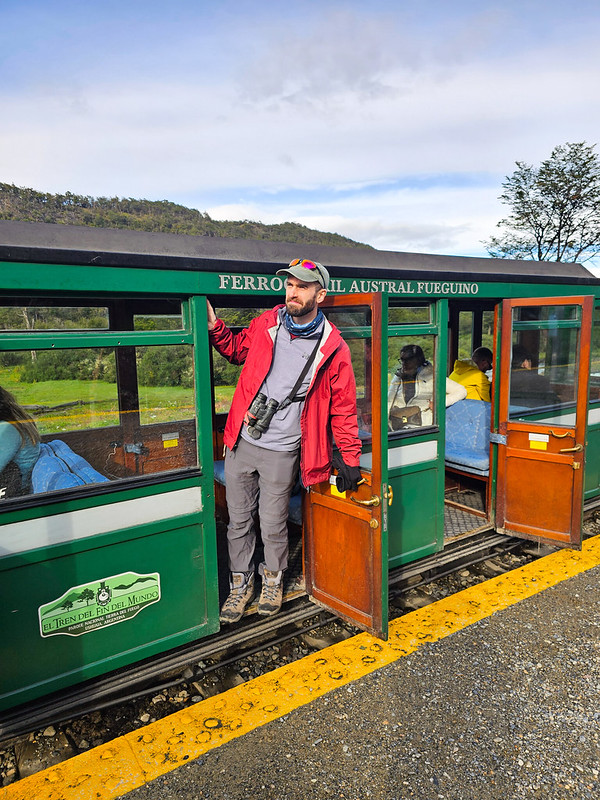
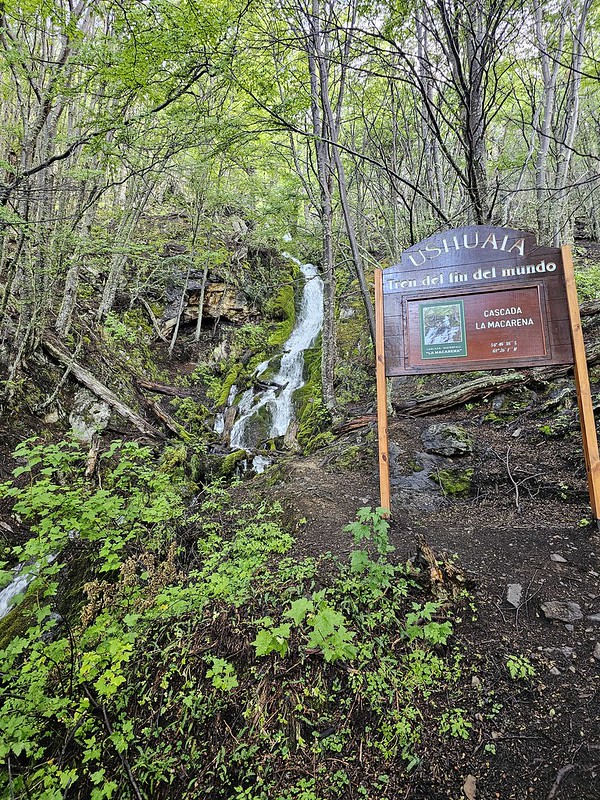
Ushuaia was initially founded as a penal colony in the early 1900’s and as it expanded, a railway was constructed to transport the prisoners into the forest to harvest timber to support the town’s growing needs. The train has been refurbished and is now known as “el tren del fin del mundo”. Today, it transports hundreds of tourists 7km into the park, showcasing gorgeous landscapes and educating visitors on the history of the railroad. It was a cool experience – it’s very picturesque and I enjoyed the opportunity to learn about the history – but I have to say, the entire experience is a bit tasteless. 

The train has a very dark history, as many of the prisoners were severely mistreated during this time period. I felt that the tour didn’t understand its intention, in that it didn’t think critically about the experiences of the prisoners or respect them. The audio tour starts off by talking about how progressive it was to offer the prisoners work, and that many of them loved the opportunity to get outside and enjoy nature. But then later in the tour it expands on how the prisoners were starved, beaten, and mistreated while working in what was essentially a labour camp. It’s not like they were given the choice to participate in labour, so it didn’t seem very progressive to me and felt rather tone-deaf. 

This is exacerbated by the fact that the Park also has paid actors running around everywhere dressed as goofy prisoners. They make you take a photo with them before boarding the train where they encourage you to pretend that you caught these naughty prisoners trying to escape (and then later try and sell you the photo of course). I found the entire production to be disrespectful and insulting to the people that suffered in this prison at the start of the century. It’s a good learning opportunity, but it was too commercialized and executed poorly.

PSX_20240228_112353
PSX_20240228_113310

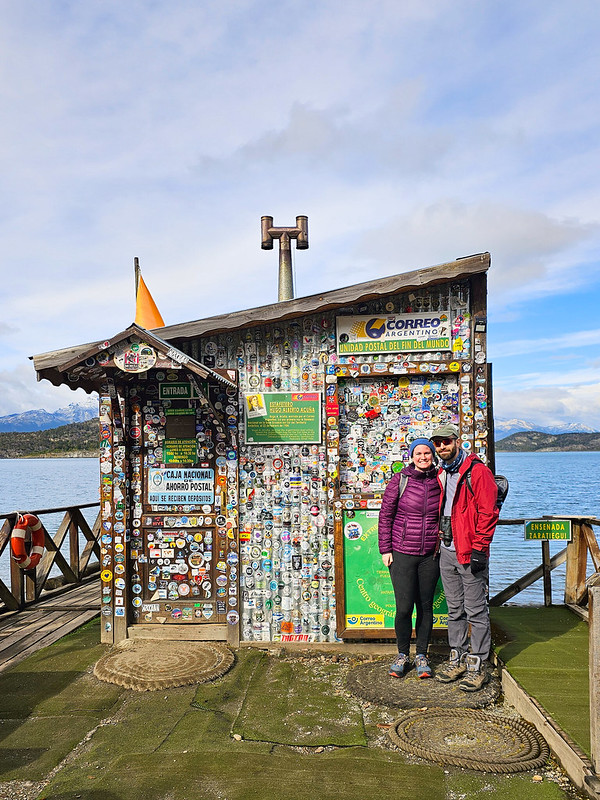
It’s a one-way train journey, so our tour bus picked us up at the end of the line and we spent the next several hours exploring around the park. This part of the tour, I really enjoyed. First we visited the post office. It’s not the most southerly post office in the world (that honour is reserved for the one in Antarctica), but it is known as the “end of the road”. The road in question is the Pan-American highway, which stretches 30,000km from Alaska to Ushuaia. The post office is located on a beautiful beach, so we sent ourselves a postcard (stamped with a penguin) and then enjoyed the views. 

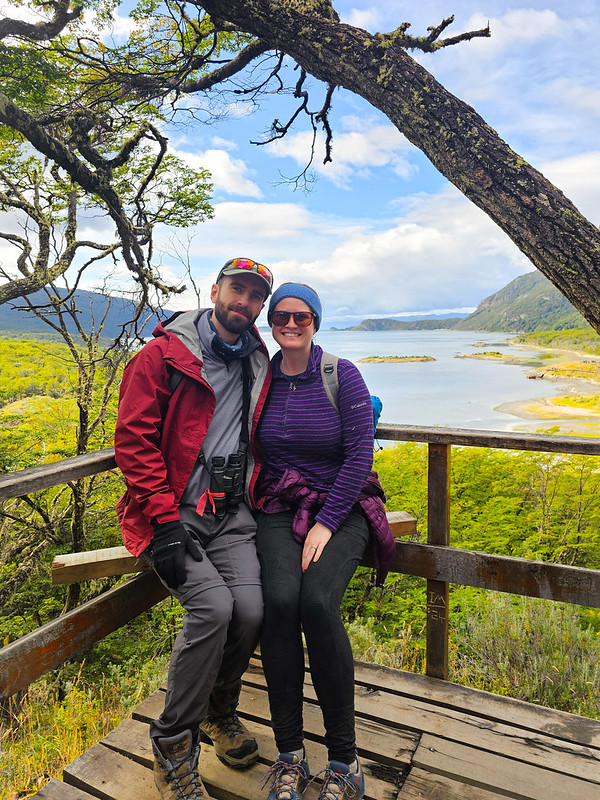
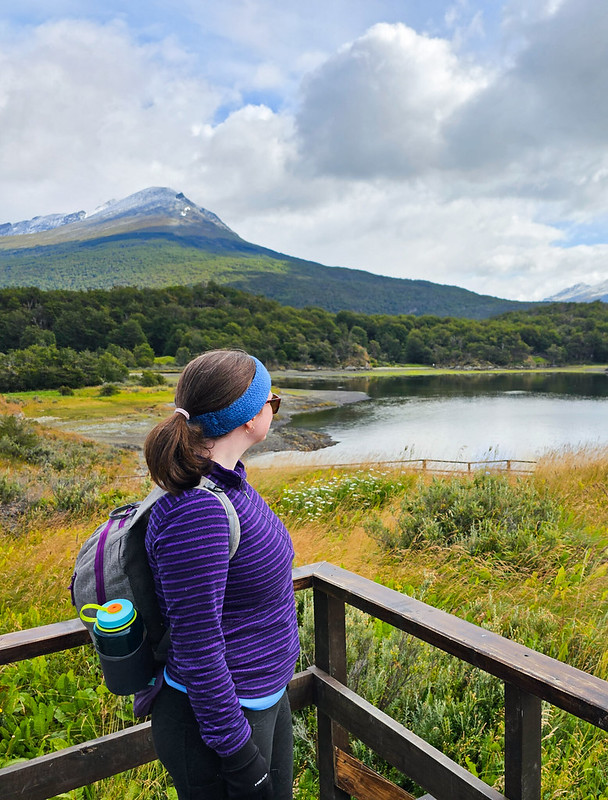
Our next stop was Lapataia, which is the real end of the road and has a beautiful mirador of the Beagle Channel. Our bus dropped us off 1km away from the parking lot and we did a short walk through the forest to Lapataia and then explored the viewpoints. It was a nice day – not super warm, but a mix of sun and clouds. I really liked the forest walk, which smelled amazing after rain from the previous night. Our last stop was to Lago Roca, which is a huge lake located on the border between Argentina and Chile. Our tour guides shared some local spirits with us at the end of the tour (which was actually delicious, a very caramelly whisky), before returning to Ushuaia.

PSX_20240228_113053
20240222_092847

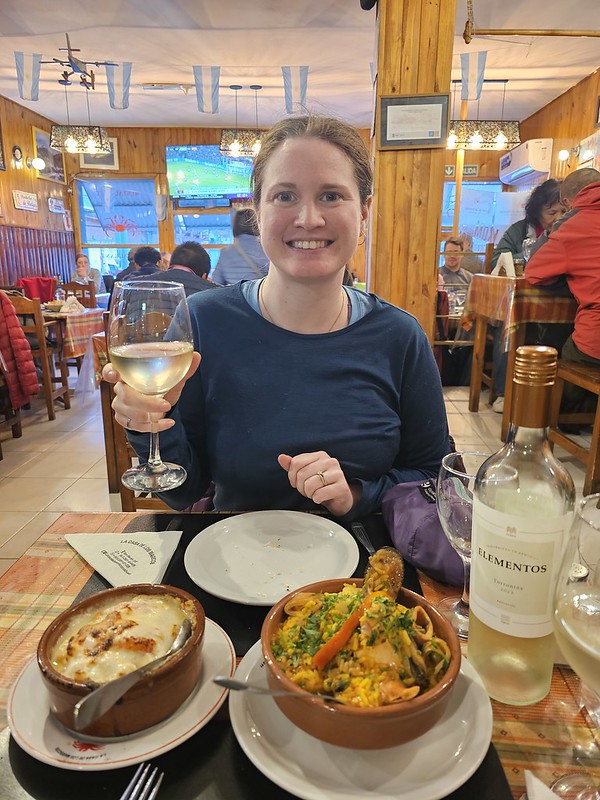
We spent the rest of the afternoon shopping around the downtown area. Seth was determined to find a bird guide and we visited some of the outdoor stores, of which there is actually a large number due to the many expeditions leaving from Ushuaia. But our main goal for the rest of the day was to sample the king crab that Ushuaia is known for. Our tour guides all recommended the same restaurant, a small place called El Viejo Marino, but given how small it was and how often it’s recommended, we could not get a table. Seth did a bit of research and found a place called La Casa de Los Mariscos, which I would highly recommend!

We got to the restaurant 15 minutes before it opened and were the first in line for the night, but a long line quickly developed behind us and by the time the doors opened, the entire restaurant was immediately filled. It was a great choice and one of the best meals I had on the entire trip! The popular dish is the parmesan king crab, which is basically a full crab baked with parmesan cheese. It was delicious and we ordered one to share with a seafood paella that came with squid, scallops, shrimp, clam, mussels, and white fish! We topped it off with a full bottle of wine for the low low price of $9. There was a guy performing life music throughout the night as well and the whole restaurant had a great vibe!

It was a wonderful way to end our time in Ushuaia. It was a very quick trip to the end of the world, we only really had two days there as we flew out to El Calafate early the next morning. I found our trip to be a bit airplane heavy on the front end with the excursion down to Ushuaia, but once we landed in El Calafate, we wouldn’t be flying anymore until the end of the trip, 

20240222_200131
20240223_190358

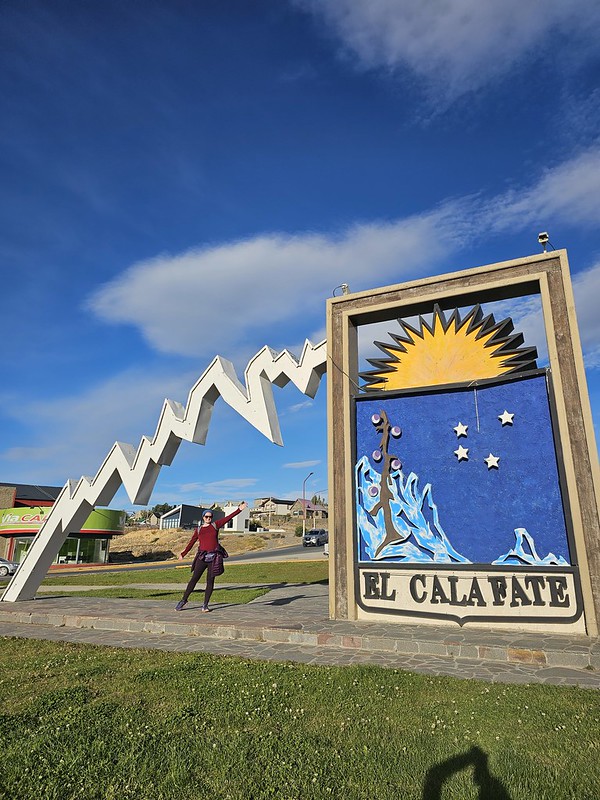
El Calafate is further north than Ushuaia (everything is), but is located squarely in the center of the Argentine Patagonia. It’s the jumping off place for anyone looking to explore Los Glaciares National Park. Like Ushuaia, it was not at all what I expected. I thought El Calafate would be smack dab in the middle of the mountains, but Patagonia is quite different from the other mountainous regions I’ve visited. Mostly in that it’s still true wilderness. There are not very many towns actually located in the mountains. The mountains are crowded around the Argentina-Chile border, but east of the border mountains, Argentina is pretty much all flatland desert. It’s very dry and barren. 

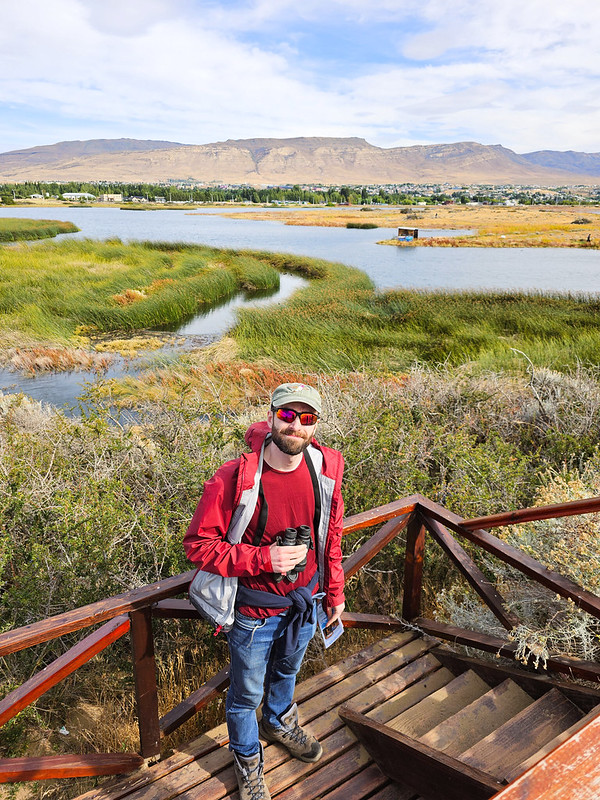
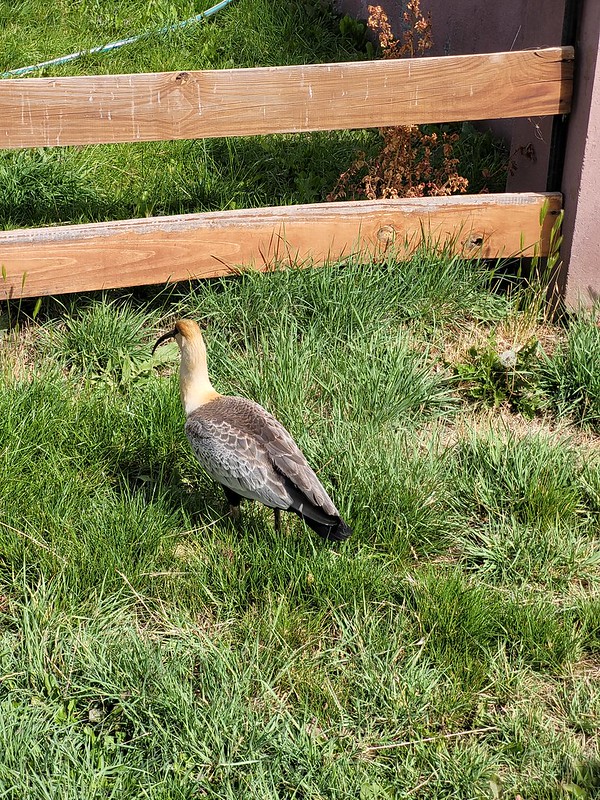
El Calafate is located right on the enormous Lago Argentino. It has a nice view of the mountains across the lake, but the town is characterized more by the desert than the mountains. We stayed in a nice little guesthouse, arriving around noon. We were starting our first trek the following day, so we spent the afternoon picking up some groceries for the trip and sourcing other things we couldn’t bring with us, like fuel for our stove. We enjoyed some beers at Patagonia Brewing and then spent the rest of the day birdwatching at Laguna Nimez, a reserve next to the lake. We saw lots of birds, but the most interesting was probably the Chilean Flamingo! There were dozens of them hanging out in the lagoon and they’re pretty goofy to watch. 

In the evening, we re-packed our bags, leaving a suitcase at the guesthouse and getting our backpacks ready for our first trek: 3 days on the Sendero Fitz Roy!

PSX_20240228_113538
20240223_152113

Skiing in Levi

The last segment of our trip was to another small town in Lapland called Levi. It’s only about an hour from Yllas, so we drove there after our visit to the snow hotel. While I didn’t care to sleep in a snow hotel, I was keen to try out one of the glass huts. There are several different glass huts around the region and as the name suggests, they are basically glass roofed hotel rooms. Unsurprisingly, they are not cheap, so I shopped around a bit before deciding on the Northern Lights Huts in Levi, which are pretty new and the cheapest I could find in the region.

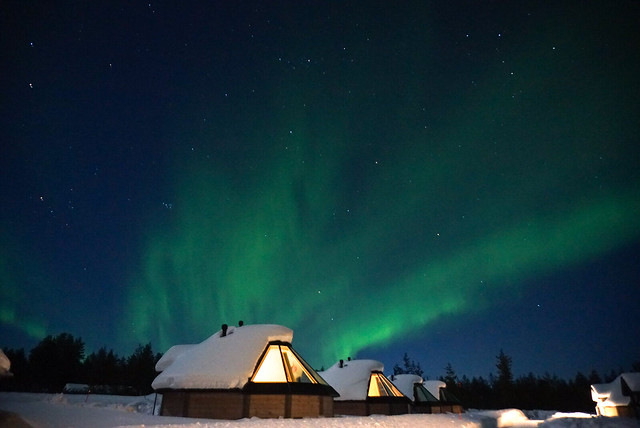
It was a great choice! It’s located on a reindeer farm about 20 minutes away from Levi town. There’s 10 glass huts on the property and we had one booked for 2 nights. The huts are very new and really nice on the inside, so it was nice to relax for a little bit after a busy day of dogsledding. We returned to town for supper, but otherwise had a chill evening.

PSX_20230402_213351

My primary motivation in booking the hut was as a last ditch attempt to make it easy to see the northern lights. Fortunately, we’d already seen them 4 nights in a row by then, so it removed a lot of the pressure. The geomagnetic storm was winding down and the KP was back around 2-3 for our last two nights, so I wasn’t sure if we would see them. On the first night it was pretty cloudy and we didn’t see anything before bed. The app said the clouds would clear around midnight, so I set an alarm and we woke up at midnight and could see them from our bed! So it ended up working out nicely because I definitely would not have trudged down to the lake in Akaslompolo at midnight, but it was nice to wake up and watch them inside for a bit and then go back to sleep.

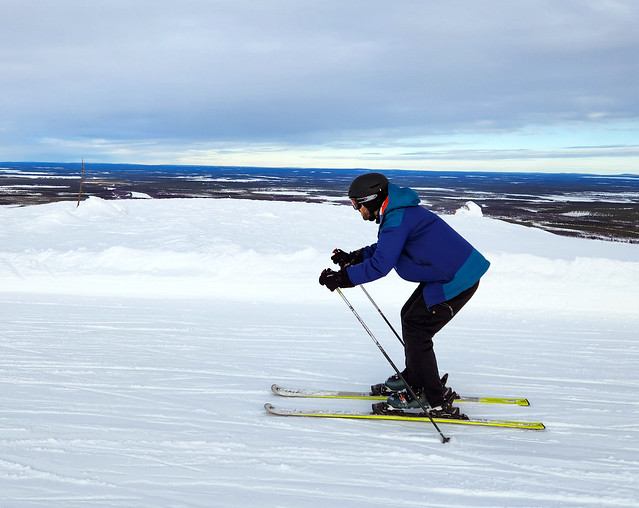
On our last full day in Lapland we had planned a second skiing day. Levi resort is bigger than Yllas and fortunately the wind storm had moved on and the entire resort was open! While Yllas only had two faces to access the mountain, Levi had at least 4. There are two main lifts, one from Levi town and one from the south face, which is where we opted to start. Levi was busier than Yllas, so it took a while to get our rentals, but after that there was a lot of terrain to choose from.

PSX_20230316_195159

I recall there being at least 3 chair lifts and 1 gondola, but pretty much all the other lifts were T-bars and there must have been at least a dozen of them! The mountain is completely bare on top, so you can pretty much ski down it in any direction. Each T-bar only services about 2-3 runs, so we slowly made our way around the mountain. The terrain was simple enough that we could ski any run on the mountain, so we just explored as much as we could. It’s a very different experience than skiing in Canada, but I enjoyed it more than Yllas.

We had lunch at a small restaurant on the east side of the mountain, but my favourite skiing terrain was on the west side. While the temperatures had been between -10 to -20 degrees celsius when we arrived in Rovaniemi, it had warmed up a lot over the week and it was around 0 degrees when we skied Levi. It felt much warmer and it even starting to feel a bit like Spring. There was no fresh powder on either mountain that we skied, but because it’s generally cold and dry in Lapland, neither mountain was icy.

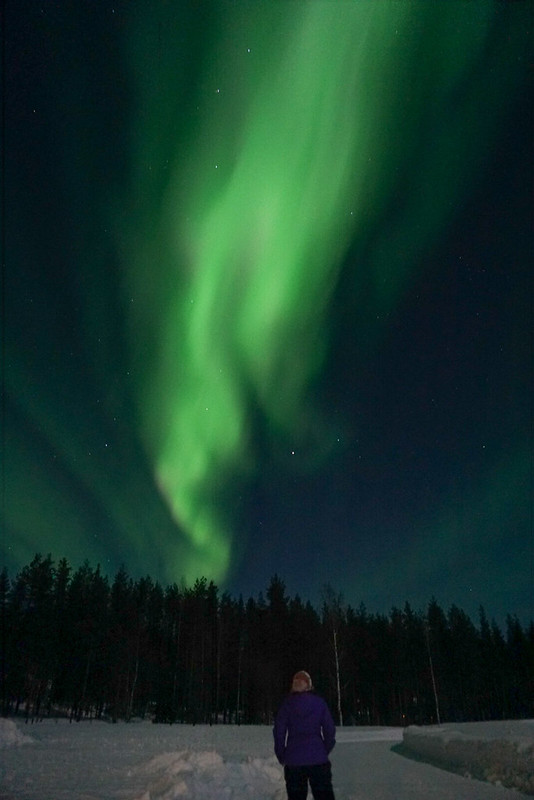
We discovered a pancake restaurant in Levi that I was excited to try for dinner on our last night. So we enjoyed some giant savoury pancakes before retiring to our hut for the evening. The KP was only 2 on the last night, so I wasn’t expecting much even though it was clear, but the aurora treated us a real show! I guess because we’re so far north, you can still get a very active sky, even with a low KP.

PSX_20230402_212918

At first the lights seemed pretty normal and similar to other nights, but around 9 or 10pm they got incredibly active and despite having the glass roof, I couldn’t resist going outside to photograph them. The lights were pulsing from horizon to horizon and we couldn’t catch the full scope of them from inside. It was probably the second best night we’d seen them and it was a real treat to witness them swirling across the sky one last time. Seth had kind of gotten over the allure by that point, but the northern lights captivated me every single night I saw them. I admit I got a little obsessed and since I returned home, I’ve been plotting when I can see them again.

The aurora goes through cycles throughout the night, but they also go through larger cycles throughout time. We’re currently heading into a period of increased geomagnetic activity for the next few years, so it should be easier to see them over the next 5 years, so if there’s ever been a time to plan an aurora trip, this is it!

PSX_20230324_234055

Our last day in Finland was pretty boring. We enjoyed our buffet breakfast at the hotel and then drove two hours back to Rovaniemi to catch our flight. One thing we learned is that the Finns all have a secret sweet tooth and eat a lot of candy and chocolate. Finnish chocolate is really creamy and delicious, so we stopped by the grocery store on the way back to stock up. We had an uneventful flight back to Helsinki and returned to Katie’s apartment for our last night.

Katie took us to a ramen restaurant for our last meal and we spent an hour walking around the city before returning to her place for one last sauna session. She’s scheduled to finish her degree before the end of the year, but she’s also planning to stay in Helsinki and look for work, so who knows, we might be back again in the future.

Finland is probably not the first place that comes to mind when you’re planning a holiday, much less a winter holiday, but I really loved it. The aurora certainly made it memorable, but even without the aurora, it’s a cool place and I liked a lot of their progressive policies. I would definitely come back in the winter to chase the aurora again – I’m not sure I’d visit Lapland in the summer, but I’d consider returning to Helsinki in the summer and maybe tack on a visit to Norway or Sweden to do some hiking. Overall we had a great trip and would definitely recommend!