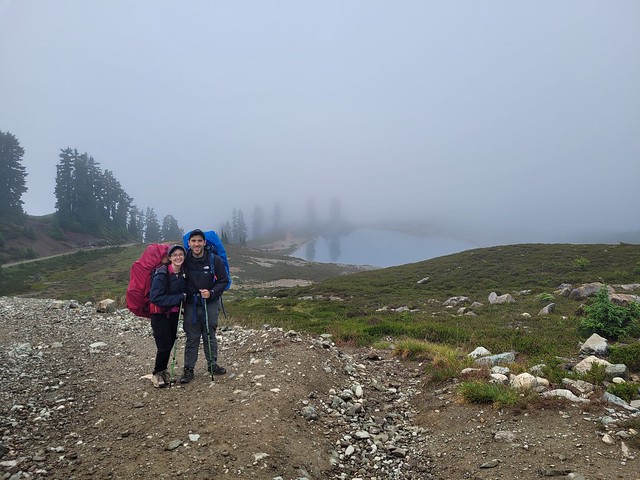
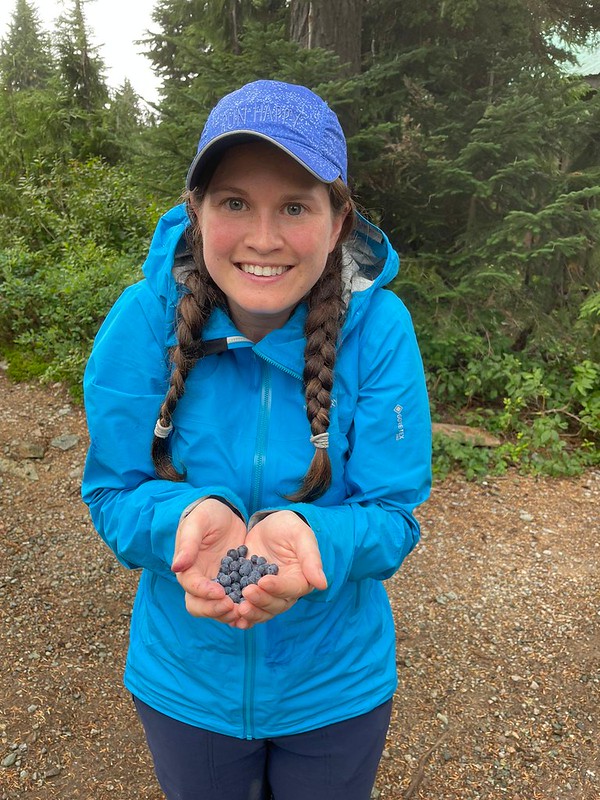
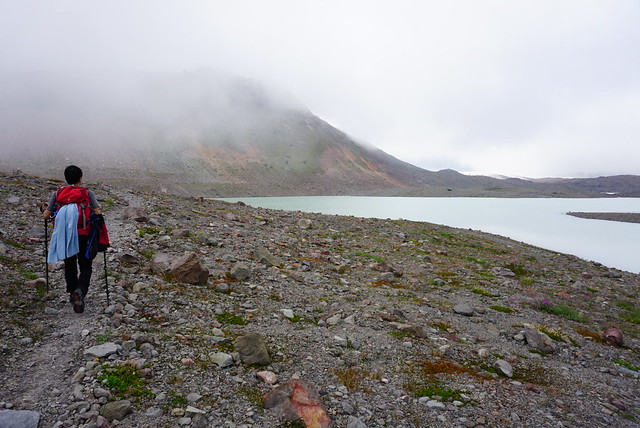
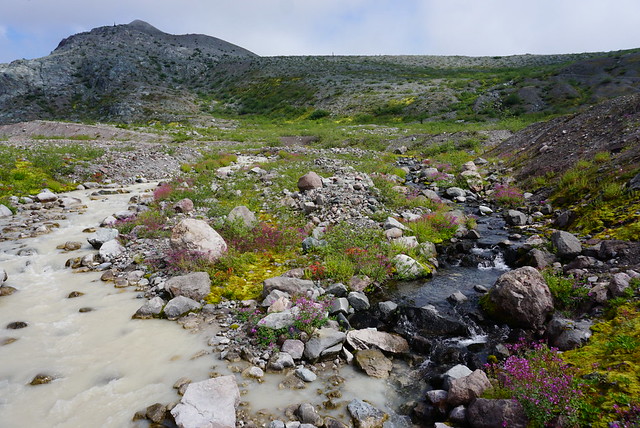
5 Overnight Hikes for Beginners

Backpacking can be very intimidating when you first get started. Hiking with an overnight pack is a lot different than day hiking, so you don’t want to start with too challenging of a hike. Figuring out what gear and food to bring is enough work without also having to stress about a difficult trail or having access to facilities at the campsite. So keeping in mind that you want to focus on shorter distance, less elevation, and easy access to facilities, here are some of my hiking recommendations for beginners.

Cheakamus Lake

DSC08878

In my opinion, this is the ultimate trail for beginners! It’s located in Garibaldi Park and is a short distance hike with very minimal elevation gain. It has outhouses and bear cache facilities, and you can book your site online in advance so that you don’t have to worry about fighting other hikers for a camping spot.

There are two campsites to choose from – the first one (Cheakamus Lake) is located right at the head of the lake and requires the least amount of hiking, approximately 4km. The campsites are located next to the water and have a decent amount of privacy. The second site (Singing Creek) is another 3.5km and is located at the midpoint of the lake. This site lends itself better to group camping as it’s a series of campsites right next to each other in the woods. That said, there is a really nice beach to hang out and cook from. If you’d like to visit both, you could always camp at the first campsite and then do a day hike out to visit the second! Both sites have an outhouse and bear cache. Reserve here for $10 per person, per night (listed under Garibaldi Park).

Buckhorn Campsite on the Heather Trail

DSC05738

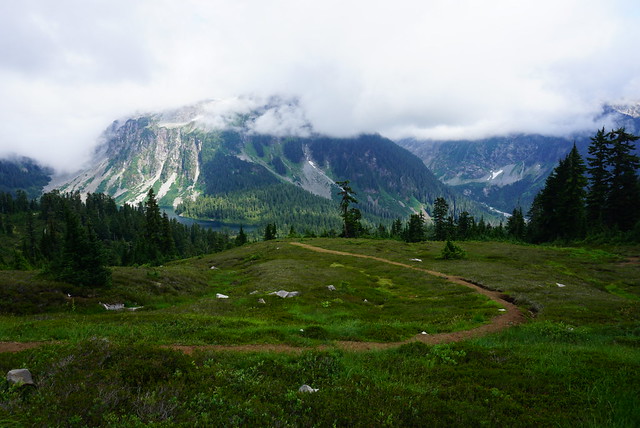
The Heather Trail is a 21km one-way trail in Manning Park. While I definitely don’t recommend doing the whole trail for beginners, the first campsite (Buckhorn) is only 4km in, which makes it the perfect spot for beginners! The Heather Trail is most popular in late July/early August for the colourful wildflowers that pop up all along the trail. What makes it so great for beginners is that you do most of the elevation gain on the drive up. You park at the top of Blackwall Road and from there is a steady incline down to Buckhorn Campsite. The views are beautiful right from the start of the trail.

Buckhorn has an outhouse, bear cache, tent pads, and even picnic tables! You do need a backcountry permit to stay overnight, but sites are first come, first serve, so you don’t need to pre-reserve. You can purchase here for a Manning Park backcountry permit for $5 per person, per night (you will need to create an account to see the system – entry and exit points are Blackwall Peak) . If you have the time, stay for two nights and make a day trip out to 3 Brothers Mountain for unreal views of the alpine meadows and surrounding mountains. Even if you can’t make it all the way to 3 Brothers, explore a little further beyond buckhorn to experience the alpine meadows. Be aware, in the early season this hike will still have snow until end of June.

Viewpoint Beach

PSX_20210605_203736

Viewpoint Beach is very similar in difficulty to Cheakamus Lake. It’s a 4.5km hike in Golden Ears Park with minimal elevation gain. Similar to Buckhorn, the campsites are first come, first serve, and you can get a permit online for Golden Ears before you go for $5 per person, per night (entry and exit points are West Canyon). There aren’t any really obvious places to camp, but most people pitch their tents along the tree line on either side of the river since the beach itself is pretty rocky. Plan in advance which side you want to camp on – if you want to camp on the far side, make sure to cross the river at the bridge before you reach the campsite. Both are nice but there tend to be less people on the far side of the trail.

There is an outhouse at this site, but when I visited last year, there wasn’t a bear cache, so we did have to make our own, which you may prefer not to do as a beginner. BC Parks has been spending a lot of time re-vitalizing this trail, so I suspect they will probably install a bear cache soon, but either way, check before you go. If you’re not comfortable hanging your food, you can purchase a bear proof container at most outdoor stores. These don’t need to be hung, but can be a little pricey.

Lindeman Lake

DSC04625

Lindeman Lake is located in Chilliwack Provincial Park. At 3.5km round trip, it’s the shortest hike on the list, but it has 300m in elevation gain in under 200m, so be prepared for a climb. If it’s your very first time carrying a pack, I’d recommend a flatter trail, but if you’re trying to increase your stamina, this is a great practice trail for beginners because it’s steep but short. Same as the previous sites, there’s no reservations for this campsite, but purchase a Chilliwack Lake permit online before you visit for $5 per person, per night.

There are a limited number of tent pads, but there’s lot of ground space to set up your tent. There’s a bear cache right next to the water and a pit toilet up in the woods. As a heads up, the toilet doesn’t have walls, but the trees provide natural privacy and it’s personally never been a problem for me. After setting up camp, I recommend hiking the 1km to the back of the lake for even more amazing views, or if you have time to stay 2 nights, make a day trip up to Greendrop Lake on the second day.

Elfin Lakes

DSC02679

Elfin Lakes is a popular campsite located in Garibaldi Provincial Park. It is the longest trail on the list and definitely the most strenuous. However, I include it because even though it’s a bit longer, 11km one way to the campsite, it is a very forgiving trail and has lots of facilities along the way. The most challenging part of the trail is the first 5km, which is a steady incline up an old forestry road. The road ends at Red Heather hut, which is only meant for emergency overnight use, but has an outhouse and is a great place to stop for lunch.

From there, the trail meanders up and down through some truly beautiful scenery as you wind your way along the ridge to the Elfin Lakes hut. There are two options for camping – both require reservations – but you can either camp on the tent pads, or sleep on one of the bunks in the hut. The hut is the main reason I include it as a beginner trail because if you’re just starting out and want to try with a bit of a lighter pack, you can leave your tent at home and sleep in the hut instead. But if you’re willing to carry your tent up, the panoramic views from the tent pads are truly unreal! Elfin has a big outhouse facility with 3-4 toilets and there is a ranger living in the ranger’s hut. Campsites sell out fast, so book early. Purchase here for Garibaldi Park for $10 per person, per night. Don’t even think about coming up without a permit because the ranger will send you packing. Be aware, this trail usually has snow on it until end of June or even early July.

Elsay Lake Backpacking Trip

Elsay Lake is the last trip in my backpacking archive! Once I write about this one I’ll be all caught up on backpacking trips. Don’t fret though, I have lots of trip plans in the works for this upcoming summer and I still have lots of day hikes and frontcountry trips to write about!

Elsay Lake is one of the more random trips I’ve done. I hiked it in July 2019 when my Howe Sound Crest trip was cancelled for the third year in a row (finally did it in 2020). Me, Emily, and Carolyn had planned to go do the trip together, but ended up having to cancel it because the last part of the trail is on private land and had been closed. Parks constructed a new trail entrance before 2020, but in 2019, you weren’t able to do the trail as a through hike.

20190714_132132

Carolyn decided to bail on an adventure altogether, but me and Emily still wanted to do something, so Carolyn agreed to drop us off at a local trail. I did a bit of quick research and we decided to try for the Elsay Lake trail, which leaves from the parking lot on Seymour Mountain.

In the summer, you can hike up the ski run to Brockton Point (the top of the chair), where you can continue into the Seymour Wilderness. Our plan was to try and hike up to Mount Seymour and do a loop trail that brings you back down towards Elsay Lake. This was a trip where my GPS app got me into a bit of trouble.

DSC09301

I use GaiaGPS to track my movements every time I go on the trail. I find the app to be a great resource, but you do still need to do research because the trails on the GPS are just based off of user data and are not always up to date. From Brockton Peak, the trail continues to a branch, where you can either go down the Elsay Lake trail, or up towards Pump Peak, Tim Jones Peak, and Mount Seymour. On my app, I noticed a trail shortcut to Pump Peak, so we decided to follow that. After hiking in for awhile, the trail became very steep and we lost it, so we decided to turn back. I later learned that it’s the old Pump Peak trail that has been closed, so you shouldn’t always put all your reliability in your GPS. However, deciding to stop and retrace our steps back was definitely the right decision and what you should do when you find yourself off trail. Don’t continue on because sometimes it’s possible to continue hiking up, but becomes impossible to turn around and hike back down (or vice versa) and you can find yourself stuck.

In any case, because of the lost time, we decided to ditch the Mount Seymour plan altogether and just took the Elsay Lake branch when we got back on the trail. This was definitely the right choice as the Elsay Lake trail ended up being super technically challenging and we needed to whole day to complete it.

20190714_132953

From the Elsay Lake trail branch, you descend down into the valley below Mount Seymour. It wasn’t raining, but it was a very foggy and overcast day when we did it, so at times it was poor visibility, but I also thought the valley looked so cool with the way the fog hung around the peaks. You hike down and down until you eventually come to a large boulder field. As we were hiking down into the valley, I would occasionally do my bear call as there were no other people around (most of the traffic is up on the Mount Seymour trail). After a while, we noticed that someone was starting to respond to our bear calls, and then they started yelling at us. We couldn’t understand what they were saying, but called back that we were on our way down.

When we reached the bottom of the valley, we ran into a slightly distressed couple. They asked us if we knew where we were, to which we responded, yes, and we asked if they were lost. They said they were – they’d been with a group of friends and they’d all hiked to the top of Seymour together. They’d been following their friend and gotten separated on the way down, so they’d hurried on towards the parking lot trying to catch their friend, but now they were confused and didn’t recognize anything.

20190714_130509

Because we were familiar with the area and using a GPS, we knew exactly where they’d gone wrong. On their way back from Mount Seymour, they’d taken the wrong branch and headed further into the wilderness towards Elsay Lake instead of back towards Brockton Point. They just kept going further down the valley thinking they were heading back to the parking lot. They were upset because they’d been entirely relying on their friend. We explained to them where they’d gone wrong, showed them the map, and explained they needed to climb back up the valley and take the proper turn to head back to their car. They weren’t happy to hear they would have to climb back up, but at least now they knew where they were and headed back the right direction.

This is a prime example of why it’s so important to always be prepared yourself. One of the common reasons people get into trouble is because of the “expert halo”. They rely on someone else to keep them safe. I’m absolutely a fan of mentoring in the backcountry, but there are definitely some basics you need to take responsibility for. If you get separated from your expert or the expert gets into trouble, do you know how to take care of yourself? It’s easy to get separated and easy to get lost. The Elsay Lake trail doesn’t get a lot of traffic and this couple were unknowingly going further and further into the wilderness. Even close to the city, it’s easy to get into trouble. Check out my post on personal safety in the backcountry and resources from organizations like Adventure Smart to learn more.

DSC09312

But getting back to the trip, Emily and I stopped for lunch in the valley around the halfway mark, before continuing on along the trail. You continue along the edge of the valley for a while, before eventually heading into the woods. This is where the trail started to get really hard, after you pass the branch that heads up towards Mount Seymour (our initial plan). Elsay Lake is one of those rare trails, where aside from the first part, most of the trail is downhill. ‘Technical’ is definitely the word to describe the trail.

There’s lots of climbing over tree roots as you walk through the forest and several boulder fields scattered throughout. The challenge with the boulder fields is that they’re in the trees and the boulders are very large. So even though the fields are short, it’s difficult to cross them, especially if you’re short. There were several sections where we had to slide down rocks or support each other up over them because they were so large, not an easy feat when you’re both wearing large packs.

DSC09317

Then the trail continues down several steep sections through the forest that we had to take slowly so as not to trip or fall. Eventually you reach a flat section through the trees at the base that we did relatively quickly, until we came to a challenging river crossing. You have to ford the river, but we were trying really hard to keep our shoes dry, so we spent a long time trying to figure out a way across. We did manage to get across and stay dry, but it chewed up a lot of time. After that, you hike through some mucky areas before finally hitting the lake and hiking around the edge to the campsite.

DSC09324

It was only a 10km hike, but it ended up taking us about 8 hours by the time we reached the campsite. There is an emergency hut, and surprisingly, despite barely seeing anyone on the trail, the campsite was pretty busy. I mean overall there were only a few groups, but it’s not a big campsite and it took us a while to find a space big enough to pitch our tent. It was around 6pm when we arrived, so we went for a quick swim in the lake and then made dinner. There is an outhouse and we were able to store our food in the hut, so fortunately we didn’t have to mess around with a bear cache.

DSC09326

Our concern now was the hike back the next day. We were exhausted and we’d completely underestimated the time the hike would take. We had pre-arranged a pick up time with Carolyn that we didn’t think we’d be able to make (this was before I had an inreach), so we figured we’d just have to do our best and hope she didn’t have to wait too long for us.

We got up early the following morning to get an early start on the day. It was dry when we got up and we were able to pack up our gear pretty quickly, but shortly after we started hiking it started to pour. It was pretty demoralizing considering we were trying to go fast, but at least it was the last day. We didn’t waste time at the river this time and instead just walked right through it, getting our feet soaked. This sucked too, but it was already pouring and we didn’t want to waste time.

DSC09334

The trail is all uphill on the way back, which might be a downside to some, but we much prefer going uphill over going downhill, so things actually went a bit better than the previous day. We were still really slow going through the boulder fields, but persevered. As we were climbing up we came across a second couple that were struggling. The woman had injured her shoulder and her partner was now carrying both his and her packs! I can’t even imagine how difficult this was – in the boulder fields he would basically pass each pack up to her at each section and they would painstakingly carry them across. We stopped to talk to them and see if they needed any first aid. They didn’t, so we asked it they wanted us to contact Search and Rescue for them when we got cell service (since we would be ahead of them). Fortunately they had their own inreach, so they said they were going to continue on since it was still really early in the day, but would contact S&R if needed.

At the time I thought this was a reasonable approach, but after watching the S&R mini-series on the Knowledge Network, I would definitely advise just calling S&R from the beginning. There’s no fee for S&R and they won’t hold it against you for needing their help. This was an example of a couple that was actually well prepared; they had first aid supplies and a satellite device, but one of them had been injured, which is often outside your control. Don’t hesitate to call S&R if you need them. Time is the most important factor in S&R tasks and you want to give them as much time and daylight hours as possible to reach you. This was a rainy, cloudy day, so S&R likely wouldn’t be able to help this couple with a helicopter, which means they would need more time to get in the field. Perhaps this couple was totally fine, but I think S&R would probably just have encouraged them to seek help right away.

DSC09287

Once we got out of the boulder fields, our day improved a lot. It stopped raining and we took a break in the valley again for snacks and to change out of our wet clothes. I still had wet feet, but I was able to finish the hike in dry clothes at least. When we got back to the trail branch, I was able to get service and give Carolyn a call that we would likely be a little late. Surprisingly we’d actually made really good time and by the end of the trail, we were only 30 mins behind our original estimate.

When she heard about how challenging the trail was Carolyn seemed reassured in her decision to skip the trip, but then she went to soccer later that night and broke her ankle with an injury that takes 2.5 years to heal, so I’m not sure how she feels about the decision now! Either way, it was both a memorable and forgettable sister trip for me and Emily. The challenges were memorable, but overall I’d say the trip was forgettable and I definitely won’t be attempting the trail again. I would like to go back some day and hike up to Mount Seymour, but personally I’d give Elsay Lake a pass. I did like the trail down to the valley, but beyond that, the trail is miserable. It was a good lesson in trip preparedness though, given that we encountered two groups experiencing trouble and that we mistakenly took a wrong trail branch ourselves. The North Shore mountains are notorious for S&R tasks, so this was a good reminder to always be prepared!

DSC09307

Special shout out to Emily for taking ZERO pictures of me on this hike. So all you get is a million photos of her selfish butt.

Lindeman Lake Backpacking Trip II

I love that the weather is starting to change again, but since it’ll still be a little while before the mountains are free of snow, I decided to re-visit some of my past adventures. I first backpacked up to Lindeman Lake for the May Long weekend in 2017 and it ended up becoming a tradition that my friends and I would do an easy start-of-season camping trip over the long weekend.

We decided to return to Lindeman Lake again in 2018, this time with a larger group. Lindeman Lake is located at the end of Chilliwack Lake Road in Chilliwack Lake Provincial Park. It’s a great early season hike because it’s short and not too high in elevation, so the snow melts quicker.

G0202652

We met at the trailhead on Saturday morning and hiked in to the lake as a group of 7. It’s a short hike, just 3.5km round trip, but it’s a steep one. The hike up takes ~1 hour with a day pack and ~1.5 hours with a backpack. It does get busy at the lake, even in May, and the tent pads disappear pretty quickly, but it’s not too difficult to find somewhere to pitch your tent and we ended up setting up in the exact same location as the previous year.

Our Lindeman Lake trip is all about taking it easy. Because it’s such a short hike we lugged up all kinds of leisure gear, including my hammock and Tiiu’s inflatable couch! It was Tiiu’s first time backpacking and somehow she still managed to have the smallest pack, even though it contained both the couch and a full bottle of wine! It was also Steve’s first time backpacking – his pack was about twice the size of Tiiu’s, but we were all jealous because he’d pretty much brought an entire pantry with him! He’s since become known as our trip bartender thanks to the assortment of drink mixes he always brings.

DSC04633

On the first day, we hiked up to the end of the lake, which in my opinion has the best view, and then spent the rest of the afternoon playing frisbee and lounging around. I love hanging out at Lindeman and I always have a great time swinging in my hammock, watching the stars, and swapping stories with my friends. But one of the things that drives me crazy is how many people opt to have campfires at the lake despite the blatant ‘no fire’ signs. Fire restrictions aren’t always about fire bans or the risk of forest fires. Lindeman Lake receives a lot of traffic and so many people scouring the woods for debris is very destructive to the natural habitat. So please respect the fire restrictions and find some other way to enjoy your evening!

GOPR2660

Our plan for Sunday was to hike up towards Flora Peak. We’d done Greendrop Lake the year before and we wanted to try something new. We knew there’d be snow up there, but just wanted to see how far we could get. Before we left, I had a good laugh at Steve who had hiked in an actual can of frozen orange juice concentrate so that he could have juice for breakfast.

Lindeman Lake is the first stop on a 20km loop around the park that continues on to Greendrop Lake, Flora Lake, Flora Peak, and then back down again. We didn’t want to do the whole circuit, so we hiked back down the way we’d come until we reached the branch for Flora Peak. It’s an even steeper trail up to Flora, but it was snow free for the first couple of hours. We made a slow pace up to a wooded viewpoint where we stopped for some snacks. Steve and Meg decided to turn back from there, but the rest of us continued on.

DSC04716

Eventually we hit snow and Tiiu decided to head back as well. Only myself, Brandon, and Carolyn continued on because we had all brought microspikes with us. It’s too bad we didn’t take Tiiu across the first snow crossing though because after that we popped out on the ridgeline and found the most amazing view looking down to Chilliwack Lake! We continued on along the ridge and eventually stopped for lunch on a rock overlooking the valley just before the trail branched off again for the peak.

The snow up to the peak was looking sketchy, so we decided not to continue beyond the ridge. Spring can be one of the most dangerous times for hiking because the snow is melting and it’s easy to fall through snow bridges or down into snow wells. We put our safety first and I definitely think it was the right choice. Plus, unspoken between me and Carolyn was the understanding that we both wanted to get back to campsite with enough daylight to go for a swim. We’d gone swimming the previous year and though it was no where near as warm this year, it felt like a milestone we just had to do.

DSC04703

We hiked back down to the bottom of the trail and then, for probably the first and only time ever, left Brandon in the dust as we hiked back up to the campsite. Since it was so chilly, we wanted to work up a good sweat so that the lake would be more appealing. We blew through the campsite to the astonished faces of our friends when we told them we were continuing up to the end of the lake to go for a swim. They’d been hanging out in the shade for several hours already and were all freezing. So when we asked them if they wanted to join us, they all looked at us in disbelief, wrapped up in their puffy jackets and toques.

“So no swim then?” Carolyn confirmed while I grabbed my swimsuit. Then we took off again towards the end of the lake, leaving Steve with his mouth hanging open and Brandon somewhere back on the trail (he was fine!) We could have swam at the campsite, which is located at the head of the lake, but it’s only about 20 minutes to the back and in my opinion, the boulder field is the best place to go because it gets the most sunlight and it’s easier to fully submerge yourself by jumping off the rocks. We all but ran there to stay warm, stripped on the rocks, and then leaped in the lake for all of 5 seconds, before scrambling back to the shore to pull ourselves out. There was no one to take pictures of us this year, but the memory will always be etched into mind!

DSC04625

We were joined by some rowdier neighbours on the second night and despite how annoying they were, we had a good laugh eavesdropping on them. They’d brought an inordinate amount of gear with them and seemed to be having a competition for who had brought the heaviest pack. One guy claimed his pack weighed 80 pounds, but I’m not sure how you could accomplish such a feat without putting actual rocks in your pack. They had a lot of booze though, so I could be mistaken…

DSC04763

After Carolyn and I got back to the campsite we enjoyed another leisurely night. Brandon spotted an otter swimming around in the lake near the log debris that we had a fun time watching while Carolyn, Steve, and Meg played a very serious game of crib. Steve and I were spared a wet end to the night when my hammock collapsed with both of us in it. I’d set it up over the water, but fortunately, the hammock gave us about a split second warning before it collapsed and we were able to tumble forward out of it onto the shore rather than back into the lake.

It was an uneventful hike out and we spent it mostly brainstorming where we should go for the next May Long weekend. Lindeman was good to us, but we’d now done all the trails and decided it was time to move on. We had to skip our 2020 trip last year, but stay tuned to hear about our trip to Cheakamus Lake in 2019! But I’ll end this post with a few more photos of our Lindeman Lake shenanigans!

DSC04777
DSC04767
DSC04795
DSC04804