Torres del Paine Backpacking Trip Part II

Despite a long first day of hiking (see Part I), I was determined to visit the suspension bridges and glacier viewpoint north of Refugio Grey. This part of the trail is known as John Gardner Pass and has a reputation as the hardest part of the O-Trek. On the O-trek, hikers come from the opposite direction and have a steep hike over the pass before crossing 3 suspension bridges along the glacier on the descent to Refugio Grey. For those doing the W-trek, it’s common to hike up to either the viewpoint after the second bridge, or all the way to the third bridge. The third bridge was too far for me with my late start, but I was pretty confident I could get to the viewpoint.

I started my hike at 6pm and was making really good time until I got to a mirador just before the first suspension bridge. What I didn’t know is that the Park recommends anyone doing the day hike to start no later than 3pm. I don’t think it’s a hard rule, but it is a good idea from a safety perspective. I ran into a ranger at the mirador and while he was really friendly, he advised me against going to the viewpoint and recommended the first bridge instead. I reassured him I had a “turn-around time” and if I didn’t make it by then, I would come back to avoid hiking in the dark (even though I was prepared and could have hiked in the dark).

20240229_192713
PSX_20240309_220202

He didn’t stop me and I continued up to the first suspension bridge, but the interaction really made me doubt myself. I’d been so confident I had enough time to get to the viewpoint, and now I was second guessing my ability. I know there’s a lot of inexperienced hikers in the park, so these recommendations make sense, but I also have a good self-awareness and I think that because I’m pretty risk adverse, I make good choices.

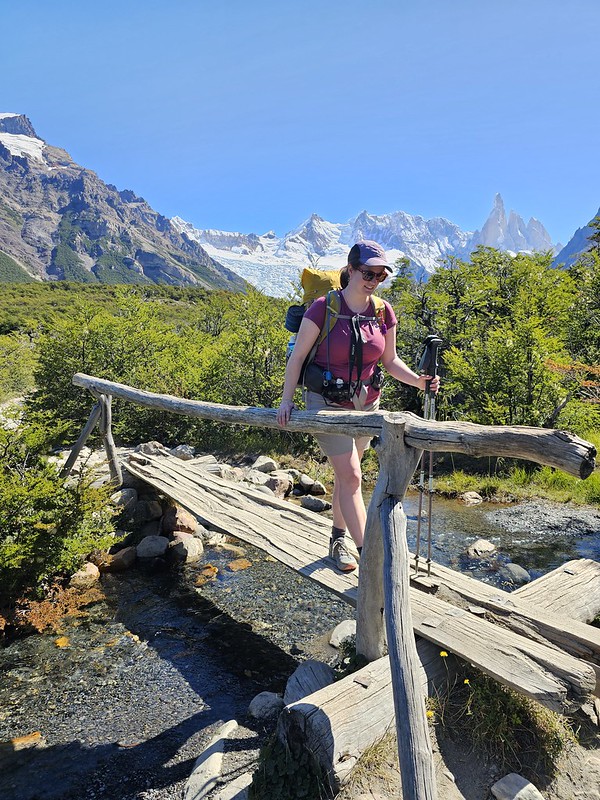
I decided I had to at least cross the first bridge. It has a big ladder to get up to the top of the bridge and it’s quite intimidating! I held on tight to the rope handles as I crossed to the other side. There were some other hikers returning from their day hike, so I stopped to talk with one guy and told him about my interaction with the ranger. He reassured me that the view was definitely worth it and encouraged me to keep going. Apparently that was all I needed and I quickly took off again, setting my doubts aside.

20240229_184133

I’m really glad I did. My initial instincts had been right and I made it to the viewpoint with enough time to hang out for a bit and still get back to the refugio before dark. This was a case where the Ranger definitely had good intentions, but I was the person who knew my abilities best. I don’t like to break rules in the backcountry (and I definitely don’t advocate for it), but I later confirmed that they are recommendations rather than rules. Technically, everyone who hikes up to the Towers for sunrise is breaking the rules, and that is literally hundreds of people.

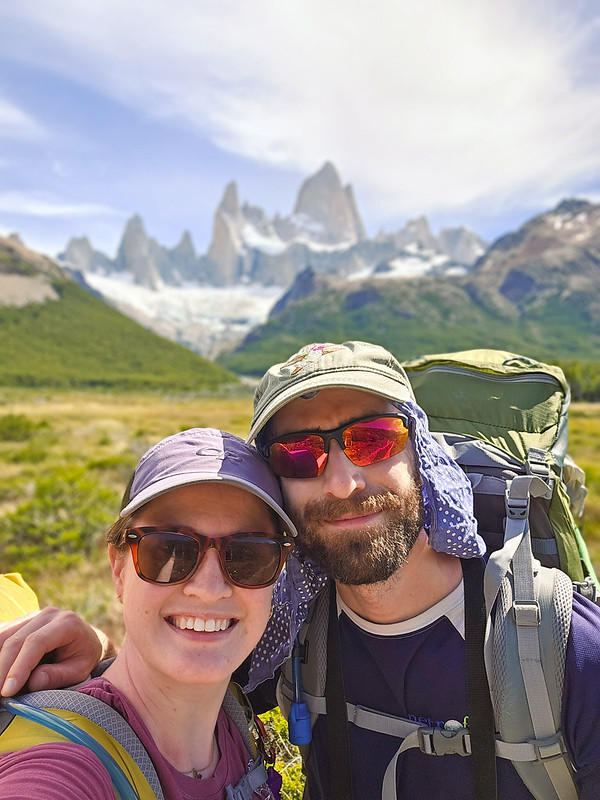
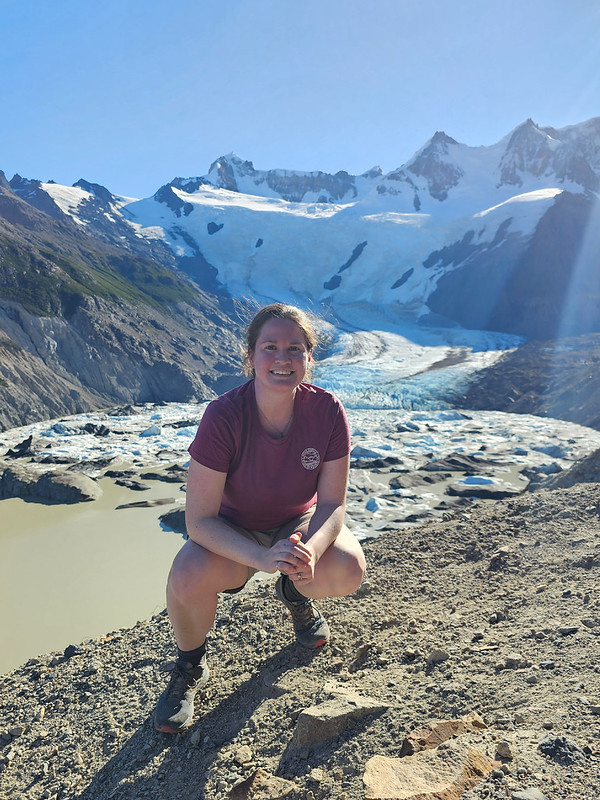
It took me an hour and 10 minutes to hike 4km up to the viewpoint. It’s uphill the entire way (~300m in elevation gain), so it was definitely a workout and I did it at a very quick pace. I saw another small group of people just before the second suspension bridge, but I didn’t see anyone for the rest of the evening after that. The viewpoint is located 5 minutes past the second bridge and has a beautiful view of the glacier. What made it even more special was that I had it entirely to myself! I hung out for ~20 minutes and took some selfies before starting my hike back down.

20240229_191708
20240229_184209

It was a lot faster on the way back, but I tried to pace myself because I was completely alone on the trail and didn’t want to get injured. It took me a little under an hour to get back and I arrived at the refugio shortly before 8:30pm. In total, I hiked 19km on day 1, so it made for a long day and I still hadn’t eaten supper!

We ate quickly and got ready for bed, realizing how woefully unprepared we were for the refugios. I’m so used to camping that I forgot we would have electricity and didn’t bring anything to plug my phone into the outlet (just a power bank). Nor did I think to bring shampoo for the shower, because I honestly forgot it was an option. But I still greatly enjoyed a hot shower on my first night before falling asleep.


There were a lot of people doing the same itinerary as us on the W-trek, but most of them do the hike to the suspension bridges on their second morning. The reason I had to cram this hike into my first day was because we had booked a kayaking tour for day 2 instead. It was quite windy, so I was convinced the kayak tour would be cancelled, but to my great surprise, it was scheduled as planned!

20240301_100712

It’s always windy in Torres del Paine, so it takes a fair bit of wind for them to cancel the tours. Because of this, I was worried that the tour company, Bigfoot Patagonia, didn’t have a very good safety culture. I’m happy to report that is far from the truth! They pre-emptively cancelled the afternoon tour and both tours the following day because it was forecasting high winds, but our morning tour was what they consider “borderline”, so they decided to run it. For additional safety, they increased their guide-to-tourist ratio from 1 guide per 2 kayaks to 1 guide per kayak, meaning we had a dedicated tour guide for just me and Seth.

It was almost 40km/h winds, which I would never even consider going out in in Canada, but our guide was fantastic! Me and Seth were in a large double boat, so it was very stable. I doubt I’ll ever get to kayak in such windy conditions again, so we embraced it and had a lot of fun. Our guide is Chilean, but in Patagonia’s offseason, he does kayak guiding on Vancouver Island, so he was excited to learn we lived in Vancouver and we had a lot of fun talking about different trips!

PSX_20240408_102829
20240301_103441

The tour leaves from Bigfoot Patagonia’s base at Playa Grey and you kayak around the headland to the ice garden, which is a little bay where ice from the glacier gets caught. We paddled around the garden and along the shore to some waterfalls draining down the mountain. You can’t go too close to the glacier for safety reasons, but the wind briefly died down for ~10 minutes and we took the opportunity to paddle into the channel for a fantastic view of the glacier. The calm didn’t last long, but we got an excellent tailwind on the way back to base. If you ever get the chance, I would highly recommend this tour. We debated between Glacier Grey and Perito Moreno for our kayaking adventure, but I’m glad we picked Grey. The balconies at Perito Moreno are so close to the glacier already that kayaking seemed unnecessary.

20240301_104834

We finished our tour just before lunch and decided to eat at the refugio. It absolutely poured while we were cooking, so the second it stopped, we hit the trail to cover as much distance as possible before the rain re-started. Seth was still popping pepto-bismal, but overall feeling a lot better than the previous day. We only had to hike 11km back to Paine Grande, so we knew exactly what was ahead of us.

We were much faster on Day 2 and made it all the way to the mirador, which is the halfway point, before the rain returned. Pretty much the entire hike is exposed, but there are small treed sections, so we took a break in the forest when it started drizzling. It rained on and off through the rest of the afternoon, but it never heavy enough to really get wet. We ended up doing the full hike in just over 4 hours, so we were about an hour faster than the previous day, arriving at Refugio Paine Grande around 4pm.

20240301_144439

Because Paine Grande is one of the main arrival/departure points for hikers, it’s one of the flagship refugios. It’s an absolutely gorgeous building since its location next to Lago Pehoe makes it easier to transport supplies. The other refugios are much more remote, and as a result, the structures and facilities are more rudimentary. Refugio Paine Grande has modern architecture and huge windows looking towards the lake and the horns.

We didn’t really get to know the other campers in our room at Grey since I spent such limited time in the room. Two of our bunkmates at Paine Grande were from Hong Kong and halfway through their O-trek, while the other two were solo American and Canadian hikers who were doing the W-trek in the opposite direction. I got some good tips from them for our hike to Mirador Britannico the following day.

20240303_111245
20240301_162232

We took it easy for the rest of the day and enjoyed the views before making supper. I mentioned in my last post that there are very strict rules about where you are allowed to cook in the park, and this was probably one of the most annoying challenges. What’s really unique about Torres del Paine is that, you don’t actually have to bring food with you. If you really want to pack light, you can pre-order your meals at every refugio and get a “packed lunch” to go. A lot of the people staying at the refugio opted to eat all their meals in the dining hall, as well as some campers, but it is very expensive ($100 per day, per person).

What I found annoying is that the refugio’s only cater to people paying for meals. The cost was one reason why we opted to bring our own food, but it was also because I love dehydrating and prefer to eat comfort food in the backcountry. But if you want to cook your own food, your only option is to use the campground shelter. It’s not the end of the world, but some of the shelters were very crowded and cold. It was also really good that we brought all cold-soak lunches, because there’s no cooking allowed outside the shelters (because of the fire risk), so you can’t heat or cook food for lunch unless you’re at a campground. Regardless, it was our last night staying in a refugio, so we took advantage of the hot showers and got a good night’s rest! Check back for Part III.

PSX_20240408_102116
20240302_085936

Sendero al Fitz Roy Backpacking Trip Part II

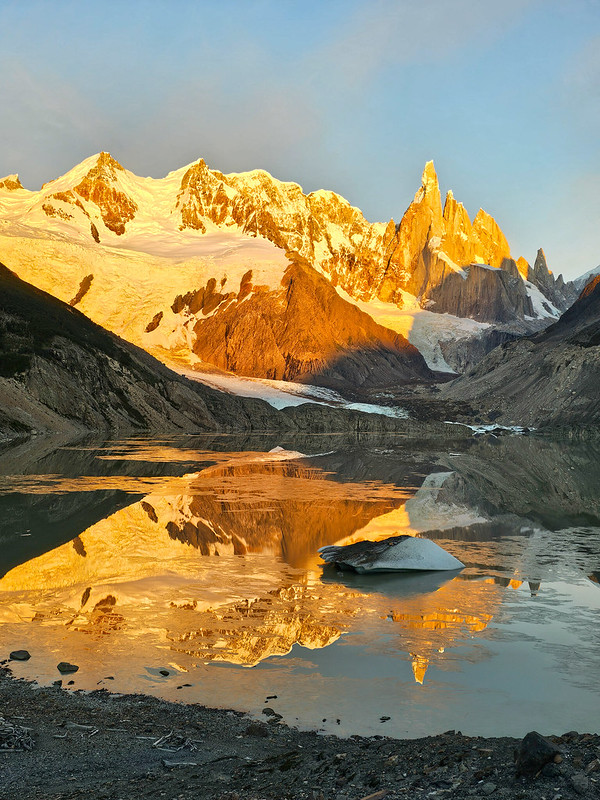
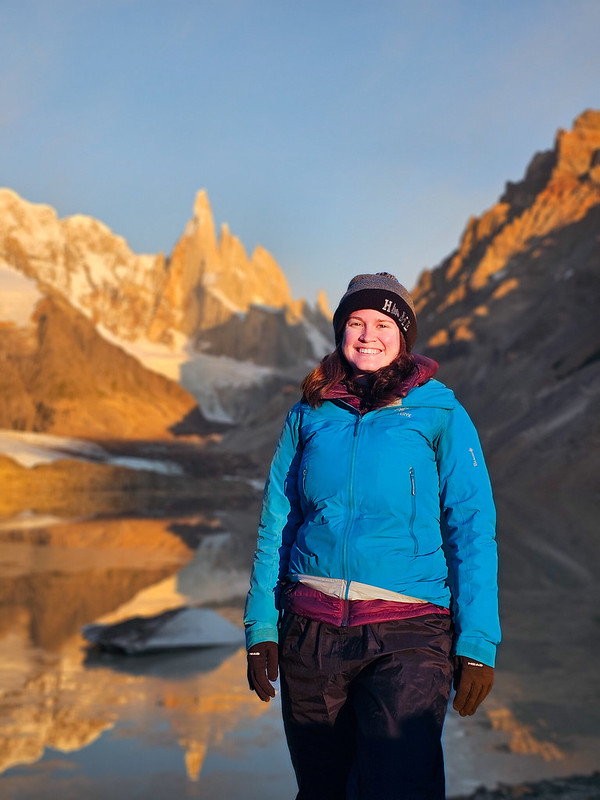
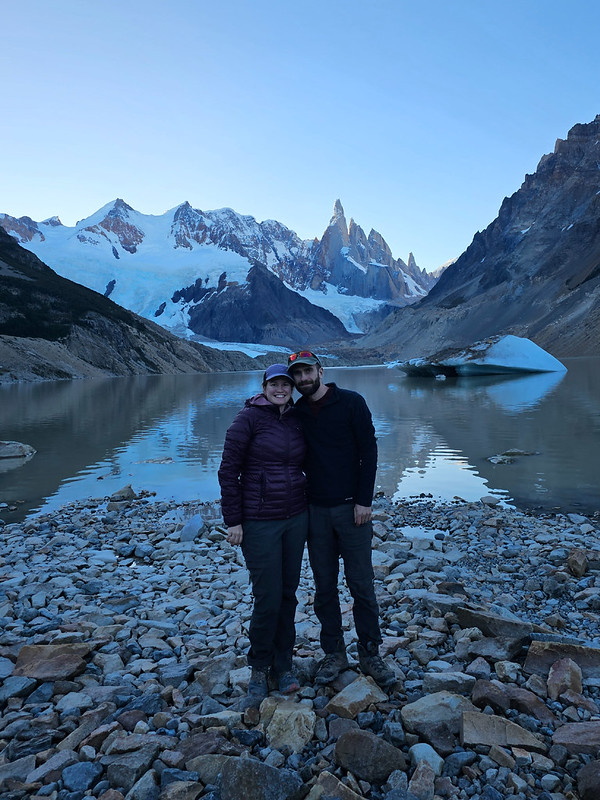
Continued from Part I. On Day 2, I got up before the sun and walked back to Laguna Torre to catch the sunrise. It’s only 10 minutes from the campground, so you really can’t skip it if it’s a nice day, which it was for me! There were no clouds in the sky, but interestingly, it was cold enough overnight that the lake had a thin sheen of slushy ice forming across it. I found a good spot around the rim of the moraine where I could see both the lake and the sunrise on the opposite horizon. 

Laguna Torre, Lago de los Tres, and Torres del Paine are all famous sunrise hikes. The reason that sunrise is key is because the sun rises on the opposite horizon of the lakes, which means for about a half hour in the morning, it turns the mountains behind the lake an orange, golden colour. The only other place I’ve experienced this was sunset at Assiniboine (although I’m sure if I was willing to get up for more sunrises, I’d have a lot more options). 

PSX_20240228_120621
PSX_20240225_190413

I had the perfect weather for sunrise at Laguna Torre, although it was very cold! It didn’t rain on us very much during our trip, but I ended up wearing my rain pants a lot because they are still great for insulation and act as a windbreaker! While waiting, I bundled up in all my layers and heated some hot water to have with my breakfast. Seth slept through the sunrise, but I’m so glad I trudged out of bed for it because it was really beautiful and probably the most memorable part of the entire trek!

Day hiking to Laguna Torre and Lago de los Tres is really popular, and backpacking to Lago de los Tres also seems to be popular, but doing them both back to back didn’t seem to be quite as common as I was expecting. It’s ~3km of hiking back along the trail until you come to a branch that connects to the Lago de los Tres hike. The connector between the two trails involves climbing up a steep pass to Laguna Hija and Laguna Madre (daughter and mother lake). It’s a bit of a slog through the forest to the top of the pass, but overall manageable, and then the hike flattens out along the two lakes and is absolutely gorgeous!

PSX_20240228_210636
20240225_125108

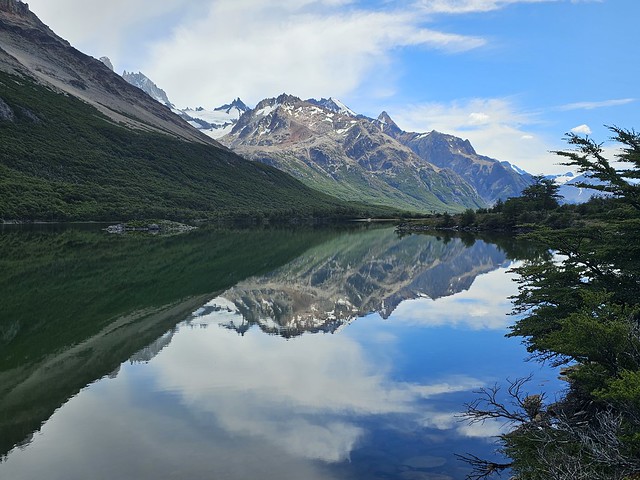
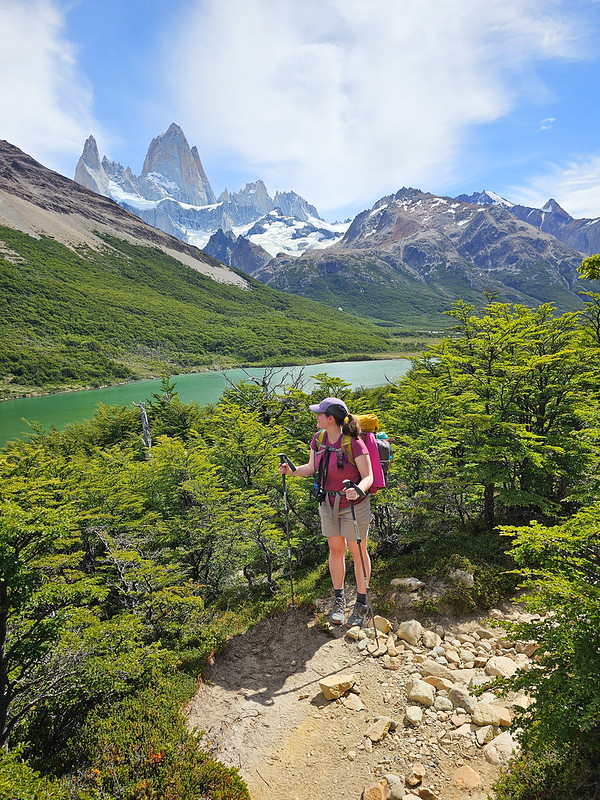
Laguna Hija is first – it’s the smaller of the two lakes, but it’s the most beautiful (in my opinion). What I liked about this section of trail is that it was very empty. We did pass some groups, but overall, it’s much less trafficked than the others trails because only the backpackers doing both hikes use it. Laguna Hija has a beautiful rocky beach at the foot of the lake and we decided to stop there for lunch. It was really nice and sunny, so we both went for a swim and enjoyed having the beach to ourselves. It was still very cold, but overall, a more enjoyable swim than at Laguna Torre.

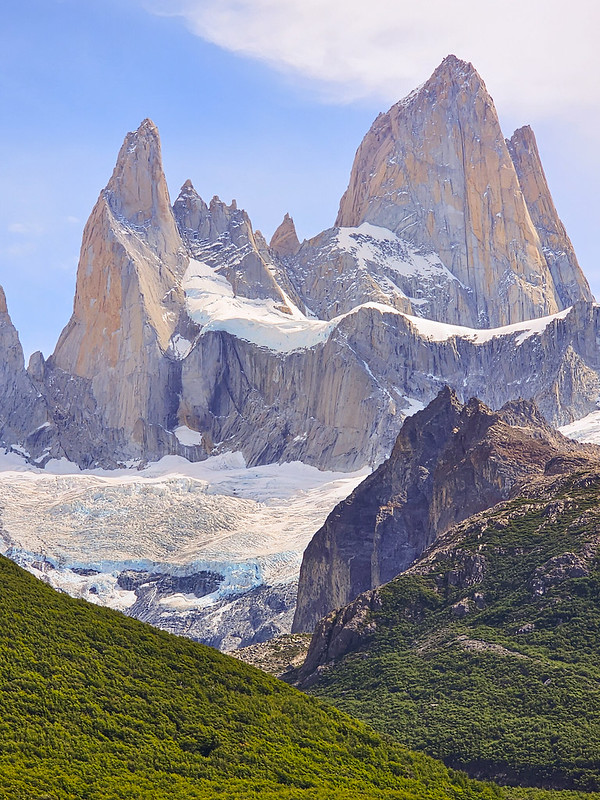
Once you leave the beach, you hike along the edge of the lake for a little while before doing a short climb to a viewpoint looking down on Laguna Madre. Laguna Torre looks at the backside of Mount Fitz Roy, so this is where we got our first view of the massive peak from the front. From there, the trail continues above the lake and goes in and out of the forest with lots of lovely viewpoints of the mountain. 

20240225_140435

Eventually you arrive at Rio Blanco, which is where you re-connect with the main trail to Lago de los Tres. This part of the trail is like a super highway of hikers and had a much different vibe from our morning hike. We filled up our drinking water at the junction because the river looked so nice, but this source continues another 1km to the campsite, so you don’t need to fill up in advance like you do at the Agostini campsite. 

At this point in the day, it was actually quite hot, so we continued directly to the Poicenot Campground, which is ~1km from the junction. Unlike Agostini, it’s still another 2km away from the view at Lago de los Tres. However, from the campsite, you can still see the trail to Lago de los Tres, as well as the steady stream of people heading to and from the summit, which is 400m in elevation gain. Because of this climb, it looks pretty intimidating from the campsite, where all you can see is a vertical wall with switchbacks! 

PSX_20240304_191245
PSX_20240304_191534

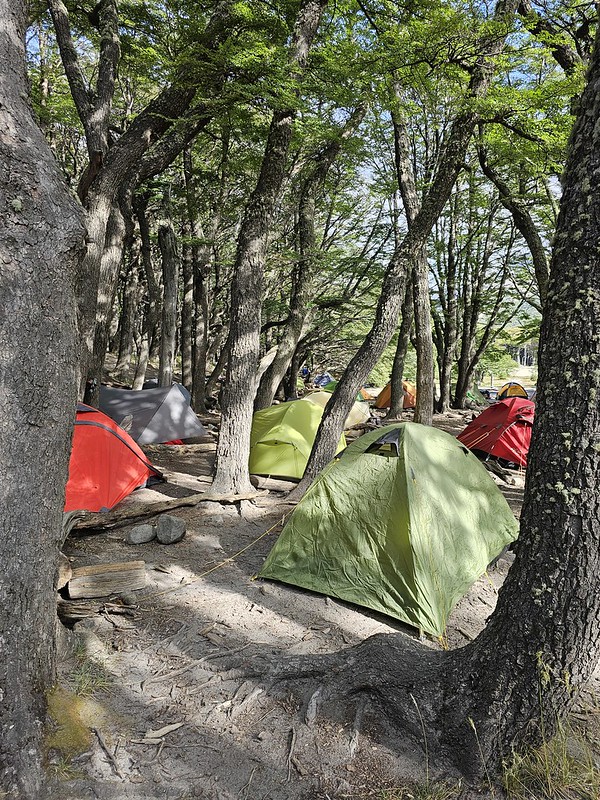
It took us longer to get to the campsite than I thought it would, and we arrived around 4pm. It was just shy of 11km of hiking, but it took us 5 hours, mostly because we stopped so much for photos and videos. I did not like Poicenot Campground at all – it’s what Brandon would refer to as a “tent city”. Agostini Campground was busy, but not really crowded. At Poicenot, it felt like the tents were almost on top of one another and there were a lot of people who seemed very new to backpacking, by which I mean they were loud and not overly considerate of other campers. 

Once we set up the tent, Seth was keen for us to hike up to the lake. Neither of us had a lot of energy after backpacking all day, but he didn’t want to get up early for sunrise. I had mixed feelings because I didn’t want to do the hike twice, but I felt that if I did it that evening, I’d still want to do it again for sunrise. The sunrise was incredibly rewarding at Laguna Torre and I didn’t want to miss that experience at Lago de los Tres. Fortunately, Seth is good at reading his partner and he knew the experience was more important to me than it was too him, so he let me decide when to hike and I picked sunrise.

PSX_20240304_191934
20240225_171605

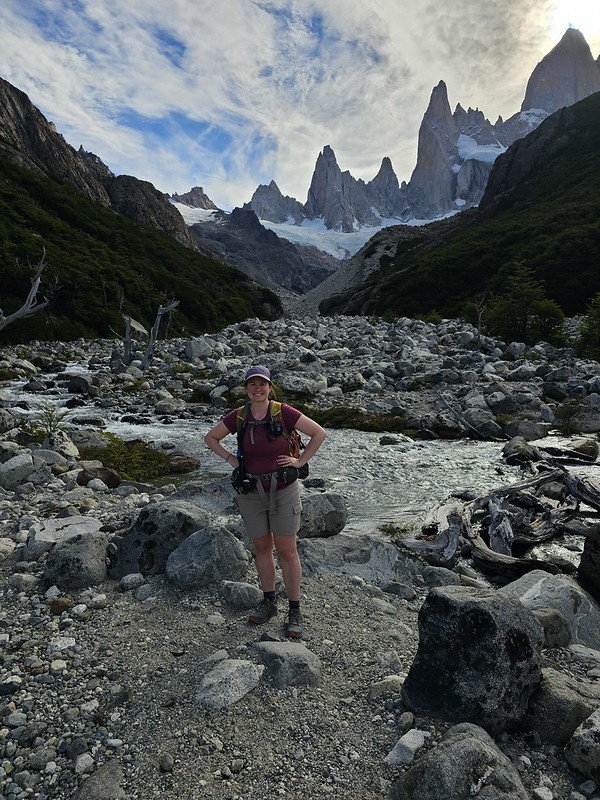
So instead of hiking up to the lake for dinner, we studied my GPS map and decided to check out a side trail up to Laguna Sucia, which looked to be ~5km round trip. It was a solid plan, although it didn’t quite manifest the way we’d hoped. My GPS showed two trails going up to the lake on either side of Rio Blanco, but when we tried the north side, there was a sign saying it was closed. We hiked up the south side of the river instead, but eventually you have to cross the river in order to go all the way to the lake, and there is no bridge. We could see people hiking on the north side, so they were clearly just using the closed trail. The trail appeared to be closed because the river has created a lot of erosion and the bank is unstable, so avoiding it was the wise choice, but I kind of wish I’d just taken the risk this one time.

But as usual, I played it safe. We walked around for a while looking for somewhere to cross the river. It’s definitely possible, but it was a bit dicey and I didn’t want to attempt it without my trekking poles, which were busy holding up my non-freestanding tent. So we never crossed the river and instead ate our supper along the river bank. It felt a bit anticlimactic, especially when we saw some other hikers crossing the river later, but I stand by my decision not to cross the river.

Eventually some clouds started rolling in and I worried we wouldn’t get the view we were after in the morning. But that’s the way it goes sometimes with hiking and we still got incredible weather overall. But we went to bed early and set our alarm with a 5am wake-up call! Check pack for Part III.
20240225_192125
20240225_180108

Sendero al Fitz Roy Backpacking Trip Part I

While it was super fun to visit Buenos Aires and Ushuaia, let’s be real – I came to Patagonia to hike. There are lots of options for hiking in both Argentina and Chile, but there are really two quintessential trips that everyone wants to cross off their bucket list and most of the tourists we met were all doing some variation of the same trip. Those hikes are Torres del Paine in Chile and Sendero al Fitz Roy in Argentina. 

Since we started in Argentina, Mount Fitz Roy was the first hike on my list and I was ecstatic to finally go backpacking. Unlike Torres del Paine, which has two circuits that most people follow, Mount Fitz Roy is really more of a collection of hikes that you can make your own custom itinerary for. Mount Fitz Roy is located in the Andean foothills near the Argentina-Chile border in Los Glaciares National Park. Most people don’t climb the mountain itself as that is a major mountaineering objective, but it can be viewed from many different trails within the park. Most trails are accessible from El Chalten, which is a tiny mountain town that pretty much exclusively caters to hikers visiting the mountain. 

PSX_20240228_113951
20240225_111456

The hike to Lago de los Tres is THE hike to do if you want to get the best view of Mount Fitz Roy. It’s roughly 11km each way to hike to the lake, so it’s usually done either as a big day hike (with accommodations in El Chalten), or as part of a backpacking trip (camping in the park). There are several other hikes in the park that can be combined with this hike to extend your trip, with the second most popular being the trail to Laguna Torre. While I easily could have spent an entire week hiking around El Chalten, I decided on a 2 night, 3 day trek to visit both Lago de los Tres and Laguna Torre.

The convenient part of our itinerary was that we didn’t need to book any accommodations. Unlike Torres del Paine, which has a mandatory reservation system that fills up months in advance, you can camp for free in Los Glaciares National Park with no pre-planning. This has some pretty big cons, which I’ll get into later in the post, but it’s definitely convenient. Accommodations in El Chalten are pretty limited, but it’s only a 3 hour bus ride from El Calafate, so we planned our entire visit around the bus schedule and didn’t stay in El Chalten at all.

PSX_20240228_114312
PSX_20240228_114841

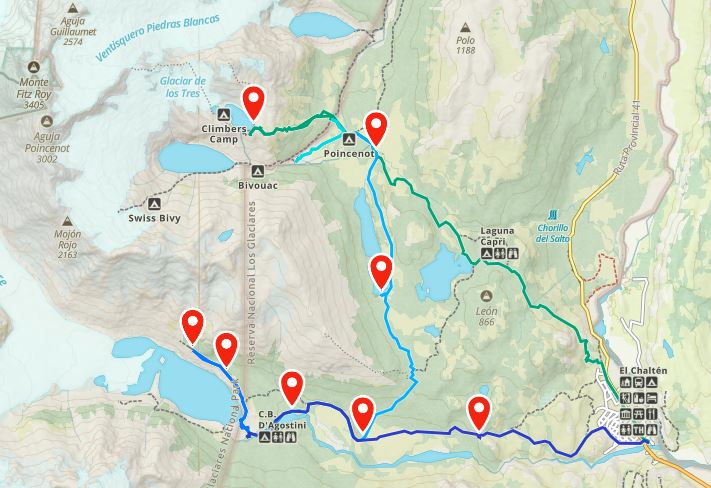
We left El Calafate on the 8am bus and had a very scenic ride through the desert to El Chalten. We saw lots of guanaco along the ride and even some rhea (which is a big bird like an ostrich or emu). We arrived in El Chalten at 11am and immediately started hiking. Laguna Torre and Lago de los Tres can be done as a loop trail measuring ~45km in total. You can go in either direction; the two campsites you’ll stay at are Agostini and Poicenot. Agostini is located right next to Laguna Torre, while Poicenot is 2km before Lago de los Tres and has 400m in elevation gain (so it’s a considerable climb from the campground). 

My planned itinerary was to hike to Laguna Torre on day 1, hike to Lago de los Tres on day 2, and back down to El Chalten on day 3. I hadn’t planned for any sunrise hikes, which is why I planned to start with Laguna Torre. We ended up hiking to both lakes for sunrise, which means I had to do the climb up to Lago de los Tres on my final day (making for a long day and fast hiking to catch our bus), so if I had my time back, I would have done the hike in the opposite direction. But we still had a fantastic time!

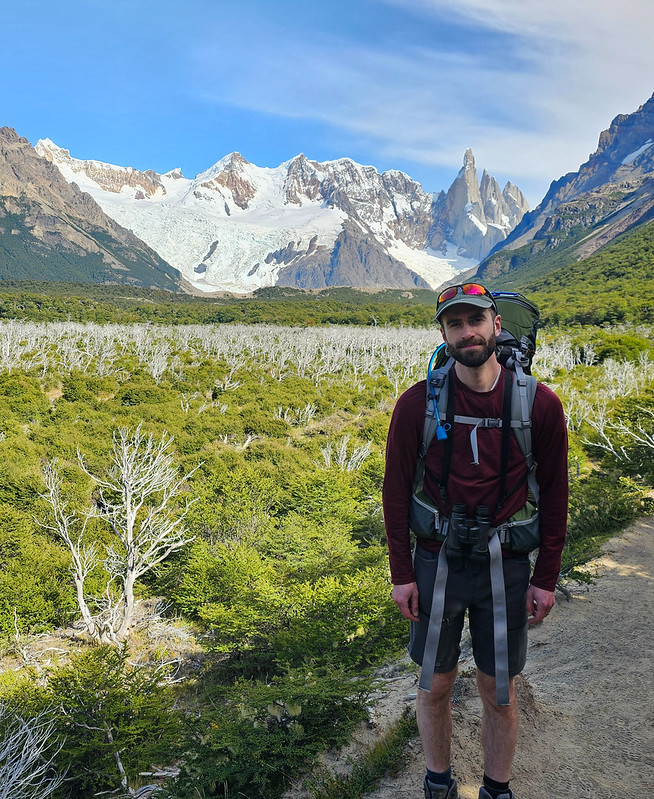
Like I said, we got off the bus and pretty much immediately started hiking. It was ~10km from the bus to Agostini Campsite. We were super lucky with the weather and quickly switched to shorts and t-shirt after we started hiking. We could only get away with this because it was a blue sky day and the presence of the sun makes a huge difference in the air temperature. The trek starts with a hike up through the canyon to Mirador Cascada Margarita and then on to Mirador Cerro Torre, which is approximately halfway to the campground. It’s a steady uphill hike until you reach Cerro Torre, but it’s pretty flat after that, so we decided to stop at the viewpoint for lunch. 

20240224_151947
20240224_170024

This was where we had our first experience with the park outhouses. Normally I don’t have a lot to say about outhouses – they’re generally never nice – but the latrines in Los Glaciares National Park were probably the worst I’ve ever used. They’re pit toilets, which I don’t have a problem with, but they were all in extremely poor condition. Some of them were almost full to the top with waste, the structures were rotting away, and the metal plate that separates the structure from the pit looked in danger of collapsing in some of them.

The park, and this trail in particular, receives thousands of visitors a year, so they really need to invest in replacing the outhouses. They’re so gross that most people were not using them and just going in the woods. That’s fine when people properly bury their waste, but the park receives so many visitors (and so many inexperienced backpackers) that it’s not sustainable for the well-being of the park to be without usable toilets. It’s amazing that you can hike and camp in the Park for free, but I would happily pay $10 a night for a permit if it meant the latrine situation could be improved. It was shameful in my opinion. That’s my rant – I’ll shut up about it now!

PSX_20240228_115228
PSX_20240228_115546

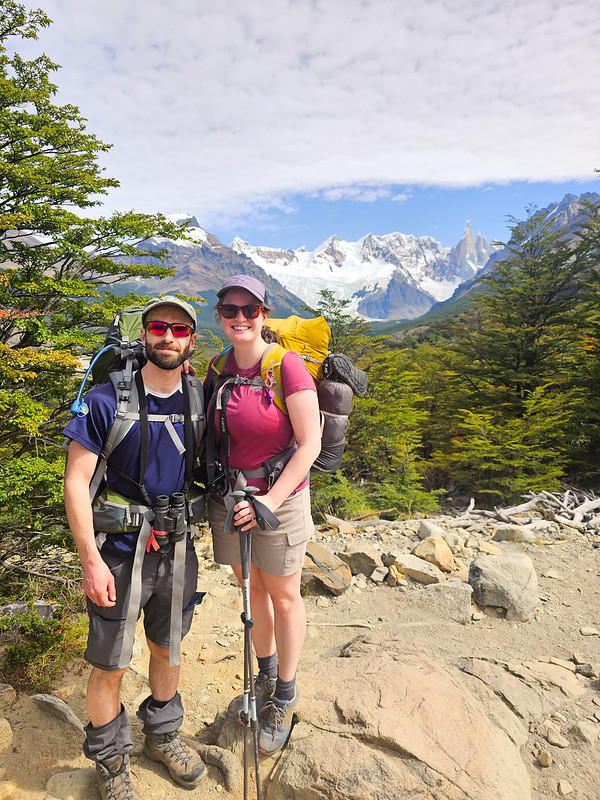
After lunch, we continued to the campsite. The second half of the hike was much easier than the first half and you have a pretty incredible view of the back of Mount Fitz Roy the entire time. The one tip I would give to other hikers is to make sure you fill up your water carriers at the river ~1km from the campsite. The Rio Fitz Roy runs right past the campsite, but it’s extremely silty and will easily clog up your filter, but there’s a great drinking water source at the bridge crossing the creek 1km before the campsite. Most people weren’t filtering their water, but we filtered everything we drank, especially once we discovered the outhouse problem and that people are just shitting next to the river at the campsite without digging catholes.

The campsites are pretty bare bones. They’re nice in that there is lots of room for tents, but there is very limited privacy. The Poicenot Campground is a nightmare because of the volume of people and the limited amount of camping experience the average visitor has, but I didn’t mind the Agostini Campground at Laguna Torre. It was reasonably busy, but it didn’t feel too crowded. I felt that most of the people there had previous backpacking experience and were considerate and respectful of the other campers and LNT practices. This was not the case at Poicenot Campground, but more on that later.

PSX_20240228_115950
20240224_181019

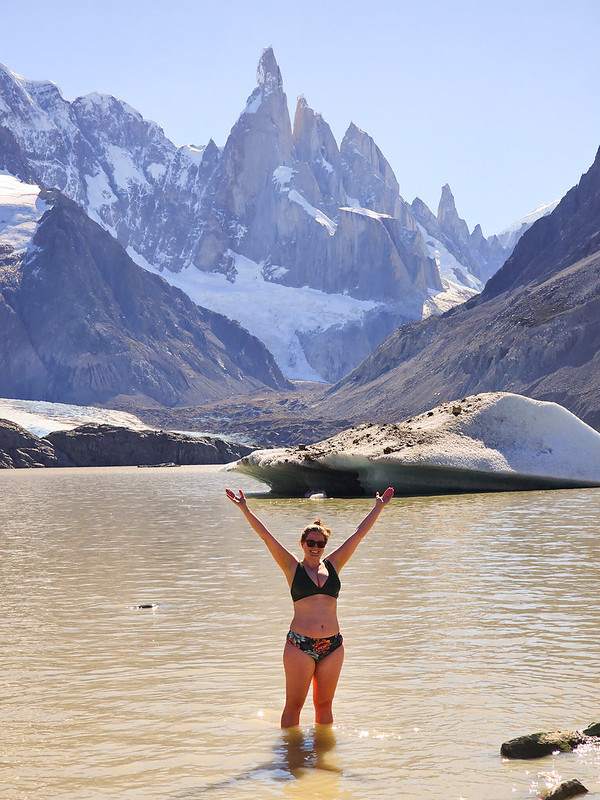
We found a nice site for our tent and then packed our bags for day hiking and set off to Laguna Torre. It’s only a 5-10 minute walk from the campsite to the lake. It was still sunny when we arrived at the lake, so I immediately decided to go for a swim. No one else was swimming and I knew it would be cold, but I have a lot of cold water pride as a Canadian, so I couldn’t resist going in the water. It was cold, but no colder than the glacial lakes in BC. Swimming isn’t permitted in Torres del Paine, so I’m glad I took the opportunity to swim at Los Glaciares!

The lake is extremely silty, so it’s kind of an ugly grey colour, but it has an incredible view of Mount Fitz Roy and the glacier. Plus, it has a ton of glacial ice floating in the lake, so it was really cool to swim with the bergy bits (something I’ve only actually done one other time in BC). After my swim, I was determined to continue hiking to Mirador Maestri. The lake is surrounded by a large moraine that was deposited by the glacier in the past, so you can hike up to the top of the moraine and then circle around to the back of the lake where you get a better view of the glacier. 

20240224_185950
20240224_200640

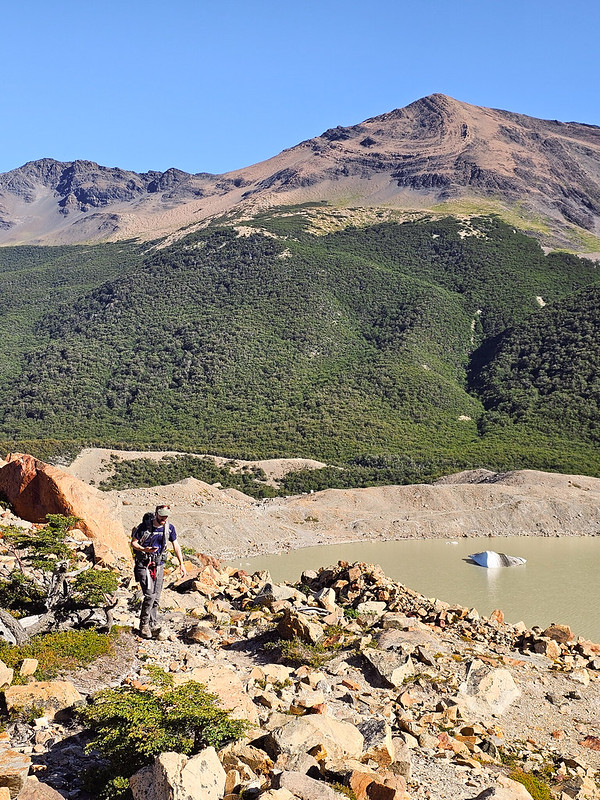
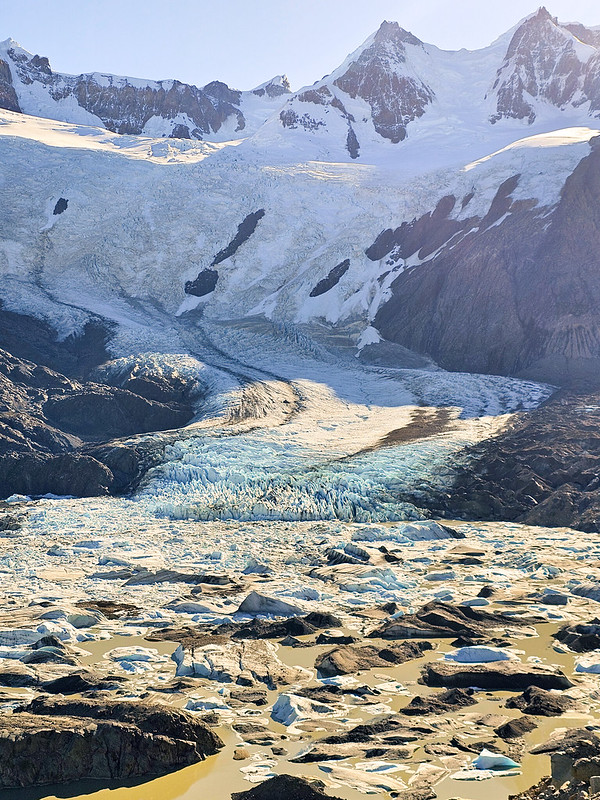
I think Seth would have happily skipped this part, but he was a good sport and accompanied me up the moraine. It’s ~5km round trip to the viewpoint, but because you can see the full trail the entire time you’re hiking, it seems closer than it is. It’s also a steady uphill, so eventually Seth lost interest and decided to hang out on the rocks and look at wildflowers while I finished the hike up to the viewpoint. I didn’t quite make it to the end of the hike, but I made it up to a natural crest in the topography and got a fantastic view of the back of the glacier! It took me ~1 hour to get there (2 hours round trip), but I definitely hustled. I would give yourself a solid 2.5-3 hours to do the full hike and properly enjoy it.

We raced the sun back to the lake and it set behind the mountains shortly after we got to the lake. As soon as the sun went down, it immediately got a lot colder and we quickly bundled up in all our layers, including our puffy jackets. But we still enjoyed eating our dinner at the lake before returning to the campground to go to sleep. Like I said, I hadn’t planned on doing any sunrise hiking, but the campground is so close to the lake that I knew I had to at least hike up to Laguna Torre for sunrise (but was still undecided whether I would do it for Lago de los Tres). So we went to bed pretty early and I set my alarm in time to get up for sunrise the following morning. It was cold overnight, so you should definitely come prepared for that, but I was warm in my -7 degree quilt and puffy jacket.

Check back next week for Part II!

20240225_065033