Garibaldi Provincial Park Guide

If you live in BC, chances are you’ve heard of Garibaldi Provincial Park. I’m not sure if it’s quite as popular as some of BC’s National Parks, but it’s certainly developed a pretty wide-reaching reputation. Garibaldi Park is a large backcountry access park near Vancouver that captures a lot of the wilderness area east of Squamish and Whistler. You can’t drive to any of the park attractions, but it has not slowed down the number of visitors to the park. 
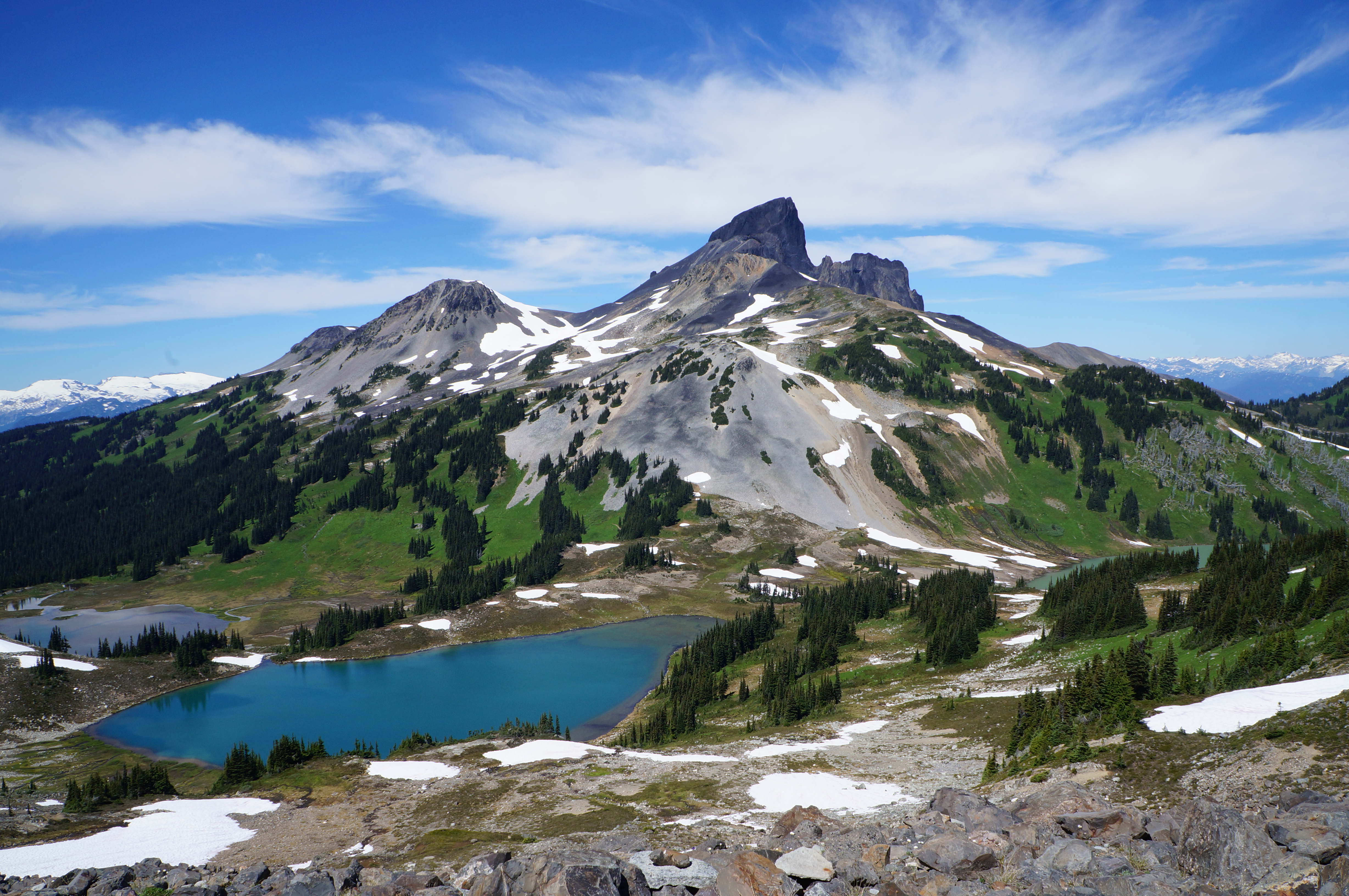
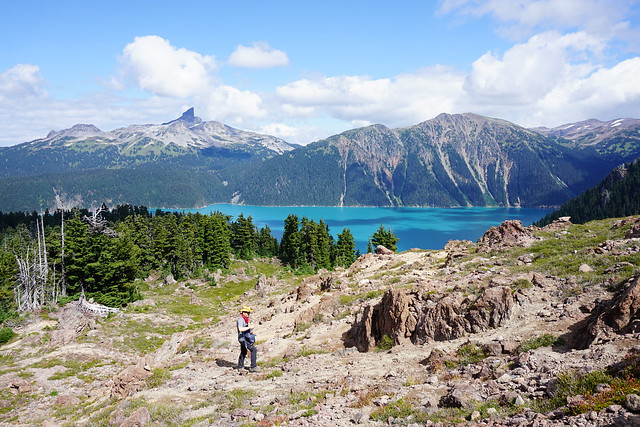
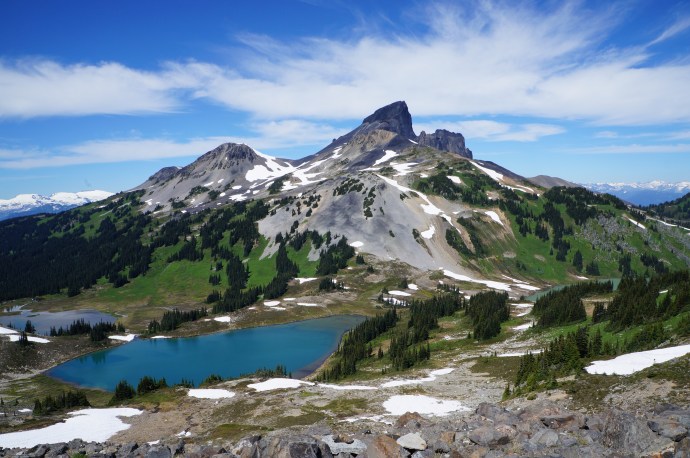
A photo of Black Tusk as seen from Panorama Ridge in Garibaldi Park on a blue sky day in the summer, with the alpine meadows and mountains in the background and lake in the foreground in BC.

Getting There

It’s impressive that Garibaldi Park gets as many visitors as it does when the access to the park is solely self-powered. The park is located between Squamish and Whistler, with several key park entrances at Diamond Head, Rubble Creek, Cheakamus, Whistler, and Wedgemount. Diamond Head is closest to Squamish, while the rest of the park entrances are closer to Whistler, so it can be a bit of a drive from Vancouver. I always give myself 1.5-2 hours of driving to get to the trailhead. Parking is generally secure, but there’s always the risk of break-ins, so don’t leave anything in your car.

Driving is by far the easiest way to get to the park, as public transit is not available. There is a park shuttle (Parkbus) that runs from Vancouver to Rubble Creek (the trailhead to Garibaldi Lake and Panorama Ridge) during late June to early October. The bus only runs on Fridays and weekends, and will book up early for Saturdays. Otherwise, there’s not many options and you’re best off trying to carpool with others via a facebook hiking group if you don’t have a car. 
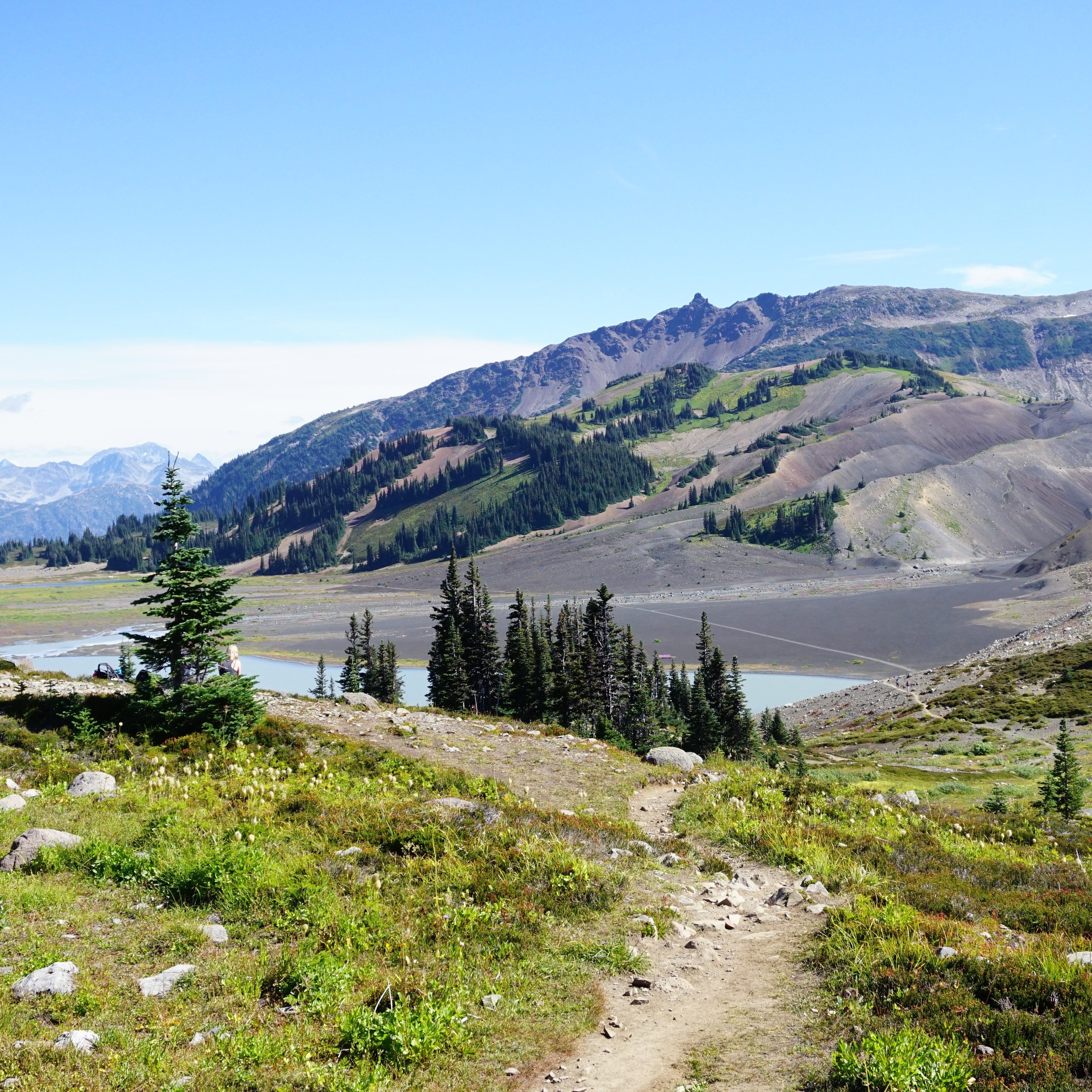
A hiking trail extends through the alpine of Garibaldi Provincial Park towards Helm Lake, with the forest and mountains in the background on a sunny day in British Columbia, Canada

Activities

The most popular activity in the park is day hiking. Visitors park at a trailhead and spend the day hiking to various viewpoints in the park. The trails are all well maintained and make for a very scenic day in the backcountry. However, most of the trails cover considerable distance and elevation gain in a remote environment, so visitors should be prepared with the 10 essentials and leave a trip plan with someone they trust. For more information on trip preparedness and trip planning, see my Safety post.

Backpacking is also popular as there are 10 beautiful campsites spread throughout the park that can be visited as single night trips or along thru hikes. Biking isn’t permitted everywhere, but you can bike from Diamond Head and Cheakamus Lake, which is a popular activity for cyclists. Finally, lots of winter visitors use the park for snowshoeing or ski touring, either as a day trip, or for an overnight expedition. There is one hut available for camping at Elfin Lakes, which is popular in winter. Avalanche Safety Training is highly recommended if you are recreating in the park during the winter. See my Avalanche Safety post.

A group of 3 skiers traverse the ridge on the way to the Elfin Shelter at Elfin Lakes in Garibaldi Provincial Park, BC. It's a beautiful sunny day with lots of snow and the forest and Diamond Head Mountain in the background.

Permits and Day Passes

In the 10+ years I’ve lived in BC, Garibaldi has always had a reputation as a crowded park. In 2016, BC Parks brought in a reservation system for their backcountry campsites to reduce the impact to the natural environment from overflow camping. If you want to camp at any of the backcountry campsites, you will need an overnight permit. These are available on camping.bcparks.ca for $10 per person ($5 for youth), per night, and release 4 months in advance of your desired date. So if you want to camp on Aug. 15, make sure to book your pass on Apr.15. 

During the pandemic, BC Parks further regulated park use by employing a free day pass system from mid June to mid October to manage parking at the trailhead and impacts to the park from overuse. While these passes are free, they have generated a lot of criticism and frustration from visitors struggling to obtain a pass. The day passes release 2 days before your desired date at 7am, and from what I understand, they can be challenging to obtain due to popularity. My recommendation is to be ready at 7am and keep refreshing for up to 15 minutes. If you make a reservation on Parkbus, it includes a day pass.

The sun shines down during golden hour on Wedgemount Lake with the hut and the mountains in the background in Garibaldi Provincial Park, BC.

When to Visit

The park is popular year round, but it is important to understand that travel through the park has much higher risks in Winter and Spring. The most popular time to visit the park is in the summer (from July to September), but be aware that summer in the mountains is much later than summer in the city. You can usually hike to Garibaldi Lake starting in late June, but the snow in the alpine and along the trails to Panorama Ridge and Black Tusk may have snow on them into late July. Early Fall is also a good time to visit the park, but be aware that temperatures will drop quickly in the mountains and that limited daylight hours can make certain trails more challenging. 

Winter can also be a great time to visit the park, but avalanche safety training is highly recommended no matter where you’re going. Snowshoers and ski tourers will travel to Elfin Lakes and the privately managed Kees and Claire Hut at Russet Lake in the winter. Both of these routes pass through challenging avalanche terrain and I strongly advise completing an AST1 course before attempting these routes. The Red Heather Hut is also a popular location for skiers who want to do a few laps on Round Mountain before heading home. This carries less risk than the other trails because the route is only in simple avalanche terrain, but you should still exercise caution and be prepared. 

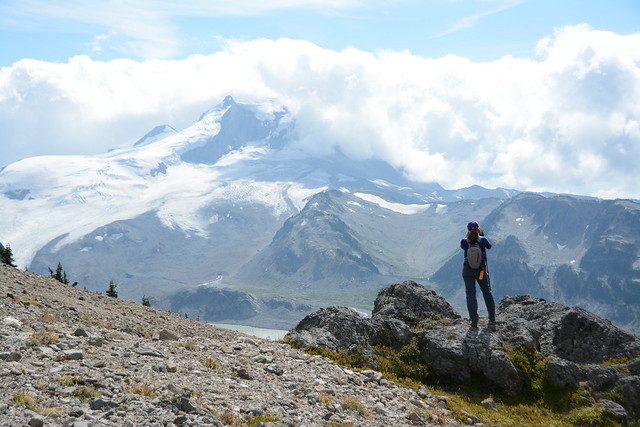
A female hiker looks tiny in comparison to the large Wedgemount Glacier in the background in Garibaldi Provincial park, BC.

Trails

There are so many trails to explore in Garibaldi Park. I’ve hiked all of them, with the exception of the winter glacier routes. Here’s some more information on trail options and links to dedicated resources for each trail. Please note that trail distances and elevation gain are approximate.

Garibaldi Lake (18km, 800m gain) – A great option for summer day hiking, or winter snowshoeing (with AST1). Probably considered the most popular hike in the park, with the trailhead at Rubble Creek.

Panorama Ridge (29km, 1500m gain) – Completed by some visitors as a long day hike (12 hours), but recommended as part of a backpacking trip (day hike from the campsite at Garibaldi Lake or Taylor Meadows). This is a very popular trail, with the trailhead at Rubble Creek. Only recommended in the summer.

Black Tusk (25km, 1400m gain) – Completed by some visitors as a long day hike, but recommended as part of a backpacking trip (day hike from the campsite at Taylor Meadows). This is a very popular trail, with the trailhead at Rubble Creek. Only recommended in the summer.

Mount Price (25km, 1400m gain) – Completed by some visitors as a long day hike, but recommended as part of a backpacking trip (day hike from the campsite at Garibaldi Lake). This trail is not very popular and requires some wayfinding, with the trailhead at Rubble Creek. Only recommended in the summer.

Helm Creek (16km, 650m gain) – Most often used as an alternative route when backpacking to Panorama Ridge or as a thru hike from Garibaldi Lake. The trailhead is at Cheakamus Lake and this route is less popular than the trails from Rubble Creek. Only recommended in the summer.

Garibaldi Thru Hike (~30km, 1500m gain) – Only completed as a backpacking objective in the summer. People will hike from Rubble Creek to Cheakamus Lake, camping at Garibaldi Lake, Taylor Meadows, or Helm Creek along the way.

Cheakamus Lake (9km, 50m gain) – A great option for beginner hikers, backpackers, and mountain bikers. It can be completed in a single day or as an overnight trip, camping at Cheakamus Lake Campsite. The trail is popular in the summer, with the trailhead at Cheakamus Lake. Can also be completed in the winter, but the access road is not plowed, making it a much longer hike.

Singing Creek (16km, 50m gain) –  A great option for beginner hikers, backpackers, and mountain bikers. It can be completed in a single day or as an overnight trip, camping at Singing Creek Campsite. The trail is popular in the summer, with the trailhead at Cheakamus Lake.

Elfin Lakes (22km, 600m gain) – A great option in the summer for day hiking and mountain biking, and in the winter for snowshoeing or ski touring (with AST1). Complete as a day hike or stay overnight at the campground or hut. A very popular trail, with the trailhead at Diamond Head (chains required for your tires in winter). 

The Saddle/The Gargoyles (27km, 900m gain) – An extended trail option from Elfin Lakes, can be completed from the parking lot in a single day, or shortened as a day hike from Elfin Lakes. The trailhead is located at Diamond Head. Only recommended in the summer.

Opal Cone (13km, 350m) – This trail can be completed as a day hike from the campsite at Elfin Lakes, or as a stop along the way when backpacking to Rampart Ponds. The trailhead is located at Diamond Head. Only recommended in the summer.

Rampart Ponds (18km, 500m gain) – This trail can be completed as a day hike from Elfin Lakes, or as a backpacking objective if you plan to stay at the campsite. The trailhead is located at Diamond Head. Only recommended in the summer.

Mamquam Lake (22km, 600m gain) – This Trail can be completed as a day hike from the campsite at Elfin Lakes, or as a shorter route from the campsite at Rampart Ponds. The trailhead is located at Diamond Head. Only recommended in the summer.

Russet Lake via Musical Bumps Trail (24km, 1300m gain) – Completed by some visitors as a long day hike (12 hours), but recommended as part of a backpacking trip, staying at the Russet Lake Campground overnight. This route requires paying for a sightseeing pass on the Whistler Gondola and hiking along the High Note or Half Note trails and the Musical Bumps trail. The trailhead is located at Whistler. It can also be visited in winter, but AST1 is required and a backcountry pass from Whistler Resort. 

Russet Lake via Singing Pass Trail (27km, 1200m gain) – Completed by some visitors as a long day hike, but recommended as part of a backpacking trip, staying at the Russet lake Campground overnight. The trailhead is located at Whistler and this route avoids having to pay for a pass for the gondola. Only recommended in the summer.

Wedgemount Lake (14km, 1200m gain) – This trail can be completed as a day hike or an overnight backpacking trip to the Wedgemount Lake Campsite. Overnight is recommended due to the substantial elevation gain. The trailhead is located at Wedgemount Creek. Only recommended in the summer.

Garibaldi Neve – This is a winter route for experienced alpinists only as it involves glacier travel. It is generally completed over 2-3 days and avalanche training and snow camping experience are required. I don’t have any experience with this route, please look elsewhere and do sufficient research and training before attempting.

Spearhead Traverse – This is a winter route for experienced alpinists only as it involves glacier travel. It is generally completed over 3-4 days and avalanche training and snow camping experience are required. I don’t have any experience with this route, please look elsewhere and do sufficient research and training before attempting.

A group of campers sit on the ground surrounded by camp food, pots, and stoves, preparing their dinner on the beach with the trees and lake in the background at Cheakamus Lake Singing Creek Campsite in Garibaldi Provincial Park in British Columbia, Canada.

Campgrounds

All campgrounds in Garibaldi Park require permits from camping.bcparks.ca. These release 4 months in advance of your desired date. They are popular, so it is recommended to book exactly 4 months before you want to visit. Backcountry permits are $10 per person ($5 for youth), per night. 

Elfin Lakes Campground – Reservable year round. There are 35 tent pads, several outhouses, picnic tables, a bear cache, and a cooking shelter. 

Elfin Lakes Shelter – Reservable year round. There are 33 bunks and an outhouse. You must bring your own sleeping pad and sleeping bag. 

Red Heather Campground – Reservable in winter only (Dec-Apr) for snow camping. There are no tent pads, but there is an outhouse and a cooking shelter. You are not permitted to sleep in the cooking shelter.

Rampart Ponds Campground – Reservable year round. There are 12 tent pads, an outhouse, and a bear cache. Sometimes this site floods in the summer and is closed.

Garibaldi Lake Campground – Reservable year round. There are 50 tent pads, several outhouses, picnic tables, bear caches, and four cooking shelters.

Taylor Meadows Campground – Reservable year round, except in September and October (I’m guessing because of bears). There are 40 tent pads, several outhouses, picnic tables, a bear cache, and two cooking shelters.

Helm Creek Campground – Reservable year round. There are 30 tent pads, an outhouse, and a bear cache. 

Cheakamus Lake Campground – Reservable year round. There are 10 tent pads, an outhouse, and a bear cache.

Singing Creek Campground – Reservable year round. There are 6 tent pads, an outhouse, and a bear cache.

Russet Lake Campground – Reservable year round. There are 7 tent pads, an outhouse, and a bear cache.

Kees and Claire Hut – While located in the park, this hut is managed by the Spearhead Huts Society (not BC Parks). Bunks can be booked year round for $60 per night and are most popular for touring in the winter.

Wedgemount Lake Campground – Reserable year round. There are 20 tent pads, a seasonal pit toilet, and an emergency hut that can be used as a bear cache. 
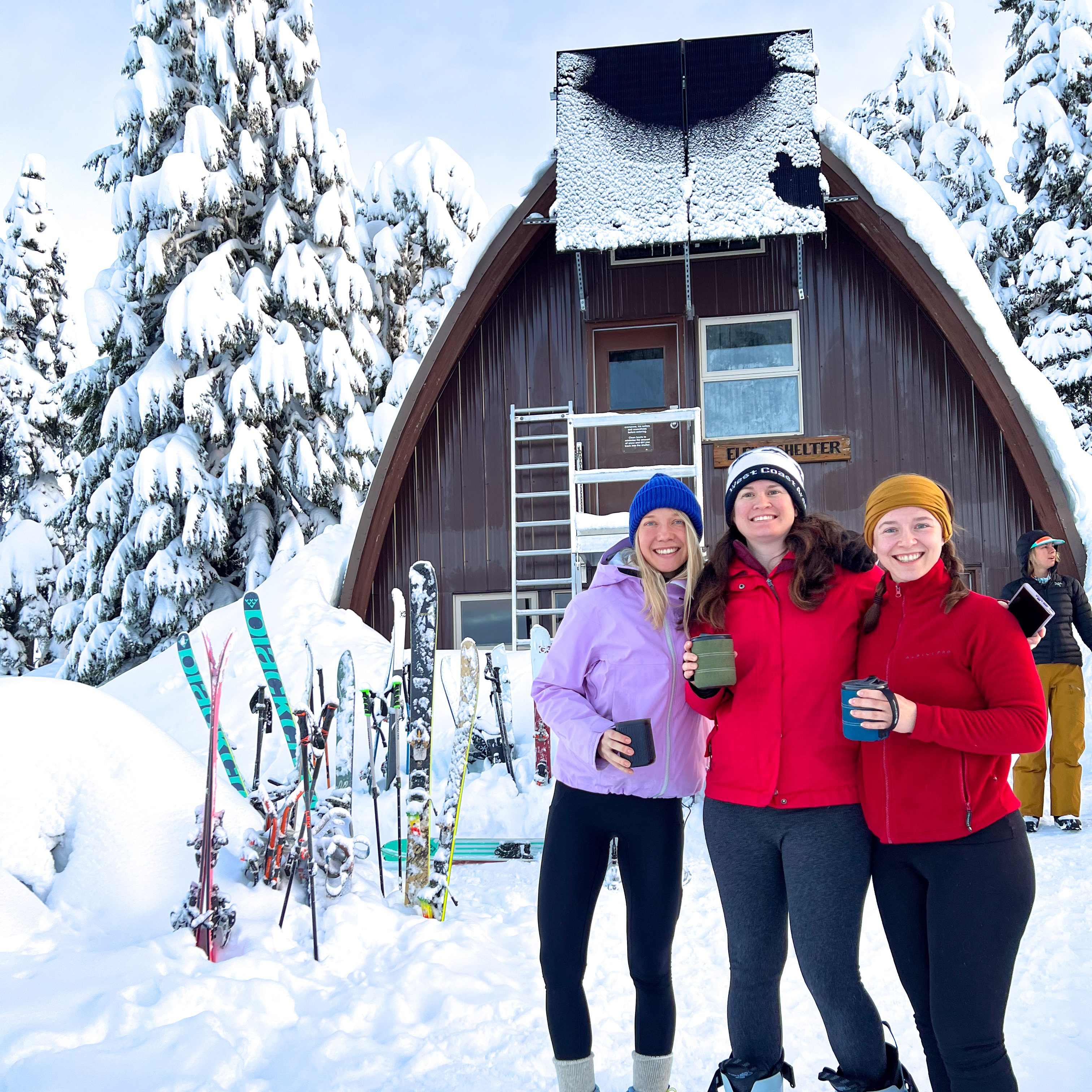
Three female skiers pose in front of the Elfin Lakes shelter on a sunny day in winter with the hut in the background and snowy trees in Garibaldi Park, BC.

Garibaldi Lake Backpacking Trip: The Remix

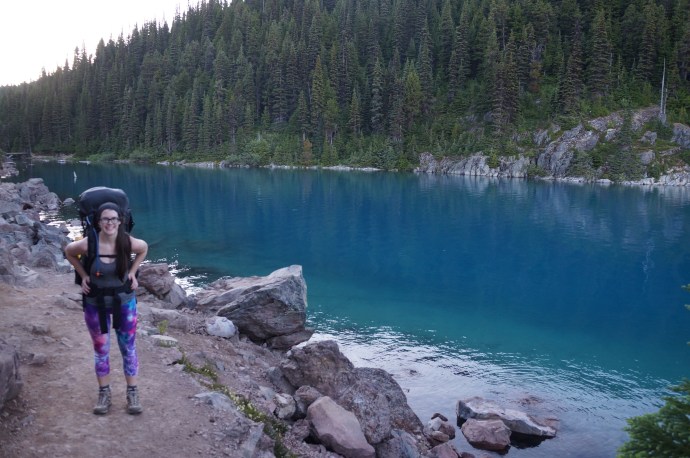
I’ve been to Garibaldi Lake 3 times. The first time was a day hike in 2015 and it was what inspired me to take up backpacking in the first place! So I followed up that hike with a 3 night trip the following year where I camped at the lake and day hiked to Panorama Ridge and Black Tusk. In 2018, Carolyn convinced me to return on another backpacking trip over the Labour Day weekend because she still hadn’t been to the lake at all.

DSC06958

Both trips took place over 3 nights and had identical starts, but the itinerary diverged after that. On both trips, I went to work on Thursday morning and then drove out to the Rubble Creek trailhead in the middle of the afternoon, starting the hike at around 5pm. The trail ascends 800m over 9km and is a bit of a slog, but it’s a very well maintained trail and isn’t that difficult, so it usually takes us about 3 hours to get to the lake, even with large backpacks. My first trip was with Seth and Emily, but on this occasion I went with Carolyn and Brandon.

It was September at this point, so we had less daylight than my previous trip, which had been in early August. We needed our headlamps for the last kilometre or so of the hike in the woods, but arrived at the campsite before it was completely dark. The 3 of us are a pretty well oiled machine at this point, so we quickly set up camp and hit the sack for the night.

HOP_0753

On both trips I left on Thursday and took Friday off. I really like this approach because the park is inundated with people on the weekend, so it allows you to beat the crowds on the way in and enjoy at least one day of hiking with less traffic. Fortunately, Garibaldi does have a reservation system, so you are guaranteed a campsite so long as you book far enough in advance to get one. Don’t even think about coming up and trying to camp without a reservation – Garibaldi Lake has a full time ranger and they won’t hesitate to send you packing.
DSC06761

Since it was Carolyn’s first time at the Lake, she wanted to do both the Black Tusk and Panorama hikes. I love Panorama, but I vowed I was done with Black Tusk after the last time (it’s a scenic hike, but I’m not a fan of all the scree). We agreed in advance that we would split up on the first day. Carolyn would day hike up to Black Tusk and I wanted to try day hiking up to Mount Price. Brandon had already done Black Tusk as well, so he decided to join me. Since Black Tusk gets a lot of traffic and Mount Price doesn’t, it worked out pretty well safety wise, plus Carolyn ended up making some friends on her Black Tusk hike, so in the end we all had company!

The hike to Mount Price leaves in the opposite direction. Black Tusk and Panorama Ridge head back the way you came and then continue on the north side of the lake, but the Mount Price trail continues south around the lake. It’s not a well maintained trail as the crowds tend to gravitate towards the more popular trails, but wow, is Mount Price ever scenic!

DSC06789

We followed the trail through the trees along the edge of the lake where it heads further back into the woods. The first part of the hike isn’t too challenging and we made good time to the foot of Mount Price. There are nice views looking back at the lake and towards Black Tusk and we didn’t see any people on the way in. The benefit of this was that I got my first real sighting of a pika! I’ve since seen them a few other times, but this was the first time I saw one and we were very close to it, so I got a great view of this cute little furry creature.

DSC06783

We stopped at the base of the mountain for a snack and then continued on. From there, the trail get’s pretty difficult. It’s about 11km round trip from the lake (the same as Black Tusk), but I think this trail is more challenging. Once you start climbing up the mountain, it’s all a big boulder field and it is really easy to lose the trail (to be honest I’m not sure there’s even really a trail in this section). From the map, we could tell where we were headed – there’s Mount Price and Clinker Peak, with a smaller peak between the two. We more or less made our own path across the boulder field as we headed up towards the saddle between the peaks.

It is very steep and many sections have loose rock, so we took our time. Once you reach the saddle, it’s just one last push up the side of Mount Price. Mount Price is very definitive because it has a huge flat top. Once you reach the top, you can still easily spend an hour walking around the entire top of the peak taking photos, which is exactly what we did! Because the top is so large, you can’t really get a 360 degree view, so we made a wide loop.

DSC06832

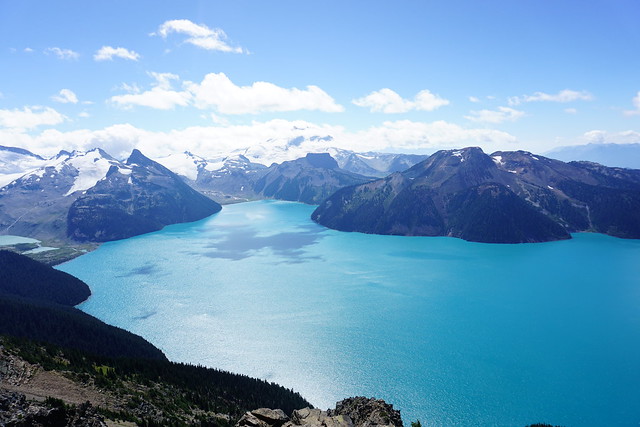
The back of the peak looks out towards the Elfin Lakes/Opal Cone area and there’s an awesome view of Garibaldi Mountain. then as you make your way towards the front, you get a view of the back end of Garibaldi Lake and all the glaciers. Finally, you can see Panorama Ridge and Black Tusk at the front of the mountain. The views from Mount Price are totally out of this world! Panorama Ridge and Black Tusk get all the glory, but honestly, I think Mount Price might be my favourite – the only view that might rival it is the view of Black Tusk from the top of Panorama. As far as lake views go, I think the view from Mount Price is just as good as from Panorama.

HOP_0538

We hung out on the top for ages and had our lunch looking down over the lake. It was pretty windy up there, so we found a nice sheltered viewpoint while we ate. We started to see some more people on our way back down the trail (some of which were day hiking 27km from Rubble Creek!), but we didn’t see anyone else while we were on top of the peak.

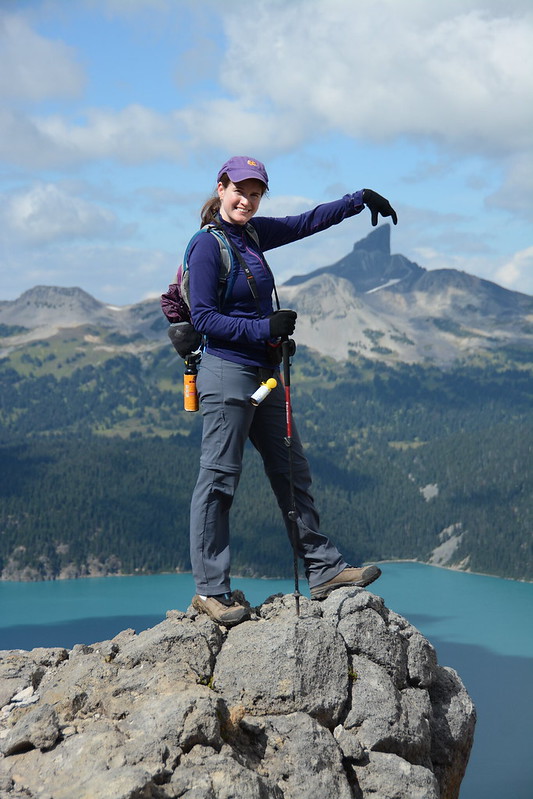
As usual, the hike down was worse than the hike up. I’d definitely recommend poles and take your time – it’s steep and there’s a lot of loose rocks. There was still a bit of snow up there and it was September, so you definitely want to be prepared for that earlier in the season as well. The best views of Black Tusk are actually from the saddle and we had a little photoshoot on the way down (one of our favourite activities).

DSC06889

Unsurprisingly, Carolyn beat us back to the campsite and was taking a nap in the tent when we returned. Normally we’d be anxious to take a swim in the lake, but it was September and quite chilly by the time we got back, so we opted not to and instead hung out on the dock by the lake while we made dinner. The Ranger was fishing off the dock when we arrived, so we ended up having a big chat with him. Apparently there are tons of fish in the lake since it was stocked in the past and now, because of it’s alpine location, there’s nothing to prey on the fish. So while he has a big canned food cache in the ranger cabin, he likes trying to get fresh fish.

DSC06828 (2)

We had a big chat with him about the reservation system as well, which is how I know you will get kicked out if you try and camp there without a permit. I accidentally ratted out a few backpackers we’d seen heading up towards Mount Price (you can get a wilderness permit for sections of the park, which I assumed they had, but apparently Price is not included in this permit). He indicated he’d already kicked 3 groups out of the campsite that day and that he wouldn’t be following the Mount Price campers, but if he saw them having a fire later, he would boot them out. Apparently you can see it all the way from the campsite and because he has a boat, he knows the secret quick trail up Mount Price that can only be accessed from the water. Anyways, trail reservations and camping restrictions exist for a reason people, please follow them.

After that we befriended a few Newfoundlanders that were also staying at the campsite! I was wearing a Newfoundland toque, so they asked me about it and then of course we discovered that Carolyn knew one of them and that we’d all studied engineering at MUN around the same time (classic occurrence TBH). So we had a fun night chatting as the sun went down over the lake while enjoying Brandon’s infamous thai chicken curry.

DSC06940

On Saturday morning we got up early and had breakfast at the lake before taking down camp. Carolyn still wanted to visit Panorama Ridge, but because I wanted to try and do something different than my previous trip, I had no trouble convincing her that we should make it a through-hike and end at Cheakamus Lake. So we lugged our packs with us away from the lake and back up towards the Panorama Ridge trail. The trail between Garibaldi Lake and Panorama is still one of my all time favourite trails. What I love about it is that pretty much the entire trail is incredibly scenic. You pass through the alpine meadows towards Black Tusk and then branch off and continue across the open plains towards the ridge.

DSC06974

The trail in this section is relatively flat, so it makes for a pretty easy hike until you hit the ridge. When we reached the branch that goes up towards Panorama, we ditched our packs in the woods and repacked our food and essentials into our day packs (if you’re caching your pack somewhere, take all your food so that bears won’t be attracted to it, and of course, always have the essentials). So we had lighter packs to climb up towards the ridge.

DSC06993

It’s not a long trail to get up to the ridge (1-2km I believe), but it’s definitely steep. This is one of my favourite parts of the trail though because it has the most stellar view looking back at Black Tusk! I love the view looking down at the lake too, but it’s always so windy and crowded up there that I somehow enjoy it less. We had a nice stop at the top though where we layered up and ate our lunches looking out over the lake and surrounding glaciers before heading back down.

HOP_0804

On the way back, we had our second photoshoot with Black Tusk. Carolyn decided she wanted to get a picture that looked like her sitting on Black Tusk, so Brandon spent forever trying to manipulate the picture to make it look like Carolyn’s throne with mixed results (it’s a lot harder than it seems!) so we just resorted to taking pictures of us crushing it instead.

Once we retrieved our packs again, we were into new territory and I was very excited about it. At the start of the hike, we met at the Cheakamus Lake trailhead and left Carolyn’s car there, driving Brandon’s back to the Rubble Creek trailhead. So instead of looping back to Garibaldi Lake, we would be continuing on to Helm Creek.

HOP_0839

From Panorama Ridge, the trail to Helm Creek looks like a bit of a barren wasteland, but I found it so interesting to explore! It’s pretty open, so I could see it being really hot in the summer, but it was September, so not bad when we visited. The weather forecast had been a little bit mixed before we left and we’d been anticipating rain, but to date we’d fortunately been spared. We continued past Helm Lake and followed the creek down through the wilderness. Traffic reduced significantly as soon as we left the ridge and we were back to having the trail to ourselves. After that all we saw were a few trail runners who were doing the entire pass in a day!

HOP_0851

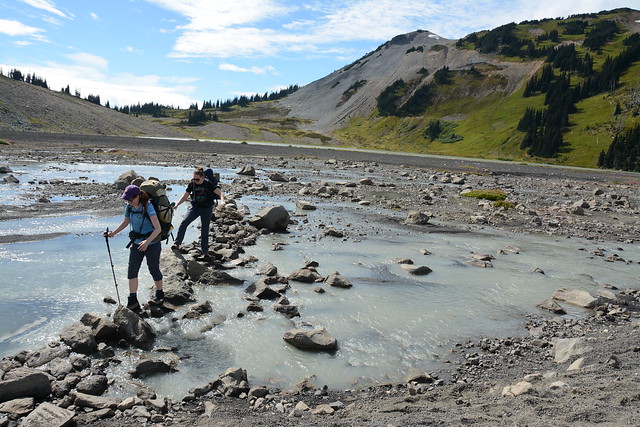
I had a lot of fun walking this section, we crossed the river several times and ended up having another photoshoot with Black Tusk as we continued around the back of it. Between this trip and some others I’ve done in the area, I think I’ve seen Black Tusk from every possible angle! Eventually though my feet started aching and the last few kilometres to the campsite were a bit rough. The vegetation increases as you head towards the Helm Creek campsite and the barren rocky outcrops turned back to meadows.

DSC07034

The campsites at the lake are all nestled along the trees and have decent privacy, but the Helm Creek Campsite is pretty much just a big open field with some tent pads. Unlike the lake, these don’t always sell out and there were a lot of empty tent pads, so if you really want to visit the park and can’t get a site, you could consider hiking in from Cheakamus Lake and staying at Helm Creek. I don’t like tent pads and prefer to set up on the ground, but tent pads are often constructed to protect the native vegetation, so we made sure to use it and always stick to the trails instead of stomping through the meadows.

Helm Creek isn’t as scenic as the lake campsite, but you can see right up to the back of Black Tusk from the meadow, so it’s still a gorgeous site. Being out in the open though, it was definitely the coldest night in the tent. We had dinner and then decided to go to bed pretty early as we were exhausted from all the hiking. Tent pads create a bit of a draught under the pad so it took us a while to warm up and fall asleep – I’m not sure if poor Carolyn warmed up at all. It rained a little bit overnight, but that ended up being the only rain on the trip, so we consider ourselves pretty lucky.

DSC07045

Sunday was our last day and the only order of business was to hike back towards the car. The trail goes back into the trees pretty much right after the campsite, so there’s not much to look at and we made good time on the trail. The trail length and elevation are pretty similar to the way in, but this trail has a long flat section along the Cheakamus River at the end, so overall it’s steeper. Once you get down the mountain, most of the elevation is done and you can either hike in towards Cheakamus Lake, or back towards the parking lot. Like most trips, we intended to go see the lake, but it was our 4th day and we were all pretty tired, so in the end we opted to skip it. We went back the following year and spent 3 days at Cheakamus Lake though, so no regrets!

And that concludes the trip! I haven’t been back to Garibaldi Lake since, but I have very fond memories from both of the trips I made there! I’ve explored most of the trails in this section of the park now, but it’s just so scenic I wouldn’t hesitate to go back again. I’m hoping my next trip there will be a snow camping trip as I’ve never seen the lake in the winter! I took an insane amount of photos on this trip, so here’s a few more to end the post.

DSC06835
HOP_0525
DSC06986
HOP_0636
HOP_0819
DSC06999
DSC07015
HOP_0829
HOP_0868
DSC07036
HOP_0897
DSC07053

Garibaldi Lake Backpacking Trip: First Timer

Garibaldi Park is hands down, one of the most beautiful provincial parks in the lower mainland. I’ve been to the lake on 3 separate occasions in the last 5 years and I really felt I experienced something new on every single trip. The first time I went to Garibaldi Lake was in 2015 as a day trip and it’s what inspired my desire to start backcountry camping. It was so beautiful at the lake that I really wanted the opportunity to stay there overnight. So the next year, I bought myself some backcountry gear and did a 3 day trip with Seth and Emily, who had just finished her bachelor’s degree and was visiting for the summer at the time.

Both times I’ve backpacked to the lake have been for 3 nights, which I think is a good length. I left work early on a Thursday and we drove out to the trailhead, aiming to be hiking by 5pm. I think we were a little bit behind, but we were certainly on the trail by 5:30pm and it took us about 3.5 hours to hike to the lake without any detours. 2016 was the first year that Garibaldi introduced the backcountry booking system, so we did have a campsite booked, but we decided to take Friday off to get ahead of the crowds and have one day with fewer people.

DSC01554

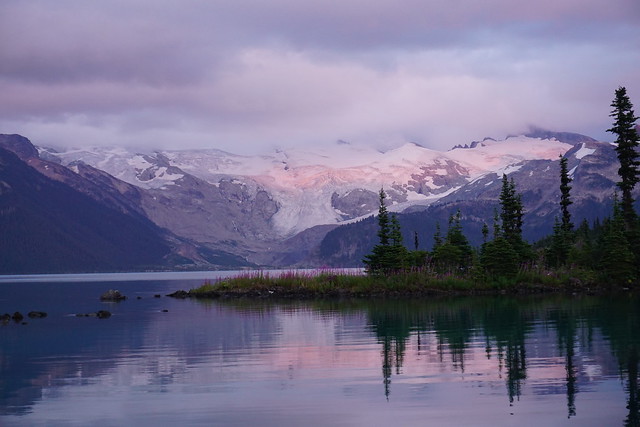
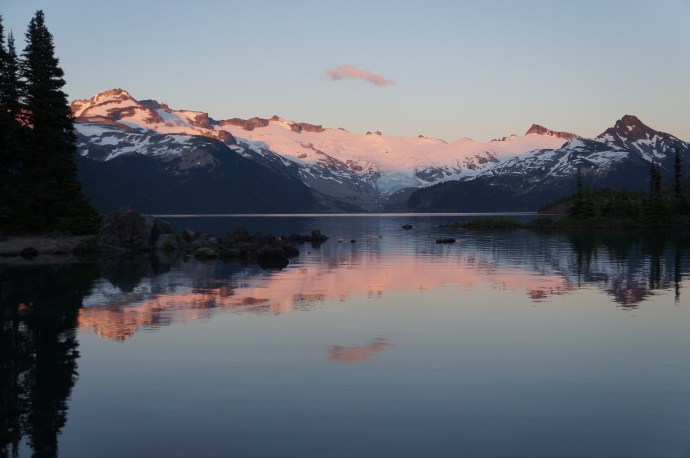
It’s a rough walk up to the lake for sure. It’s a pretty easy trail, but there is significant elevation gain (~800m) and the trail is pretty much constant switchbacks with no views for the first 6-7km. After that it gets a little more varied and less steep, before you finally reach the lake and hike in along the edge to the campsite. If you are hiking in a little later, like we were, be prepared to hike in the dark and have lights with you. Fortunately, we reached the campsite just around dusk and got to see the glacier at the back of the lake lit up pink with the alpen glow before night set in.

Hiking in Thursday night gave us two full days in the backcountry before we had to hike out again, so we planned to hit Garibaldi’s other two most popular attractions, Panorama Ridge and Black Tusk. I was most excited for Panorama Ridge because I’d seen so many amazing pictures of the bright blue waters of Garibaldi Lake as seen from the ridge looking down on it. So we decided to day hike to Panorama on Friday. We had each purchased a small daypack from Mountain Warehouse that we had stuffed into our big packs, so we crammed them full of all our day items.

DSC01739

It’s a bit of a rough start to Panorama Ridge when you leave the lake and have to hike back up over the bank, but after that the trail levels out a lot and has beautiful views of the alpine meadows. Panorama Ridge is about a 15km round trip hike from the lake and definitely ranks as one of my top 5 hikes. At first you hike through alpine meadows until you reach the base of Black Tusk, and then the trails branch off and you loop right the edge of Black Tusk Mountain down towards helm creek. You can’t see Black Tusk from this part of the trail, or Garibaldi Lake, but you can see down into the Valley and up to your final destination at the top of the ridge. I went during the August long weekend, so there were lots of wildflowers in bloom along the trail.

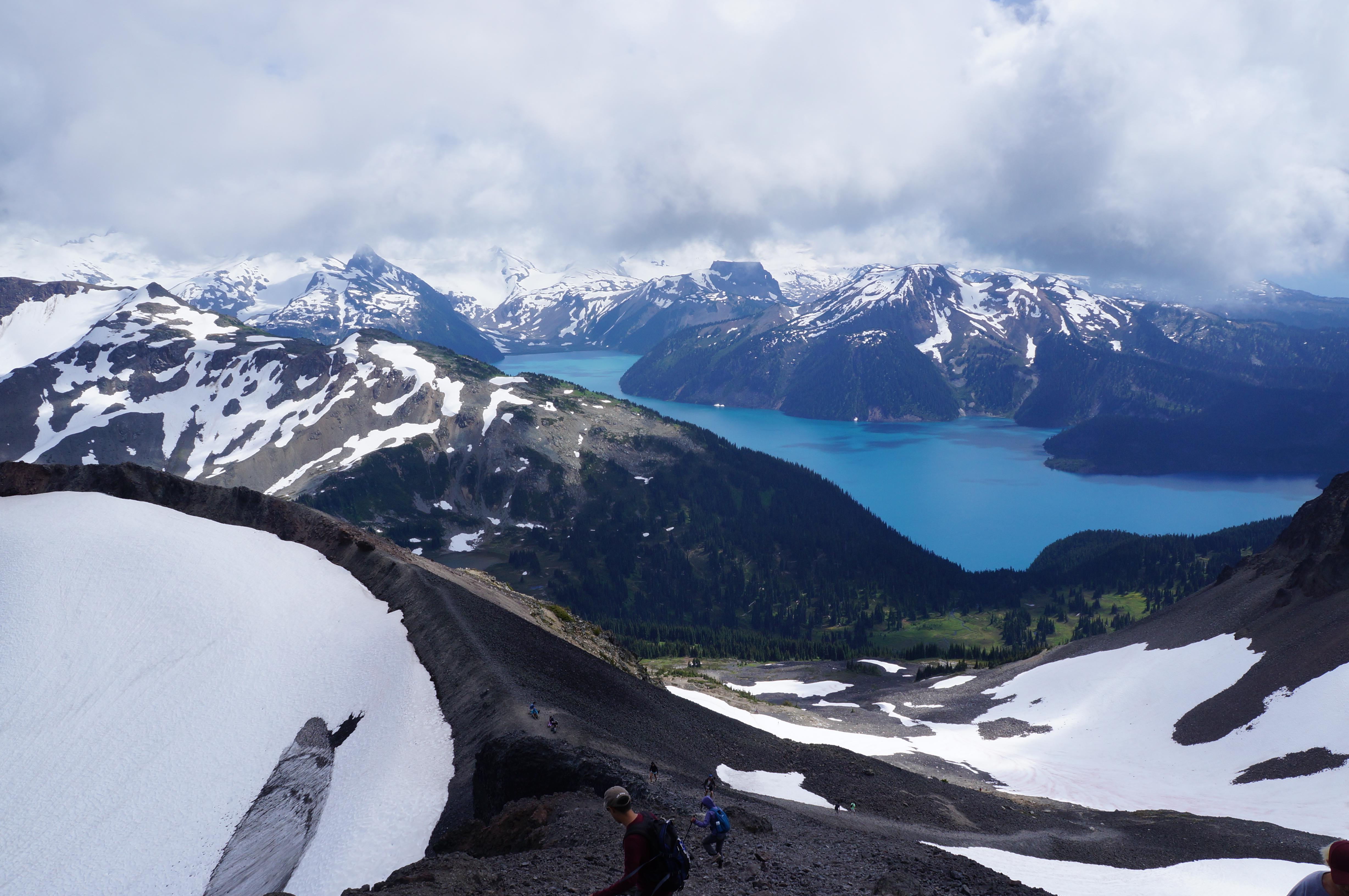
The last 2 kilometres of the trail are more difficult as you start climbing up towards the top of the ridge. It’s a steep trail and it can get quite crowded. Even though it was a Friday, it was still pretty busy, but I was glad we did it first. The view from the top is unbelievable and you should absolutely time your trip to eat up at the top so that you can hang out for a while. The view of Garibaldi and the surrounding mountains and glaciers is incredible, but it’s really the view back towards Black Tusk that took my breath away. I don’t think that view is showcased quite as much. I was anticipating and expecting the beautiful view of the lake, so I was surprised by the equally beautiful view looking back at Black Tusk and could never quite decide which direction to face!

I definitely think a day hike is the way to go for Panorama though. I know some people do Panorama as a 30km round trip, but I can’t imagine doing this unless you were a trail runner. It must be at least a 12 hour day to do the whole thing and that doesn’t leave much time to enjoy the views or the lake. Panorama Ridge was a whole day affair for us.

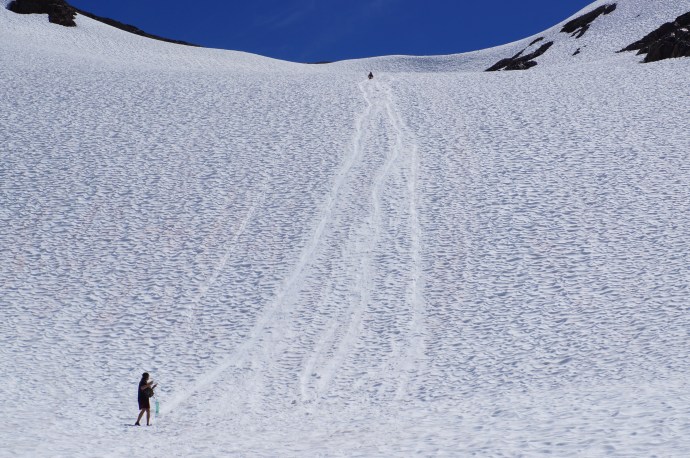
The year we went, there was still a lot of snow going up the side of the ridge towards the top. On the way up we could see some butt marks in the snow coming down from the top and Seth was really keen to slide down the snow on the way back. I think whether or not this is possible probably depends on the conditions when you visit, but I would absolutely recommend AGAINST it either way. Me and Emily were swayed by Seth’s enthusiasm about sliding down and decided to give it a try. But it’s a lot steeper than it looks and a lot longer. Once you start sliding down it’s really hard to control your speed and you’re pretty much committed to going the whole way. It is so cold to slide down a snowbank in your shorts and because we started picking up to much speed, we were forced to try and slow ourselves down with our hands, causing both our hands and butts to go totally numb for hours (yes. hours, I am not exaggerating). So yes, we did slide down, but I would not repeat the experience.

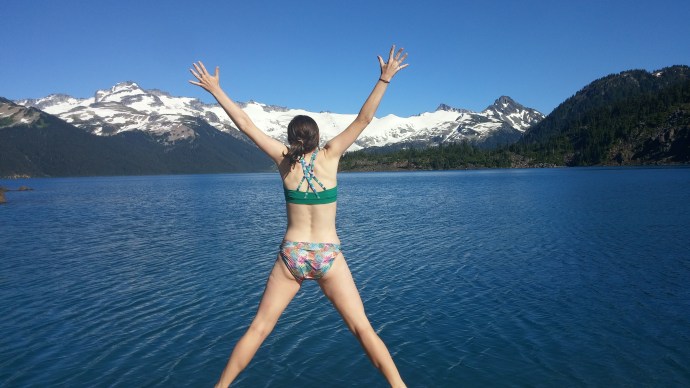
We finished the day with one of my favourite activities, a swim in the lake! If you don’t walk far enough in around the lake, you might never know that there’s a dock, but if you want to swim, this is absolutely where I’d recommend you go because then you can save yourself the torture of having to wade into the freezing, glacial water, and just jump in. I think I swam in the lake every time I’ve been up there and while it is freezing, it is one thing I would recommend! The cold water is so nice on your aching muscles and it makes for a great photo!

On Saturday we hit up Black Tusk. We would have preferred to stay at Garibaldi Lake all weekend, but unfortunately the campsite had been full for Saturday night by the time we booked, so we packed up everything and moved to Taylor Meadows on Saturday morning. Taylor Meadows is about 1.5km away from the lake and has traditionally been used for group and overflow camping back before the reservations were introduced. Now you can book all the campsites online and while it’s frustrating if you’re not fast enough to nab one, it does remove the stress of wondering whether you’ll find somewhere to pitch your tent for the night.

DSC01372

It was the BC Day weekend and as expected, it was a lot busier on Saturday. Taylor Meadows is nice, but it definitely can’t compare with the lake. The campsites have much less privacy and are all crammed together in the meadow. We decided to eat lunch in the hut and then started on the Black Tusk hike after lunch. Black tusk is a bit shorter than Panorama Ridge, but it has more elevation gain. The weather was cooler on the day we did Black Tusk as well. You hike in to the same junction, but instead of hiking around the mountain, this time, you hike up it. I wasn’t expecting to see the Lake from Black Tusk since you can’t see it from Panorama at all until the very top, but you can actually see the lake from a lot of the Black Tusk hike, which was really nice. There was still quite a bit of snow on Black Tusk though, even in August, so we did have to cross several snowy sections on the way up.

DSC01678

What I didn’t realize until the way down, was that the official Black Tusk hike actually ends about halfway up to the ridge (there’s a sign that marks the end of the hike – which I did see, but thought it was just an info board about the hike). So we kept going to the top of the ridge at the base of the tusk. It is definitely rough going in that last section. It is all scree going up to the ridge and every step you take you feel as if you’re sliding half a step back. Emily and Seth hated it and I didn’t particularly like it either. We pushed to the top of the ridge so that we could see the views on either side of the mountain, but Emily and Seth refused to go on from there. There is one last section that goes right to the base of the tusk and I really wanted to see it, so I braved the last 10-15 minutes up the slope on my own.

But that’s where I quit. I know there are people that climb Black Tusk, some of which bring actually safety and climbing gear, and others that just free hand it. I’m not one of those people. I’ve heard stories of how dangerous it is, so I opted to give it a pass. But, I did get beautiful views of the tusk and looking out around the surrounding area on both sides of the tusk. I have been back to Panorama Ridge since then, but that will probably be my one and only time up Black Tusk. It was a cool hike, but I’m not a huge fan of all the scree, so it’s one I’m happy to tick off my bucket list and move on from. But never say never I guess, I could probably be convinced to return on snowshoes.

And that was really it for our Garibaldi trip. We returned to Taylor Meadows and hiked out the next morning. It was Sunday when we hiked out, so there were still an insane number of people hiking in, and it’s kind of fun to watch all the day hikers sweating it on their way in while you hike all downhill with your pack and your sweater still on.

DSC01402

Overall, I do have a bit of a love-hate relationship with Garibaldi though. I definitely love it in that it is incredibly beautiful and awe inspiring, but it’s also mistreated by a lot of its visitors and that is really frustrating. I’ve had more than one “leave no trace” rant on this blog, but Garibaldi and Joffre are particularly bad for garbage. Please please please, respect the beautiful nature that we all share and pack out all your garbage! Do not leave garbage in outhouses as that attracts bears. If you can pack it in (uphill) full, then you can definitely pack it out empty.

DSC01481