Skating in Banff

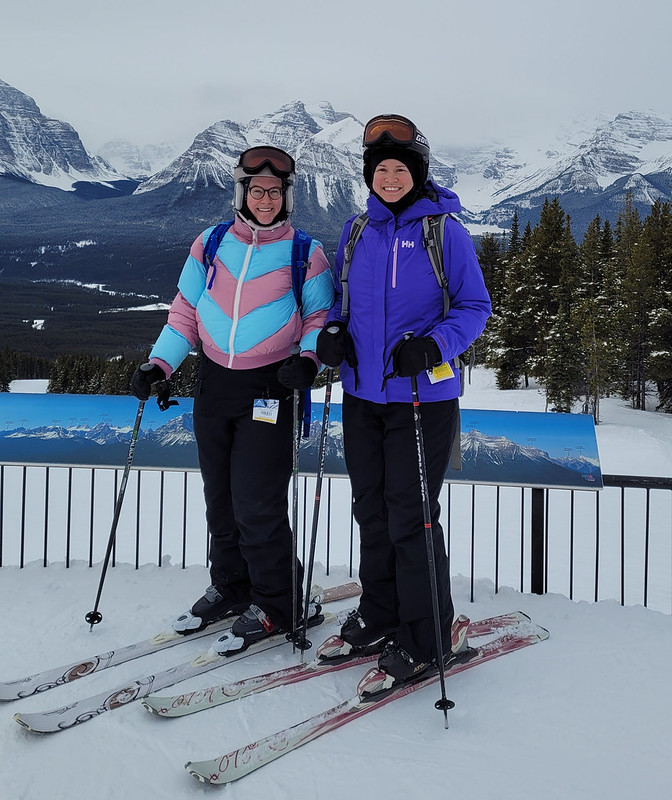
As much as I loved skiing in Banff National Park, I can’t deny that one of the real highlights of the trip for me was when we went skating on Lake Minnewanka. Lake skating is such an iconic Canadian activity, yet I get so few opportunities to do it living in Vancouver. I was super keen to go skating while we were in the Rockies, so I crammed my skates into my checked luggage.

While you do have a lot more freedom to set your own schedule when you bring your own skates, it’s definitely not necessary. Emily didn’t bring it any, so we still had to rent them while we were there. We assumed we’d get the opportunity to skate on Lake Louise, but I was still keen to find a less commercial skating experience. The hardest part about free skating on natural ice is timing. You want the ice to be thick enough, but if you wait to late in the season, the ice will likely be covered in snow, resulting in a lot of work to shovel the skating surface. How the ice freezes will also play a large role in how easy the skating will be.

20220227_132016

Since we were visiting in March, I figured our odds of getting to go lake skating were pretty slim. But it had been really cold and sunny the week before we visited, so I was hoping some lakes might be clear. It was calling for snow most of the week we visited, so the first thing we did was search for some ice before it got covered again in the following days.

There are several places to rent adventure equipment in Banff – we rented from Banff Adventures for $15. I was told Lake Minnewanka and Two Jack Lake were good places to try, but the rental place told Emily the surface wouldn’t be good, so we decided to try the outdoor rinks first (I think the rentals are hesitant to recommend lake skating for liability reasons, so do your own research).

20220227_133259

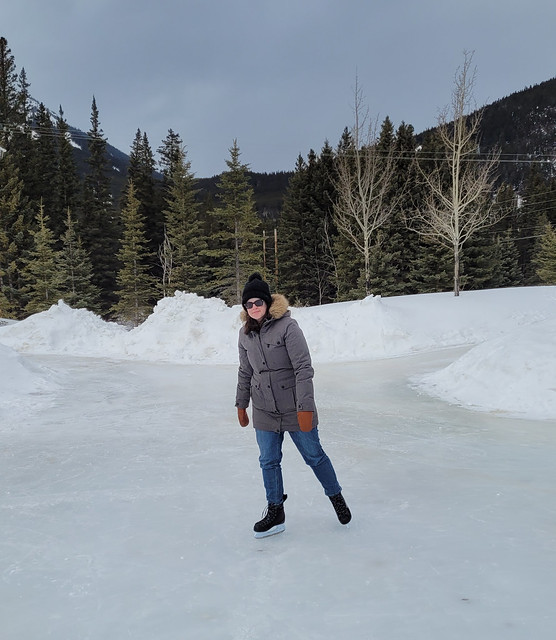
If you’re nervous about lake skating, there are a few options in Banff, there’s a small natural rink by the train station and a bigger one behind the curling arena. Driving by the train station rink first (and seeing how small it was), we opted for the arena. I’m glad we went here first because it had been several years since either of us had been on skates and it was a comfortable place to get used to it again. There were a few people around with hockey sticks, but it wasn’t overly busy, so we had a good time doing laps.

But I was still really keen to at least check out the lakes while we had the rentals, so we decided to go to Minnewanka anyways, figuring if we couldn’t skate we could at least go for a little hike. You have to drive by Two Jack Lake on the way to Minnewanka, so we scoped it out, but it was a mix of very bumpy ice and snow, so we kept going to Minnewanka. Likewise, Minnewanka was a bit of a mix of ice and snow, but there were much larger ice patches and lots of people out exploring around on the ice, so we figured it was worth a try.

20220227_151609

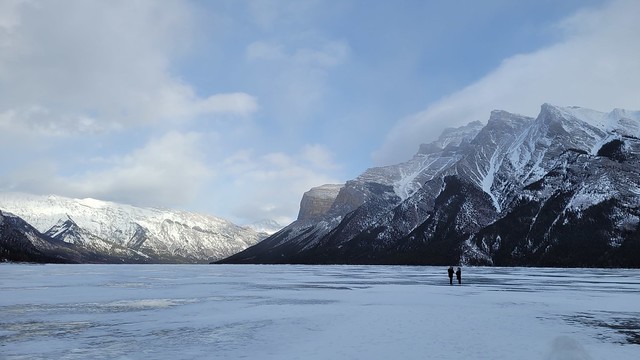
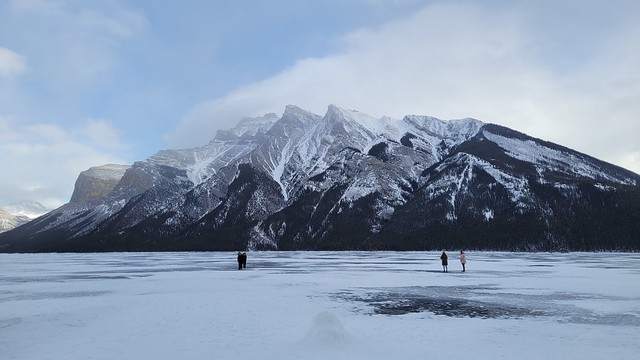
Minnewanka is a huge lake, extending 28km up through the mountains. It’s absolutely wild to me that such a large lake is able to completely freeze in the winter. The shallow part of the lake was completely covered in snow, so you have to walk about 500-1000m to get to the parts where you can skate. Always be cautious if you are going out of the ice. It had been -20 degrees the entire week before we got there and we’d read up that people had been out skating all the previous week before visiting. It is somewhat risky going out on the snow to get to the ice because it provides a relative feeling of safety, but you can’t see the ice quality until you’re further out.

It was jarring when we did finally reach the ice. The ice in Newfoundland generally doesn’t freeze very evenly and is usually completely opaque, but the ice in Minnewanka is clear and we could quickly see that we weren’t going to have any concerns about ice depth. From the ridges in the ice, you can easily see that it’s at least 1.5-2 feet thick. 6 inches is the safe depth for skating, so we weren’t worried about ice depth at all, just freaked out by how scary it is to be able to see right down through the ice!

PSX_20220227_162739

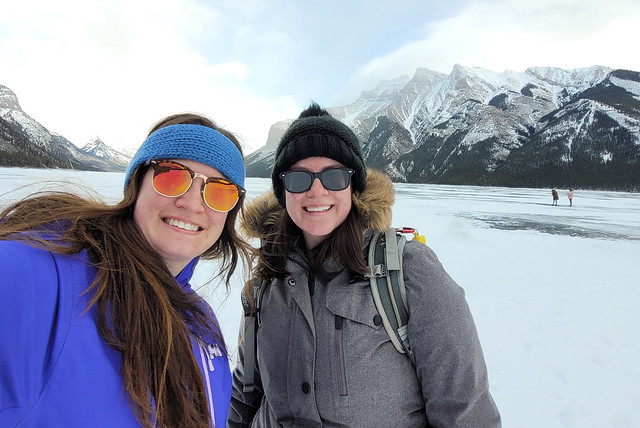
It was very cool though. When we got to the edge of the snow we laced up our skates and put our boots in our backpack to go for a skate. The ice was bumpy in places, but it was a much smoother surface than I was expecting and there was tons of room to skate all over the lake. You can see all the air bubbles frozen in the ice as they tried to rise to the surface and we kept skating around looking for interesting features. It was pretty windy skating on the lake, but I think that’s why more of the snow was gone. Pretty much every other lake we saw was snow covered, but I think the wind blows it off Minnewanka since it’s so large. It’s such a fun experience and frankly, I’ve never felt more Canadian then when ice skating on a frozen lake.

Fortunately, if you’re still a bit nervous about the idea of finding your own ice, you can skate on Lake Louise. It’s still not a totally risk free activity as the ice isn’t managed by anyone, but so many people skate there and it’s very close to shore, so I think it’s more manageable risk. Lake Louise does get covered in snow though, so you can’t skate on the entire lake, just the section at the end near the chateau where people keep in shoveled.

PSX_20220227_163106

Later in the week we wanted to make a go for Lake Louise as well. It’s such an iconic place, so we figured it was worth skating there too. Unfortunately the day we visited was the worst weather we had on the trip. It was overcast most days, but on the day we went to Lake Louise it snowed pretty heavily and the clouds and visibility were really low. The rink wasn’t shoveled when we got there, so we decided to snowshoe across the lake instead. Cross country skiers traverse across the lake and walkers go up and down the edge to the back of the lake where there are some ice climbing opportunities.

Unfortunately we didn’t catch much of the views with the poor visibility, but we have been there in the summer, so we just tried to enjoy the snow on the trees instead. There were some people starting to clear the ice when we got back, but it was a relatively small surface and a lot of people, so we decided to skip it since we’d had so much success at Minnewanka already.

So that’s my advice on skating in Banff National Park. Definitely go for it because it is a super fun activity, but stick to your comfort level and always make sure the ice is safe before going out onto it!

20220227_151645

Banff Winter Guide

This is a bit different than the kind of post I usually write, but I just spent a full 7 days in Banff on a winter ski holiday. That’s pretty much the longest I’ve ever stayed in one place on vacation, so I actually feel like I have a lot to say about Banff in the winter – from skiing, to hiking, to skating, and where to eat and shop.

Getting There

20220227_151612

The easiest way to get to Banff is to fly to Calgary. If you’re in BC, you could consider driving, but since I was meeting Emily (who was coming from Newfoundland), I opted to fly as well. It’s actually relatively easy to get around without a car in Banff (there’s a pretty comprehensive bus system around town and to the ski resorts), so you can just take a shuttle from the airport into Banff if you prefer. Otherwise, you’re pretty much limited to renting a car, which is what we did – it’s about a 90 minute drive. Just be careful, most rentals come with 4 season tires, which we were fine with because we grew up driving in a snowy climate, but if you’ve never driven on snow, I recommend paying extra for proper snow tires. Along the main highway from Calgary to Lake Louise, you will be fine, but beyond that, winter tires are needed.

Where to Stay

20220228_160157

Your options are pretty much to stay in Banff or Canmore. I think there is limited accommodations in Lake Louise, but there’s little else there, so I recommend Banff or Canmore. Banff is definitely more fun and attracts the tourists and crowds. Canmore is where more of the locals live, so it has a different atmosphere, but I do still really like it there. It’s cheaper in Canmore, so if you’re looking to save some money, it’s a good option. The thing about Banff is that it’s 20 minutes closer to all of the ski resorts and it’s actually located in the National Park, so it’s a lot of fun. We stayed in Banff and I recommend staying on the main road so you can walk into town for shopping and food. We were about 1.5km outside of the downtown, but we didn’t mind the 15 minute walk because parking in the downtown is a bit of a nightmare.

Skiing Guide

20220302_102209

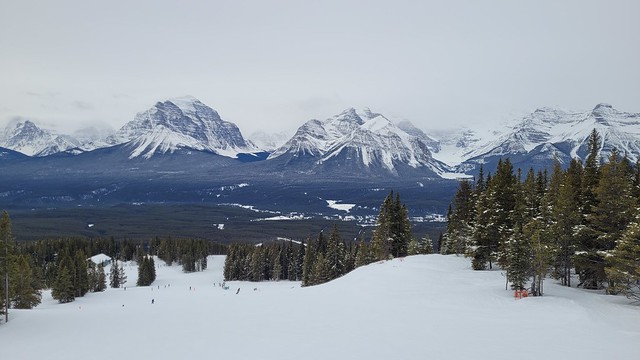
I’m going to be making an individual post about each of the ski resorts, but in a nutshell, there are 3 major resorts to chose from in Banff National Park. We opted to get the “SkiBig3” pass, which allowed us to hop around from resort to resort. With our pass, we had a 5 day span in which to do 3 ski days, so we did one at each mountain. The pass also includes tubing and night skiing at Norquay on the same day you ski there. As well as there are other perks and discounts with the pass at various stores and restaurants. If you need to rent gear, I recommend doing it in Banff to save yourself some time on the mountain. There are many rental places and you can pick up your skis or board the night before you use them.

Lake Louise – the furthest from Banff (45 min drive), but arguably the most popular of the 3. It’s located right off the highway, so it’s not as high elevation as Sunshine, but has some great runs on the back of the mountain for more advanced riders.

Sunshine Village – the highest and largest of the 3, it’s about a 20 minute drive from Banff and there’s a big gondola to transport you to the top. Probably the best resort for beginners as it had the most variety of terrain and on a sunny day you can see all the way to Mount Assiniboine. Because of its higher elevation, it generally gets the most powder.

Norquay – the smallest of the 3 mountains, but the closest to Banff (just 10 min drive). Norquay is the most diversified as they also offer a small area for night skiing and have tubing. That said, it’s a steeper mountain and I wouldn’t recommend for beginners.

Where to Eat

20220228_192851

Advising on restaurants is way out of my normal wheelhouse, but I ate at so many that I wanted to share some of my thoughts. In Banff, most of the restaurants are located in the downtown core and they continue up along Banff Ave, with several located in the hotels. Canmore also has a really nice downtown area and it’s worth checking out for a day.

Ticino Swiss Italian – This was my favourite restaurant of the trip because they do a traditional cheese fondue and have a cute Swiss-ski vibe. It was also the most expensive meal I had on the trip, but I don’t regret it. The Grizzly House also does fondue and is located right in downtown.

Park Distillery – We almost skipped this one because we didn’t realize it had food – in addition to a HUGE cocktail menu, it also has a great food menu. I had the game bannock (elk and beef) and Emily had a vegan burger, both of which were delicious. I was extremely tempted by their bison burger as well and will have to return again!

Nourish Bistro – A completely vegetarian restaurant, we visited this one for Emily and ended up loving it. They also have a lot of cocktails (at very reasonable prices), as well as yummy salads, bowls, and burgers. A great option for non-meat alternatives.

Rocky Mountain Flatbread Co – I didn’t visit on this trip because they don’t offer vegan cheese for Emily, but it’s located in Canmore and is a fantastic pizza restaurant if you have a craving!

El Toro – A Mexican restaurant higher up on Banff Ave. We hadn’t been planning to eat there because it didn’t look like anything special, but it was the closest restaurant to our hotel and we were really lazy one night. They have a wide variety of choices and we ended up really loving the pasta! A great cheaper alternative.

3 Bears Brewing – We mostly visited this one for the beer, but it has a really great vibe and food as well. It’s in a new building with beautiful high ceilings – you can get a 6-beer flight and some really tasty eats to accompany your meal. We also visited Banff Ave Brewing, but liked 3 bears a lot more.

Grizzly Paw Pub – Similar vibes to 3 Bears, but located in Canmore, I really like their beer (which you can find in most AB liquor stores) and their burgers!

Canary Coffee – A very cute little coffee shop in Canmore that has the kindest owner! Recommend if you’re looking for a hot drink or a tasty snack.

Beaver Tails – There are 2 locations in Banff and a third in Canmore. BeaverTails are iconic canadian pastries shaped like, you guessed it… beaver tails, and you can customize with your own toppings. It’s a bit of a must have if you’re on a winter trip to the Rockies!

Other places we tried included Farm + Fire, which is a beautiful restaurant that had mildly disappointing food, and Graze, in Canmore, which likewise was mildly disappointing. The next time I return I would like to visit The Bison or Saltlik, which seem to be the higher end restaurants. There’s also several Indian, Mexican, and Italian restaurants that we never made it to. We wanted to visit Block, which is a tapas restaurant, but it’s very small and cramped and Covid is still a thing, so we opted not to risk it.

Where to Shop

20220303_152831

Banff has a plethora of crappy souvenir shops that I kind of despise (please if you are buying something associated with indigenous culture, make sure it is authentic!), so we skipped pretty much all of those, but there’s still a bunch of great shops in both Canmore and Banff. To be honest, I even kind of prefer the shopping in Canmore because there’s less of the touristy crap and more locally made wares.

Banff Tea Co – I’m obsessed with tea and I go here every time I visit. The workers are so nice and they have so many great flavours, as well as health teas. Lots of the teas are named after local landmarks and it’s such a fun place to shop.

Evoolution – This was a new discovery for us and there’s a shop located in both Banff and Canmore. They sell specialty oils and vinegars and have the whole store set up as a tasting bar. Try as many as you want with bread and check out their recommended pairings to bring a few small bottles home with you!

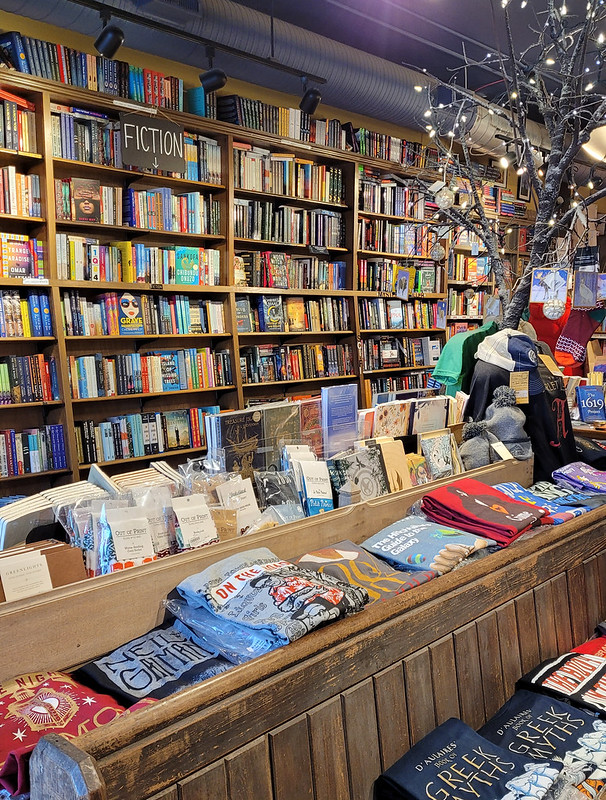
Cafe Books – There are no book shops that I’m aware of in Banff, but there’s a great one in Canmore! Cafe Books is split into two sections, with new books in the front shop and used books in the back shop. They carry a ton of specialty items and special editions and I had the best time browsing through both parts of the shop!

Big Bear Trading – This is the one souvenir shop I did like because they carried a wider variety of items and featured more locally made items. If you want to get specific Banff related items, then I would recommend this one.

Alberta’s Own Marketplace – Located in Canmore, this is the much more authentic place to buy souvenirs. Everything in this shop is hand crafted and beautiful! They have tons of beauty products, hand knits, clothing, jewelry, and prints. I got a gorgeous handmade merino knit headband.

Project A – Similar to Alberta’s Own Marketplace, Project A has a beautifully curated selection of jewelry, clothing, and beauty products. My top pick is the candles from Land of Daughters, which is a female, indigenous owned business (FYI, you can also get these at Coastal Bookstore in Port Moody).

Banff Doghouse – Definitely stop in here if you have a dog. They have all kinds of great toys and treats, so we had to get a little souvenir to take home for Sadie (she’s already eaten it).

A few other shops I’m a fan of are The Tin Box and Mountain Mercantile in Canmore, as well as the Canmore Tea Co. I didn’t like it quite as much as the Banff Tea Co, but I still bought some tea to take home from both! There’s also a few nifty stores in Banff, including Cabin 108, The Spirit of Christmas, and Monod Sports.

If you’re looking for any outdoor clothing or gear, there’s also a ton of shops to choose from. They’re all franchises, so I won’t go into too much detail, but it’s great to be able to visit SmartWool, North Face, Patagonia, and Atmosphere, which are more often stocked in other stores rather than having their own flagship stores.

Attractions

20220227_094958

In addition to skiing, there are lots of other outdoor attractions in Banff, here’s a few that we tried just to get you started:

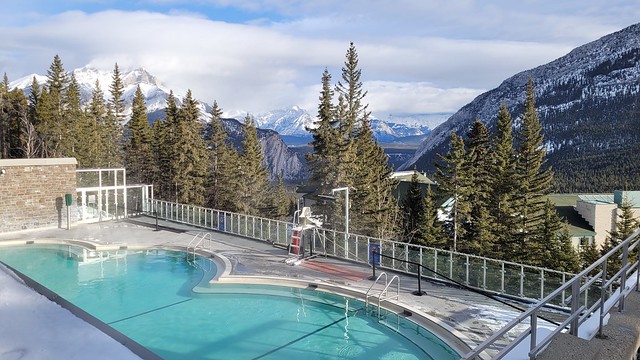
Banff Upper Hot Springs – Located just outside of town and up on the mountain, it makes for a great side trip! You can drive or take the bus and the springs is owned by Parks Canada, so it’s actually very reasonably priced at just $10pp.

Johnston Canyon – Located on the Bow Valley Parkway, it’s a fun walk out to some ice waterfalls through the canyon. The trail will be covered in snow and ice though, so make sure you bring microspikes, or rent cleats in town.

Lake Louise Skating or Snowshoeing – One of the most iconic scenes in the Rocky mountains, in the winter you can skate on the lake or rent snowshoes or cross country skis to explore across it. We were hoping to skate, but it was a very snowy day when we visited, so we hiked to the back of the lake instead.

Lake Minnewanka – Probably the highlight of the whole trip for me. Lake Minnewanka is a huge lake that completely freezes over in the winter. Similar to Lake Louise, whether you will be able to skate or snowshoe on it will largely depend on the weather. If you opt to skate on any lake, make sure you check the ice conditions and research the weather from the previous week. Blue ice is the safest. Stay away from grey ice.

Other Things to Note

There’s just 2 random things I wanted to note. The first is to make sure you get your park pass when you enter the park on the way to Banff. You will need it to park everywhere inside the park. It’s $10 per person, per day, or you can get the family pass for the whole year for $145. This is what we did since I plan to be back in the Rockies again later in the summer.

The second thing is to watch your speed. The speed limit on the highway inside the park is 90km/h, which is 20km/h less than on the highway from Calgary. The speed limit in Banff is 30km/h. I’ve never seen so many cops prowling around the streets as in Banff, so pay close attention to your speed or you might be going home with a fine.

Mount Assiniboine Backpacking Trip: Part IV

On Day 5 we got up at 5am to try and beat the heat for the day (Part I, Part II, Part III for reference). We had to backpack 15km to the next campsite, but fortunately our packs were lighter and the day was pretty much going to be entirely downhill. We packed up everything and were off at 7am.

We hiked back towards the lodge and then took the trail branching off to Og Lake. This was the route most people had entered by and our final destination was Sunshine Village. After leaving the lodge it’s about 5.5km to Og Lake and the trail leaves the woods almost immediately. It’s a very exposed trail and it would have been exhausting late in the day in the open sun. Fortunately there was still a nice breeze so I actually really enjoyed the first half of the walk across the plain.

DSC09471

There’s a lone boulder about halfway across the plain, so we stopped there for a quick shady break, but the mosquitoes quickly ruined our solitude and we were forced to go on. After that the trail was entirely inundated with mosquitoes. Seriously, I’ve never seen so many of them. It’s a boggy area around the trail and I guess they’ve just been breeding like crazy in the heat, there were literally thousands of them flying around everywhere. It was a nightmare. You couldn’t stop moving for 2 seconds or they would swarm you. I hiked in my bug hat and left full length pants on despite the heat. I couldn’t bear to cover my arms, so I used fly dope to keep them away. All I can say is thank goodness it wasn’t also hot at this point in the day.

We arrived at Og Lake around 9am to find it totally deserted. There are 10 tent pads by Og Lake, but there is absolutely no shade to be found anywhere and the mosquitoes are awful, so I think everyone either got up early or bypassed it altogether. Magog Lake was buggy, but it definitely didn’t have anything on Og. I’d seen on the internet that a lot of people actually prefer Og Lake and think the campground itself is more scenic than Magog Campground. I could see how it would be nice on a cooler day, but on this particular trip I’ve never been so happy to skip a campsite.

PSX_20210715_133538

We did stop briefly to go for a swim because I was still determined to swim in every lake. The water was a little cool because it was morning, but I could see it being so nice in the heat of the day. The big thing about this section of the trail is you need to make sure to fill up your water bladders between Og Lake and Porcupine Camp. There’s no water for the first 6km to Porcupine and while there are two small lakes in the last 3km, they’re not great water sources because they are stagnant, so we avoided them. We’d been carrying 3L of water with us where ever we went, so it wasn’t really a problem for us.

The 9km between Og Lake and Porcupine Camp are a bit of a bummer though. The area is known as the Valley of the Rocks and it’s basically a semi forested area with lots of big glacial till. It is a really interesting topography because you can tell it was once super barren and that the entire valley would have been glacier covered, but now a lot of vegetation has grown on the top of the rocks. But after 9km it gets pretty boring. The only saving grace was the mosquitoes were a lot less and it was semi shaded.

HOP_6148

We trudged along taking a break every 3km. We stopped at km 6 to have lunch on a windy rocky ledge and we were getting pretty tired. The final 3km were brutal. There’s a junction and if you don’t need to stop at Porcupine Camp, you can avoid 200m of elevation gain by taking the other trail, but we had to stay at the campsite, so there was no avoiding it for us. Our part of the trail was very meandering, with several steep uphill sections and a whole lot of downhill (that we would have to undo the following day). The steep sections were filled with that slippery cobble sized gravel that’s a pain in the ass to walk on and I had several close calls and 1-2 falls.

But eventually the trail flattened out and we finally hit Porcupine Camp. It’s a first come-first serve camp and since it was only 2pm, we were the second group to arrive. The other group was a couple there that were bushwacking their way across the park and having their afternoon siesta. Fortunately the mosquitoes weren’t bad and we had a nice nap in the shade before taking a little river bath. I heard a lot of the other hikers complaining at Magog about how it’s not a nice campsite, but I actually didn’t mind it at all. It had a nice cool creek and it was quiet and shaded, I actually found it quite relaxing! I had some journaling time and befriended the new hikers as they arrived from the other direction.

HOP_6209

The bushwackers had come from the same direction as us and were debating whether to bushwack out along the Simpson River Trail the next day (they didn’t), while the other 2 groups that showed up were on their way to Magog Lake. One couple arrived at 5pm and were debating continuing to Og Lake, but I convinced them to stay. I was like, “Og Lake is one big mosquito orgy. It’s all uphill, has no shade, and it took us 5 hours to get there from here”. Needless to say they were easily convinced considering they’d already done almost 20km in the heat that day. (PSA, don’t try and go from Sunshine Village to Og Lake in one day with the gondola out, it’s too much).

It’d still been a pretty hot day and we were thrilled to see more clouds rolling in. Brandon was convinced it would rain overnight, but I wasn’t optimistic. We enjoyed our final dinner on the trail and went to bed early to prepare for another early rise.

Us and the bushwackers were up again at 5am, but everyone else was still asleep when we hauled out at 7am. The location of Porcupine Camp was perfect for us because we had to start the day with a huge climb up Citadel Pass. We had to go up 500m of elevation in just 3km and then another 100m in the last km. I was dreading it after Wonder Pass, but it ended up not being that bad! I was surprised that on the final day I was actually feeling pretty good. Day 5 had been a bit of a slog and I felt like I’d been battling dehydration since Day 2, but on Day 6 I actually started to feel a bit rejuvenated.

PSX_20210715_134511

The clouds hadn’t amounted to anything and we’d woken to blue sky again, but it was definitely a bit cooler. It took us about an hour and 15mins to ascend the 3km and another 45minutes to the top of the pass. Citadel Pass is absolutely beautiful! It’s filled with meadows and mountain peaks on all sides, I actually really enjoyed our hike through the pass.

After that we descended for most of the rest of the day. A lot of the trail was exposed, but it was so scenic and there were so many wildflowers, I loved it and it ended up being my second favourite day on the trail after our sunset hike up the Nublet. Unfortunately Brandon didn’t have the same boost of energy I had and was still not feeling great. I don’t know if it’s actually related, but I drank 1L of electrolytes every day throughout the trip (500mL with breakfast and 500mL with dinner); Brandon didn’t drink any electrolytes, only water, so I wonder if that’s why I recovered faster. Could also be age since Brandon has a decade on me 😛 But I’ll stop rubbing it in because usually Brandon outpaces me on every hike, this just wasn’t his day.

DSC09549

We hit Howard Douglas Lake at about the 8km mark and stopped for a break and a swim. It was my last lake. It wasn’t my favourite, but it was still very beautiful and quite warm since it wasn’t very large. Unfortunately there was a final push uphill after that to the top of Windy Ridge – it wasn’t very long, but it was steep and hot, so it took us a little while. But again, from the top of the ridge there were absolutely gorgeous views of the surrounding mountains! Plus there was a nice breeze on the top so I felt good again. The only downside is from the top you can see the rest of the trail as it meanders through meadow after meadow all the way to the ski resort, and it looks far.

We continued down from the ridge and the trail was still partially shaded along this stretch. The trail went in and out of the meadows and it was very hot crossing them, but we decided we’d push until the end of the last treed section and then take a break for lunch before crossing the last meadow. The last meadow is Sunshine Meadow, which is super popular among tourists when the gondola is running. We had the unique experience of visiting when it was totally empty, but it’s exposed for about 3km, so we weren’t looking forward to crossing it.

DSC09556

We stopped for lunch in the trees before pushing through the final stretch. As we were sitting we saw more and more clouds moving in. Just as we were packing up to head back to the meadows, a miracle occurred and the clouds moved to actually block the sun! We were so thrilled, we cheered and quickly started crossing the meadow to try and beat the sun. We encountered two groups heading in the other direction while we were crossing the meadow and they were the first people we’d encountered that day, save for one couple at Howard Douglas Lake. There was a nice breeze going through the meadow and I still felt great as we crossed.

Once we finally hit the ski resort though I started to lose my motivation. The trail continues down to the gondola and then it’s a brutal 6km walk along the road that goes under the gondola. It was interesting seeing the ski village empty and in the summer, but we were both ready to be done so we blew through quick. The sun had poked out from the clouds again and it was exhausting as it beat down our backs on the descent. It was around 1:30pm, so there was no shade to be found and the road was that awful gravel that’s great for rolling an ankle, so it was hard to go too fast.

DSC09575

About halfway down some dark rainclouds moved in and blocked out the sun again. We could hear a thunderstorm brewing from the neighbouring mountains and we figured we’d better haul ass. Honestly I would have welcomed a bit of rain, but a full fledged thunderstorm was probably more than we needed. We felt a few drops on the way down, but it never amounted to more than that while we were on the trail. The last few kilometers were brutal on the feet. We hiked almost 20km, which was our longest day, so my feet were throbbing and so desperate to be done.

Finally we hit the parking lot and I kid you not, 5 minutes later the clouds completely let loose a torrential downpour on us. We felt sorry for everyone on their way into Porcupine, but were thrilled to be back in our air conditioned vehicle. We no longer had to pick up Lien’s car from Mount Shark, so we went straight to Canmore to check into our hotel for the night. I finally got to talk to Seth and my Mom about what had happened and we showered before going out for a celebratory dinner. We each had 1 beer and we were toast, so we did some more walking (I know right?) and shopping along the pedestrian road to sober up. It ended up actually being a really nice evening!

HOP_6257

There’s not much to report on the drive home the next day. We learned the intense heat wave had unfortunately caught half of the province on fire and the air quality was atrocious driving through Kamloops from the smoke. Surprisingly though, I didn’t feel sore after the hike and the drive. I usually find nothing makes you more stiff than getting in a car after a hike, but I didn’t get the post hike stiffness this time. I had a stiff shoulder early in the hike, but otherwise I did a good job keeping my pack light on this trip! I started with a 38lb pack and I weighed it at 30lbs on the final day of the trip. Not the lightest, but pretty good for 6 days!

So overall, it was not the trip we anticipated. We faced a lot more challenges on this trail than I expected, but I did still find the experience rewarding. I would like to re-visit Assiniboine some day, but in future I would definitely do things differently. But really, that’s what all treks are about – bettering yourself. We learned some hard lessons on this trip, but I also learned that the effort I regularly put into preparedness actually really matters. Never underestimate the trail and bring your essentials every single time. The time and money put into courses like wilderness first aid and invested in gear like an inreach can quite literally save your life. Invest in yourself. It’s worth it.

HOP_6241