Sendero al Fitz Roy Backpacking Trip Part I

While it was super fun to visit Buenos Aires and Ushuaia, let’s be real – I came to Patagonia to hike. There are lots of options for hiking in both Argentina and Chile, but there are really two quintessential trips that everyone wants to cross off their bucket list and most of the tourists we met were all doing some variation of the same trip. Those hikes are Torres del Paine in Chile and Sendero al Fitz Roy in Argentina. 

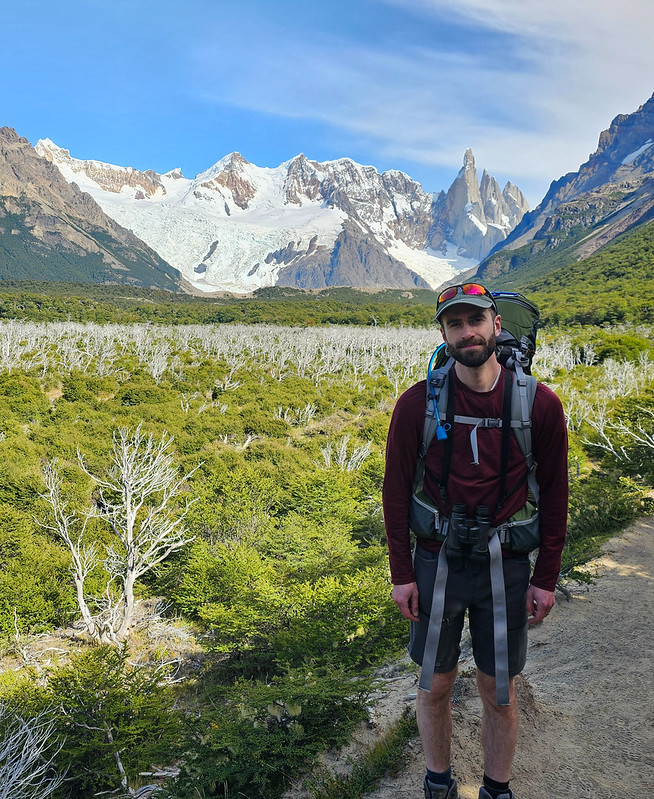
Since we started in Argentina, Mount Fitz Roy was the first hike on my list and I was ecstatic to finally go backpacking. Unlike Torres del Paine, which has two circuits that most people follow, Mount Fitz Roy is really more of a collection of hikes that you can make your own custom itinerary for. Mount Fitz Roy is located in the Andean foothills near the Argentina-Chile border in Los Glaciares National Park. Most people don’t climb the mountain itself as that is a major mountaineering objective, but it can be viewed from many different trails within the park. Most trails are accessible from El Chalten, which is a tiny mountain town that pretty much exclusively caters to hikers visiting the mountain. 

PSX_20240228_113951
20240225_111456

The hike to Lago de los Tres is THE hike to do if you want to get the best view of Mount Fitz Roy. It’s roughly 11km each way to hike to the lake, so it’s usually done either as a big day hike (with accommodations in El Chalten), or as part of a backpacking trip (camping in the park). There are several other hikes in the park that can be combined with this hike to extend your trip, with the second most popular being the trail to Laguna Torre. While I easily could have spent an entire week hiking around El Chalten, I decided on a 2 night, 3 day trek to visit both Lago de los Tres and Laguna Torre.

The convenient part of our itinerary was that we didn’t need to book any accommodations. Unlike Torres del Paine, which has a mandatory reservation system that fills up months in advance, you can camp for free in Los Glaciares National Park with no pre-planning. This has some pretty big cons, which I’ll get into later in the post, but it’s definitely convenient. Accommodations in El Chalten are pretty limited, but it’s only a 3 hour bus ride from El Calafate, so we planned our entire visit around the bus schedule and didn’t stay in El Chalten at all.
PSX_20240228_114312
PSX_20240228_114841

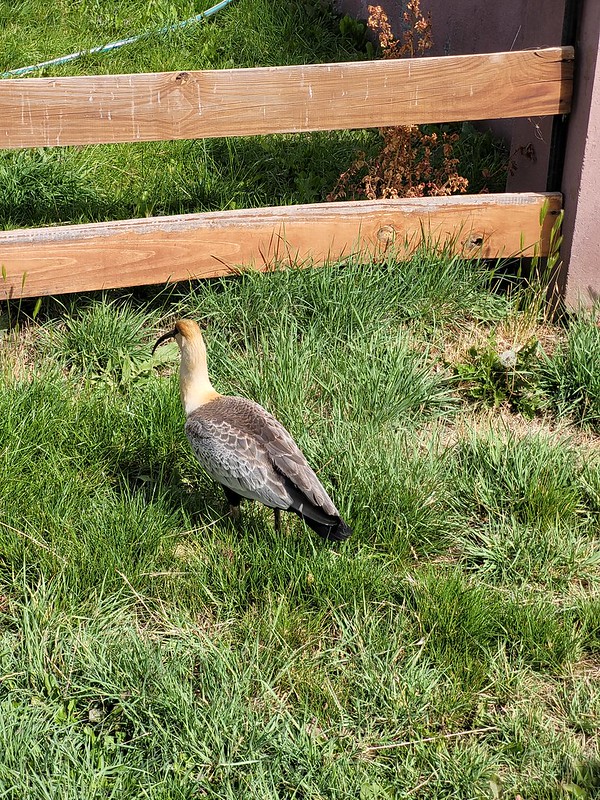
We left El Calafate on the 8am bus and had a very scenic ride through the desert to El Chalten. We saw lots of guanaco along the ride and even some rhea (which is a big bird like an ostrich or emu). We arrived in El Chalten at 11am and immediately started hiking. Laguna Torre and Lago de los Tres can be done as a loop trail measuring ~45km in total. You can go in either direction; the two campsites you’ll stay at are Agostini and Poicenot. Agostini is located right next to Laguna Torre, while Poicenot is 2km before Lago de los Tres and has 400m in elevation gain (so it’s a considerable climb from the campground). 

My planned itinerary was to hike to Laguna Torre on day 1, hike to Lago de los Tres on day 2, and back down to El Chalten on day 3. I hadn’t planned for any sunrise hikes, which is why I planned to start with Laguna Torre. We ended up hiking to both lakes for sunrise, which means I had to do the climb up to Lago de los Tres on my final day (making for a long day and fast hiking to catch our bus), so if I had my time back, I would have done the hike in the opposite direction. But we still had a fantastic time!
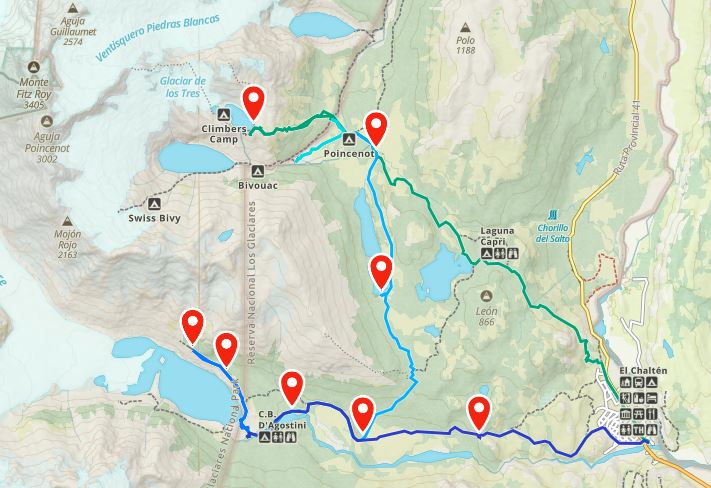
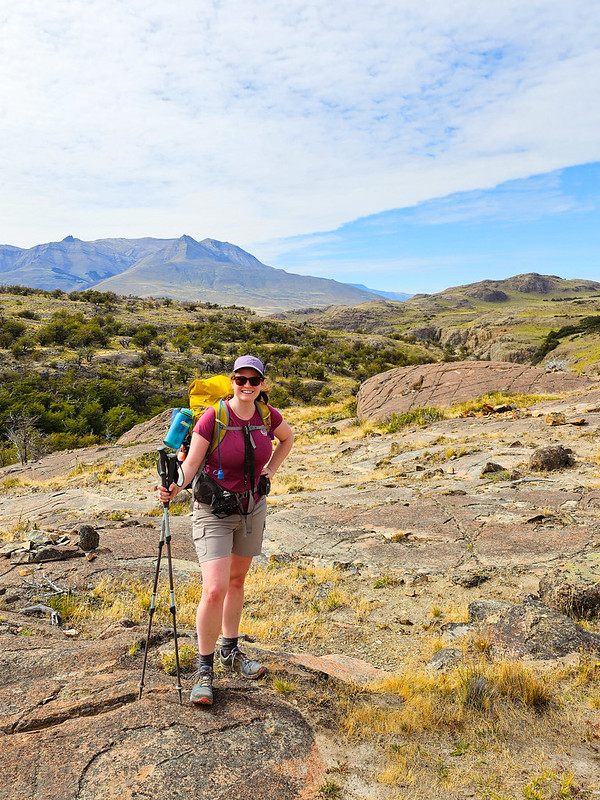
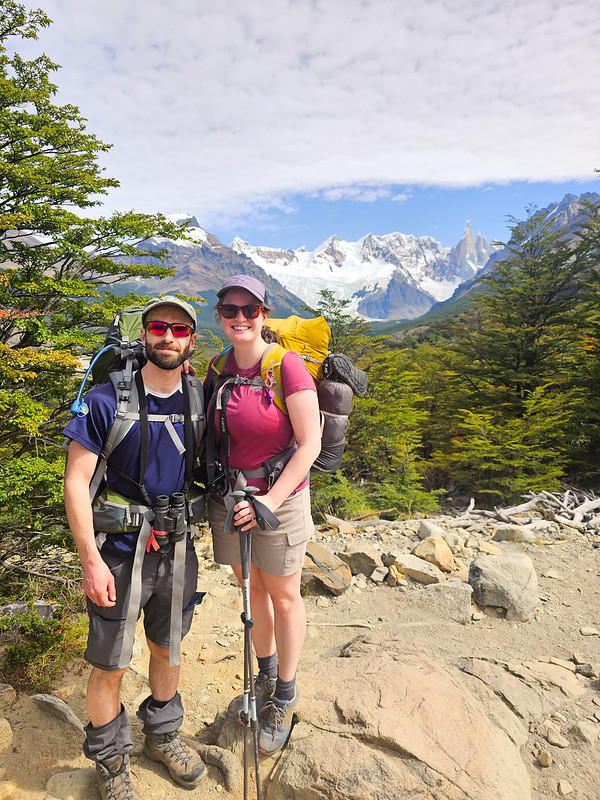
Like I said, we got off the bus and pretty much immediately started hiking. It was ~10km from the bus to Agostini Campsite. We were super lucky with the weather and quickly switched to shorts and t-shirt after we started hiking. We could only get away with this because it was a blue sky day and the presence of the sun makes a huge difference in the air temperature. The trek starts with a hike up through the canyon to Mirador Cascada Margarita and then on to Mirador Cerro Torre, which is approximately halfway to the campground. It’s a steady uphill hike until you reach Cerro Torre, but it’s pretty flat after that, so we decided to stop at the viewpoint for lunch. 
20240224_151947
20240224_170024

This was where we had our first experience with the park outhouses. Normally I don’t have a lot to say about outhouses – they’re generally never nice – but the latrines in Los Glaciares National Park were probably the worst I’ve ever used. They’re pit toilets, which I don’t have a problem with, but they were all in extremely poor condition. Some of them were almost full to the top with waste, the structures were rotting away, and the metal plate that separates the structure from the pit looked in danger of collapsing in some of them.

The park, and this trail in particular, receives thousands of visitors a year, so they really need to invest in replacing the outhouses. They’re so gross that most people were not using them and just going in the woods. That’s fine when people properly bury their waste, but the park receives so many visitors (and so many inexperienced backpackers) that it’s not sustainable for the well-being of the park to be without usable toilets. It’s amazing that you can hike and camp in the Park for free, but I would happily pay $10 a night for a permit if it meant the latrine situation could be improved. It was shameful in my opinion. That’s my rant – I’ll shut up about it now!
PSX_20240228_115228
PSX_20240228_115546

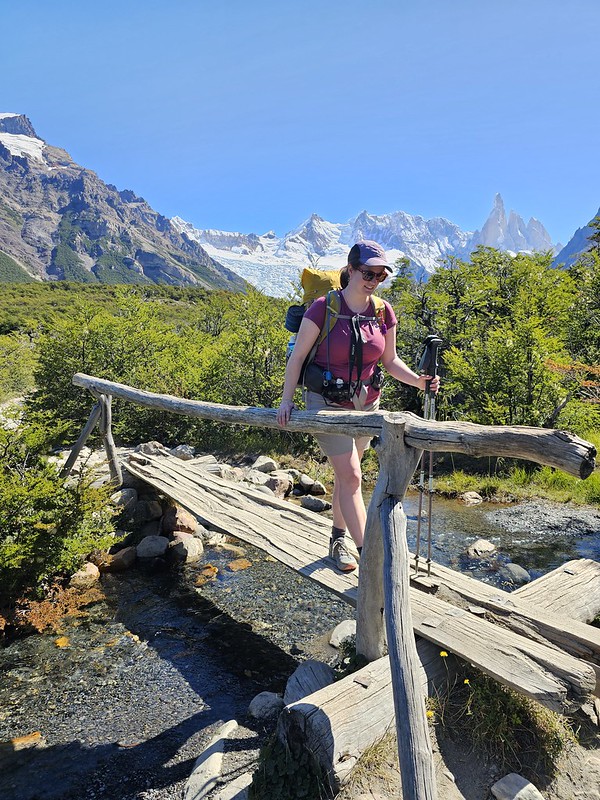
After lunch, we continued to the campsite. The second half of the hike was much easier than the first half and you have a pretty incredible view of the back of Mount Fitz Roy the entire time. The one tip I would give to other hikers is to make sure you fill up your water carriers at the river ~1km from the campsite. The Rio Fitz Roy runs right past the campsite, but it’s extremely silty and will easily clog up your filter, but there’s a great drinking water source at the bridge crossing the creek 1km before the campsite. Most people weren’t filtering their water, but we filtered everything we drank, especially once we discovered the outhouse problem and that people are just shitting next to the river at the campsite without digging catholes.

The campsites are pretty bare bones. They’re nice in that there is lots of room for tents, but there is very limited privacy. The Poicenot Campground is a nightmare because of the volume of people and the limited amount of camping experience the average visitor has, but I didn’t mind the Agostini Campground at Laguna Torre. It was reasonably busy, but it didn’t feel too crowded. I felt that most of the people there had previous backpacking experience and were considerate and respectful of the other campers and LNT practices. This was not the case at Poicenot Campground, but more on that later.
PSX_20240228_115950
20240224_181019

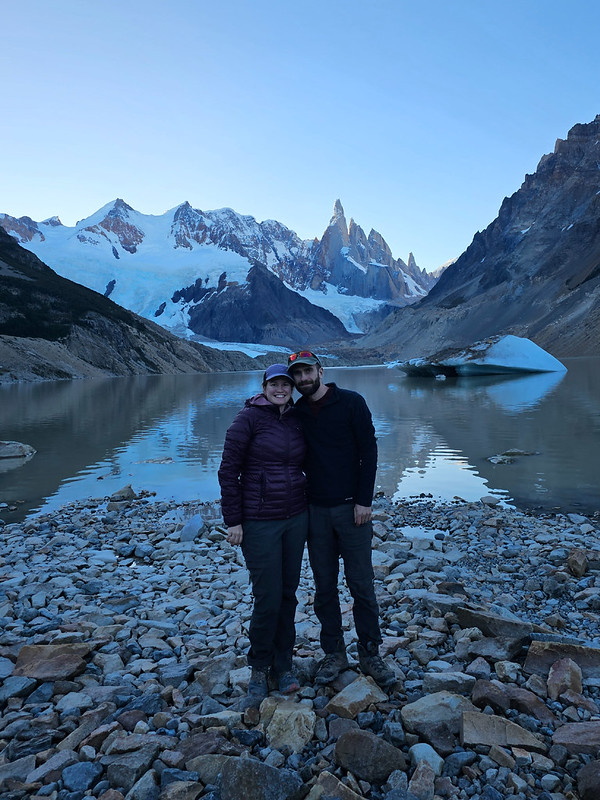
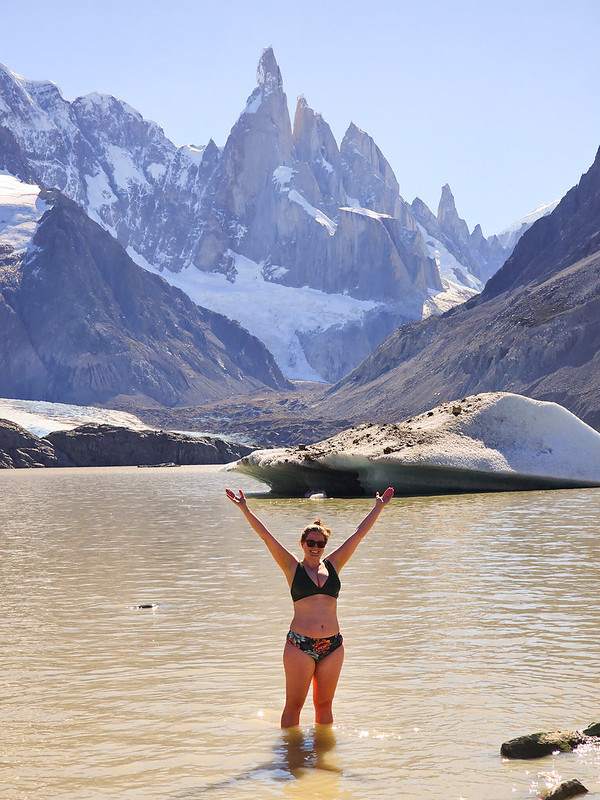
We found a nice site for our tent and then packed our bags for day hiking and set off to Laguna Torre. It’s only a 5-10 minute walk from the campsite to the lake. It was still sunny when we arrived at the lake, so I immediately decided to go for a swim. No one else was swimming and I knew it would be cold, but I have a lot of cold water pride as a Canadian, so I couldn’t resist going in the water. It was cold, but no colder than the glacial lakes in BC. Swimming isn’t permitted in Torres del Paine, so I’m glad I took the opportunity to swim at Los Glaciares!

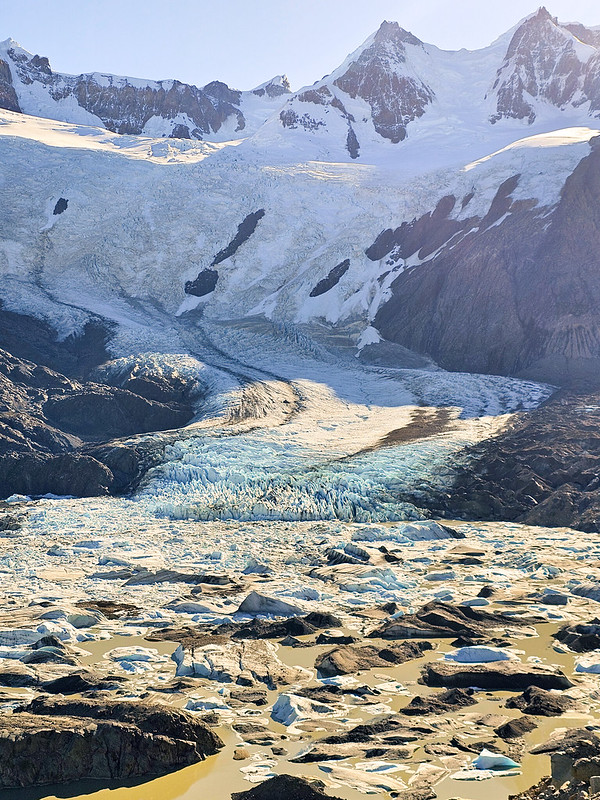
The lake is extremely silty, so it’s kind of an ugly grey colour, but it has an incredible view of Mount Fitz Roy and the glacier. Plus, it has a ton of glacial ice floating in the lake, so it was really cool to swim with the bergy bits (something I’ve only actually done one other time in BC). After my swim, I was determined to continue hiking to Mirador Maestri. The lake is surrounded by a large moraine that was deposited by the glacier in the past, so you can hike up to the top of the moraine and then circle around to the back of the lake where you get a better view of the glacier. 
20240224_185950
20240224_200640

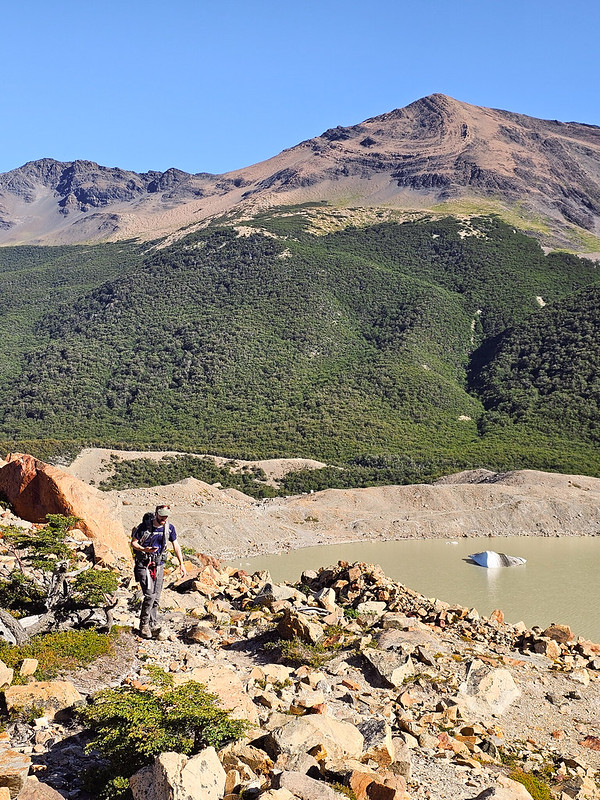
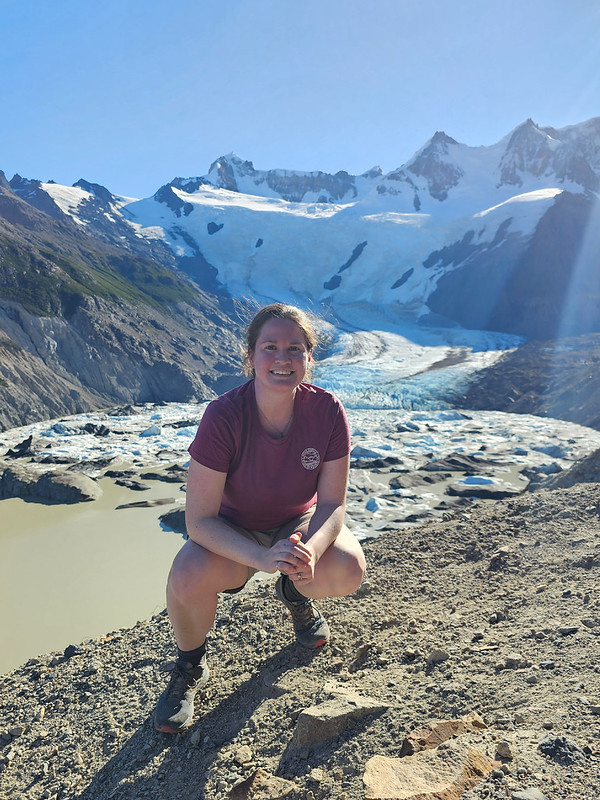
I think Seth would have happily skipped this part, but he was a good sport and accompanied me up the moraine. It’s ~5km round trip to the viewpoint, but because you can see the full trail the entire time you’re hiking, it seems closer than it is. It’s also a steady uphill, so eventually Seth lost interest and decided to hang out on the rocks and look at wildflowers while I finished the hike up to the viewpoint. I didn’t quite make it to the end of the hike, but I made it up to a natural crest in the topography and got a fantastic view of the back of the glacier! It took me ~1 hour to get there (2 hours round trip), but I definitely hustled. I would give yourself a solid 2.5-3 hours to do the full hike and properly enjoy it.

We raced the sun back to the lake and it set behind the mountains shortly after we got to the lake. As soon as the sun went down, it immediately got a lot colder and we quickly bundled up in all our layers, including our puffy jackets. But we still enjoyed eating our dinner at the lake before returning to the campground to go to sleep. Like I said, I hadn’t planned on doing any sunrise hiking, but the campground is so close to the lake that I knew I had to at least hike up to Laguna Torre for sunrise (but was still undecided whether I would do it for Lago de los Tres). So we went to bed pretty early and I set my alarm in time to get up for sunrise the following morning. It was cold overnight, so you should definitely come prepared for that, but I was warm in my -7 degree quilt and puffy jacket.

Check back next week for Part II!

20240225_065033

Tierra del Fuego National Park

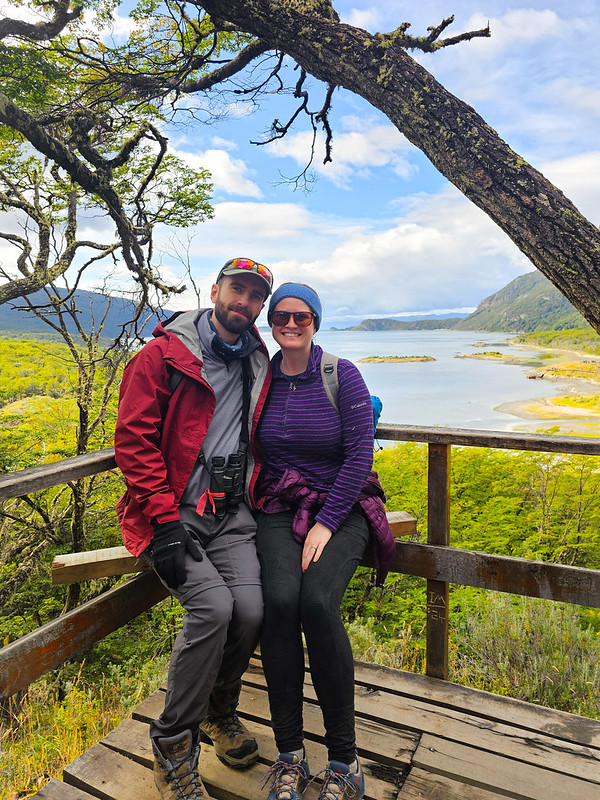
On our second day in Ushuaia, we were determined to visit Tierra del Fuego National Park. I was really tempted to check out some of the hiking trails in the area, but I felt that visiting the park was a unique experience that I didn’t want to miss, so we opted to do the much more touristy activity. We signed up for a tour and got picked up at our hostel in the morning to drive towards the park. The bus dropped us off at the train station and we had the opportunity to travel into the park by train instead. 

Tierra del Fuego is already an interesting geographic region at the end of the world, but it has an interesting history as well. We didn’t have the opportunity to learn very much about its indigenous history, except that there were a number of indigenous Fuegian groups living all over the coastal south region and the interior of the island. They had a very unique culture and were never colonized by the Incans (like many other parts of Argentina and Chile), but like many indigenous groups, they were devastated by the arrival of the Europeans and diseases like measles and smallpox.

Unfortunately, the park doesn’t really focus on this history. It’s a common theme we noticed in both Argentina and Chile, with the bypassing of indigenous history, save for our guide in Santiago, who shared more indigenous history with us on his 3 hour tour, than we learned on the rest of the entire trip. The National Park is heavily marketed to tourists, but they’ve decided to focus on the colonial history of Ushuaia and the surrounding area. 

PSX_20240228_111607
PSX_20240228_111949

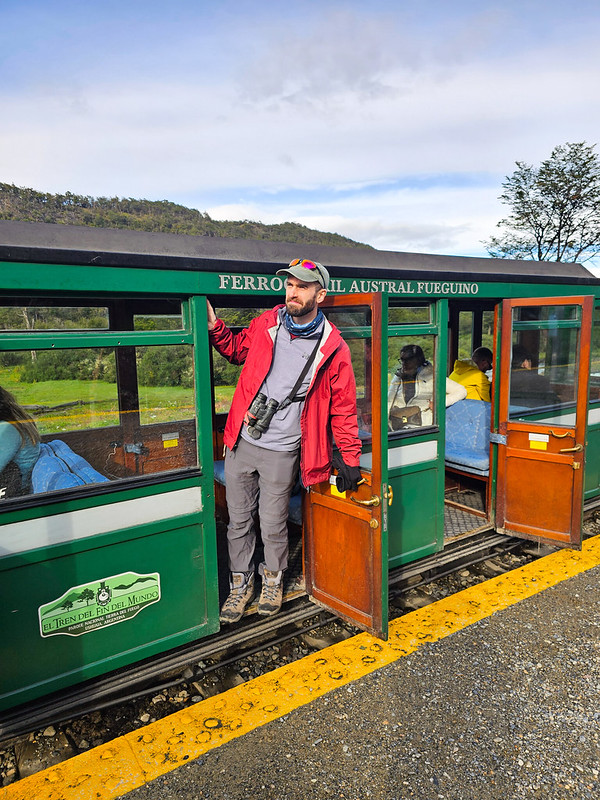
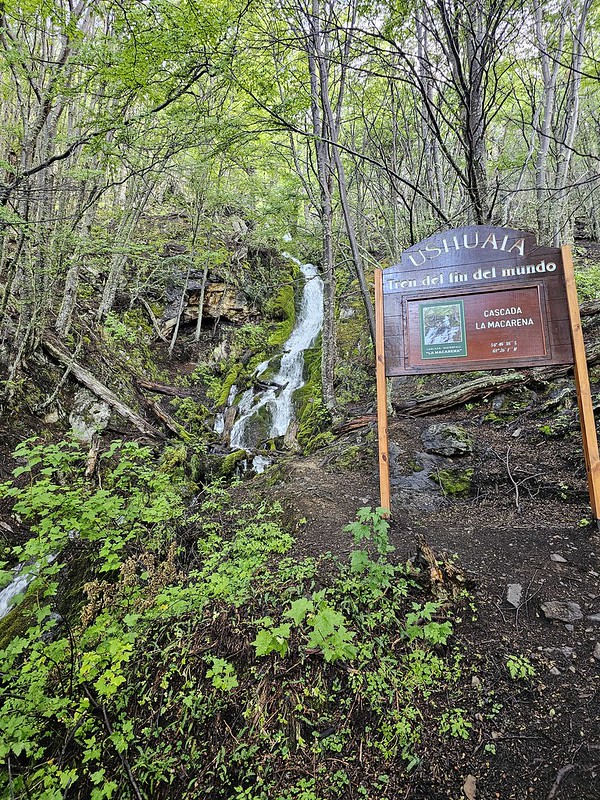
Ushuaia was initially founded as a penal colony in the early 1900’s and as it expanded, a railway was constructed to transport the prisoners into the forest to harvest timber to support the town’s growing needs. The train has been refurbished and is now known as “el tren del fin del mundo”. Today, it transports hundreds of tourists 7km into the park, showcasing gorgeous landscapes and educating visitors on the history of the railroad. It was a cool experience – it’s very picturesque and I enjoyed the opportunity to learn about the history – but I have to say, the entire experience is a bit tasteless. 

The train has a very dark history, as many of the prisoners were severely mistreated during this time period. I felt that the tour didn’t understand its intention, in that it didn’t think critically about the experiences of the prisoners or respect them. The audio tour starts off by talking about how progressive it was to offer the prisoners work, and that many of them loved the opportunity to get outside and enjoy nature. But then later in the tour it expands on how the prisoners were starved, beaten, and mistreated while working in what was essentially a labour camp. It’s not like they were given the choice to participate in labour, so it didn’t seem very progressive to me and felt rather tone-deaf. 

This is exacerbated by the fact that the Park also has paid actors running around everywhere dressed as goofy prisoners. They make you take a photo with them before boarding the train where they encourage you to pretend that you caught these naughty prisoners trying to escape (and then later try and sell you the photo of course). I found the entire production to be disrespectful and insulting to the people that suffered in this prison at the start of the century. It’s a good learning opportunity, but it was too commercialized and executed poorly.

PSX_20240228_112353
PSX_20240228_113310

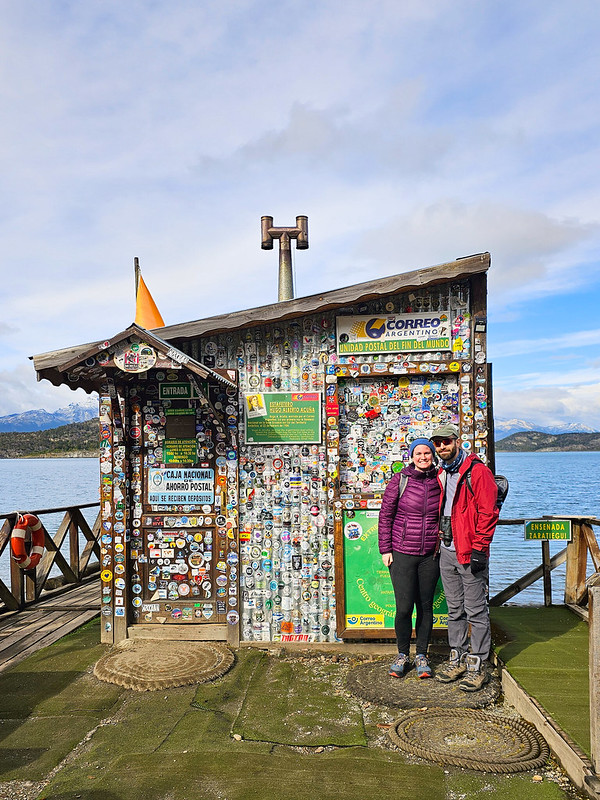
It’s a one-way train journey, so our tour bus picked us up at the end of the line and we spent the next several hours exploring around the park. This part of the tour, I really enjoyed. First we visited the post office. It’s not the most southerly post office in the world (that honour is reserved for the one in Antarctica), but it is known as the “end of the road”. The road in question is the Pan-American highway, which stretches 30,000km from Alaska to Ushuaia. The post office is located on a beautiful beach, so we sent ourselves a postcard (stamped with a penguin) and then enjoyed the views. 

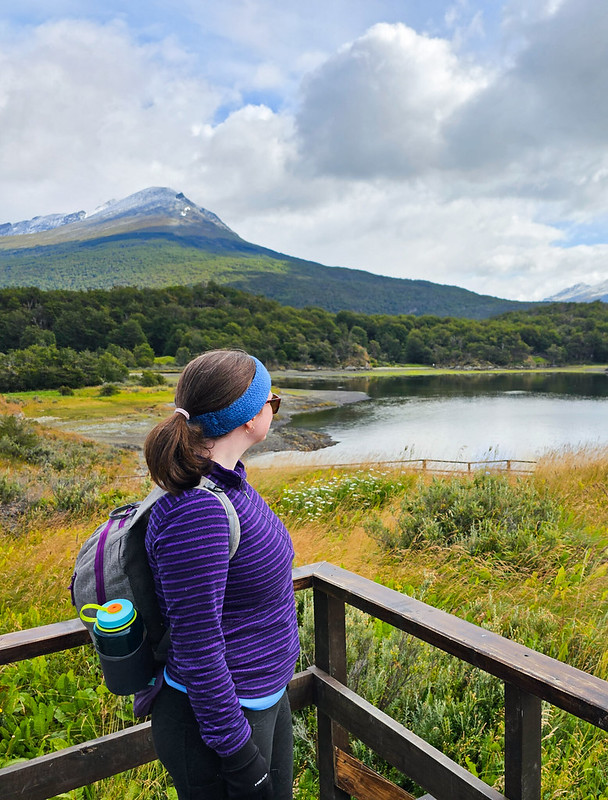
Our next stop was Lapataia, which is the real end of the road and has a beautiful mirador of the Beagle Channel. Our bus dropped us off 1km away from the parking lot and we did a short walk through the forest to Lapataia and then explored the viewpoints. It was a nice day – not super warm, but a mix of sun and clouds. I really liked the forest walk, which smelled amazing after rain from the previous night. Our last stop was to Lago Roca, which is a huge lake located on the border between Argentina and Chile. Our tour guides shared some local spirits with us at the end of the tour (which was actually delicious, a very caramelly whisky), before returning to Ushuaia.

PSX_20240228_113053
20240222_092847

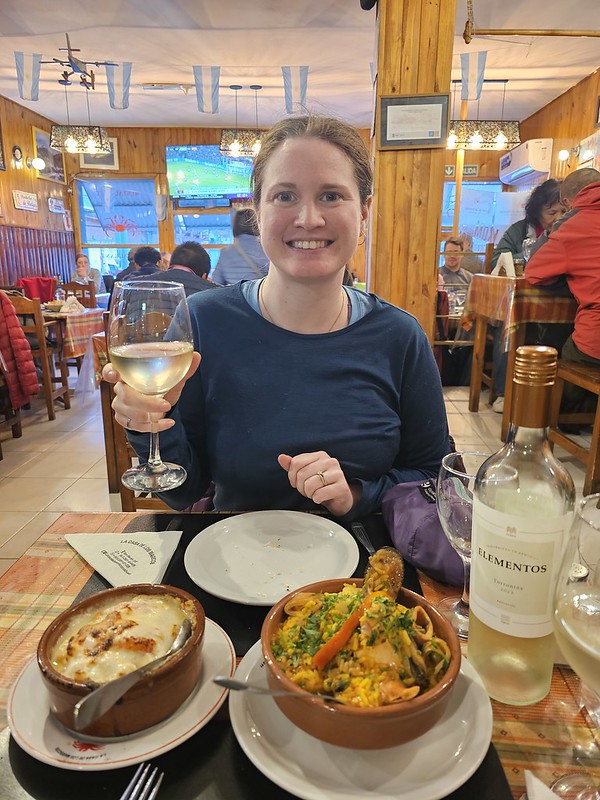
We spent the rest of the afternoon shopping around the downtown area. Seth was determined to find a bird guide and we visited some of the outdoor stores, of which there is actually a large number due to the many expeditions leaving from Ushuaia. But our main goal for the rest of the day was to sample the king crab that Ushuaia is known for. Our tour guides all recommended the same restaurant, a small place called El Viejo Marino, but given how small it was and how often it’s recommended, we could not get a table. Seth did a bit of research and found a place called La Casa de Los Mariscos, which I would highly recommend!

We got to the restaurant 15 minutes before it opened and were the first in line for the night, but a long line quickly developed behind us and by the time the doors opened, the entire restaurant was immediately filled. It was a great choice and one of the best meals I had on the entire trip! The popular dish is the parmesan king crab, which is basically a full crab baked with parmesan cheese. It was delicious and we ordered one to share with a seafood paella that came with squid, scallops, shrimp, clam, mussels, and white fish! We topped it off with a full bottle of wine for the low low price of $9. There was a guy performing life music throughout the night as well and the whole restaurant had a great vibe!

It was a wonderful way to end our time in Ushuaia. It was a very quick trip to the end of the world, we only really had two days there as we flew out to El Calafate early the next morning. I found our trip to be a bit airplane heavy on the front end with the excursion down to Ushuaia, but once we landed in El Calafate, we wouldn’t be flying anymore until the end of the trip, 

20240222_200131
20240223_190358

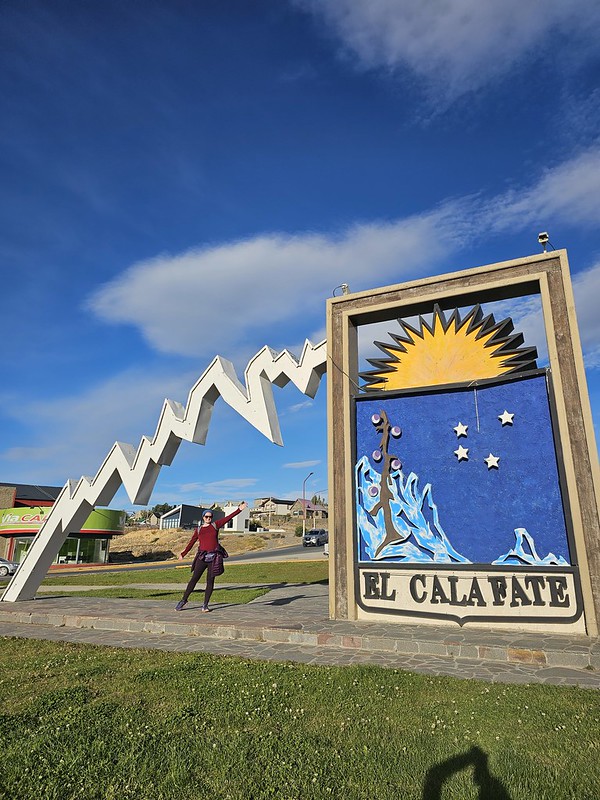
El Calafate is further north than Ushuaia (everything is), but is located squarely in the center of the Argentine Patagonia. It’s the jumping off place for anyone looking to explore Los Glaciares National Park. Like Ushuaia, it was not at all what I expected. I thought El Calafate would be smack dab in the middle of the mountains, but Patagonia is quite different from the other mountainous regions I’ve visited. Mostly in that it’s still true wilderness. There are not very many towns actually located in the mountains. The mountains are crowded around the Argentina-Chile border, but east of the border mountains, Argentina is pretty much all flatland desert. It’s very dry and barren. 

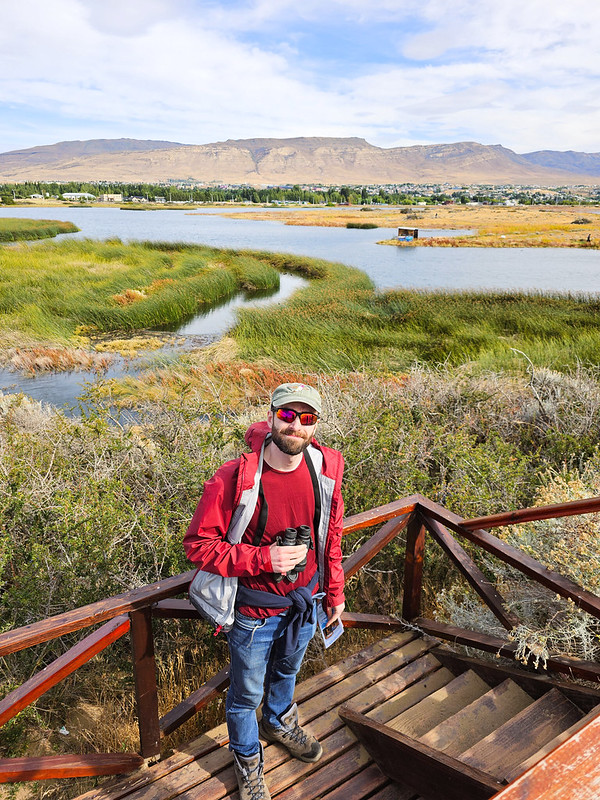
El Calafate is located right on the enormous Lago Argentino. It has a nice view of the mountains across the lake, but the town is characterized more by the desert than the mountains. We stayed in a nice little guesthouse, arriving around noon. We were starting our first trek the following day, so we spent the afternoon picking up some groceries for the trip and sourcing other things we couldn’t bring with us, like fuel for our stove. We enjoyed some beers at Patagonia Brewing and then spent the rest of the day birdwatching at Laguna Nimez, a reserve next to the lake. We saw lots of birds, but the most interesting was probably the Chilean Flamingo! There were dozens of them hanging out in the lagoon and they’re pretty goofy to watch. 

In the evening, we re-packed our bags, leaving a suitcase at the guesthouse and getting our backpacks ready for our first trek: 3 days on the Sendero Fitz Roy!

PSX_20240228_113538
20240223_152113

Two days in Buenos Aires

My last post ended up being a step by step instructional on how not to get scammed out of your money in Argentina, so now let’s talk about the actual fun things we did in the city! Our first activity in beautiful Buenos Aires was a walking tour to try and get a lay of the land and learn a bit of the city’s history. As with most major cities these days, there’s a free walking tour that leaves daily. Buenos Aires is such a big city that they actually have multiple tours, we decided to do one of the Retiro and Recoleta neighourhoods, but I’d really like to the do the city center tour as well.

I find free tours are always excellent because they rely solely on tips (so tip well)! I’ll admit, our tour guide was a bit long winded and the tour was close to 4 hours, which is a bit on the long side, but we learned a lot of interesting history that served us well through the rest of the trip. Probably the most interesting tidbit was about the Falklands War between Argentina and Great Britain in the 1980’s. GB claims ownership over the Falklands, which Argentina disputes, so in 1982, they invaded the Falkland Islands and were at war with Britain for 10 weeks until Argentina surrendered.

20240219_113057

What was interesting wasn’t so much the war, but rather all the government propaganda that we observed about it after the fact. The Falkland Islands are known as Islas Malvinas in Argentina and even though it’s still a part of Great Britain – and hundreds of Argentinians lost their lives in the war – there is still (40 years later) government-published propaganda all over the country stating “las Islas Malvinas son Argentinas”. I’m definitely not going to make any sort of political comment on the sovereignty of the islands, but it was interesting to observe public opinion throughout Argentina. It reminded me a little of Quebec trying to claim Labrador as part of Quebec on contemporary maps, even though Labrador is a part of the great province of Newfoundland and Labrador! But I digress, lol.

Buenos Aires is a city that has been heavily influenced by the French (architecturally anyways). We witnessed the same thing in Santiago. Even though both countries were colonized by the Spanish, they’ve been independent since 1816 and 1810 respectively. So quite a long time. Traditionally Buenos Aires was considered an aristocratic city and was very wealthy, but as we saw with the country’s inflation issues, that’s no longer the case. The thing I thought was missing from the Buenos Aires walking tour (that we got on the Santiago tour), was a discussion of the indigenous history. But they love to brag about Avenido 9 de Julio (the widest street in the world) and how they won the most recent world cup! Messi definitely has a presence in the city!

20240219_123453
20240219_134151

So the two neighbourhoods we visited looked very wealthy and European. We ended the tour at the gates of the Recoleta Cemetery, which is basically a sub-city of mausoleums. We decided to have lunch first and I had my first serving of risotto and seafood. The food is definitely interesting in Buenos Aires (and Argentina in general). I was expecting a more vibrant food scene in Buenos Aires, but to be honest, it’s a lot of hamburgers and pizza. Seafood was easy to come by (and for a very good price), as was risotto, which is a personal favourite of mine. Otherwise, the only thing in Buenos Aires that seemed at all “Argentinian” was the empanadas. But they were unbelievably delicious, so I made it a point to track down one a day for a snack during the rest of my time in Argentina.

The cemetery really did feel like a city of the dead. Some of the mausoleums were very elaborate, while others were decrepit or downright creepy. You have to pay to go in, but it’s clear the graves are only being managed by surviving family and not the city. Eva Peron’s (Evita) seemed to be the most popular one, but it’s a bit lackluster in comparison to some of the more elaborate monuments. The whole place is a bit spooky, but it was a cool experience.

20240219_150808
20240219_152247

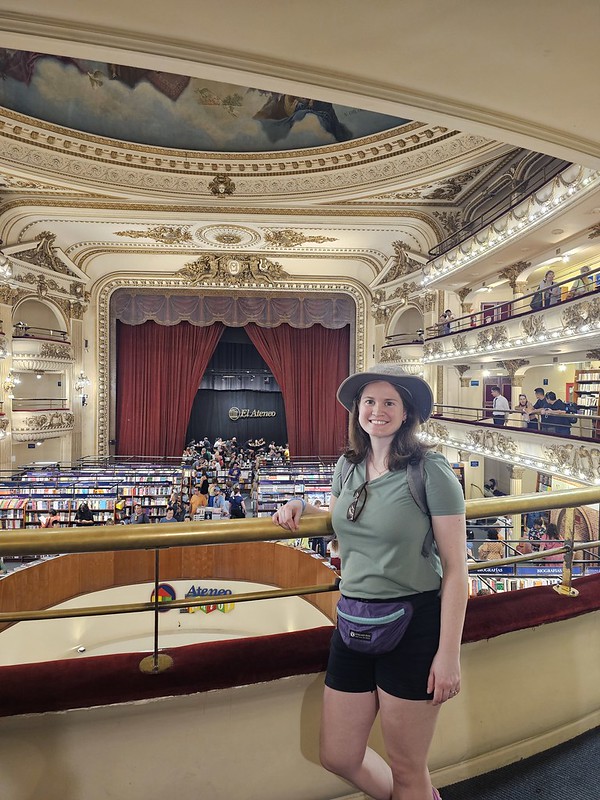
The main thing I wanted to do during my short time in Buenos Aires was to visit El Ateneo Grand Splendid bookstore. El Ateneo is located in a former theatre and was named as the “the most beautiful bookstore in the world” by National Geographic in 2019. As an avid book lover, I think every bookstore is beautiful, but architecturally, this one definitely has an edge over others! Plus there’s a really cute café located at the back of the store on the old stage.

We actually ended up visiting a lot of bookstores while in South America. What was most striking to me – compared to some of my other travels – was that because Spanish is so widely spoken, pretty much every bookstore we went to stocked Spanish books exclusively. Comparatively, when I visited Finland and Vietnam, there were a lot more English books. It was still fun to visit the bookstores, but it felt a little like being starving at a feast!

20240219_161255
20240219_161004

After the bookstore, we returned to our hostel for a leisurely swim in the rooftop pool and enjoyed a free drink at the bar before walking nearby to our tango show for the evening. There are a huge number of tango shows in the city and we picked the El Querandi dinner and tango show, mostly because it was located close to our hostel. But it ended up being a great show! The dinner was fantastic – they had all local dishes, so I sampled the humita, which is a local corn dish from Northern Argentina, and the Patagonia stew, which features lamb. The show was also great and takes you through the history of tango, showcasing different styles of how tango has evolved in the past 100 years. In my opinion, it’s just gotten sexier over time!

20240219_232355

On day 2, I was determined to visit Palermo. I’m not sure why I was so obsessed with visiting Palermo over other parts of the city, but I heard it was really nice and it drew my attention. First we did a bit of walking around city centre to see the Playa de Mayo and Casa Rosada, and then took a bus over to Palermo. To be honest, I thought Palermo was a bit of a letdown. It’s a nice enough area, with leafy streets and lots of restaurants and shops. We went for a walk all over the neighbourhood, but ended up just getting acai bowls for lunch. We took the bus back to San Telmo a bit early and decided to visit the San Telmo Market instead. I really liked the market! It had a lot of food options and I had the best empanada’s of my entire trip!

And that was pretty much it for our time in Buenos Aires. Like I said, there’s a lot of attractions that we didn’t do. It’s a very large city and our time there was so limited. I would have loved to sample some more wine while we were there, but it will have to wait for a future trip to Mendoza. We got a taxi to the airport in the late afternoon to catch our flight to Patagonia. Our first stop was to Ushuaia, the most southern city in the world! Check back for the next part!

20240220_104032
20240220_143216