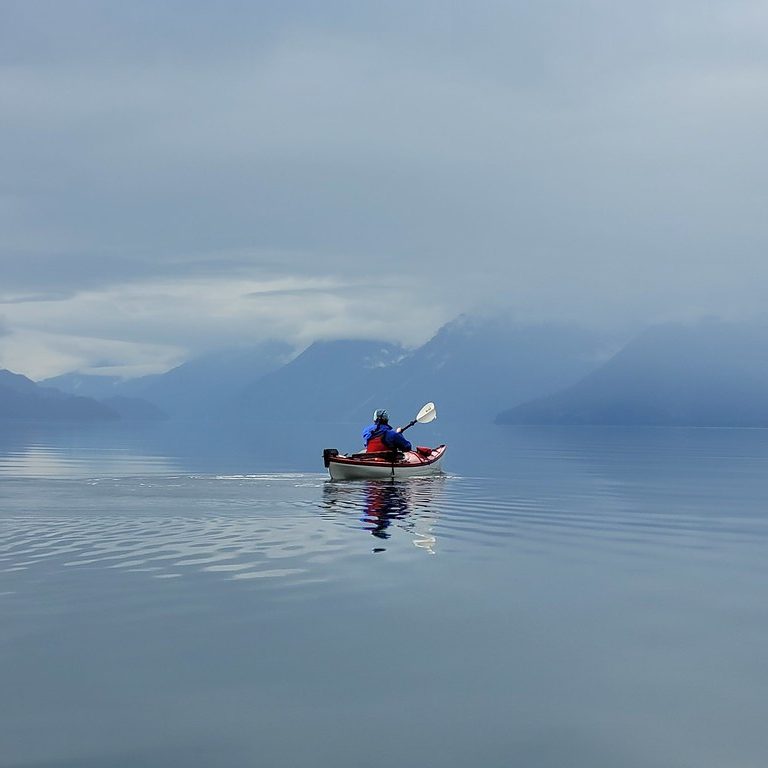
10 Paddling Trips near Vancouver

A few weeks ago I shared a list of 10 Easy Day Paddles near Vancouver. In keeping with the paddling theme, I’d like to highlight 10 Paddling Trips near Vancouver! We’re lucky to have easy access to excellent paddling routes in Southwest BC and these are a few of my favourite overnight and multi-day trips. Please be aware that overnight tripping does add complexity to the activity and you should make sure that your skills and experience match that complexity. I highly recommend taking a paddling course from Paddle Canada before attempting any of these trips as you want to ensure you know how to self-rescue and are familiar with the basic paddle strokes. Despite canoeing being very popular in Canada, I do think it is more challenging than kayaking.

Twin Islands

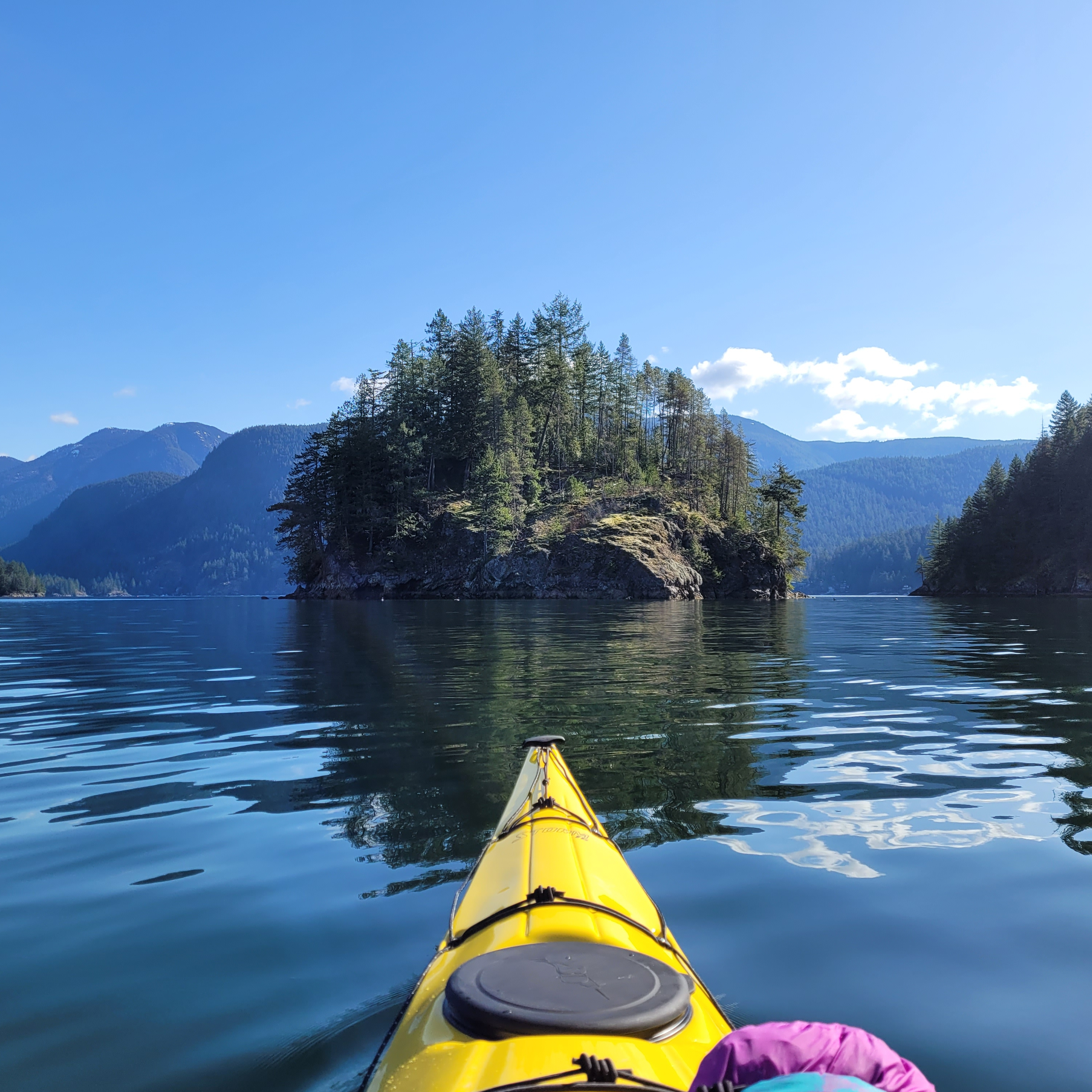
A kayaker paddles towards Jug Island on a sunny day with calm waters in Indian Arm. Jug Island is located near Belcarra Regional Park in Vancouver, BC.

Twin Islands also made my list of day trips and it’s a popular overnight location for a reason. It’s only a 5km paddle from Deep Cove to Twin Islands and there are several tent pads located on the north island (camping is not permitted on the south island). While you can access Twin Islands from either Belcarra or Deep Cove, there is no overnight parking at Belcarra. Kayak rentals are available from Deep Cove and Cates Park and there is no overnight camping fee. Due to the proximity to the lower mainland, this campsite can get extremely busy. If you’re going on a weekend, I recommend leaving early, or avoid altogether by going on a week day. There is an outhouse on the island and please make sure to back out all your garbage and be respectful of other paddlers.

Granite Falls

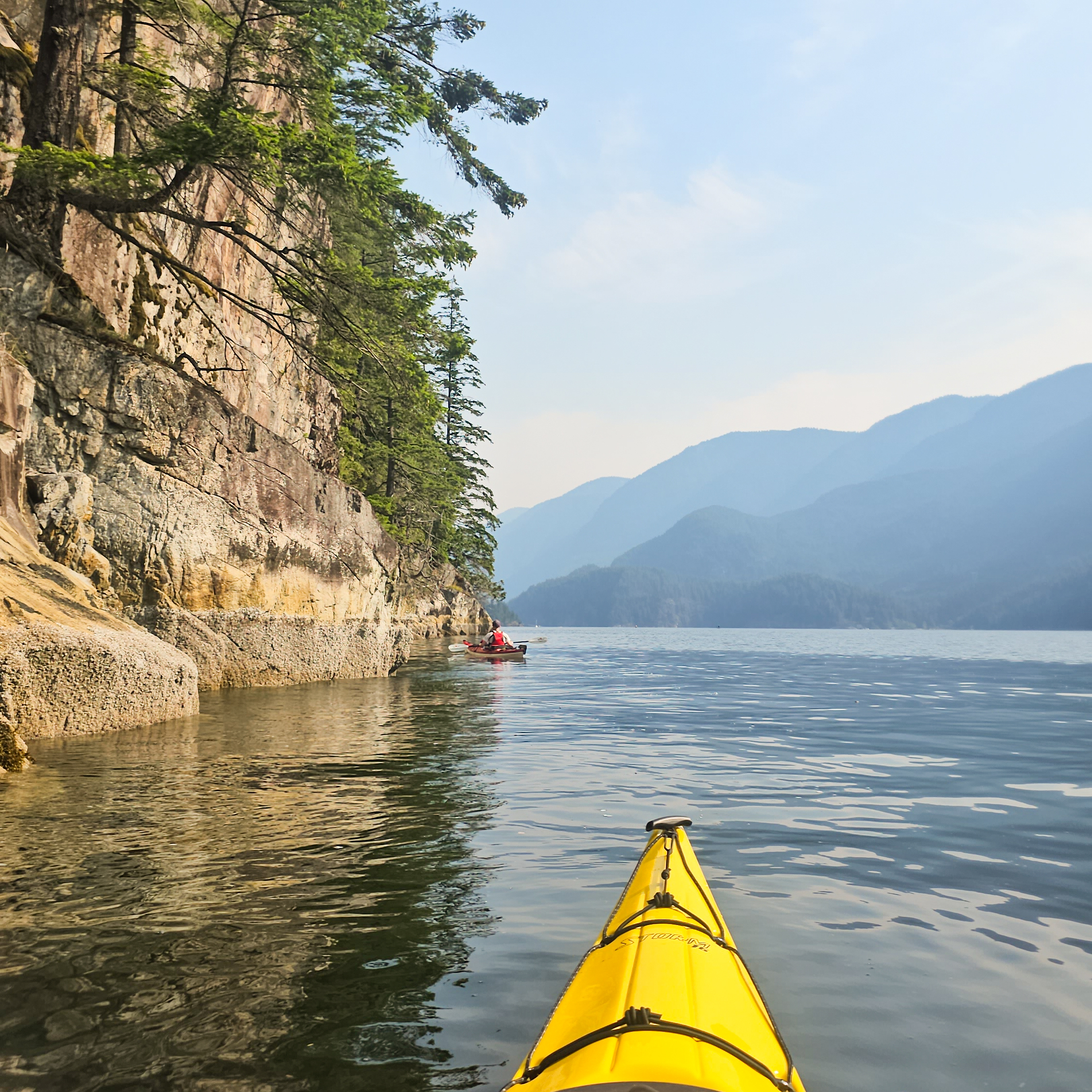
Two kayakers paddle up the still waters of Indian Arm, with the mountains in the background and a steep cliff extending into the water near Vancouver, BC.

If you want a more ambitious trip than Twin Islands, continue north up Indian Arm to Bishop Creek or Granite Falls, where there are two more free campsites. Bishop Creek is approximately 14km from Deep Cove, while Granite Falls is 18km. Granite Falls is beautiful, with a large cascading waterfall, but it’s extremely popular among both paddlers and power boaters. I think this is a great trip, but honestly, the atmosphere on a busy weekend is not great. It attracts more of a party scene, meaning that it’s very crowded, noisy, and very few people practice bear safety. There are outhouses and bear caches, but the caches are undersized for the amount of people that visit the site. I recommend doing this trip on a week day, or consider staying at Bishop Creek instead. Some people like to do this as a multi-night trip, staying at Twin Islands on the way there or back. Leave early to return to Deep Cove as the wind gets high in the afternoon. Kayak rentals are available from Deep Cove and Cates Park.

Widgeon Creek

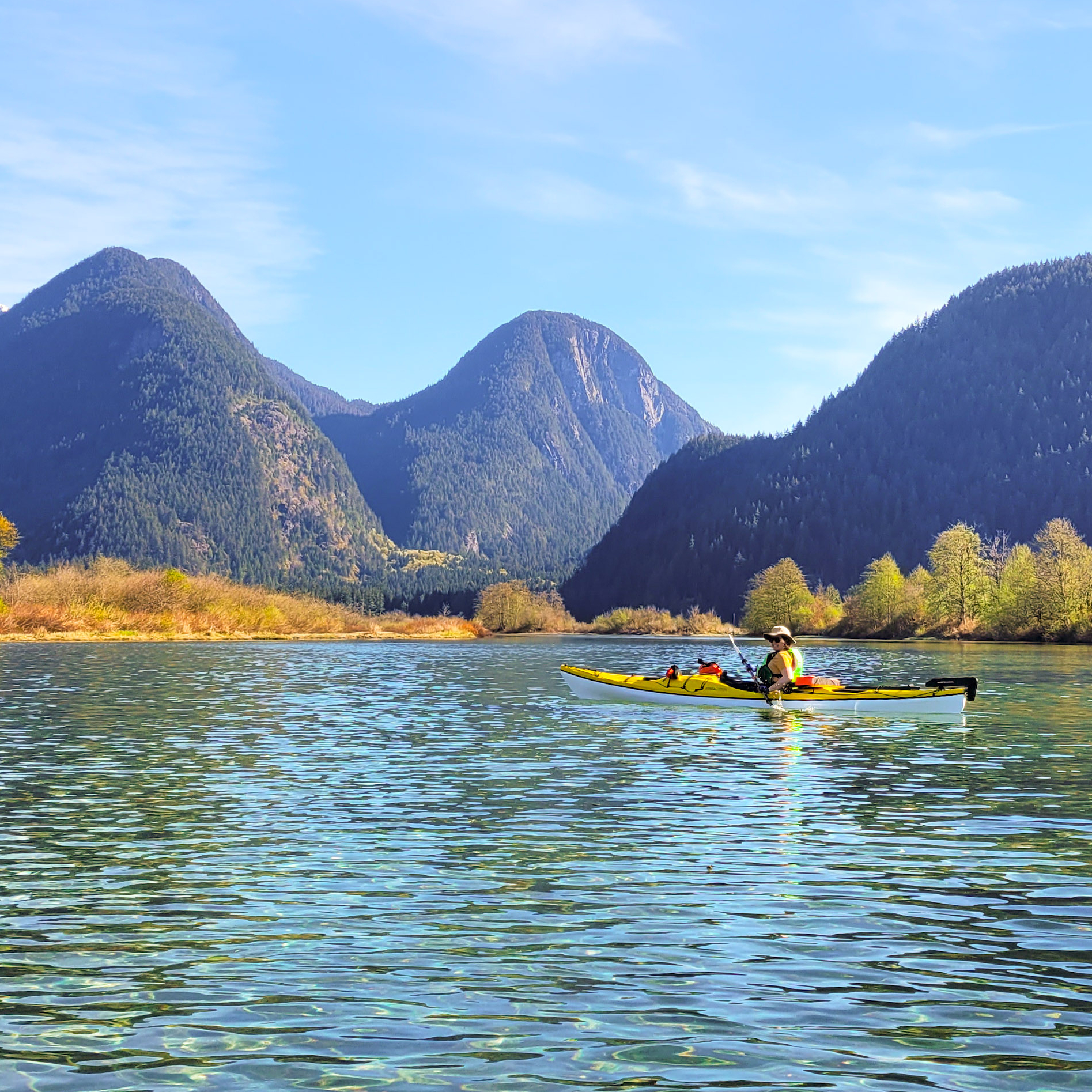
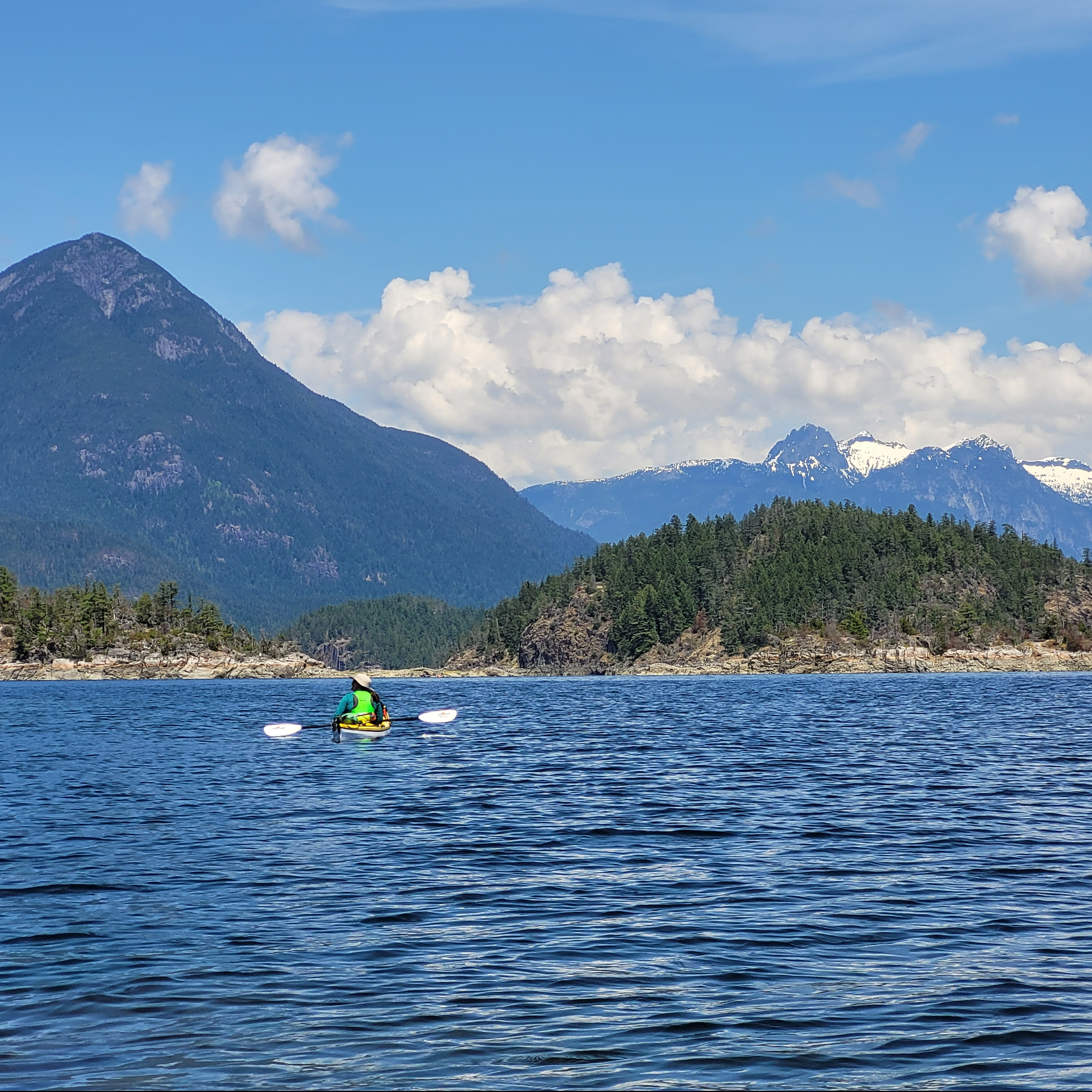
A woman in a yellow kayak paddles in crystal clear blue water on a sunny day with mountains in the background and a blue sky in Widgeon Creek by Widgeon Marsh in British Columbia, Canada.

Widgeon Creek is a very popular summer paddling destination in Pitt Meadows. It was also on my list of day trips and it is a great option for an overnight trip for beginners. Park at the main lot on Pitt Lake and paddle across the Pitt River to Widgeon Creek, which is a leisurely 6km paddle to the campsite. From there you can do a day hike to Widgeon Falls. This area is very busy in the summer, but head out in April or May to avoid the crowds. Be careful crossing the Pitt River, which can have strong currents, and leave early to avoid the wind. Flows in the creek can be very low later in the summer, meaning you may have to walk your boat in some sections, especially at low tide. You can rent boats from Katzie in the summer, or through independent operators that deliver the boats to the lot. There is a bear cache and outhouse at the campsite and there is no fee to camp, but you do have to pay for parking at Pitt Lake in the summer.

Pitt Lake

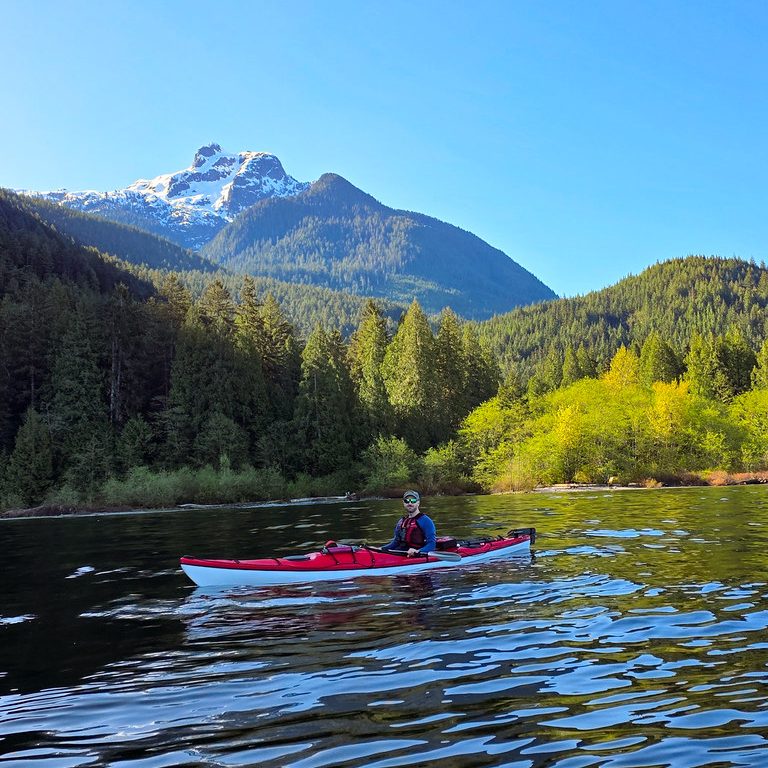
A kayaker paddles up Pitt Lake with Raven Creek Campsite and Golden Ears Peak in the background on a sunny day in Pitt Meadows, BC.

Pitt Lake is located in Pitt Meadows and is a trip I recommend for slightly more experienced paddlers, only because it can get very windy on the lake. There are two BC Parks campsites located on the east side of the lake, in Golden Ears Park. Raven Campground is located approximately 9km from the boat launch and Osprey Campground is another 8km from Raven. Paddle to the far east side of the lake along the dike before following the coastline up to the campsite. There are some shallow areas along the edge of the lake that may require you to paddle out into the lake to avoid getting stuck in the mud flats. This is a tidally influenced lake, so make sure you set up camp above the high tide line. A permit is required to camp at these sites, it’s $5 per person, per night, from camping.bcparks.ca. There is an outhouse, but no bear cache.

Alouette Lake

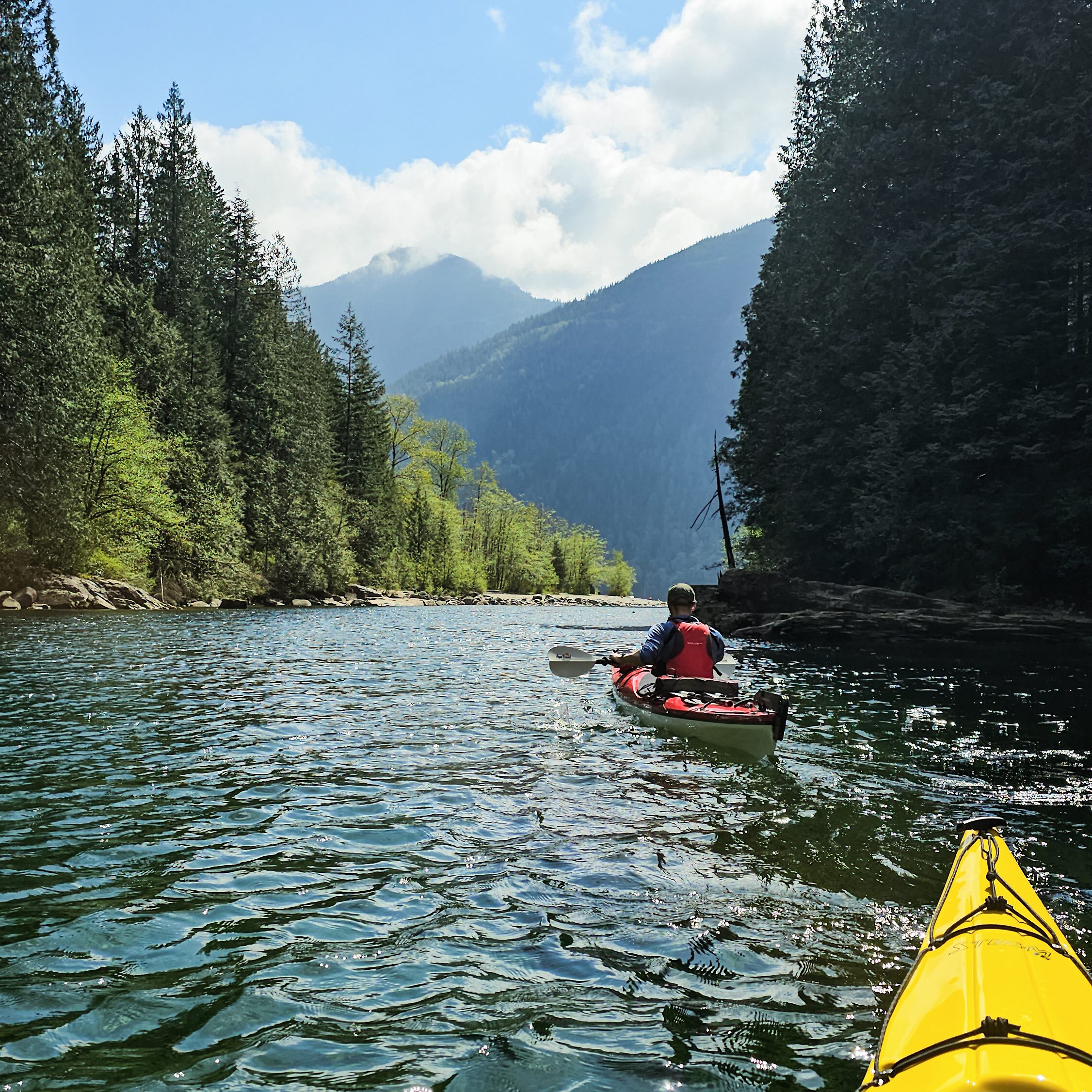
Two kayakers paddle up Gold Creek on a sunny day on Alouette Lake in Golden Ears Provincial Park. BC, with the forests and mountains in the background.

Alouette Lake in Golden Ears Park is a popular location for day trippers in the summer, with lots of people exploring Gold Creek. However, there are also 3 BC Parks campsites on this long lake, two are located approximately 10km from South Beach, Moyer Creek and The Narrows, and a third, Alouette River, is located at the far north end of the lake, another 8km from Moyer Creek. Similar to other lakes, Alouette can get very windy in the afternoon. A permit is required to camp at these sites, it’s $5 per person, per night, from camping.bcparks.ca. There is an outhouse and bear cache at Moyer Creek, I’m not sure about the other campsites. You can usually rent canoes from South Beach in the summer.

Plumper Cove

Two tents set up at the campsite on a sunny, blue sky day near the ocean at Plumper Cove Marine Park on Keats Island, BC.

Plumper Cove also made my list of day trips under the title of Keats Island. It’s the shortest paddle on this list and a great option for beginners because it’s only 3km from Gibsons. You can rent kayaks from Alpha Adventures at the marina and paddle across the channel to Keats Island, following the coastline north until you reach Plumper Cove Provincial Park. This park is primarily marine access and attracts a lot of power boaters. It’s a huge site with lots of space for camping. It is first-come-first-serve, and you’ll need to bring cash to pay the on-site ranger. Since there is a water crossing from Gibsons to Keats, pay close attention to the wind and do not attempt to cross if it is a windy day.

Sechelt Inlet

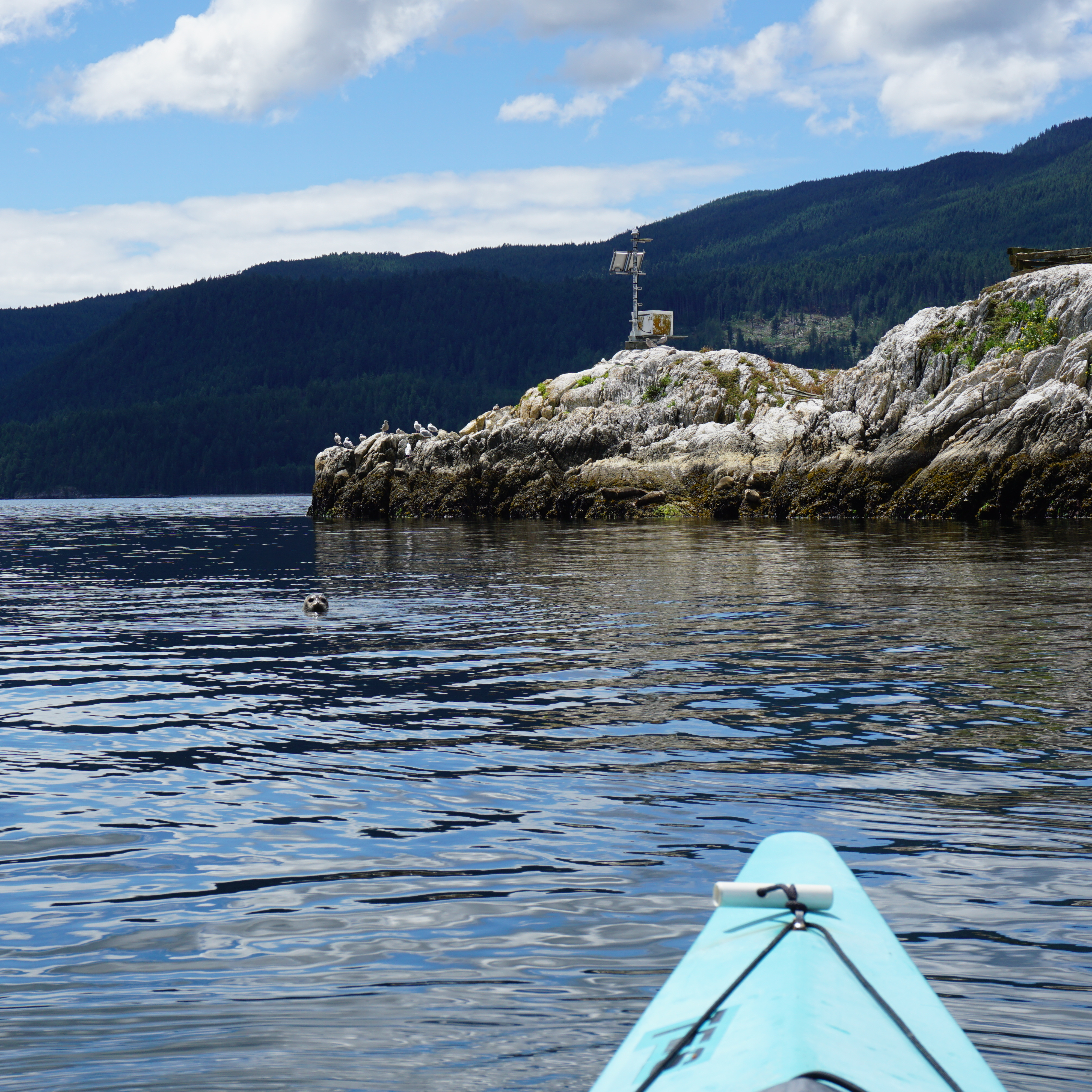
A photo of a seal looking at the camera from the water in Sechelt Inlet on a kayaking trip, with the water and mountains in the background on the Sunshine Coast in BC.

Sechelt Inlet is located just north of Sechelt on the Sunshine Coast. It’s a great option for multi-day trips and offers a more remote experience than some of the other trips on this list. There are more than a half dozen campsites located throughout the inlet, with some of my favourites at Nine Mile Beach, Kunechin Point, and Halfway Beach. The boat launch is located at Lamb’s Bay and you can rent boats from Pedals and Paddles. The campsites are all free and most of them have outhouses, though I’m not sure if they have bear caches. I recommend staying for at least two nights on this trip. As usual, beware of wind in the afternoon.

Gulf Islands

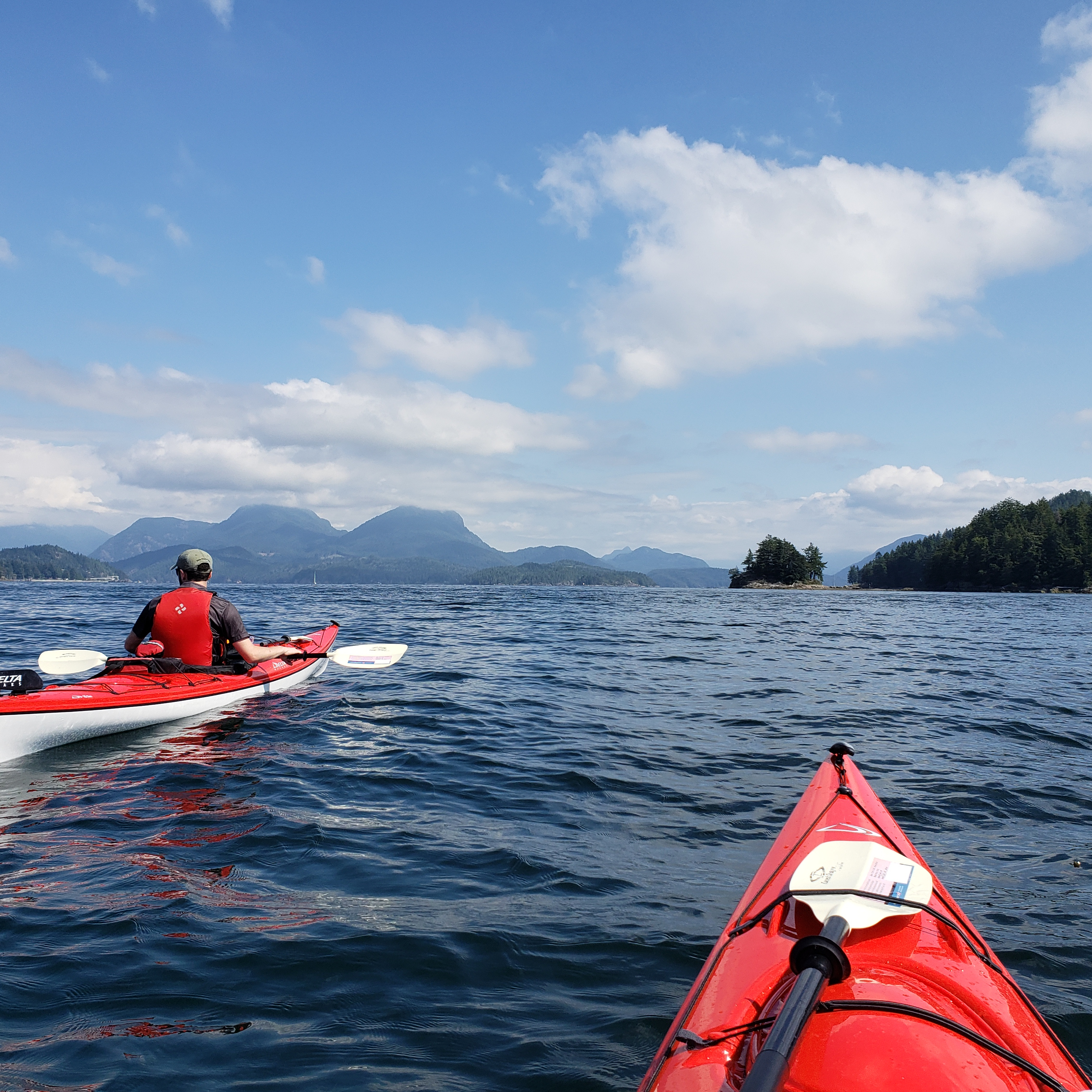
Two kayakers paddle on the Pacific Ocean in the Gulf Islands Marine Reserve National Park between Run Island and Sidney Spit on a sunny day with bright blue sky.

There are lots of options available for paddling in the Gulf Islands National Park Reserve, located just east of Vancouver Island (Salt Spring, Pender, Saturna, Mayne Island, etc). Plan your trip around where you want to visit. I’ve done trips out of both Pender Island and Sidney. Pender is a safe option because you don’t have to do any open water crossings, whereas some of the other sites require water crossings out of Sidney, which are more appropriate for experienced paddlers. There’s a great first-come-first-serve campsite at Rum Island and another at D’arcy Island. Beaumont Campground on Pender Island has closed, but you can still make reservations at Shingle Bay. In addition, there’s a frontcountry site at Sidney Spit. Some sites require reservations from reservation.pc.gc.ca, but the others are pay on site, so bring cash. You can rent boats from Blue Dog Kayaking in Sidney or Pender Island Adventures on Pender Island.

Copeland Islands

A female kayaker smiles at the camera from her yellow Boreal Storm kayak while the sun sets over the water and leaves a pink glow over everything in the Copeland Islands Provincial Park on the Sunshine Coast in British Columbia, Canada.

The Copeland Islands are located north of Powell River on the Sunshine Coast and can be accessed from Lund. There are several campsites located throughout the collection of islands and it’s approximately 10km from Lund to the North Campground. I believe the campsites can get pretty busy in the summer, but the water is super warm in this area, so it’s a great option to visit in May or September. It’s free to camp and there is an outhouse. This is a great 1-night trip, or you could extend it to paddle into Desolation Sound for a few more nights. I’m not aware of any boat rentals in Lund.

Desolation Sound

A female kayaker in a yellow kayak admires the view on the water with the mountains in the background in Desolation Sound Provincial Park on the Sunshine Coast in British Columbia, Canada.

Finally, Desolation Sound is a beautiful provincial park reserve north of Powell River on the Sunshine Coast. You can access it from either Lund (via the Copeland Islands) or Okeover Arm. It’s a large area that warrants at least a few days to properly explore. The most popular campsites are on the Curme Islands, but these can get very busy in the summer with both paddlers and power boaters, so the campsites at Bold Head and Tenedos Bay are good alternatives. You do have to do an open water crossing to access the Curme Islands, so it’s not recommended for beginners. There is no freshwater, so make sure you bring enough for your entire trip. Permits are required from camping.bcparks.ca and cost $5 per person, per night. All campgrounds have outhouses and some of the mainland sites have bear caches. You can rent boats from Powell River Sea Kayak near Okeover.

10 Easy Day Paddles near Vancouver

The main focus of this blog is definitely backpacking, which is one of my favourite summertime activities. But I also spend a lot of time kayaking and have slowly been working my way around the easy paddling trips near Vancouver. My husband and I own two sea touring kayaks and for this post, I decided to compile some of our favourite day trips near the lower mainland! It’s easy to rent boats for a lot of these trips, but there are a few where it’s easier if you have your own.

Jug Island / Twin Islands

A kayaker paddles towards Jug Island on a sunny day with calm waters in Indian Arm. Jug Island is located near Belcarra Regional Park in Vancouver, BC.

Jug Island is by far our most frequented kayak day trip. It’s located near Belcarra Regional Park and can be accessed from either Belcarra or Deep Cove. We always choose Belcarra since we live in Coquitlam, but it’s a ~5km round trip from both starting locations. There’s a large beach where you can land your boat and an outhouse, so it’s a nice place to stop. It usually takes us ~45 minutes to paddle there from Belcarra and we’ll often take a break and then continue on to explore Bedwell Bay or Twin Islands. Twin Islands makes for a longer day, as it’s a ~9-10km paddle, but it’s very beautiful there and it’s fun to swim from the south island. If you’re renting, you can choose from Deep Cove Kayaks or Takaya in Belcarra. Alternatively, you can also rent from Cates Park for a slightly longer paddle.

Barnet Marine Park / Rocky Point

A female kayaker wears a lifejacket and holds a paddle while smiling next to her yellow Boreal storm kayak on the rocky beach of Barnet Marine Park with the ocean and mountains in the background in Burnaby, British Columbia, Canada.

There are a few options for where you can paddle from Barnet Marine Park. I usually just use it as an alternative access point for Jug Island since it’s located in Burnaby and is sometimes a closer drive, but you can also paddle between Rocky Point and Barnet Marine from either location. Rocky Point is located in Port Moody and is a very easy access point. The annoying thing about Barnet Marine is that they now limit parking to 4 hours, which is difficult if you’re looking to do a longer trip. If you leave from Rocky Point, parking is also a challenge in the summer, but it’s easier to rent boats from Rocky Point than Barnet.

Buntzen Lake

20210418_104713

Buntzen Lake is located super close to the city, in the town of Anmore. It’s the perfect place for beginners because the lake isn’t that long, but it’s big enough to make for a nice paddle to the end and back, roughly 10 kms. Plus you can also explore around the river and hang out on either end of the lake. A day pass is needed in the summer, which is free, but must be obtained 2 days in advance from BC Hydro. There are often canoe rentals available along the south beach.

Whytecliff Park

Whytecliff Park is located in West Vancouver near Horseshoe Bay and is one of many paddling options in West Vancouver. You can launch your boat from Whyte Cove, which is located in the park, or from Batchelor Bay or Horseshoe Bay. If you don’t mind a longer paddle, you could also launch from Eagle Harbour, at the beach next to the yacht club. There are no rental options from this location that I am aware of, but it’s a fun place to explore. Watch out for ferry traffic if you are paddling around Horseshoe Bay.

Bowen Island

DSC09010

I haven’t actually done this trip myself, but I’ve heard Bowen Island is great for kayaking. The best option is to walk on the ferry from Horseshoe Bay to Bowen Island and rent boats from Snug Cove on the other side. From here, you can paddle around the edge of the island. I recommend heading north as there are more beaches to land at in this direction. I believe more experienced paddlers will cross from Horseshoe Bay on their own, but I don’t recommend this.

Keats Island

Two kayakers paddle on the Pacific Ocean towards Keats Island from Gibsons on the Sunshine Coast, BC on a sunny day, with the mountains in the background.

Keats Island is a great destination from Gibsons. You can launch from the marina and paddle across the straight to Keats Island. Follow the coast north past the Shelter Islets until you reach Plumper Cove Marine Park, which is a great place to hang out for the day or to camp overnight. It can be windy crossing the straight, so I recommend doing this trip early in the morning. Rentals are available from the marina in Gibsons.

Widgeon Creek

A woman in a yellow kayak paddles in crystal clear blue water on a sunny day with mountains in the background and a blue sky in Widgeon Creek by Widgeon Marsh in British Columbia, Canada.

Widgeon Creek is a very popular summer paddling destination in Pitt Meadows. Park at the main lot on Pitt Lake and paddle across the Pitt River to Widgeon Creek, which is a leisurely 6km paddle to the campsite. From there you can do a day hike to Widgeon Falls. This area is very busy in the summer, but head out in April or May to avoid the crowds. Be careful crossing the Pitt River, which can have strong currents, and leave early to avoid the wind. You can rent boats from Katzie in the summer, or through independent operators that deliver the boats to the lot.

Alouette Lake

Two kayakers paddle up Gold Creek on a sunny day on Alouette Lake in Golden Ears Provincial Park. BC, with the forests and mountains in the background.

Golden Ears Park is most popular for paddlers in the Gold Creek area, especially for SUP. But I think all of Alouette Lake is a great option for paddling. The easiest location to launch from is the boat launch at South Beach, and then you can head north on either shore of the lake. But pick one or the other because it gets windy on the lake and it’s not easy to cross back and forth. I regularly like to go out for a few hours and paddle up to Gold Creek and back. You can usually rent canoes on South Beach in the summer.

Harrison Lake

A female kayaker paddles on Harrison Lake on a cloudy morning with flat water and the mountains in the background.

Harrison Lake is somewhere that you need to be really careful paddling, but can make for a fun trip in the right conditions. It can be very windy at the lake, so my recommendation is to stick to early morning paddling and stay near to the edge of the lake. We camped at Bear Creek on a rainy weekend in June and stumbled into premium kayaking conditions. It was dead calm on the water and mystical with the cloudy skies. But exercise caution on a nice day.

Lightning Lakes

Lightning Lakes is a pretty safe place to kayak and is incredibly scenic. It’s located in E.C. Manning Park, east of Hope, and comprises two lakes connected by a small creek. It is possible to navigate between the two lakes, but it is narrow, so exercise caution. The views are beautiful and there’s no power boats, so it’s a great place to explore and enjoy the water and the mountains.

Kayaking Alouette Lake

Spring is finally here in full and we’ve been taking full advantage of the weather to do lots of kayaking. Spring is usually my best season for paddling because I get distracted by the mountains once the snow melts in late June. We managed to get our kayaks out 4 times before May this year, which is a new record for us. Seth and I have a big kayak trip coming up in a few weeks (stay tuned), so we’ve been doing lots of training.

Generally, we prefer paddling in salt water, but in late April we decided to make a visit to Alouette Lake in Golden Ears Provincial Park before the day pass system came into effect. We’ve paddled Alouette Lake once before, but I’ve never taken the time to write about it. There’s lots of great camping along the shoreline of Alouette, so I’m keen to return in the future for an overnight trip. But on this occasion, we arrived around 9am for a morning paddle. 

20250427_104218

Honestly, 9am was a bit of a late start time for Alouette. Almost all of the waterbodies in the area get windy starting in the early afternoon. We paddle Indian Arm all the time and it consistently gets choppy around 1pm. Alouette ended up getting windy earlier, around 11:30am, so we did have our work cut out for us on the way back. But I’m getting ahead of myself!

I’m not sure what the proper protocol is for launching kayaks at Alouette Lake. There is a formal boat launch, but it’s tailored to motorcraft that need to be backed down the ramp to the water’s edge. I think some people launch their kayaks from here, but we’ve always just done it from South Beach, around where the canoe rentals are. The beach isn’t too busy in April, so it’s a quieter time to paddle. 

20250427_095543
PSX_20250505_082804

The first time we paddled here, we only made it as far as the public beach at Gold Creek Campsite. So our goal for this trip was to paddle all the way to North Beach in order to navigate the boats up Gold Creek. It was overcast in the morning, but the water was pretty calm and we had a nice paddle along the shore. Alouette Lake is dammed and used by BC Hydro, so there are a lot of tree stumps around the lake’s edge from when they impounded the reservoir. It makes for an interesting paddle because some of the stumps still poke out of the water and are absolutely giant! It’s a little sad to imagine the former giants. Make sure you exercise caution while paddling, because many of the stumps are just under the surface of the water and can be hard to see. 

It’s ~4km to paddle to the beach at Gold Creek, which is a nice stopping point. If you want somewhere quieter, there are lots of little pocket beaches around the shoreline as well. I’ve only ever paddled up the northwest side of the lake, but I’d like to check out the southeast side some day as well. The water was calm and it didn’t take us too long to get to Gold Creek. We decided not to stop and instead, continued another 2km directly to North Beach. There are campgrounds located at both Gold Creek and North Beach, so those can be quite busy on a nice day.

20250427_110207
PSX_20250427_211709

We stopped at the beach for a snack. I had packed in a delicious donut from my favourite shop in Coquitlam, Doughnut Love, which I really enjoyed. Our main goal in paddling to North Beach was to continue up Gold Creek. There’s a public parking lot near the North Beach Campsite and we frequently visit in the summer. It’s a ~1km walk along Gold Creek to the beach and we’ll often stop and go swimming in the river, which has extremely clear water. Even though I’ve been there lots of times, I’d never paddled up the creek in my kayak and was keen to do so. You can’t go too far up the river before it gets too steep to continue, but it does make for a scenic little paddle and it gave us a nice end destination. 

Unfortunately, by the time we left Gold Creek, the wind had picked up and we had to paddle into a pretty healthy headwind. It wasn’t too windy to be out, but it was a workout to paddle the 6km back to South Beach. The waves weren’t bad, but it’s tiring battling into the wind. It was the kind of weather where you just put your head down and paddle rather than getting to enjoy the views. We made a brief stop at a pocket beach on the way back, but were concerned the wind would only get stronger, and decided to hustle back.

20250427_113009
PSX_20250427_212552

The wind dropped a bit the closer we got to South Beach and I’m not sure if it was because the wind came down, or just that it’s less windy at the end of the lake. Either way, we made it back to the beach without incident around 1pm. Like I said, the wind came up earlier than I was expecting, and I’m not sure if that’s typical for Alouette, or just typical for April. The last time we paddled Alouette Lake was in mid summer and we arrived in the afternoon. It wasn’t as windy then, so it might have just be the early season conditions.

Either way, we had a great time exploring around the shoreline and Alouette remains one of my favourite lakes near Vancouver. From mid-May onwards, you do need a day pass to visit on the weekends. These can be obtained from BC Parks, 2 days before your trip, at no cost. But it is a popular park, so make sure you go on the website at 7am when the passes release or you’ll miss the opportunity to visit the park. I hope to return someday to paddle all the way to the end of the lake and take the opportunity to do some lakeside wilderness camping.

20250427_102719