5 Simple Backcountry Breakfasts

I’m far from an expert on backcountry cuisine, but I’ve spent a lot of time backpacking and figuring out what works and doesn’t work (for me at least). I have lots of thoughts on meal planning and dehydrating, so I decided to do a series dedicated to food! I’ve already shared an introduction to dehydrating and I’ve been working on follow-up posts dedicated to meal planning for Breakfast, Lunch, and Supper, so stay tuned!

I’ve been muddling through online resources and recipes over the years, trying existing recipes, as well as creating my own. I’m not a fan of complicated recipes that require a lot of prep, nor am I fan of expensive freeze-dried meals. So I decided to share some of the ideas that work for me. Most of the time I like a quick breakfast that’s “just add water”, but sometimes if I have a bit more time to spare, I get a little bit more creative. Here’s my Go-To breakfasts:
DSC04795

1. Oatmeal with the fixin’s

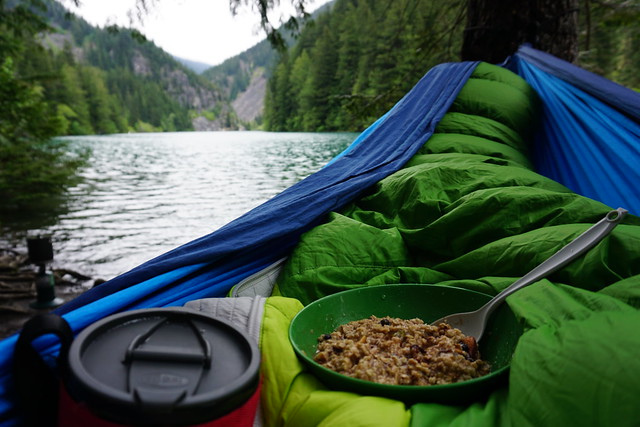
I know, nothing revolutionary here. There’s a reason oatmeal is a classic – it’s quick, tasty, and timeless! I bring 2 instant oatmeal packets from home that are already flavoured and add my preferred fixin’s and hot water! Usually I just add some of my trail mix to my oatmeal because I’m a big fan of the melted chocolate, but sometimes I’ll also bring brown sugar or freeze dried berries or apple. If you’re looking to add more calories for energy intensive trips, add PB2 (peanut butter powder) or flax, chia, or hemp seeds. I mix it all into one ziploc baggie before the trip.

2. Sunrise Spuds

90% of the time when I’m backcountry camping I alternate between oatmeal and sunrise spuds every other day, but given the choice between the two, sunrise spuds are my favourite. Some people find this one a bit weird, but I learned it from Girl Guides and it’s always a huge hit at my camps, even in the frontcountry. Sunrise spuds is just instant mashed potatoes with fixin’s! Don’t buy the big box of instant mashed potato because it’s unflavoured and pretty tasteless (since it relies on adding butter), instead buy the single serving flavour packets from Idahoan. My favourites are butter and herb and four-cheese. The simplest is to add bacon bits, pepperoni sticks, and hard cheese or babybel to it, but sometimes I also bring sundried-tomatoes and dehydrated chives or parmesan if I’m feeling fancy.

3. Eggs and Hash

This is a tasty meal, but one that I’ll only do if I’m not in a rush. It consists of powdered eggs and dehydrated hash browns. I know a lot of people aren’t a fan of powdered eggs (myself included), but I find they’re much more palatable mixed with the hash browns. You can buy already dehydrated potato flakes from Costco that you just have to re-hydrate and fry. It helps to have a bit of oil for this recipe and then I add some spices (salt, pepper, paprika). It does take a while to fry the hash browns, so start with that and then add the powdered eggs towards the end. The key with powdered eggs is to mix them with water first and then cook. I usually add some bacon bits, sun-dried tomato, and/or cheese. Sometimes I even bring bacon jerky to complete the meal (though pepperoni sticks or Korean BBQ pork from Costco works well too)!

4. Apple Crisp

This is a recipe I really like, but I’ve struggled to master because it is best with freeze-dried apple. I can’t take credit for this recipe, I found it on Fresh Off The Grid, but I’ve made it several times and find it really yummy. Usually I make it as a dessert, but I also find it makes for a nice breakfast. It’s a very easy recipe as all you have to do is rehydrate and heat the apples with some spices and then add the topping, but the apples are the tricky part. Pending where you live, it might be easy to get freeze-dried apples, but I’ve struggled to find them for a reasonable price and resorted to trying to make my own last year (it took about 2 months in my freezer, so I don’t recommend). It can be made with dehydrated apple slices, but it really works best with freeze-dried as they rehydrate a lot better. Fortunately, Superstore recently started stocking freeze-dried apples, which saved me a lot of trouble!

5. PB&J

I often make PB&J’s for lunch, but they make a great breakfast too. The simplest way is to take one tortilla and those single packets of peanut butter and jam that you get from diners and breakfast restaurants. If you can’t find those, or you want something more lightweight, I’ve used dehydrated versions for both. PB2 doesn’t really taste like peanut butter when you rehydrate it, but it’s close enough that when you eat it on tortilla with jam it still tastes good (on it’s own it’s not that great). My secret for dehydrated jam is to crush up some dehydrated berries and add sugar. Both powders can be rehydrated with cold water, so it’s a really lightweight option for PB&J.

DSC08950

The Secret to Easy Dehydrated Meals

Figuring out what to eat in the backcountry is one of the more intimidating parts of backpacking when you first start. Pre-packaged dehydrated meals are expensive and still quite bulky, so it can be a little overwhelming to figure out what to eat. I assumed dehydrators were really expensive, and some of them are, but there are a lot of cheaper ones on the market and my life got so much easier when I finally bought one! I currently use one of these “cheaper” dehydrators, from Hamilton Beach. It has increased in price since I bought it, but it is still relatively affordable and often goes on sale, so I’ve found it to work great for the price, especially if you’re just starting out and aren’t sure you’ll use it much.

Unfortunately, purchasing a dehydrator was only have the battle and I still found it a little bit overwhelming finding good recipes after I got it. There are lots of resources out there, but they are often still a lot of work – involving either specialty items or a lot of steps. I toyed around with lot of different recipes and tried creating some of my own, but I have one big secret when it comes to easy dehydrated meals. Here’s what I think most people miss out on when dehydrating:

Stop trying to reinvent the wheel and start dehydrating all your favourite every day dishes.

Instead of dehydrating all your veggie and protein sources separately and then combining ingredients and spices, just make your favourite chili or rice dish and pop the entire thing in the dehydrator. Making a stew or pasta? Have leftovers from your favourite mexican or curry restaurant? Just put the whole thing in the dehydrator. You don’t even have to pack the pasta or rice separate, just dehydrate the sauce and pasta together and then you don’t even have to mess around with cooking 2 separate ingredients at camp!

Once I figured this out, I stopped using recipes for dehydrated meals altogether. Instead, I look for easy to cook meals that I like to eat at home and then just dehydrate those. You just need to try and stick to one-pot type meals and things that will dehydrate well. For me, that mostly means avoiding things with a lot of oil (as this won’t dehydrate) and good protein sources (you can dehydrate chicken, but it’s tricky and ground meats and beans will dehydrate better). When I find a good dish, my practice is to cook a double batch, share it with Seth for dinner and then dehydrate the rest. That way I know if it tastes good and I can piggyback off a meal I’m already cooking anyways.

The benefit to dehydrating the rice or pasta along with the dish is that it will save you time and fuel later. Pretty much any dehydrated meal will rehydrate with cold water. So if you let it soak for a few hours, the entire meal will be edible already and only require re-heating rather than cooking. This means you don’t have to boil your pasta for 10 minutes or cook your chili – as long as you soak, you can just quickly heat it and eat it right away. Plus then you don’t need to bring a second pot to cook the rice or pasta separately! It’s also great for quick lunches. I will often add a bit of cold water to my lunch at breakfast, let it soak while I hike, and then eat it cold for lunch (as long it’s a meal you don’t mind eating cold, like a pasta or quinoa salad). It involves no cooking or prep, but tastes a lot better then sliced salami on tortilla.

I’ve been experimenting with hydrated meals a lot this year and plan to share some of my recipes (or links to favourite recipes) as a series later in the year, but for now I just wanted to talk about how one-pot meals made dehydrating so much easier for me. It removed a lot of the stress about serving sizes and taste because I could eat some first and then dehydrate the same amount, rather than having to worry about dehydrating everything separately, assembling, and then hoping I got the level of spices right. So if you backpack a lot, I think getting a dehydrator is a great alterative to the expensive freeze dried meals and it didn’t take me too long to see a lot of value from my dehydrator. Plus I love how lightweight my food bag is as a result.

Bon Appetit!

Let’s Talk: Campfires

There’s only really one thing that matters when it comes to having a campfire in the backcountry – if it’s not allowed, DON’T DO IT. I’ve camped in so many locations and there’s almost always one group breaking the campfire rule. Just because someone else is doing it does not make it okay for you to have a campfire too. Just because you see evidence of fires from past campers does not make it okay to have a campfire. Forgetting to check in advance if fires are allowed also does not give you the right to have a fire. Campfires are not an “ask for forgiveness, not permission” issue. Respect the backcountry and always check first.

DSC06085

If you want to have a campfire when you’re hiking, there’s two things you should check in advance:

  1. Whether campfires are permitted. Most Provincial Parks don’t allow fires in the backcountry, though there are definitely some that do. Fires are a risk in parks and they can be destructive to the natural environment, but I think the main reason why Parks don’t allow fires is because of the impact of firewood collection. People will cut down and destroy live trees and shrubs in their zeal for foraging firewood and even dead branches have a lot of value to the forest ecosystem, so usually, parks are better off left alone.
  2. If there’s a fire ban. Regardless of whether fires are permitted or not, if there’s a fire ban in the area that you are camping in, then you cannot have a fire. Hopefully I don’t have to explain the risk of this one given the wildfires spreading all over the Pacific Northwest the last couple of years. So I usually try and prioritize campfire friendly locations in Spring and Fall since the fire ban will likely prohibit any fires throughout the summer regardless of location.

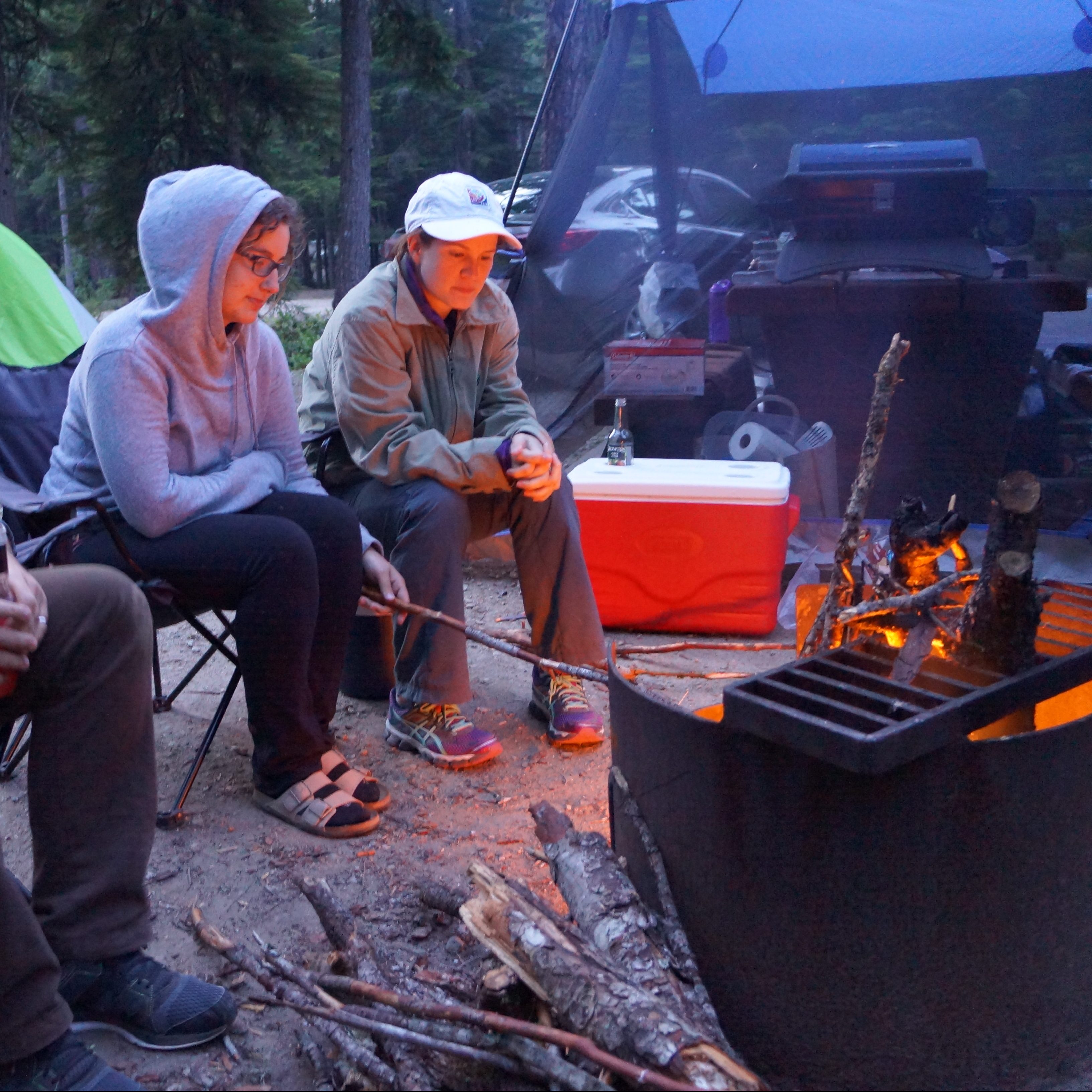
However, there are some times when you will be able to have a fire! The coastal trails on Vancouver Island (above photo) are a great place if you’re looking to have a campfire because the damp environment keeps the wildfire risk low and there’s lots of driftwood to burn, which has lower ecological value. Often if you stick to trail networks that are outside of park systems, fires are generally permitted as well, though there are some parks that permit campfires. Finally, if there’s no fire ban, campfires are almost always permitted in frontcountry campsites! This is a great way to enjoy a campfire because you don’t have to forage for firewood and there are often firepits provided, creating a safer environment for fires.

But if you are lucky enough to find yourself at a backcountry location where fires are permitted, what should you keep in mind?

  1. Safety: pick a good location for your fire. It should be away from your tent and anything that could catch fire from flankers. If possible, build a fire ring out of rocks to help contain the fire, or dig a pit in the sand, and always have a source nearby to put out the fire. Carolyn’s trick is to fill all our pots with water and keep them next to the fire in case it spreads. Or if you’re on the beach have sand nearby to throw on the fire.
  2. Firewood: like I’ve discussed above, try and disturb the surrounding environment as little as possible. Beach campfires are great because it’s easier to find rocks to create a pit and driftwood makes for great firewood. Never take branches from living trees and avoid larger logs – these are generally wet and provide valuable habitat to many forest critters. Stick to smaller deadfall that will be easier to burn and has less ecological value.
  3. Put out your fire: never leave a fire burning after you’re done with it. Even if it’s just embers left, douse them with water or throw sand on top. A fire should never be left unattended.

Tips for starting your fire:

  1. Stack your wood, by which I mean, start with smaller dry materials, move up to twigs, then sticks, then logs. As the fire grows, start adding the bigger pieces of wood to keep it going. Collect enough wood in advance so that you don’t have to leave the fire unattended to look for more. Use a pocket knife to make wood shavings for kindling, or find some small twigs from the underbrush.
  2. Bring a firestarter to help speed things along. I like to use fluffed up tampons because they’re tiny and burn well, but Brandon dips pieces of paper towel in hot wax and brings them with him. If you don’t mind carrying something a little bulkier, the old dryer lint stuffed in an egg carton and dipped in wax works great too.
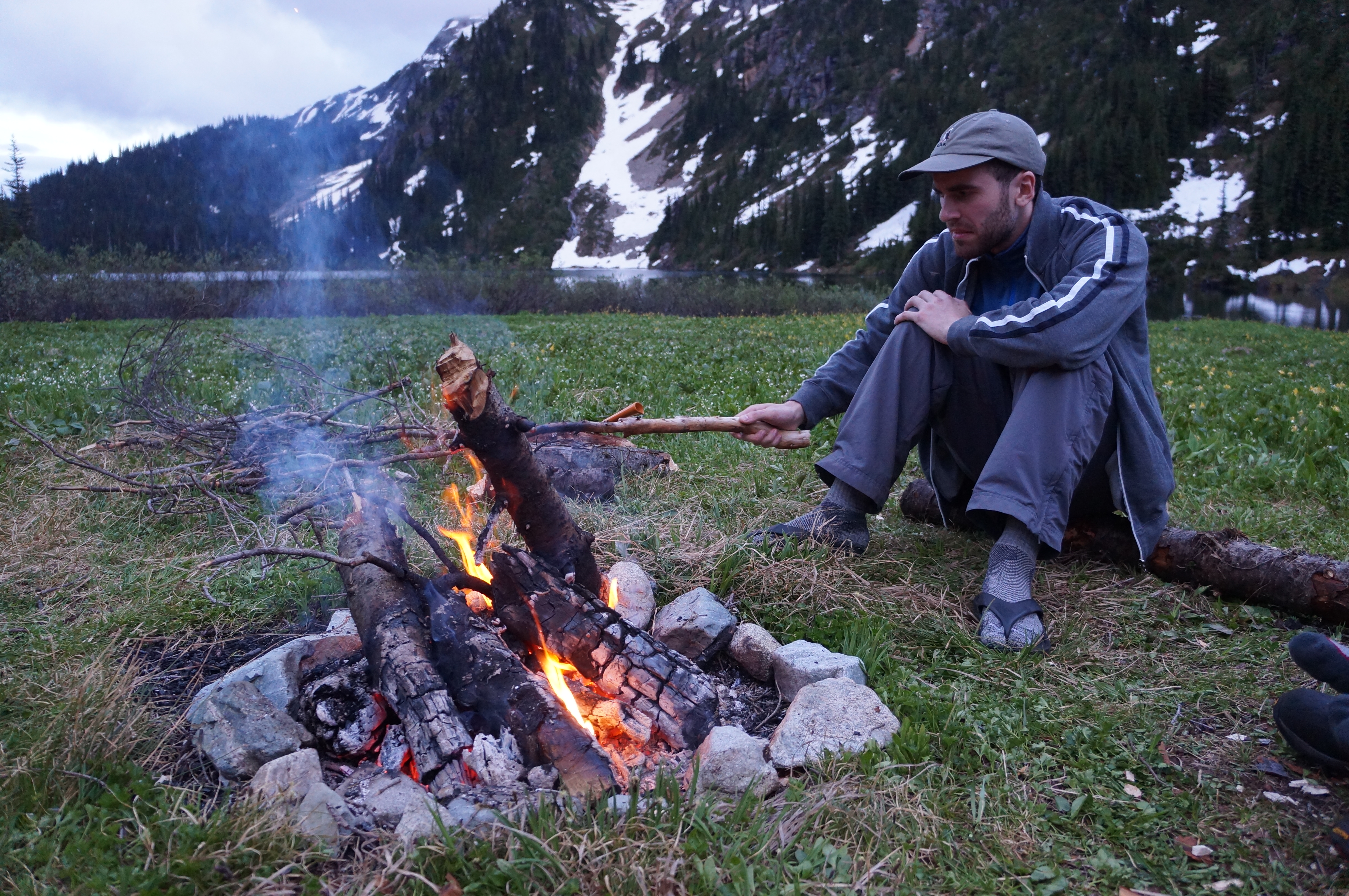
  3. Make sure your fire always has oxygen. Use a pot lid to blow some air into the fire when you’re getting started and have a fire poking stick to turn logs over and keep the fire fresh.

I’m not really a fire expert, so if you have any more tips to share or if I missed anything, please let me know and I’m happy to add! Just remember, only you can prevent forest fires!