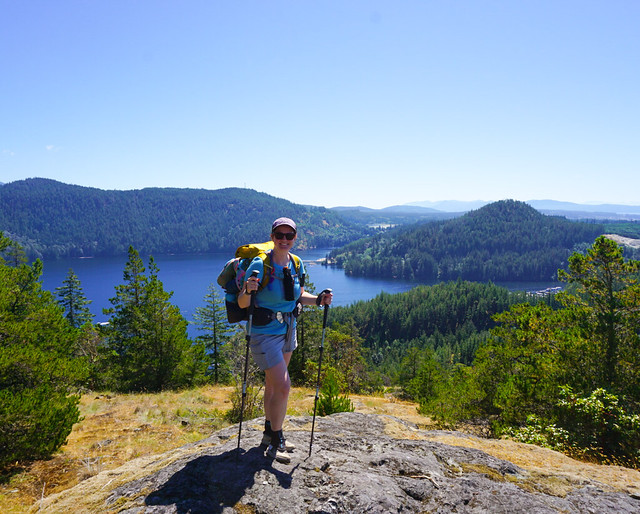
A Beginner’s Guide to Backpacking

Would you like to get into backpacking, but don’t know where to start? Whether you’re new to hiking or an avid hiker, it can be challenging to make the transition to backpacking. It can be hard to know where to go, what to bring, and how to stay safe. This Guide is meant to be a high level support to link you to other resources, help you assess your skills, and safely plan for your first overnight hike.

The backcountry can be a dangerous place. It can be easy to become lost, injured, or susceptible to adverse weather, and without the proper preparedness, sometimes one mistake can unfortunately prove to be fatal. I don’t think we need to be afraid of the backcountry, but I do advocate for smart planning to mitigate as many risks as possible up front.

I am not an expert on backpacking. I have done a lot of backpacking near the lower mainland and I am a Outdoor Adventure Trip Lead with Girl Guides Canada, so I focus a lot of risk management and preparedness in the backcountry.

IMG_4814

Assessing Your Skills

Before heading into the backcountry, I think it’s important to understand what skills you have and what skills you may need to supplement. Are you an experienced hiker? Are you comfortable on more challenging terrain? Do you have any special training such as first aid or avalanche safety? Do you have access to all the essentials? Are you good at map and GPS reading? Do you know what to do if you run into trouble?

It’s important to have a good sense of awareness of your own body and to listen to it. It’s easy to get into trouble if you push your body too far or don’t recognize signs of stress. If you haven’t done much hiking, always start small to understand your limitations. Stop when you need a break, you are tired, the terrain looks dangerous, it’s too hot, etc. One of the most challenging decisions is accepting that you should turn around and not expose yourself to additional risk. Once you’ve started something, the inclination is always to push forward, because you’ve sunk time and energy into getting this far. But if the weather conditions are not right or your body is not feeling it, you should always feel empowered to stop for any reason.

Picking a Trail

Deciding where you want to go will help you plan appropriately for the rest of your trip. Once you’ve assessed your skills, you should have a better idea of what kind of trail you may want to do. Here’s some questions to ask yourself:

  • How far a distance do I want to hike?
  • Am I okay with hiking uphill, or do I prefer a flatter hike?
  • Do I want access to facilities like an outhouse, bear cache, tent pads, cooking shelter, etc?
  • How far am I willing to drive?
  • Can my vehicle safely access the trail?

For new backpackers, I recommend starting with shorter trails that aren’t too steep. AllTrails is a great resource to research hikes, so look for trails under ~6-10km and with elevation gain of no more than 200-400 metres. The shorter the hike and the greater the elevation gain, the steeper it will be. As a rule of thumb, keep the elevation gain under 10% grade (100m of gain over 1km). I also recommend selecting campgrounds that have outhouses and bear caches. Unless you already know how to dig a proper cathole, or you have a bear cannister, it’s much less stressful if you have access to these facilities. A cooking shelter can also be a great resource if the weather is not good because it will help you to stay dry without needing to set up a tarp. Do as much as possible to make your first trip easy because it can be overwhelming trying to learn too many new skills as once. Next week I’ll be posting some of my recommended hikes for beginners near Vancouver.

PSX_20220818_214003

Packing the Essentials

Backpacking is a balancing act between making sure you have everything you need to survive and trying to keep your pack light for physical comfort. It’s likely you will have a pretty heavy pack on your first trip because lightweight gear is expensive and you won’t have a good sense of what you really need versus what you can manage without. First time backpackers often bring way too much clothes, make sure you have warm and waterproof layers, but leave the extras at home. Embrace being smelly and just wear the same clothes for multiple days.

While there’s some things you can do without, you can’t compromise on your 10 essentials. I have a whole other blog post on Personal Safety and the 10 essentials and you can get more information from North Shore Rescue. Make sure you have all the essentials with you.

Safety

One of the most important things to do before heading into the wilderness is to leave a trip plan and have a plan for how you will manage problems on the trail. Your trip plan should include details on where you are going and when you are expected to return, and should be left with someone you trust to call 911 if you do not return. AdventureSmart is a great resource for creating a trip plan. Some other things to consider for safety:

  • Assess your first aid knowledge. Are you carrying a first aid kit and do you know what to do if you become injured?
  • Assess your navigation skills. Are you confident reading maps and GPS? Are you carrying an extra battery for your phone/GPS? Will your GPS app work offline?
  • Assess the ease of communication. Do you know if you will have service on this hike? Do you have a satellite device in case of emergency? If not, are you traveling with other people who can help in an emergency, or on a crowded trail where you can seek help from others?

If you become lost or injured, always stop right away and call 911. Don’t call a friend, partner, or parent. 911 calls will go through on any network available and are traceable. If cell service is unreliable, don’t waste what might be your only call on someone who can’t trace you or meaningfully help you. I have written extensively about trip plans, navigation, and communication in my blog post on Personal Safety, as well as I have a blog post dedicated to First Aid and preparation.
DSC09647

Camping Permits and Reservations

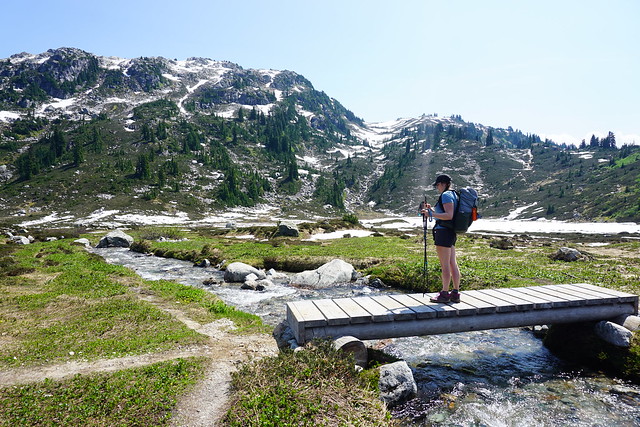
Now that we’ve talked about the scary safety preparedness implications, let’s talk about some of the more practical preparation you can do. Camping permits and reservations can be really confusing, but are necessary for most campsites. There is a lot of camping you can do on crown land, but I recommend parks where possible because they have more infrastructure dedicated to visitors. It’s important to respect the natural landscape in which we’re recreating. Everyone makes mistakes starting out, so it’s easier to limit your impact when camping in parks with access to toilets, grey water disposal, bear caches, etc.

If you’re camping in a provincial park, you will need a permit or reservation. Both can be booked online at camping.bcparks.ca. Reservations are only required in popular parks where they are trying to manage overcrowding. A reservation guarantees you a campsite, but not a specific site. For example, Elfin Lakes has 50 tent pads, so they release 50 reservations and you can pick any available tent pad when you arrive. Reservations are available for Garibaldi Park, Joffre Lakes, Manning Park, Berg Lake, and Assiniboine. They release 4 months in advance of your desired date, so if you want to camp on Aug. 15, you must reserve your campsite at 7am on Apr. 15. These typically cost $10 per person, per night, with a $6 reservation fee.

All other parks require only a backcountry permit. Permits are available 2 weeks before your desired date, but there is no limit on the number of permits sold, so you can wait until the evening before your trip to purchase it. There is no guarantee of a site with a backcountry permit, it’s simply first-come-first-serve at the campground when selecting a site. These typically cost $5 per person, per night.

Camping Equipment

Your essentials likely will only account for a portion of what you actually want to bring in your pack. Equipment can be really overwhelming when you first start backpacking because gear is really expensive. On your first trip, borrow as much as you can and accept that you’re not going to have all the best gear and that you will likely have a heavy pack. I have a gear guide dedicated to talking about camping equipment. My piece of advice would be to start with investing in a quality sleeping bag, something both warm and lightweight, and then move on to other gear later. I have also shared a packing list from the 10-day trip I did on the Sunshine Coast Trail.

HOP_6458

Food Planning

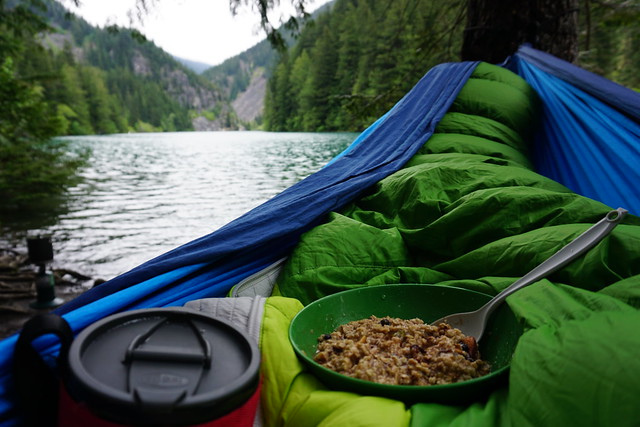
Food planning can be very stressful or very easy. If you want it to be easy on your first trip, just purchase backpacking meals at any outdoor store. They are expensive, but they are simple because they only require boiling water.

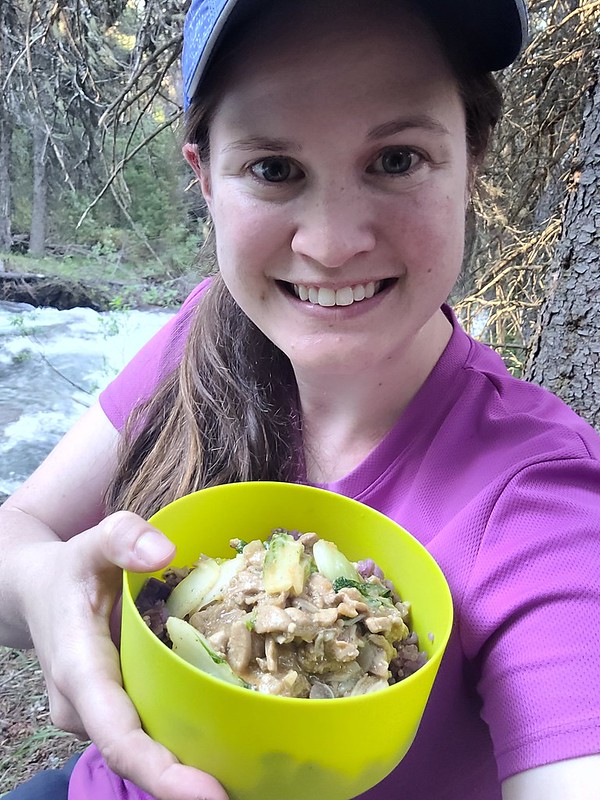
If you want to save money, I have written a 3-part series on cheap and easy meals to eat in the backcountry (no dehydration required):

If you want to get into the exciting world of dehydrating your own meals, of which I am a huge fan, I’ve written another 3-part series on easy dehydrated meals:

DSC08950

Leave No Trace

If you are recreating in the backcountry, you have a responsibility to leave it the same or better than you found it. This means, take all your garbage, including your toilet paper; stay on trails, even if it means walking through mud; filter your grey water to keep food waste out of the streams and lakes; don’t harm the natural environment scavenging for firewood or take anything natural back with you; respect wildlife and be considerate of other people. Check out Leave No Trace Canada for more information.

Other Considerations

A few other things to be aware of:

  • Practice bear safety. Cook away from your tent; keep everything that smells in a bear cache, including sunscreen and toiletries; pick up all crumbs; and make noise while hiking.
  • Protect your water sources. Filter or treat your drinking water and get water from moving sources, upstream of where people are swimming or washing dishes.
  • Always prepare for the weather. Mountain weather is unpredictable, always be prepared for rain and cold conditions. Turn back if necessary.

Check back next week for a list of recommended overnight hikes for beginners!
HOP_6069

Maria’s Updated Gear Guide

I’ve already written one gear guide, but it’s a bit outdated compared to what I currently use, so I decided it’s time for an update! These days I’m a lot more focused on ultralite gear, so my set-up is quite different. I’ll try and share a few options for each key part of my camping set-up, depending on your preference!

Backpack

PSX_20220917_112741

My opinion hasn’t changed that much from my last post – I still think Gregory has some of the best value backpacks on the market. They’re lightweight and cheaper than brands like Osprey, while still being super comfortable and well designed. I don’t think you can go wrong with a Gregory pack, especially if you’re a beginner. However, if you’re looking for something ultralite, I swear by Gossamer Gear, which I think are super light without compromising on comfort or utility. A lot of ultralite packs aren’t super comfortable because they either don’t have any internal frame, or only a very small one. Gossamer Gear has a small metal frame providing some structure, but more importantly, they have a removeable sit-light pad that provides more structure to the bag and can also be used as a sit-upon. I hiked 180km with the pack on the Sunshine Coast Trail and it was so comfortable.

Can you use an ultralite pack even if you’re a beginner? You sure can! But make sure you assess your other gear first. Ultralite packs can’t carry as heavy loads as traditional packs. So assess how much your other gear weighs before committing to one. Beginners tend to have heavier packs because it’s expensive to buy a lot of gear at once and you typically have to compromise on quality to afford everything you need or borrow it, plus beginners tend to take a lot of comfort items while they’re learning. There’s absolutely nothing wrong with this approach, but consider how heavy your gear realistically is before getting an ultralite pack. In addition, most outdoor stores don’t stock many ultralite options, so they often have to be ordered from the US. There are a lot of benefits to trying your backpack on first to make sure it’s comfortable, especially for beginners, which is why I like to also recommend Gregory packs. If you’re a beginner and starting from scratch, I would probably start with a 60L pack. If you have smaller gear, I personally prefer a 50L pack or smaller (I use the Gossamer Gear Gorilla 50).

If you’re shopping for a day pack, always look for a pack that has waist straps as this will make hiking so much more comfortable. Consider what you’ll be using the pack for, if it’s mostly for summer, a smaller pack may suit you better (though I don’t like anything smaller than 20L because I always take my essentials); but if you plan to use it in the winter, you may want a larger pack to house your cold weather gear, or consider a pack with snowshoe straps or space for avalanche gear.

Note: keep in mind that while the Gossamer Gear backpacks appear similarly priced to Gregory, these are listed in USD and you will have to pay both shipping (~CAD$50) and duties (~CAD$60).

Best Value / Best for Beginners: Gregory Jade 53/63 (women’s); Gregory Amber 55/65 (women’s); Gregory Stout 60 (men’s)

Best Ultralite: Gossamer Gear Gorilla 50 (unisex); Gossamer Gear Mariposa 60 (unisex)

Best Summer Daypack: Gregory Maya 20 (women’s); Gregory Juno 24 (women’s); Gregory Miko 20 (men’s); Gregory Citro 24 (men’s)

Best Winter Daypack: Deuter Freerider 28 (women’s); Deuter Freerider 30 (men’s); Gossamer Gear Kumo 36 (unisex)

Sleeping Bag

DSC04795

In my opinion, if there’s one item you’re going to splurge on, make it your sleeping bag. There’s no compromise for a comfortable night’s sleep and a really warm and lightweight bag will cost you money. Personally I prefer down bags for warmth, but pay close attention to the comfort and survival ratings when choosing your bag. My experience is that cheap bags typically have a larger gap between the comfort and survival rating. The closer the ratings are to one another, the more I generally trust the rating. Women’s bags typically run a bit warmer and fit better (less empty space for cold air to settle), so consider a women’s bag if you’re female.

It’s hard to recommend sleeping bags because everyone is different and where you live will really govern how warm it needs to be. Living in Canada, I would never buy a bag rated less than -5 degrees celsius. When picking a bag, it’s really a balance of weight to warmth to cost. Consider how much money you’re willing to spend and how much weight you’re willing to carry. If you’re a beginner, I recommend a standard mummy zip bag, but if you’ve been backpacking awhile, do yourself a favour and consider buying a quilt.

A quilt compromises on weight by acting more like a blanket that’s strapped to your sleeping pad. They generally have an enclosed footbox, but no back. The bottom of your sleeping bag doesn’t give you very much warmth – the warmth underneath you comes from your sleeping pad, which insulates you from the ground – so by cutting out the back of the bag, you can save on weight and still be able to stay warm. However, this only works with a quality sleeping pad, so don’t compromise one for the other. I bought my first quilt last year that’s rated to -6 degrees celsius and I am obsessed with it! My quilt is from UGQ Outdoors – I love this option because every quilt is custom; and my sleeping bag is from MEC, which I think make quality bags with a decent price tag.

If you’re looking for a winter sleeping bag, there are limited options on the market and they will cost you a lot of money. I have a -30 degree bag for snow camping that I paid a lot of money for, but it’s not my favourite because it’s a unisex bag and it’s too big for me. It does keep me warm, but it’s a bit of work for me to get warm in such a large bag. I have lots of thoughts on winter bags if you ever want to DM me, but I don’t want to recommend a bag I haven’t tested.

3- Season Sleeping Bag: MEC Delphinus -9 (women’s); MEC Draco -9 (men’s)

Quilt: UGQ Bandit -6/-12

Sleeping Pad

It’s so easy to overlook your sleeping pad, but it’s such an important part of your sleep system. You could have the warmest bag in the world, but if you go to sleep on a crappy sleeping pad, you will still be cold. Personally I think Thermarest has the best sleeping pads on the market. They are expensive, but they are so warm and comfortable (some people think they are crinkly and noisy, but it’s never been a problem for me). For backcountry, I swear by the Neoair line because they are both the lightest and smallest on the market. I use the Xlite for 3-season camping (rated R4.5) and I use the Xtherm for snow camping (rated R7). I’ve recommended a few cheaper sleeping pads if you’re on a budget; I don’t find them as comfortable, but there’s nothing wrong with them, just make sure the R-value is 3.5 or higher, especially if you’re in Canada.

If you’re snow camping on a budget, just put a foamy under your 3-season pad for extra insulation. Otherwise, commit to the Xtherm, trust me, it’s the best.

Best 3-season: Thermarest Neoair Xlite (R4.5)

Best 4-season: Thermarest Neoair Xtherm (R7)

Budget 3-season: MEC Reactor (R3.8)

Tent

PSX_20220929_122048

If you’re trying to lighten your pack, you’ll get the most bang for your buck with your tent. A standard 2p tent can weigh 5-6lbs, which you can easily lighten by going with an ultralight or non-freestanding version. If you’re a beginner, I recommend sticking with a freestanding tent, they’re much easier to set up and generally more comfortable. But if you’re a little more experienced and don’t mind dealing with condensation and a more nuanced set-up, you can lighten your pack a lot with a non-freestanding tent (usually doesn’t come with poles and is erected using your trekking poles and tension from the pegs).

For freestanding tents, a lot of people swear by the MSR Hubba Hubba, but I’ve never tried it. Personally, I like Marmot for an easy-to-use lightweight tent. For non-freestanding tents, which are popular among thru-hikers, an important thing to understand is that most of them are single walled, meaning they don’t have a separate fly. They work great in California, but if you live in Canada and hike in the alpine, it means the inside of your tent will generally be filled with a lot of condensation every morning. I use a single walled non-freestanding tent from Gossamer Gear, but I’ve had some growing pains with it because I don’t like dealing with the condensation. The people who prefer them generally learn to deal with it, or else they don’t hike in the Canadian alpine and therefore don’t have to. Fortunately, there is a double walled non-freestanding tent on the market and unsurprisingly, it’s made in Canada! It’s a bit heavier than a single walled, but Carolyn has one and she loves it. So I will begrudgingly link my Gossamer Gear tent, which I love for it’s size and how easy it is to set up, but be prepared to deal with condensation.

Standard 2p Tent: Marmot Tungsten

Lightweight 2p Tent: Marmot Tungsten Ultralight

Non-freestanding (single wall) 2p Tent: Gossamer Gear The Two

Non-freestanding (double wall) 2p Tent: Durston X-Mid

Kitchen

IMG_0347

I don’t have as many opinions on stoves and pot sets as I do for the “big 4” described above. But I have learned a few things over the years.

For stoves, I like to use an isobutane stove. The stoves are very straight forward to use and fuel is relatively lightweight and easy to find. You can get away with an isobutane stove for most of the year, but if you’re going to be snow camping, consider getting a white gas stove instead (any of the white gas stoves from MSR). Isobutane can freeze in cold temperatures and a white gas stove is the most reliable option. Another alternative is an alcohol stove, but I don’t personally recommend these. I have 2 isobutane stove recommendations because I think one is better for solo trips (when you have a small pot) and the other is better for when you’re cooking on a full size pot.

Isobutane stove (solo trips): BRS mini

Isobutane stove (2+ people): Primus stove

White gas stove: MSR Whisperlite, Dragonfly, or XGK

For pot sets, I don’t have strong opinions. I have a small pot that I use for solo trips that I absolutely adore and is well priced. I don’t personally see the point in spending a lot of money on a pot set, they’re generally going to get beat up over time, so don’t break the bank on it. The most important thing for me is a well-fitting pot lid. Some people really like the sets that come with dishes, but I just like something that easily fits my stove inside it. For multi pot sets, I prefer to have a lid for each pot rather than a shared lid (but I’ve yet to find a set that comes with 2 lids and no dishes).

Solo pot: GSI Halulite Minimalist

Other Gear

Sit-upon: I’ve been using the MEC Seat Cushion for years and I love it!

Pillow: I used to use my sit-upon as a pillow too, but I recently switched to the MEC Pillow and it’s a lot comfier

MugGSI Infinity Mug 

Microspikes: I think every hiker needs a good paid of microspikes, I use Kahtoola Microspikes 

Communication Device: A satellite device could save your life, I used one in 2021 when my friend had a serious medical emergency and highly recommend the Garmin InReach Mini 

Clothing

You don’t need a bunch of expensive clothing for hiking. I try to avoid cotton, but you can find pretty much everything you need at Costco, you just need to time your purchases for some of their featured items. They sell nice merino shirts from cloudveil once a year in the Fall and they sell lightweight puffy jackets every winter. They also stock merino wool socks in the winter and have base layer merino year round from paradox (though be aware, this brand is only about 15% merino, but still made with poly and appropriate for the backcountry). Other items I’ve found throughout the years include a lightweight pair of puffy slippers for winter camping and hiking shorts from Eddie Bauer.

The only thing I don’t really trust from Costco is a quality rain jacket, so I decided to spend a bit more money on this item. If you’re looking for a more environmentally sustainable company than Costco, I personally like Patagonia.

4 Simple Backcountry Dinners

This is the last post in my backcountry meal series. I’ve talked about hot dinners to make with a dehydrator, but I recognize not everyone has the time or money for dehydrating. Fortunately, there are lots of options for hot, lightweight meals that you can get directly from your local grocery store. You can also try freeze-dried meals from any outdoor store, but these run up to $15 a serving. My first dehydrator was only $75 (and is still available for ~$100) and worked great for 4 years, so I’ve never been able to justify the cost of freeze-dried meals. But we’re not here to talk about dehydrating today, so here’s some of my favourite cheap and easy meals:

DSC06268

1. Ramen

Ramen is a classic for a reason. There are so many options on the market – personally I stick with the classic 99cent noodles packets, but there are lots of other yummy just-add-water options available at Superstore and Costco, just browse the International aisle and pick your favourite. For protein, I’ll add an egg, pepperoni sticks, dehydrated soy (available at most outdoor stores) or Korean BBQ pork (from Costco).

2. Sidekicks

You could build an entire backpacking menu around Knorr Sidekicks. They’re ~$1.50 a packet from any supermarket and I find them to be the perfect size for backpacking. There are so many pasta and rice options that I alternate back and forth between. The trick is that a lot of them call for milk. You can easily substitute water and not worry about it, but if you still want to capture the creamy taste of a fettucine alfredo, then buy a bag of powdered milk and just bring as much as you need for the meal. That way you still only need to add water, but it’ll be much tastier! Same as above, add egg (or powdered egg), pepperoni, soy, or jerky for protein, plus I will often pick up some dehydrated veggies from Bulk Barn to add to the mix.

3. Thanksgiving in a bowl

This is another recipe that I got from Fresh of the Grid that mostly involves grocery store staples. Instant mashed potatoes, stovetop stuffing, and gravy sauce powder can all be easily purchased, the only challenge is the freeze dried chicken. I’ve never been able to find it anywhere in Canada, so I’d recommend substituting soy or jerky for your protein. Alternatively, you could bring a small can of chicken or spam if you don’t mind carrying it!

4. Soup and Salad

This one will vary depending where you’re from, but if you’ve ever been to a farmer’s market, odds are there’s been someone there selling soup and salad mixes. I’ve seen a ton of different brands and they’re so popular in Vancouver I regularly see them at grocery stores or specialty stores as well. The ideas is that all the dry ingredients and spices are all consolidated and you just need to cook them and maybe add a few other ingredients. Some of them are easier than others and just require water and maybe a few other dry ingredients like craisins or nuts. So just check the back before purchasing to see how adaptable to the backcountry it is. This are naturally more expensive than options 1-3, but at least they go back to the local economy (and are still cheaper than freeze dried). The only thing is they are often meant to serve up to 4 people and require some soaking for the beans, so just plan ahead when you get to camp and immediately start soaking the mix so that it has time to soften before you cook. Here are a few of the companies I’m aware of: SimplyDelish, Mitchell’s Soup Company, Soup Girl.

20210627_191203