Traveling through the Andes

Picking up where I left off in my last blog, we traveled from Paracas to our next destination, Arequipa, by bus. This was the longest bit of driving on the trip, so we decided to take an overnight bus. The main bus company here is Cruz del Sur and apparently they are years ahead of bus systems in the rest of the world, almost to the point of excessive. Their buses all have two floors, you check your luggage before you get on and need a baggage ticket to claim it afterwards, they serve meals on pretty much every route, and they give you pillows and blankets. We even played a round of bingo on our route! This definitely made the trip a bit more bearable, but it was a 12 hour bus trip, so by the end we couldn’t wait to get off!

Arequipa is a pretty nice city. We didn’t spend much time there and didn’t see much of the city, but I liked the vibe a lot better than Lima. We visited the monastery of Santa Catalina, which was one of the most beautiful buildings. It had tons of indoor courtyards with lots of different trees and flowers and several outdoor streets contained within the convent, which all had individual quarters for the nuns. What made the monastery so beautiful though was the colours. The walls were all painted bright blues and reds, it just made the place seem very welcoming.
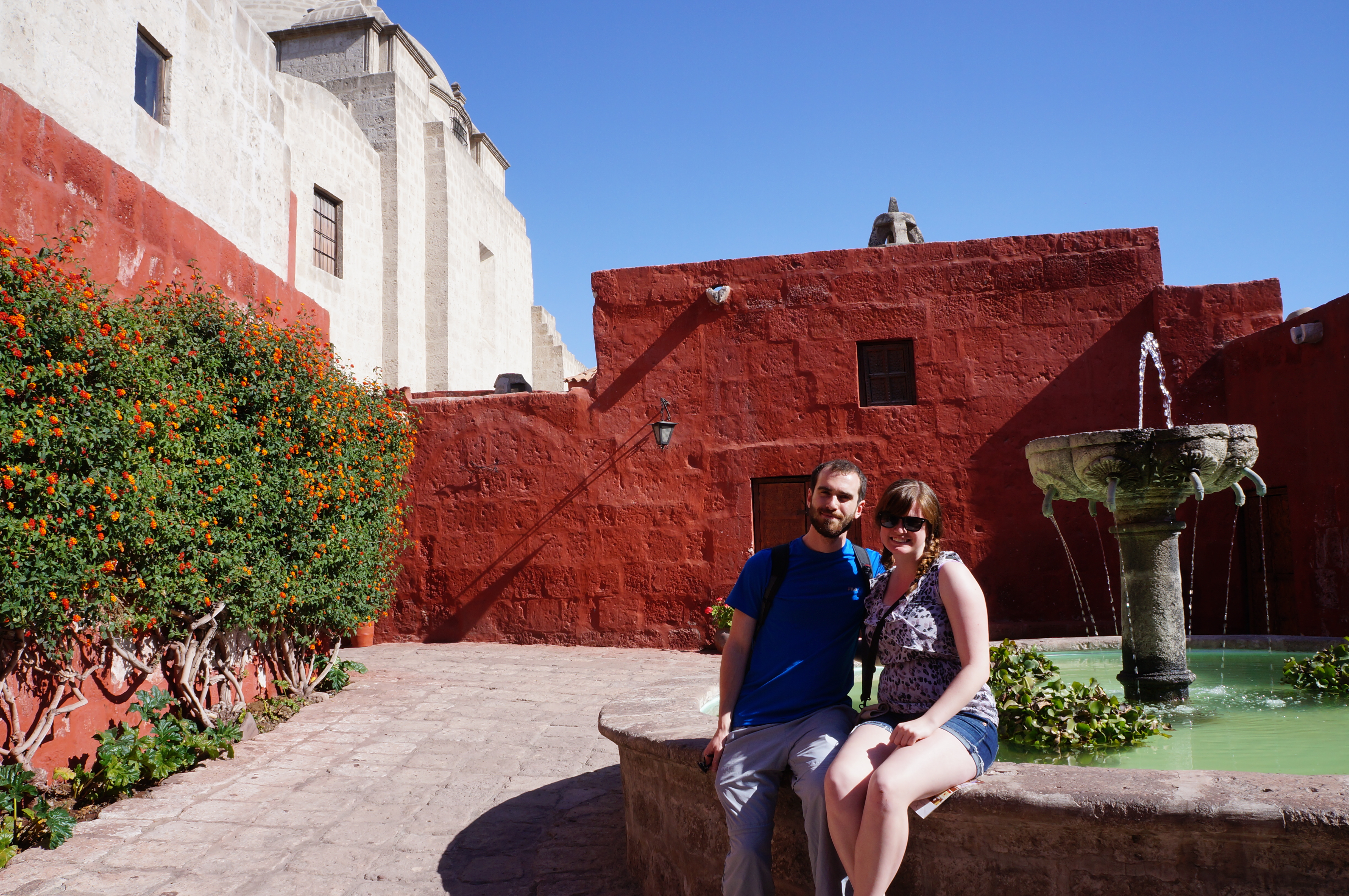
Convento de Santa Catalina

Convento de Santa Catalina

Other than the monastery, we just did a bit of exploring and shopping around the city. Peru has some of the nicest textiles! Every city we go to had loads of women selling their knitted wool garments and their textiles. I’ve already been suckered into buying a wool hat, mitts, and a warm sweater for when we go hiking, all with llamas on them!

The next part of our trip was a two day trip out to Colca Canyon and the town of Chivay. This is where we first experienced the challenges of traveling at higher altitudes. Arequipa was at an altitude of ~2300m, which is a pretty comfortable altitude. But on the drive to Chivay, we passed through altitudes up to 4900m above sea level before settling in Chivay at 3600m.

View on the way to Colca Canyon

View on the way to Colca Canyon

I’d read about altitude sickness, but I wasn’t really sure what to expect and I didn’t really think it would affect us that much. You can’t really feel it if you’re just sitting around, but as soon as you start to do any kind of strenuous activity (i.e. walking up a flight of stairs in this case) your lungs have to work twice as hard to get the oxygen your brain needs, so you get winded really quickly. I’ve definitely been having a bit of a hard time acclimatizing. It makes you feel like you’re really out of shape because of all the extra work your lungs have to do. Luckily we’ll have been at this altitude a week by the time we start hiking, so hopefully it will get easier!

Chivay is a pretty small town, but it is right in the middle of the most gorgeous setting! It is located in the valley, so everywhere you look, you are completely surrounded by huge mountains. On the first day, we went to a natural hot spring and had dinner in a restaurant with traditional dancers and musicians. On the second day, we drove along the valley to Colca Canyon. Colca Canyon is the deepest canyon in the world. At the point we visited, the canyon was ~2700m deep, but at other locations, it goes as deep as 4100m.
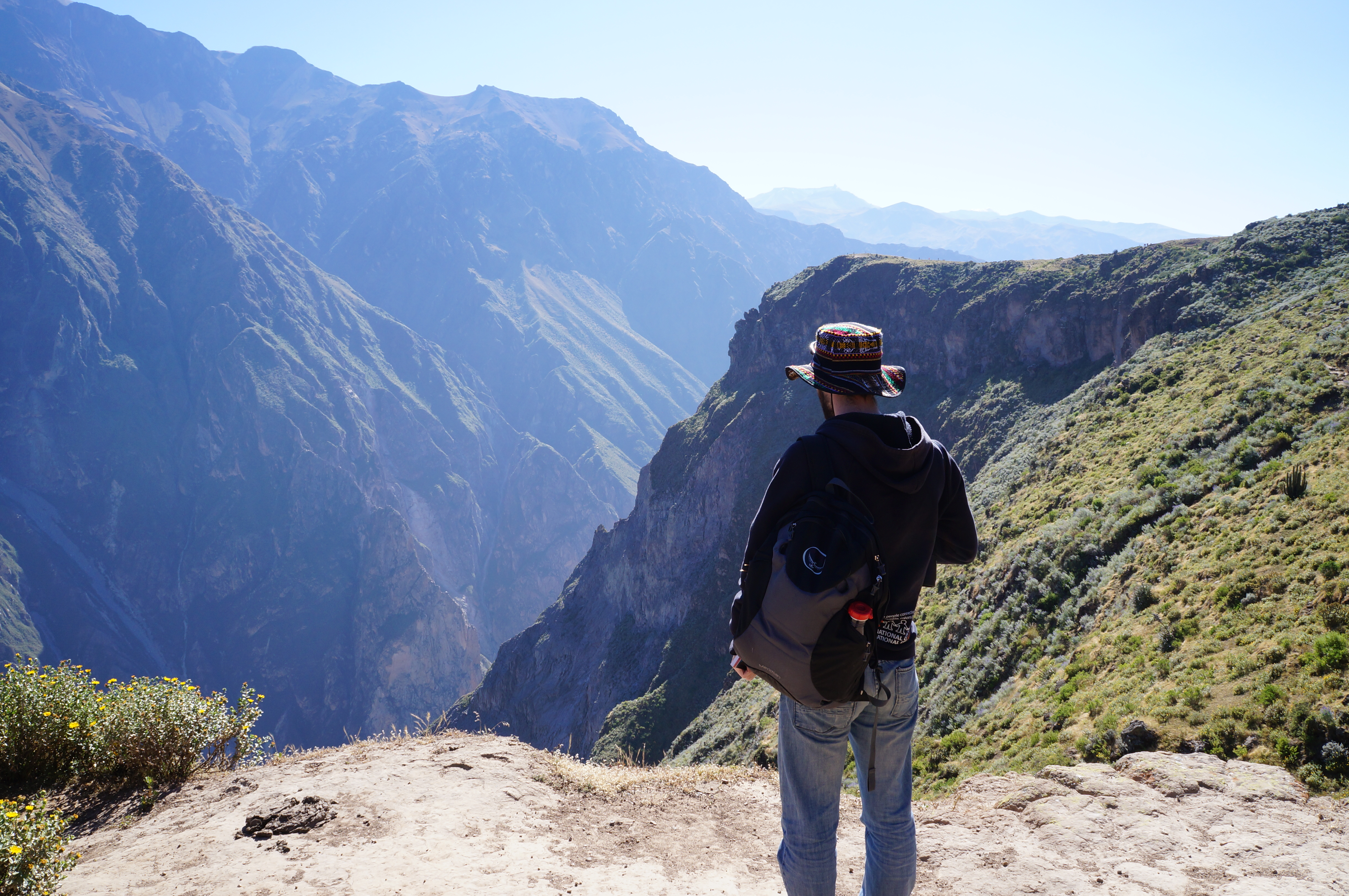
Cruz del Condor at Colca Canyon

Cruz del Condor at Colca Canyon

The other main attraction at Colca Canyon is the condors. Condors are one of the largest birds in the world, with a wingspan between 2.5 and 3 metres. I was a little bit skeptical that we would actually see condors, but I could see them soaring overhead before we’d even gotten off the bus! They are very large and it’s impossible to miss them, they would soar right over us and I got some great pictures. I think the constant presence of condors is partly due to the fact that the national park uses money from entrance fees to make sure there’s always a dead cow or two in the area (condors are vultures). We spent the morning walking along the side of the canyon, from viewpoint to viewpoint. I don’t think I ever actually got a glimpse of the bottom of the canyon though, it was very deep.

The majestic Condor

The majestic Condor

Overall, the canyon was my favourite part of the trip thus far (in the first week anyways). It had some of the most amazing vistas and the people there were very friendly. Instead of returning to Arequipa, we decided to take a bus transfer to Puno, which is located on the shores of Lake Titicaca, the next portion of our trip. I’ll fill you in on our time there in my next entry!

Cheers,
Maria

Exploring the Peruvian Coastline

Peru has been amazing so far, I don’t even really know where to start! We left around suppertime the day after we finished university, so it was a pretty hectic day and a long overnight flight from Toronto to Lima. It was misty rain and overcast when we arrived as well, which was a little bit anticlimactic and had us wondering what the rest of the trip might hold. Fortunately, every day here just seems to get better and better!

We spent a day and a half in Lima trying to cram in what we could. We stayed in Miraflores, which is this tourist area located on the southern coast of Lima. The misty rain cleared up pretty fast and the sun came out for us. We spent a bit of time exploring the parks in Miraflores and went to Huaca Pucllana, which is an ancient ruins from Lima culture (400AD) that is still standing right in the middle of the city! From afar it kind of just looks like a huge bunch of clay bricks, but they actually form a large pyramid (with a pretty nice view) and a series of living areas. One fun fact I liked about it is that the bricks are all vertical instead of horizontal, the reason being to leave room for flexibility in the event of an earthquake, which does frequently occur along the coast.

Atop the pyramid in Huaca Pucllana

Atop the pyramid in Huaca Pucllana

One of the first things we noticed about Lima is that it has some of the craziest drivers ever! Drivers somehow manage to fit their cars into the smallest of places, completely disregard all pedestrians, and drive as fast as they like. We had one of the craziest bus rides ever into the city center to visit the historical center. So far as we could tell, there’s one guy that is responsible for driving the bus and repeatedly honking the horn, and there is a second guy who is responsible for getting people on and off the bus as fast as possible, sometimes while the bus is still moving! We pretty much had no idea where to get off, which incited a huge discussion between the bus guy and a large group of the passengers about where we should get off. It certainly made our job a lot easier, although it didn’t really shorten the amount of time we spent wondering around after trying to find the right way (we made it in the end).

Plaza del Armas in Lima

Plaza del Armas in Lima

After leaving Lima, we moved on to the small town of Paracas. Paracas is a home base for the Ballestas Islands and Paracas National Reserve. Most of the southern coast of Peru is actually a desert. The moisture all gets trapped along the Andes mountain range and the coast gets very little rain, so it is very dry. However, it has a thriving sea life!

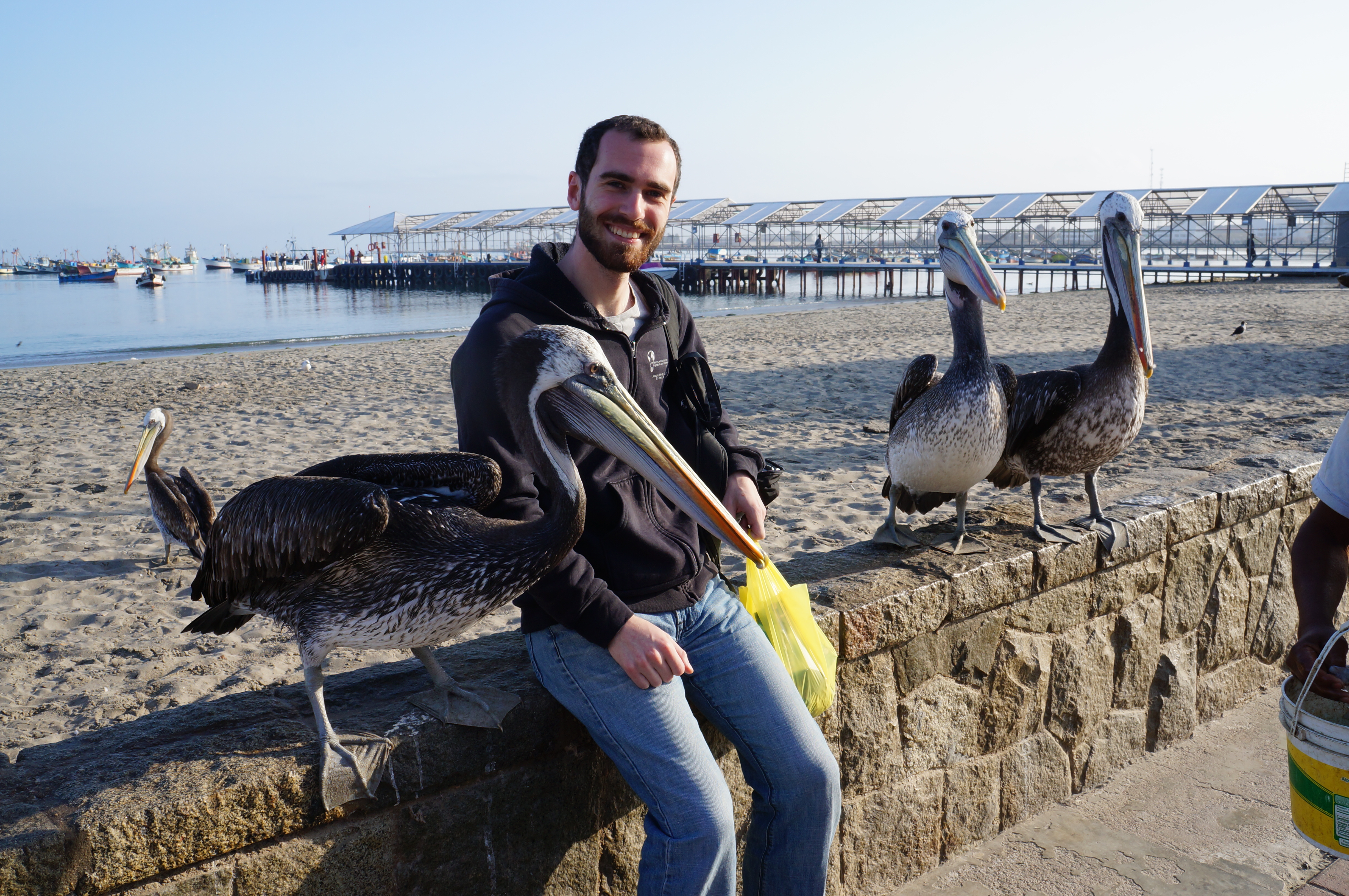
Seth making some Pelican friend in Paracas

Seth making some Pelican friends in Paracas

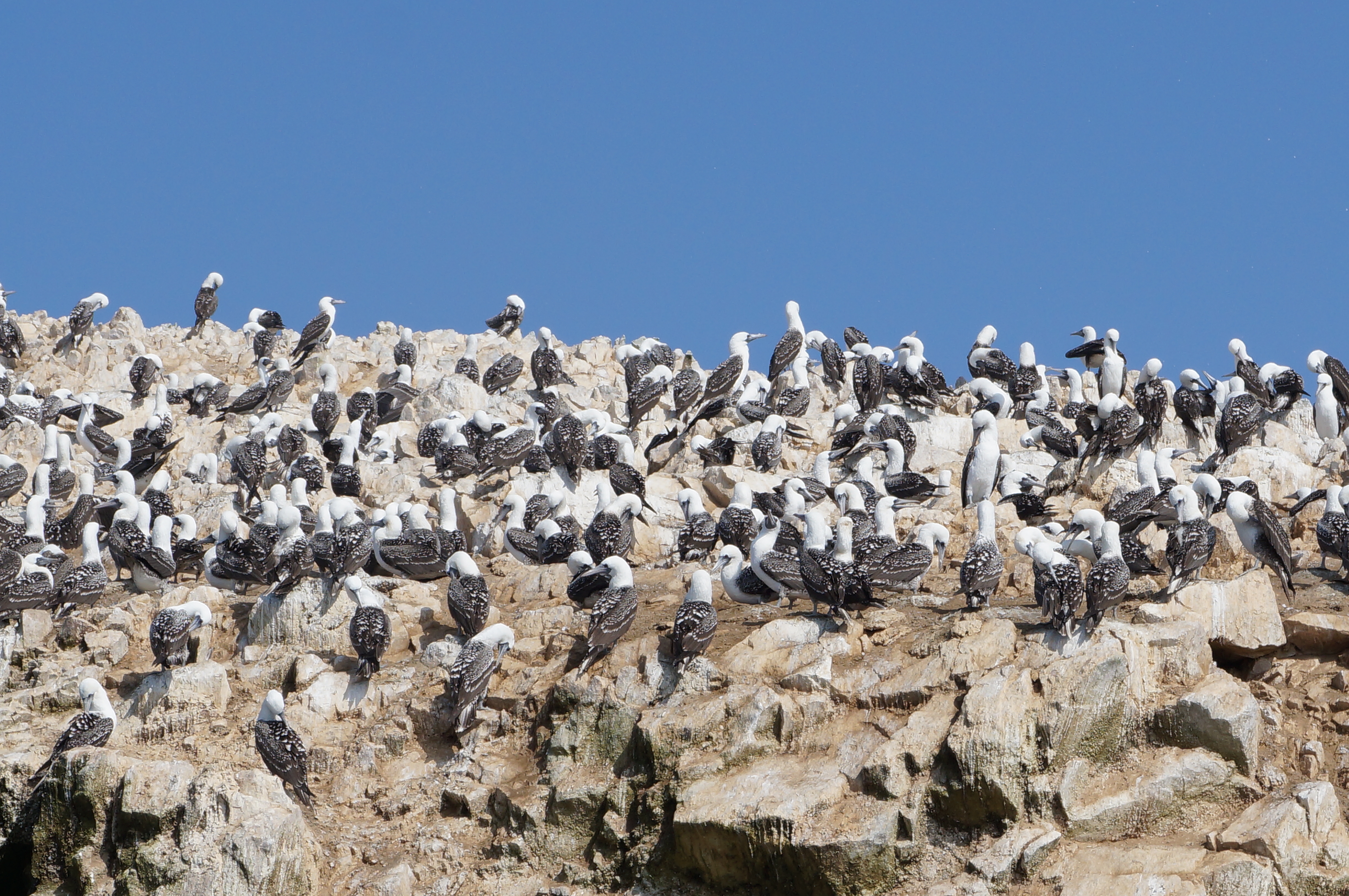
First we visited the Ballestas Islands, which contains large nesting colonies for lots of different types of seabirds! Sometimes the island is known as the Galapagos of Peru, or more unfortunately, poor man’s Galapagos. We thoroughly enjoyed it though! One of the most common birds you can see there is the Peruvian Booby (yes that’s actually what’s its called), but my favorites were the Peruvian pelicans, Inca terns, and the cute little Humboldt penguins! There’s also lots of sea lions hanging out in the area!

A few Peruvian Boobies hanging out in the Ballestas Islands

A few Peruvian Boobies hanging out in the Ballestas Islands

After the Ballestas Islands, we took a tour of the Paracas National Reserve. It was a lot different then we expected as the whole thing was just one big desert, but it was still quite unique to experience! We took the time to try out some local Peruvian Cuisine, one dish that is very popular in Lima is Ceviche. It’s basically raw fish that is marinated with onions and a lot of lemon juice! I actually didn’t mind the raw fish at all (I had sea bass) but I had a hard time with how acidic it was from all the lemon juice!

Trying ceviche in Paracas

Trying ceviche in Paracas

Overall, we’ve had a pretty interesting foray in local gastronomy. We both tried the popular soft drink, Inka Cola, which I actually really like, and we tried a shot of pisco sour when we were in Paracas, which was really sweet. Over the past few days, I also had the opportunity to try both alpaca meat and guinea pig meat! The alpaca was pretty tough, but tasty, whereas I just found the guinea pig to be tough.

I was hoping to fit a few more things in this post, but I hate long posts so I’m going to stop here. In my next update you can look forward to hearing about our trip to the worlds deepest canyon and learn about altitude sickness and how much it sucks!

Love Maria