On the Shores of Lake Titicaca

There’s one last blog that I want to write about Peru. The last big location that we visited was Lake Titicaca. I skipped writing about it in favour of Machu Picchu and the Amazon, but it was a pretty great place to visit as well! Lake Titicaca is located on the southwestern side of Peru and shares a border with Bolivia. Approximately 60% of the lake is in Peru and 40% in Bolivia. It’s the largest lake in the world that’s located at such a high altitude (3800 masl). The lake is really diverse and has some of the most interesting and traditional cultures that we discovered while in Peru.

We stayed in Puno City while we visited the lake, but we did take a 2 day trip out into the lake to visit several of the islands. The section of the lake near Puno is actually really shallow and a lot of reeds grow in the area. In most of the bay surrounding Puno, the water is only 7-8 metres deep! The first island that we visited was one of the Uros Islands, which are actually floating reed islands built by the people that live on them. The islands are formed of a floating base layer and the reeds are layered perpendicular to one another until they are high enough that they are out of the water. The islands are then anchored to the bottom of the lake and the Uros People have to make sure to always add new layers of reeds to the island.

Uros Floating Reed Island

Uros Floating Reed Island

It was incredibly unique and different than anything I’ve ever seen before. The people living on the islands survive mostly on tourism, so we took a boat ride in a reed boat around a few of the islands in order to support their livelihoods. There are still many people who live on the islands, however it is a lot of work to maintain the islands and more and more children are leaving when they grow up. It’s an interesting way to live and it was a bit bizarre to see a lot of modern technology on the island as well. Many of the reed houses had solar panels, which provided them with electricity, and satellite dishes. Although, many of the islands have also been completely abandoned in more recent years.

The second island that we visited was Amantani Island. Amantani is a completely natural island which also survives primarily on tourism. On Amantani, you will not find any hostels, hotels, or restaurants. Amantani is in the business of providing an authentic family experience to tourists. We stayed in Amantani overnight with a local family. Most families have an extra room in their homes for tourists and they cook all their meals. Our host family was really nice and had four children between the ages of 5 and 16. Their second eldest daughter took us around for most of the day since it was a saturday and she wasn’t in school.

Our host family

Our host family harvesting oka in Amantani

We ate a delicious lunch and supper with our host family and spent some time in the afternoon working with them as they harvested oka, a small vegetable that’s very common on the island. Our tour group also went on a short hike in the late afternoon to the top of the island to watch the sun set. It was actually a pretty large island and in order to get to the top we had ascend 400 metres in elevation. This was before our Salkantay hike, so I had a hard time with it of course, but I made it to the top in time to watch the sun set over the Lake!

In the morning we left Amantani behind and visited our third and final island, Taquile. I didn’t find the scenery on Taquile much different than Amantani, but it had one of the most unique cultures. The people who live on Taquile Island are known to be the best weavers. Everyone learns to weave and it is essential to learn to be a good weaver. One of the most important possessions for men in Taquile is their hats. Every boy and man must weave a traditional hat for themselves. The hats all looked the same to me, red on the bottom with some detailed design around it, and pure white on the top with a large colourful tassle. The white part of the hat folds over and can hang down on either side of your head.

Taquille Island

Taquile Island

If you look more closely at the hats though, there’s a lot that you can learn from them. Each hat is actually different, the detailed design on the bottom of each hat tells the history of your family, so if you ever lose your hat, you don’t really need to worry about it because someone is bound to find it and know to return it to you. However, the reason it’s so important to be able to weave a good hat is that a good hat is a symbol of a good, hard worker, whereas a bad hat might indicate that you are not a dedicated or hard worker. So women are on the lookout for men with good hats. It was also interesting to learn that the way a boy or man wears his hat is also very important. Married men have different hats than unmarried men, but it’s important to wear your hat the right way if you’re unmarried. If you wear your hat with the pom in the back, it means you are happily single. If you wear it with the pom on your right, it means you’re in a relationship, whereas if you wear it with the pom on your left, it means you’re looking for love. Definitely an interesting way to share your relationship status….
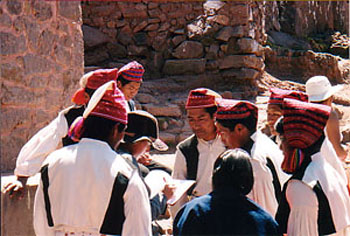
Traditional hats

Traditional hats in Taquile

Women must also become good weavers as well; one of their most important tasks is weaving a belt for their husband before they are married. Everyone survives on agriculture and pretty much all labour is done manually, so it’s important to have a good belt to protect your back. A woman must weave the first work belt for her husband and it is common for part of the belt to actually be woven using some of her hair. There’s a lot of interesting dynamics with how men and women interact in Taquile and my first thought was that it was a bit dated. For example, women are expected to walk 5 paces behind their husbands if they’re out together. However, our guide talked about how traditional gender roles have been changing and how women have recently started getting involved in island politics and voting.

It was a very interesting culture to learn about, however, as with the Uros Islands, it’s a culture that is quickly dying. Teenagers have less of a desire to continue their parents way of life and are anxious to move to Puno to attend university. This change is only accelerated by tourism, which can be equal parts good and equal parts bad. Tourism certainly supports local livelihoods and provides families with more security and opportunity, but it also introduces a traditional culture to a different way of living. Children are exposed to cameras, ipods, tablets, and phones and are starting to desire a different life. I’m glad we got to learn a little bit about their culture though as I’m sure it will continue to change more and more.

Anyways, I hope you all enjoyed my little mini-series on Peru! I’m not sure what I’ll write about next, I’m hoping to do some traveling around Newfoundland over the summer and might be making a trip up to Ontario. Let me know if there’s anything you’d like to hear about. Hope to see you over the summer!

Maria

Into the Amazon

After three and a half weeks, we’re finishing up our trip to Peru. We’re flying back to Lima today and then back to Canada tomorrow. It’s definitely been an incredible trip and the longest period of time I’ve spent on vacation! We spent the last week in Manu National Park, it’s located on the eastern side of Peru and is a part of the Amazon Rainforest.

We left Cusco last week and drove for a full day to get to Salvacion, the town we stayed in. We left the Andes and traveled through the mountainous beginnings of the cloud forest as we descended in altitude towards the rainforest. It was one of the scariest roads we’ve traveled on in Peru. We were in a huge bus and the roads felt like they were barely wide enough for us, it had some beautiful views though!

Manu National Park

Manu National Park

We decided to do a work and travel program in the Amazon in order to save money. We thought we’d be working part time on a conservation project, but it turns out the website we’d booked on was a little out of date and we didn’t end up actually doing any work. The company we worked with is owned by a couple and it ended up just being us on the tour, so we had a very specialized trip!

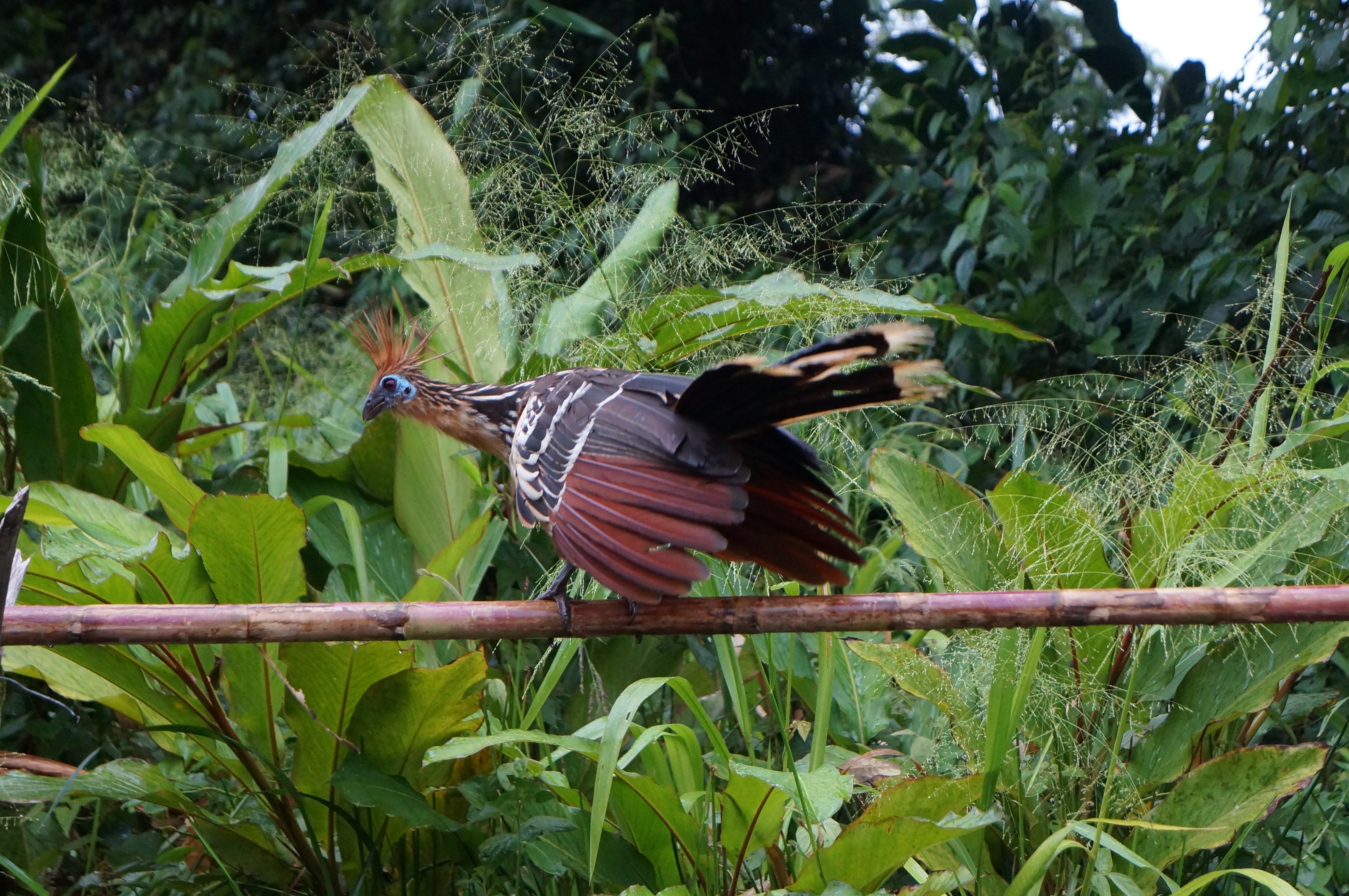
We spent two nights in town and we spent another two nights in a cabin in the rainforest. We had the opportunity to go bird watching at an oxbow lake and we went on lots of walks in the jungle looking for animals. Seth got lucky and we saw lots of birds! We saw macaws, heron, and the ridiculous looking hoatzin and Amazonian umbrella bird. We also saw lots of different monkeys, frogs, and insects. Seth even saw a few snakes and opossums.

Hoatzin

Hoatzin

On our last day, we went out for a motorcycle ride to see some more birds and animals. Luckily it was overcast the first two days we were there, when the sun comes out it gets so hot that you can’t really do anything! Overall the trip was different than we expected, but we had a great time exploring in the park. Aside from the animals we saw, we also saw some incredible flora. Everything grows so high in the rainforest, almost no sunlight makes it down to the jungle floor. We saw a kapok tree, the biggest tree in the Amazon, and we spent a lot of time near the Madre de Dios river which eventually flows into the Amazon river.

Kapok Tree

Kapok Tree

We’ve been spending our last few days in Cusco. We were going to visit some more Incan ruins, but they’re actually pretty expensive and we decided we’d seen enough ruins, so we’ve been trying some other things. We did some shopping and had an hour long massage with hot stones for the low price of $10! We even spent one afternoon at Cusco’s very own ChocoMuseo, a museum all about chocolate! It was actually super interesting and they had all kinds of chocolate treats for tasting, we particularly enjoyed a chocolate tea that they make.

Yesterday we decided to go white water rafting on the Urubamba River! I’ve been rafting once before in BC and I wasn’t really sure what to expect, but it ended up being really fun! The rapids were all class 2 and 3, so they weren’t too overwhelming, but we still had a few laughs when two of the girls fell out of our raft and pulled the guide in with them! Seth and I both managed to stay in the raft the whole time, although I did jump out for a swim at one point. The river runs through the Sacred Valley outside Cusco, so it was a pretty scenic trip with the Andes all around us!

All suited up for white water rafting!

All suited up for white water rafting!

I’m so glad we got to spend several weeks here and had the opportunity to check out a lot of different sites; there’s so much to do in Peru! We skipped several big tourist attractions and we didn’t visit the top half of Peru at all, we easily could have spent several more weeks here. But I am excited to be coming home now and ready to get that piece of paper that says I have a degree! See you all soon!

Love Maria

Trekking from Salkantay to Machu Picchu

I’m going to postpone writing about lake Titicaca for now as I’ve just spent the last week hiking from Salkantay to Machu Picchu. Machu Picchu is, of course, one of the biggest attractions in Peru and one of my motivations for wanting to come here. We decided we wanted to trek there to make the experience a little more special, so we hiked for four days to Aguas Calientes and arrived in Machu Picchu on the fifth day.

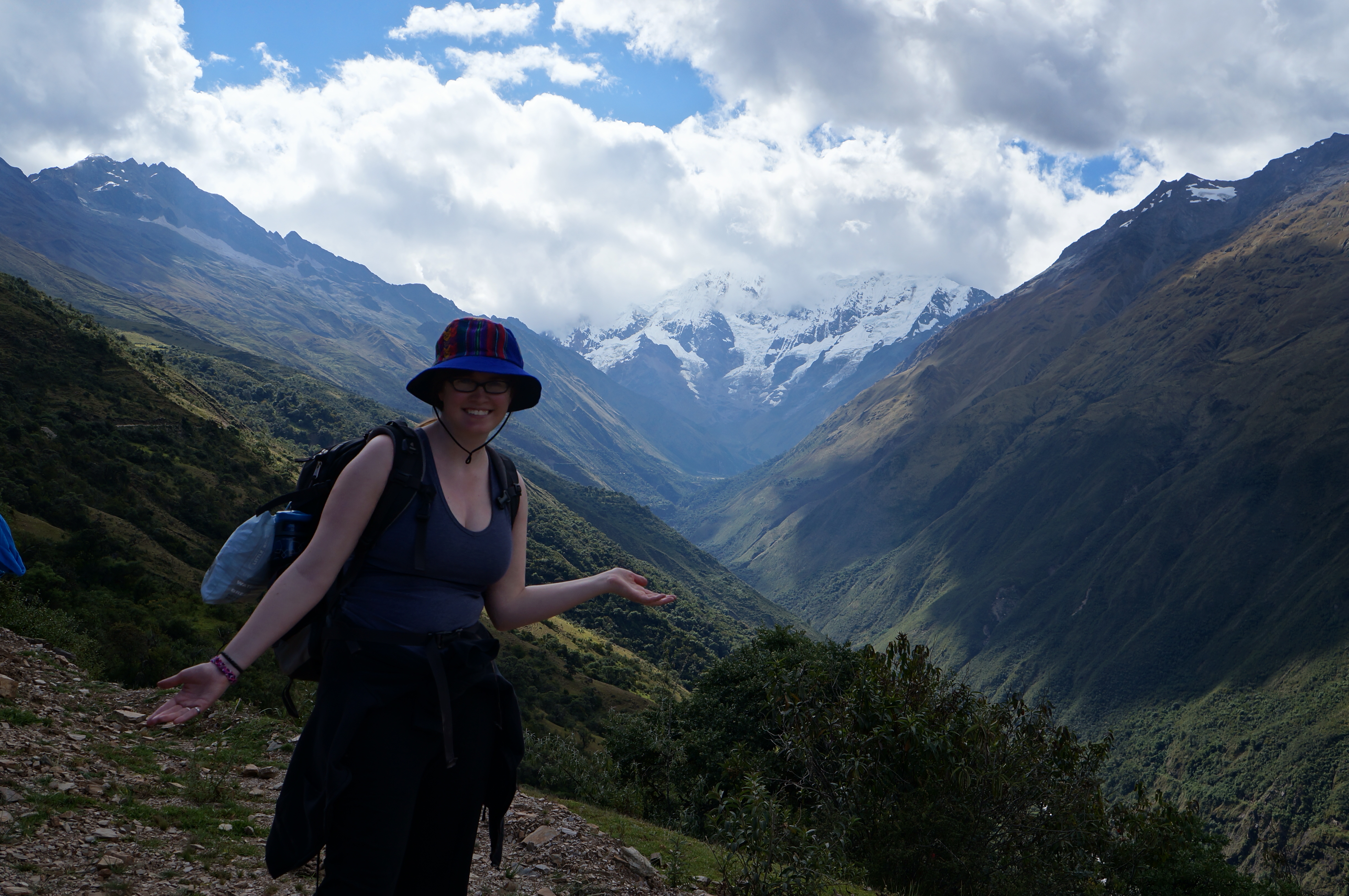
There’s a few different options for trekking, the most popular of which is the Inka Trail. The Inka Trail is a tough hike with something like 15,000 stone steps. We opted not to do this one in the interest of cost, and instead decided to hike the Salkantay Trail, which hikes up to the Salkantay glacial peak and then down through the beginning of the Amazonias and the cloud forest. This was definitely the most physically challenging thing I’ve ever done. On the first and second day of hiking I was definitely regretting the decision to go on a trek, but I really did enjoy the last few days and I’m really proud that I finished it.

My "I'm not sure why I'm doing this" pose from the first day of hiking

My “I’m not sure why I’m doing this” pose from the first day of hiking

We started off hiking in Mollepata (2900m) and hiked 20km to the base of humantay glacier (3900m). The altitude completely exhausted me on this portion of the trek, which was mostly uphill, and I had a hard time keeping up with the group. I don’t think I ever really acclimatized. The views were incredible though! We hiked along the edge of the mountains all day until we reached the snowy peak of the Humantay Glacier.

Luckily, we didn’t have to do anything on the trek except walk. We had cooks who met us at our lunch stops and campsites to prepare us meals, and horses that carried out luggage. We just had to hike with our day packs. The first night under the glacier was the coldest night of the trek. In the mountains it gets very hot during the day and very cold at night. We had to bundle up in all our clothes, but we had the most amazing view of the night sky. I’ve never seen so many stars before. It was easy to pick out the Milky Way, the whole sky was just lit with stars!

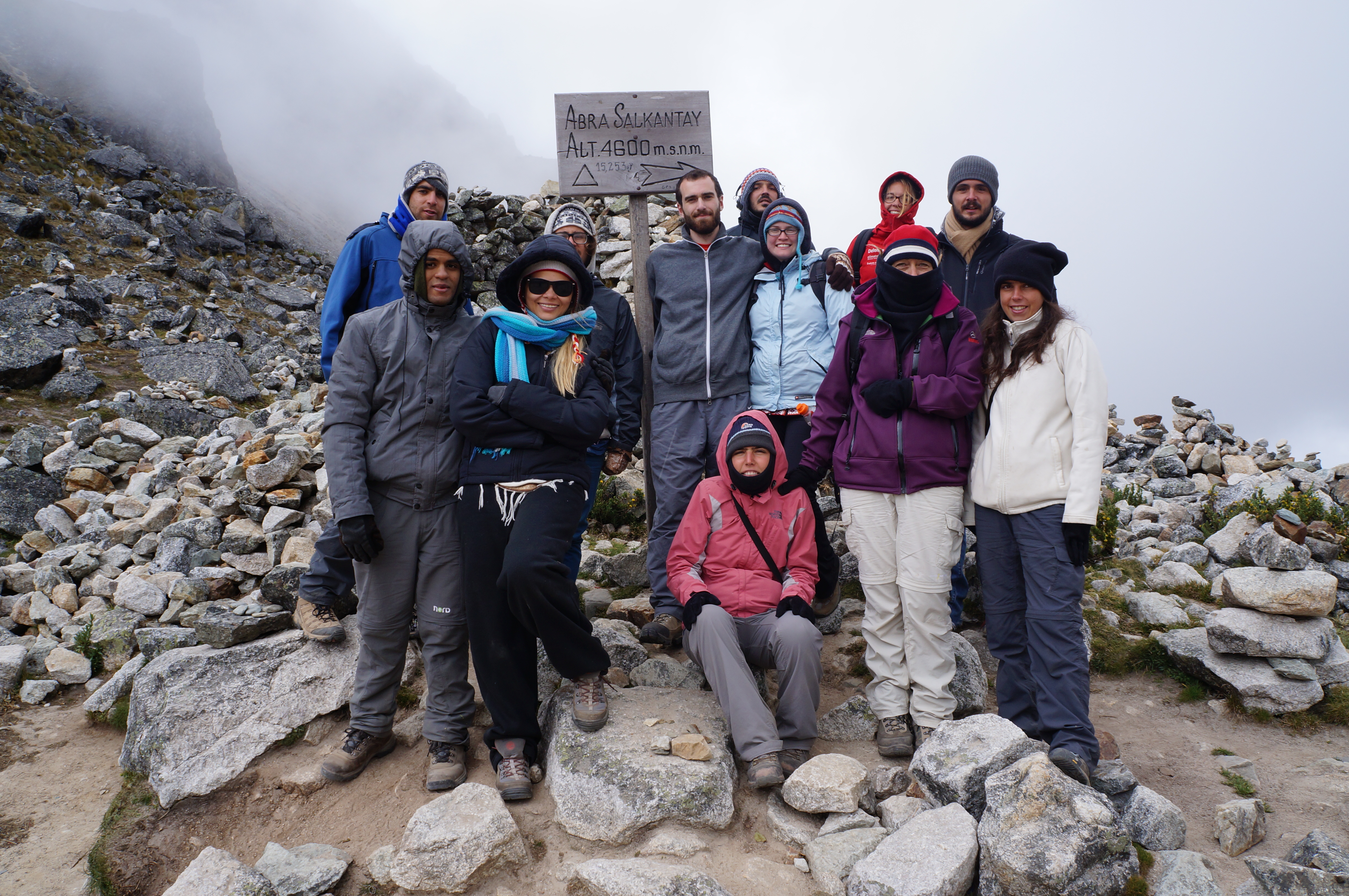
A little bit cold at the Salkantay Peak!

A little bit cold at the Salkantay Peak!

What challenged me most on this hike was learning about my own limitations. On the second day, the group hiked up another 700m to the Salkantay glacial peak. This is one of the most challenging parts of the hike, so there was the option to take a horse up to the top. I wish I could have hiked it, but I decided to take a horse instead of trying to hike up at such a high altitude. Seth did the whole trek and I met him at the top. From there we hiked down 1700m out of the mountain pass and into the cloud forest and the beginning of the Amazon. We hiked for 11 hours on the second day, but the quickly changing scenery was amazing. We went from the foggy mountain pass into the lush green of the cloud forest. Cloud forests are a pretty unique habitat, they’d be like a rainforest but for the high altitude at which they’re located.

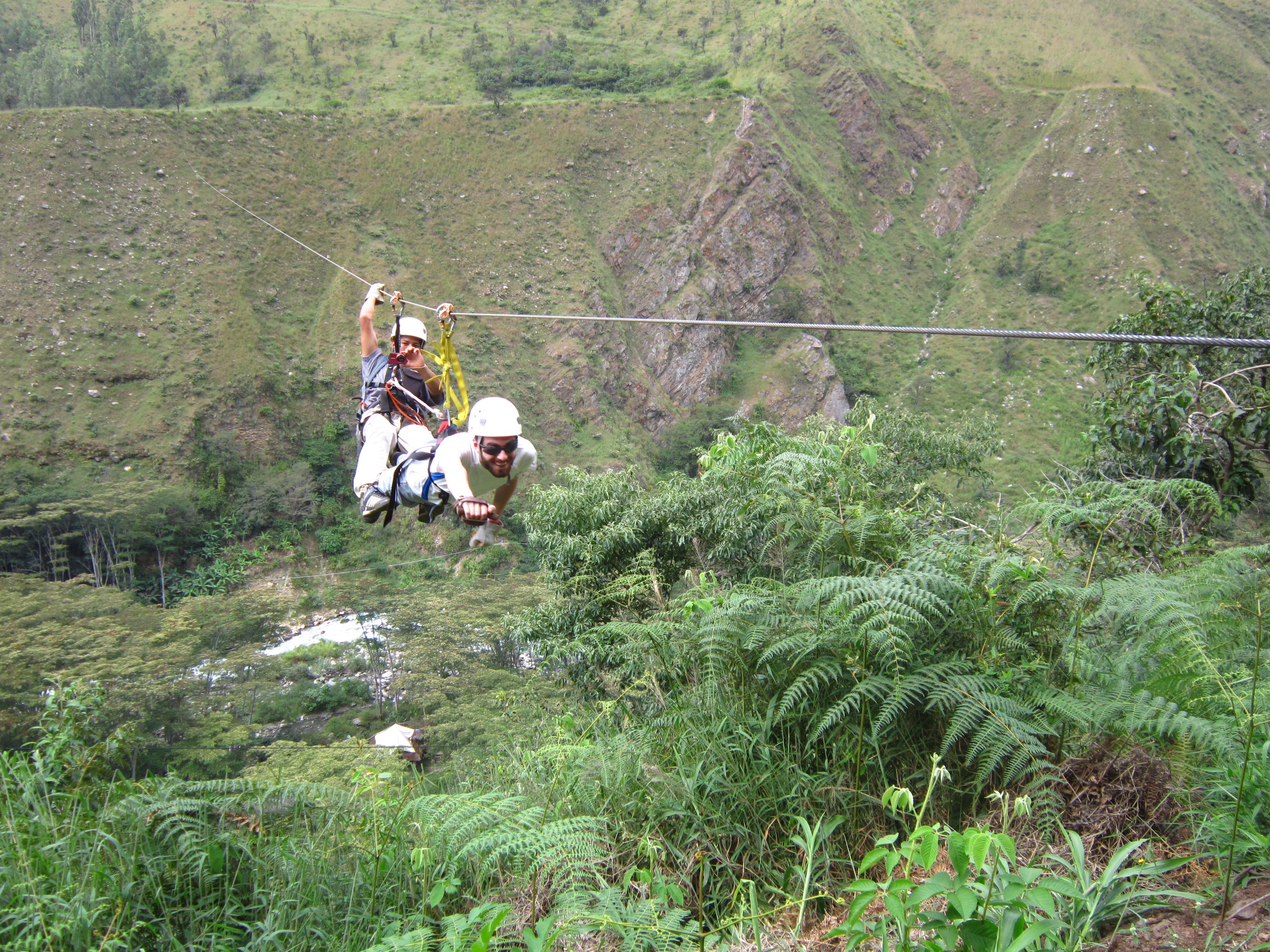
The last two days of trekking after that were at lower altitudes, had shorter distances, and were much more enjoyable. On the third day we hiked through the forest to Santa Teresa where we went to a hot springs, and on the last day we had the opportunity to go zip lining across the valley! We did 6 lines and the guides wanted to make sure you had as much fun as possible (while still being safe). Seth did one line upside down and did another “superman” style by wearing his harness backwards! We finished off by hiking along the train tracks behind Machu Picchu to Aguas Calientes.

Seth flying over the river

Seth flying over the river

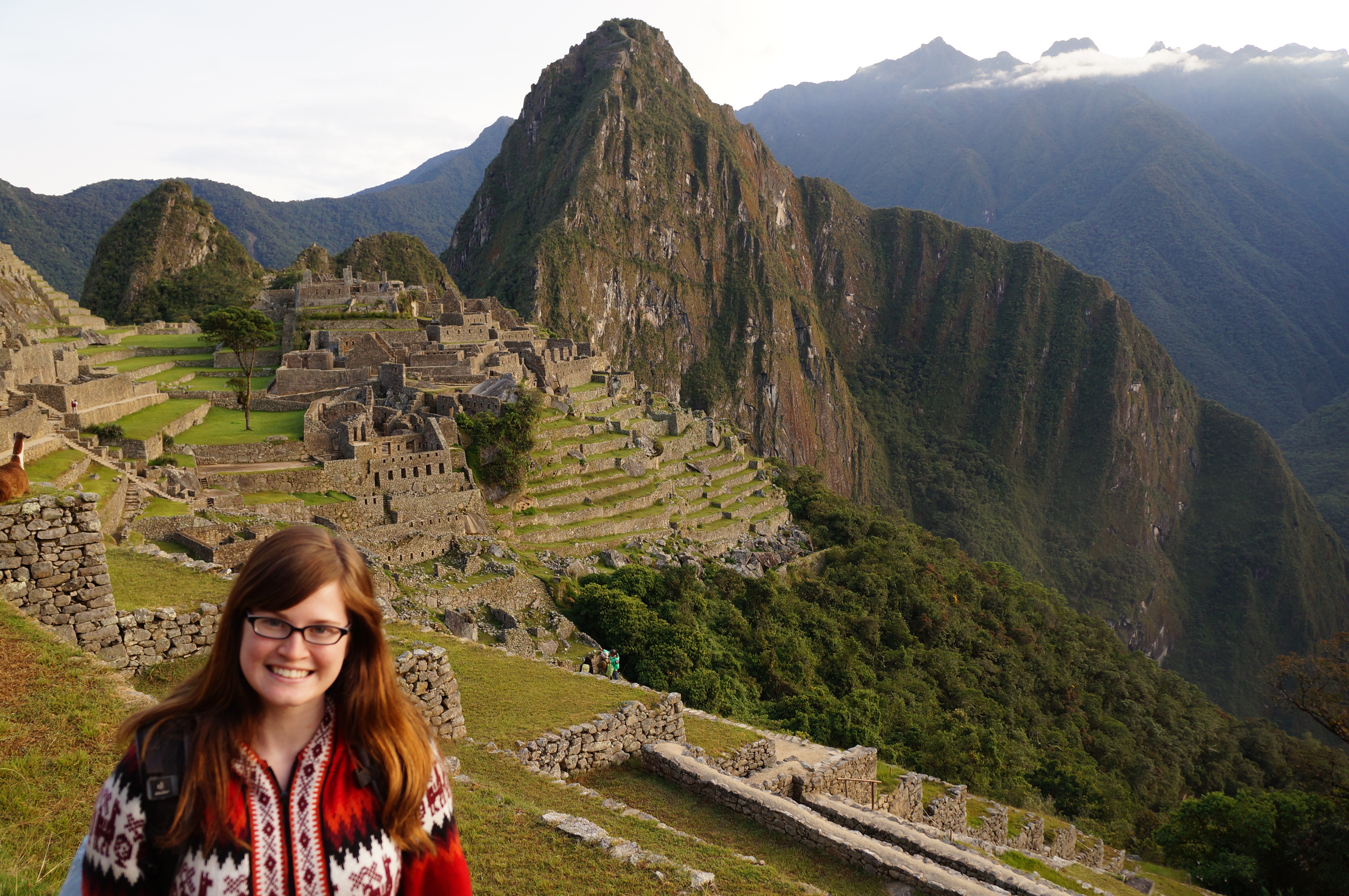
It was an early rise on our last day to go up Machu Picchu. We got there for opening time at 6am and watched the sun rise over the Andes. We had a guided tour and then we had the rest of the day to explore on our own. I can’t believe we’ve been there now, it felt like the whole trip had been leading up to Machu Picchu. It did not disappoint at all and was incredible! There’s such an amazing view of the surrounding mountains and its incredible how much of the huge Inkan city is still standing (only 30% was restored). It’s hard to believe they built an entirely self sustaining city up there. There’s a fountain system which runs through providing water and all of the stones used to create the buildings and terraces were taken from the mountain. The city is divided into two parts, the terraces are used for agriculture as rain water easily irrigates from one terrace to the next, and the buildings form the actual city where people lived.

Beautiful Machu Picchu!

Beautiful Machu Picchu!

Anyways, it was definitely an incredible experience and I’m proud I was able to finish the hike. We’re back in Cusco now and soon starting the last part of our trip. We’ll soon be off into the Amazon for a week, hopefully to see lots of interesting plants and animals!

Cheers,
Maria