An Expensive Welcome to Argentina

After a very sad winter (weather-wise), I was thrilled to have a big trip on the agenda for mid-February to early March! Me and Seth started travelling again last year with a visit to my cousin, who is studying in Finland. We had an incredible time, so I convinced Seth that 2024 was the year to finally cross a major trip off my bucket list – hiking in Patagonia! I still had some banked vacation time from 2020, so we booked off 3 weeks to explore around Southern Argentina and Chile.

In order to get to Patagonia, we had to go through some major cities first, and like most plane trips these days, it was chaotic. We booked an Air Canada flight to Buenos Aires through Toronto. We planned to stay for 2 days before catching a flight to Patagonia, which is the region that encompasses the southern portion of both Argentina and Chile.

The trip almost got off to a rough start. We weren’t due to leave Vancouver until 1pm, and I woke up early on Saturday morning to an email from Air Canada saying our flight had been cancelled and we’d been rebooked 2 days later through LONDON HEATHROW. I know it’s an automated re-booking, but it’s just unfathomable to me why any program would ever re-book a flight from Western Canada to South America, with 2 crossings of the Atlantic Ocean.
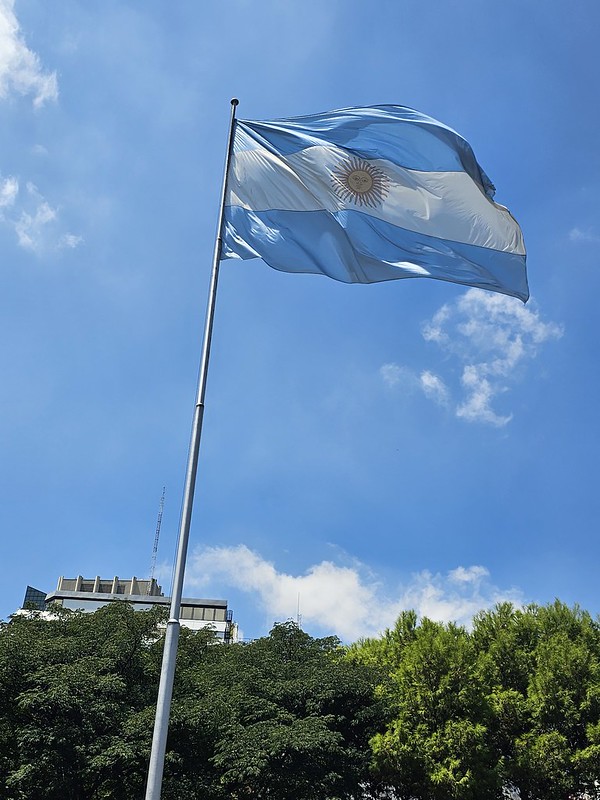
20240218_154350
20240219_123431

We would have lost our entire 2 days in Buenos Aires with this itinerary (and maybe even our flight to Patagonia), but fortunately, with a little detective work we were able to solve the problem. It was only our flight from Vancouver to Toronto that had actually been cancelled, so we re-booked that portion of the flight 2 hours earlier and rushed to get to the airport in time to make the original booking. Fortunately I’d woken up early, otherwise we might have had a really bad start to the trip.

Our flight did still end up being a bit delayed and we arrived in Buenos Aires ~4 hours late, just in time for a pretty sunset. We had very limited time in the city and there was a lot to explore! I would have preferred to spend a few more days in Buenos Aires, but I had to limit myself because our trip was primarily about Patagonia and I’m committed to the idea of returning to visit Northern Argentina and Chile on a subsequent trip.

There are a lot of neighbourhoods in Buenos Aires and I had a hard time trying to decide where to stay. I was mostly between San Telmo (for location) and Palermo (for atmosphere). I’d heard mixed reviews about how safe San Telmo was, but ultimately decided on a hip hostel because the location was so ideal. It ended up being great! We didn’t really go out after dark, but I never felt unsafe in San Telmo and our hostel was really nice. We had a private room, but our hostel had a lot of community space, including a bar and 2 pools. The entire front atrium is made of glass with crisscrossing glass staircases (very Harry Potter). The coolest part was that it had a glass bottom floor pool on the roof! So the atrium was always kind of shimmery from the light reflecting off the pool, through the glass floor, and across the walls. It was really neat.
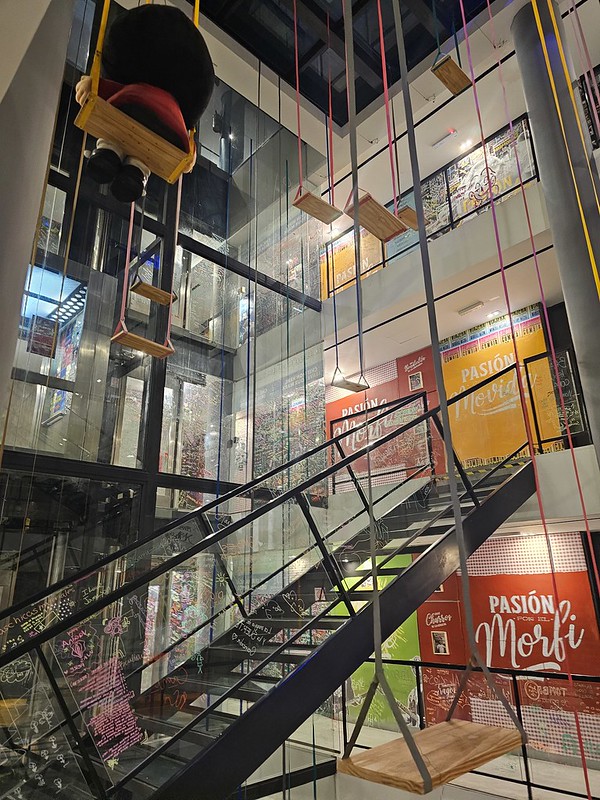
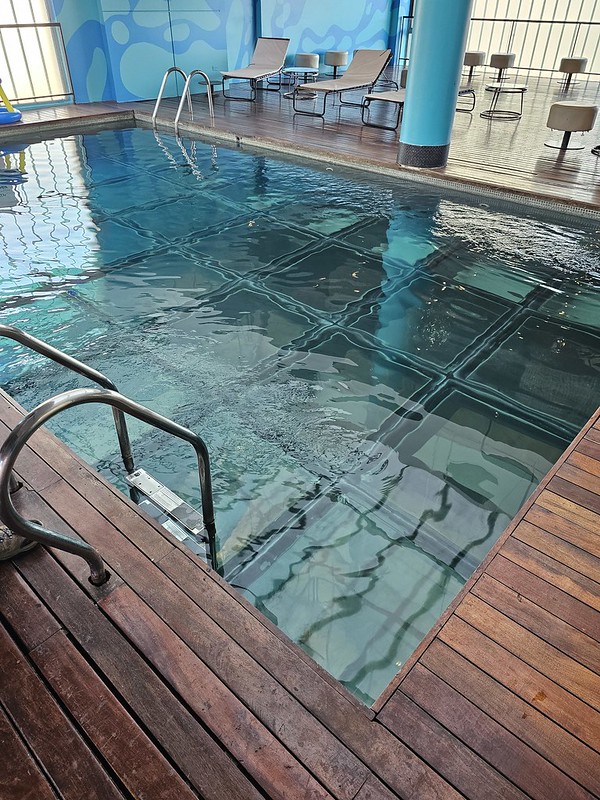
20240218_222150
20240219_175331

With limited time, we could only do a few activities in Buenos Aires. This was further exacerbated by the fact that we ended up having major money problems in Argentina that we needed to solve before leaving the capital.

Argentina’s currency is the Argentine peso, which is problematic because it is a very volatile currency that has seen rapid inflation and de-valuing of the currency in recent years. It seems to be a bit of a pariah currency internationally and we couldn’t get any of it in Canada before we left. For this reason, Argentinians prefer to try and keep their savings in US currency because it’s much more stable, so we brought several hundred dollars of USD with us, and assumed we could get pesos from ATM’s once we arrived.

Argentina’s main problem is that the official government rate from USD to pesos is about a 3rd of the actual rate. So ATM’s are not really an option because they give you a terrible conversion rate; they can only dispense a maximum of ~$20USD at a time; and they charge you high fees to take the money out. So to take out the equivalent of $20USD in pesos from an ATM would likely cost you more like $60USD. However, because Argentinians prefer to keep their savings in USD, there’s incentive for them to change money on the street. So there’s a separate conversion rate known as the “blue rate”, which people use colloquially to change money. So stores will indicate that they will accept USD at the “blue rate” or you can exchange cash in Argentina’s thriving black market.
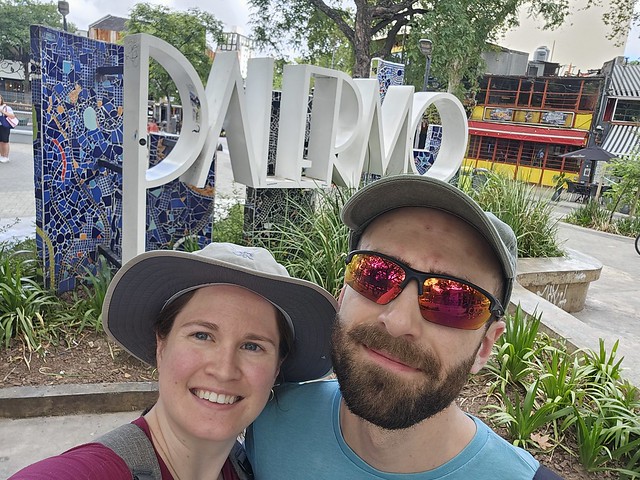
20240220_115711

This seemed completely wild to me and I’m still a bit shocked that we actually did it. Honestly, I would have been good to just exchange the US currency we brought and pay for everything else on card, but our money problem was further exacerbated by the fact that Argentina is a cash based economy and we heard horror stories about more remote towns not accepting credit cards. There’s definitely a preference for cash and many stores will list their retail items at two different prices: a “cash rate” and a “card rate”. I was very worried we would get to Patagonia and not be able to use our credit cards, leaving us with no way to get any more money than the USD we’d brought with us.

This turned out to be very much not the case. You can pay for most things in Argentina on credit card, even in Ushuaia, El Calafate, and El Chalten. They are all small towns, but tourism is their main source of revenue, so they have adapted to accept credit cards. It does cost you a bit more to pay on card because of the fees – which used to be exorbitant as well, but were regulated in 2022 – so while cash is still king, the rate I got on my visa was fine. It’s pretty much just street markets, buses, and taxis where you need cash. But even that was hit or miss. Lots of taxis do take card, as do some of the major bus depots. I think this cash myth is perpetuated around the country because paying with cash on the blue rate is the most economical way to spend money and most Argentinians can’t imagine having the luxury of paying a bit more to simplify your life. So I recognize that that is a privilege we had as tourists.

But I didn’t know most of this when I arrived in Buenos Aires, so we immediately became stressed out about how to obtain enough cash for the entirety of our time in Argentina. We exchanged some of our USD on the black market, but even then we got scammed. It sounds shady, but it’s a pretty accepted practice and there’s a street in Buenos Aires where you can go to change money. We found someone and he led us back to an apartment building where he had set up a bit of a secret office. He only let one of us go in, so Seth went and changed half of our money. The largest bill Argentina has is the 1000 peso, which is worth ~$1USD. So it’s basically the equivalent of everyone in America walking around and paying for everything with stacks of $1 bills. To manage their stacks of cash, a lot of people and businesses use electronic bill counters. The guy we were buying from counted out the money for Seth using the machine, but when we counted the bills later, they had clearly rigged the it and we got short-changed.
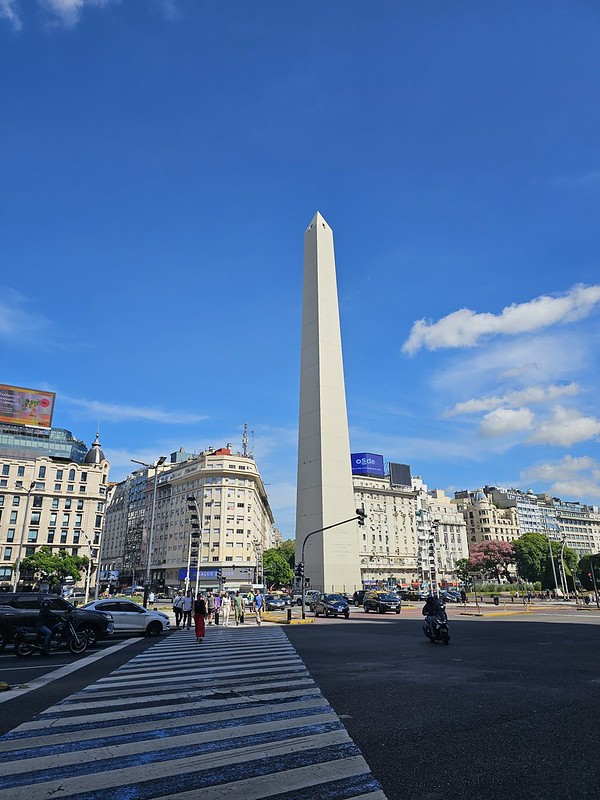
20240219_101738
20240219_114707

It turns out, the most reliable way to get money is through Western Union. I only have good things to say about Western Union after this experience because they offer a great rate and you can basically send yourself money in Canada and pick it up in Argentina in pesos. So it’s the easiest way to get your hands on cash without getting scammed. The problem is, we couldn’t send ourselves money once we got to Argentina. So my Mom ended up going into a Western Union in St. John’s and sent us all the money we needed and we picked it up in cash in Buenos Aires. It’s still somewhat challenging because a lot of the small branches run out of cash, but there’s a few big branches, including one near our hotel, that was very reliable. So after much difficulty, we finally got enough cash for the trip and I was able to breathe easy.

Mostly I’m relieved we started the trip in Buenos Aires because I think this would have been much more difficult if we’d started the trip in El Calafate or Ushuaia. My recommendation for anyone going is to wire yourself a ton of money through Western Union before the trip, pick it up in Buenos Aires, and avoid the blue rate altogether. We ended up keeping the rest of our USD for an emergency. We didn’t exchange it for pesos and ended up just taking it home. Maybe not ideal if you’re European, but as a Canadian, I don’t mind having some USD around.

So it was a hectic and stressful welcome to Argentina, but fortunately the trip improved a lot from there! Check back next week to hear about the fun things we got up to Buenos Aires and make sure you adequately research the money situation if you decide to visit Argentina! Economically, Chile is much more stable, so it was only Argentina where we had issues.
Hiking around Ilha Grande

Sadly our trip to Brazil is over now. We spent the last part of our vacation on Ilha Grande, an island a few hours outside of Rio. We feared the trip to the island might be a bust because of a bad weather forecast, but it still turned out pretty good.

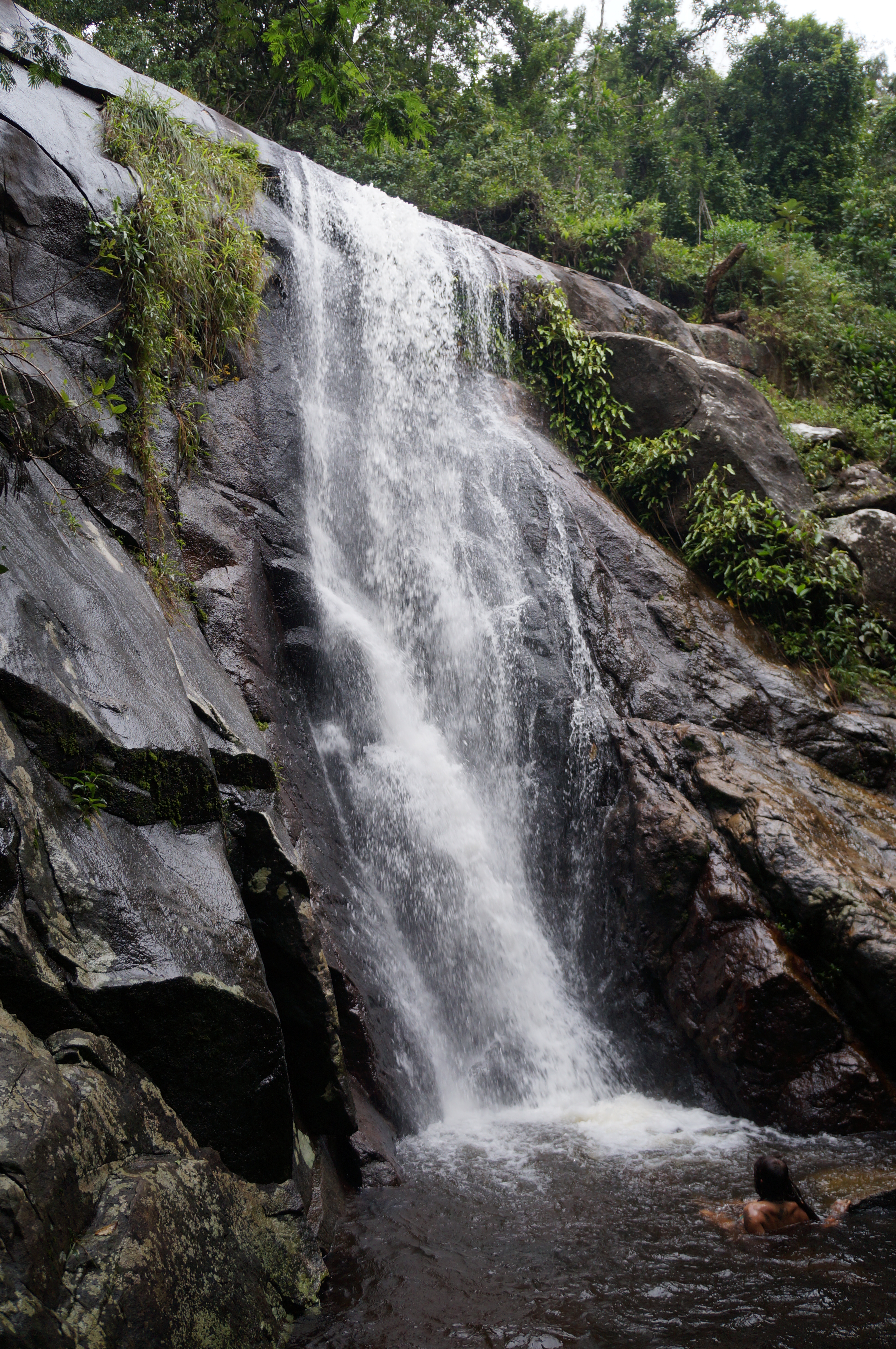
We took a transfer from Rio early in the morning and arrived on the island just after lunch. It rained our whole way to the island, so we weren’t feeling up for beaches, but we decided to go on a little 3km hike that somehow turned into 8+ kilometers. Our intention was to hike up to an old aqueduct that still transports water down to the main city of Abraao, but the rain cleared up a bit, so we decided to continue on another few kilometers to Feiticeira Waterfall. It looked pretty small compared to what we saw in Iguazu, but it was still quite nice. Our hiking boots have definitely seen better days though! The whole trail was covered in red clay, which got incredible sticky thanks to all the rain and got caked all over our boots and legs.

Feiticeira Waterfall

Feiticeira Waterfall

The sun was trying to poke out the following morning, so we rose early to complete a 7km hike out to Ilha Grande’s best beach, Lopes Mendes. We seemed to be the first ones out on the trail and even though it was mostly uphill, we enjoyed the first few kilometres of the trail. There’s a lot of dogs on the island, mostly strays unfortunately, and we picked up two doggy friends at the start of our hike. At first we tried to shake them off because I’m usually pretty weary of animals in other countries, but they were very sweet and hiked most of the way to Lopes Mendes with us! There was a little brown one that was always taking off into the woods and a bigger white dog that would run ahead after the smaller dog and then wait for us to catch up (he was sweet and I really liked him). They disappeared after about an hour and we weren’t sure what happened to them, but they eventually caught up with us later on with another group of hikers.

DSC06568

Made some new friends

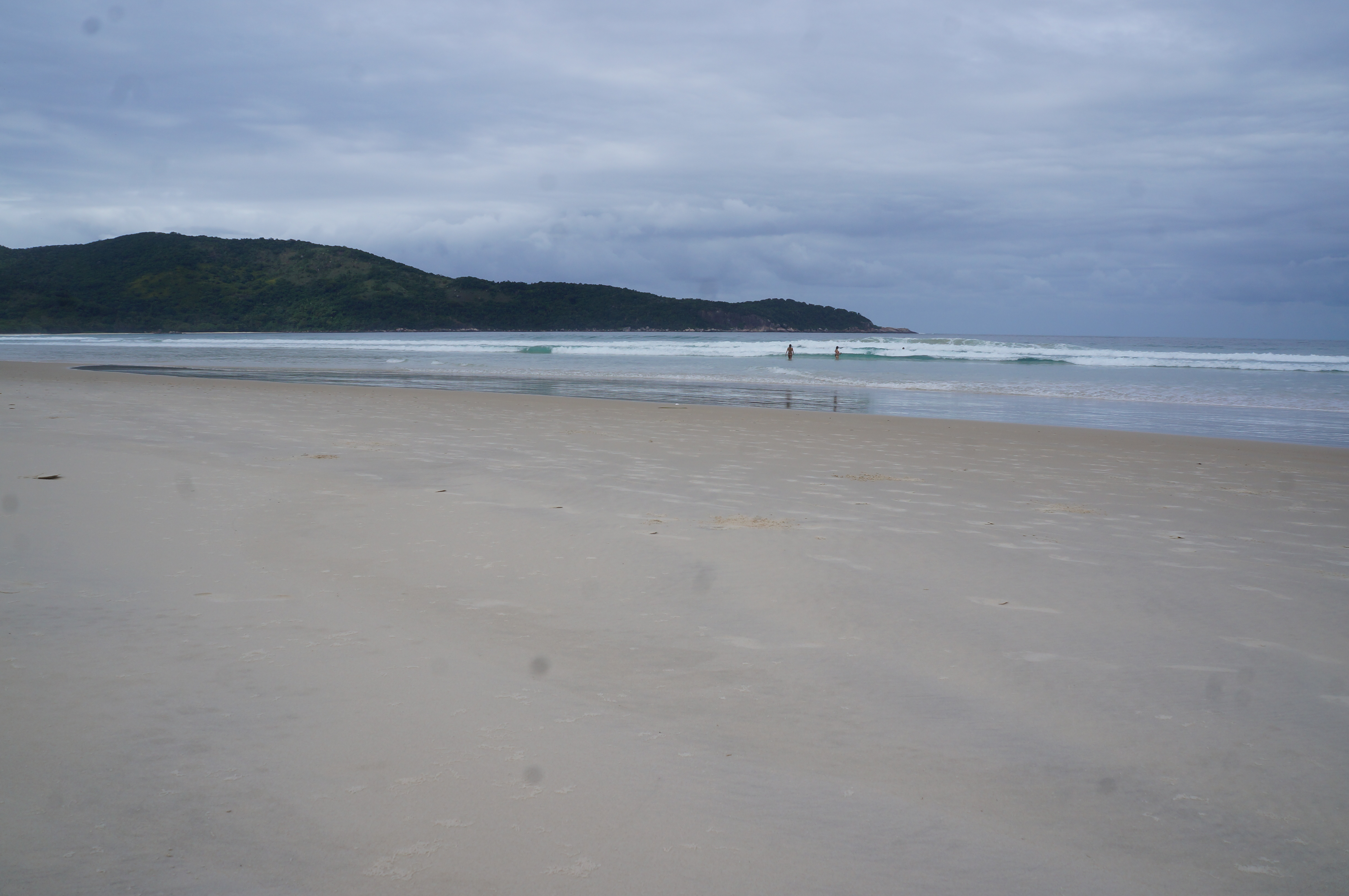
I read before we came here that Lopes Mendes was ranked as one of the best beaches in the world and it did not disappoint! It’s definitely near the top of my list! It was just miles of the finest, cleanest sand I’ve ever seen. It was so soft and we spent a lot of time just hanging out in the shallows. At first when we saw the waves at Lopes Mendes we were a little disappointed because they looked really large and we had gotten pummeled by the large waves at Copacabana, but they ended up being perfect. The slope of the beach is very small, so the waves would break really far out and were great for jumping around in. Everyone in Rio told us the water would be too cold for swimming because it was almost winter, but unsurprisingly, we didn’t find it cold at all and thought it was the perfect temperature!

Beautiful Lopes Mendes

Beautiful Lopes Mendes

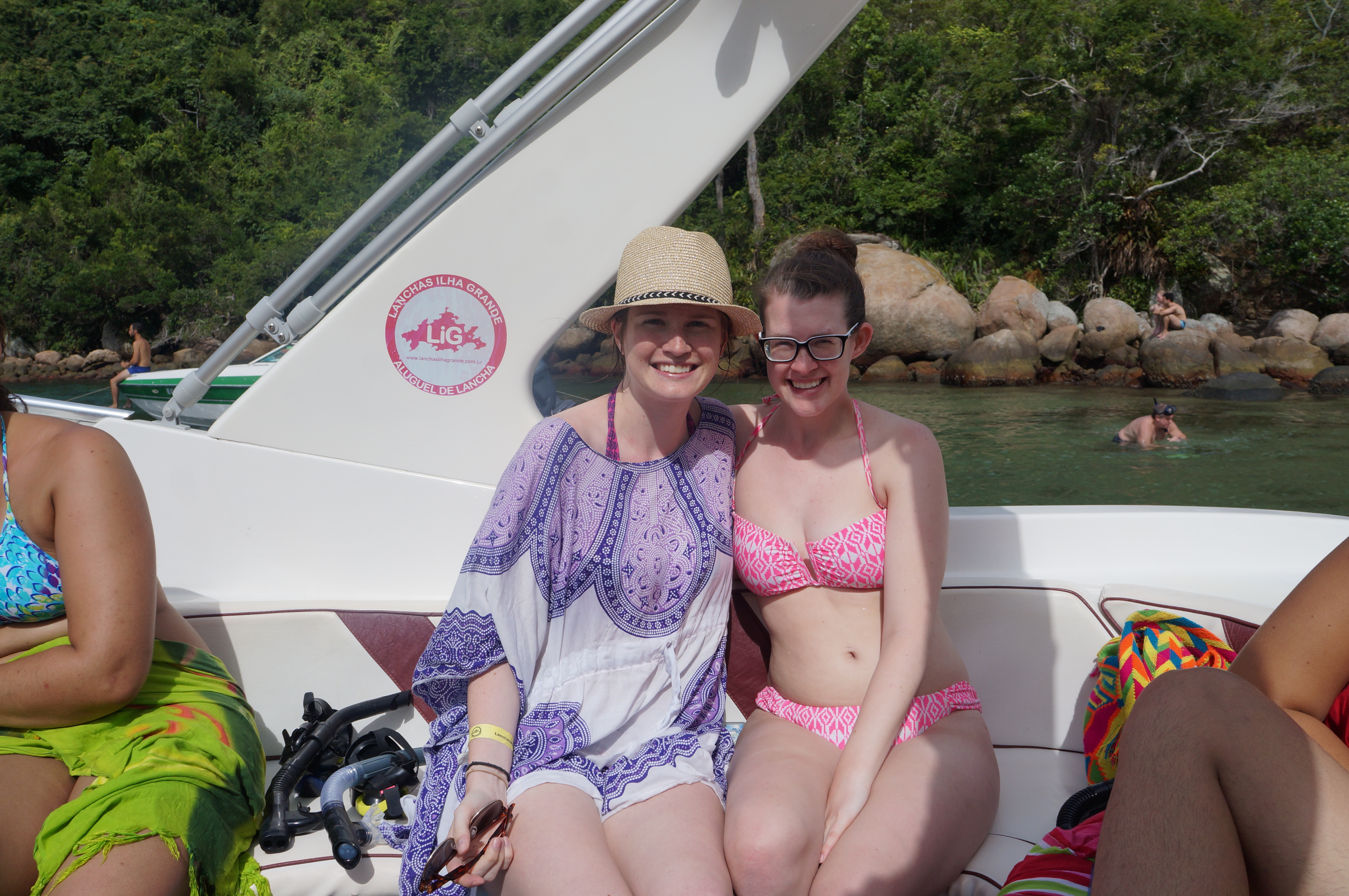
On our second day in Ilha Grande we decided to explore the island by boat. Tourism definitely plays a large role for most of the locals living on the island and there were dozens of little agencies offering a number of excursions around the island. We decided to do a snorkeling tour of the north half of the island. We spent the day on a nice high speed motor boat with a dozen other tourists and visited several different beaches.

The sun was out when we left and fortunately it stuck around for most of the day. Our first two stops on the boat were the snorkeling locations, Lagoa Azul and Lagoa Verde, which translates to blue and green lake. Lagoa Azul had better reefs, with lots of bright fish and some coral, but I ended up having more fun at Lagoa Verde. Our boat driver had some fish food that he threw in the water while I was snorkeling near the boat and I got a great view of all the fish as they swarmed around. He gave me some to feed them as well – they’re these little pellets that you hold in the water and all the fish bite at them. I was surprised at how aggressive they were and they quickly devoured all the food! A few of them gave me little bites on the arm and I realized there was another kind of fish swarming around my feet when they bit me on the legs too! It was all fun though, everyone else seemed a bit reluctant to be in the middle of all the fish, but I enjoyed it.

Boat trip around the island

Boat trip around the island

In the afternoon we stopped to a different beach for lunch and then toured another few beaches on the way back to Abraao. The tide had come in by then, so unfortunately the beaches had shrunk quite significantly, but it was still nice to get a tour of the island. Emily and I both agreed though that Lopes Mendes was the best beach and that overall, the boat tour and snorkeling we’re probably a little overrated. We were glad to support the livelihoods of those living on the island, but our preference probably would have been to do some more beach hopping by hiking rather than boat. But it’s a very beautiful island!

On our last night in Rio we decided to go all out and go on a pub crawl with the group that organized our walking tour when we arrived. The pub crawl goes all around Lapa, which has the best night life in Rio and we had a blast! Emily has a friend from Rio, so he joined us for the evening and we all had a great time sampling some of Rio’s best bars and clubs.

We started at a Cachacaria. Cachaca is the key ingredient in Brazil’s favourite cocktail, the caipirinha, so we visited a small bar called Cana Kriok that makes its own cachaca and got a lesson in how to make the perfect caipirinha. The other ingredients include just lime, sugar, and ice; I picked up a bottle of cachaca to take home, so I’ll have to try them out myself! The caipirinhas at Cana Kriok were easily the best ones I had the whole trip. Apparently they’re best made individually and the large batches of caipirinhas they sell on the beach just can’t compare.

Our second stop was to a “typical Brazilian bar”, Antonio’s, which Emily and I had unknowingly visited earlier in the trip. The last two clubs we visited we’re where we finally sampled some samba! The first club was Sacrilegio, which is a very old club that is known as the birthplace of samba. There was a live band and we had a great time attempting to learn some samba moves! We were so bad at it, you have to move your feet so quickly, but we had fun nonetheless.

Emily, Arthur, and I at Antonio's

Emily, Arthur, and I at Antonio’s

The last stop was Rio Scenarium, the most famous club in Brazil and ranked one of the top 10 clubs in the world by The Guardian. It had three floors and was enormous! The main floor had more Brazilian music and samba and the second floor had electronica. Brazil just hosted it’s first Tomorrowland festival in São Paulo last week, so the second floor was packed. We spent some time on both floors and were more then happy to spend the remainder of our night at the Scenarium!

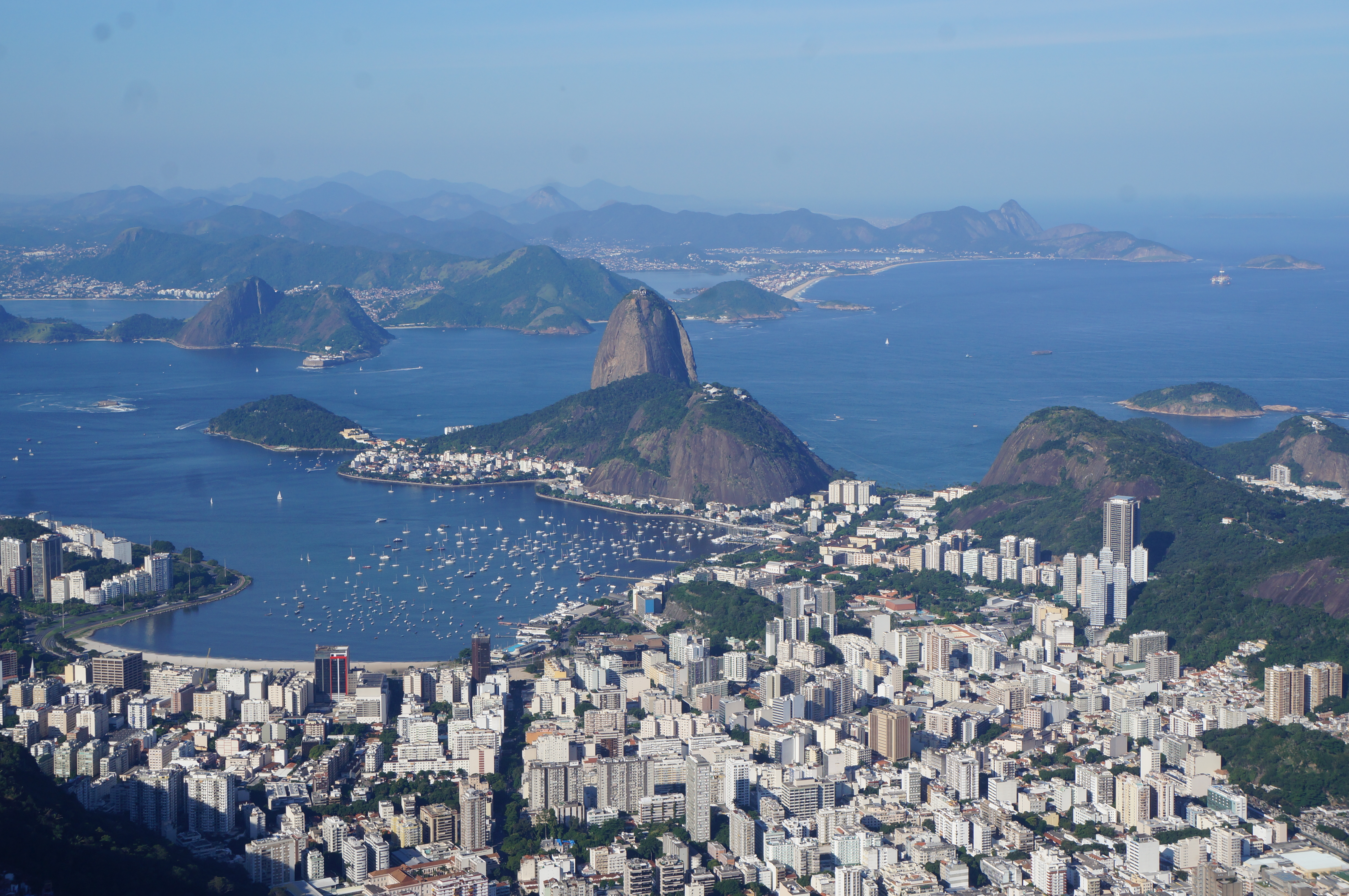
Our flights didn’t leave until after 9pm on our last day, so we took it easy and spent the day walking along the beaches again. We did a little hike up to a small fort located near the beach to finish off the trip with one last view of Rio. It was definitely a rewarding view and hike. We met lots of little marmosets on the way up and we had a great view of all Rio’s famous attractions, the Sugarloaf, Christo Redentor, and Copacobana Beach. It was a pretty satisfying way to end the trip.

One last view of Rio

One last view of Rio

As with most trips, I’m sad to leave but happy to be home. I don’t have too much of a break though as my parents are coming for a visit in just 3 short days!! I hope you enjoyed the blogs about Brazil, I really enjoyed writing them. Check my Facebook for pictures soon!

Otherwise, I’m sure I’ll have lots of fun summer adventures to share with you soon!

Maria

A Tour of Rio’s Top Attractions

On our second visit to Rio we stayed in Zona Sul, home to Copacabana and Ipanema beach. We immediately preferred it to Lapa. Our hostel was located just 4 blocks from Copacabana beach and the atmosphere was immensely different. Copacabana stretches for 5 kilometers in an arc across south Rio until it reaches the Copacabana fort and Arpoador, where it continues into Ipanema and Leblon beach for another several kilometers. The weather cooperated great and we headed straight for the beach upon our arrival.

We arrived on a Saturday, so the beach was packed with locals and tourists alike. We found a nice place to lay our towels and settled in for the afternoon. The waves along the beach are enormous, but it’s so hot and humid it doesn’t stop anyone from cooling off in the water. We had to be so vigilant with sunscreen while at the beach, but managed to avoid getting burnt (except for the tops of our feet).

You can’t spend very long at the beach without noticing how many people make their livelihoods from it. There are locals roaming the beach all day selling every kind of product imaginable. The first people you notice are those renting beach chairs. It seems each person manages a different area of the beach and as soon as you enter their section, they try and get you to rent a chair or umbrella from them. Then there are the people selling beach goods, from towels and cover-ups, to sunscreen, bikinis, sunglasses, hats, beach buckets, and even inflatable children’s pools. Finally, there’s the people selling food and drinks. They’re my favourite, you could easily spend the whole day on the beach without having to go in search of food. There are guys selling sandwiches, mozzarella sticks, prawn skewers, chips, ice cream, and our favourite, acai! The second day we went to the beach Emily flagged the acai guy down from halfway up the beach! The last are those selling drinks. I still find it very strange that drinking alcohol in public is legal in Brazil, so there are tons of guys roaming the beach all day with coolers of beer and trays of caipirinhas.

Sunset over Ipanema Beach

Sunset over Ipanema Beach

On our first day, we decided to walk up Copacabana Beach to the Arpoador in Ipanema to watch the sunset. The Arpoador is a huge rock that juts out into the ocean between Copacabana and Ipanema. It has a great view of the sunset over the mountains and was packed with people on every inch of the rock on Saturday evening! We found a spot and enjoyed watching surfers ride the waves as the sun dipped behind Ipanema.

It was calling for a cloudless day on Sunday, so we decided to attempt to see Sugarloaf and Christo Redentor in one day. We visited Sugarloaf first; it was pretty early so we had a quick ride to the top without any wait. The cable car first takes you up to Morro da Urca, the smaller of the two mountains, and then a second cable car takes you to the top of the iconic Sugarloaf mountain. The view from the top gives you an amazing 360 degree view of Rio. We could see straight out to the Christ the Redeemer statue, with the beaches on one side and Lapa and Centro on the other. After we snapped a few photos, we discovered a little path going down the back of the mountain that it seems most tourists ignore. You couldn’t see the view there, but you could enjoy the jungle on the back of the mountain instead. We saw some interesting bugs hanging around and watched a group of marmosets jumping from tree to tree.

View from Sugarloaf

View from Sugarloaf

We messed up the bus stop location after we left Sugarloaf and spent a fair bit of time wondering around, somehow ending up at Botafogo Bay, but we found it eventually and hopped on a bus to Corcovado. We were impressed with our quick ascent up the Sugarloaf, but we paid for it at Corcovado. The later in the day you wait, the longer the lines get. In order to go up to the Christ the Redeemer statue, you have to take an old tram through Tijuca National Park, up the side of the Corcovado, so only so many people can go up at once. Fortunately we didn’t have to wait too long to get tickets, but our tram ticket was for about an hour and a half after when we purchased it. Things could have been a lot worse though and we just used the extra time to go in search of lunch.

It was a nice ride up to the statue, but I have to admit the tram was a bit dated. It’s a narrow ride up to the top, so there’s only one track and you have to stop 3 or 4 times on the way up at wider sections to wait for the tram coming down to pass. It took about 30 minutes, but we were dying at the end from the heat in the un-air conditioned carriage. The view from the top was worth it though!

Christo Redentor

Christo Redentor

If we had to pick, we both agree that the view from the Corcovado was better than the view from the Sugarloaf. However, the crowd was not. It’s a very narrow platform at the top with a lot of people crammed in taking pictures of both the statue and the view. It made me almost thankful for the bottleneck at the bottom, which at least slowed down the flow of people. We stayed for a little while to take our pictures and admire the view, but it was a bit too crowded for us. You can’t help but admire the statue though!

View of Sugarloaf from the Corcovado

View of Sugarloaf from the Corcovado

Up until now, our schedule has been pretty packed with activities, so on Monday we finally had a nice relaxing day at the beach. We slept in and then made our way down to Copacabana Beach. Our strategy was to spend an hour or so in one spot and then pack up and move a little further down the beach, eventually making our way to the end of Ipanema Beach. It was extremely hot, so we spent a fair bit of time cooling down in the waves. It was definitely a nice relaxing day and was less crowded since it was a week day. We finished off with some shopping in Ipanema and took a break from Brazilian food and shared a huge plate of nachos on the beach for supper.

A great day at the beach!

A great day at the beach!

We’re in Ilha Grande now for the last leg of our vacation. It looks like our good luck with weather has finally run out and it’s calling for rain the next few days. But we’re going to try and make the best of it and hopefully we’ll still get to enjoy Ilha Grande’s premier beaches!

Maria