Let’s Talk: Backcountry Bathrooms

Okay friends, let’s talk about using the bathroom in the outdoors. I’ve done a lot of overnight trips without bathroom facilities this year and I’m shocked by the amount of bathroom waste being left in the wilderness. I’m a wastewater engineer by trade and a passionate advocate for leave no trace camping, so let’s get dirty and talk about it!

You’d think using the bathroom in the wilderness would be intuitive, but it’s absolutely not for a lot of people, and that’s totally okay. You don’t need to feel bad if the prospect of peeing and pooping in the wilderness is scary or overwhelming for you, but you do need to do your research about it to be prepared. So I’d like to use this post to talk about some tips and proper leave no trace principles, so that we can all commit to a healthy and clean wilderness and so that Carolyn doesn’t have to avoid stepping in HUMAN POOP the next time she tries to make a bear cache.

Tip #1: Do your research about the trail

Before you go anywhere, always research the trail so that you know what to expect and ensure that the trail is within your ability. This includes checking if there are any facilities along the trail where you’ll be hiking or camping. I would say that generally, most hikes in southwestern BC have outhouses at the trailhead. There are hikes that don’t, but most hikes within provincial parks will have a toilet near the parking lot, so make sure to use it before you start your hike. Fewer hikes have outhouses at the end destination, but if it’s a popular backcountry camping location, odds are there may be an outhouse there too. Unless you have digestive concerns, for most people, access to a toilet at the start and end of the hike is usually sufficient, just make sure to bring toilet paper and hand sanitizer with you, because these are rarely guaranteed to be available.

Tip #2: Plan ahead

If access to toilets are limited, pay attention to your surroundings along the hike. If a hike has a long open section, you may want to consider using the toilet before you get to that section because there will be limited privacy later. Keep an eye open for more private areas where you can hide behind a tree, or if you need to poop, pay attention to the ground conditions and look for a spot that would be easier to dig. Take into consideration where the water sources are and avoid them or go downstream of where you collect your water. Planning ahead also includes making sure you have the right supplies with you, both for using the bathroom, and for disposing of your waste. I always bring a ziploc bag with toilet paper and hand sanitizer, plus another ziploc bag for my used toilet paper. Bring a trowel for digging catholes, or a waste disposal bag if catholes are not possible (see below).

Tip #3: Properly dispose of all bathroom waste

In my opinion, this is the hardest part and the part that most people get wrong. Never ever leave waste. I know pee tissue is gross y’all, but it’s not as gross as a beautiful trail that’s cluttered up with half de-composed pee tissue. There’s no getting around this one, unless there’s an outhouse, you just have to take it with you. Use an extra ziploc bag, double bag it, or bring an empty pringles container along with you, whatever you have to do to make it bearable. But you have to take it with you. If this is really a challenge for you, consider using the drip dry method or getting a pee cloth (see below).

Tip #4: Research proper cathole technique

I recommend using leavenotrace.ca for proper techniques, but to summarize here, the two most important considerations are location and technique. As discussed in Tip #2, find a location away from the trail, that has good soils, and that is away from or downsteam of your water source. I’ve found that soil type really is a big consideration because it influences how easy it will be to dig the cathole. Organic soils are best because they will help decomposition and are easier for digging. As for technique, the hole should be 6-8 inches deep (length of the trowel blade) and 4-6 inches wide. It’s not necessarily better to dig a deeper hole as it will be harder for the waste to decompose. Afterwards, fill the cathole with the removed dirt and disguise with other native materials. You can bury your poo tissue in the cathole, however, try to use as little as possible as it does take a while to decompose and some people recommend just taking your poo tissue with you too. For the same reason, do not try and bury your pee tissue from earlier as it’s just too much material. Overall, it is better to pack the tissue out as much as possible. Lightweight trowels are easily available at camping stores, Canadian Tire, Walmart, etc. I have a plastic Coghlan’s trowel that literally cost me $3.

Tip #5: Be prepared for your period

You can absolutely go hiking and camping on your period and it’s smart to be prepared for it. First of all, even if you’re not on or expecting your period, bring supplies for it. Hiking and camping are a big change to your normal habits and can cause your period to come early. Otherwise, dealing with your period on the trail isn’t really that different from anywhere else. Take extra care in washing and sanitizing your hands both before and after you use the toilet and pack everything out, including used tampons and pads. These will not decompose in an outhouse or cathole and may be dug up by wild animals, so they need to be packed out. Bring something a little more heavy duty for waste disposal (a pringles can instead of a ziploc) and mask the smell with other garbage, like used tea bags. As with all garbage, you need to keep it in your bear cache overnight. If you use a menstrual cup (see below), you can use a cathole to empty the cup. REI has a great article about menstruation in the backcountry if you want to read more.

Tip #6: Proper squatting technique

Some of you may laugh at me for including this one, but I still believe it’s not necessarily intuitive to everyone. The sitting position that we use on the toilet is not really a natural position for using the bathroom. Don’t try and mimic a toilet position in the wilderness, it’s tiring and not as effective. I’ve heard some people will bench against a tree for support, but my recommendation is to squat with your knees out so that you get your bottom as close to the ground as possible. Try and keep your feet a good distance apart and use your hand to brace against whatever is nearby. If you’re on a slope, pee downwards to avoid the pee running back into your shoes. Likewise, if its super windy, pee with the wind. If you still find squatting really difficult, consider getting a pee funnel to make it easier. Some people really love these, just make sure you give consideration to how you will clean and store it.


That’s it for my tips, but there are 3 more backcountry bathroom considerations that I’d like to discuss:

1. What to do when it’s not possible to dig a cathole? There are some situations where it’s just not possible to dig a cathole, primarily in the alpine where it is mostly rock. Fortunately I haven’t been in this situation very often and I usually try and plan ahead (i.e. poop in advance when it’s possible to bury it), but unfortunately in some cases you will just have to take your poop waste with you as well. If it’s a short haul, use a sealed container like a pringles can and dispose of it when possible by burying it or dumping in an outhouse. If it’s a long haul, consider getting a proper waste disposal bag. I don’t have experience with these myself, but there are waste disposal bags, such as the wag bag, on the market.

2. What’s the deal with menstrual cups? Menstrual cups are definitely not for everyone and if you’d prefer to continue using pads or tampons, that is totally great, though I’d recommend against free-bleed in the backcountry for wildlife reasons. Essentially, it’s a silicone cup with a stem that collects menstrual blood and is removed, dumped, and cleaned up to every 12 hours. Personally, I’ve been using a menstrual cup for several years and I absolutely love it. I find it more comfortable than tampons or pads and I like that you don’t have to change it as frequently. It’s great for the backcountry because it’s easier for disposal and you only have to carry the one little cup with you instead of a stash of products. But it’s definitely messy and that can be a challenge to manage. Always wash your hands before inserting or removing. It can also be hard to wash the cup in the backcountry, so I usually just give it a wipe with some toilet paper or pour some water on it if I’m only out for a day or two. There’s lots of cups on the market, I have only tried DivaCup, but I love it.

3. What about pee cloths? I don’t personally have experience with pee cloths since I don’t mind just dealing with pee tissue, but I’ve heard a lot of people really love them. It’s basically a microfiber quick dry cloth that can be used multiple times and then laundered after the trip. If you have one, you can carry less toilet paper and subsequently, less pee tissue. I won’t get into it because I don’t have any experience with them, but I’ve heard Kula is a great brand and recommend checking them out if you want to learn more about it.


And that concludes my bathroom talk. It’s important to take care of ourselves and the environment, so it’s also important to normalize talking about it. I hope you learned something and always do your best to be prepared in the wilderness!

Hiking Cheam Peak

One of my favourite local hikes to date is Cheam Peak – which is interesting because the first time I hiked it was in 2018 and in much less than ideal conditions. Cheam Peak is a well known hike in the Fraser Valley, whose sharp peak dominates the skyline as you drive out Highway 1 past Chilliwack. Though you can easily see the mountain from the Highway, you have to enter the trail from the South on Chilliwack Lake Road. I wasn’t expecting it to be a busy hike because you need 4WD to access to the trail head, and it was a pretty smoky day when we hiked it in 2018, so I was shocked when we arrived at the trailhead to find the parking lot packed with trucks and SUVs. As far as 4WD hikes go – I can also assume this is one of the more popular since the mountain peak is so iconic.

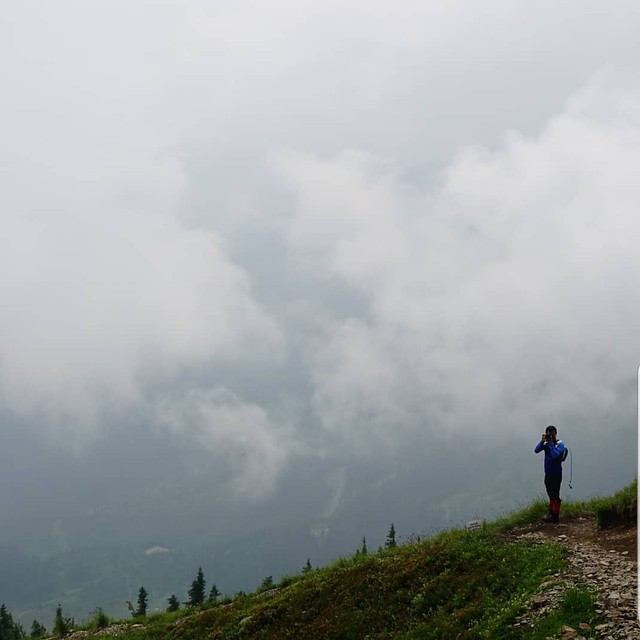
5 of us piled into Brandon’s 4Runner to get to the trailhead – a drive that was a lot more fun for Brandon than the rest of us. The higher we drove along the road, the worse the visibility got. 2018 was one of the worst summers for forest fires and the city was filled with smoke for weeks on end, making it hard to do much of anything outdoors without coughing up a lung. The smoke hadn’t peaked yet, but it was also an overcast day and we were high enough to be up in the clouds – so the smoke and fog together made for some really terrible visibility.

The conditions didn’t impact my enjoyment of Mount Cheam though and even with the poor visibility, between the alpine meadows and cute little Spoon Lake, I was in hiking heaven. The meadows start pretty much at the trailhead and are gorgeous and green, with this tiny little swimming hole that looks like it’s been punched out of the landscape. Plus there’s lots of wildflowers if you go at the right time of year. From the meadow, I think you can see up most of the mountain, but unfortunately for us, the meadow was the only part of the trail not shrouded in fog. As we started to ascend, we immediately entered the clouds and lost all sight of anything around us. I’ve hiked a few times in the fog, but this was definitely the worst. The closer we got to the top, the worse it got. It’s not the longest trail, only 9km round trip, but you tackle a lot of elevation gain in that hike, approximately 650m. So it’s pretty steep for most of the hike, with lots of switchbacks and at times I literally couldn’t see my friends if they were more than 6 feet away.

We weaved our way up the mountain until we reached the ridgeline along the top. It was super creepy in the conditions because the fog was getting caught up on the other side of the ridge (towards the highway), so we could see down the ridge a little bit, but the highway side was just a bank of milky white fog. It’s made weirder by the fact that when you reach the top, you get over the mountain sound barrier, so all of sudden you can hear all the traffic from down on the highway. From the peak, Mount Cheam looks down on the highway, but since we were hiking it from the back, we were totally surrounded by the backcountry. Since you can’t see any of the traffic on the way up, you feel like you’re in the middle of the wilderness, it makes for a really weird experience.

20200828_120419

We hung out at the bottom of the ridgeline for a bit and had our lunch. We figured there was no use racing to the top when we couldn’t see anything anyways, so we took our time. The fog did eventually start to thin, so we continued on to the very top, but we never did get a view down into the Fraser Valley. We hung out for a long time taking funny pictures of the fog and messing around, but we eventually gave up on our hope of catching the view and started to head back down again. Despite all the fog and not being able to see the view, I still had a great time on the hike, which I attribute to my companions, who had just as much fun taking photos in the fog as we would have with an amazing view!

The fog continued to thin as we made our way back down again. We could see more of the mountain around us and eventually the fog got high enough that we could see all the way down to the meadow. This was my favourite part of the hike and it made for a nice, scenic walk back. Me and Lien are a bit obsessed with swimming, so we had big plans to take a dip in the little hobbit pond, formally known as Spoon Lake, at the bottom. We didn’t waste any time and both dove right into the water as soon as we got there. It’s a small waterbody and it was the middle of the summer, so it was actually really warm and we had a great time swimming around. From Spoon Lake, it’s just a short walk back out of the meadow and about a kilometre along a gravel road back to the parking lot. So even though the weather conditions weren’t the best, we still had a great time on the hike and will have to keep in on our bucket lists to return on a clearer day!

20200828_120434


Fast forward to 2020. 2 years after our first hike to Mount Cheam, we decided to return and see if we could actually catch the view. It was Sunday morning back in mid July and it was one of the hottest days of the summer. Me and Emily spent all Saturday trying to get into any of the lakes in the lower mainland and were rejected from Buntzen and Sasamat, so we figured cute little Spoon Lake would make for a great end of hike swim the next day.

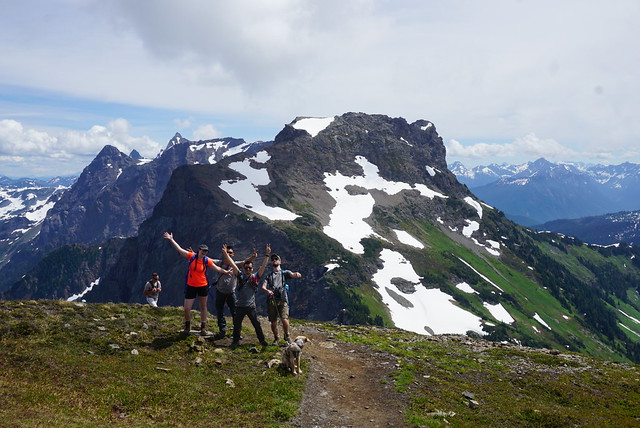
Even though I never saw the view the first time, I’d loved everything about Mount Cheam, particularly swimming in Spoon Lake, which looks like its been carved out of the hillside. So I was excited to return, this time with Emily, Seth, and Sadie in tow. We drove separately and then all piled into Brandon’s 4×4 for the 9km ride up to the trailhead. I remembered there being some pretty bad waterbars along the forestry road the first time, but I also remembered us driving up it pretty fast. I don’t know if I mis-remembered or if the road has gotten worse, but it seemed in much poorer condition then the last time. It ended up taking us over an hour just to go the 9km! I wasn’t sure how well Sadie would do on the drive. As a puppy she had really bad car sickness, but has mostly grown out of it. Fortunately she seemed to love the 4×4 road! She was running back and forth across me, Seth, and Lien in the back seat to look out the windows as we drove up.

DSC06554

It was a slow year for the snowpack melting, so there was still quite a bit of snow on the trail when we visited in mid-July. Fortunately we had microspikes, but since the snow was so sporadic, it’s a pain constantly taking them on and off, so we mostly went without. Sunglasses are a must with so much snow though – Emily sunburned her eyes crossing the snow fields. Walking into the meadow from the parking lot we could see there was a fair amount of snow left and we were concerned the lake might still be frozen. You can’t see it until you’re pretty much on top of it, so we were anxious as we approached, praying we’d be able to swim in it. Unfortunately, the lake was a real mess. The whole area coming down to the lake looked more or less in shambles. Since our last visit, it looked like there’d been an avalanche in the area. There’s several trees knocked down and a ton of debris coming down into the lake. It looked like there was a bunch of debris from the slide that had been knocked into the lake and was now covered with snow and dirt. We were convinced it would never be swimable again, but I’ve since seen photos of the lake on Instagram later in the summer, and it looks totally fine now, so most of it must have been snow, or the debris suck to the bottom. So we were quite sad at the time, but thrilled to see it more or less seems to have recovered.

DSC06473

The hike ended up being more challenging than I remembered. Like I said above, it’s a short hike, but has a lot of elevation gain. I’m not sure if I was having a bad day or if I’m just out of shape from the pandemic, but it was a challenging hike, even after completing the NCT. I’m inclined to blame it on the heat though because it was well over 30 degrees. From the lake it’s a steady climb for the rest of the hike, the main difference being that this time we got to enjoy the views! A lot of the hike is going back and forth across exposed boulder fields, some of which were still under snow, so caution is definitely advised. On our way down we saw a few people trying to take shortcuts up the boulder field, don’t do this, it’s deceivingly hard, it’s dangerous (loose rock and steeper) and it damages the landscape.

DSC06500

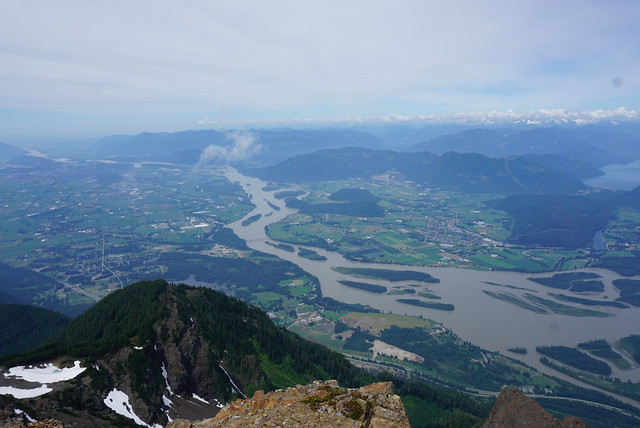
It was a slog, but we reached the top to gorgeous blue sky views of the surrounding area. Looking north you can see Highway 1 all the way out to Harrison Lake, and south is a cacophony of snowy peaked mountains all the way to the States. We sat at the very peak to enjoy our lunch before heading back down again. This was Sadie’s first major hike, so we weren’t sure what to expect, but she LOVED it. She’s definitely an outdoor dog and has a ton of energy. She thrives on steep difficult trails, so she was right in her element on Cheam. Also, she’s obsessed with the snow and loves playing it. I’m not sure if it’s just because it was so hot, but she couldn’t get enough of running around throughout the snow fields. She was totally pooped by the end of the hike though. She was all wet and muddy from running around and we didn’t want her sitting in our laps, so we made her sit on the floor in the back seat and she immediately lay down and fell asleep for most of the car ride back (a feat for Sadie who rarely settles down).

So despite the setbacks with the lake, it was still a great day! It’s a challenge to get to, but well worth the visit, my only recommendation is to leave early to avoid the crowds and go prepared for any condition because you will be a long way from help! Happy hiking everyone!

DSC06586

Banff National Park

Banff was our second stop on a weeklong holiday in August. Check out my post about our first stop in the Okanagan.

Compared to some of BC Parks campgrounds, I wasn’t overly impressed with the campgrounds in Banff. That said, Banff is really a tourist town and I think the campgrounds were more about quantity than quality. We stayed at Tunnel Mountain Village II, which has over 600 sites. Coupled with Tunnel Mountain Village I and the trailer park, that’s a lot of camping just outside Banff (and there’s still loads more campgrounds throughout the rest of the National Park). The benefit to Tunnel Mountain though is that is super close to Banff town and there’s even a shuttle bus that runs between the campground and the town.

We had 3 full days in Banff National Park, so we were planning to do two hikes, spend some time at the lake, and explore the town. Banff really has the look of a ski town, but I’ve only ever travelled there in summer – hopefully one day I’ll make it over there to go skiing as well. Fortunately, the weather in Banff was a lot more comfortable than the weather in the Okanagan. It was still hot in the day, but it properly cools off in the night, making it much easier to sleep. One of the cool things about the National Park is that they provide firewood! There’s a lot of education about not transporting firewood because you can introduce invasive bugs to new areas, so I suspect that’s one of the reasons why it’s provided. You can just drive to the wood lot, take as much as you want, and just make sure to leave behind whatever you don’t use.

DSC07025

On our first day, we decided to go hiking. It’s unreal how many trail options there are in the Rockies. There are tons in Banff alone, without including all the trails in the neighbouring parks. The top two trails on my list were Plain of 6 Glaciers and Sentinel Pass. The problem is that both are super popular and involve getting up early. 6 Glaciers leaves from the Lake Louise parking lot, which I’d heard filled up my 8am, and Sentinel Pass leaves from the Moraine Lake parking lot, which is really small and I’d heard filled up by 6am! The drive from our campsite was about 45 minutes, so we weren’t willing to get up quite that early. We figured things might be a little less busy since it was a Tuesday, so our plan was to aim for Lake Louise for 8am, but to turn up to Lake Moraine if that lot was still open when we passed (Parks closes the lot once it’s full and limits traffic access). When we passed Moraine Lake at 7:45am, the sign said lot full, but we could still see some cars being let up the access road, so we decided to try and were thrilled to be admitted up to the lake! We grabbed the first parking spot we saw and then got ready for the hike. In retrospect, a good idea would be to make your breakfast once you’ve parked to save a bit of time in the morning.

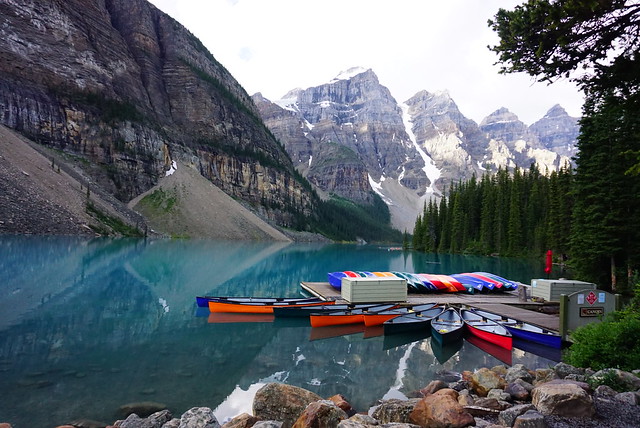
Moraine Lake is a dream. It was my first time there and it was absolutely gorgeous. You can visit the lake from the parking lot, but Sentinel Pass trail continues on from the lake. I think I will write separate posts about Sentinel Pass and Plain of 6 Glaciers, but Sentinel Pass was by far the highlight of the trip to Banff for me. We had gorgeous weather for it and the meadows at the top were filled with wildflowers! You get the most amazing view from the pass and the entire hike was really a joy. Sadie did really well on the hike, though she’d been having some tummy issues over the past few days and Seth was getting a little concerned about her. We ended up calling the animal hospital in Canmore because she’d had diarrhea for 3 days and Seth was concerned about parvo. They said to try feeding her a bland diet of chicken and rice, so our first stop after the hike was to the grocery story to pick up chicken breasts for Sadie. I boiled them, which was a new experience and pretty much the grossest way I can think of to eat chicken. It worked like a charm though and the next day she didn’t poop at all! (TMI?)

DSC07252

Our second day was intended as a relaxing day between the two hikes. We slept in and then went into Banff town to do a bit of shopping. We’d been dismayed throughout the trip by the lack of people wearing masks. Whenever we stopped anywhere we would wear our masks, even just using the bathroom at gas stations, but very few people seemed to be doing the same. So it was nice to see some pretty strict rules about masks in Banff. I assume it’s because it’s mostly a tourist town, but they’d converted the main street into a pedestrian road and masks were required everywhere along the stretch. We got some new gear at the Smartwool and North Face stores and me and Emily had a lot of fun tea shopping at Banff Tea Co. We’re both tea addicts, so we picked up a few new flavours.

It was getting progressively hotter, so we went out to Lake Minnewanka in the afternoon. It was super busy at the lake and we had to circle the parking lot for a bit, but eventually we did find a spot. The lake is really interesting. It’s a huge reservoir and you can rent motorboats and canoes. There’s a trail that goes along the edge of the lake and instead of one big beach, there are lots of little beaches along the lake where you can hang out for the day. We found a spot to set up in the shade of the trees and finally decided to blow up the rubber dinghy we’d brought on the trip. It was a good time for the dinghy because Minnewanka was a lot colder than Okanagan Lake. We went for one little swim, but as gorgeous as the lake was, it wasn’t really a swimming lake. So instead we took the boat out for a little spin and marveled at the gorgeous mountains surrounding the lake.

DSC07326_1

We returned to the campsite for dinner, but after that Seth and I decided to take Sadie for a walk. There’s a nice trail running all along the campsite and we walked to what was labelled as the “hoodoo viewpoint”. We didn’t know what a hoodoo was, but learned it’s basically just a name for a weird rock feature. The viewpoint was gorgeous! It looked out at Rundle Mountain and from it we could look down at the Bow River, see the hoodoos, and even glimpse the fancy Banff Springs Hotel. It’s just off the main road, which is one of the things I love about the Rockies, you don’t even really have to hike anywhere to get amazing views.

On our last full day in Banff we headed back to Lake Louise to do the Plain of 6 Glaciers hike. Lake Louise is gorgeous, but a little overwhelming. We came back at 8am again and had no trouble finding parking in the massive lots. The crowds were a lot though. Moraine Lake is busy, but because of the size of the parking lot, it didn’t feel too busy (usually there’s shuttles that run up there, but not this year because of Covid). Lake Louise had a very different feel and I didn’t want to hang out for too long because of all the people.

DSC07338

Both mornings had been chill when we started hiking, but while Sentinel had gotten really hot later in the day, 6 Glaciers remained cool throughout. I’m glad we got up early for the hike though because we finally saw a bit of rain for the first time on the trip. It was gorgeous blue skies when we started, but as we continued to hike, the clouds started to move in. Again, I think I will write a second post about the particulars of the trail, but the highlight for me was that there’s a tea house located at the top, so we were able to each get a cup of tea at the top and shared a scone. It was also a gorgeous hike, but I’d still give Sentinel the edge over 6 Glaciers. The glacier hike is a lot more barren, whereas I liked all the meadows and wildflowers at Sentinel. It started raining on our way back, but fortunately it was after we’d seen the view, so we couldn’t complain about it.

Though it rained in Lake Louise, there was no evidence of rain at our campsite and we enjoyed one last lazy night and campfire. Sadie was beat after the hike and took it easy for the rest of the night. In the morning we packed up again and started to head home. It was too far to drive all the way home in one day, so we had a hotel booked in Salmon Arm. The main motivation for getting a hotel was that all the shower houses in the National Park were closed because of Covid. I get it… but like, also you should want people to be bathing themselves. We made a stop at Emerald Lake in Yoho National Park on the way home (another park I’d like to explore more), but we ran into some trouble in Glacier National Park. We’d planned to stop there again for lunch, but it poured when we passed through, so we held out until the end of the park, when we saw a rest stop with covered picnic tables.

DSC07475

After that we drove straight to Salmon Arm and had a lazy night swimming in the pool and ordering take-out. On the final day, we made a stop in the morning in Kamloops where we took Sadie to this awesome dog park. It’s located right on the river and she had a great time running around the beach and in the water. We’d intended to stop at Falls Lake for a walk when passing through the Coquihalla, but the lot was closed, so we pushed through to Hope. After that it was just a quick lunch before heading home. It was a great trip, but it’s always nice to arrive home again. I really loved hiking in the Rockies and I think I might have to try and make it an annual thing since there’s just so much to explore! We only visited a small part of the Rockies and I can’t wait to go back for more!