We’ve always gone birdwatching when we travel because it’s Seth’s favourite hobby, but I don’t think I’ve ever gotten quite so into it as on this trip. There were tons of birds when we travelled to Vietnam, but nobody really seemed to care about them so we struggled to find any bird watching related tours. New Zealand is the complete opposite. We didn’t even plan that many bird related activities, yet birds are always discussed on every tour we do because historically New Zealand was an island of just birds (no mammals) and everyone here seems to really value the native bird life. Plus there’s just not that many bird species here (comparatively), so it makes it relatively easy to identify birds. So even I’ve gotten a bit into it because it’s basically just like real-life pokemon go.
Anyways, because of the abundance of birds, we didnt need to incorporate that many “birding only” activities into the itinerary because you can pretty much bird watch everywhere, but we’d be remiss if we didnt make a trip down to the far south of the country to visit New Zealand’s birding mecca, Stewart Island. You drive as far south as you can go to the little town of Bluff, and then you take the world’s worst ferry to Oban township on Stewart Island, also known as Rakiura.
Seriously though, the ferry was this little passenger catamaran that was pretty much the worst experience of my life. It was my first time ever being seasick and it was a horrible experience. It’s only an hour ferry ride, but it literally wrecked me for the rest of the day. Oban is really the only town and most of the island is dedicated National Park. We were there for about 48 hours and somehow managed to cram 3 birdwatchering tours into our brief visit.
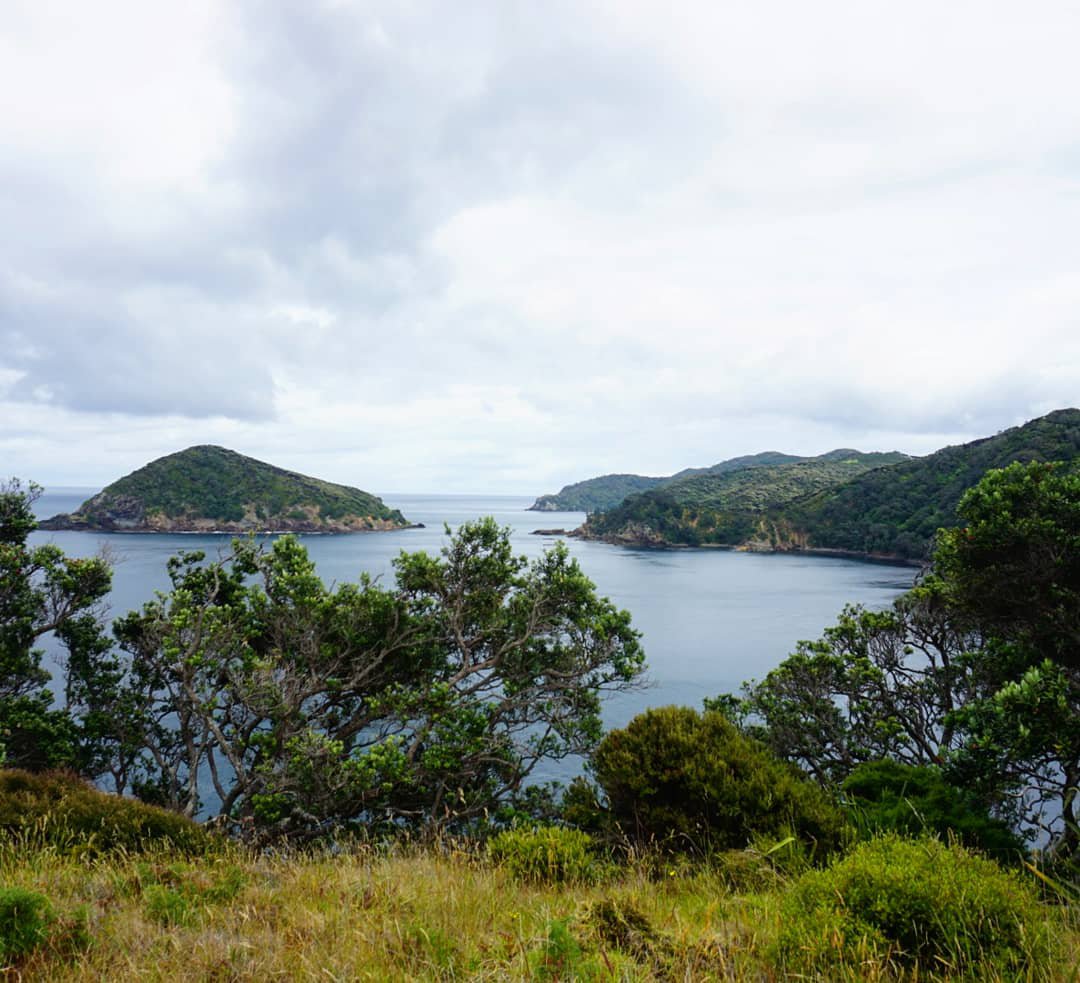
It was a lazier first day, which I really needed after the ferry ride and to catch up on laundry. But we did go out exploring for a little bit and discovered a nice lookout and some scenic beaches. The real fun started after dark though when we went on a Kiwi walk. The Kiwi is definitely one of NZ’s most popular birds, even among people that don’t care a whit about birds. They’re nocturnal, so if you want to see them in the wild, you have to be willing to stay up late.
There is a fenced, predator free area on the island, which is where we went looking for them on our tour. We didnt see or hear much for most of the tour and mainly just tramped around with our red lights in the dark, but near the end we finally stumbled upon a kiwi that was sniffing around feeding. He was so cute but guess where we saw him? Outside the fenced in predator free zone. So here we are inside the kiwi safe zone, looking out at the little kiwi hanging around outside the fence. We thought that was it and still considered it a trip well spent, but the fun wasnt over and we spotted another kiwi running along the road on the drive back, as well as a little blue penguin nesting in the grass on the side of the road.
There was no rest after our late night though because we had two birdwatching tours on day 2. We started with a trip to Ulva Island. It’s this little island just next to Oban that is totally predator free, and as such boasts a large bird population. Of the 3 this was probably my favourite tour because our guide was extremely knowledgable about the island, the bird life, and the flora. So I learned a lot and we saw a ton of birds. It was an expensive tour, but really worth it for the local knowledge because she knew where are the nests are and we saw a ton of baby birds as well.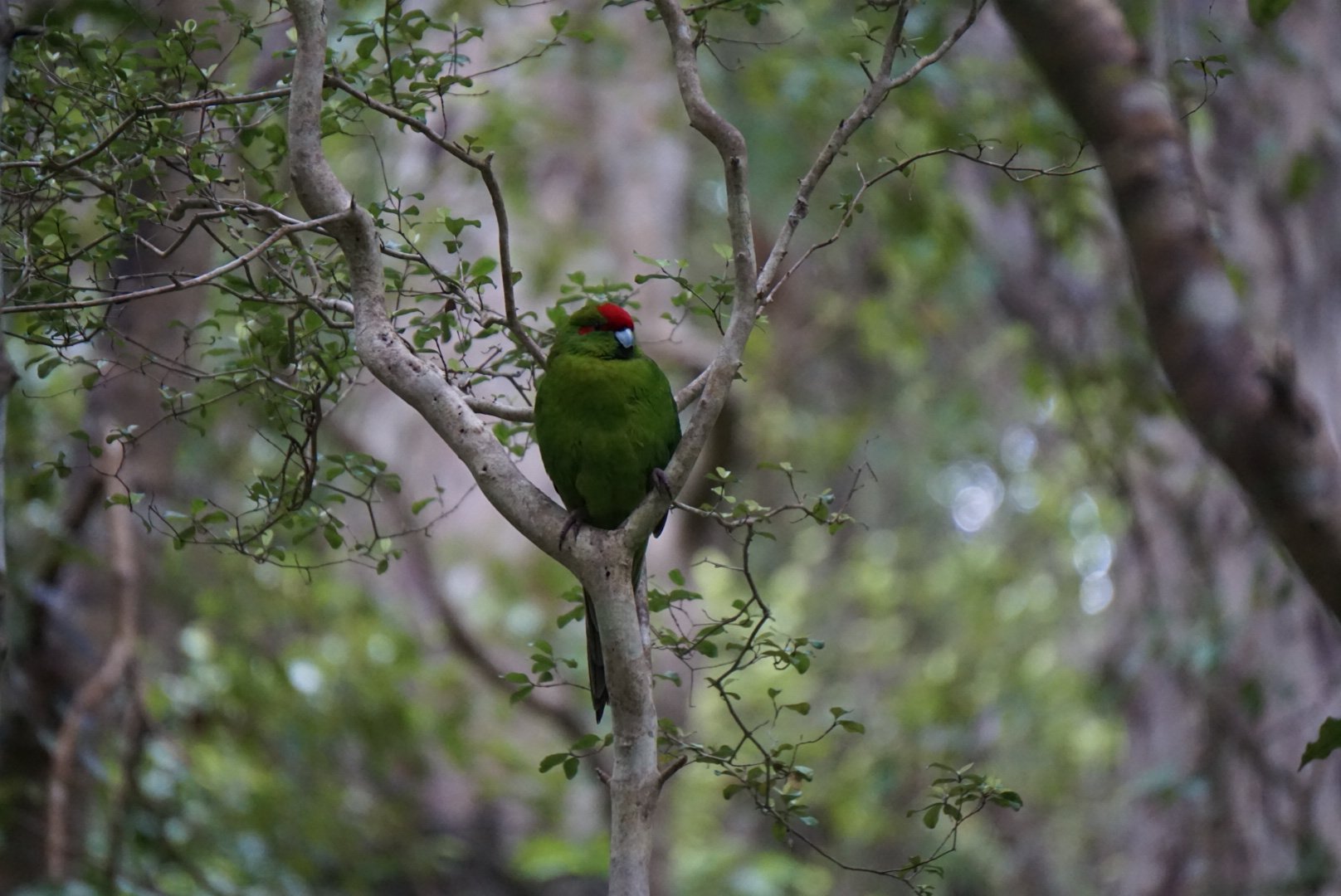
Then in the afternoon it was off on a boat tour to look for seabirds. I was nervous about this one after the ferry experience, so I popped a gravol which maybe wasnt the best idea because I dozed off a few times while we were cruising around. It was just us and two really intense wildlife photographers on the tour, so I broke out my (sad compared to theirs) zoom lens to see what photos I could capture. Again, we saw a bunch of birds, but the highlight was the Mollymawks. They’re a type of albatross and are enormous with a wingspan of up to 2.5m. They basically followed us around in a swarm all afternoon because they knew we had fish.
I happily would have called it a day after two birding tours, but apparently Seth hadn’t had enough yet, so we went out on our own in the evening because we heard blue penguins could be seen returning to their nests at dusk. The rumour turned out to be true and I spotted one swimming into the harbour and then Seth spotted it climbing up on to the rocks. It’s the smallest penguin in the world and very cute. They nest up to a kilometer inland and apparently they can really make a racket if they decide to nest under your house…
So it was a pretty successful trip and fortunately a less eventful ferry ride back. For those of you less interested in birds, you can look forward to my next post on Fiordland National Park and the infamous Milford Track!
Author: Maria
Road Trippin’ the South Island
We’ve been exploring around the South Island for the past few days and its been quite the adventure. We landed in Queenstown long enough to stock up on groceries and pick up some camping equipment and then hit the road. We have a new rental, a compact SUV that were planning to drive all the way back to Auckland over the next month.
Our first stop out of Queenstown was Mount Cook National park, about a 3.5 hour drive according to Google. It took us closer to 5 hours, but we stopped a lot for photos, plus a lunch break. The weather made it an eventful drive. It rained for the first 3 hours, but not enough to put a damper on the views. Even in the rain we were in awe of the mountain road. It’s just as winding as the roads on great barrier island, but fortunately wider. We were particularly impressed by our drive through the Lindis pass, which runs along the valley between the barren mountains north of Cromwell.
We had originally planned to do this part of the trip later in our itinerary, but I really wanted to see some of the lupins New Zealand is famous for, so I rearranged our plans to put us in the inland south island as soon in the trip as possible. The lupin season is late November, early December, so I wasnt sure if we might still miss them. It might not have been peak season, but there were still tons of lupins around, especially coming out of the Lindis Pass and I was constantly pulling over to take photos of fields of them along the sides of the road.
The rain finally let up when we hit Lake Pukaki and we decided to pull in to the visitor centre for lunch. We had brought out own sandwiches, but apparently the lake is super popular for salmon, so there was a ton of salmon sashimi for sale there and nothing else.
From there it was just one more hour to mount cook. The road winds its way up the rest of the lake and into the mountains, though we saw very little of it because, while the rain had finally let up, the clouds were still clinging to the mountains. We snagged a campsite at White Horse camp, which is right at the end of the valley at the base of the mountains. I had very mixed feelings about camping out there because I wasnt sure what the rain was going to do, but it is the only place to stay and we really wanted a chance to explore the park.
I assumed Mount Cook was so popular because it’s the tallest mountain in New Zealand and that was its appeal. That is the case, but it’s also super dangerous and seems to have become New Zealand’s Everest in its own way. While a lot of people like us flock to it just to see it and hike in the valley, the ruggedness of the mountain clearly holds its appeal for mountaineers. The visitor center had a lot of information about expeditions over the years and a very sobering memorial where they list everyone who has died on the mountain over the years. There were 5 volumes, with the most recent entry that had been completed being in 2018.
So with that reminder we headed out to do our own exploring. We made a go at the Tasman Lake hike, it’s not very long, maybe a kilometer or two, really more of a viewpoint. You hike up to a lake at the base of the glacier, which we could just make out, but it was mostly clouded in. It was an impressive look back at the valley though. Parts of the park were featured in Lord of the Rings and it’s not hard to tell it’s where Helms Deep was set.
The rain picked up again, so it was a pretty low key evening and a cold night in the tent, so we got started on a bottle of wine and went to bed early. But it was all worth it because the clouds and rain totally cleared off in the morning and we had a gorgeous day to hike the Hooker Valley Track in to the lake at the base of Mount Cook. It was exactly the kind of hike that I get excited about. It had 3 suspension bridges and unbelievable views of the surrounding mountains from everywhere on the trail. I’ve since noticed though that a lot of the hikes here seem to go through the mountain valleys rather then up and over them.
We made the most of the gorgeous weather and continued on to Tekapo where we were also tenting. We rolled in to town just in time to visit the infamous Church of the Good Shephard. It’s just a little stone church on the edge of the lake. I wasnt really expecting much, but it’s undeniably a beautiful church and I really enjoyed sitting inside it and listening to the worship music they had playing. It was very peaceful.
Our campsite was a tiny block of field at the holiday park surrounded by campervans, but we had our own little lupin patch and I had a lot of fun snapping photos in them. Our big plans for the evening were to visit the Mount John observatory, which is owned by the University of Caterbury, to do some star gazing. I booked the tour in advance and it cost a small fortune. The weather report overall was pretty bleak around that time, but the good weather of the day held out and we actually ended up with a cloudless sky in which to go stargazing. I really couldn’t believe our luck.
Stargazing wasnt until midnight so we popped into the Tekapo Springs to kill some time and relax a bit. It’s really a hot pool because its piped and definitely had none of the character of a natural springs, but it was still nice.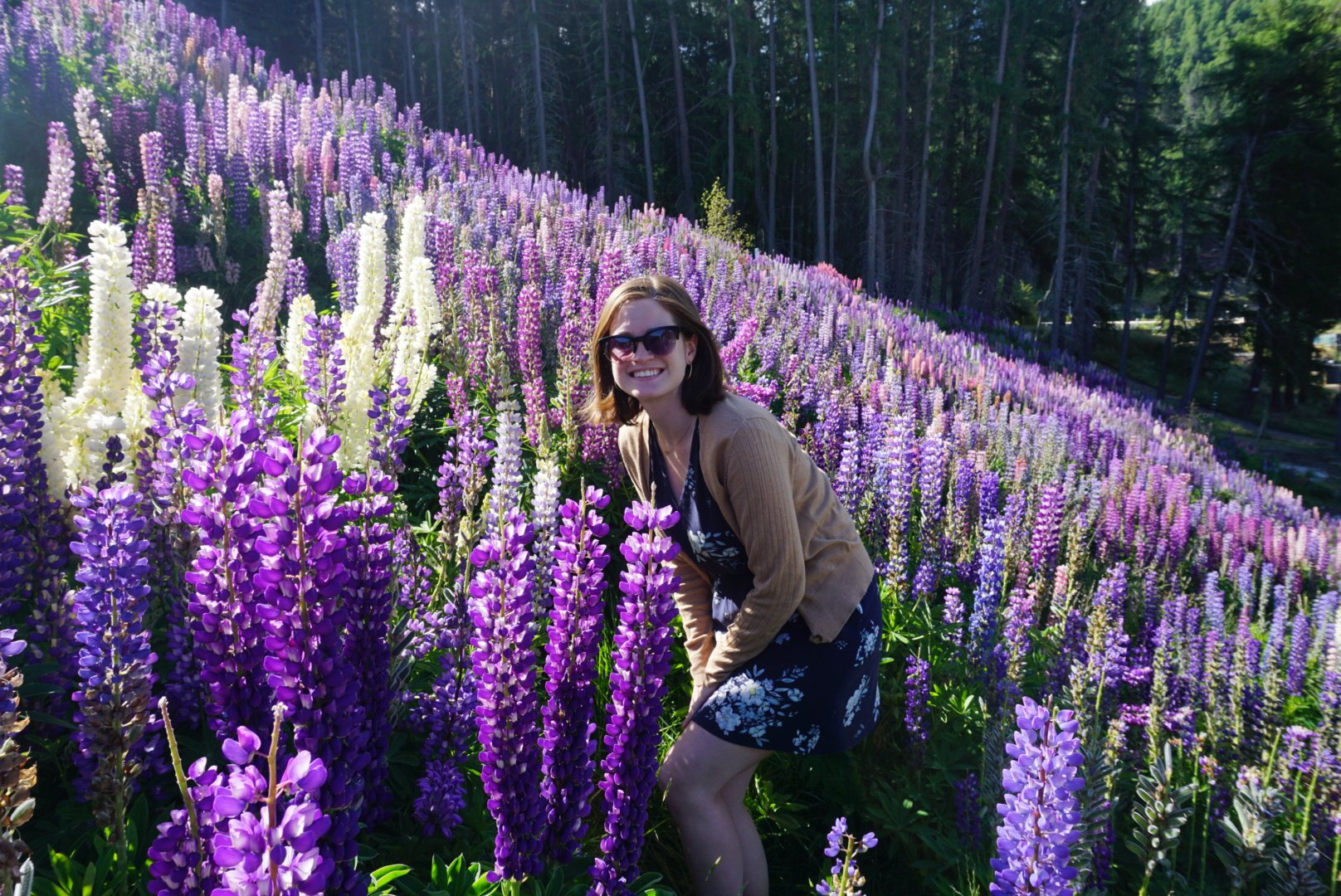
The observatory tour ended up being awesome. I’ve taken up a bit of a star photography in Vancouver over the last year and it was really interesting to learn about the night sky in the southern hemisphere. Orion and Sirius really dominate the sky here, but they are upsidedown in this hemisphere. They had some really powerful telescopes and we got to look at the jewel box star cluster and alpha centauri, which is the closest star to earth and actually two stars in one. Then they broke out the observatory telescope and we got to look at the middle star in Orion’s sword, which is actually a nebula of stars and very neat to see up close.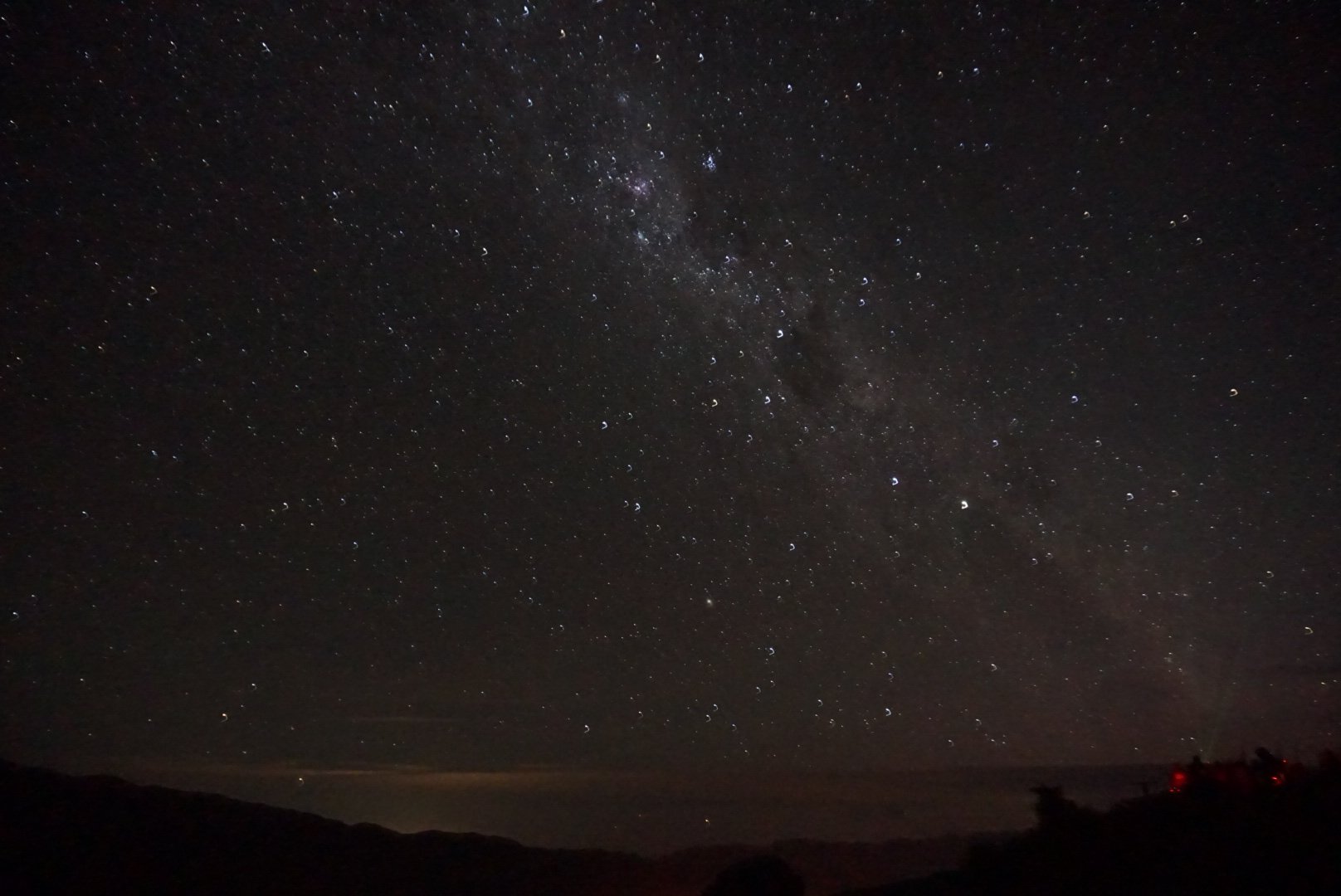
It made for a late night and we would have loved to sleep in the next day, but it was a big driving day because we had to travel all the way down to the far south to catch our ferry to Stewart Island. We drove all morning to get to Moeraki along the east coast. We stopped briefly to see the Moeraki boulders beach, and then visited the Kaitiki Lighthouse, which is popular for wildlife and had a bunch of fur seals and nesting birds. The highlight was right at the end of our walk when Seth spotted a yellow eyed penguin just chilling on the beach.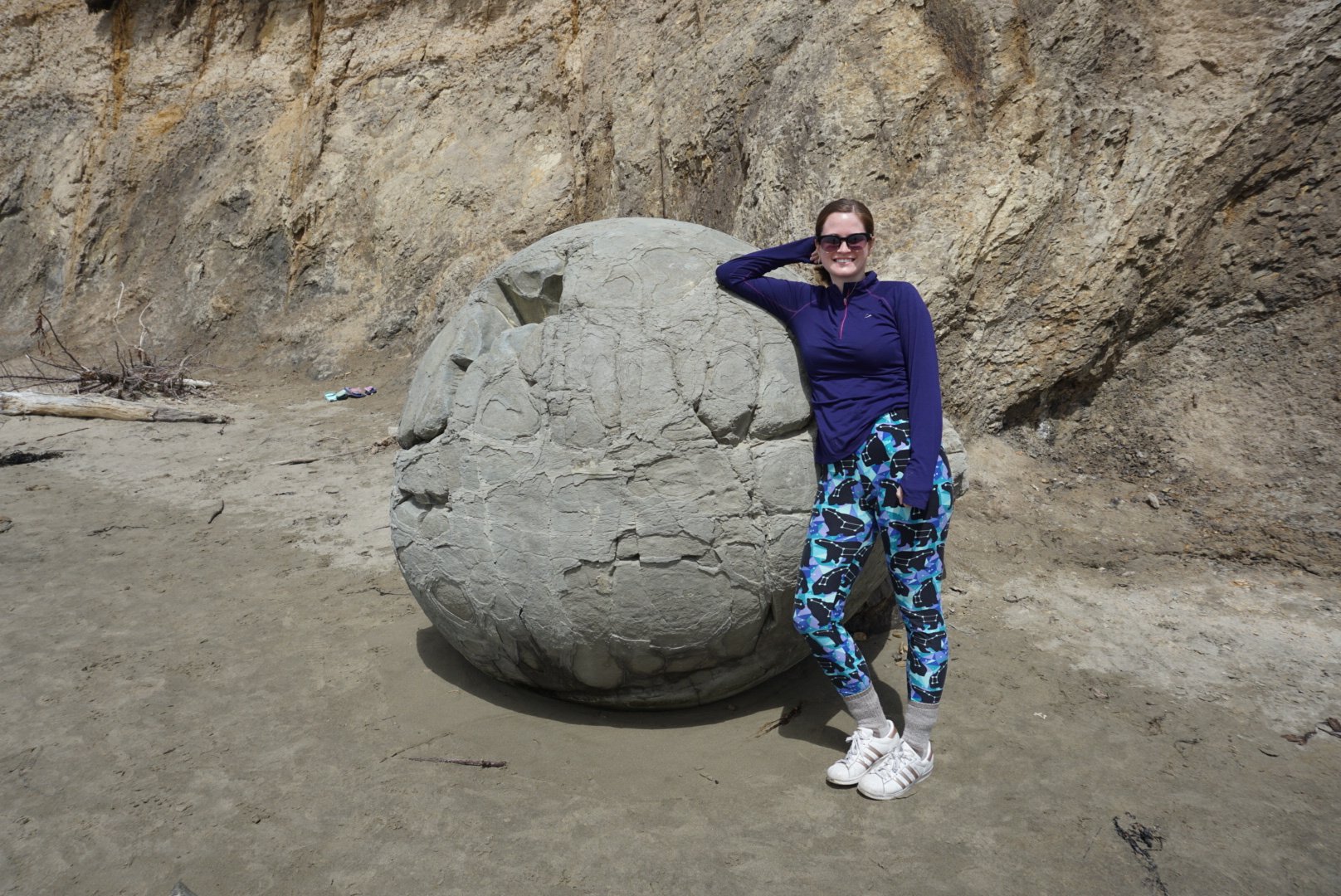
After that we drove another hour to Orokonui Ecosanctuary just outside of Dunedin for some more wildlife viewing. There’s birds and wildlife all over New Zealand, but this was evidentally the bird watching portion of the trip. New Zealander’s are very big on conservation and creating safe spaces for their native bird populations. So there are several sanctuaries all over the islands that are essentially fully enclosed, pest free areas. They gate the sanctuaries to protect them from introduced predators like rats, stoats, weasels, and possums.
The highlight from the Sanctuary was a takahe. I’ve learned the takahe’s story since then and I find it super fascinating, so indulge me for a minute. Basically the takahe were believed extinct for a long time until a single colony of them was discovered way up in the mountains in Fiordland National Park in 1948. The area was immediately protected and shut off to visitors and they worked on supporting the population to grow. Once it was deemed more sustainable, they started relocating some of the takahe to other parts of New Zealand to help them re-establish, mostly on predator free islands. The program has been doing well and while there’s still cause for concern, the department of conservation is hopeful about their increasing numbers.
After the Sanctuary though the forecasted rain finally began and it was a wet drive out of Dunedin. Our destination for the night was Curio Bay. The yellow eyed penguins nest on the beach there and we were hoping to catch them returning to their nests at dusk and had booked a campsite next to the beach. We weren’t looking forward to camping in the rain again, so we were hopeful the rain would clear itself out. But the further south we went the worse it got and by the time we reached Curio Bay it was absolutely torrential downpour and high winds coming off the ocean.
It’s a tiny community, just one short road, and there’s no service anywhere along the road there. Almost all the limited hotels in the community were booked out, but we saw one vacancy listed on our drive through and quickly pulled in. It was a local family that rents out their garage suite and we happily forked over the cash that saved us from having to camp all night in the pouring rain. Best decision ever, absolutely no regrets. We did try to see the penguins still, to no avail, but there’s something really lovely about listening to the rain patter on the roof and being warm and dry in a bed you weren’t supposed to have.
Great Barrier Island
We spent 3 days on Great Barrier Island and had the best time! Like I said in my last post, the island doesn’t have electricity or a lot of services, so our idea was that it would be a relaxing start to the trip. We didn’t plan much in advance and ended up having a great time exploring around the island.
We stayed at a cute little bed and breakfast, Mulberry Grove Retreat, and our host Michelle was the nicest! She made us a big breakfast every morning and we enjoyed sitting on her deck and watching all the wildlife running around. Seth is in biologist heaven. There are birds everywhere and they’re not hard to spot or identify. Our B&B had a bunch of rabbits and even an eel who hangs out in the stream that runs through.
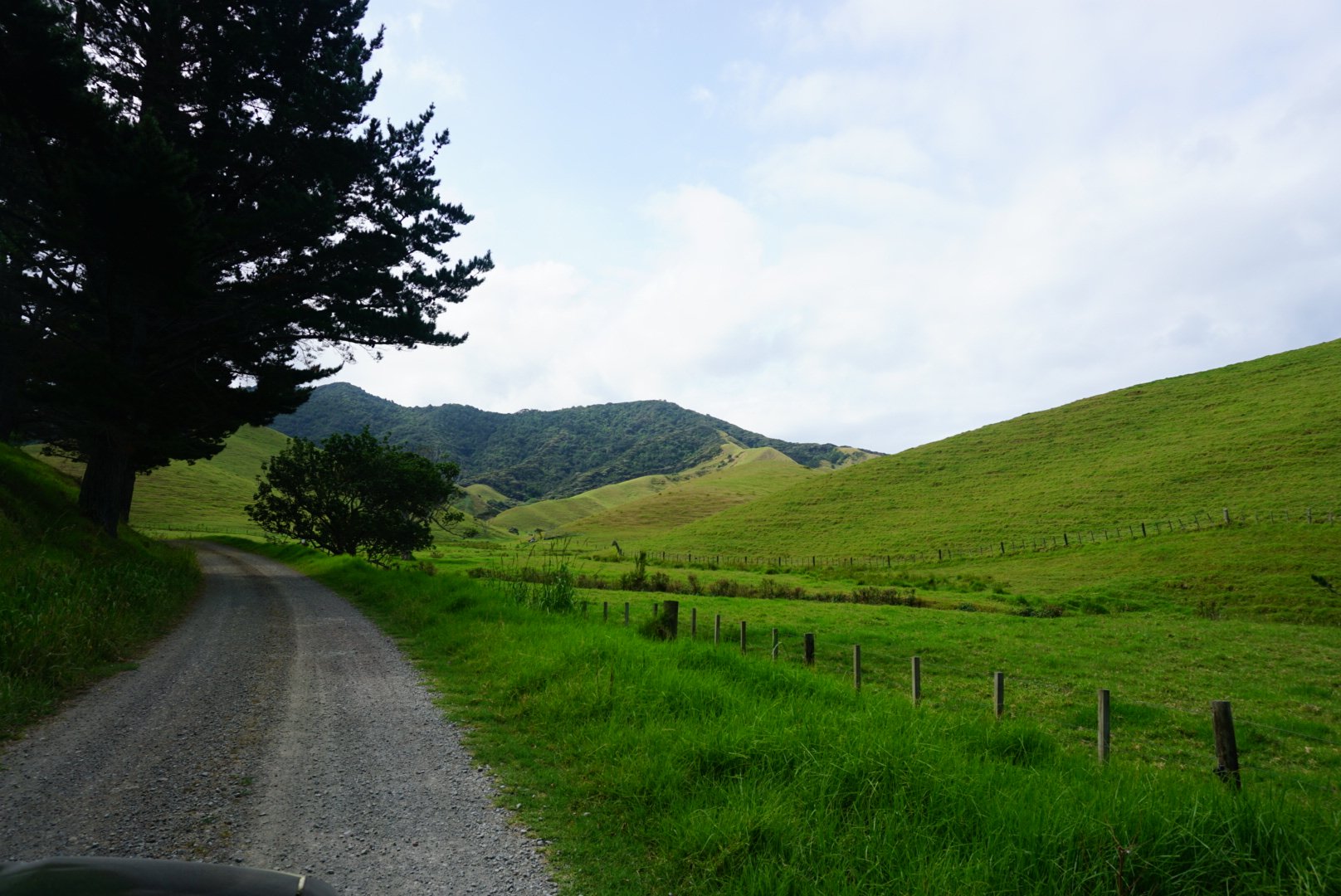
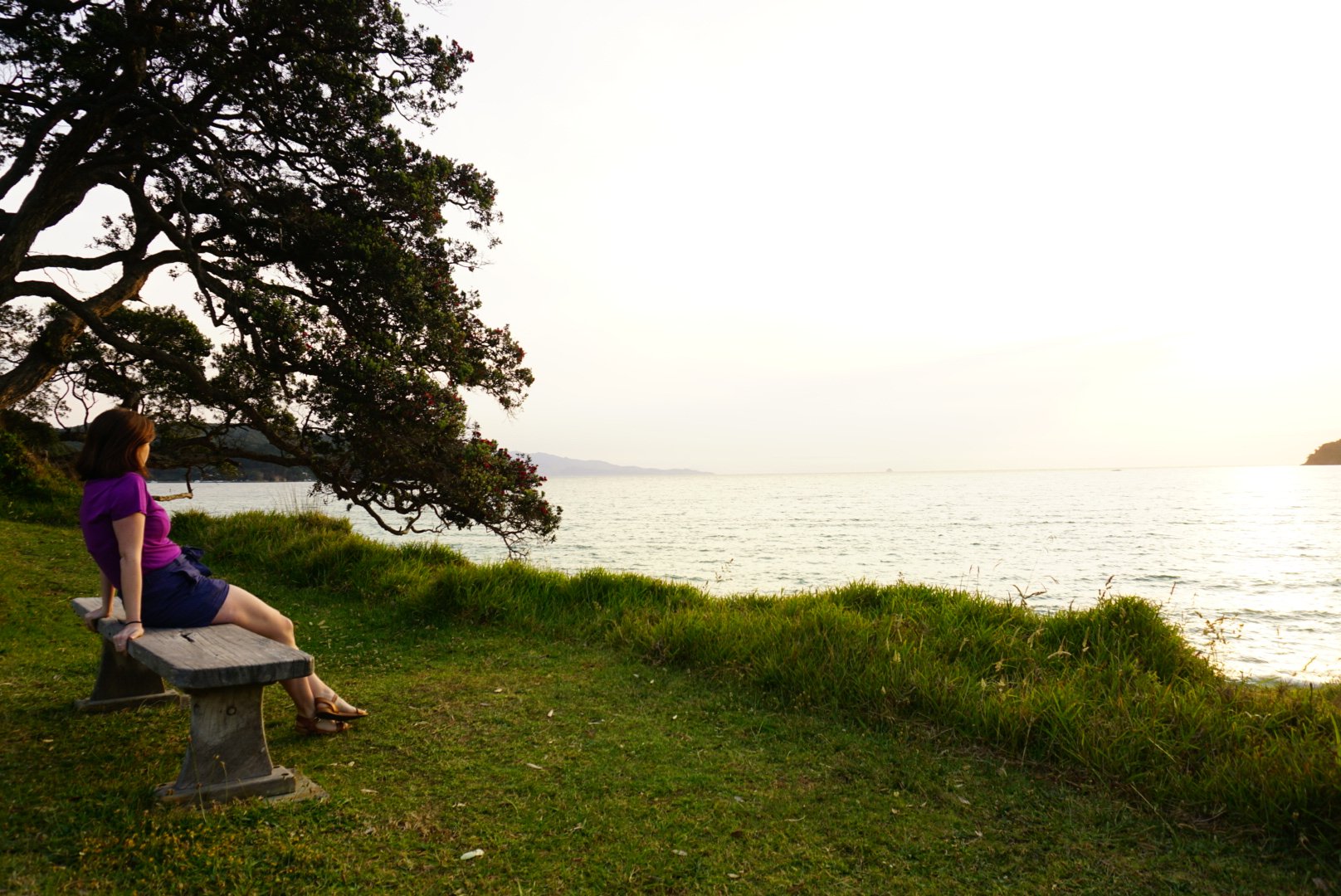
We did a mix of hiking and beaches on the island. There’s literally nowhere you can go that isnt incredibly scenic. We set my gopro up on the dash thr first day and were constantly filming because every stretch of road is interesting. Theres a lot of diversity on the island, from rolling hills, to forested mountains, to green meadows, and miles of golden sand beaches. It was sunny when we arrived, so we did a quick jaunt down to one of the nearby beaches and then had a seafood dinner along the waterfront.
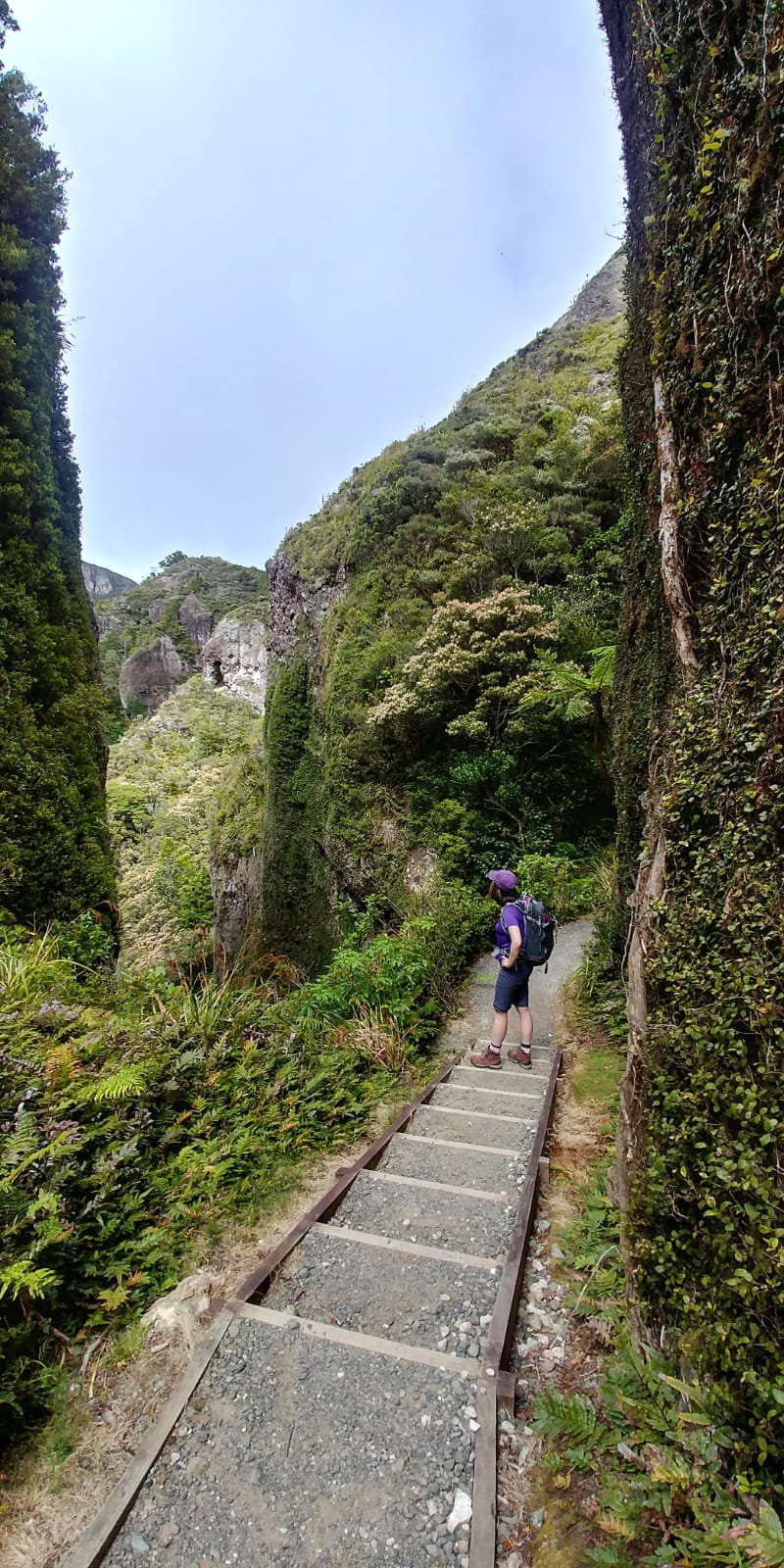
It was overcast and a little chilly on our first day, so we decided to start with a hike up Mount Hobson, the highest mountain on the island and part of the Aotea Track, which takes about 3 days to complete from hut to hut. We didn’t overnight it, but instead hiked 3km along Palmers Track, past Windy Canyon. The Canyon was pretty interesting because it has a lot of really neat geological formations, but the highlight of the track was definitely hiking along the ridge on the way to Mount Hobson. You’re surrounded by miles of mountain wilderness and you can see all the way down to the beaches and ocean on two sides. It ended up being cloudy at the too of the mountain and we didnt actually get the view from the summit, but it didnt bother us at all because the rest of the hike had been so scenic anyways.
Despite its beauty, every place has it’s own challenges and on Great Barrier Island its Kauri Dieback Disease. It’s a soil borne disease that is killing a lot of their native Kauri trees. It’s obvious that conservation is very important to New Zealand, so the department of conservation was out education about the disease at the entrance to Mount Hobson and every track we did have a scrub brush and water hose to clean off your boots before and after ever hike to try and avoid transporting the disease around.
We saw about 8 other people on the Mount Hobson hike, so it was the busiest attraction we visited. The thing that amazes me most about the island is just how unpopulated it is. Theres not very many people living there and there were limited tourists when we visited. I think it gets busier after Christmas when New Zealanders are on summer holiday, but most of the time it felt like we had the island to ourselves. At every other beach or hike we went on, we were almost always the only ones there. It made for a very relaxing a memorable start to the trip. Everything about the island was idyllic, except maybe the cost of living. Meals were expensive and petrol was a whopping $3.32 a litre!
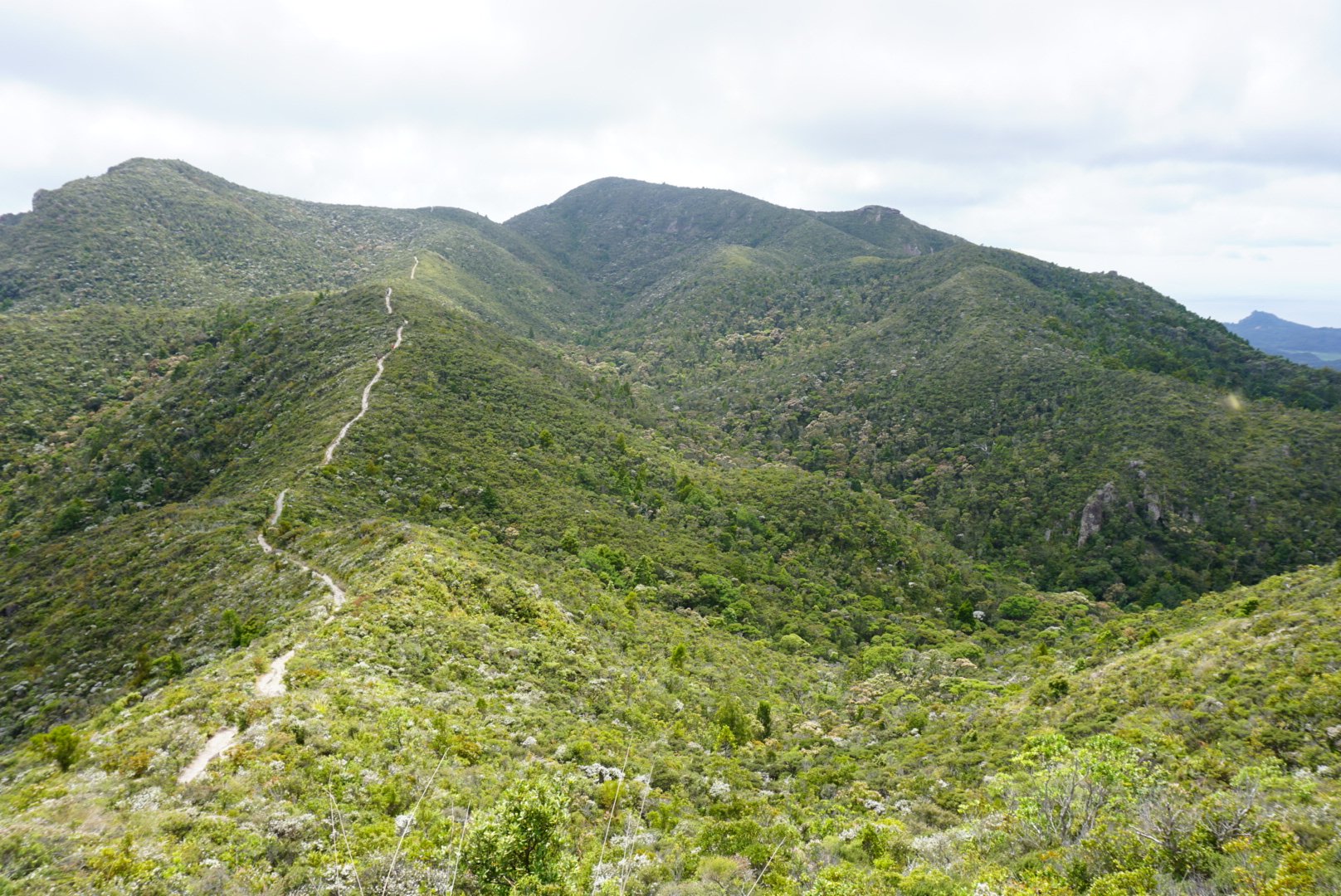
It ended up being super humid on the hike, so we were anxious to hit the beach when we finally finished. We decided on Whangapoua Beach, which is located about 10km down a gravel road. It was probably my favourite drive on the island because it’s all rolling green hills and farmland and it just reminded me so much of the shire and exactly what I thought New Zealand would look like. Plus theres something so peaceful about driving through the countryside with your windows down and the wind on your face.
But if it was my favourite drive, it was definitely also my favourite beach. Its about a 3km long beach with golden sands and sand dunes and hills at the back. The tide was out, so it felt like the beach went on forever. And we were the only ones there. Theres tons of shorebirds living on the beach, so Seth was in his glee watching the oystercatchers hunt for clams and I had a great time playing around in the water. It is pretty wavy at a lot of the beaches, so it wasnt great for swimming, but the water was still warm and I had fun in the smaller waves and just chilling in the shallows.
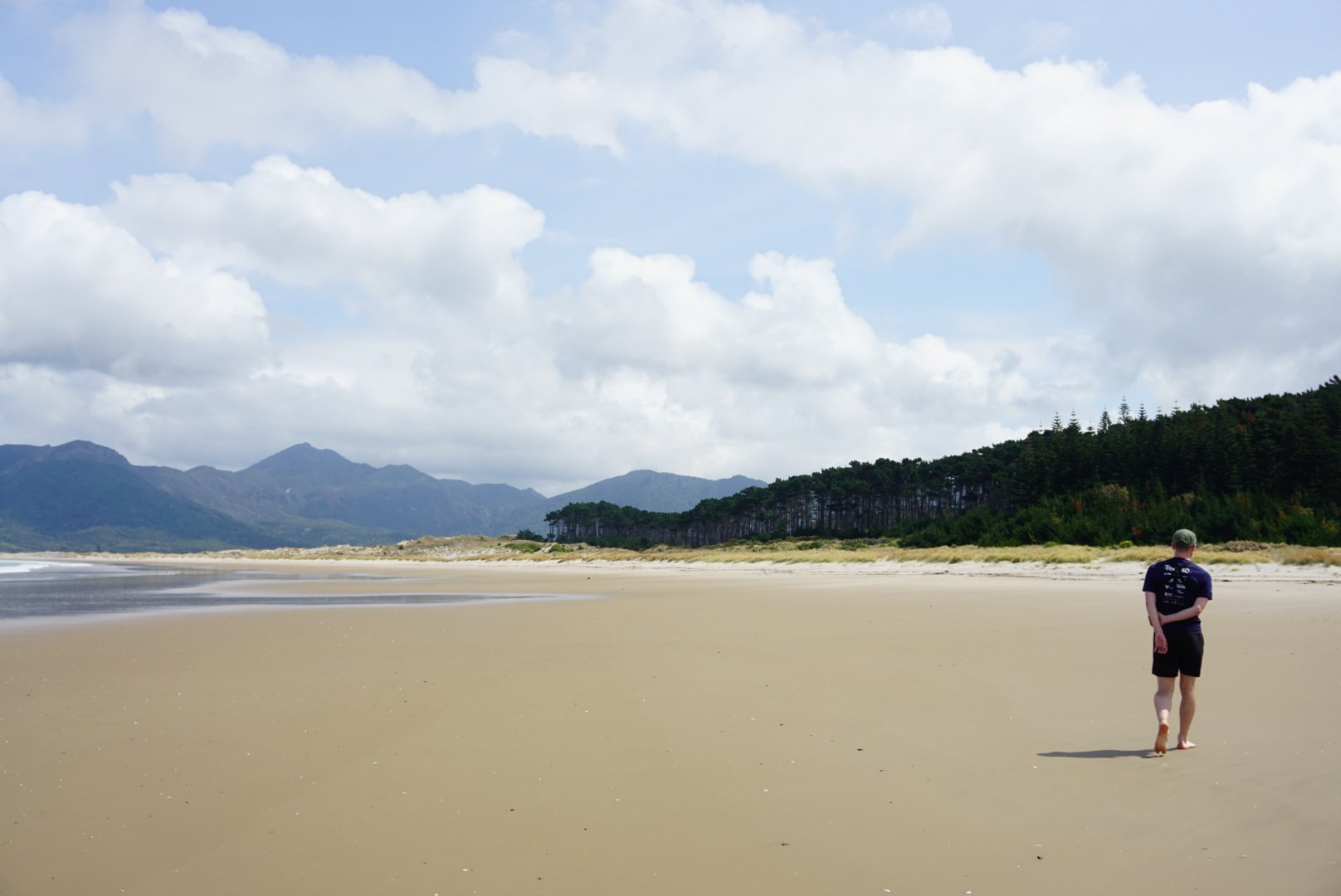
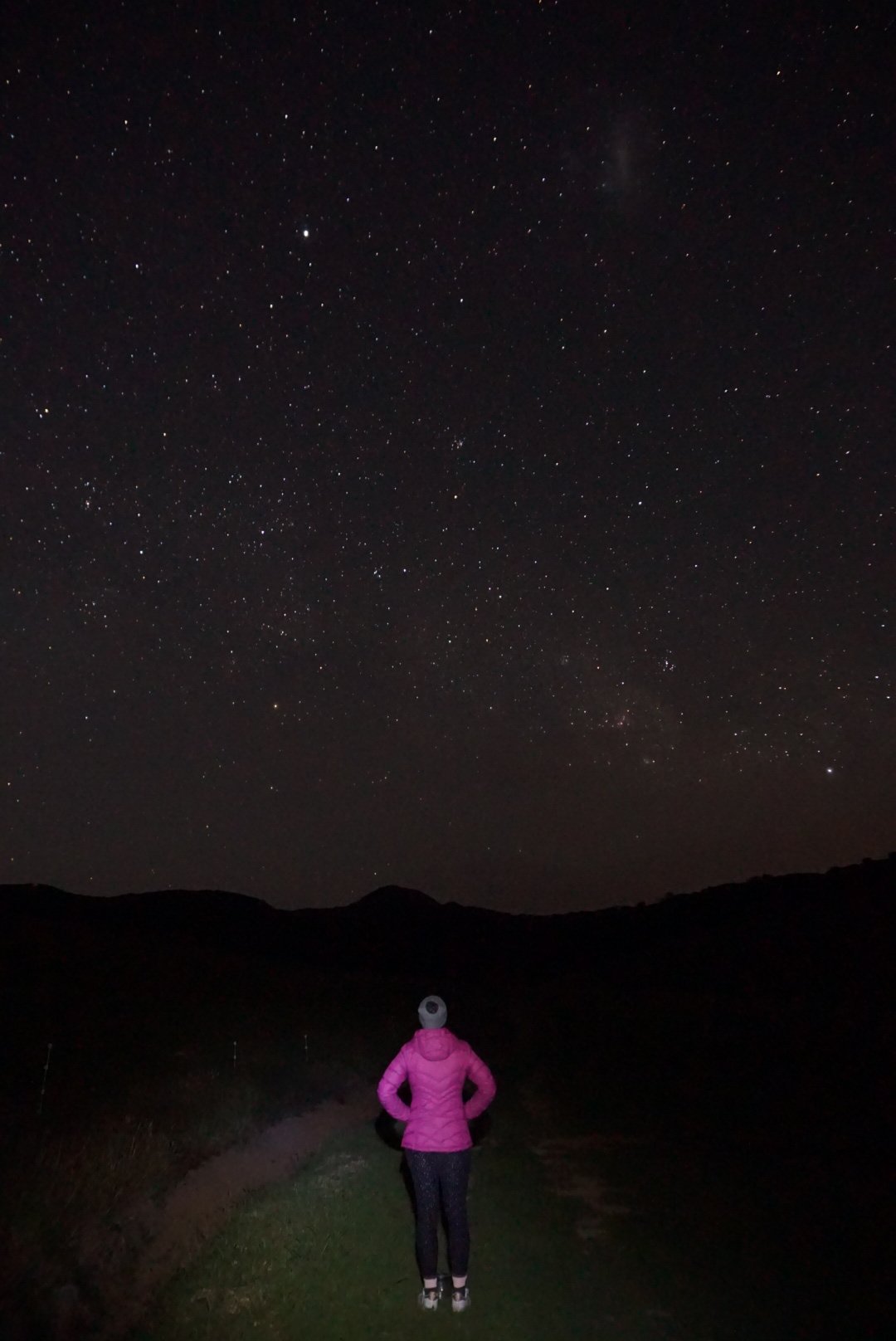
We finished the day off with some stargazing in the field behind our B&B. The entire island is a dark sky reserve, so the stargazing is supposed to be incredible. We had gotten up in the middle of the night on our first night to search for stars, but it was just after the full moon and the moonlight was so bright it was hard to actually see the stars. So on our second night we went out as soon as it got dark and got about an hour of stargazing in before it started to peak out. We couldn’t find the milky way, but we had a great view of Orion and caught a few shooting stars.
Our second day was another mix of activities. We went beach hopping in the morning to several more gorgeous, deserted beaches, and then did some more hiking in the afternoon. We started with Kaitoke hot springs, which is a hot river with several pools built along it. For a hot spring, it’s quite large, but of course, we had it all to ourselves. It definitely was a different experience from all the hot springs I’ve visited in BC. There you have the opposite experience, with 50 people all trying to share 1 tiny hot spring.
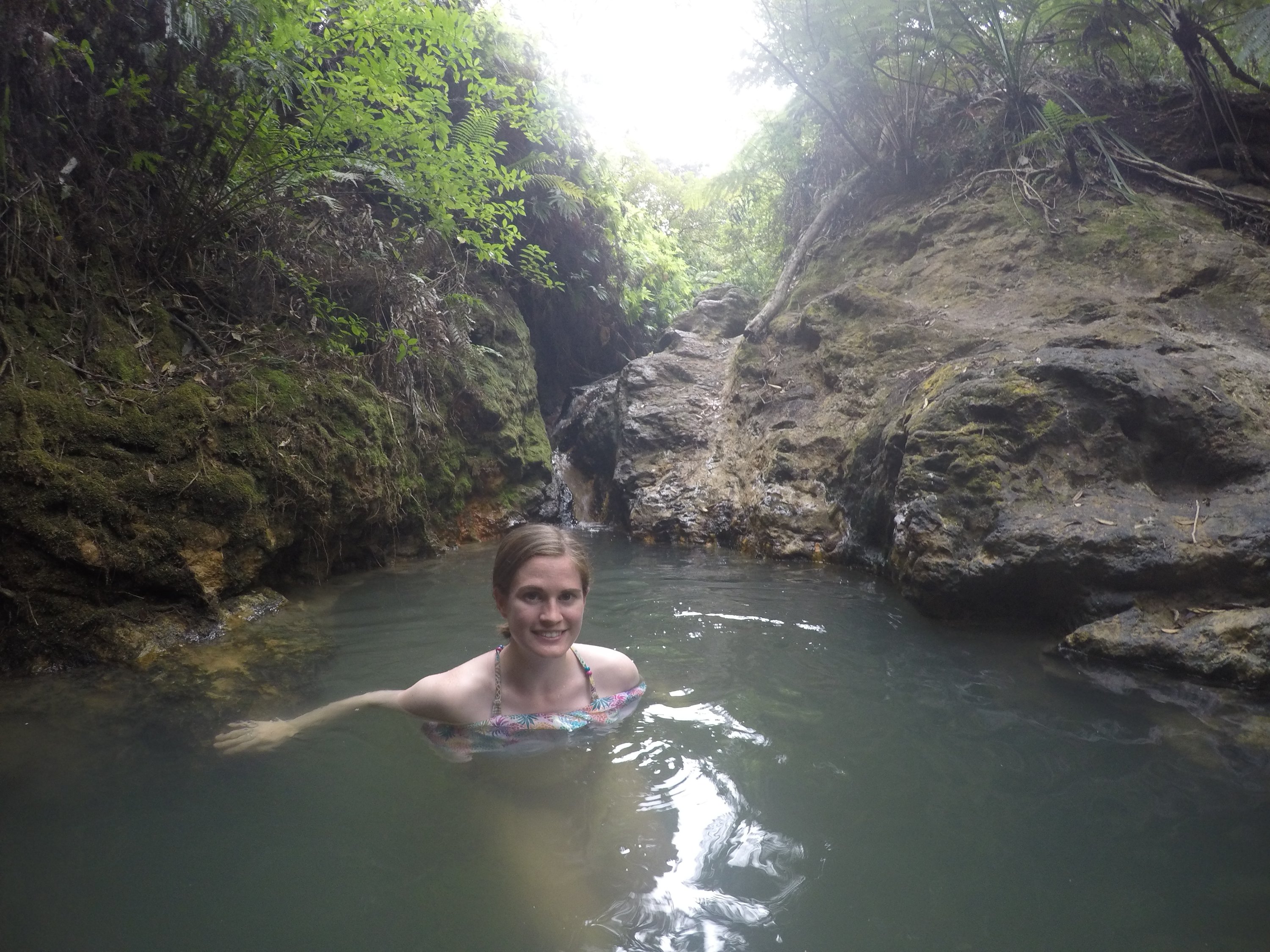
We also did a short hike into Kauri Falls. The waterfall itself was a little underwhelming (although we still went for a quick swim), but I actually really liked the hike there, which was a long this grassy only tramline track from back during the islands short-lived Kauri logging operation. We finished the day with supper in Whangaparapara with a gorgeous view of the little harbour.
On our last day we did one more walk to the Whaler’s Lookout at the far southern point of the island, which had great ocean views. We liked that almost every hike we did seemed to have different flora and a different view. So we ended up loving our time on Great Barrier Island and I’m so thrilled we went. I almost scrapped it from my crowded itinerary, but I’m so glad I decided it was worth visiting. Now were off to Queenstown on the South Island for the next part of our adventure!
 The Road Goes Ever On